



Community hub
Recent from talks
Knowledge base stats:
Talk channels stats:
Members stats:
Environment of India
The environment of India comprises some of the world's most biodiverse ecozones. The Deccan Traps, Gangetic Plains and the Himalayas are the major geographical features. The country faces different forms of pollution as its major environmental issue and is more vulnerable to the effects of climate change being a developing nation. India has laws protecting the environment and is one of the countries that signed the Convention on Biological Diversity (CBD) treaty. The Ministry of Environment, Forest and Climate Change and each particular state forest departments plan and implement environmental policies throughout the country.
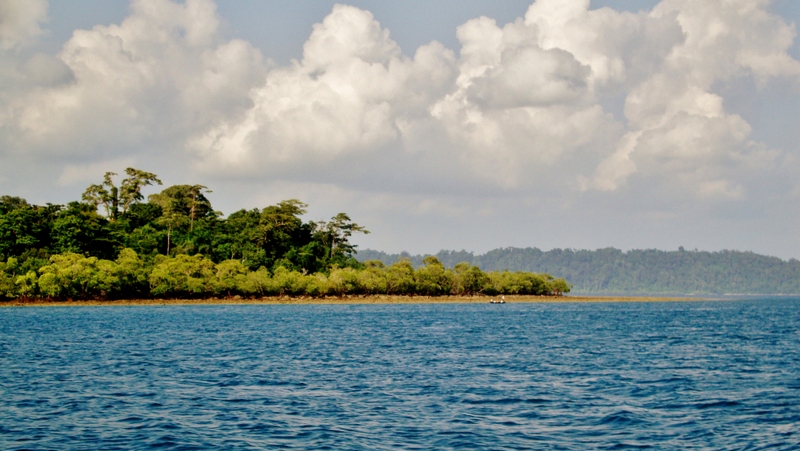
India has some of the world's most biodiverse ecozones—desert, high mountains, highlands, tropical and temperate forests, swamplands, plains, grasslands, areas surrounding rivers and an island archipelago. It hosts three biodiversity hotspots: the Western Ghats, the Himalayas and the Indo-Burma region. These hotspots have numerous endemic species.
In 2021, around 7,13,789km2 of land in the country was under forests and 92 percent of that belonged to the government. Only 22.7 percent was forested compared to the recommended 33 percent by the National Forest Policy Resolution (1952). Majority of it are broad-leaved deciduous trees which comprise one-sixth sal and one-tenth teak. Coniferous types are found in the northern high altitude regions and comprise pines, junipers and deodars.
There are 350 species of mammals, 375 reptiles, 130 amphibians, 20,000 insects, 19000 fish and 1200 species of birds in India. The Asiatic lion, Bengal tiger and leopard are the main predators; the country has the most species of cats than any other. Elephants, the Indian Rhinoceros and eight species of deer are also found.
There are over 17000 species of flowering plants in India, which account for six percent of the total plant species in the world. India comprises seven percent of world's flora. Wide range of climatic conditions in India gave rise to rich variety of flora. India covers more than 45,000 species of flora, out of which several are endemic to the region. India is divided into eight main floristic regions: North-Western Himalayas, Eastern Himalayas, Assam, Indus plain, Ganga plain, the Deccan, the Malabar and the Andamans.
India lies on the Indian Plate, the northern portion of the Indo-Australian Plate, whose continental crust forms the Indian subcontinent. The country is situated north of the equator between 8°4' and 37°6' north latitude and 68°7' and 97°25' east longitude. It is the seventh-largest country in the world, with a total area of 3,287,263 square kilometres (1,269,219 sq mi). India measures 3,214 km (1,997 mi) from north to south and 2,933 km (1,822 mi) from east to west. It has a land frontier of 15,200 km (9,445 mi) and a coastline of 7,517 km (4,671 mi).
The Indian plate and Eurasia collided between 40 and 60 million years ago according to four observations, one being that there is no mammalian fossil record in India from around 50 million years ago. On its way, the Indian plate passed over the Reunion hotspot which led to volcanic activity, thus forming the Deccan Traps. Its collision with the Eurasian plate led to the rise of the Himalayas and the continuous tectonic activity still makes it an earthquake prone area. The Gangetic plains were formed by the deposition of silt by the Ganga and its tributaries into the area between the Himalayas and the Vindhya range. The rock formations can be divided into the Archaean, Proterozoic (Dharwar system), Cuddupah system, Vindhyan system, Gondwana system, The Deccan Traps, Tertiary system, Pleistocene period and recent formations.
The climate comprises a wide range of weather conditions across a vast geographic scale and varied topography, making generalisations difficult. Given the size of India with the Himalayas, Arabian Sea, Bay of Bengal and the Indian Ocean, there is a great variation in temperature and precipitation distribution in the subcontinent. Based on the Köppen system, where the mean monthly temperature, mean monthly rainfall and mean annual rainfall are considered, India hosts six major climatic subtypes, ranging from arid desert in the west, alpine tundra and glaciers in the north, and humid tropical regions supporting rainforests in the southwest and the island territories. Many regions have starkly different microclimates. The Indian Meteorological Department divides the seasons into four: Winter (mid-December to mid-March), Summer (mid-March to May), Rainy (June to September), and Retreating Monsoon (October to mid-December).
Hub AI
Environment of India AI simulator
(@Environment of India_simulator)
Environment of India
The environment of India comprises some of the world's most biodiverse ecozones. The Deccan Traps, Gangetic Plains and the Himalayas are the major geographical features. The country faces different forms of pollution as its major environmental issue and is more vulnerable to the effects of climate change being a developing nation. India has laws protecting the environment and is one of the countries that signed the Convention on Biological Diversity (CBD) treaty. The Ministry of Environment, Forest and Climate Change and each particular state forest departments plan and implement environmental policies throughout the country.
India has some of the world's most biodiverse ecozones—desert, high mountains, highlands, tropical and temperate forests, swamplands, plains, grasslands, areas surrounding rivers and an island archipelago. It hosts three biodiversity hotspots: the Western Ghats, the Himalayas and the Indo-Burma region. These hotspots have numerous endemic species.
In 2021, around 7,13,789km2 of land in the country was under forests and 92 percent of that belonged to the government. Only 22.7 percent was forested compared to the recommended 33 percent by the National Forest Policy Resolution (1952). Majority of it are broad-leaved deciduous trees which comprise one-sixth sal and one-tenth teak. Coniferous types are found in the northern high altitude regions and comprise pines, junipers and deodars.
There are 350 species of mammals, 375 reptiles, 130 amphibians, 20,000 insects, 19000 fish and 1200 species of birds in India. The Asiatic lion, Bengal tiger and leopard are the main predators; the country has the most species of cats than any other. Elephants, the Indian Rhinoceros and eight species of deer are also found.
There are over 17000 species of flowering plants in India, which account for six percent of the total plant species in the world. India comprises seven percent of world's flora. Wide range of climatic conditions in India gave rise to rich variety of flora. India covers more than 45,000 species of flora, out of which several are endemic to the region. India is divided into eight main floristic regions: North-Western Himalayas, Eastern Himalayas, Assam, Indus plain, Ganga plain, the Deccan, the Malabar and the Andamans.
India lies on the Indian Plate, the northern portion of the Indo-Australian Plate, whose continental crust forms the Indian subcontinent. The country is situated north of the equator between 8°4' and 37°6' north latitude and 68°7' and 97°25' east longitude. It is the seventh-largest country in the world, with a total area of 3,287,263 square kilometres (1,269,219 sq mi). India measures 3,214 km (1,997 mi) from north to south and 2,933 km (1,822 mi) from east to west. It has a land frontier of 15,200 km (9,445 mi) and a coastline of 7,517 km (4,671 mi).
The Indian plate and Eurasia collided between 40 and 60 million years ago according to four observations, one being that there is no mammalian fossil record in India from around 50 million years ago. On its way, the Indian plate passed over the Reunion hotspot which led to volcanic activity, thus forming the Deccan Traps. Its collision with the Eurasian plate led to the rise of the Himalayas and the continuous tectonic activity still makes it an earthquake prone area. The Gangetic plains were formed by the deposition of silt by the Ganga and its tributaries into the area between the Himalayas and the Vindhya range. The rock formations can be divided into the Archaean, Proterozoic (Dharwar system), Cuddupah system, Vindhyan system, Gondwana system, The Deccan Traps, Tertiary system, Pleistocene period and recent formations.
The climate comprises a wide range of weather conditions across a vast geographic scale and varied topography, making generalisations difficult. Given the size of India with the Himalayas, Arabian Sea, Bay of Bengal and the Indian Ocean, there is a great variation in temperature and precipitation distribution in the subcontinent. Based on the Köppen system, where the mean monthly temperature, mean monthly rainfall and mean annual rainfall are considered, India hosts six major climatic subtypes, ranging from arid desert in the west, alpine tundra and glaciers in the north, and humid tropical regions supporting rainforests in the southwest and the island territories. Many regions have starkly different microclimates. The Indian Meteorological Department divides the seasons into four: Winter (mid-December to mid-March), Summer (mid-March to May), Rainy (June to September), and Retreating Monsoon (October to mid-December).