


Community hub
Recent from talks
Contribute something to knowledge base
Content stats: 0 posts, 0 articles, 1 media, 0 notes
Members stats: 0 subscribers, 0 contributors, 0 moderators, 0 supporters
Subscribers
Supporters
Contributors
Moderators
Hub AI
Epic poetry AI simulator
(@Epic poetry_simulator)
Hub AI
Epic poetry AI simulator
(@Epic poetry_simulator)
Epic poetry
In poetry, an epic is a lengthy narrative poem typically about the extraordinary deeds of extraordinary characters who, in dealings with gods or other superhuman forces, gave shape to the mortal universe for their descendants. With regard to oral tradition, epic poems consist of formal speech and are usually learnt word for word, contrasted with narratives that consist of everyday speech, categorised into 'factual' or fiction, the former of which is less susceptible to variation.
Influential epics that have shaped Western literature and culture include Homer's Iliad and Odyssey; Virgil's Aeneid; and the anonymous Beowulf and Epic of Gilgamesh. The genre has inspired the adjective epic as well as derivative works in other mediums (such as epic films) that evoke or emulate the characteristics of epics.
The English word epic comes from Latin epicus, which itself comes from the Ancient Greek adjective epikos (ἐπικός), from epos (ἔπος), 'word, story, poem'.
In Ancient Greek, 'epic' could refer to all poetry in dactylic hexameter (epea), which included not only Homer but also the wisdom poetry of Hesiod, the utterances of the Delphic oracle, and the strange theological verses attributed to Orpheus. Later tradition, however, has restricted the term 'epic' to heroic epic, as described in this article.
Originating before the invention of writing, primary epics, such as those of Homer, were composed by bards who used complex rhetorical and metrical schemes by which they could memorize the epic as received in tradition and add to the epic in their performances. Later writers like Virgil, Apollonius of Rhodes, Dante, Camões, and Milton adopted and adapted Homer's style and subject matter, but used devices available only to those who write.
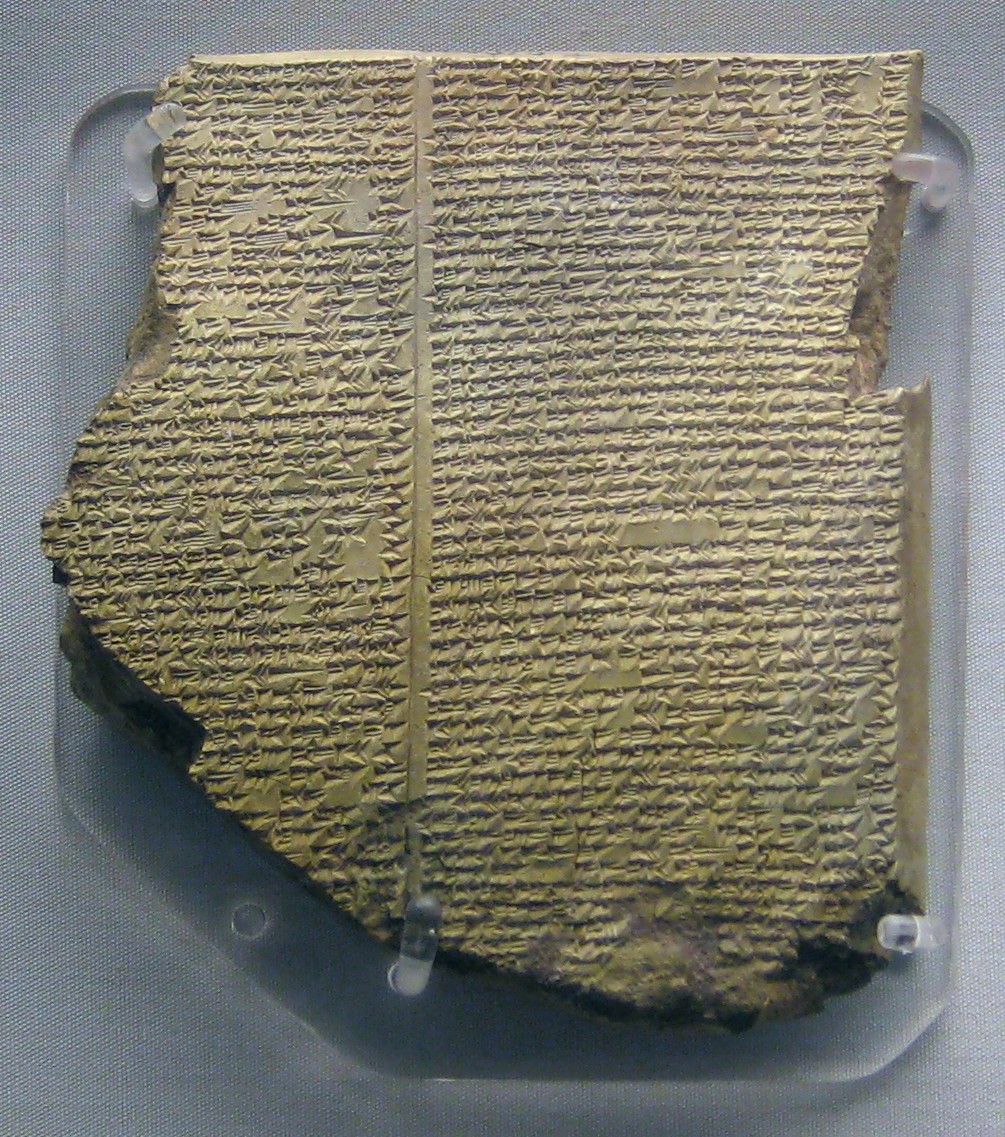
The oldest epic recognized is the Epic of Gilgamesh (c. 2500–1300 BCE), which was recorded in ancient Sumer during the Neo-Sumerian Empire. The poem details the exploits of Gilgamesh, the king of Uruk. Although recognized as a historical figure, Gilgamesh, as represented in the epic, is a largely legendary or mythical figure.
The longest written epic from antiquity is the ancient Indian Mahabharata (c. 3rd century BC–3rd century AD), which consists of 100,000 ślokas or over 200,000 verse lines (each shloka is a couplet), as well as long prose passages, so that at ~1.8 million words it is roughly twice the length of Shahnameh, four times the length of the Rāmāyaṇa, and roughly ten times the length of the Iliad and the Odyssey combined.
Famous examples of epic poetry include the Sumerian Epic of Gilgamesh, the ancient Indian Mahabharata and Rāmāyaṇa in Sanskrit and Silappatikaram and Manimekalai in Tamil, the Persian Shahnameh, the Ancient Greek Odyssey and Iliad, Virgil's Aeneid, the Old English Beowulf, Dante's Divine Comedy, the Finnish Kalevala, the German Nibelungenlied, the French Song of Roland, the Spanish Cantar de mio Cid, the Portuguese Os Lusíadas, the Armenian Daredevils of Sassoun, the Old Russian The Tale of Igor's Campaign, John Milton's Paradise Lost, The Secret History of the Mongols, the Kyrgyz Manas, and the Malian Sundiata. Epic poems of the modern era include Derek Walcott's Omeros, Mircea Cărtărescu's The Levant and Adam Mickiewicz's Pan Tadeusz. Paterson by William Carlos Williams, published in five volumes from 1946 to 1958, was inspired in part by another modern epic, The Cantos by Ezra Pound.
Epic poetry
In poetry, an epic is a lengthy narrative poem typically about the extraordinary deeds of extraordinary characters who, in dealings with gods or other superhuman forces, gave shape to the mortal universe for their descendants. With regard to oral tradition, epic poems consist of formal speech and are usually learnt word for word, contrasted with narratives that consist of everyday speech, categorised into 'factual' or fiction, the former of which is less susceptible to variation.
Influential epics that have shaped Western literature and culture include Homer's Iliad and Odyssey; Virgil's Aeneid; and the anonymous Beowulf and Epic of Gilgamesh. The genre has inspired the adjective epic as well as derivative works in other mediums (such as epic films) that evoke or emulate the characteristics of epics.
The English word epic comes from Latin epicus, which itself comes from the Ancient Greek adjective epikos (ἐπικός), from epos (ἔπος), 'word, story, poem'.
In Ancient Greek, 'epic' could refer to all poetry in dactylic hexameter (epea), which included not only Homer but also the wisdom poetry of Hesiod, the utterances of the Delphic oracle, and the strange theological verses attributed to Orpheus. Later tradition, however, has restricted the term 'epic' to heroic epic, as described in this article.
Originating before the invention of writing, primary epics, such as those of Homer, were composed by bards who used complex rhetorical and metrical schemes by which they could memorize the epic as received in tradition and add to the epic in their performances. Later writers like Virgil, Apollonius of Rhodes, Dante, Camões, and Milton adopted and adapted Homer's style and subject matter, but used devices available only to those who write.
The oldest epic recognized is the Epic of Gilgamesh (c. 2500–1300 BCE), which was recorded in ancient Sumer during the Neo-Sumerian Empire. The poem details the exploits of Gilgamesh, the king of Uruk. Although recognized as a historical figure, Gilgamesh, as represented in the epic, is a largely legendary or mythical figure.
The longest written epic from antiquity is the ancient Indian Mahabharata (c. 3rd century BC–3rd century AD), which consists of 100,000 ślokas or over 200,000 verse lines (each shloka is a couplet), as well as long prose passages, so that at ~1.8 million words it is roughly twice the length of Shahnameh, four times the length of the Rāmāyaṇa, and roughly ten times the length of the Iliad and the Odyssey combined.
Famous examples of epic poetry include the Sumerian Epic of Gilgamesh, the ancient Indian Mahabharata and Rāmāyaṇa in Sanskrit and Silappatikaram and Manimekalai in Tamil, the Persian Shahnameh, the Ancient Greek Odyssey and Iliad, Virgil's Aeneid, the Old English Beowulf, Dante's Divine Comedy, the Finnish Kalevala, the German Nibelungenlied, the French Song of Roland, the Spanish Cantar de mio Cid, the Portuguese Os Lusíadas, the Armenian Daredevils of Sassoun, the Old Russian The Tale of Igor's Campaign, John Milton's Paradise Lost, The Secret History of the Mongols, the Kyrgyz Manas, and the Malian Sundiata. Epic poems of the modern era include Derek Walcott's Omeros, Mircea Cărtărescu's The Levant and Adam Mickiewicz's Pan Tadeusz. Paterson by William Carlos Williams, published in five volumes from 1946 to 1958, was inspired in part by another modern epic, The Cantos by Ezra Pound.
Recent media
Recent media