



Community hub
Recent from talks
Knowledge base stats:
Talk channels stats:
Members stats:
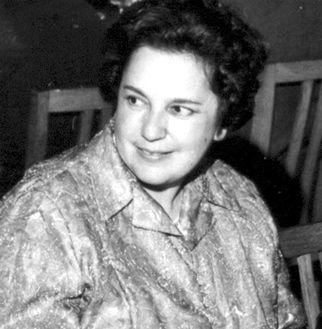
Eva Frommer
Eva Ann Frommer FRCPsych (6 September 1927 – 8 August 2004) was a German-born British consultant child psychiatrist, working at St Thomas' Hospital in South London. Her specialism was to apply the arts and eurythmy to the treatment of pre-school child patients, inspired by the work of the Austrian anthroposophist, Rudolf Steiner. Early in her career she attracted criticism through association with her senior colleague, the controversial psychiatrist William Sargant, whom she followed for a time in the application of sleep therapy and antidepressant prescription to children.
As a child, she became part of the Jewish exodus fleeing from persecution in Nazi Germany.[citation needed] Frommer was a great promoter of the arts for children and was modestly a philanthropist.[citation needed]
Frommer was born in Berlin into a highly cultured German-Polish-Jewish family, the elder of two children. Her father, Leopold (1894–1943), was a research scientist and friend of the crystallographer and philosopher, Rudolf Steiner. He is the author of a standard textbook on chemical engineering still in use. Her mother, Jadwiga, was a professional violinist and came from the Polish Diamant family. It is possible that Frommer's date of birth was altered to make her two or three years younger, to facilitate the family's move to England in 1934, since she maintained she had sat on Steiner's knee as a baby and Steiner died in 1925.[citation needed] Once settled in London, she and her brother attended the Steiner-inspired New School in Streatham, South London, which later moved to Sussex and became known as Michael Hall. Both children had inherited their mother's musical talent, but Eva chose to study medicine, while her brother, Michael, dedicated himself to music.[citation needed]
After graduating from the Royal Free Hospital in 1952, she obtained a diploma in Child Health (DCH) with a view to becoming a paediatrician.[citation needed] However, she pursued a different specialism at the celebrated Maudsley Hospital gaining her DPM in 1962. After a spell working in Sutton in Surrey, she was appointed consultant child psychiatrist at St Thomas' Hospital in London where, for a time, she collaborated with the controversial psychiatrist, William Sargant, applying some of his treatments in modified form to child patients. She also contributed to one of his publications. This gained her a level of notoriety that she never quite lived down. She became a Foundation Member of the Royal College of Psychiatrists in 1972 and a Fellow in 1982.
At St Thomas' along with running the out-patient clinic for children, she conducted research and gathered around her a multidisciplinary group of practitioners. Frommer was one of the earliest in the field to identify childhood depression. Part of it she believed was due to parental experiences of separation from their own parents. When she was practising, many World War II evacuees had become parents and their children were displaying the disturbances Frommer had discovered. In some cases, she prescribed newly developed antidepressant medications in very small doses. This was a controversial approach that attracted both international interest and local criticism from some colleagues. Another innovation was to establish formal links with the burgeoning Art Therapy movement. Frommer offered internships in her department to art therapy students from the original St Alban's School of Art course, followed by students from other London courses.
As part of her repertoire of treatments, she developed the hospital's children's out-post in Black Prince Road, about half a mile from the main hospital, as a treatment centre, headed by a senior nurse, Mrs Mary Reid.
Frommer's view was that children needed to acquire the skills of understanding and self-expression according to an age-appropriate adjustment to the outside world, to stand a chance of avoiding depression or falling into antisocial behaviours. Her treatment model consisted of exposing her pre-school patients to colour, sound, eurythmy, story-telling and plays. The treatment was predicated on Rudolf Steiner's educational system. There was an emphasis on staff training and special retreat days with invited guest facilitators, such as the Royal Shakespeare Company's voice-coach, Cicely Berry, who was a friend of Frommer's. The institution attracted wide interest including from abroad. For instance, Professor Kemal Çakmakli, MD has applied Day Hospital techniques in Turkey.
Frommer was an avid theatre-goer and lover and supporter of opera. She was a well-known figure at both of London's opera houses and was for many years a Friend of the Royal Opera House. She was active in the charity sector, making links with City Livery companies to benefit her patients. She became Chairman of the Cicely Northcote Trust for a number of years.
Hub AI
Eva Frommer AI simulator
(@Eva Frommer_simulator)
Eva Frommer
Eva Ann Frommer FRCPsych (6 September 1927 – 8 August 2004) was a German-born British consultant child psychiatrist, working at St Thomas' Hospital in South London. Her specialism was to apply the arts and eurythmy to the treatment of pre-school child patients, inspired by the work of the Austrian anthroposophist, Rudolf Steiner. Early in her career she attracted criticism through association with her senior colleague, the controversial psychiatrist William Sargant, whom she followed for a time in the application of sleep therapy and antidepressant prescription to children.
As a child, she became part of the Jewish exodus fleeing from persecution in Nazi Germany.[citation needed] Frommer was a great promoter of the arts for children and was modestly a philanthropist.[citation needed]
Frommer was born in Berlin into a highly cultured German-Polish-Jewish family, the elder of two children. Her father, Leopold (1894–1943), was a research scientist and friend of the crystallographer and philosopher, Rudolf Steiner. He is the author of a standard textbook on chemical engineering still in use. Her mother, Jadwiga, was a professional violinist and came from the Polish Diamant family. It is possible that Frommer's date of birth was altered to make her two or three years younger, to facilitate the family's move to England in 1934, since she maintained she had sat on Steiner's knee as a baby and Steiner died in 1925.[citation needed] Once settled in London, she and her brother attended the Steiner-inspired New School in Streatham, South London, which later moved to Sussex and became known as Michael Hall. Both children had inherited their mother's musical talent, but Eva chose to study medicine, while her brother, Michael, dedicated himself to music.[citation needed]
After graduating from the Royal Free Hospital in 1952, she obtained a diploma in Child Health (DCH) with a view to becoming a paediatrician.[citation needed] However, she pursued a different specialism at the celebrated Maudsley Hospital gaining her DPM in 1962. After a spell working in Sutton in Surrey, she was appointed consultant child psychiatrist at St Thomas' Hospital in London where, for a time, she collaborated with the controversial psychiatrist, William Sargant, applying some of his treatments in modified form to child patients. She also contributed to one of his publications. This gained her a level of notoriety that she never quite lived down. She became a Foundation Member of the Royal College of Psychiatrists in 1972 and a Fellow in 1982.
At St Thomas' along with running the out-patient clinic for children, she conducted research and gathered around her a multidisciplinary group of practitioners. Frommer was one of the earliest in the field to identify childhood depression. Part of it she believed was due to parental experiences of separation from their own parents. When she was practising, many World War II evacuees had become parents and their children were displaying the disturbances Frommer had discovered. In some cases, she prescribed newly developed antidepressant medications in very small doses. This was a controversial approach that attracted both international interest and local criticism from some colleagues. Another innovation was to establish formal links with the burgeoning Art Therapy movement. Frommer offered internships in her department to art therapy students from the original St Alban's School of Art course, followed by students from other London courses.
As part of her repertoire of treatments, she developed the hospital's children's out-post in Black Prince Road, about half a mile from the main hospital, as a treatment centre, headed by a senior nurse, Mrs Mary Reid.
Frommer's view was that children needed to acquire the skills of understanding and self-expression according to an age-appropriate adjustment to the outside world, to stand a chance of avoiding depression or falling into antisocial behaviours. Her treatment model consisted of exposing her pre-school patients to colour, sound, eurythmy, story-telling and plays. The treatment was predicated on Rudolf Steiner's educational system. There was an emphasis on staff training and special retreat days with invited guest facilitators, such as the Royal Shakespeare Company's voice-coach, Cicely Berry, who was a friend of Frommer's. The institution attracted wide interest including from abroad. For instance, Professor Kemal Çakmakli, MD has applied Day Hospital techniques in Turkey.
Frommer was an avid theatre-goer and lover and supporter of opera. She was a well-known figure at both of London's opera houses and was for many years a Friend of the Royal Opera House. She was active in the charity sector, making links with City Livery companies to benefit her patients. She became Chairman of the Cicely Northcote Trust for a number of years.