Hubbry Logo
Eva TanguayEva TanguayMain
Open search
Eva Tanguay
Community hub
Eva Tanguay
logo
8 pages, 0 posts
0 subscribers
Be the first to start a discussion here.
Eva Tanguay
Eva Tanguay
from Wikipedia

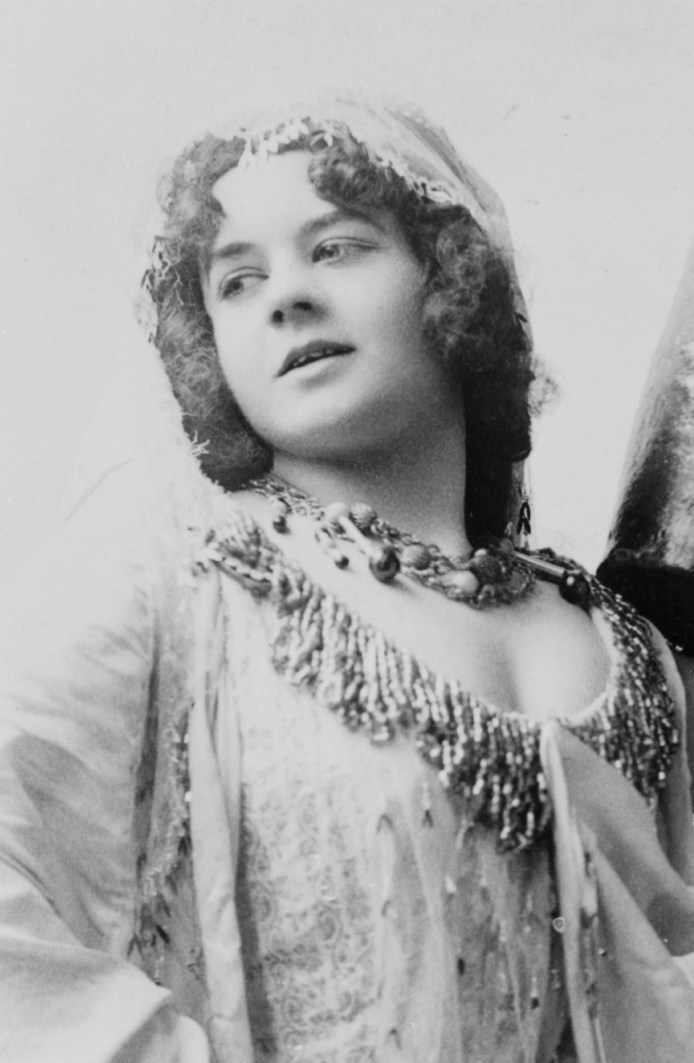
Eva Tanguay (August 1, 1878 – January 11, 1947) was a Canadian singer and entertainer who billed herself as "the girl who made vaudeville famous". She was known as "The Queen of Vaudeville" during the height of her popularity from the early 1900s until the early 1920s. Tanguay also appeared in films, and was the first performer to achieve national mass-media celebrity, with publicists and newspapers covering her tours from coast-to-coast, out-earning the likes of contemporaries Enrico Caruso and Harry Houdini at one time, and being described by Edward Bernays, "the father of public relations", as "our first symbol of emergence from the Victorian age."[2]

Key Information

Early life

[edit]
Holyoke's Parsons Hall, where Tanguay made her humble debut at amateur nights as a young girl, wearing several knit chair-throws and the fabric of an old umbrella as her dress[3]: 30 

Tanguay was born in 1878 in Marbleton, Quebec.[4] Her father was a doctor.[4] Before she reached the age of six, her family moved from Quebec's Eastern Townships to Holyoke, Massachusetts. Her father died soon after. While still a child she developed an interest in the performing arts, making her first appearance on stage at the age of eight, circa 1886, at an amateur night in Holyoke.[3] In her earliest days she was promoted through a small theater company operated by one Paul C. Winkelmann, a successful 16-year-old multi-instrumentalist who lived next door to her family and who used his influence to give a testimonial benefit show for her at the Holyoke Opera House, a venue which she would return to years later after establishing her own act.[5][6]

Two years later, she was touring professionally with a production of a stage adaptation of the popular Frances Hodgson Burnett novel Little Lord Fauntleroy. Tanguay eventually landed a spot in the Broadway musical My Lady in 1901.[3] The 1904 show The Chaperons started her rise in popularity.[4] In 1904 and 1905, her career reached new heights as she starred in The Sambo Girl, which debuted the song "I Don't Care," composed specifically for her.[7]

The Sambo Girl also starred Melville Collins as Raphael Rubens, Tanguay's romantic interest in the show. This began a longterm professional partnership between Tanguay and Collins, with Collins serving as her accompanist in vaudeville for more than a decade and also her sometimes manager. He was reportedly the major love of Tanguay's life, although he never returned her feelings and ultimately married Tanguay's niece, Lillian M Skelding, in 1914. While Collins died in 1924, years later an urn containing his ashes was placed in Tanguay's casket and they were buried together in 1947.[3]

Stage career

[edit]
Advertisement (1916)
The Wild Girl (1917)

Although she possessed only an average voice, the enthusiasm with which Tanguay performed her suggestive songs soon made her an audience favorite. She went on to have a long-lasting vaudeville career and eventually commanded one of the highest salaries of any performer of the day, earning as much as $3,500 a week ($118,113 in 2024 dollars) at the height of her fame around 1910.[8]

After seeing her perform, English poet and sexual revolutionary Aleister Crowley called Tanguay America's equivalent to Europe's music hall greats Marie Lloyd of England and Yvette Guilbert of France. The American Genius, he wrote, "is unlike all others. The 'cultured' artist, in this country, is always a mediocrity ... The true American is, above all things, FREE; with all the advantages and disadvantages that that implies. His genius is a soul lonely, disolate, reaching to perfection in some unguessed direction ... Eva Tanguay is the perfect American artist. She is ... starry chaste in her colossal corruption."[9]

Tanguay is remembered for brassy, self-confident songs that symbolized the emancipated woman, such as "It's All Been Done Before but Not the Way I Do It", "I Want Someone to Go Wild with Me", "Go as Far as You Like", and "That's Why They Call Me Tabasco". In showbiz circles, she was nicknamed the "I Don't Care Girl" after her most famous song, "I Don't Care". She was brought in to star in the 1909 Ziegfeld Follies, where she replaced the husband-and-wife team of Jack Norworth and Nora Bayes, who were engaged in a bitter salary and personal feud with Ziegfeld. Tanguay requested that the musical number "Moving Day in Jungle Town" be taken from rising talent Sophie Tucker and given to her. Despite this, the two later became close friends.[3]

Tanguay spent lavishly on publicity campaigns and costumes. One obituary notes that a "clever manager" told Tanguay early in her career that money made money. She never forgot the lesson, buying huge ads at her own expense and on one occasion allegedly spending twice her salary on publicity.[10]

Gaining free publicity with outrageous behavior was one of her strengths. In 1907, she stayed with married entertainment journalist and publicist C. F. Zittel in a Brooklyn hotel for nearly a week. Zittel's wife uncovered the affair by hiring detectives dressed as room-service bellhops to burst into the room. The event made headlines and did not damage Eva's popularity, reputation, or box-office success.[3] She also got her name in the papers for allegedly being kidnapped, allegedly having her jewels stolen, and being fined $50 in Louisville, Kentucky, for throwing a stagehand down a flight of stairs.[11]

Stage costume

[edit]

Her costumes were as extravagant as her personality. In 1910, a year after the Lincoln penny was first issued, Tanguay appeared on stage in a coat entirely covered in the new coins.[12]

Recording

[edit]

Tanguay only made one known recording ("I Don't Care") in 1922 for Nordskog Records. In addition to her singing career, she starred in two film comedies, which used the screen to capture her lusty stage vitality. The first, titled Energetic Eva, was made in 1916. The following year, she starred with Tom Moore in The Wild Girl.[13]

Retirement

[edit]

Tanguay was said to have lost more than $2 million ($36.6 million in 2024 dollars) in the Wall Street crash of 1929.[14] In the 1930s, she retired from show business. Cataracts caused her to lose her sight, but Sophie Tucker, a friend from vaudeville days, paid for an operation that helped to restore some of her vision.[14]

Autobiography

[edit]

At the time of her death, Tanguay was working on her autobiography, to be titled Up and Down the Ladder. Three excerpts from the autobiography were published in Hearst newspapers in 1946 and 1947.[citation needed]

Death

[edit]

Tanguay died on January 11, 1947, aged 68, in Hollywood.[15] She was interred in the Hollywood Memorial Park Cemetery, now Hollywood Forever Cemetery.[14]

Legacy

[edit]

In 1953, Mitzi Gaynor portrayed Eva Tanguay in a fictionalized version of her life in The I Don't Care Girl.[13]

Family

[edit]

Tanguay married twice, although she was incorrectly reported to have been married up to four times, due in part to her 1908 public engagement to extremely popular cross-dressing performer Julian Eltinge, who played the bride while she dressed in traditional male formal attire. They exchanged rings but never legally wed.[3]

Her first marriage was to dancer John Ford in 1913, but they divorced after four years. Following her divorce, Tanguay was romantically linked, though never married, as was sometimes reported, to vaudeville dancer Roscoe Ails. She terminated the relationship after Ails's behavior became increasingly erratic and violent.[3]

In 1927, aged 49, Tanguay married her piano accompanist, 25-year-old Al Parado.[16] Shortly after the marriage, she had it annulled on the grounds of fraud.[14] She claimed that Parado had at least two other names, which he used so frequently that she was not sure which one was real.[17] The marriage was actually a publicity ploy and was dissolved by Tanguay when it did not bear the intended promotional results.[3]

See also

[edit]

References

[edit]

Literature

[edit]
  • Andrew L. Erdman: Queen of Vaudeville: the story of Eva Tanguay, Ithaca, NY: Cornell Univ. Press, 2012, ISBN 978-0-8014-4970-3
[edit]
Revisions and contributorsEdit on WikipediaRead on Wikipedia
from Grokipedia
Eva Tanguay (August 1, 1878 – January 11, 1947) was a Canadian-born singer and entertainer who achieved stardom in the early through her exuberant stage presence and the popularization of the song "I Don't Care," which became her defining anthem and earned her the nickname "The I Don't Care Girl." Billed as "the girl who made famous," she embodied a proto-feminist independence with her bold, unapologetic persona, performing in outlandish costumes and rejecting conventional femininity. Tanguay began her career as a child actress in touring productions before transitioning to around 1901, where her high-energy acts quickly propelled her to the top of the circuit. She starred in Broadway musicals such as The Office Boy (1903) and The Sambo Girl (1905), and later appeared in the , solidifying her status as one of the era's highest-paid performers, reportedly earning up to $7,500 per week at her peak. Her influence extended to early film, with appearances in shorts and features in the and 1920s, though her career waned due to health problems including . Despite amassing a fortune during her heyday, Tanguay died in relative obscurity and in Hollywood, her once-substantial wealth depleted. Her legacy endures as a trailblazer in American popular entertainment, prefiguring the assertive style of later performers and challenging societal norms through her defiant .

Early Life

Birth and Family Origins

Hélène Eva Tanguay was born on August 1, 1878, in Marbleton, a rural township in Dudswell Parish, Wolfe County, , . Her family was of French-Canadian descent, with her paternal lineage tracing back at least six generations in . She was the daughter of Joseph Octave Tanguay, a physician born in 1839 who practiced medicine without formal recognition in some accounts, and Marie Adèle Pajeau (also spelled Pageau or Pajean), a French-Canadian woman from a shoemaker's family. Octave Tanguay died in the early , leaving Adèle to raise the children; she passed away in 1899. Eva had three known siblings: Adolph Étienne "Mark" Tanguay (born circa 1868), Joseph Adolph Tanguay, and Blanche Agnes Tanguay (born 1874). The family relocated from Quebec's to , by 1883, following her father's death, settling in a working-class environment.

Childhood Relocation and Initial Performances

Eva Tanguay was born on August 1, 1878, in Marbleton, Quebec, Canada, to French-Canadian parents; her father, Joseph Tanguay, worked as a physician in the rural community. Around 1883, when she was five years old, her family relocated to Holyoke, Massachusetts, seeking better opportunities amid economic challenges in Quebec. Her father's death the following year, when Eva was six, left the family in financial straits, prompting her early involvement in performance to contribute to household income. Tanguay began her stage career at age eight with local amateur performances in Holyoke, including appearances at venues like Parsons Hall on Race Street. These initial outings involved singing and acting in contests, showcasing her energetic style and drawing attention from audiences in the Franco-American community. As a child actress, she toured in juvenile roles, such as in productions inspired by , honing her skills through regional theater before transitioning to professional .

Vaudeville Career

Debut and Breakthrough Acts

Tanguay entered the circuit following her early stage work in musical comedies, making her New York debut at Hammerstein's Victoria Theatre in 1904. Her initial acts emphasized vigorous dancing and comedic renditions of contemporary songs, drawing on and coon-shouting styles that were popular in the era's entertainment. These performances, often solo, showcased her athletic stage presence and unconventional energy, setting her apart from more restrained performers. A pivotal breakthrough arrived shortly thereafter with her role in the 1905 musical The Sambo Girl, where, despite the production's limited success, Tanguay's of the "Please Go 'Way and Let Me Sleep" garnered widespread attention for its bold delivery in a characterization. This exposure propelled her into regular bookings, including a noted 1905 appearance in , before elite crowds that praised her whimsical style. By refining her act into a high-octane blend of , , and irreverent humor, she established herself as a rising headliner, earning salaries that reflected her growing draw—reportedly up to $1,500 weekly by the late 1900s. Her ascent accelerated in 1907 when she formalized an act embodying emerging feminist assertiveness through sexually suggestive yet defiant routines, which resonated amid shifting social norms. This period marked her transition from supporting roles to stardom, with bookings across major circuits that capitalized on her reputation for unpredictable, crowd-pleasing antics.

Peak Popularity and Touring Success

Tanguay achieved her greatest fame in from approximately 1908 to 1918, during which she commanded unprecedented earnings and audience draw. By 1910, she earned $3,500 per week, elevating her from earlier rates of $500 weekly to become the highest-paid performer in the industry, outpacing stars like and . This financial pinnacle underscored her billing as "Vaudeville's Greatest Attraction" for nearly 25 years. Her touring success spanned major circuits across the and , where she headlined at venues such as B. F. Keith's Theatre and Hammerstein's Victoria in New York, upholding attendance records as noted in contemporary trade publications. Tanguay often performed independently, circumventing booking monopolies to negotiate top slots, which amplified her appeal in cities including and . Her acts consistently sold out theaters, reflecting the era's boom and her role in sustaining its popularity amid rising competition from film.

Signature Performances and Innovations

Eva Tanguay's signature vaudeville act revolved around her energetic rendition of "I Don't Care," a song she first popularized in the 1903 musical The Chaperones, which she adapted into a solo showcase emphasizing comedic defiance and vocal improvisation. In performances, she delivered the lyrics with deliberate nonchalance—omitting lines at whim, as the song itself boasted: "Some lines I sing, some lines I don't sing/ I don't care"—creating a raw, unpredictable style that contrasted with 's polished routines and captured emerging sentiments of female autonomy. This act, often billed under monikers like "The Genius of Mirth and Song," propelled her to top billing by the mid-1900s, with audiences drawn to her "cyclonic" stage presence that combined rapid-footed dancing, exaggerated gestures, and unscripted audience interaction. Tanguay innovated through her self-designed costumes, which prioritized spectacle and personal eccentricity over convention, featuring garish elements like towering feather headdresses, outfits adorned with thousands of Lincoln pennies upon the 1909 coin's release, and revealing designs inspired by the Dance of the Seven Veils. These ensembles, often incorporating ethnographic motifs from French cabaret traditions, amplified her ribald humor and physicality, setting her apart from demure contemporaries and influencing later performers by normalizing bold self-expression in American entertainment. Her approach elevated vaudeville's visual and performative excess, earning her the highest in the field—reportedly $1,500 weekly by 1910—while challenging era norms through unapologetic individualism rather than scripted propriety.

Artistic Style and Public Persona

"I Don't Care" Philosophy and Songs

Eva Tanguay's adoption of the 1905 song "I Don't Care", with lyrics by Jean Lenox and music by Harry O. Sutton, marked a defining element of her vaudeville persona, performed as her signature number from that year onward. The tune, structured as a waltz with rowdy, declarative lyrics like "I walk down the street in my Sunday clothes / And they say, 'Don't you think that you're going too far?' / I don't care a fig, I carry my dog / And he dresses much better than you or ma," conveyed unapologetic defiance against criticism. This reflected Tanguay's reported instruction to Lenox for any song, as long as it incorporated her offhand phrase "I don't care," which the lyricist developed into the full composition after hearing it during a late-night session. The song embodied Tanguay's broader philosophy of exuberant and rejection of , positioning her as a symbol of self-confident abandon in an era of shifting social norms for women. Her performances emphasized a "take me as I am" attitude, prioritizing personal expression over propriety, which resonated with audiences amid early 20th-century cultural changes. Tanguay integrated this ethos into her acts, using the number to elaborate themes of , as evidenced by its role in shows like The Sambo Girl where it underscored her iconoclastic style. While "I Don't Care" remained her most enduring hit, earning her the nickname "The I Don't Care Girl" by 1910, Tanguay's repertoire included complementary songs like "That's All" and "The Moving Day in Jungle Town", which echoed similar irreverent energy through playful, boundary-pushing lyrics. She recorded "I Don't Care" in 1922, preserving its hiccupping delivery and emphatic refrain for posterity. This philosophy influenced her career trajectory, framing appearances as declarations of autonomy rather than conformity to industry expectations.

Costumes, Energy, and Stage Techniques

Eva Tanguay's costumes were characterized by their flamboyance, revealing nature, and deliberate provocation, often featuring risqué elements like that scandalized audiences and elevated her fame. She famously wore outfits constructed from unconventional materials, such as a made of 400 Lincoln pennies valued at $40 and another entirely of feathers, which underscored her eccentric and drew public attention through sheer audacity. Tanguay quipped about her attire's impact, stating, "When I put on , my name went up in lights," reflecting how these garments transformed her from performer to sensation. Flag-themed ensembles and conical dunce-cap hats further accentuated her "village idiot" aesthetic, blending whimsy with eroticism to challenge norms. Her stage energy was unrelenting and explosive, earning descriptors like "cyclonic comedienne" and "queen of vivacity," as she flung herself across the stage in a maelstrom of gyration and that captivated crowds despite her average vocal and skills. Tanguay's performances radiated ebullience and unpredictability, with ribald humor, sensuality, and sudden mood shifts that kept audiences on edge, often likened to a volcanic eruption or whirl. This raw vitality, powered by her wild blonde curls and brash physicality, compensated for technical limitations, positioning her as vaudeville's premier showstopper through sheer force of personality. Tanguay innovated stage techniques by incorporating onstage clothing changes and provocative movements, such as shimmying, shaking, and bouncing uncontrollably, which heightened tension and defied . In her 1908 "Visions of Salome" act, she removed seven veils before the audience while donning a body stocking, blending 's with racial and iconoclasm to simulate abandon and . These elements, including brash poses and simulated ecstasy, elevated her routines beyond song delivery, turning performances into visceral spectacles that once led to an arrest for indecent dancing under Sunday laws.

Recordings and Broader Media Presence

Eva Tanguay made only one commercial recording during her career, a rendition of her signature song "I Don't Care," waxed circa 1922 for the short-lived Nordskog Records label. This acoustic recording, featuring her characteristic energetic delivery, captured her style but saw limited distribution due to the label's instability and the era's nascent recording industry. Despite her prominence as a live performer, Tanguay did not pursue extensive work, prioritizing stage tours over studio commitments. In film, Tanguay ventured into early silent cinema with two short appearances, reflecting her curiosity about emerging media but limited success in translating her live charisma to the screen. Her debut was in Energetic Eva (1916), a one-reel directed by Joseph Smiley, where she portrayed a vivacious character aligned with her stage persona. This was followed by The Wild Girl (1917), a Firefly Photoplays production also running about 50 minutes, in which she starred as a spirited lead amid action-oriented plots. These efforts, produced during vaudeville's peak, failed to sustain her momentum in Hollywood, as her physical energy and audience interaction proved challenging to convey without or direct . Tanguay's broader media footprint remained tied to print publicity and vaudeville promotion rather than radio or television, mediums that gained traction after her prime performing years. No verified radio broadcasts are documented, underscoring how her appeal, rooted in personal stage presence, did not adapt well to audio-only formats. Her recordings and films, though sparse, preserved elements of her "I Don't Care" ethos for posterity, influencing later revivals like the 1953 biopic The I Don't Care Girl.

Professional Challenges and Conflicts

Financial Disputes and Lawsuits

In 1905, while performing at the Grand Theater in , Eva Tanguay overslept and missed a scheduled matinee performance, prompting the theater manager to impose a $100 fine equivalent to two weeks' salary under her contract terms. Tanguay refused to pay the full amount, leading the manager to sue her for $50, half the stipulated penalty as per the agreement; the court ruled in the manager's favor, and Tanguay complied by settling the claim. This incident highlighted early tensions over contractual obligations and compensation in her engagements, though it did not derail her rising career. Tanguay's high earnings—peaking at $1,500 to $3,500 per week by the early , making her one of 's top-paid acts—were often offset by extravagant spending on costumes, jewelry, and lifestyle, contributing to recurrent financial instability rather than outright litigation in later years. No major lawsuits beyond the Evansville case are documented from her peak period, though disputes over bookings and payments were common in the industry, with Tanguay known for aggressively negotiating fees to match her star status. By the late , health issues and the vaudeville decline exacerbated her fiscal woes, leading to reduced performances in small venues by 1931 without recorded legal actions tied to debts or insolvency.

Managerial Feuds and Industry Pushback

Tanguay's independent streak and demanding nature led to notable conflicts with theatrical producers and circuit operators. In the of 1909, she insisted that a musical number be reassigned from another performer to her, an action described as an "unforgivable show biz sin" that strained relations with producer Florenz Ziegfeld Jr.. This episode highlighted her unwillingness to defer to established hierarchies in booking and staging decisions. Her temperament also sparked disputes with booking agents and venue managers, including refusals to perform when rival acts appeared on the same bill, prompting lawsuits against vaudeville circuit bosses who controlled major theaters. A prominent example occurred in , in 1905, where Tanguay arrived for an engagement but declined to go on stage due to dissatisfaction with the lineup; she was subsequently fined $100 for missing a matinee performance and retaliated by shredding the theater curtain with a . Industry pushback intensified as Tanguay's antics clashed with the structured demands of circuits like Keith-Albee, which prioritized reliability and adherence to contracts. Similar walkouts, such as her abrupt exit from a bill on September 29, 1910, underscored ongoing tensions with managers over creative control and scheduling. These incidents, while fueling her notoriety, contributed to perceptions of her as unreliable, limiting long-term alliances with powerful booking entities despite her drawing power. Public feuds with fellow performers, often amplified by press agents, indirectly pressured managerial relations; for instance, her 1908 rivalry with Gertrude Hoffman escalated when Hoffman mimicked Tanguay's act, leading to competing claims of authenticity that managers exploited for publicity but which complicated shared bookings. Tanguay's pattern of leveraging such "beef" for attention, including staged conflicts with figures like , reinforced industry wariness toward her self-managed approach.

Health Decline and Forced Retirement

Tanguay's performing career, marked by relentless touring and high-energy acts, contributed to the onset of chronic health issues in the late 1920s, culminating in an involuntary retirement as physical demands exceeded her capacity. Serious illnesses confined her to bed rest, exacerbating financial strains from prior investments lost in market crashes. In August 1932, Tanguay suffered a severe , becoming critically ill and nearly blind from a combination of diseases, having been bedfast for four months prior; her condition deteriorated further two weeks before reports emerged, prompting fears for her life. Medical interventions followed, including a 1933 eye operation to address cataracts that had severely impaired her vision. Despite partial recovery, these vision problems, compounded by ongoing debility, curtailed any return to . By 1937, advancing had progressed to the point of rendering Tanguay unable to perform or work, enforcing a permanent ; she relocated to a modest Hollywood residence, where mobility limitations and pain isolated her from public life. The cumulative toll of decades of strenuous routines— including falls, overexertion, and untreated strains—underlay this decline, as contemporary accounts noted her body's failure to sustain the "cyclonic" vigor that defined her peak years.

Later Years

Autobiography and Reflections

Tanguay labored on an autobiography titled Up and Down the Ladder during her final years, intended to chronicle her career's ascents and declines in and beyond. The manuscript remained incomplete at her death on January 11, 1947, amid deteriorating health that included progressive vision impairment starting around 1937, which confined her to a reclusive existence in Hollywood. Three excerpts from the work appeared in newspapers, offering glimpses into her as a performer who prioritized unfiltered energy over conventional polish. These fragments echoed Tanguay's longstanding "I Don't Care" , portraying her stage persona not as calculated rebellion but as innate defiance against industry norms that favored restraint. In one reported reflection, she credited her longevity to rejecting scripted vulnerability, insisting her appeal stemmed from raw, unapologetic vitality rather than scripted —a stance she maintained even as waned under cinema and radio's dominance by the early 1930s. Financial ruin from the 1929 stock market crash exacerbated her isolation, forcing sales of costumes and jewelry to sustain a modest life on canned goods and occasional visitors, yet she voiced no public bitterness, aligning with her philosophy of indifference to acclaim's transience. Biographers note Tanguay's memoirs, if completed, would have provided rare firsthand critique of vaudeville's exploitative underbelly, including her own battles with managers and health, but her failing eyesight thwarted plans. Instead, her reflections surfaced indirectly through rare interviews, where she affirmed that fame's ephemerality validated her carefree approach, observing that " must come down" without lamenting . This unyielding perspective, unmarred by or revisionism, underscored a causal realism in her career arc: unchecked vigor propelled her to stardom but clashed with aging and economic shifts, rendering reinvention untenable.

Post-Performance Activities and Isolation

Following her retirement from the stage in the early 1930s, Tanguay sustained herself through the sale of her former stage costumes from a storefront on . She resided alone in a modest in Hollywood, increasingly isolated as health issues mounted, including crippling and partial blindness from untreated or recurring cataracts by the mid-1930s. These conditions, compounded by her inability to adapt to emerging media like radio and , confined her to limited mobility and social withdrawal in a home offering only views of adjacent backyards. Financial hardship exacerbated her seclusion after the 1929 stock market crash depleted her savings, leaving her reliant on sporadic costume sales and fixed income without significant industry support. In 1934, she appealed to for assistance in purchasing a , citing her impoverished circumstances, but received no aid. Tanguay remained largely detached from her vaudeville contemporaries during this period, granting few public engagements beyond a final interview with Life magazine shortly before her death on January 11, 1947, in her Hollywood residence.

Death and Immediate Aftermath

Final Illness and Passing

Eva Tanguay suffered a on the evening of January 10, 1947, and died the following morning at her cottage in Hollywood, . She was 68 years old. By the mid-1930s, Tanguay's health had deteriorated severely due to cataracts that left her nearly blind, compounded by arthritis, , and heart conditions, forcing her into increasing isolation and limiting mobility. These chronic ailments had rendered her in her , dependent on a after earlier financial losses. Despite occasional attempts at recovery, including funded by performer around 1934, her vision and overall vitality did not fully return, contributing to her reclusive existence.

Estate Settlement and Forgotten Status

Tanguay died intestate or with minimal provisions, leaving an estate valued at $584 according to court documents filed shortly after her passing on January 11, 1947. This figure, equivalent to approximately $8,000 in 2023 dollars adjusted for , stemmed from decades of financial erosion: her peak earnings, once estimated in the millions from and engagements, were depleted by extravagant spending on costumes and publicity, failed investments, and the 1929 crash's ripple effects on performers. By , she subsisted on from savings and sporadic sales of her elaborate wardrobe, exacerbated by health issues that confined her to bed and rendered her blind in later years. The settlement process was unremarkable, with assets—primarily personal effects and negligible cash—likely distributed to close relatives or companions without public contention, as no major lawsuits or disputes emerged in records. Her diminished estate underscored Tanguay's rapid descent into obscurity post-retirement. Obituaries, such as that in , noted her as a faded vaudeville icon sidelined by illness and economic hardship, but lacked the widespread tributes afforded contemporaries like . Vaudeville's eclipse by radio, film, and talking pictures in the and marginalized her "I Don't Care" , which relied on live spectacle ill-suited to transitions; without reinvention or heirs to champion her archive, her contributions faded from collective memory. This immediate aftermath cemented her as a cautionary figure of ephemeral fame, with no immediate cultural revivals or endowments to sustain awareness, unlike peers who adapted or curated legacies through recordings and philanthropy.

Legacy

Influence on Entertainment and Performers

Eva Tanguay's bold, eccentric performances and signature song "I Don't Care," which she popularized from onward, established a template for female entertainers who embraced self-assertion and flamboyance over conventional decorum in . Her routine, featuring outrageous costumes, improvised monologues, and a disregard for audience expectations, earned her the billing as the highest-paid act by the , influencing the genre's shift toward personality-driven stars who leveraged media coverage for fame. Mae West explicitly modeled early aspects of her career on Tanguay, beginning as an impersonator of the icon before developing a more deliberate persona centered on sexual ; West's initial acts in the drew from Tanguay's chaotic energy but emphasized calculated . , another contemporary who rose to prominence in the and , cited Tanguay as a direct influence on her own ribald, larger-than-life stage presence and comedic timing. , the African American singer and actress active from the , also acknowledged Tanguay's impact on her interpretive style, particularly in blending song with dramatic flair. Tanguay's pioneering use of publicists and newspapers to cultivate a mass-media from the early onward made her the first entertainer to achieve nationwide through self-promotion, setting precedents for how performers like Tucker and West managed their images amid industry transitions to and radio. Her flouting of propriety—through suggestive and emancipated comportment—challenged norms, redefining womanhood in as autonomous and defiant, a thread echoed in later acts that prioritized individual over scripted conformity. This influence persisted into the 1920s vaudeville decline, as Tanguay's model of the "wild girl" archetype informed the evolution toward jazz-age and Hollywood musicals, though her own career waned with these shifts.

Cultural Rediscovery and Modern Assessments

In the early , scholarly interest revived attention to Tanguay's career, positioning her as a foundational figure in American history whose brash anticipated modern pop icons. Andrew L. Erdman's biography Queen of Vaudeville: The Story of Eva Tanguay, published by , portrayed her as an "unjustly forgotten megastar" whose self-promotion and onstage audacity defined vaudeville's peak era, drawing on archival materials to reconstruct her influence amid the form's decline. This work, alongside a companion I Knew Her released in , emphasized her role in pioneering through relentless self-branding, including her signature "I Don't Care" catchphrase and extravagant costumes. Cultural analysts have reassessed Tanguay as a proto-rock star whose unapologetic and rule-breaking style prefigured performers like , with her 1900s acts featuring improvised riffs, sexual innuendo, and that challenged Victorian norms. A 2009 Slate profile described her as "the first rock star," noting how her energy and disregard for convention inspired early admirers such as , who began as a Tanguay , and , who credited her as a direct influence; even acknowledged Tanguay's impact on vocal delivery and stage presence. David Hajdu's 2021 book A Revolution in Three Acts further evaluates her alongside contemporaries like and , arguing that Tanguay's flouting of propriety—through songs declaring female desire and desirability—helped redefine womanhood for the modern age, fostering a legacy of performative liberation in entertainment. Modern critiques, however, temper this rediscovery by examining Tanguay's reliance on racially inflected "coon shouting" routines early in her career, which reflected vaudeville's broader minstrelsy traditions and contributed to her transgressive appeal but also perpetuated stereotypes, as analyzed in cultural histories of the era. Despite such contextual scrutiny, assessments consistently affirm her commercial dominance—she earned up to $7,500 weekly by 1910, equivalent to over $200,000 today—and her role in elevating female agency on stage, evidenced by preserved sheet music, posters, and holdings that underscore her as vaudeville's highest-paid star for over a decade. Overall, contemporary scholarship credits Tanguay with embodying "personality" as a marketable trait, influencing the shift from scripted theater to individualized stardom in and , though her obscurity stems from limited early recordings and vaudeville's eclipse by cinema post-1920s.

Balanced View of Achievements Versus Limitations

Eva Tanguay achieved unprecedented commercial success in , earning up to $3,500 per week by 1910 through her bold, self-promotional persona and high-energy performances that captivated audiences during the genre's peak from the early to the . Her signature song "I Don't Care" and outrageous stage antics, including extravagant feather-adorned costumes and unapologetic declarations of independence, positioned her as a trailblazing female entertainer who challenged Victorian norms of femininity and helped elevate 's cultural prominence. This success translated to significant influence, with contemporaries viewing her as a precursor to later performers emphasizing personality over polished technique, and her ribald style foreshadowing aspects of flapper-era liberation. However, Tanguay's artistic limitations were evident in assessments that her raw ambition exceeded her technical skills; she was not regarded as the superior singer, dancer, or comedienne among peers, relying instead on chaotic energy and publicity stunts rather than refined talent. Her career's brevity—peaking sharply before declining in the amid the shift to motion pictures, which ill-suited her verbal and kinetic style in silent formats—underscored vulnerabilities, compounded by erratic behavior such as skipping shows and audience confrontations that alienated producers. Health deterioration, including by 1937 and earlier eye issues, forced retirement, leading to financial strain despite prior earnings and eventual obscurity, as her persona proved non-transferable to evolving media landscapes. In balance, Tanguay's achievements lay in pioneering a disruptive, personality-driven model of that maximized short-term fame and wealth for women in male-dominated , yet her limitations—rooted in middling skills, professional unreliability, and inability to adapt—prevented enduring artistic legacy, rendering her a vivid but fleeting emblem of vaudeville's excesses rather than a foundational innovator.

Personal Life

Relationships and Romances

Eva Tanguay's first marriage was to vaudeville dancer in 1913, a union she later described as impulsive and akin to a jest, contracted during a performance stop in ; the couple divorced in 1917 amid reports of a stormy relationship. After the divorce, Tanguay entered a romantic involvement with fellow vaudevillian Roscoe Ails in 1919, characterized as an affair that drew public attention due to backstage dynamics in the entertainment world. In 1927, she married her 23-year-old Al Parado in what some accounts suggest was partly a , but the marriage was annulled soon after when Tanguay alleged on Parado's part regarding his identity and intentions. Contemporary rumors also linked Tanguay romantically to performer George Walker, though these remain unverified beyond speculative reports in entertainment circles. Tanguay had no known children from any of these relationships, and her personal life often intersected with her professional persona of independence and disregard for convention.

Family Ties and Private Struggles

Eva Tanguay was born Hélène Eva Tanguay on August 1, 1878, in , , to Joseph Octave Tanguay, a medical doctor born around 1839, and Marie Adele Pajeau, a French-Canadian woman approximately 36 years old at the time of her daughter's birth. The family, of French-Canadian descent, relocated to , by around 1883, where Tanguay spent her formative years in a working-class mill town environment despite her father's profession. She had at least one , Blanche Agnes Tanguay, though details on other potential brothers or sisters remain sparse in records, suggesting limited surviving family connections into adulthood. Tanguay's mother died in 1899, when the performer was 21 years old, leaving her without a key familial anchor during her rising career; this loss occurred amid her early stage successes but is noted in biographical timelines as a pivotal personal event. Tanguay never married and had no children, maintaining independence from long-term domestic ties, though she formed professional and personal associations that occasionally blurred into familial-like roles, such as with managers and companions. Her father's death date is not prominently recorded, but the absence of documented ongoing family support underscores her self-reliant path, with immigrant roots potentially complicating inheritance or cultural ties in later life. In private, Tanguay grappled with emotional volatility, evidenced by reports of inexplicable mood shifts that affected her offstage life and relationships, often manifesting in outrageous or unpredictable behavior even as her public persona thrived. By the late , her health deteriorated sharply, with multiple serious illnesses in 1928 forcing performance cancellations and marking the onset of a broader decline in physical fortunes. Financial woes compounded these issues; post-vaudeville, by 1938, she faced acute that eroded her self-image, reliant on sporadic aid amid the era's entertainment industry's collapse. By 1932, medical assessments described her as nearly blind from accumulated ailments, contributing to isolation without family buffers, as her lack of immediate relatives left her to navigate these hardships alone. These struggles, rooted in career transience and personal autonomy, contrasted her earlier flamboyance, leading to reclusiveness in her final decade.

References

Add your contribution
Related Hubs
User Avatar
No comments yet.