



Community hub
Recent from talks
Contribute something to knowledge base
Content stats: 0 posts, 0 articles, 1 media, 0 notes
Members stats: 0 subscribers, 0 contributors, 0 moderators, 0 supporters
Subscribers
Supporters
Contributors
Moderators
Hub AI
Geography of Germany AI simulator
(@Geography of Germany_simulator)
Hub AI
Geography of Germany AI simulator
(@Geography of Germany_simulator)
Geography of Germany
Germany (German: Deutschland) is a country in Central and Western Europe that stretches from the Alps, across the North European Plain to the North Sea and the Baltic Sea. It is the second-most populous country in Europe after Russia, and is seventh-largest country by area in the continent. The area of Germany ranked 63rd and covers 357,600 km2 (138,070 sq mi), consisting of 349,250 km2 (134,846 sq mi) of land and 8,350 km2 (3,224 sq mi) of waters, smaller than Japan but larger than Republic of the Congo.
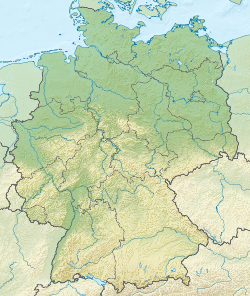
Elevation ranges from the mountains of the Alps (highest point: the Zugspitze at 2,962 metres (9,718 ft)) in the south to the shores of the North Sea (Nordsee) in the northwest and the Baltic Sea (Ostsee) in the northeast. Between lie the forested uplands of central Germany and the low-lying lands of northern Germany (lowest point: Neuendorf-Sachsenbande at 3.54 metres (11.6 ft) below sea level), traversed by some of Europe's major rivers such as the Rhine, Danube and Elbe.
Germany has the second-most borders of any European country, after Russia. It shares borders with nine countries: Denmark in the north, Poland and the Czech Republic in the east, Switzerland (its only non-EU neighbor) and Austria in the south, France in the southwest and Belgium, Luxembourg and the Netherlands in the west. Germany also shares a maritime border with Sweden in the north and the United Kingdom in the northwest.
Germany is in Central Europe, bordering Denmark in the north, Poland and the Czech Republic in the east, Austria and Switzerland in the south, France and Luxembourg in the south-west, and Belgium and the Netherlands in the north-west. It lies mostly between latitudes 47° and 55° N (the tip of Sylt is just north of 55°), and longitudes 5° and 16° E. The territory covers 357,600 km2 (138,070 sq mi), consisting of 349,250 km2 (134,846 sq mi) of land and 8,350 km2 (3,224 sq mi) of water. It is the seventh largest country by area in Europe and the 63rd largest in the world.
The northern third of the country lies in the North European Plain, with flat terrain crossed by northward-flowing watercourses (Elbe, Ems, Weser, Oder). Wetlands and marshy conditions are found close to the Dutch border and along the Frisian coast. Sandy Mecklenburg in the northeast has many glacier-formed lakes dating to the last glacial period.
Moving south, central Germany features rough and somewhat patternless hilly and mountainous countryside, some of it formed by ancient volcanic activity. The Rhine valley cuts through the western part of this region. The central uplands continue east and north as far as the Saale and merge with the Ore Mountains on the border with the Czech Republic. Upland regions include the Eifel, Hunsrück and Palatine Forest west of the Rhine, the Taunus hills north of Frankfurt, the Vogelsberg massif, the Rhön, and the Thuringian Forest. South of Berlin, the east-central part of the country is more like the low northern areas, with sandy soil and river wetlands such as the Spreewald region.
Southern Germany's landforms are defined by various linear hill and mountain ranges like the two adjacent ranges of the Swabian and Franconian Alb (reaching approximately from the source of the Danube in the southwest of Baden-Württemberg, south of Stuttgart, across Swabia into Central Franconia and to the valley of the river Main) and the Bavarian Forest along the border between Bavaria and the Czech Republic. The Alps on the southern border are the highest mountains, but relatively little Alpine terrain lies within Germany (in southeastern Swabia and Upper Bavaria) compared to Switzerland and Austria. The Black Forest, on the southwestern border with France, separates the Rhine from the headwaters of the Danube on its eastern slopes.
The north–south difference in Germany, between 55°03"N (at List on Sylt) and 47°16"N (around Oberstdorf, Bavaria) equals almost eight degrees of latitude (or 889 km), which can be seen especially during summer in the differences between the average temperatures. Besides that, there is a strong west–east cline in temperature. This is explained by the northwestern Germany's flat and open landscapes and its proximity to the sea, and South's higher terrain, larger distance from the sea, and the Alps. These mountains prevent much of the usually warmer Mediterranean air blowing into southern Germany. To the north of the Alps and the Carpathians, the local climate becomes colder, even at the same latitude and altitude. This is caused by some areas being further away from the Atlantic Ocean's Gulf Stream, known for having a warm current for its latitude, in addition to being closer to Russia's and Siberia's extremely cold winter winds. Even if Siberian winter winds are not dominating, when they do hit Germany, temperatures can in extreme cases fall to -20 C in the mountains and below during the nights, and this has an effect on the average temperatures of November to March. Although rare, when such cold air reaches Germany, the North-Eastern parts become mainly affected, while the Southwest receives few cold days in general. The Gulf Stream results in the coast having the mildest nights in the winter, almost never freezing.
Geography of Germany
Germany (German: Deutschland) is a country in Central and Western Europe that stretches from the Alps, across the North European Plain to the North Sea and the Baltic Sea. It is the second-most populous country in Europe after Russia, and is seventh-largest country by area in the continent. The area of Germany ranked 63rd and covers 357,600 km2 (138,070 sq mi), consisting of 349,250 km2 (134,846 sq mi) of land and 8,350 km2 (3,224 sq mi) of waters, smaller than Japan but larger than Republic of the Congo.
Elevation ranges from the mountains of the Alps (highest point: the Zugspitze at 2,962 metres (9,718 ft)) in the south to the shores of the North Sea (Nordsee) in the northwest and the Baltic Sea (Ostsee) in the northeast. Between lie the forested uplands of central Germany and the low-lying lands of northern Germany (lowest point: Neuendorf-Sachsenbande at 3.54 metres (11.6 ft) below sea level), traversed by some of Europe's major rivers such as the Rhine, Danube and Elbe.
Germany has the second-most borders of any European country, after Russia. It shares borders with nine countries: Denmark in the north, Poland and the Czech Republic in the east, Switzerland (its only non-EU neighbor) and Austria in the south, France in the southwest and Belgium, Luxembourg and the Netherlands in the west. Germany also shares a maritime border with Sweden in the north and the United Kingdom in the northwest.
Germany is in Central Europe, bordering Denmark in the north, Poland and the Czech Republic in the east, Austria and Switzerland in the south, France and Luxembourg in the south-west, and Belgium and the Netherlands in the north-west. It lies mostly between latitudes 47° and 55° N (the tip of Sylt is just north of 55°), and longitudes 5° and 16° E. The territory covers 357,600 km2 (138,070 sq mi), consisting of 349,250 km2 (134,846 sq mi) of land and 8,350 km2 (3,224 sq mi) of water. It is the seventh largest country by area in Europe and the 63rd largest in the world.
The northern third of the country lies in the North European Plain, with flat terrain crossed by northward-flowing watercourses (Elbe, Ems, Weser, Oder). Wetlands and marshy conditions are found close to the Dutch border and along the Frisian coast. Sandy Mecklenburg in the northeast has many glacier-formed lakes dating to the last glacial period.
Moving south, central Germany features rough and somewhat patternless hilly and mountainous countryside, some of it formed by ancient volcanic activity. The Rhine valley cuts through the western part of this region. The central uplands continue east and north as far as the Saale and merge with the Ore Mountains on the border with the Czech Republic. Upland regions include the Eifel, Hunsrück and Palatine Forest west of the Rhine, the Taunus hills north of Frankfurt, the Vogelsberg massif, the Rhön, and the Thuringian Forest. South of Berlin, the east-central part of the country is more like the low northern areas, with sandy soil and river wetlands such as the Spreewald region.
Southern Germany's landforms are defined by various linear hill and mountain ranges like the two adjacent ranges of the Swabian and Franconian Alb (reaching approximately from the source of the Danube in the southwest of Baden-Württemberg, south of Stuttgart, across Swabia into Central Franconia and to the valley of the river Main) and the Bavarian Forest along the border between Bavaria and the Czech Republic. The Alps on the southern border are the highest mountains, but relatively little Alpine terrain lies within Germany (in southeastern Swabia and Upper Bavaria) compared to Switzerland and Austria. The Black Forest, on the southwestern border with France, separates the Rhine from the headwaters of the Danube on its eastern slopes.
The north–south difference in Germany, between 55°03"N (at List on Sylt) and 47°16"N (around Oberstdorf, Bavaria) equals almost eight degrees of latitude (or 889 km), which can be seen especially during summer in the differences between the average temperatures. Besides that, there is a strong west–east cline in temperature. This is explained by the northwestern Germany's flat and open landscapes and its proximity to the sea, and South's higher terrain, larger distance from the sea, and the Alps. These mountains prevent much of the usually warmer Mediterranean air blowing into southern Germany. To the north of the Alps and the Carpathians, the local climate becomes colder, even at the same latitude and altitude. This is caused by some areas being further away from the Atlantic Ocean's Gulf Stream, known for having a warm current for its latitude, in addition to being closer to Russia's and Siberia's extremely cold winter winds. Even if Siberian winter winds are not dominating, when they do hit Germany, temperatures can in extreme cases fall to -20 C in the mountains and below during the nights, and this has an effect on the average temperatures of November to March. Although rare, when such cold air reaches Germany, the North-Eastern parts become mainly affected, while the Southwest receives few cold days in general. The Gulf Stream results in the coast having the mildest nights in the winter, almost never freezing.
Recent media
Recent media