Hubbry Logo
FR8FR8Main
Open search
FR8
Community hub
FR8
logo
8 pages, 0 posts
0 subscribers
Be the first to start a discussion here.
FR8
FR8
from Wikipedia

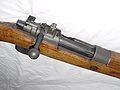
The FR 7 and FR 8 are bolt-action rifles adopted by Spain in the 1950s. The "FR" stands for Fusil Reformado in Spanish ("Converted Rifle" in English).[4] The FR 7 is a variant of the "Spanish M93 Mauser" bolt action while the FR 8 is based on the "Mauser System 98" bolt action. Due to their light weight, short barrel and the calibre used, their recoil and muzzle blast are relatively heavy.

Key Information

History

[edit]

The FR7 and FR8 were introduced in the 1950s when the Spanish military was already implementing the CETME automatic rifle, but did not yet have sufficient inventory to equip and train all troops. The rifles were made from existing stockpiles of Mauser bolt-action rifles. The FR-7 was a modification of the Model 1916 short rifle, which in turn was based on the Mauser Model 1893. These three rifles are often referred to as being "small ring" Mausers, as the receiver ring is smaller in diameter than the latter Model 1898 by .110-inch (1.410 inches vs. 1.300 inches).[5] The FR-8 was rebuilt from the Model 1943 short rifle, which was based on the "large ring" Model 1898 Carbine Mauser action(98K). Both rifles were modified to fire 7.62×51mm NATO but the FR-7 uses a low powered variation due to the small rings weaker design.[6][7][8] The FR 8 was used well into the 1970s by mounted Guardia Civil units in the Sierra Nevada.

Features

[edit]

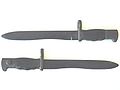
The flash hider was designed to also function as a rifle grenade launcher, compatible with NATO-standard 22 mm rifle grenades. It also has notches in it so that wire could be cut with it by firing a round. The under-barrel tube, which resembles the gas cylinder found on automatic weapons, actually serves as the bayonet mount and as storage for cleaning gear. The rear sight is an elevation-adjustable rotary type with apertures for 200 m (220 yd), 300 m (330 yd) and 400 m (440 yd), as well as an open "V" notch for 100 metres (110 yd). The front sight is elevation-adjustable via a special tool. Operation is identical to the standard Mauser design.

Images

[edit]

See also

[edit]

References

[edit]
[edit]
Revisions and contributorsEdit on WikipediaRead on Wikipedia
from Grokipedia
The FR-8 (Fusil Reformado Modelo 8), the rifle variant of Spain's Fusil Reformado series, is a bolt-action rifle developed in Spain during the 1950s as a cost-effective training and reserve weapon amid the nation's shift from 8mm Mauser to 7.62×51mm NATO ammunition. Converted primarily from surplus Spanish M1943 Mauser rifles at the La Coruña arsenal, it incorporated select components from the emerging CETME semiautomatic rifle to familiarize troops with the new cartridge and ergonomics. Production occurred from approximately 1957 to the early 1960s, with conversions also using older Gewehr 98 and Polish Mauser actions when needed, resulting in an estimated several thousand units. Designed as a transitional "stopgap" under the Franco regime's War-era military reforms, the FR-8 bridged the gap until full production of the Model C could equip frontline forces. It retained the reliable Mauser 98 controlled-feed action but was rebarreled for , with an approximately 19-inch barrel featuring a threaded muzzle for launchers and a flash hider. Key modernizations included -inspired diopter rear sights adjustable from 100 to 400 meters, a protected front post sight, and a hollow under-barrel channel for storing a cleaning kit or . The measured about 39 inches in overall length, weighed approximately 7.5 pounds unloaded, and fed via a 5-round internal using stripper clips. Compatible with bayonets and 22mm , it emphasized durability and simplicity for second-line units like reserves and the Guardia Civil. The FR-8's significance lies in its role as a pragmatic hybrid—often called a "Franken-Mauser"—that extended the life of obsolete stockpiles while supporting Spain's alignment and adoption. It saw limited combat use but proved effective for marksmanship training into the 1980s, after which surplus examples entered civilian markets, prized by collectors for their historical ties to Spanish and robust . Today, original parts are scarce, but the rifle remains a notable example of post-World War II surplus adaptation, chambered strictly for 7.62×51mm to avoid overpressure risks with commercial .308 Winchester loads.

Development and Production

Historical Background

In the aftermath of , under Francisco Franco's regime faced international isolation, which delayed military modernization efforts despite the country's reliance on outdated small arms like the 8mm rifles from the . The 1953 between and the marked a turning point, providing economic and military aid in exchange for basing rights, and prompting to align its armaments with Western standards, including the adoption of the cartridge in the mid-1950s to facilitate and access to U.S. supplies. As part of this overhaul, initiated the development of the in the early , drawing on German wartime designs to create a modern select-fire weapon chambered for the new cartridge. However, production at the factory in La Coruña proved insufficient to meet the army's needs by the late , with the Model C variant only entering limited service around 1957. To address this shortfall, Spanish authorities converted existing stocks of rifles—heritage designs from the and —into interim weapons capable of using the 7.62×51mm , serving as a bridge until CETME output could scale up. The FR-8 conversion program, formally known as Fusil Reformado Modelo 8, began in the late 1950s, with rifles entering service around 1958, primarily at the Fabrica de Armas La Coruña arsenal. These stopgap rifles were designated for second-line units and training roles, allowing recruits to familiarize themselves with the NATO-standard cartridge and CETME-inspired without diverting precious new production rifles from frontline deployment. This approach extended the utility of Spain's vast inventory while the military transitioned fully to assault rifles by the early , resulting in an estimated several thousand units converted.

Conversion Process

The FR8 rifle was created through a systematic conversion of surplus Spanish Model 1943 short rifles, which utilized the large-ring 98 pattern action, at Spanish military arsenals during the 1950s. These conversions aimed to modernize the bolt-action design for the emerging standard while retaining the reliable mechanism. In parallel, the related FR7 variant was rebuilt from earlier Model 1916 short rifles based on the small-ring pattern. The core of the conversion process centered on rebarreling to accommodate the . The original 8×57mm barrel was removed and replaced with a -derived barrel, approximately 18.5 inches (47 cm) in length and chambered specifically for ammunition. This new barrel, sourced from CETME production lines with technical input from , featured a rifled bore optimized for the higher-pressure NATO round. At the muzzle, a CETME-style flash hider was fitted, integrated with a new front sight base that included an adjustable post sight protected by ears, enhancing visibility and durability in field conditions. Additional modifications included updating the rear sight to a CETME-inspired dioptric with preset notches for 100, 200, 300, and 400 meters, and adding a hollow tube beneath the barrel for storing a cleaning kit or grenade-launching attachment. The remained largely wooden and pistol-gripped from the original, but was refinished to match the updated configuration, with provisions for loading into the internal five-round magazine. All FR8 conversions were performed at the Fabrica de Armas La Coruña , leveraging existing infrastructure from production. Barrels were supplied directly from facilities, reflecting the integrated development between bolt-action upgrades and Spain's new program. The process emphasized compatibility with standards, including threading the muzzle to M15 specifications for potential suppressors or projectors. Quality control during conversion focused on ensuring the large-ring Mauser 98 actions could withstand NATO pressures up to 50,000 psi without failure, with each rifle inspected for headspace, bore condition, and overall structural integrity post-rebarreling. For the FR7, the small-ring actions were similarly inspected and adapted to handle 7.62×51mm NATO ammunition reliably. These measures confirmed the rifles' suitability for training and reserve roles, bridging the transition to full NATO compliance.

Design and Features

Mechanism and Components

The FR-8 rifle employs a turn-bolt 98 controlled-feed action system, utilizing a large-ring receiver to provide enhanced strength for handling modern cartridges. This , derived from the Model 1943 short rifle, features a bolt with two locking lugs that engage the receiver for reliable extraction and feeding. The barrel measures 470 mm (18.5 in) in length and is sourced from production, featuring 4-groove with a right-hand twist. Chambered for the standard cartridge, the FR-8's robust large-ring action allows it to better accommodate full-pressure loads compared to the small-ring FR-7 variant. The stock and furniture are constructed from walnut sourced from original Mauser rifles, with the stock shortened and refinished during conversion to suit the updated configuration. The metal components receive a parkerized finish to enhance resistance in field conditions. Internally, the FR-8 incorporates a stripper clip-fed box magazine with a capacity of 5 rounds, loaded through the top of the receiver in the traditional manner. A two-position safety lever, mounted on the rear of the bolt, locks both the bolt and the trigger when engaged. The rifle's flash hider, integral to the barrel muzzle, also supports grenade-launching capability.

Accessories and Sights

The FR8 rifle features a CETME-pattern muzzle device that functions primarily as a flash hider while also serving as a base for launching 22 mm NATO-standard rifle grenades, including fragmentation and variants, to enhance its utility in training exercises simulating capabilities. The bayonet system consists of an under-barrel tube that mounts , providing compatibility with the Spanish military's standard issue while doubling as storage for the cleaning rod and small maintenance tools. For aiming, the FR8 is equipped with inspired by the design, including a fixed front post protected by sighting ears and an adjustable rear U-notch sight graduated in 100-meter increments from 100 to 400 meters, featuring CETME-style and adjustments via a rotating disc that also incorporates peep apertures for longer ranges. The rifle lacks provisions for optical sights, prioritizing simple, robust suited to its role as a basic training weapon. Additional fittings include sling swivels retained from the original design, allowing for standard sling attachment without modifications.

Variants and Specifications

FR7 Variant

The FR7 variant of the FR series was converted from the Model 1916 Spanish short rifle, which utilized a small-ring action derived from the earlier Model 1893 design and considered weaker than the later Model pattern receivers. This conversion process involved rebarreling to 7.62×51mm, updating the sights to match contemporary rifles, and modifying the stock for improved ergonomics, but retained the inherent limitations of the original action's smaller ring size. Due to the fragility of the small-ring receiver, the FR7 was adapted to fire the low-pressure 7.62×51mm cartridge, featuring a reduced powder charge to minimize stress on the action; it was not rated for standard full-pressure 7.62×51mm ammunition, which could risk damage. This ammunition choice aligned the FR7's ballistics with Spain's transitional rifles, ensuring compatibility in environments without overtaxing the older . Key specifications of the FR7 include an overall length of 978 mm (38.5 in), a weight of approximately 3.4 kg (7.5 lb) unloaded, and a barrel length of 482 mm (19 in). Approximately 1,000 units were produced, with its role primarily limited to training and second-line duties for the Guardia Civil and military reserves, reflecting the constraints imposed by its ammunition and action design. The FR7 features a straight stock similar to the original Model 1916.

FR8 Variant

The FR8 variant serves as the primary and most robust model in the FR series, rebuilt from the Model 1943 Spanish short featuring a large-ring action engineered for compatibility with full-pressure loads, ensuring reliable performance under standard military pressures. This choice addressed the need for a durable bolt- during Spain's transition to modernized small arms in the late . Chambered for the cartridge, the FR8 maintains an effective range of 400 meters, aligned with the adjustable rear sights graduated up to that distance for precise targeting in training and support roles. As a manually operated bolt-action , it lacks a cyclic but supports an effective firing rate of 10-15 rounds per minute for sustained use. With a of approximately 840 m/s for standard loads from its barrel length. Detailed specifications highlight its compact configuration: an overall length of 986 mm (38.8 in), a barrel length of 470 mm (18.5 in), and an unloaded weight of 3.4 kg (7.5 lb), making it suitable for second-line infantry and ceremonial applications within the Spanish military and Guardia Civil. The main production variant, with conversions numbering around 5,000-10,000 units, incorporated CETME-derived components such as the flash hider serving as a launcher for NATO-standard projectiles. The FR8 features a semi-pistol grip stock modified from the Model 1943.

Operational History

Adoption and Military Use

The FR-8 rifle was adopted by the in the 1950s as a transitional measure during the shift to the semiautomatic rifle, which entered service in 1957, to supplement armaments amid production limitations of the new design. It was primarily issued to reserve forces, training units, and second-line personnel to bridge the gap until production scaled up. Conversions for service began in the early , following the adoption of the Model C. The primary users of the FR-8 were the Spanish Ejército de Tierra and the Guardia Civil, with additional limited employment by the Spanish for purposes. No major exports occurred, reflecting its role as a domestic stopgap tailored to Spanish needs. In its capacity, the FR-8 facilitated basic marksmanship instruction, leveraging the familiar ergonomics to ease the transition for troops accustomed to bolt-action rifles. It also supported grenade-launching exercises through a fitted compatible with standard 22 mm projectiles, enhancing overall weapons familiarization without requiring full CETME issuance.

Service and Withdrawal

The FR-8 remained in active through the and as a training and second-line , bridging the gap until full production of semiautomatic rifles could meet demand. The Guardia Civil continued employing the FR-8 into the 1980s, particularly for mounted patrols and internal security operations. Operational use of the FR-8 involved limited exposure, with the rifle primarily assigned to units and police duties rather than frontline engagements. No major battles are associated with its deployment, but it proved reliable for internal security tasks in varied environments, leveraging the durable action for consistent performance. Withdrawal of the FR-8 from Spanish service occurred gradually in the 1980s, as the military transitioned to updated CETME variants like the Model L chambered in 5.56×45mm NATO, which offered greater versatility and firepower. Surplus stocks were placed in storage post-withdrawal, pending demilitarization efforts in the 1990s. Demilitarization processes in the 1990s resulted in many FR-8 rifles being destroyed or sold as surplus, while others underwent refurbishment for export to civilian markets, where they remain available through auctions and dealers.

Legacy

Collectibility

Surplus FR-8 rifles were imported to the in significant numbers during the 1990s, primarily through specialized dealers, as transitioned away from the design following the adoption of 5.56mm NATO-caliber weapons in the . These imports made the FR-8 accessible to American collectors, and under current ATF regulations, FR-8 rifles qualify as Curio & Relic (C&R) items if they are at least 50 years old and retain their original configuration, allowing licensed C&R holders to acquire them without a standard FFL transfer. In the collector market as of 2025, pristine FR-8 examples—those with minimal wear, intact markings, and functional components—typically command prices between $400 and $800 USD, reflecting steady demand driven by the rifle's distinctive hybrid design that combines a modified 98 action with CETME-inspired components for compatibility. This value range accounts for recent upticks in popularity among surplus enthusiasts, though prices can vary based on and regional availability. Collectors particularly prize FR-8 rifles that retain their original parkerized metal finish and stocks, as these features preserve the rifle's military heritage and aesthetic appeal, while common condition issues such as worn bores from extensive training use can diminish value if not addressed through . Within the collector community, the FR-8 is frequently discussed on forums like The High Road, where enthusiasts share restoration tips and acquisition stories, and is highlighted in educational content from channels such as , which emphasize its historical quirks. Compared to the semi-automatic FR-7 variant, the bolt-action FR-8 is often preferred for its superior shootability and robustness with standard ammunition, making it a more reliable choice for range use and long-term ownership.

Modern Relevance

In contemporary civilian contexts, the FR-8 remains legal for sporting and purposes in most countries where bolt-action rifles chambered in are permitted, typically requiring appropriate licensing for such activities. Its robust Mauser-derived action and cartridge compatibility make it suitable for , with users praising its compact design and accuracy for brush or short-range applications. Additionally, the FR-8 has gained popularity in vintage military rifle (VMR) competitions, where "as-issued" surplus firearms from the mid-20th century are favored for matches emphasizing historical accuracy over modern modifications, such as those governed by organizations like the . Aftermarket support for the FR-8 is limited, reflecting its niche status as a converted surplus , though some reproduction parts like stocks and hardware are available from specialized suppliers. Repairs often leverage the rifle's CETME-influenced components, with barrels interchangeable with those from models or compatible G3 variants when shortened to the FR-8's specifications, allowing owners to maintain functionality using widely available roller-delayed system parts. The FR-8 holds cultural significance in firearms enthusiast communities, frequently featured in media like ' detailed video review, which highlights its unique hybrid design. It symbolizes Spain's post-World War II military modernization and integration into standards, bridging the transition from 8mm to 7.62mm calibers during the 1950s. Availability of the FR-8 is greater in the United States through surplus importers such as Royal Tiger Imports and J&G Sales, where it circulates among collectors and shooters, with total production estimated at several thousand units. In , however, the is scarce due to stringent firearms regulations that restrict surplus imports and civilian ownership of military-pattern rifles, limiting its presence to licensed sporting use or groups.

References

Add your contribution
Related Hubs
User Avatar
No comments yet.