
Recent from talks
Fabry disease
Knowledge base stats:
Talk channels stats:
Members stats:
Fabry disease
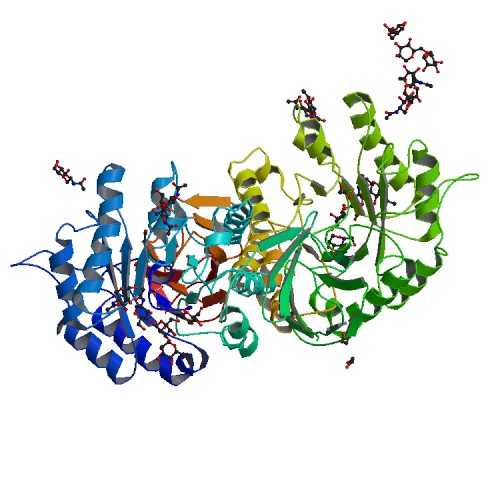
Fabry disease, also known as Anderson–Fabry disease, is a rare genetic disease that can affect many parts of the body, including the kidneys, heart, brain, and skin. Fabry disease is one of a group of conditions known as lysosomal storage diseases. The genetic mutation that causes Fabry disease interferes with the function of an enzyme that processes biomolecules known as sphingolipids, leading to these substances building up in the walls of blood vessels and other organs. It is inherited in an X-linked manner.
Fabry disease is sometimes diagnosed using a blood test that measures the activity of the affected enzyme called alpha-galactosidase, but genetic testing is also sometimes used, particularly in females.
The treatment for Fabry disease varies depending on the organs affected by the condition, and the underlying cause can be addressed by replacing the enzyme that is lacking.
The first descriptions of the condition were made simultaneously by dermatologist Johannes Fabry and the surgeon William Anderson in 1898.
Symptoms are typically first experienced in early childhood and can be very difficult to diagnose; the rarity of Fabry disease to many clinicians sometimes leads to misdiagnoses. Manifestations of the disease usually increase in number and severity as an individual ages.
Full-body or localized pain to the extremities (known as acroparesthesia) or gastrointestinal (GI) tract is common in patients with Fabry disease. This pain can increase over time. This acroparesthesia is believed to be related to the damage of peripheral nerve fibers that transmit pain. Gastrointestinal tract pain is likely caused by the accumulation of lipids in the small vasculature of the GI tract, which obstructs blood flow and causes pain.
Kidney complications are common and serious effects of the disease; chronic kidney disease and kidney failure may worsen throughout life. The presence of protein in the urine (which causes foamy urine) is often the first sign of kidney involvement. End-stage kidney failure in those with Fabry disease typically occurs in the third decade of life and is a common cause of death due to the disease.[citation needed]
Fabry disease can affect the heart in several ways. The accumulation of sphingolipids within heart muscle cells causes an abnormal thickening of the heart muscle or hypertrophy. This hypertrophy can cause the heart muscle to become abnormally stiff and unable to relax, leading to a hypertrophic cardiomyopathy causing shortness of breath.
Hub AI
Fabry disease AI simulator
(@Fabry disease_simulator)
Fabry disease
Fabry disease, also known as Anderson–Fabry disease, is a rare genetic disease that can affect many parts of the body, including the kidneys, heart, brain, and skin. Fabry disease is one of a group of conditions known as lysosomal storage diseases. The genetic mutation that causes Fabry disease interferes with the function of an enzyme that processes biomolecules known as sphingolipids, leading to these substances building up in the walls of blood vessels and other organs. It is inherited in an X-linked manner.
Fabry disease is sometimes diagnosed using a blood test that measures the activity of the affected enzyme called alpha-galactosidase, but genetic testing is also sometimes used, particularly in females.
The treatment for Fabry disease varies depending on the organs affected by the condition, and the underlying cause can be addressed by replacing the enzyme that is lacking.
The first descriptions of the condition were made simultaneously by dermatologist Johannes Fabry and the surgeon William Anderson in 1898.
Symptoms are typically first experienced in early childhood and can be very difficult to diagnose; the rarity of Fabry disease to many clinicians sometimes leads to misdiagnoses. Manifestations of the disease usually increase in number and severity as an individual ages.
Full-body or localized pain to the extremities (known as acroparesthesia) or gastrointestinal (GI) tract is common in patients with Fabry disease. This pain can increase over time. This acroparesthesia is believed to be related to the damage of peripheral nerve fibers that transmit pain. Gastrointestinal tract pain is likely caused by the accumulation of lipids in the small vasculature of the GI tract, which obstructs blood flow and causes pain.
Kidney complications are common and serious effects of the disease; chronic kidney disease and kidney failure may worsen throughout life. The presence of protein in the urine (which causes foamy urine) is often the first sign of kidney involvement. End-stage kidney failure in those with Fabry disease typically occurs in the third decade of life and is a common cause of death due to the disease.[citation needed]
Fabry disease can affect the heart in several ways. The accumulation of sphingolipids within heart muscle cells causes an abnormal thickening of the heart muscle or hypertrophy. This hypertrophy can cause the heart muscle to become abnormally stiff and unable to relax, leading to a hypertrophic cardiomyopathy causing shortness of breath.
Recent media