Hubbry Logo
Fan KuaiFan KuaiMain
Open search
Fan Kuai
Community hub
Fan Kuai
logo
8 pages, 0 posts
0 subscribers
Be the first to start a discussion here.
Fan Kuai
Fan Kuai
from Wikipedia

Key Information

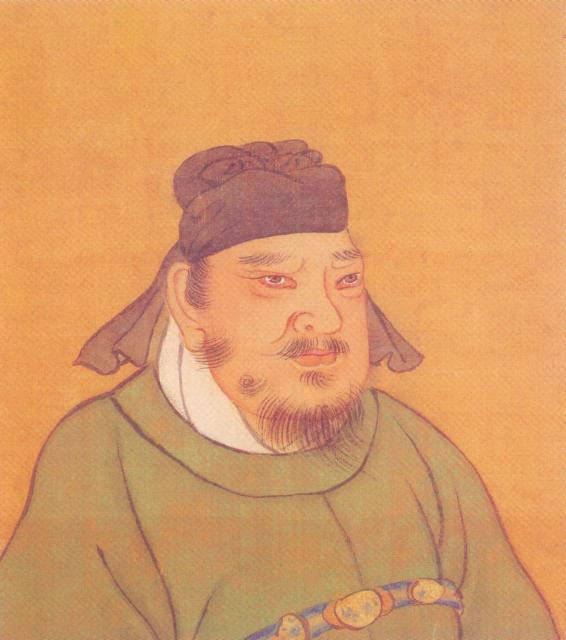
Fan Kuai (242? – c.July 189 BC[1]) was a military general of the early Western Han dynasty. He was a prominent figure of the Chu–Han Contention (206–202 BC), a power struggle for supremacy over China between the Han dynasty's founder, Liu Bang, and his rival Xiang Yu.

Early life

[edit]

Fan Kuai was a close friend of Liu Bang, both from the same hometown of Pei County (present-day Feng County, Jiangsu). In his early days, he was a butcher specialized in preparing dog meat. He married Lü Xu, the younger sister of Liu Bang's wife Lü Zhi, making him an extended kin of the Liu family (later the royal family of Han dynasty) via affinity.

Rebelling against the Qin dynasty

[edit]

Once, Liu Bang released the prisoners he was escorting and became an outlaw on Mount Mangdang (in present-day Yongcheng, Henan). Following the Dazexiang Uprising in 209 BC, the magistrate of Pei County also wanted to rebel as well so he heeded Xiao He and Cao Shen's advice, and sent Fan Kuai to Mount Mangdang to invite Liu Bang and his men back to help him. However, the magistrate changed his mind later and denied Liu Bang entry into the city. The citizens responded to Liu Bang's call and killed the magistrate, allowing Liu and his men to return home. Liu Bang was then known as "Duke of Pei" and Fan Kuai served as one of his close aides and bodyguards. Fan Kuai distinguished himself on the battlefield as a mighty warrior and capable general. He fought in many battles on Liu Bang's side and claimed the heads of enemies in increasing order in each battle, and was rewarded with promotions to higher ranks each time.

Chu–Han contention

[edit]

Feast at Hong Gate

[edit]

Fan Kuai is best known for defending Liu Bang at the Feast at Hong Gate, which was actually a trap set to kill Liu. He rushed to Liu Bang's defence when he heard that Xiang Yu's advisor Fan Zeng intended to have Liu killed. Fan Kuai chided Xiang Yu openly, making a speech about Liu Bang's accomplishments and stating that it would be unjust for Xiang to kill Liu. Xiang Yu was impressed by Fan Kuai's bravery and offered him a seat at the feast. Liu Bang escaped from the feast later on the pretext of going to the latrine, with Fan Kuai accompanying him.

After the fall of the Qin dynasty, Xiang Yu divided the former Qin Empire into the Eighteen Kingdoms, appointed Liu Bang as "King of Han" with the lands of Shu as his fiefdom. Liu Bang seized the lands of the Three Qins and engaged in a long power struggle with Xiang Yu for supremacy over China, historically known as the Chu–Han Contention. Fan Kuai participated actively in many of the battles between the two contending forces and became famous for his prowess in battle.

Service during the Han dynasty

[edit]

After the establishment of the Han dynasty, Emperor Gao (Liu Bang) enfeoffed Fan Kuai as the Marquis of Wuyang (舞陽侯) in recognition of Fan's contributions to the dynasty's founding. After Fan Kuai's death, he was posthumously conferred the title "Marquis Wu" (武侯) while his son Fan Kang inherited his title of "Marquis of Wuyang". Fan Kuai's wife Lü Xu was put to death in the aftermath of the Lü Clan Disturbance in 180 BC and Fan Kang was killed as well. Several months later, Emperor Wen conferred the title on Fan Shiren, another son of Fan Kuai who was not born to Lü Xu.

Modern references

[edit]
[edit]

In Romance of Three Kingdoms, Xu Chu the general and guard of Cao Cao, who were known as the "Tiger Warriors" (虎士). Cao Cao claimed him : "This man is my Fan Kuai!" Fan Kuai is the epitome of a brave guard.

References

[edit]
Revisions and contributorsEdit on WikipediaRead on Wikipedia
from Grokipedia
Fan Kuai (Chinese: 樊噲; died 189 BCE) was a military general of the early who played a pivotal role in the and the establishment of the Han regime. Hailing from Pei County (modern Peixian, ), he was a close associate and eventual brother-in-law of Liu Bang, the dynasty's founder, having joined his uprising against the as a by . Fan Kuai gained renown for his fearless intervention at the Hongmen Banquet in 206 BCE, where he burst into Xiang Yu's feast hall naked and wielding a dog’s head on a pole to intimidate the rival warlord and shield Liu Bang from assassination. His martial prowess contributed to decisive victories, including the Battle of Gaixia, leading to his enfeoffment as Marquis of Wuyang in 201 BCE and command in subsequent campaigns against northern tribes and internal threats. Fan Kuai's loyalty and battlefield effectiveness exemplified the merit-based rise of non-aristocratic figures under Liu Bang, though his later years involved political tensions, culminating in his death amid suspicions during Empress Lü's regency.

Early Life

Origins in Pei County

Fan Kuai hailed from Pei County in Sishui Commandery, corresponding to modern Peixian County, Province. Historical accounts place his origins in this rural administrative center during the late , a region known for producing several key figures in the subsequent Han founding, though specific details on his family lineage or precise birth year are absent from primary records. He died in 189 BCE, suggesting an active lifespan spanning the turbulent transition from Qin to Han rule. In Pei County, Fan Kuai's early circumstances were marked by humble means, as he worked as a butcher, slaughtering and selling meat from canines—a practical in a locale where such provisions supplemented local diets amid agrarian hardships. This occupation underscored the lowborn status shared by many of Bang's early allies from the area, positioning Fan Kuai within a network of local associates like and before the outbreak of widespread rebellion against Qin authority.

Pre-Rebellion Occupation and Local Reputation

Fan Kuai resided in Pei County (modern Peixian, Province) during the late , where he worked as a dog , slaughtering and preparing dogs for meat, a common trade reflecting the era's dietary practices and his lower social stratum. This occupation provided his livelihood amid the oppressive corvée labor and taxation under Qin rule, prior to the widespread uprisings sparked by and Wu Guang in 209 BCE. Locally, Fan Kuai was known among Pei residents for his ties to Liu Bang, a fellow native and minor official who had clashed with Qin authorities; when Liu Bang fled after killing the chasing Sima Xin around 209 BCE, Fan Kuai assisted in his escape, demonstrating early loyalty and boldness that earned him trust within the nascent rebel circles. His physical presence—later described by as fierce, with glaring eyes and a bristling beard—likely contributed to a reputation for intimidation and resolve, traits suited to a butcher's demanding work and evident in his readiness to defy imperial pursuit. Such qualities, though not extensively documented in pre-rebellion anecdotes, positioned him as a figure of potential utility when Pei County's contemplated joining the anti-Qin revolt, prompting the dispatch of Fan Kuai to locate Liu Bang.

Anti-Qin Rebellion

Joining Liu Bang's Uprising

Fan Kuai, a native of Pei County (modern Peixian, ) and a specializing in , joined the anti-Qin rebellions in 209 BCE amid the chaos sparked by the Dazexiang Uprising led by and Wu Guang. As a fellow townsman of Liu Bang, the local pavilion chief who had turned rebel after releasing conscripted laborers rather than delivering them to the Qin capital, Fan Kuai aligned early with Liu Bang's emerging force, contributing his physical prowess and local reputation for ferocity—likened in historical accounts to a snarling —to bolster the group's cohesion and defense. Collaborating with key Pei County figures such as and , Fan Kuai helped consolidate support for Liu Bang during the initial phase of the uprising, advising on strategic presentations of authority, including the suggestion that Liu Bang adopt the title of (or Marquis) of Pei to legitimize his leadership over the rebels. This period marked Fan Kuai's transition from civilian tradesman to trusted aide and informal , roles that positioned him as one of Liu Bang's core companions in the localized resistance that would expand into broader campaigns against Qin rule. His involvement reflected the opportunistic mobilization of rural strongmen and kin networks in Pei, where personal loyalty and martial skill proved decisive in the fragmented early rebellion.

Initial Military Engagements

Fan Kuai joined Liu Bang's uprising against the in 209 BCE, enlisting alongside other locals from Pei County as the rebellion spread following and Wu Guang's initial revolt. He contributed to the early offensives in the Sishui Commandery, where Liu Bang's forces targeted Qin administrative centers, capturing counties such as Fangyu and Yongqiu through coordinated assaults on garrisons and supply lines. These operations, conducted amid widespread anti-Qin sentiment, enabled Liu Bang to amass several thousand troops and establish a foothold in eastern by mid-208 BCE. Though primary records like the Shiji provide limited details on Fan Kuai's specific tactical roles in these engagements, his presence as a core retainer underscores his involvement in suppressing local Qin resistance and securing logistical advantages for the rebels. Fan Kuai's and , honed from his pre-rebellion occupation as a , likely aided in close-quarters fighting typical of the against Qin enforcers during this phase. By 207 BCE, as Liu Bang maneuvered northwest toward the Wei River valley, Fan Kuai continued supporting advances that pressured Qin's northern defenses, contributing to the dynasty's collapse without notable individual attributions in surviving accounts.

Chu-Han Contention

Defense at the Hongmen Banquet

In late 206 BC, after Liu Bang entered the Qin capital of but refrained from claiming it, summoned him to Hongmen under the pretext of a celebratory , while plotting his at the urging of advisor . During the proceedings, as Xiang Zhuang initiated a intended to strike Liu Bang, the latter's advisor Zhang Liang slipped out to assess the situation and encountered Fan Kuai, Liu Bang's armed retainer, who was waiting outside with a hound. Alerted to the imminent danger, Fan Kuai charged into the hall, sword and shield in hand, brushing aside attendants who thrust halberds to bar him; his ferocious glare compelled them to withdraw without resistance. Fan Kuai positioned himself squarely before Xiang Yu, eyes bulging and hair unbound in defiance, prompting Xiang Yu to inquire his identity. Zhang Liang identified him as Pei Gong's (Liu Bang's) carriage guard, leading Xiang Yu to remark, "A valiant warrior," and order wine bestowed upon him, followed by an uncooked pork shoulder. Kneeling briefly to express thanks before rising to drain the wine in one gulp, Fan Kuai then placed the meat on his shield and devoured it standing, declining a seat with the justification that, as the subordinate of a guest, he could not presume such familiarity amid the king's hospitality. Undeterred, Fan Kuai delivered a vehement defense of , decrying the Qin's tyrannical rule akin to "tigers and wolves with human faces" and crediting Pei Gong with toppling it without absconding with its palaces or treasures upon entering —contrasting this forbearance against 's own delays. He asserted that empire's mandate favored not the possessor of greater armies but the benefactor of the populace, declaring his readiness to sacrifice himself for 's cause. Though seethed and urged summary execution, demurred, permitting Fan Kuai's withdrawal; this interruption sowed hesitation among the hosts, enabling to depart Hongmen unscathed later that night. The account in Sima Qian's Shiji, compiled circa 100 BC from contemporary records and oral traditions, portrays Fan Kuai's intrusion as pivotal in thwarting the plot, though its dramatic elements reflect the historiographical style of emphasizing heroic .

Key Battles and Tactical Contributions

Fan Kuai actively engaged in combat operations during the Chu-Han Contention, supporting Liu Bang's campaigns against Xiang Yu's Western Chu forces from 206 to 202 BC. His roles emphasized frontline leadership and personal bravery, complementing the strategic maneuvers of commanders like . Historical accounts credit him with steadfast defense and offensive actions that helped maintain Han positions amid repeated clashes. In the buildup to major confrontations, Fan Kuai led expeditions to secure eastern territories, including an advance northward to assault Zou county (modern ), which expanded Han influence and disrupted Chu supply lines in the region. This tactical move occurred as Liu Bang consolidated power after entering the Central Plains, aiding the overall Han effort to challenge 's dominance. Fan Kuai also contributed to the Han army's northern contingent in the 205 BC offensive toward Pengcheng, 's provisional capital. Commanding alongside , Zhou Bo, and Guan Ying from Henei, his forces aimed to envelop the city from multiple directions but faced a decisive Chu counterattack led by , resulting in heavy Han losses. Despite the setback, Fan Kuai's participation in initial gains demonstrated his effectiveness in rapid maneuvers and close-quarters fighting. During the subsequent stalemate at Xingyang in 204 BC, Fan Kuai's defensive tenacity proved crucial. As Han forces endured sieges and sorties against assaults, his merits for "holding firm in battle" were recognized, sustaining morale and preventing collapse under pressure. These efforts contributed to the prolonged that weakened over time, paving the way for Han's eventual victories elsewhere. Shiji records highlight such reliability as key to his rewards post-contention.

Early Han Service

Ennoblement and Rewards

Following the defeat of and the establishment of the in 202 BC, Emperor Gaozu enfeoffed Fan Kuai as Marquis of Wuyang (舞陽侯) in recognition of his valor during the Chu-Han Contention, including his intervention at the Hongmen Banquet and frontline command in key engagements such as the . The marquisate carried a of 5,400 households in Wuyang County (modern-day Yuanyang County, ), entitling Fan to a portion of tax revenues and labor services from the assigned population, standard for high-ranking nobles under the early Han feudal system. Subsequent rewards augmented this initial grant; in 201 BC, the fief was formalized specifically in Wuyang County following administrative adjustments to consolidate loyalists' holdings. Fan's position in the merit rankings—fourth among military contributors, behind , , and Zhou Bo—reflected Emperor Gaozu's assessment of his contributions relative to peers, as documented in contemporary evaluations of founding service. These honors positioned Fan among the dynasty's core aristocratic elite, with the noble title hereditary and protected by imperial oath against revocation.

Administrative and Military Roles

Following the establishment of the Han dynasty in 202 BC, Fan Kuai held the military rank of general (jiangjun) and led Han forces in suppressing rebellions by disaffected kings and generals who resisted the new imperial order. These campaigns targeted Zang Tu, the king of Yan who rebelled in the immediate aftermath of the dynasty's founding; Chen Xi, who orchestrated a major uprising in 197–196 BC from Dai Commandery; Lu Wan, a former Han general who defected and rebelled from the northern borders; and Xin, the king of Han, who fled to the Xiongnu after military defeats. In administrative capacities, Fan Kuai served as princely counsellor (xiangguo), a role that entailed providing governance counsel, likely tied to his marquisate or advisory functions within the feudal hierarchy. His positions reflected the early Han system's integration of military merit with noble oversight, though primary accounts in the Shiji emphasize his earlier battlefield exploits over extended bureaucratic tenure. By the mid-190s BC, amid ongoing stabilization efforts, Fan Kuai's influence waned as he aged and favored retirement, yet his titles persisted as markers of foundational service.

Death and Family

Final Years and Demise

In 195 BC, amid Emperor Gaozu's (Liu Bang) , informants accused Fan Kuai of conspiring with the Lü clan—through his to Empress Lü's —to deploy troops against Concubine Qi and Prince Ruyi of Zhao immediately following the emperor's death. Gaozu, viewing this as a threat to his Liu heirs amid the Lü family's growing influence, ordered Chancellor Chen Ping and Marquis Zhou Bo to hasten to Fan Kuai's army encampment and behead him on the spot. To avert immediate chaos from Lü reprisals, Chen and Zhou falsely reported the execution to Gaozu, who then pardoned Fan's household, allowing him to evade death. Fan Kuai survived the episode and retained his positions under Emperor Hui (r. 195–188 BC), including oversight of military affairs. He died in 189 BC near the close of Hui's reign, with no recorded cause beyond natural passing in advanced age. Posthumously, he received the title Marquis Wu of Wuyang (Wuyang Wuhou), honoring his martial contributions to the dynasty's founding.

Succession and Kin's Fate

Fan Kuai's legitimate son, Fan Kang (樊伉), born to his wife Lü Xu (呂媭), sister of Lü, succeeded him as Marquis of Wuyang upon his death in 189 BC. Fan Kang's tenure was short-lived; during the purge of the Lü clan in 180 BC following Lü's death, he was executed due to his maternal ties to the condemned family, resulting in the temporary abolition of the marquisate. To preserve Fan Kuai's legacy, Emperor Wen enfeoffed his illegitimate son Fan Shiren (樊市人), who lacked Lü connections, as the new Marquis of Wuyang. Fan Shiren governed the for 29 years until his death, earning the posthumous title Marquis Huang (荒侯). His son Fan Toguang (樊他广) briefly inherited the title but was deposed by Emperor Jing around 141 BC for excessively punishing a retainer, leading to another interruption in the lineage. The marquisate was restored under Emperor Ping in 2 AD to Fan Zhang (樊章), a later descendant of Fan Kuai, with an estate of 1,000 households, though the line ultimately faced extinction amid Wang Mang's usurpation in 9 AD. This pattern of intermittent succession reflected the precarious fate of early Han tied to founding merit, vulnerable to imperial purges and political missteps.

Historical Evaluation

Accounts in Primary Sources

The principal primary source for Fan Kuai's life is chapter 95 of the Shiji (Records of the Grand Historian), compiled by around 100 BCE, which groups his biography with those of fellow Liu Bang retainers Li Shang, Xiahou Ying, and Guan Ying under the rubric of loyal followers from humble origins. The Shiji portrays Fan as a native of Pei County (modern Peixian, ), where he earned a living as a dog butcher and was already acquainted with Liu Bang prior to the 209 BCE anti-Qin rebellions. It records his early advocacy for Liu Bang to declare himself Duke of Pei in 206 BCE amid the power vacuum following Qin's collapse, marking his initial rise from civilian to military aide. In the Shiji's detailed narrative of the Hongmen Banquet (late 206 BCE), Fan Kuai emerges as a pivotal defender: upon learning of Xiang Yu's assassination plot against Liu Bang, he stormed the banquet hall in full armor, sword in hand and shield raised, while holding a raw dog thigh from his trade; he boldly rebuked Xiang Yu's hesitation to strike, extolled Liu Bang's merits in suppressing Qin rebels, and declared willingness to fight ten thousand men single-handedly, shaming the Chu forces into releasing Liu unharmed. The text attributes to Fan subsequent tactical roles in the Chu-Han Contention (206–202 BCE), including leading assaults that contributed to victories at battles like Gaixia, where Xiang Yu was defeated and Liu Bang proclaimed emperor as Gaozu in 202 BCE. For these exploits, the Shiji states Fan received incremental honors: first as General of the Left, then Marquis of Left Ping, and finally Marquis of Wuyang with 10,000 households, reflecting Gaozu's reliance on Pei County loyalists. The Shiji further chronicles Fan's post-unification service under Hui (r. 195–188 BCE), including commands against northern rebels like Zang Tu (206–204 BCE) and Chen Xi (195 BCE), as well as his advisory role in , where his forthright temperament occasionally clashed with protocol, such as when he drew his in anger during deliberations. It records his death by illness in 189 BCE during Hui's reign, with succession passing to his son Fan Kuai the Heir, later revoked under Wen for unrelated offenses. Sima Qian's account draws from Han archives and eyewitness traditions, presenting Fan as emblematic of merit-based ascent in the dynasty's founding, though without overt embellishment beyond verifiable titles and campaigns. The Hanshu (Book of Han) by Ban Gu (32–92 CE), chapter 39, largely parallels the Shiji but condenses military details while confirming Fan's titles and demise, relying on Sima Qian's framework with minor additions from Eastern Han records; it omits no major discrepancies but emphasizes administrative continuity in marquisate inheritance. No earlier bamboo-slip or oracle-bone inscriptions directly name Fan, underscoring the Shiji as the foundational textual authority, compiled within a century of events using imperial gazetteers and participant testimonies.

Assessments of Character and Impact

Fan Kuai is historically assessed as a paragon of martial loyalty and unyielding courage, traits that Sima Qian emphasizes in the Records of the Grand Historian through vivid depictions of his actions during the Chu-Han Contention (206–202 BCE). His dramatic intervention at the Hongmen Banquet in late 206 BCE, where he boldly entered Xiang Yu's feast hall clad only in undergarments, shield in hand, and consumed raw pork while defying armed retainers, exemplified a fearless resolve that deterred potential assassination attempts against Liu Bang. This act, recounted by Sima Qian as a display of raw valor from a low-born dog-meat vendor, underscored Fan Kuai's character as straightforward and resolute, prioritizing duty over decorum or personal safety. Such personal bravery had profound causal impact on the Han Dynasty's founding, as Fan Kuai's protection of Liu Bang at Hongmen preserved the rebel leader's life at a juncture when Xiang Yu's forces held overwhelming advantage, enabling subsequent Han offensives that culminated in victory at Gaixia in 202 BCE. Post-founding, Fan Kuai's military leadership in suppressing rebels, including campaigns as a general under Emperor Gaozu, contributed to early Han consolidation by enforcing imperial authority through decisive force. groups him with other merit-based retainers like Guan Ying, implicitly contrasting their earned prowess against aristocratic pedigrees, thereby illustrating how individual agency from humble origins propelled dynastic success amid the power vacuum following Qin's collapse. Later evaluations, drawing from primary accounts, note Fan Kuai's traits as double-edged: his straightforwardness fostered but occasionally manifested as impulsiveness, as seen in his post-victory confrontations that tested imperial patience. Nonetheless, his legacy endures as a model of in , where to a worthy —evident in his lifelong service without recorded defection—outweighed class origins, influencing views on in governance. No contemporary sources attribute strategic genius to him, positioning his impact as tactical and protective rather than visionary, yet indispensable in the causal sequence of Han ascendancy.

Cultural Legacy

Representations in Classical Literature

Fan Kuai is prominently depicted in 's Shiji (Records of the Grand Historian, ca. 94 BCE), particularly in the collective "Fan Kuai, Li Shang, Teng Ying, and Guan Ying Liezhuan" (chapter 95), where he emerges as a paradigmatic figure of raw courage and unwavering loyalty amid the Chu-Han Contention. portrays Fan Kuai as originating from humble Pei county stock, initially a by , whose ferocity—likened to a snarling hound—propels him into Liu Bang's service during the anti-Qin uprisings around 209 BCE. This origin underscores themes of meritocratic ascent in early Han narratives, with Fan's physical prowess and unpolished demeanor contrasting strategists, yet earning imperial favor through battlefield valor. The defining literary episode is Fan Kuai's intervention at the Hongmen Banquet in late 206 BCE, vividly rendered by as a moment of defiant heroism that averts Liu Bang's assassination by Xiang Yu's forces. Bursting uninvited into the feast hall clad in armor, wielding a and (or metal pan in some accounts), and bearing a raw pig's head as an impromptu offering, Fan rebukes Xiang Yu's advisor for , declaring readiness to die for his sovereign rather than yield to intimidation. emphasizes Fan's unyielding rhetoric—"The King of Pei holds vast territories west of the Pass; even death holds no terror for me, let alone mere wine!"—highlighting causal realism in his actions: personal audacity disrupts a calculated , preserving Liu Bang's life and altering the war's trajectory toward Han victory. This scene, drawn from oral traditions and contemporary records, cements Fan as an archetype of the fierce guardian, whose impulsive bravery compensates for Liu's diplomatic lapses. Subsequent Shiji accounts detail Fan Kuai's military exploits, such as leading assaults against Xiang Yu's remnants and suppressing post-unification rebellions under Emperors Gaozu and Hui (202–188 BCE), portraying him as a blunt instrument of Han consolidation—effective in combat but sidelined in intrigues due to his coarseness. Sima Qian's arc concludes with Fan's as Marquis of Wuyang and his death in 189 BCE, attributing his legacy to unadorned rather than subtlety, a subtle critique of Han reliance on such "tiger-like" retainers amid dynastic fragility. In later classical works, Fan Kuai's image endures as a literary symbol of protective valor. Luo Guanzhong's Sanguo Yanyi (Romance of the Three Kingdoms, 14th century) invokes him indirectly as the benchmark for loyal enforcers, with Cao Cao likening his bodyguard Xu Chu to "my Fan Kuai" for mirroring the Hongmen audacity in shielding against threats, thus embedding Fan's traits into broader heroic archetypes of martial fealty. This referential role in vernacular classics reinforces Shiji's foundational depiction, prioritizing empirical feats over embellishment, though Sima Qian's historiography—compiled under Han patronage—may amplify pro-Liu Bang causal narratives at Xiang Yu's expense.

Depictions in Modern Media

Fan Kuai is portrayed in the 2012 Chinese historical television series Legend of Chu and Han (also titled King's War), an 80-episode production dramatizing the period. Actor Kang Kai plays the role, emphasizing Fan Kuai's loyalty and martial prowess, including his dramatic intervention at at Hongmen to shield Bang from Xiang Yu's ambush. The series aired on networks including Anhui TV and Jiangsu TV, drawing on historical accounts while incorporating fictional elements for narrative flow. In video games, Fan Kuai appears as a non-playable character in the 2002 Prince of Qin, developed by Object Software. Set during the late , players encounter him in Pei County as a dog-meat seller, where dialogue options reveal Liu Bang's whereabouts, nodding to his pre-military life and early alliance with the future emperor. The game integrates historical figures into its storyline of rebellion against the Qin regime.
Add your contribution
Related Hubs
User Avatar
No comments yet.