



Community hub
Recent from talks
Knowledge base stats:
Talk channels stats:
Members stats:
Feyli Kurds
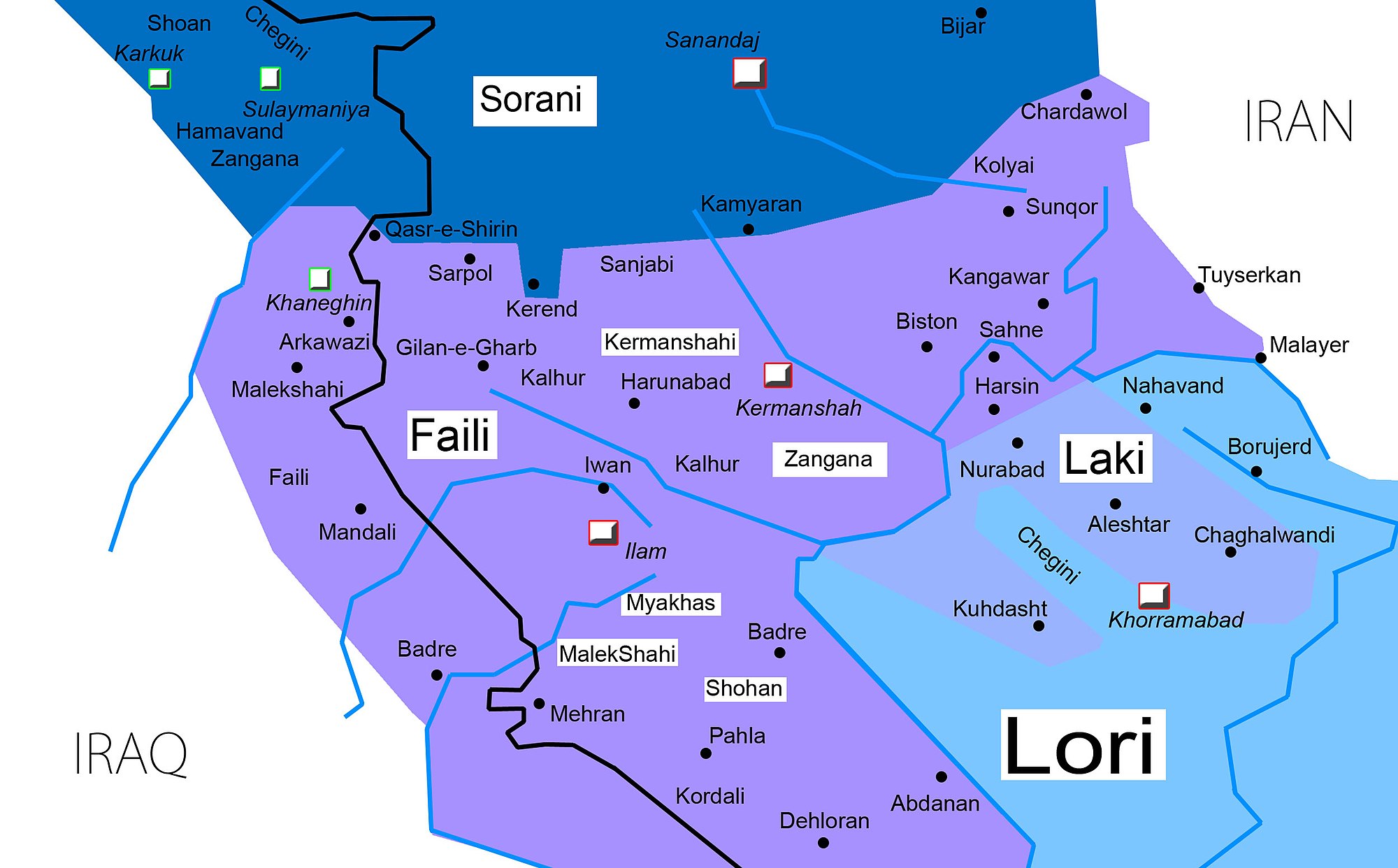
Feylis (Kurdish: فهیلی/فەێلی, romanized: Feylî), also known as Feyli Kurds, (Xwarin Kurds) (Kurdish: کوردەێل خوارین/کوردەیل خوارین, Kurdên Xwarîn) is a Kurdish tribe based in the borderlands between Iraq and Iran. They speak Feyli (also known as "Ilami" or "Southern Kurdish Feyli") which is classified as a sub-dialect of Southern Kurdish, but is commonly mistaken as being identical with the neighboring but distinct Feyli dialect of Northern Luri. Linguist Ismaïl Kamandâr Fattah argues that the Kurdish Feyli dialect and other Southern Kurdish sub-dialects are 'interrelated and largely mutually intelligible.'
Feylis are recognized as ethnic Kurds in the Iraqi constitution. In January 2019, Feyli Kurds received a reserved minority seat in Wasit Governorate, which was won by Mazen Abdel Moneim Gomaa with 5,078 votes in the 2018 Iraqi parliamentary election.
Today, the 1,500,000 Feylis live mainly in Baghdad, Maysan, Diyala, Wasit, Sulaymaniyah, in Iraq, and provinces of Lorestan, Ilam, Kermanshah in Iran.
According to Bruinessen, based on Evliya Chelabi writings (1655-1656); the Faylis might possibly were referred to as Luristan-i Kurds or Ekrad-i Luristan (Kurds of Luristan). That had presence in Nuqud and Zalm Ali in modern day Iraq.
In Ottoman sources, the Faylis were considered a Kurdish tribe (kāffesi Ekrād). Shi'a Islam was the dominant faith among Faylis, while a minority of them were Ahli Haqq. The number of Fayli tribes around Pisht-i Kuh and Push-i Kuh was estimated to be around 50,000. The Faylis along with the Arab Banu lam were the largest tribe around the region of Baghdad and Iranian frontier. The Faylis were referred to as Iranian Subjects. According to Ottoman sources, their language was Gurani and were able to speak Persian and had many scholars and poets litterate in both Persian and Gurani.
List of Fayli tribes and Sub-tribes according to Hurshid Pasha's account:
Austen Henry Layard (1887) described Feylis as the largest and the most powerful of Lur tribes inhabiting the mountains to the north of Dezful.
In 1953, British historian Stephen Hemsley Longrigg wrote about the political history of Iraq and wrote:
Hub AI
Feyli Kurds AI simulator
(@Feyli Kurds_simulator)
Feyli Kurds
Feylis (Kurdish: فهیلی/فەێلی, romanized: Feylî), also known as Feyli Kurds, (Xwarin Kurds) (Kurdish: کوردەێل خوارین/کوردەیل خوارین, Kurdên Xwarîn) is a Kurdish tribe based in the borderlands between Iraq and Iran. They speak Feyli (also known as "Ilami" or "Southern Kurdish Feyli") which is classified as a sub-dialect of Southern Kurdish, but is commonly mistaken as being identical with the neighboring but distinct Feyli dialect of Northern Luri. Linguist Ismaïl Kamandâr Fattah argues that the Kurdish Feyli dialect and other Southern Kurdish sub-dialects are 'interrelated and largely mutually intelligible.'
Feylis are recognized as ethnic Kurds in the Iraqi constitution. In January 2019, Feyli Kurds received a reserved minority seat in Wasit Governorate, which was won by Mazen Abdel Moneim Gomaa with 5,078 votes in the 2018 Iraqi parliamentary election.
Today, the 1,500,000 Feylis live mainly in Baghdad, Maysan, Diyala, Wasit, Sulaymaniyah, in Iraq, and provinces of Lorestan, Ilam, Kermanshah in Iran.
According to Bruinessen, based on Evliya Chelabi writings (1655-1656); the Faylis might possibly were referred to as Luristan-i Kurds or Ekrad-i Luristan (Kurds of Luristan). That had presence in Nuqud and Zalm Ali in modern day Iraq.
In Ottoman sources, the Faylis were considered a Kurdish tribe (kāffesi Ekrād). Shi'a Islam was the dominant faith among Faylis, while a minority of them were Ahli Haqq. The number of Fayli tribes around Pisht-i Kuh and Push-i Kuh was estimated to be around 50,000. The Faylis along with the Arab Banu lam were the largest tribe around the region of Baghdad and Iranian frontier. The Faylis were referred to as Iranian Subjects. According to Ottoman sources, their language was Gurani and were able to speak Persian and had many scholars and poets litterate in both Persian and Gurani.
List of Fayli tribes and Sub-tribes according to Hurshid Pasha's account:
Austen Henry Layard (1887) described Feylis as the largest and the most powerful of Lur tribes inhabiting the mountains to the north of Dezful.
In 1953, British historian Stephen Hemsley Longrigg wrote about the political history of Iraq and wrote: