Hubbry Logo
Fiat Mini platformFiat Mini platformMain
Open search
Fiat Mini platform
Community hub
Fiat Mini platform
logo
8 pages, 0 posts
0 subscribers
Be the first to start a discussion here.
Fiat Mini platform
Fiat Mini platform
from Wikipedia

Fiat Mini platform
Overview
ManufacturerFiat Auto (2003–2007)
Fiat Group Automobiles (2007–2014)
Fiat Chrysler Automobiles (2014–2021)
Stellantis (2021–present)
Production2003–present
Body and chassis
ClassCity car
LayoutTransverse Front-engine, front-wheel-drive or four-wheel-drive
Chronology
PredecessorFiat Type Zero platform
SuccessorSmart Car Platform

The Fiat Mini platform is an automobile platform shared among city cars of the Fiat Group.[1]

Specification

[edit]

Developed in the late 1990s in Turin, Italy, the Mini platform was designed to be adaptable to the city cars sold by Fiat Group. The Mini platform replaced the old Panda platform (code project Type Zero; Tipo Zero in Italian) dating back to 1980. All components were totally new, and were made to be adaptable to more types of small vehicles (including hatchback, convertible and crossover SUV). The frame makes heavy use of high-strength steel. Cars built on the Mini platform can accommodate either front- or four-wheel drive, using only front-mounted transverse engines. The standard version was of the platform is designed for MacPherson strut front suspension and torsion beam rear suspension but the four wheel drive version was re-engineered with independent semi-trailing arms rear suspension and electronic Limited slip differential. A concept version was used in the 1999 Fiat Ecobasic prototype, powered by a small 1.2 JTD Multijet engine, but the first production vehicle on the platform was the Mk2 Fiat Panda in 2003 – a five-door hatchback with a high roof which allowed for increased interior space compared to most of its competitors.[2]

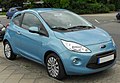
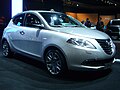
The architecture has been developed for production by Fiat in Poland, in Mexico by Chrysler (when the Fiat 500 was adapted for sale in the USA) and later in Italy at Pomigliano d'Arco plant (when production of the Fiat Panda Mk3 began there). The Mini platform has a wheelbase of 2,299mm in the standard version (2,305mm in 4x4 version), which is used on the Fiat Panda Mk2. In 2007, the platform spawned two smaller three-door hatchbacks: the Fiat 500 and Ford Ka Mk2. A Long wheelbase version (2,390mm) of the platform was used in the Lancia Ypsilon Mk3, launched in 2011. In 2012, the third generation of Fiat Panda was launched, again using the standard-wheelbase version, but at the 2,305mm wheelbase previously used only for the 4x4 mode. Vehicles based on Fiat Mini platform:

[edit]

Economy platform

[edit]

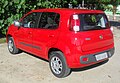
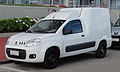
The Economy platform, is a chassis created for the small low cost vehicle produced by FCA in South America. It is a new platform introduced first with the Fiat Uno (codeproject 327) in 2010 assembly in Betim, Brasil. Fiat said "the Panda and Uno were born together in design and share the same concept, but have no mechanical parts in common".[5] Fiat claims that the Uno uses 82% new components, being based on the old Fiat Palio.[6] A long wheelbase version was also used in the second generation of Palio (326) and Grand Siena (326 3V). In 2014 Fiat introduced the Brazilian Fiorino based on the modified Uno (327) chassis with rear axle from the Fiat Strada pick up, and in 2016 the smaller Fiat Mobi introduced a new version of the Economy platform engineering to a lower cost.

The successor of the FCA Economy platform was the new FCA MP1 (Modular Platform 1) chassis introduced in 2017 with the new Fiat Argo. Vehicles based on Fiat Economy ("Low Cost") platform:

[edit]

References

[edit]
Revisions and contributorsEdit on WikipediaRead on Wikipedia
from Grokipedia
The Fiat Mini platform is a front-wheel-drive automobile developed by for cars, characterized by its flexibility to support various body styles from hatchbacks to small minivans and crossovers. Introduced with the second-generation in 2003, it features a standard of 90.6 inches (230 cm) and has been updated over time to accommodate increased track widths and enhanced interior space while maintaining efficient production lines capable of 260,000 units annually at facilities like the Pomigliano d'Arco plant in . Shared with Ford for models like the second-generation Ka, the platform—also referred to as the Mini Global Architecture—underpins key models including the Fiat Panda (2003–2012), Fiat 500 (2007–2024), and second-generation Ford Ka (2008–2016), enabling shared components and cost efficiencies across Fiat Group and partner vehicles. It has also supported variants like the Lancia Ypsilon (third generation, 2011–2024) and performance-oriented Abarth 500, with optional all-wheel-drive systems in models such as the Panda 4x4 for improved versatility in urban and light off-road use. By 2010, annual production of Mini platform-based vehicles stood at around 500,000 units, primarily Fiat-branded, with Fiat projecting expansion to 900,000 units by 2012 and 1.2 million by 2014 through adaptations for global markets including North America. The platform's design emphasizes modularity, allowing variations in dimensions for city car applications and integration of engines ranging from efficient 1.2-liter petrol units to diesel Multijet options, contributing to the environmental adaptability of vehicles like the Hydrogen prototype. As part of Fiat's broader strategy under the merger (forming in 2014), the Mini platform served as a foundational element for affordable, high-volume small-car production. As of 2025, it continues to underpin the , though newer models are transitioning to platforms like STLA Small for electric vehicles in the .

Overview

Production Timeline

The Fiat Mini platform's development began in the late 1990s at 's engineering center in , , where engineers focused on creating a versatile, compact suitable for urban vehicles across the Fiat lineup. This initiative aimed to replace older platforms with a more that could support various body styles and powertrains while optimizing production efficiency for small cars. Production of the platform commenced in 2003 with the launch of the second-generation (Mk2), marking the first vehicle to utilize the architecture in series manufacturing at 's facilities. Initially overseen by Auto as the primary automotive division, the platform's rollout aligned with the company's strategy to revitalize its city car segment amid evolving European market demands for compact, fuel-efficient models. Over the subsequent years, manufacturing transitioned alongside corporate restructurings: from Auto (2003–2007) to Group Automobiles (2007–2014), reflecting the integration of 's broader automotive operations under the Fiat Group umbrella. In 2014, following Fiat's acquisition of full control over Chrysler Group, the entity reorganized into (FCA), under which the Mini platform continued to underpin key models through expanded global production. This period saw the platform's adaptability tested with prototypes like the hydrogen-powered introduced in 2006, an early milestone in alternative propulsion integration. The structure further evolved in 2021 with the merger of FCA and Groupe PSA, forming , which has since managed ongoing refinements and extensions of the platform's lifecycle. As of 2025, the Fiat Mini platform remains in active production under , primarily supporting the third-generation (introduced in 2011), with manufacturing extended at the Pomigliano d'Arco plant in until at least 2027 to meet sustained demand for affordable city cars. As of 2025, the platform continues to support the third-generation in production until at least 2027, though newer variants like the Fiat Grande Panda have transitioned to the Smart Car platform. A significant milestone in recent years includes the platform's adaptation for hybrid powertrains in models like earlier variants.

Platform Layout and Class

The Fiat Mini platform serves as a dedicated city car architecture for subcompact vehicles within the , prioritizing urban maneuverability through its compact footprint and lightweight construction. This design emphasizes and accessibility in densely populated environments, enabling agile navigation in city traffic while maintaining affordability for everyday use. At its core, the platform adopts a transverse front-engine layout, with the mounted ahead of the front and primarily configured for (FWD) to optimize space and in small vehicles. An optional four-wheel-drive (4WD) variant is available, featuring an on-demand system that engages the rear wheels through a hydraulically actuated multi-plate for improved traction on varied surfaces without compromising the base FWD efficiency. The platform's modular architecture facilitates sharing across Fiat Group (now ) models, allowing components like the and mounting points to be adapted for multiple city car applications, which enhances production scalability and cost-effectiveness in the mini segment. This supports variations in body styles and features while upholding the platform's focus on versatile urban performance.

Development

Origins and Concept

The development of the Mini platform originated in the late 1990s, when engineers in , , sought to create a new foundational architecture for compact vehicles amid evolving demands for efficiency and affordability in urban mobility. This initiative drew inspiration from the Ecobasic , a forward-thinking prototype unveiled in December 1999 at the Bologna Motor Show, which embodied 's vision for sustainable, low-cost city cars. Designed by Auto's integrated teams in marketing, design, engineering, and logistics, the Ecobasic served as a for innovative solutions, reflecting the company's century-long expertise in compact automobiles while addressing customer needs for practicality and environmental responsibility. Central to the Ecobasic's concept was a focus on extreme and , powered by a 1.2-liter JTD Multijet second-generation with common-rail injection, capable of achieving less than 3 liters per 100 kilometers while meeting Euro 4 emissions standards. The platform's goals emphasized versatility and cost-effectiveness, aiming to underpin a range of small cars that could succeed aging architectures like the Fiat Type Zero platform through modular construction that facilitated easy customization and body style variations. This approach prioritized recyclability and low running costs, positioning the Mini platform as a flexible base for future Group city cars. Early design efforts centered on lightweight construction to enhance performance and economy, with the Ecobasic weighing just 750 kg thanks to extensive use of body panels and avoidance of expensive materials. Aerodynamic optimization, achieving a of 0.28, further supported the emphasis on adaptability, allowing the platform to support diverse configurations while maintaining safety and . These conceptual prototypes laid the groundwork for a scalable that balanced with economic viability, influencing Fiat's for compact development into the 2000s.

Replacement of Predecessor

The Fiat Mini platform succeeded the Fiat Type Zero platform, which had been introduced in 1980 and underpinned early small-car models including the original and the . By the early 2000s, the Type Zero platform had become increasingly obsolete, failing to meet evolving European emissions regulations such as Euro 3 and Euro 4 standards, which demanded significant reductions in CO2 and pollutant outputs from compact vehicles. Additionally, heightened safety mandates from organizations like required advanced crash structures and occupant protection features that the aging architecture could not economically accommodate, while shifting urban mobility needs emphasized lighter, more agile designs for congested city environments. These pressures necessitated a comprehensive replacement to sustain Fiat's competitiveness in the A- and markets. The transition to the Mini platform delivered key advantages in design flexibility and performance integration. Its modular construction enabled shared components across multiple models, reducing development costs and production complexity compared to the more rigid Type Zero setup, thereby supporting 's goal of platform efficiency during resource-constrained times. Enhanced crash safety was achieved through reinforced high-strength zones and optimized energy absorption, aligning with European safety and emissions standards, with later adaptations for global markets including the U.S., representing a substantial upgrade over the predecessor's basic unibody structure. In 2005, entered a collaboration with Ford to jointly develop and produce vehicles on an updated version of the platform, leading to shared use in models like the second-generation starting in 2008. Furthermore, the platform facilitated seamless incorporation of advanced powertrains, such as efficient Multijet diesel and later TwinAir petrol engines, allowing compliance with stricter environmental norms without compromising the compact footprint essential for city cars. This platform shift occurred amid Fiat's broader recovery efforts following severe financial difficulties in the , marked by declining , high debt, and operational inefficiencies that nearly led to . The launch of the second-generation Panda on the Mini platform symbolized a strategic pivot under new leadership, prioritizing innovative, cost-effective small vehicles to rebuild profitability and regain European dominance, with production efficiencies contributing to over 2 million units built in the ensuing decade.

Technical Specifications

Dimensions and Materials

The Fiat Mini platform features a compact measuring 2,299 mm in its standard configuration, providing a balanced foundation for city car applications. This dimension supports agile maneuverability while accommodating essential interior space. For four-wheel-drive variants, the wheelbase is slightly extended to 2,305 mm to integrate additional components without compromising the platform's core footprint. A long-wheelbase iteration stretches to 2,390 mm, enabling adaptations for models requiring enhanced rear passenger or cargo capacity, such as the , with further extensions up to 2,612 mm for minivan derivatives like the . Overall vehicle lengths derived from the platform typically range from 3,500 mm to 4,300 mm, allowing flexibility for various body styles while maintaining a subcompact to compact profile suited to urban environments. The body emphasizes rigidity and occupant safety through a high-strength , incorporating reinforced panels and impact-absorbing zones. Approximately 85% of the body by weight consists of zinc-coated panels, with 73% double-galvanized for superior resistance and durability. Weight considerations prioritize lightweight efficiency, with curb weights generally falling between 800 kg and 1,000 kg depending on , trim, and configuration, which contributes to improved fuel economy and handling responsiveness. For instance, base models achieve around 840 kg, while four-wheel-drive versions approach 1,050 kg due to added structural reinforcements. These material and dimensional choices reflect the platform's design ethos of combining structural integrity with minimal mass for versatile small-car production.

Suspension and Drivetrain

The Fiat Mini platform employs a front suspension system across all variants, providing independent wheel control and efficient space utilization in the compact chassis. This setup, combined with an , contributes to responsive handling in urban environments while maintaining ride comfort. For standard front-wheel-drive (FWD) models, the rear suspension utilizes a , which offers a balance of simplicity, cost-effectiveness, and adequate load-carrying capacity for city cars. This semi-independent , also featuring an , ensures stability during cornering without the complexity of fully independent systems. In contrast, four-wheel-drive (4WD) configurations adopt an independent rear suspension with semi-trailing arms, enhancing traction and articulation on varied terrain while integrating with the platform's modular architecture. The platform's is predominantly FWD, with mounted transversely to optimize in the narrow engine bay. A 4WD option is available on select applications, incorporating a permanent all-wheel-drive system that employs an (ELD) to distribute between wheels when grip is lost, improving off-road capability without compromising on-road efficiency. Engine compatibility spans 0.9-liter to 1.4-liter units, accommodating efficient petrol options like the TwinAir two-cylinder turbo and diesel variants such as the 1.3-liter Multijet, all integrated via transverse mounting for seamless power delivery.

Applications

European City Cars

The Fiat Mini platform underpinned a series of compact city cars designed specifically for the dense urban landscapes of Europe, prioritizing agility, fuel efficiency, and space utilization in tight spaces. These vehicles leveraged the platform's modular architecture to deliver accessible entry-level models from Fiat and its partners, with adaptations for varying market segments while maintaining a core front-wheel-drive layout. The second-generation Fiat Panda, produced from 2003 to 2012, marked the debut application of the Fiat Mini platform as a versatile five-door suited to city commuting. It featured a range of efficient petrol and diesel engines, starting with a 1.1-liter unit delivering 54 horsepower, and included a 4x4 variant launched in 2005 equipped with a 1.2-liter engine producing 60 horsepower for enhanced traction in varied conditions. Introduced in 2007 and remaining in production, the adopted the platform for its retro-inspired three-door body, blending nostalgic styling with modern compact efficiency as a quintessential European city car. Ford utilized a licensed version of the platform for the second-generation Ka from 2008 to 2016, creating an economical subcompact with Fiat-sourced 1.2-liter engines and shared underpinnings to compete in the budget segment. The third-generation Lancia Ypsilon, built from 2011 to 2024, stretched the platform's wheelbase to 2,390 mm for a more premium small experience, incorporating higher-grade materials and suspension tuning for refined urban handling. Across these models, design adaptations emphasized compliance through features like multiple airbags and rigid body structures—evidenced by the 500's three-star rating in 2007 and subsequent updates—while sub-3.7-meter lengths and tight turning circles optimized them for European urban parking constraints.

South American Adaptations

The Fiat Mini platform underwent significant adaptations for South American markets through the creation of the Economy variant, a low-cost optimized for local and challenging road conditions in emerging economies. Introduced in with the in 2016, this platform shares core architecture with the European Mk3 while incorporating cost reductions and enhanced durability features. The platform, as utilized in models like the Mk3, has been adapted into the Economy variant for local production in and , supporting small cars like the Mobi tailored to regional demands. These adaptations include reinforced suspensions and higher ground clearance in select trims, reaching up to 19 cm in models like the Mobi to better handle potholed urban streets and light off-road terrain prevalent in . Integration with local production at facilities such as Fiat's Betim plant in allows for efficient assembly and component sourcing, reducing costs while maintaining the platform's compact of approximately 2.3 meters for maneuverability in dense cities. In high-volume markets like , these vehicles fulfill the role of affordable urban transport, with the Mobi achieving annual sales of around 70,000 units by emphasizing and low maintenance.

Variants

Economy Platform

The Economy Platform represents a cost-optimized of the Fiat Mini platform, specifically tailored for emerging markets with an emphasis on affordability and . Introduced in 2010 alongside the second-generation in , this variant was engineered locally to meet the demands of budget-conscious consumers in , featuring a stretched architecture derived briefly from the core Mini platform's modular design. Key structural differences include an extended to enhance interior and ride comfort without increasing overall complexity, measuring 2,421 mm for models like the Palio and approximately 2,511 mm for sedans such as the Grand . This configuration allowed for greater passenger and capacity while maintaining the platform's lightweight construction using high-strength in critical areas to reduce material costs. The prioritized simplified components, such as basic suspension setups with MacPherson struts at the front and a torsion beam rear axle, along with entry-level engines like the 1.0-liter Fire series, to minimize production expenses and ensure reliable basic functionality for urban and rural use. Principal models built on the Economy Platform include the (produced from 2010 to 2021), the Fiorino cargo van (introduced in 2014 and ongoing), and the entry-level Mobi city car (launched in 2016 and continuing production). These vehicles were manufactured primarily at Fiat's Betim plant in , where adaptations like flex-fuel compatibility for ethanol-gasoline blends further supported local market needs by lowering operating costs. As part of Chrysler's (later ) strategy to modernize its lineup, the Economy Platform began a phased transition to the more advanced MP1 architecture starting in 2017, with the serving as the inaugural model on the new platform, offering improved safety features and efficiency while gradually replacing older Economy-based vehicles.

Four-Wheel-Drive Configurations

The four-wheel-drive configurations of the Fiat Mini platform were offered as optional features on the second generation (2003–2012) and third generation (2011–present), enhancing traction for light off-road and adverse weather scenarios while preserving the platform's compact urban focus. In the second-generation Panda, the system employed an electronically controlled center differential for on-demand power transfer to the rear wheels, integrated with a five-speed manual gearbox and tuned ESP for slippery conditions like or . The wheelbase was extended to 2,304 mm to fit the , providing modest ground clearance of 188 mm for improved stability without compromising maneuverability. This setup delivered enhanced light-duty off-road performance, such as navigating rural tracks or inclines, but operated primarily in for efficiency, engaging 4WD only as needed rather than full-time. Available with 1.2-liter petrol (60 hp) or 1.3 Multijet diesel (69–75 hp) engines, it catered to European buyers seeking crossover versatility in models like the Panda 4x4. The third-generation iteration advanced to a torque-on-demand 4WD with an electronically controlled coupling and electronic (ELD), button-activated for traction on low-grip surfaces, paired with a six-speed manual in some variants. The measured approximately 2,300 mm, supporting engines including the 0.9 TwinAir Turbo (85 hp) and 1.3 Multijet II diesel (75 hp), both with Start&Stop for efficiency. Building on the platform's torsion beam rear suspension, these configurations raised ground clearance to 150–160 mm (about 10–20 mm more than the standard model) and used mud/snow tires, enabling capable handling of steep rural lanes or winter drives without a low-range or full-time engagement. Primarily marketed in since 2012 and continuing as of 2025, they appealed to users wanting a practical city car with added all-weather security for light crossover duties.

Production and Legacy

Manufacturing Locations

The Fiat Mini platform vehicles have been primarily manufactured at several key facilities in and the to serve global markets. In , the plant near has been a central hub for assembly, particularly for the , with production commencing there in the late to support European demand. Additionally, the Mirafiori plant in has handled production, including the hybrid variants starting in 2025, with plans for 5,000 units by the end of 2025 and scaling to over 100,000 annually thereafter. In Poland, the plant has served as a major production site since the early 2000s, focusing on models like the and , with the facility achieving over 2 million Panda units by 2011 and total output exceeding 6.2 million vehicles by that period. This site benefited from post-2000 expansions driven by cost efficiencies, as shifted more assembly to to optimize labor and logistics amid rising Western European expenses, including a €755 million in 2020 for hybrid and production. For the , the Assembly Plant in produced the from 2010 to 2019, exporting units to North and n markets and reaching one million units by 2012 through dedicated lines for variants including the electric 500e. In , the Betim plant in , , has been the core facility for platform-based models such as the , Mobi, and Fiorino since the , with ongoing production supporting local adaptations and achieving record monthly outputs like 82,000 units in August 2012. Collectively, these sites enabled peak annual production exceeding one million units across the platform by the mid-2010s, reflecting Fiat's strategy for scalable, region-specific manufacturing.

Market Impact and Successors

The Fiat Mini platform has significantly contributed to Fiat's commercial success in the small car segment, enabling the production of millions of vehicles worldwide. Key models such as the Fiat 500, which surpassed 3 million units by 2024, and the third-generation Panda, a mainstay in Europe since 2011, have driven substantial sales volumes, with the Panda alone accounting for a large share of Fiat's European market leadership. This platform's versatility and cost-efficiency boosted Fiat's dominance in Europe's city car market, where it consistently held top positions, exemplified by the Panda's role in achieving over 10% market share for the brand in key countries like Italy. As part of ' broader city car strategy, the Fiat Mini platform has served as a foundational architecture, supporting efficient production and influencing cross-brand applications. Notably, it underpinned the second-generation from 2008 to 2016, produced alongside Fiat models in shared facilities to leverage . This legacy continues to inform ' focus on affordable urban mobility, with the platform enabling high-volume output that solidified 's position as the group's top-selling brand globally in recent years. Looking to successors, the Fiat Mini platform is transitioning to more advanced architectures tailored for . In , it is evolving toward the STLA Small platform, which will support the next-generation Fiat 500e, delayed to 2029 amid slower EV adoption. The current Fiat 500e employs a dedicated EV variant derived from the Mini design, while hybrid iterations of models like the 500 persist on the platform into 2025. In , the platform adapted into the Economy variant and later the MP1 architecture from 2017, powering vehicles such as the and for regional needs. Overall, plans a full phase-out of the Mini platform for pure EV models by 2030, aligning with the brand's goals.

References

Add your contribution
Related Hubs
User Avatar
No comments yet.