Hubbry Logo
Fran AllisonFran AllisonMain
Open search
Fran Allison
Community hub
Fran Allison
logo
8 pages, 0 posts
0 subscribers
Be the first to start a discussion here.
Fran Allison
Fran Allison
from Wikipedia

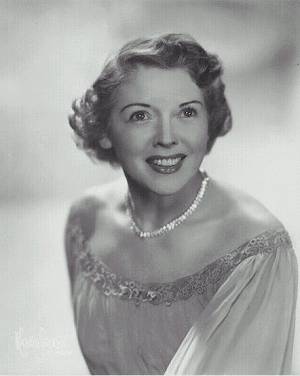
Frances Helen Allison (November 20, 1907 – June 13, 1989) was an American television and radio comedienne, personality, and singer.

Key Information

She is best known for her starring role on the weekday NBC-TV puppet show Kukla, Fran and Ollie, which ran from 1947 to 1957, occasionally returning to the air until the mid-1980s. The trio also hosted The CBS Children's Film Festival, introducing international children's films, from 1967 to 1977.

Biography

[edit]

Early years

[edit]

Frances Helen Allison was born to Jesse Louis Allison and Anna M. "Nan" (née Halpin) Allison in La Porte City, Iowa, where her father worked as a clerk in a grocery store until his stroke in 1913. They then moved in with her paternal grandparents, David Allison, a Civil War veteran, and Susan (née Booth) Allison. Their house still stands on Sycamore Street in LaPorte City.[1]

A 1927 graduate of Coe College, she was a member of Alpha Gamma Delta.[2] She was a fourth-grade teacher for four years in Schleswig and Pocahontas (both in Iowa),[1] before beginning her broadcasting career at WMT[3] in Cedar Rapids, Iowa. (Another source describes WMT as "Waterloo radio station WMT." It moved to Cedar Rapids in 1935.)[3] In 1934, Allison was among "14 sectional winners in the Hollywood Hotel radio contest."[4]

Radio

[edit]
Allison as Aunt Fanny

She moved to Chicago, Illinois in 1937, where she was hired as a staff singer and personality on NBC Radio.[5] A July 26, 1937, newspaper item reported, "Fran Allison, singer of WMT, Waterloo, Ia., makes her network debut in the WJZ-NBC club matinee at 3."[6]

Beginning in 1937, she was a regular performer on The Breakfast Club,[3] a popular Chicago originating national radio show, and was a fixture for 25 years as "Aunt Fanny", a gossipy small-town spinster.[7] Her Aunt Fanny character also appeared on the ABC-TV series, Ozark Jubilee, during the late 1950s. While in Chicago, she was also heard on Those Websters.[1]

Kukla, Fran and Ollie

[edit]

In 1947, the director of WBKB-TV in Chicago asked Burr Tillstrom if he could put together a puppet show for children, and he asked Allison,[3] whom he had met during a World War II war bond tour, to join the show.[8]

The show was an early American television show using puppets. It was created for children, but was soon watched by more adults than children. It did not have a script and was entirely ad-libbed. It was broadcast from Chicago between October 13, 1947, and August 30, 1957.[9] Comedienne Fran Allison starred, interacting with hand puppets Kukla and Ollie (and sometimes other puppets) whose puppeteer was the show's creator, Burr Tillstrom.[citation needed]

Other television work

[edit]

Her television career continued after the initial run of Kukla, Fran and Ollie: in the late 1950s, she hosted The Fran Allison Show, a panel discussion TV program in Chicago; and appeared in television musical specials displaying her singing abilities, including Many Moons (1954), Pinocchio with Mickey Rooney (1957),[10] Damn Yankees (1967) with Phil Silvers and lastly Miss Pickerell (1972).[citation needed]

She had her own program, The Fran Allison Show on WGN-TV (1958–1960).[11] In the 1980s, she hosted Prime Time, a show for senior citizens, on KHJ-TV in Los Angeles.[5]

Recordings

[edit]

Allison made records for the RCA Victor label. She had two minor pop hits. Her recording of "Peter Cottontail" charted at #26 around Easter of 1950. The next year her recording of "Too Young" achieved position #20. In both recordings she is backed by Jack Fascinato, who was the orchestra leader of Kukla, Fran and Ollie.[12]

Recognition

[edit]

In 1950, Allison was nominated for an Emmy Award as Most Outstanding Kinescoped Personality.[13] In 1959, she won two Chicago Emmy awards.[14] In 2002, she was a Silver Circle honoree of the Chicago/Midwest Chapter of the National Academy of Television Arts and Sciences.[15]

In 1967, Iowa Wesleyan University awarded her an honorary doctorate of letters.[16]

Personal life

[edit]

Fran Allison was married to music publisher Archie Levington from 1940 until his death in 1978.[3]

In her free time, she devoted her efforts to promoting mental health. From a profile in the Freeport Journal-Standard, "For mental health, she will travel anywhere, anytime."[17]

Allison was on the board of Pacific Pioneer Broadcasters.[18]

Death

[edit]

In later life, Allison lived in Van Nuys, California. She died on June 13, 1989, aged 81.[19] from myelodysplasia in Sherman Oaks, California,[20] She was buried in Mount Calvary Cemetery in Cedar Rapids, Iowa. She was survived by her brother, James "Lynn" Allison, a saxophonist.[21]

Legacy

[edit]

For contributions to the television industry, Allison was honored with a star on the Hollywood Walk of Fame at 6763 Hollywood Boulevard.[22] She was inducted into the Chicago Television Academy's Silver Circle in 2002.[23]

She appeared with puppets Kukla and Ollie on a 44¢ US commemorative postage stamp in the "Early TV Memories" series, issued on August 11, 2009.[24]

References

[edit]
[edit]
Revisions and contributorsEdit on WikipediaRead on Wikipedia
from Grokipedia
Frances Helen Allison (November 20, 1907 – June 13, 1989) was an American radio and television personality, singer, and actress, best known for her role as the human host alongside the puppets Kukla and Ollie on the pioneering children's program , which aired from 1947 to 1957 and attracted millions of viewers during its prime-time run. Born in La Porte City, , she graduated from in 1928 with a degree in music and education before teaching fourth grade in rural Iowa communities for four years. Allison began her broadcasting career in the at radio station WMT in , where she created the character "Aunt Fanny" and gained regional popularity, later moving to Cedar Rapids and then in 1937 to work as a staff singer and announcer for Radio. By 1947, she joined puppeteer on Kukla, Fran and Ollie, debuting on television in 1948 as the warm, improvisational foil to the puppets, a role that earned the show Peabody and and made her one of early television's most recognizable figures. The program, which reached 6 million viewers by 1950, was revived in the , and Allison's natural rapport with the characters—whom she described as "never anything but real to me"—helped define live children's programming in the pre-recorded era. Following the original run of , Allison hosted her own local program, The Fran Allison Show, in during the late 1950s and later served as the host of The Children's Film Festival from 1967 to 1977, introducing international short films to young audiences. In the 1960s, she also hosted a show and , a program for seniors on KHJ-TV in , while appearing in commercials and making guest spots on other television series. Nominated for an Emmy in 1950 and awarded an honorary doctorate from in 1967, she died of bone marrow failure in Sherman Oaks, California, at age 81, leaving a legacy as a versatile performer who bridged radio's golden age and television's formative years.

Biography

Early life

Frances Helen Allison was born on November 20, 1907, in the small rural town of La Porte City, . Her father worked as a grocer but was frequently ill during her childhood, while her mother, Nan, suffered from , leading Allison to be raised primarily by her grandparents. This family dynamic, set against the backdrop of rural life, was influenced by her maternal grandmother, Bridget Bannon Halpin, a former soloist at Dublin Cathedral, whose musical background likely sparked Allison's early interest in performance. She had a brother, Lynn, who later became a professional musician with the band. Allison pursued higher education at in , majoring in music and education. She graduated in 1928 with a teaching certificate and was active in campus life, including the Vesper Choir, Girls' Glee Club, and sorority. Her first exposure to broadcasting came during college in 1927, when she performed on the station KWCR. Following graduation, Allison taught for four years in one-room schoolhouses in rural communities, including Schleswig and , earning a modest salary of around $100 per month. These experiences helped develop her public speaking and performance abilities, as she engaged with students in intimate, multi-grade settings typical of farm-town education. In 1932 or 1933, Allison transitioned into broadcasting by joining WMT radio in (which later relocated to Cedar Rapids), as a sustaining . She took on versatile roles as a singer, , and performer, delivering spot announcements, cooking lessons, and commercials for $10 per week plus a 10% commission on she secured. Among her early creations was the character Aunt Fanny for a local program, marking her initial foray into character-driven entertainment.

Radio career

In 1937, Fran Allison relocated to , , where she secured a position as a staff singer and personality at Radio, marking her entry into major network broadcasting. There, she quickly established herself as a versatile performer, appearing in soap operas such as Meet the Meeks, singing in commercials, and contributing to variety programs like KC Jamboree. Her adaptability allowed her to handle diverse roles, from dramatic parts in serialized dramas to lighthearted musical segments, honing her ability to engage listeners through voice alone. Allison's most enduring radio role began that same year on Don McNeill's The Breakfast Club, a popular morning originating from , where she portrayed "Aunt Fanny," a folksy, gossipy next-door neighbor known for on conversations and interrupting with witty, opinionated asides. The character, characterized by its interactive and improvisational style, became a fixture on the program, with Allison ad-libbing lines to create a sense of spontaneous community involvement that resonated with audiences. She maintained this role for 25 years, from 1937 until 1962, contributing to the show's long-running appeal as a daily ritual for millions of listeners. Beyond , Allison frequently sang on other NBC variety programs, showcasing her vocal talents in musical interludes and ensemble performances. She also gained recognition for her expertise in ad-libbed commercial singing, effortlessly incorporating product endorsements into songs with humor and charm, which enhanced her reputation as a multifaceted radio artist. Allison's radio tenure profoundly shaped her career, building essential skills in improvisation, character development, and direct audience engagement that later informed her television performances.

Kukla, Fran and Ollie

Kukla, Fran and Ollie debuted on October 13, 1947, initially as the local program Junior Jamboree on Chicago's WBKB station, marking it as one of the earliest regularly scheduled television shows in the United States. It transitioned to the network for national broadcast on January 12, 1949, airing weekdays in a half-hour format before shortening to 15 minutes in 1951, and continued until its conclusion on August 30, 1957, after a brief stint on ABC starting in 1954. Broadcast live from studios, the show reached audiences across the country via and later microwave relay, amassing a peak viewership of around 4 million daily. The program's format centered on entirely ad-libbed interactions without scripts, featuring Burr Tillstrom operating and voicing a cast of hand puppets, including the innocent Kukla and the mischievous Ollie, as part of the "Kuklapolitan Players" ensemble. Tillstrom, who created the characters during his childhood and refined them through early radio and performances, manipulated the puppets from behind a small stage in real time, responding spontaneously to events and generating improvised songs and skits. Production emphasized a low-budget charm with minimal sets, a single stationary camera, and even audible laughter from the off-stage crew, fostering an intimate, unpolished atmosphere that avoided condescension toward young viewers by treating them as intelligent participants in a whimsical world. Fran Allison played the role of the human host, appearing as her authentic self to serve as the "straight woman" who grounded the puppets' antics through natural conversations, musical numbers, and gentle guidance, drawing on her radio-honed improvisational skills to maintain flow and rapport. Her warm, engaging presence bridged the puppet world with the audience, enabling the show to captivate both children and adults—over 60% of viewers were grown-ups at its height—by blending humor, music, and subtle without simplifying content for youth. This dynamic made Allison indispensable, as Tillstrom often credited her sincere interactions for elevating the puppets' charm and creating emotional connections that prompted up to 10,000 fan letters per day. Notable episodes highlighted the show's versatility, such as the June 1953 production of "St. George and the Dragon," which incorporated orchestral elements, while guest appearances by celebrities like conductor and various songwriters added musical depth and real-world flair to the ad-libbed proceedings. These segments, often tied to current events or holidays, exemplified the program's live, improvisational spirit and its role in pioneering sophisticated children's programming during television's formative years.

Other television and film work

Following the success of Kukla, Fran and Ollie, Fran Allison expanded her television presence into variety programming and hosting roles. From 1958 to 1960, she hosted The Fran Allison Show on in , a program that featured conversations on various topics alongside music and comedy segments. In 1967, Allison returned to children's programming as co-host of the CBS Children's Film Festival, alongside puppeteers and puppets Kukla and Ollie, presenting international short films to young audiences with her engaging introductions and commentary; the series ran until , airing on weekends and emphasizing educational content through global cinema. Allison also appeared in notable television specials, including the 1957 production of , where she portrayed the Blue Fairy in this live musical adaptation starring . In 1967, she took on the role of Boyd, the wife of the protagonist, in the television adaptation of the musical , directed by Kirk Browning and featuring and . Later in her career, Allison shifted toward programming for adult audiences, hosting on KHJ-TV in Los Angeles during the 1980s, a local series focused on topics relevant to senior citizens, including interviews and lifestyle discussions. While her work primarily remained in television, these projects highlighted her versatility beyond puppetry, with no major theatrical film roles documented.

Recordings

In the late 1940s, Fran Allison signed with RCA Victor Records, launching a recording career that capitalized on her radio-honed vocal skills in singing commercials and . Her breakthrough single, (RCA Victor 20-3727), released in 1950, reached No. 26 on the Best Sellers chart, its playful lyrics and her buoyant, whimsical delivery capturing Easter's festive spirit. The following year, Allison covered Nat King Cole's hit "Too Young" (RCA Victor 20-4105), which climbed to No. 20 on the in July 1951, her warm, intimate interpretation adding a gentle charm to the romantic . Beyond these pop successes, Allison recorded numerous holiday-themed tracks, including "The Angel" and "Christmas in My Heart" (RCA Victor 20-3938) in 1950, which highlighted her versatile phrasing suited to seasonal storytelling. She also produced songs tied to , such as medleys like "Here We Are / Mr. K and Mr. O / Hello Cutie" on the 1955 (RCA Victor LPM-1064), where her commercial-singing background infused the tracks with an approachable, promotional energy that engaged young audiences. Allison's RCA Victor discography, spanning approximately 20 singles and albums from 1949 to the mid-1950s, focused on children's novelty records and family-oriented tunes, such as Songs of Fun (RCA Victor WY-406) and puppet-show adaptations, contributing to the era's burgeoning market for whimsical, educational audio content that bridged radio jingles with kid-friendly melodies.

Recognition

Fran Allison received significant recognition for her pioneering work in early television and radio broadcasting. In 1950, she was nominated for a Primetime Emmy Award as the Most Outstanding Kinescoped Personality for her role on . This nomination highlighted her engaging on-screen presence as the human host interacting with the puppet characters, marking one of the earliest accolades for a female performer in children's programming. Throughout the 1950s, Allison's contributions to local Chicago television earned her further honors. In 1959, she won two Chicago Emmy Awards: one for Best Female Saleswoman in commercials and another for Best Female Program Host/M.C., recognizing her versatile performances in both advertising and hosting roles. These awards underscored her impact on the Chicago broadcasting scene, where she hosted panel discussions and commercials with her signature warmth and humor. For her broader achievements in television, Allison was awarded a star on the at 6763 in the television category, dedicated on February 8, 1960. Allison's lifetime accomplishments extended to academic and industry tributes. In 1967, conferred upon her an honorary degree in recognition of her distinguished career in entertainment. Peers and organizations frequently acknowledged her during her active years; for instance, her role on contributed to the program's multiple Emmy wins and its 1986 induction into the Television Academy Hall of Fame, where Allison's contributions were celebrated alongside creator . In 2002, the Chicago Television Academy inducted her posthumously but reflectively into its Silver Circle, honoring her long-term impact on the medium over 25 years of service.

Personal life

Fran Allison married music publisher Archie Levington in 1940, beginning a devoted that lasted until his in 1978. The couple, who shared different religious faiths, built a strong bond rooted in mutual respect and support, with Levington providing emotional encouragement during Allison's professional highs and personal challenges, including her recovery from a severe car accident and early in their . They resided in a renovated coach house on Chicago's North State Parkway, where Levington pursued his hobbies by installing custom gadgets around the home. The marriage remained childless following the tragic loss of their baby, allowing Allison to channel her energies primarily into her burgeoning radio and television career while maintaining a close family dynamic that included living with her mother, Nan. In her personal time, Allison enjoyed reading mystery novels and listening to soap operas for character inspiration, and the couple frequently visited nightclubs to scout new songs and talent, aligning with Levington's business interests. She also committed to volunteer work with the National Mental Health Association, traveling extensively to advocate for awareness. During the height of her career in the 1940s and 1950s, the Allisons remained based in , but following Levington's retirement, they relocated to in 1976, settling in before moving to nearby Sherman Oaks in her later years. This transition provided a quieter amid the demands of her ongoing media appearances, where she balanced public commitments with private pursuits like and community involvement.

Death

Fran Allison died on June 13, 1989, at the age of 81 from failure at Sherman Oaks Community Hospital in Sherman Oaks, California. She had resided in nearby and had been battling the condition, which impairs the production of blood cells, for an extended period. A memorial Mass was held for Allison on June 17, 1989, at 10 a.m. at St. Church in Sherman Oaks, with the eulogy delivered by conductor and entertainment personality . She was subsequently buried at Mount Calvary Cemetery in , near her birthplace. Her passing prompted tributes from contemporaries, highlighting her enduring appeal. Chicago Mayor remarked, "Fran Allison was synonymous with , delighting several generations... Her passing will be mourned by everyone who recalls the joy she brought." The timing of her death followed her active involvement in 1980s television, including hosting the Los Angeles-based program Prime Time for senior citizens, which underscored her continued connection to audiences later in her career.

Legacy

Cultural impact

Fran Allison's portrayal in Kukla, Fran and Ollie exemplified a pioneering approach to early television programming, serving as a vital bridge between adult and child audiences through its entirely unscripted, improvisational format. As the show's human host, Allison engaged in spontaneous interactions with puppeteer Burr Tillstrom's characters, creating engaging content that appealed to families by blending whimsy with sophisticated topics like politics, literature, and holidays, often eliciting on-air laughter and genuine chemistry. This ad-libbed style, which debuted nationally on NBC in 1949, transformed children's television from rigid scripts to lively, unrehearsed performances that captured the imaginations of viewers across generations, including high-profile fans such as Orson Welles and John Steinbeck. The show's innovative use of and Allison's natural, warm interaction style profoundly influenced subsequent family-oriented programming, particularly in fostering educational and inclusive viewing experiences. By featuring non-stereotypical characters that tackled accessibly, inspired creators like and , directly shaping the development of and its emphasis on puppet-driven storytelling for broad appeal. Allison's role as the relatable human intermediary normalized these interactions, paving the way for puppetry's evolution into a tool for intergenerational entertainment and learning in shows like . Allison's prominence as a female host in the 1940s and 1950s significantly advanced women's visibility in broadcasting, positioning her as a non-stereotypical figure who combined comedy, singing, and improvisation without relying on conventional gender tropes. Ranked as the third most popular television personality in a 1950 Radio Daily poll—behind only Milton Berle and Arthur Godfrey—she anchored the show as its sole regular human performer, contributing to an inclusive production environment where women like producer Beulah Zachary and camera operator Rae Stewart held equal creative roles. Her success highlighted the potential for women to lead unscripted, intellectually engaging content in a male-dominated medium, influencing broader trends toward gender diversity in early TV. The enduring cultural appeal of Allison's work persists in , where Kukla, Fran and Ollie episodes are valued for their historical insight into live television's creative processes, supported by extensive archival preservation efforts. Over 700 surviving kinescopes have been digitized and made accessible online, allowing scholars to analyze the show's impact on and family media consumption, while institutions like the screen restored episodes to educate new audiences on its foundational role in American broadcasting. This preservation underscores Allison's legacy as a catalyst for thoughtful, audience-connecting content that transcended its era.

Posthumous honors

To mark the centennial of her birth in 2007, the Archive of American Television honored Allison with a retrospective feature, highlighting her role as the human host of and including archival interviews that praised her wit and versatility in bridging live puppetry with adult and child audiences. That same year, a 60th anniversary tribute to aired on WTTW's Chicago Tonight, showcasing restored clips from the that featured Allison alongside the puppets, emphasizing the show's enduring influence on American entertainment. Allison's legacy was further commemorated in 2009 when the United States Postal Service issued a 44¢ stamp as part of the "Early TV Memories" series, depicting her interacting with Kukla and Ollie to celebrate iconic programs from television's golden age. In the 21st century, episodes of Kukla, Fran and Ollie have gained renewed accessibility through digital archives and streaming platforms, allowing modern audiences to engage with Allison's performances; for instance, restored episodes are available on the Internet Archive, preserving her improvisational style for contemporary media histories and educational retrospectives. In 2020, the official Kukla, Fran and Ollie YouTube channel began posting digital transfers of kinescopes on a regular schedule. Additionally, in December 2023, the Chicago History Museum hosted "Kukla, Fran and Ollie Days," screening five freshly digitized episodes from 1951 to celebrate the show's legacy.

References

Add your contribution
Related Hubs
User Avatar
No comments yet.