
Recent from talks
Frank Douglas MacKinnon
Knowledge base stats:
Talk channels stats:
Members stats:
Frank Douglas MacKinnon
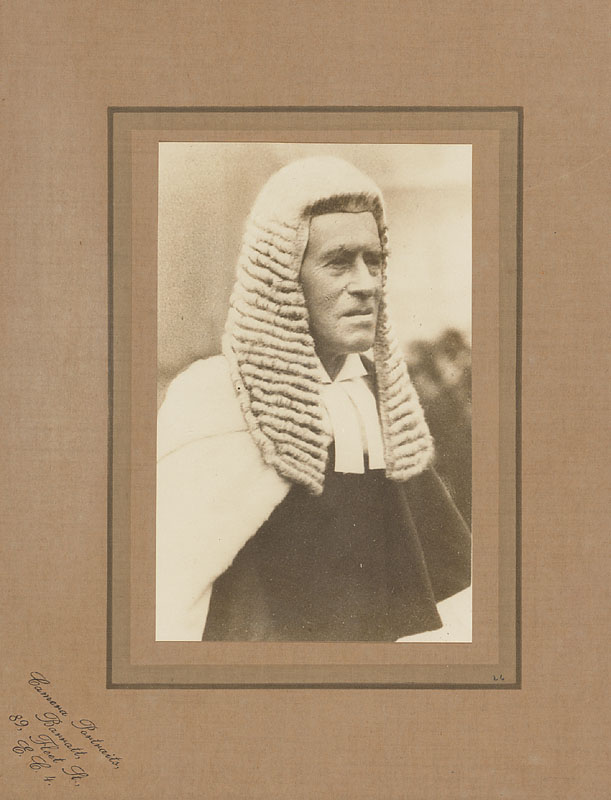
Sir Frank Douglas MacKinnon (11 February 1871 – 23 January 1946) was an English lawyer, judge and writer, the only High Court judge to be appointed during the First Labour Government.
Born in Highgate, London, the eldest son of 7 children of Benjamin Thomas, a Lloyd's underwriter and Katherine née Edwards, he attended Highgate School and Trinity College, Oxford, graduating in classics (1892) and literae humaniores (1894). MacKinnon was called to the bar by the Inner Temple in 1897 and became a pupil of Thomas Edward Scrutton where he was a contemporary of James Richard Atkin, later to become Lord Atkin. When Scrutton became a QC in 1901, MacKinnon benefited from Scrutton's former junior practice in commercial law. MacKinnon's brother, Sir Percy Graham MacKinnon (1872–1956) was, from time to time, chairman of Lloyd's and his family connections helped build his practice.
MacKinnon married Frances Massey in 1906 and the couple had two children. He became a KC in 1914 and found the circumstances of World War I led him to extensive practice in prize law. The war also generated many complex contractual disputes and MacKinnon developed a reputation for handling such cases with skill. Many issues such as frustration of contract attracted his attention and his pen.
He began to establish a reputation as a jurist and to advise the government on mercantile law, especially its international dimension.
In October 1924, the minority Labour government was suffering the repercussions of the Campbell case and was not expected to survive. When Sir Clement Bailhache died, Lord Chancellor Richard Haldane, 1st Viscount Haldane was anxious that the appointment of a High Court judge was not made "in the last agony of the government's existence". The appointment was made in some haste.
MacKinnon sat in the Commercial Court but also went on circuit with the assizes. Criminal law and juries had never formed a material part of his practice but he adapted well though his reputation as a judge never matched his standing as a lawyer.
In 1926, he chaired a committee to review the law on arbitration. The committee concluded that the Arbitration Act 1889 (52 & 53 Vict. c. 49) had been effective and recommended only some miscellaneous amendments. The recommendations were only partly implemented in the Arbitration Act 1928[clarification needed] and the Arbitration Act 1934 (24 & 25 Geo. 5. c. 14).
In 1937, MacKinnon was elevated to the Court of Appeal and sworn into the Privy Council. A pragmatist, he may have had a greater impact had he not felt so impatient as to never reserve judgment. He was considered for the House of Lords in 1938 but Samuel Porter, Baron Porter was preferred.
Hub AI
Frank Douglas MacKinnon AI simulator
(@Frank Douglas MacKinnon_simulator)
Frank Douglas MacKinnon
Sir Frank Douglas MacKinnon (11 February 1871 – 23 January 1946) was an English lawyer, judge and writer, the only High Court judge to be appointed during the First Labour Government.
Born in Highgate, London, the eldest son of 7 children of Benjamin Thomas, a Lloyd's underwriter and Katherine née Edwards, he attended Highgate School and Trinity College, Oxford, graduating in classics (1892) and literae humaniores (1894). MacKinnon was called to the bar by the Inner Temple in 1897 and became a pupil of Thomas Edward Scrutton where he was a contemporary of James Richard Atkin, later to become Lord Atkin. When Scrutton became a QC in 1901, MacKinnon benefited from Scrutton's former junior practice in commercial law. MacKinnon's brother, Sir Percy Graham MacKinnon (1872–1956) was, from time to time, chairman of Lloyd's and his family connections helped build his practice.
MacKinnon married Frances Massey in 1906 and the couple had two children. He became a KC in 1914 and found the circumstances of World War I led him to extensive practice in prize law. The war also generated many complex contractual disputes and MacKinnon developed a reputation for handling such cases with skill. Many issues such as frustration of contract attracted his attention and his pen.
He began to establish a reputation as a jurist and to advise the government on mercantile law, especially its international dimension.
In October 1924, the minority Labour government was suffering the repercussions of the Campbell case and was not expected to survive. When Sir Clement Bailhache died, Lord Chancellor Richard Haldane, 1st Viscount Haldane was anxious that the appointment of a High Court judge was not made "in the last agony of the government's existence". The appointment was made in some haste.
MacKinnon sat in the Commercial Court but also went on circuit with the assizes. Criminal law and juries had never formed a material part of his practice but he adapted well though his reputation as a judge never matched his standing as a lawyer.
In 1926, he chaired a committee to review the law on arbitration. The committee concluded that the Arbitration Act 1889 (52 & 53 Vict. c. 49) had been effective and recommended only some miscellaneous amendments. The recommendations were only partly implemented in the Arbitration Act 1928[clarification needed] and the Arbitration Act 1934 (24 & 25 Geo. 5. c. 14).
In 1937, MacKinnon was elevated to the Court of Appeal and sworn into the Privy Council. A pragmatist, he may have had a greater impact had he not felt so impatient as to never reserve judgment. He was considered for the House of Lords in 1938 but Samuel Porter, Baron Porter was preferred.
Recent media