Hubbry Logo
HighgateHighgateMain
Open search
Highgate
Community hub
Highgate
logo
8 pages, 0 posts
0 subscribers
Be the first to start a discussion here.
Contribute something
Highgate
Highgate
from Wikipedia

Highgate is a suburban area of north London in the London Boroughs of Camden, Islington and Haringey. The area is at the north-eastern corner of Hampstead Heath, 4.5 miles (7 kilometres) north-northwest of Charing Cross.

Key Information

Highgate is one of the most expensive London suburbs in which to live.[2] It has three conservation organisations: the Highgate Society, the Highgate Neighbourhood Forum and the Highgate Conservation Area Advisory Committee, to protect and enhance its character and amenities.

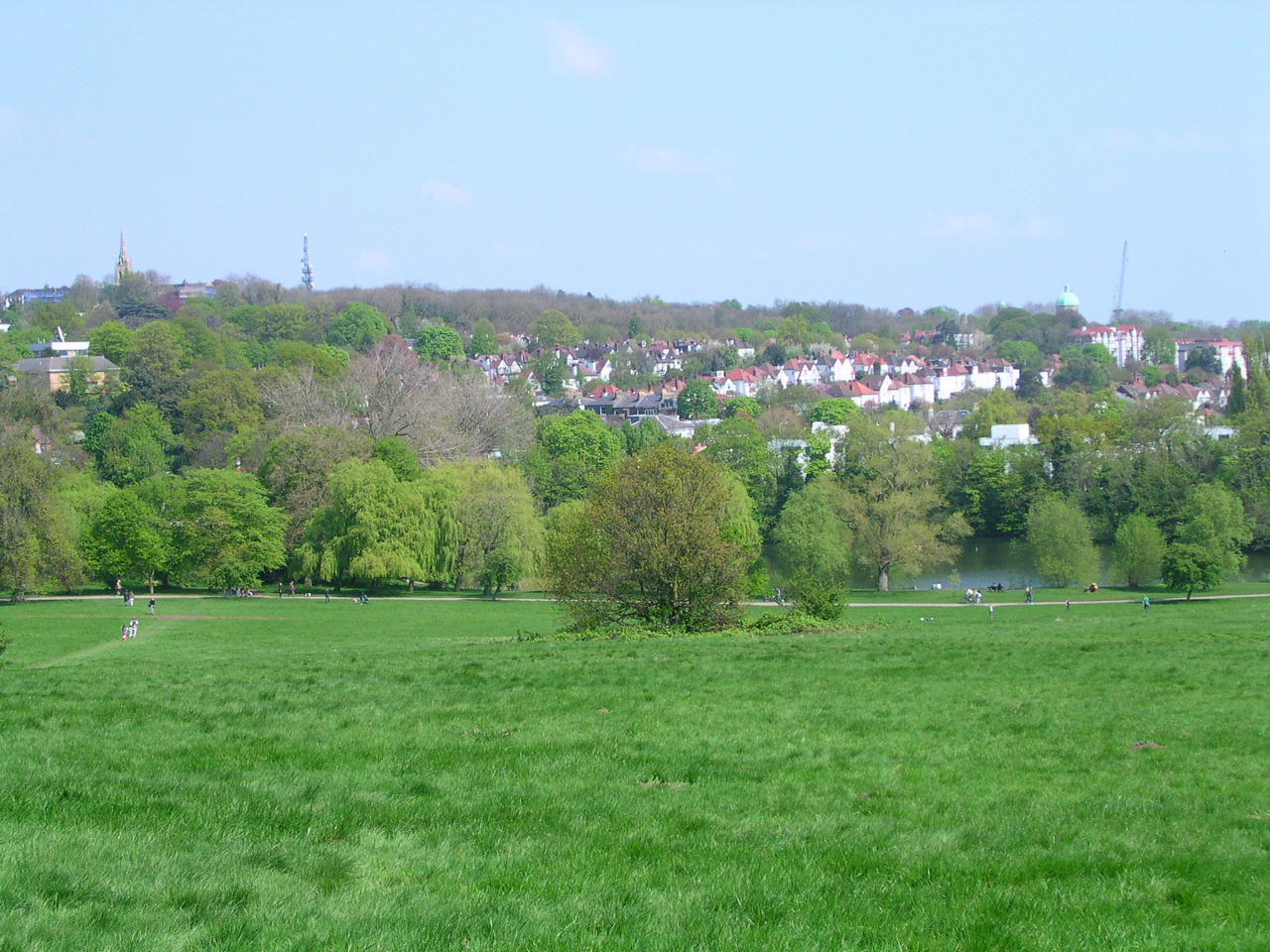
Until late Victorian times, it was a distinct village outside London, sitting astride the main road to the north. The area retains many green expanses, including the eastern part of Hampstead Heath, three ancient woods,[3] Waterlow Park and the eastern-facing slopes, known as Highgate bowl.

At its centre is Highgate village, largely a collection of Georgian shops, pubs, restaurants and residential streets,[4] interspersed with diverse landmarks such as St Michael's Church and steeple, St. Joseph's Church and its green copper dome, Highgate School (1565), Jacksons Lane arts centre, housed in a Grade II listed former church, the Gatehouse Inn, dating from 1670, which houses the theatre Upstairs at the Gatehouse[5] and Berthold Lubetkin's 1930s Highpoint buildings. Pond Square, behind the High Street, is a registered village green, and is the centre of communal activities which take place in the elegant buildings of the Highgate Literary and Scientific Institution and Highgate Society facing the Square.

Highgate is best known for the Victorian Highgate Cemetery, in which the Communist philosopher Karl Marx and the novelist George Eliot are buried, along with many other notable people.[6] Adjoining is Holly Village, the first gated community, built in 1865, which is a Grade II* listed site.[7][8]

The village is at the top of Highgate Hill, which provides views across central London. Highgate is 136 m (446 ft) above sea level at its highest point.[9]

The area is divided among three London boroughs: Haringey in the north and east, Camden in the south and west, and Islington in the south and east. The postal district is N6.

History

[edit]
A view of Highgate, John Constable, 1st quarter of 19th century.

Historically, Highgate adjoined the Bishop of London's hunting estate. Highgate gets its name from these hunting grounds, as there was a high, deer-proof hedge surrounding the estate: 'the gate in the hedge'.[10]

The bishop kept a toll-house where one of the main northward roads out of London entered his land. A number of pubs sprang up along the route, one of which, the Gatehouse, commemorates the toll-house.

Hampstead Lane and Highgate Hill contain the red brick Victorian buildings of Highgate School and its adjacent Chapel of St Michael. The school has played a paramount role in the life of the village and has existed on its site since its founding was permitted by letters patent from Queen Elizabeth I in 1565.

From 1853 to 1940 the London Diocesan Penitentiary was sited on North Hill in Highgate. The area north of Hampstead Lane and east of the High Street was part of Hornsey parish and also later the Municipal Borough of Hornsey, and the seat of that borough's governing body for many years.

Highgate Hill, a steep road linking Archway (traditionally called part of Upper Holloway) and Highgate village, was the route of the Highgate Hill Cable Tramway, the first cable car to be built in Europe. It operated between 1884 and 1909.

Like much of London, Highgate suffered damage during World War II by German air raids. The local tube station was used as a bomb shelter.

Highgate New Town

Highgate New Town is a post-war estate adjacent to the cemetery, designed by Camden Council with similarities to the Alexandra Road estate.

Governance

[edit]

Between 1983 and 2010 Highgate was part of the Hampstead and Highgate constituency. The Boundary Commission report of 2003 recommended removing the Camden part of Highgate from the remainder of that constituency and joining it with Kentish Town and Holborn to the south in order to form an enlarged Holborn and St Pancras constituency from the 2010 general election.

Since 1983 the northern half of Highgate village was part of the Hornsey and Wood Green constituency. Until 2023 the southern half of Highgate was in the Holborn & St Pancras Parliamentary constituency whose MP is Keir Starmer of the Labour Party, the current Prime Minister. The whole of Highgate Village is now part of the Hampstead and Highgate (UK Parliament constituency).

Transport and locale

[edit]
The Angel Inn
The Duke's Head
Kenwood House

Nearest places

[edit]

Bus routes

[edit]
  • London Buses 143, 210, 214 (24 hour), 263 and 310 plus Night Bus N263 all serve Highgate Village.

Nearest tube stations

[edit]

Places of interest

[edit]

Highgate is known[by whom?] for its pubs which line the old high street and surrounding streets. Some notable pubs are the Angel, the Flask, the Duke's Head and the Wrestlers.

Demography

[edit]

The 2011 census showed that the Highgate ward of Haringey was 82% white (60% British, 19% Other, 3% Irish). 40.9% of the ward were Christian, 7% Jewish and 3.8% Muslim.[11]

The Highgate ward of Camden meanwhile was 80% white (61% British, 15% Other, 4% Irish), and 3% Black African. 37.5% of the ward were Christian, 5.1% Muslim.[12] and 4.2% Jewish.

Education

[edit]

Religion

[edit]
St Michael's Church
St Joseph's Church

Highgate's main Church of England parish church, St Michael's, is situated close to the summit of the hill, and is the highest church in Greater London. It was built as one of the Commissioners' churches in 1831 and consecrated and opened on 8 November 1832. The architect was Lewis Vulliamy, and in 1831 his original drawings for the church were exhibited at the Royal Academy of Arts.[13]

From the late 17th century until 1830 Ashhurst House, the home of former Lord Mayor of London Sir William Ashhurst, stood on the site of the church. The remains of the house's cellar now form part of the church's crypt.[13]

The church's spire, built of Bath stone, with a cross of Portland stone, is a landmark on London's northern skyline.[13]

Inside, the chancel and choir stalls were done by G. E. Street in 1880. The pulpit dates from 1848. The present bench pews date from 1879, replacing box pews. The present organ is by Hill and Davidson, and was installed in 1885, replacing an earlier instrument of 1842. It was overhauled in 1985.[13]

There is a monument to Samuel Taylor Coleridge and his family in the form of a slate slab in the middle of the church.[13]

The church was damaged in the Second World War by enemy air raids and the present stained glass window at the east end was installed in 1954, replacing a window broken in the Blitz. It is one of the last works by Evie Hone and depicts the Last Supper.[13]

Further down Highgate Hill is the town's Roman Catholic parish church, St Joseph's. It was designed by Albert Vickers, and built in 1888, replacing an earlier, smaller church of 1861. Although St Joseph's Church was opened in 1889 by the Bishop of Liverpool, it was not until 1932, when its debts were cleared, that it was officially consecrated.[14]

The church has a distinctive copper dome with a green patina, and the interior of the dome was painted by Nathaniel Westlake in 1891. The organ is by William Hill and Sons, and installed in 1945 as a memorial to the local victims of the Second World War.[14]

1980s murder

[edit]

On Friday 26 August 1988, Michael Williams, a 43-year-old father from Highgate who worked for the Home Office in Pimlico, disappeared while travelling back home after an employee social. His body was found at Highgate Wood the next day. The case remains unsolved despite being featured heavily in the national press and on the BBC's TV programme Crimewatch.[15]

Notable inhabitants

[edit]

Highgate Cemetery is the burial place of Communist philosopher Karl Marx, Michael Faraday, Douglas Adams, George Eliot, Jacob Bronowski, Sir Ralph Richardson, Dawn Foster, Christina Rossetti, Sir Sidney Nolan, Alexander Litvinenko, Malcolm McLaren, Radclyffe Hall, Joseph Wolf and singer-songwriter George Michael.

Many notable alumni have passed through Highgate School, either Masters or indeed Old Cholmeleians, the name given to old boys of the school. These include T.S. Eliot, who taught the poet laureate John Betjeman there, Gerard Manley Hopkins the poet, the composers John Taverner and John Rutter, John Venn the inventor of Venn diagrams, actor Geoffrey Palmer, Anthony Crosland MP and Labour reformer, and the cabinet minister Charles Clarke.

A blue plaque on a house at the top of North Hill notes that Charles Dickens stayed there in 1832, when he was 20 years old.

Peter Sellers lived as a boy in a cottage in Muswell Hill Road, where his mother had moved in order to send him to the Catholic St Aloysius Boys' School in Hornsey Lane.

In Victorian times St Mary Magdalene House of Charity in Highgate was a refuge for former prostitutes—"fallen women"—where Christina Rossetti was a volunteer from 1859 to 1870. It may have inspired her best-known poem, Goblin Market.

Siouxsie and the Banshees' bassist Steven Severin was born and brought up there.

Coleridge

[edit]

In 1817 the poet, aesthetic philosopher and critic Samuel Taylor Coleridge came to live at 3, The Grove, Highgate, the home of Dr James Gillman, in order to rehabilitate from his opium addiction.[19] After Dr Gillman built a special wing for the poet, Coleridge lived there for the rest of his life, becoming known as the sage of Highgate.[20]

While here some of his most famous poems, though written years earlier, were first published including "Kubla Khan". His literary autobiography, Biographia Literaria, appeared in 1817. While living there he became friends with his neighbour Joseph Hardman.[21] His home became a place of pilgrimage for figures such as Carlyle and Emerson. He died here on 25 July 1834 and is buried in the crypt of nearby St Michael's Church. The writer J. B. Priestley subsequently lived in the same house; a commemorative plaque marks the property.

[edit]

See also

[edit]

References

[edit]
[edit]
Revisions and contributorsEdit on WikipediaRead on Wikipedia
from Grokipedia

Highgate is a primarily residential suburb located in North London, England, divided between the London Boroughs of Haringey to the north and Camden to the south and west, with minor extensions into Islington. Situated on a hill rising to about 375 feet above sea level, it offers extensive views across London and is characterized by its affluent housing, historic village center dating to the medieval period as a toll gate settlement, and abundant green spaces including Highgate Wood and Waterlow Park.
The district gained prominence in the 18th and 19th centuries as a fashionable retreat from , featuring grand Georgian and that remains a defining feature. Highgate is home to longstanding institutions such as , a co-educational independent day school founded in 1565 by Sir Roger Cholmeley under royal charter to provide grammar education. It also encompasses , established in 1839 as part of London's "Magnificent Seven" garden cemeteries to address urban burial overcrowding, and now a protected site with over 53,000 graves, including those of , , and . These elements, combined with proximity to and strong transport links via and Overground, underscore Highgate's blend of historical preservation, natural amenity, and cultural significance.

Geography

Location and Boundaries

Highgate is a suburban residential locality in , situated approximately 5 miles (8 km) north-northwest of [Charing Cross](/page/Charing Cross), at the northern edge of the ridge. It occupies elevated terrain in the northern heights of the city, with its highest point reaching about 129 meters (423 feet) above near a on the A1 road. The area's central coordinates are roughly 51°34′ N, 0°09′ W, placing it between to the west and to the north. As an informal locality without precise statutory boundaries, Highgate spans parts of three London boroughs: primarily Camden in the south and west, Haringey in the north and east, and a smaller portion in to the southeast. The historic village core around Highgate High Street and Pond Square is bisected by the administrative boundary between Camden and Haringey, which follows the line of the former parish divisions. In Camden, the corresponding Highgate ward extends westward to Town ward, southward to and wards, northward adjacent to Barnet and Haringey boroughs, and eastward to . This division reflects post-1965 borough reorganizations, which split the pre-existing and St Pancras areas, creating administrative fragmentation despite Highgate's cohesive community identity.

Topography and Natural Features

Highgate occupies elevated terrain in northern , forming part of the northern heights that rise prominently above the surrounding lowlands. The area's highest point, at Highgate Hill, reaches 129 meters above , contributing to expansive views southward over the city. This topography features a ridgeline extending westward toward , with undulating slopes shaped by differential of softer clays and resistant gravels. The underlying geology consists primarily of the Eocene Formation, a stiff blue-brown clay that forms the across much of the district, overlain by Tertiary sands and gravels of the and Formations on the higher elevations. Northern sections include glacial deposits from Pleistocene ice advances, which cap the clays and influence local soil drainage and vegetation patterns, with flint-rich gravels evident in archaeological finds. These formations create varied microtopography, including steeper scarps and gentler benches that support distinct habitats. Prominent natural features include Highgate Wood, a 28-hectare remnant of from the medieval Great Forest of , characterized by pedunculate oak, hornbeam, and birch stands alongside holly understory, fostering habitats for over 70 bird species, foxes, and . Adjacent Queen's Wood, similarly ancient at about 20 hectares, preserves comparable oak-hornbeam woodland with rare fungi and lichens. To the south, Highgate borders Hampstead Heath's northern extension, encompassing hilly grasslands, ancient pollard trees, and natural ponds that enhance the area's and recreational green corridors. These woodlands, managed by the , retain prehistoric flint-working evidence and resist urban fragmentation through active conservation.

History

Origins to the 17th Century

Highgate emerged as a small in the southeastern corner of the medieval Bishop of London's hunting estate, encompassing parts of the parishes of and St. Pancras in . The area's development was tied to its position along ancient tracks and the , serving as a gateway for drovers transporting to London markets such as Smithfield, with the hill providing a natural vantage and stopping point. Land ownership primarily fell under the Bishop of London's manor of , with portions in St. Paul's Cantlowes manor in St. Pancras; early lessees included figures like in 1463 and Thomas Combes in 1467. The name Highgate first appears in records by 1318, associated with a toll at the hilltop entrance to the bishop's deer park, which collected fees from travelers ascending Highgate Hill. Etymologically, it likely derives from the gate's elevated position, though an alternative traces it to the "hǣg-gæt," meaning a hedge-enclosed to a private park track. By the mid-14th century, around 1380, a new road via Holloway improved access, spurring settlement with burgage plots along what became and the establishment of inns like the Swan by 1480. A hermitage near the toll , manned by a collecting tolls, drew pilgrims by 1464, contributing to early communal structures. As hunting in the bishop's woods declined in the , land was leased for and housing, forming a crossroads at , North Road, Hampstead Lane, and Southwood Lane. In the , Highgate gained prominence with the foundation of a free in 1565 by Sir Roger Cholmeley, who repurposed the hermits' chapel on the site; Cholmeley, a prominent and , became one of the area's first notable residents. Early fine houses appeared, including by 1588, attracting nobility and merchants. Queen Elizabeth I visited residences there between 1589 and 1594. By 1552, five alehouses operated, indicating a growing for wayfarers. The 17th century saw further , with mansions like Cromwell House constructed around 1638 and Dorchester House emerging as status symbols for the wealthy. King James I visited in 1604, underscoring royal favor. Separate administrative officials were appointed by 1577, and by the mid-century, political divisions mirrored national conflicts between Parliamentarians and Royalists. Highgate's elevation and rural setting positioned it as a desirable retreat, laying the foundation for its later reputation among London's elite.

18th and 19th Century Development

Highgate's primary phase of residential expansion occurred during the 18th century, transforming it from a rural hamlet into a Georgian village favored by affluent Londoners seeking respite from urban congestion and poor air quality. The area's elevated position on Highgate Hill, offering panoramic views and salubrious conditions, attracted merchants, professionals, and nobility who constructed substantial brick villas and mansions along streets like The Grove and Highgate High Street. Notable examples include South Grove House, built around 1720, and a row of houses at Nos. 17-21 Highgate High Street, erected circa 1733 by developer William Blake. This development was supported by the Great North Road's traffic, which brought economic activity, and the 1774 Lighting and Watching Act, which formalized local governance for maintenance and security. By mid-century, Highgate had evolved into a self-contained community with shops, schools, and medical services, maintaining its appeal as a prestigious retreat. In the , Highgate retained its status as one of London's most desirable suburbs, with continued villa construction on south-facing slopes near , such as Holly Lodge in 1809, alongside infilling by smaller-scale terraced houses amid earlier estates. Infrastructure improvements facilitated growth, including the opening of Archway Road in 1813 to ease traffic bottlenecks and the introduction of piped water from the New River Company in the 1850s. Religious and burial facilities expanded with the consecration of St. Michael's Church in the 1830s and the establishment of in 1839 by the London Cemetery Company, accommodating over 168,000 interments on 37 acres and reflecting the area's rising population and mortality pressures. The chapelry of St. Michael's recorded 4,302 inhabitants in the 1841 census, indicating steady demographic increase from earlier estimates. Speculative developments, like Victorian terraces in areas such as Bisham Gardens, catered to a broadening while preserving the village's genteel character.

20th Century to Present

In the early , Highgate saw the completion of mansion blocks and terraced housing, extending the late Victorian and Edwardian developments that filled in remaining gaps along streets like North Hill and Highgate Hill. This period marked the transition from rural village to suburban enclave, with the area attracting middle-class residents seeking elevated views over . The interwar years brought modernist innovation with the construction of in , a cruciform block of 64 apartments designed by and Tecton, praised by as vertical . Highpoint II followed in 1938 on adjacent land, introducing communal facilities and influencing post-war housing design, though both faced maintenance challenges amid wartime disruptions. impacted Highgate through air raids, contributing to the neglect of sites like , where staffing shortages from military service led to overgrown grounds by war's end. Post-war administrative reforms under the London Government Act 1963, effective from 1 April 1965, divided Highgate among the London Boroughs of Camden (western parts including Highgate village), Haringey (eastern slopes), and (minor southern edges), replacing prior municipal boroughs like and . In 1962, proposals to demolish the historic for A1 road widening sparked resident opposition, culminating in the founding of the Highgate Society in 1966 as one of Britain's earliest civic amenity societies dedicated to preservation. This activism secured the village's retention and influenced the designation of Highgate as a conservation area in December 1967 by Haringey, with parallel protections in Camden. The featured council-led redevelopment at (also known as ), where 1966 plans evolved into 273 low-rise homes built from 1972 by Haringey and Camden architects, emphasizing child-friendly design with play spaces and varied typologies amid . Though innovative, the estate later drew criticism for maintenance issues, , and social challenges, reflecting broader 1970s housing debates. Since the , Highgate has prioritized heritage conservation, with ongoing efforts by the Highgate Society and neighbourhood plans to balance infill development against the area's Georgian and Victorian character, maintaining its status as an affluent, low-density suburb.

Governance

Administrative Structure

Highgate lacks a unified administrative entity and is divided across three , with local governance provided by each borough's council based on precise boundary lines. The southern and western portions fall within the London Borough of Camden, while the northern section is in the London Borough of Haringey; a smaller eastern area, encompassing Highgate Hill, lies in the London Borough of Islington. In Camden, the area constitutes the Highgate electoral ward, established since the borough's formation in 1965, which returns three councillors to the 51-member responsible for services such as planning, housing, and environmental health. The ward boundaries encompass residential neighborhoods west of Highgate High Street, bordering to the west and to the south. The Haringey portion forms the Highgate ward, which elects three councillors to the 51-member and includes areas north of the High Street, extending toward Highgate Wood. This division along Highgate High Street, dating to historical parish boundaries between St. Pancras and , results in differing local policies, such as variations in rates and development controls, despite the area's cohesive community identity. The Islington segment, primarily Highgate Hill (postal codes N19), is incorporated into the Junction electoral ward, which elects three councillors to the and covers a broader area including Archway. This tri-borough arrangement complicates unified local initiatives, though cross-borough cooperation occurs on shared issues like conservation.

Political Representation

Highgate straddles the boundary between the London Borough of Camden and the London Borough of Haringey, resulting in divided local political representation. The western portion, within Camden, comprises the Highgate ward, which elects three councillors to . Following the December 2023 , this ward includes representation from the , with Lorna Jane Russell securing a seat amid a turnout of 33%. The remaining seats are held by Labour councillors Camron Aref-Adib and Anna Wright, who have been active in local initiatives such as the opening of Highgate Newtown in May 2025. The eastern portion, in Haringey, falls under the Highgate ward of , which also elects three councillors. Since the 2022 local elections, this ward has been represented entirely by Liberal Democrat councillors Nick da Costa, Scott Emery, and Marsha Isilar-Gosling. At the parliamentary level, the majority of Highgate lies within the and Highgate constituency, represented by of the Labour Party, who has held the seat since her election in 2015 and was re-elected in July 2024. The smaller eastern area in Haringey belongs to the and constituency, represented by of the Labour Party since 2015. For the London Assembly, the Camden section is covered by the Barnet and Camden constituency, held by Anne Clarke of Labour since 2021, while the Haringey section falls under Enfield and Haringey, represented by of Labour.

Demographics

Population and Ethnicity

Highgate's population spans the Highgate wards in the London Boroughs of Haringey and Camden. The Haringey ward recorded 12,764 residents in the 2021 census, reflecting a slight decline of 0.87% from 2011. The Camden ward had 10,226 residents in the same census. Combined, these wards encompass approximately 22,990 people across an area of about 5-6 km², yielding a density of roughly 4,000-4,500 persons per km². Ethnically, Highgate wards exhibit lower diversity than London's average, where White British residents comprise 37% of the population. In Haringey's Highgate ward, White British individuals form 51% of residents, with groups at 21%; Asian residents account for 8%, Mixed ethnicities 7%, 5%, and other groups 4%. Camden's Highgate ward shows a similar profile, with at 56%. Overall, groups dominate at over 75% in the Haringey portion, exceeding 's broader ethnic diversity.

Socioeconomic Profile

Highgate is characterized by above-average household incomes relative to national benchmarks, reflecting its status as a desirable residential . In the Camden portion of Highgate ward, the median household income stands at £36,401, with a mean of £43,109, positioning it among the higher-ranking wards within the borough. Neighborhood-level estimates for areas like Highgate Hill (N6 5HG) indicate an average total household income of £60,700 annually, rated as high (7 out of 10) compared to . These figures underscore a socioeconomic environment supportive of professional and managerial occupations, though they lag behind some wards with mean incomes exceeding £90,000. Deprivation levels in Highgate are generally low, with the Haringey Highgate ward ranking 21,931 out of 32,844 in the Index of Multiple Deprivation (IMD), indicating relative affluence on a national scale. Within Camden's Highgate ward, most lower-layer super output areas (LSOAs) avoid the most deprived quintiles, though one LSOA falls in England's 20% most deprived and another in the 20-30% band, highlighting minor pockets of disadvantage amid broader prosperity. Employment metrics reinforce this profile, with out-of-work benefits claimed by only 5.3% of households in Highgate Hill, compared to 9.3% borough-wide in Camden, and low rates of (0.5% versus 2.5%). Housing in Highgate commands premium prices, emblematic of its exclusivity and surroundings, with average values around £756,582 as of 2024, reflecting a 6.68% year-on-year increase despite broader market fluctuations. Recent sales data show variability, including a 20.9% decline in some Highgate segments year-over-year, yet overall affordability remains strained, with properties ranging from £350,000 to over £2.75 million depending on size and location. This high-value market contributes to limited social housing and contributes to socioeconomic homogeneity, with tenure dominated by .

Education

Schools and Educational Institutions

Highgate is served by a mix of independent and state-funded schools, reflecting the area's affluent and historically educated character. The most prominent institution is , a co-educational independent for pupils aged 4 to 18, founded in 1565 by Sir Roger Cholmeley under a from Queen Elizabeth I as a boys' for local . Originally accepting both boarders and day pupils, it transitioned to day-only status in 1997 and became fully co-educational in 2004, maintaining a focus on liberal arts and sciences with around 1,500 pupils across its junior and senior divisions. State primary schools include , a two-form entry community school established as the British School and relocated to North Hill in , now serving approximately 420 pupils with an emphasis on inclusive education and outdoor learning through its Forest Schools program. St Michael's Church of England Primary School, a voluntary-aided institution on North Road, caters to around 200 pupils aged 3 to 11 on a site with four acres of green space, integrating faith-based values with a broad . St Joseph's Catholic Primary School provides Roman Catholic education for local children, focusing on alongside spiritual development. For secondary education, St Aloysius' College, a Roman Catholic boys' state-funded school in the Highgate area (administered by but serving ), admits around 180 pupils annually into Year 7 and emphasizes high academic standards with a . Nearby state options like , a girls' comprehensive on Highgate Road, draw from the locality but are situated just outside core Highgate boundaries. Independent girls' schools such as Channing School (ages 4-18) and prep institutions like Avenue Pre-Preparatory School and Nursery (ages 2-8) further diversify options for families seeking single-sex or early-years education.

Religion

Places of Worship

![St Michael's Church, South Grove, Highgate][float-right] St. Michael's Church, an Anglican parish church located in South Grove, Highgate, was designed by architect Lewis Vulliamy and consecrated on November 8, 1832. It holds the distinction of being the highest-elevated church in due to its position on Highgate Hill. The structure underwent significant reordering and extension between 1879 and 1881 under , with additional work by Temple Moore starting in 1903. St. Joseph's Church, a Roman Catholic parish on Highgate Hill, was established by the Passionist order, which acquired the site in 1858 and rebuilt the chapel between 1887 and 1889 to designs by Albert Vicars in a blend of Romanesque and Byzantine styles. The church features a prominent dome and richly decorated interior with wall paintings and oil paintings. All Saints' Church, another Anglican parish known as the "Little Church in the Woods," has served the northern part of Highgate from its site at the corner of Church Road and Talbot Road for over 160 years, dating its establishment to the mid-19th century. Highgate Synagogue, an Orthodox Jewish congregation, traces its origins to the late 1920s, with an earlier facility at 88 Archway Road in use from at least 1935 until 1952; the current building was inaugurated in 2017. Other active places of worship include and Highgate International Church, an evangelical congregation reflecting the area's diverse Christian communities. St. Anne's Church, also , remains open for services such as baptisms, weddings, and funerals. No mosques are located directly within Highgate, with the nearest in surrounding areas.

Religious Demographics and Historical Role

Highgate's religious history is rooted in , with the establishing a dominant presence from the . An initial brick school chapel constructed in 1576 functioned as the area's parish church for over two centuries, serving residents until the consecration of St Michael's Church on November 8, 1832, designed by architect Lewis Vulliamy. This development coincided with Highgate's growth as a residential suburb, where the church provided central worship, burials, and community functions, including housing the remains of poet . Roman Catholicism emerged in the mid- following the Act of 1829, with St Joseph's Church founded in 1858 by Father Ignatius Spencer of the Passionist order, marking the first permanent Catholic site amid initial local opposition. Nonconformist groups, such as evangelicals, also appeared, with Cholmeley Evangelical Church tracing origins to tent preaching along Archway Road in the to evangelize passersby. These institutions reflected Highgate's evolution from a semi-rural outpost to a hub of diverse Protestant and Catholic practice, influenced by London's broader religious shifts during industrialization and migration. In contemporary demographics, reflecting 2021 census data for Highgate ward in Haringey, no religion constitutes the largest category at 43% of residents, indicative of secularization trends in affluent suburbs. remains the primary identified faith among religious adherents, though precise figures align with 2011 proportions of approximately 41% Christian, 7% Jewish—higher than 's average due to North 's Jewish communities—and smaller Muslim (3.8%), Hindu (1.2%), and Buddhist (0.9%) populations. This distribution underscores a historical Christian foundation yielding to modern irreligiosity, with enduring minority faiths supported by local synagogues and mosques in adjacent areas, though Highgate itself centers on Christian places of worship.

Landmarks and Attractions

Highgate Cemetery

is a Victorian-era ground in , established by the London Cemetery Company on 20 May 1839 as one of seven private cemeteries created to alleviate overcrowding in urban churchyards amid London's population boom. The 37-acre site, initially comprising the wooded western portion, was designed with landscaped gardens, catacombs, and architectural features including an Egyptian Revival entrance arch and twin chapels in Gothic style. Consecrated by the on opening day, the first occurred on 26 May 1839, marking the start of its role as a prestigious resting place for the affluent middle and upper classes. The cemetery expanded with the addition of the eastern section in the early to accommodate growing demand, resulting in two distinct areas separated by Swain's Lane. The West Cemetery, the original and more exclusive part, features overgrown paths, ancient trees, and ornate mausolea amid a deliberately wild, Romantic landscape that has evolved into a nature reserve with diverse and . Access to the West is restricted to guided tours to protect its and structures, while the East Cemetery permits unguided visits, offering a more manicured setting with accessible paths and prominent memorials. This bifurcation underscores practical differences in upkeep: the West's limited intervention preserves Victorian authenticity but limits capacity, whereas the East supports ongoing burials and broader public use. Over 170,000 individuals are interred in around 53,000 graves across the site, including philosopher , whose simple granite tomb in the East—erected by admirers after his 1883 death—bears inscriptions from and draws ideological pilgrims. Other prominent burials encompass singer (2017), poet , and engineer Alexander "Greek" Thomson, reflecting the cemetery's draw for intellectuals, artists, and professionals. Following the London Cemetery Company's receivership in 1981, management transferred to the Friends of Highgate Cemetery Trust, a registered charity formed in 1975 that acquired the freehold and oversees conservation, new interments, and visitor operations to sustain it as a functional burial ground and heritage site listed as a Grade I registered park. The trust funds maintenance through memberships, tours, and grants, emphasizing ecological balance over commercialization.

Highgate Wood and Village

Highgate Wood comprises approximately 28 hectares of in , with about 24 hectares designated as ancient semi-natural woodland, situated between Highgate and . Managed by the since 1885, it features evidence of prehistoric human activity, including flint tools, and a Roman manufacturing site uncovered in archaeological excavations. The wood retains mature trees and historical management practices such as bundle planting for timber production, reflecting centuries of and selective felling that shaped its structure. Public access includes walking paths, a nature trail, playground, and community events, supporting conservation amid urban pressures. Adjacent to the wood lies Highgate Village, a historic settlement on Highgate Hill rising to 375 feet above , which maintained a rural village identity until the late despite proximity to . The area's name derives from a tollgate documented around 1318, functioning as a medieval for drovers en route to Smithfield Market and as an early stopping point for travelers from the north. Development accelerated from the , with the village gaining fashionable status by the through large mansions for affluent residents, and its —lined with Georgian and Victorian buildings—was preserved from 1960s demolition plans via local advocacy. Notable features include independent shops, cafes, and traditional pubs such as the Flask (dating to the ), the , the Wrestlers, and the Duke's Head, which serve as social hubs offering local ales and seasonal menus. The village's compact fosters a pedestrian-friendly environment, contrasting with preserved green edges linking to the wood.

Architectural and Historic Sites

Highgate's architectural landscape reflects its evolution from a rural retreat to a affluent suburb, featuring a mix of Tudor, Georgian, Victorian, and early modernist structures, many designated as listed buildings under the Planning (Listed Buildings and Conservation Areas) Act 1990. The area includes two conservation areas—Highgate Village and Highgate Hill—encompassing over 500 listed buildings, with special protections for their historic and aesthetic significance, including terraced housing, villas, and institutional edifices that preserve the village's pre-urban character. Lauderdale House, a Grade II* in Waterlow Park, originated as a timber-framed residence constructed around 1582 for merchant Sir Richard Martin, a three-time , and was later rebuilt in brick during the 17th century with additions reflecting Jacobean and Georgian influences. It served as a private residence for nobility, including the in the 1640s, before falling into disrepair and undergoing restoration in the to function as an and center. The house exemplifies early English domestic adapted for elite use, with surviving features like paneled interiors and landscaped grounds integrated into public parkland since 1889. St Michael's Church, located on South Grove, stands as a prominent example of early 19th-century , designed by Lewis Vulliamy and consecrated on November 8, 1832, to serve the growing population amid Highgate's suburban expansion. The original structure features a , aisles, and tower in yellowish brick with stone dressings, later extended in 1879–1881 by G. E. Street and further altered by Temple Moore from 1903, incorporating elements while maintaining its elevated position as London's highest . Listed at Grade II*, it highlights the shift toward ecclesiastical Gothic in Regency-era commissions, with Vulliamy's design exhibited at the Royal Academy in 1831. Holly Village, a gated enclave off Swain's Lane completed in 1865, represents Victorian philanthropic , commissioned by Baroness Angela Burdett-Coutts and designed by Henry Astley Darbishire as twelve cottages arranged around a central green. The ensemble employs polychrome brickwork, ornate bargeboards, and Tudor-style detailing to evoke a medieval village, providing dignified housing for the amid Highgate's genteel villas; all structures are Grade II listed, underscoring their rarity as a purpose-built utopian community. Highgate Village's core preserves 17th- and 18th-century fabric, including timber-framed houses and Georgian terraces like those on Highgate High Street, which survived redevelopment threats due to local , maintaining the area's historic streetscape of bow-fronted shops and inns. Notable among these are early examples such as the 1580s origins of structures near the Gate House, blending and classical styles that influenced later suburban . Victorian terraces, such as Stoneleigh Terrace, further exemplify mid-19th-century speculative development with facades and iron railings, contributing to Highgate's dense inventory of protected heritage assets.

Transport

Road Infrastructure

Highgate's road infrastructure primarily revolves around two historic thoroughfares: the steep Highgate Hill, a medieval route forming part of the ancient Great North Road from to the north, and the Archway Road, constructed in as a bypass to alleviate congestion on the hill. Highgate Hill, spanning nearly a kilometer with a gradient challenging for early horse-drawn traffic, originated as a permitted by the around the 14th century, evolving into a key staging post by the late medieval period when a Holloway route from the City intersected it. The Archway Road, now integrated into the A1 trunk road, features the Highgate Archway—a 19th-century and cutting designed by engineer to carry Hornsey Lane over the route, enabling smoother passage for increasing volumes of coach and later motorized traffic while diverting it from Highgate village. This infrastructure supported Highgate's growth as a , with the hill hosting Europe's first motorized cable tramway from 1884 to 1909 to conquer its incline. Wait, no Wikipedia; from and In the modern era, these roads handle substantial through-traffic, with Archway Road serving as a major artery linking to northern suburbs and motorways, contributing to congestion and concerns near schools and residential areas. Local authorities and residents have implemented measures such as low traffic neighbourhoods (LTNs) restricting eastbound through-traffic in parts of Highgate village since around 2020, alongside school streets and campaigns for speed reductions on Highgate Hill between Bisham Gardens and Hornsey Lane to prioritize pedestrian . These interventions reflect ongoing tensions between historic connectivity and contemporary demands for reduced vehicle dominance in a densely populated . Highgate Underground station, situated on Archway Road in the London Borough of Haringey, serves as the primary rail link for the area on the Northern line's High Barnet branch. This deep-level station, in Travelcard Zone 3, connects southbound to destinations including , , and via interchanges at stations like King's Cross St Pancras, with typical peak-hour frequencies of every 2-3 minutes toward the city. Northbound services run to and High Barnet, with the line's platforms designed historically for longer trains though now accommodating standard six-car units. The station handles approximately 1.5 million passenger journeys annually, reflecting its role in linking Highgate to the wider . Multiple bus routes operated by and other TfL contractors provide extensive surface connections from Highgate station and surrounding stops. Route 43 travels south to via , with services running from around 5:00 AM to 1:00 AM and frequencies of 8-12 minutes during peak times. Route 134 links to Warren Street and , operating daily with similar intervals. Additional routes include 234 to Barnet via , 263 to Highgate Wood and , and 310 circling locally to . Night service N20 maintains connectivity overnight from to Barnet Church, passing Highgate every 30 minutes after midnight. In Highgate Village and adjacent areas, further routes such as 143 to , 210 to , 214 to , and 603 to supplement access, often terminating or passing through key points like . These services, integrated under TfL's fare system, enable direct links to Overground and interchanges at nearby stations including (for the Suffragette line) and Upper Holloway, approximately 1-2 km south. Accessibility features vary, with Highgate Underground lacking step-free access from street to platform, relying on 160 steps total.

Culture and Society

Notable Inhabitants

Highgate has attracted a range of notable residents over centuries, drawn by its elevated position, historic homes, and proximity to . The Romantic poet and philosopher lived in the village for 19 years, from 1816 until his death on July 25, 1834, initially boarding with physician James Gillman to address his opium dependency before moving to 3 The Grove in 1823. His presence fostered intellectual gatherings, earning him the local moniker "Sage of Highgate," and his remains were interred in St. Michael's Church. Philosopher and statesman died in Highgate on April 9, 1626, at (now the site of St. Michael's Church), after conducting an impromptu experiment on meat preservation during snowy weather, which led to . In modern times, Highgate's desirable Victorian and Edwardian properties have housed celebrities, including actor , who resided there during the 2010s. Celebrity chef acquired a Highgate home in 2015 for approximately £10 million. Musician has been a resident, alongside former residents like supermodel , musician Sting, and the late singer , who owned properties in the area. These figures reflect Highgate's appeal to affluent creatives, though privacy concerns limit confirmed current addresses.

Representation in Media and Literature

Highgate Cemetery serves as the central setting for Audrey Niffenegger's 2009 novel Her Fearful Symmetry, where the story revolves around American twins inheriting a flat adjacent to the site and exploring its tombs and ghosts, drawing on the cemetery's and historical burials for atmospheric tension. The novel's depiction emphasizes the site's overgrown, labyrinthine paths and notable graves, such as that of , to evoke themes of mortality and inheritance. In film and television, Highgate's residential streets and cemetery have provided backdrops for multiple productions, including the 2004 zombie comedy , directed by , which filmed key scenes in local pubs and roads to capture suburban life amid . The area also appears in the series (2016–2019), utilizing Highgate's hilly terrain and homes for exterior shots that underscore the protagonist's chaotic personal narrative. Other credits include the 2017 drama , filmed partly in Highgate for its portrayal of community and natural surroundings near . The cemetery's eerie reputation has influenced horror media, such as the 2021 TV movie The Curse of the Highgate Vampire, which dramatizes 1970s sightings of supernatural phenomena amid its catacombs and mausolea, amplifying local legends for thriller elements. Highgate features in Len Deighton's 1978 alternate-history novel and its 2017 adaptation, where the cemetery symbolizes wartime desolation with a depicted bomb-damaged tomb. These representations often highlight the suburb's blend of affluent Victorian heritage and secluded, atmospheric locales, though portrayals in tend to prioritize visual spectacle over historical nuance.

Folklore: The Highgate Vampire

Reports of supernatural activity in emerged in late 1969, with local residents describing sightings of a tall, ghostly figure resembling a man in dark clothing lurking among the tombs at night. On December 24, 1969, occult investigator David Farrant reportedly observed a grey, humanoid apparition on the cemetery grounds, which he later described as ethereal rather than corporeal. These accounts gained media attention through a December 1969 article in the Hampstead & Highgate Express, which speculated on the possibility of a based on descriptions of the figure's hypnotic gaze and nocturnal habits. In February 1970, further letters to the Hampstead & Highgate Express detailed encounters with a "swarthy-faced" entity that allegedly caused animals to behave erratically and left graves disturbed, prompting in . Self-proclaimed Sean Manchester interpreted these reports as evidence of an entity, possibly originating from an Eastern European noble buried in the cemetery, and organized investigations while warning of its supernatural threat. This led to heightened hysteria, culminating on March 13, 1970——when approximately 100 people entered the cemetery in a disorganized hunt for the supposed , resulting in and police intervention. A public rivalry developed between Farrant, who emphasized ghostly phenomena over literal vampirism, and , who pursued exorcisms and staking rituals; claimed in 1973 to have destroyed by driving a stake through its heart in a derelict house nearby. Farrant faced legal consequences, including a 1974 for during a , and was convicted in 1978 on charges related to activities, with prosecutors alleging he fabricated elements of the narrative. No , such as physical remains or verifiable attacks, substantiated the claims, which skeptics attribute to mass suggestion, misidentified shadows, and the era's fascination with amid 1970s cultural trends. The legend persists in , documented in 's 1985 book The and Farrant's 1991 response Beyond the , though both authors' accounts reflect personal biases and unverified assertions.

Notable Events and Controversies

Preservation Efforts

Highgate's historic character is safeguarded primarily through designated conservation areas administered by the London Boroughs of Camden, Haringey, , and Barnet, which encompass nearly the entire village and enforce strict planning controls to maintain architectural integrity, topography, and green spaces. The Camden portion, appraised in detail, emphasizes the interplay of urban form, open spaces like Highgate Wood, and , guiding development to prevent erosion of these features. The Highgate Society, established in 1966, leads community-driven preservation by opposing developments such as oversized extensions, basement excavations, and "mega-mansions" that alter the area's scale and greenery, launching monthly appeals against such applications. It collaborates with bodies like the Highgate Conservation Area Advisory Committee to influence borough policies and has supported campaigns, including one in 2021 to protect a century-old lime tree from removal for housing. Highgate Cemetery, a Grade I listed landscape opened in 1839, benefits from the Friends of Highgate Cemetery Trust, founded in 1975 to manage restoration via "managed neglect" transitioning to active conservation, including a 2019 plan for monument repairs and biodiversity enhancement. In December 2024, the Trust announced an £18 million project, seeking £6.6 million from the National Lottery Heritage Fund, to restore trees, paths, and infrastructure while preserving its Victorian necropolis status, though it later dropped a contentious maintenance building proposal amid local opposition. Highgate Wood, an remnant managed by the since 1885, is governed by a 2025–2035 management plan prioritizing habitat protection, removal, and volunteer-led conservation through groups like Heath Hands, which conducts and bramble clearance to sustain . These efforts integrate with broader initiatives, such as SAVE Britain's Heritage campaigns against threats to local historic structures.

1988 Unsolved Murder

On the morning of 27 August 1988, the body of 41-year-old Michael Williams, a civil servant, was discovered in Highgate Wood, , by a woman walking her dog. Williams, who lived locally in Highgate and worked on the National Computer system, had been married for 18 years and was the father of a two-year-old daughter; he was described by acquaintances as a devoted family man and active churchgoer, though he was bisexual with a history of relationships with both men and women. Williams was last seen alive at approximately 11:35 p.m. on , 26 August 1988, at Victoria station after an evening of drinks with colleagues in ; he was heading home via public transport during the August bank holiday weekend. A possible sighting placed him at around 12:30 a.m. on Saturday, but his movements after that remain unaccounted for in an eight-hour window until his body was found at 7:40 a.m. near a wooded path off Vicars Moor Lane. The cause of death was a single, forceful blow to the throat, delivered with such precision that investigators speculated it may have been inflicted by someone trained in like , severing major blood vessels and causing rapid fatality without signs of a prolonged struggle. The murder appeared opportunistic, as Williams had been robbed of his wallet, , identity pass, signet ring, distinctive watch, and a computer manual; one credit card was used two days later on 28 at a in Southgate, but this lead yielded no arrests. Highgate Wood was known at the time as a discreet meeting spot for homosexual activity, raising questions about whether Williams, given his , may have been there for an encounter that turned violent, though no direct evidence confirmed this. A reported seeing a suspicious white man, approximately 6 feet tall, slim, with long brown hair and a , loitering near a lamppost close to the discovery site around 6:00 a.m., leading to an artist's impression circulated by police, but he was never identified. The launched a investigation, including a reconstruction featured on UK in November 1988, which generated about 140 calls, three of which were deemed promising but ultimately unproductive; files from three other unsolved were reviewed for links, but none materialized. Motives considered included random escalating to or a targeted attack possibly related to sexual activity or homophobia in the area, though forensic evidence was limited by the era's technology, with no matches or weapon recovered. As of 2022, the case remains unsolved, with no arrests despite ongoing reviews, and the encourage tips via their non-emergency line or Crimestoppers.

References

Add your contribution
Related Hubs
Contribute something
User Avatar
No comments yet.