


Community hub
Recent from talks
Contribute something
Nothing was collected or created yet.
Fun Boy Three
View on Wikipedia
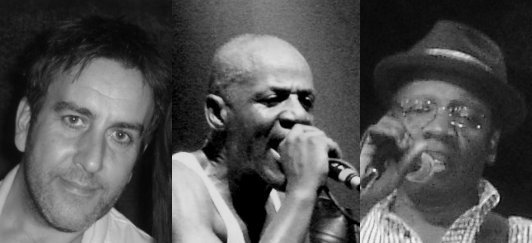
Fun Boy Three were an English new wave pop[1] band, active from 1981 to 1983 and formed by singers Terry Hall, Neville Staple and Lynval Golding after they left the Specials. They released two albums and had seven UK top 20 hits.
Key Information


History
[edit]Fun Boy Three reduced the ska sound that they and Jerry Dammers had crafted with great success with the Specials and initially took a more minimal approach with the focus on percussion and vocals.[2] For their second album they assembled a six-piece backing group including a cellist and a trombone player, allowing the record to feature more diverse and expansive arrangements, and also enabling them to play live instead of being a purely studio group as previously. The band enjoyed six UK top 20 singles, starting with "The Lunatics (Have Taken Over the Asylum)" and including the top 10 hits "It Ain't What You Do (It's the Way That You Do It)", "Tunnel of Love" and "Our Lips Are Sealed".[3] They created two albums of which the eponymous debut was the more successful. The follow-up album Waiting, produced by David Byrne, was well-received critically.[4][5][6]
Following the trio's last UK hit "Our Lips Are Sealed", co-written by Terry Hall and Jane Wiedlin of the Go-Go's, who had a U.S. hit with the song a year earlier, they then toured the United States and split afterwards.[7]
They were credited with helping launch the career in 1982 of Bananarama, whom Hall first saw in The Face magazine.[8] The three women provided credited chorus vocals on the hit "It Ain't What You Do (It's the Way That You Do It)"; the Fun Boy Three later sang on the Bananarama song "Really Saying Something", both reaching the top 5 in the UK.[3]
Discography
[edit]| Fun Boy Three discography | |
|---|---|
| Studio albums | 2 |
| Live albums | 1 |
| Compilation albums | 3 |
| Singles | 9 |
Studio albums
[edit]| Title | Details | Chart positions | Certifications (sales thresholds) | ||||
|---|---|---|---|---|---|---|---|
| UK [9][10] |
AUS [11] |
NL [12] |
NZ [13] |
US | |||
| The Fun Boy Three |
|
7 | 84 | 10 | 17 | — | |
| Waiting |
|
14 | — | 47 | 11 | 104 |
|
| "–" denotes releases that did not chart or were not released in that territory. | |||||||
Live albums
[edit]| Title | Details |
|---|---|
| Live on the Test |
|
Compilation albums
[edit]| Title | Details |
|---|---|
| The Best of Fun Boy Three |
|
| Really Saying Something: The Best of Fun Boy |
|
| The Complete Fun Boy Three |
|
Singles
[edit]| Year | Title | Chart positions | Certifications | Album | |||||
|---|---|---|---|---|---|---|---|---|---|
| UK [9][16] |
AUS [11] |
IRL [17] |
NL [12] |
NZ [13] |
US Club Play | ||||
| 1981 | "The Lunatics (Have Taken Over the Asylum)" | 20 | 43 | 28 | — | 46 | — | Fun Boy Three | |
| 1982 | "It Ain't What You Do (It's the Way That You Do It)" (Fun Boy Three with Bananarama) | 4[9] | 55 | 5 | 3 | 37 | 49 |
| |
| "Really Saying Something" (Bananarama with Fun Boy Three) | 5[9] | 74 | 9 | 16 | — | 16 |
|
Deep Sea Skiving (Bananarama album) | |
| "The Telephone Always Rings" | 17 | — | 29 | 49 | — | — | Fun Boy Three | ||
| "Summertime" | 18 | — | 13 | — | — | — | — | ||
| "The More I See (The Less I Believe)" | 68 | — | — | — | — | — | Waiting | ||
| 1983 | "The Tunnel of Love" | 10 | — | 14 | 38 | — | — | ||
| "Our Lips Are Sealed" | 7 | — | 13 | — | — | — | |||
| "The Farm Yard Connection" (Germany only) | — | — | — | — | — | — | |||
| "–" denotes releases that did not chart or were not released in that territory. | |||||||||
References
[edit]- ^ a b Fun Boy Three Allmusic bio
- ^ Green, Jim & Robbins, Ira "Fun Boy Three", Trouser Press, retrieved 27 January 2010
- ^ a b "Fun Boy Three". Official Charts.
- ^ Review from Allmusic
- ^ Fun Boy Three from Christgau's website
- ^ Robert Palmer (10 August 1983). "The Pop Life". The New York Times. Retrieved 11 November 2009.
- ^ Unterberger, Richie. "Fun Boy Three Biography". AllMusic. AllMusic. Retrieved 19 January 2026.
- ^ Unterberger, Richie. "Fun Boy Three Biography". AllMusic. AllMusic. Retrieved 19 January 2026.
- ^ a b c d "Fun Boy Three | Full Official Chart History". Official Charts Company. Retrieved 19 January 2016.
- ^ Roberts, David (2006). British Hit Singles & Albums (19th ed.). London: Guinness World Records Limited. p. 216. ISBN 1-904994-10-5.
- ^ a b Kent, David (1993). Australian Chart Book 1970–1992 (Illustrated ed.). St Ives: Australian Chart Book. p. 119. ISBN 0-646-11917-6.
- ^ a b "charts.org.nz - Discografie Fun Boy Three". Hung Medien. Retrieved 9 September 2011.
- ^ a b "charts.nz - Discography Fun Boy Three". Hung Medien. Retrieved 7 November 2009.
- ^ "Albums in the Year 1982". © 2007-9, Steve Hawtin et al. Retrieved 7 November 2009.
- ^ a b c "British certificates: searchable database". bpi.co.uk. Archived from the original on 24 September 2009. Retrieved 30 June 2010.
- ^ Roberts, David (2006). British Hit Singles & Albums (19th ed.). London: Guinness World Records Limited. p. 519. ISBN 1-904994-10-5.
- ^ "The Irish Charts". IRMA 2006 - 2008. Archived from the original on 26 January 2010. Retrieved 30 May 2009.
External links
[edit]- Fun Boy Three discography at Discogs
- Fun Boy Three at IMDb

| International | |
|---|---|
| National | |
| Artists | |
| Other | |

Fun Boy Three
View on GrokipediaBackground and formation
Origins in The Specials
The Specials were formed in 1977 in Coventry, UK, initially as the Coventry Automatics, by keyboardist Jerry Dammers, emerging as a multiracial ensemble that blended the upbeat rhythms of Jamaican ska and reggae with the raw energy of British punk to address social issues like racism and unemployment.[3][4] The band's lineup solidified in the late 1970s with the addition of key members, including lead vocalist Terry Hall, who joined shortly after the group's inception, along with Neville Staple on vocals and percussion and Lynval Golding on vocals and guitar, contributing to its diverse, working-class ethos rooted in Coventry's industrial landscape.[1][5] The Specials achieved rapid success with their self-titled debut album released in October 1979 on Dammers' newly established 2 Tone Records label, which became a cornerstone of the ska revival movement by promoting multiracial unity and anti-racist messages through its iconic black-and-white checkered logo.[6][7] The album featured hits like "Gangsters," a June 1979 single that critiqued media sensationalism and reached No. 6 on the UK charts, and "A Message to You Rudy," an October 1979 cover of a Dandy Livingstone track that peaked at No. 10, both exemplifying the band's sharp social commentary and energetic live performances that fueled the 2 Tone scene.[3][7] By 1981, however, creative tensions had escalated within the band, driven by exhaustion from a relentless touring schedule and ideological clashes, particularly over founder Jerry Dammers' push toward more politically militant themes that some members found overly prescriptive and draining.[8][7] These frictions culminated during the recording of the brooding single "Ghost Town" in April 1981, a No. 1 hit reflecting urban decay amid UK riots, where interpersonal conflicts, including onstage violence and arguments over musical direction, highlighted the growing rift.[9] The band's split occurred in July 1981 following a chaotic US tour earlier that year marked by abusive behavior and unbearable pressures, prompting Hall, Staple, and Golding to depart and form Fun Boy Three later that summer.[9][10][11]Formation in 1981
Following the internal disputes within The Specials over money, tax issues, and creative control—despite the band's recent success with their number one single "Ghost Town" in July 1981—vocalists Terry Hall, Neville Staple, and Lynval Golding departed to form Fun Boy Three in summer 1981.[12][13] The trio chose the name "Fun Boy Three" as a deliberately ironic twist on their previous serious image with The Specials, to playfully counter perceptions that the members looked miserable.[12] They quickly signed with Chrysalis Records, the label that had distributed The Specials' 2 Tone releases, and adopted a stripped-down approach emphasizing a cappella-style vocals, close harmonies, and minimal instrumentation to mark a fresh creative departure from their ska roots toward pop experimentation.[14][1] Early rehearsals took place in their hometown of Coventry, where the group focused on vocal interplay and percussive elements to develop their new sound.[1] The band was announced in October 1981 alongside their debut single "The Lunatics (Have Taken Over the Asylum)," a song originally written for The Specials but rejected by the band, released on October 23 and entering the UK Singles Chart the following month, where it peaked at number 20.[15][16][1]Career
Debut album and early success
Fun Boy Three recorded their self-titled debut album in late 1981 and early 1982 at The Bridge Studios in London, with production handled by Dave Jordan, who had previously worked with the band during their time in The Specials. The sessions were marked by a spontaneous approach, as the trio commuted daily from Coventry to London, improvising songs influenced by mambo, cha-cha, and reggae rhythms without relying on pre-written demos. This process resulted in a sparse, experimental sound emphasizing the group's vocal harmonies and minimalist instrumentation, diverging from their ska roots toward a more eclectic pop sensibility.[17] The album, featuring tracks like "The Lunatics (Have Taken Over the Asylum)," "It Ain't What You Do (It's the Way That You Do It)"—a cover of the 1939 jazz standard featuring backing vocals from Bananarama—and "The Phone Always Rings," was released in March 1982 by Chrysalis Records. It peaked at number 7 on the UK Albums Chart, achieving gold status and demonstrating the band's ability to blend pop accessibility with subversive social commentary. Critics praised the record for its innovative fusion of new wave, electro-pop, and residual ska elements, highlighting its mischievous and enigmatic tone amid the socio-political tensions of early 1980s Britain. Pitchfork later described it as a "cultural anomaly" with a haunting quality shaped by the era's racial violence and economic unrest.[18][17] The band's early success was propelled by their debut single "The Lunatics (Have Taken Over the Asylum)," released in November 1981, which reached number 20 on the UK Singles Chart and spent 12 weeks in the Top 100, signaling a shift to lighter, more ironic pop while retaining thematic bite on mental health and societal breakdown. Follow-up singles from the album, including "It Ain't What You Do (It's the Way That You Do It)" in late January/early February 1982 (peaking at number 4) and "Really Saying Something" in April 1982 (also number 5), both collaborations with Bananarama, further boosted visibility and attracted a broader pop audience. Promotion included extensive UK tours capitalizing on The Specials' established fanbase, alongside high-profile television appearances on shows like Top of the Pops, where performances of these tracks helped solidify their transition from ska revivalists to innovative pop act.[15][19][20]Collaborations and second album
The band's second phase involved additional partnerships with female vocalists, including June Miles-Kingston on the track "Our Lips Are Sealed" and Bethan Peters providing backing vocals and bass across several songs, contributing to the group's evolving harmonic layers.[21][22] Recording for the second album, Waiting, took place in late 1982 at Wessex Sound Studios in London, with production handled by David Byrne of Talking Heads. The sessions emphasized eclectic production techniques, incorporating string arrangements, sampled sounds, and experimental percussion to expand beyond the trio's vocal core into a more sophisticated pop landscape.[21][23] Waiting was released on 25 February 1983 by Chrysalis Records, reaching No. 14 on the UK Albums Chart. Key tracks included the lead single "The More I See (The Less I Believe)", the cover "Our Lips Are Sealed" (originally by The Go-Go's, peaking at No. 7 on the UK Singles Chart), and "Tunnel of Love" (reaching No. 10 on the UK Singles Chart), blending covers and originals with wry social commentary.[24][25][26][21] To promote the album, Fun Boy Three embarked on a US tour in mid-1983, performing at venues such as The Ritz in New York, where the shows highlighted creative peaks in their live vocal interplay amid growing personal tensions within the group.[27]Disbandment in 1983
Fun Boy Three announced their disbandment in March 1983, shortly after the release of their second album Waiting in February of that year. The split was precipitated by exhaustion from extensive touring and a desire among the members to pursue individual creative projects, with lead singer Terry Hall citing a reluctance to restrict his artistic exploration. This decision came amid growing internal tensions, particularly during their promotional US tour for Waiting, where Hall's dissatisfaction with the group's dynamic led to an abrupt end without prior consultation with bandmates Neville Staple and Lynval Golding. Staple, for instance, learned of the dissolution via a phone call while on holiday in Jamaica, highlighting the sudden nature of the announcement.[1][28][29] Despite the breakup, the band's final single, "Our Lips Are Sealed"—a collaboration with Jane Wiedlin of the Go-Go's—continued to gain traction after its release on 29 April 1983, reaching number 7 on the UK Singles Chart. This track, featured on Waiting and produced by David Byrne, marked a poignant close to their active period, as the group had no further performances or recordings planned. The dissolution effectively concluded Fun Boy Three's brief but influential run, with no official reunion ever materializing, though Hall, Staple, and Golding occasionally reflected on the band with fondness in later interviews.[30][1] In the immediate aftermath, the members diverged into solo endeavors: Hall quickly formed The Colourfield in 1984, releasing their debut single "The Colour Field," while Staple and Golding returned to roots by briefly rejoining The Specials for select reunion activities in the late 2000s and 2010s. Their later individual careers included further collaborations and solo releases that echoed elements of Fun Boy Three's eclectic style.[29][28]Members and collaborators
Core members
Fun Boy Three consisted of three core members who had previously collaborated in The Specials: Terry Hall, Neville Staple, and Lynval Golding.[29][31] Terry Hall (19 March 1959 – 18 December 2022) served as the band's lead vocalist and primary songwriter, renowned for his distinctive deadpan delivery that infused their music with wry detachment. Born in Coventry, England, to a working-class family—his father employed at Rolls-Royce and his mother at Chrysler—Hall left school at age 14 and initially joined the punk band Squad before transitioning to The Specials at around 18, where he emerged as the frontman. In 1981, amid internal conflicts within The Specials, Hall co-founded Fun Boy Three with Staple and Golding, shifting toward a more eclectic pop sound while retaining his lyrical focus on social observation and personal introspection, as seen in tracks like "Well Fancy That," which drew from his experiences of childhood abuse.[29] Neville Staple (born 11 April 1955) contributed vocals, toasting, and percussion, bringing a vibrant energy rooted in reggae traditions to the group's performances. Originally from Christiana in Manchester Parish, Jamaica, Staple emigrated to England at age 5, first settling in Rugby, Warwickshire, before moving to Coventry, where he immersed himself in the local music scene. A Coventry native by upbringing, he gained prior band experience with the Jah Baddis Sound System and as a roadie-turned-frontman for the Coventry Automatics (an early incarnation of The Specials), honing his skills in fusing Jamaican ska and reggae with punk influences through the city's sound system culture. Staple's role in Fun Boy Three emphasized his charismatic toasting style, adding rhythmic drive and cultural depth to their arrangements.[31] Lynval Golding (born 24 July 1951) provided vocals, guitar, and trombone, emphasizing rich vocal harmonies and melodic support within the trio. Born in Saint Catherine, Jamaica, Golding's family emigrated to the UK during his childhood, initially to Gloucester before relocating to Coventry when he was 18, where he became active in the burgeoning 2-Tone scene. As a founding member of The Specials, he had established himself as a rhythm guitarist and backing vocalist, and in Fun Boy Three, he continued to anchor the instrumentation—being the primary player among the three—while contributing to the band's layered vocal textures.[32][4] Within Fun Boy Three, Hall acted as the frontman and chief lyricist, Staple delivered energetic toasting and percussion flair, and Golding offered melodic guitar and harmonic backing, creating a balanced dynamic that evolved from their Specials roots. All three shared songwriting credits on most tracks, fostering a collaborative approach evident in albums like their 1982 debut, where compositions such as "The Lunatics (Have Taken Over the Asylum)" reflected joint input. Their interpersonal relationships exhibited a brotherly camaraderie, with Staple and Golding later describing Hall as a "genius" collaborator, yet this masked underlying tensions over creative control and band direction, which they addressed through open discussions to sustain the group's short-lived unity.[33][34]Guest artists
The Fun Boy Three frequently incorporated guest artists into their recordings, enhancing their eclectic pop sound with diverse vocal and instrumental contributions. Their most prominent collaboration was with the female vocal trio Bananarama (Siobhan Fahey, Sara Dallin, and Keren Woodward), who provided credited chorus vocals on the 1982 single "It Ain't What You Do (It's the Way That You Do It)," a cover of the 1939 swing standard that peaked at No. 4 on the UK Singles Chart.[35][19] Bananarama also appeared on three additional tracks from the band's self-titled debut album—"Sanctuary," "Funrama 2," and "Alone"—stemming from shared connections within the 2 Tone Records scene, where both acts had roots in the Coventry ska movement.[36] This partnership marked an early breakthrough for Bananarama, propelling them toward international success and introducing a playful, harmonious female perspective to the Fun Boy Three's wry, minimalist arrangements.[37] On their 1983 sophomore album Waiting, the band expanded their guest roster to include a range of session musicians, reflecting a shift toward more experimental, chamber-like textures under the production of David Byrne of Talking Heads. Byrne himself contributed as a guest musician, playing guitar on tracks such as "Our Lips Are Sealed" and "The Tunnel of Love," while also shaping the album's overall sound with his distinctive rhythmic and atmospheric approach.[38] Other notable contributors included trombonist Annie Whitehead, cellist Caroline Lavelle, percussionist Geraldo D'Arbilly, and horn player Dick Cuthell, who added brass and string elements to songs like "Searching for the Wrong Reasons."[39] Backing vocalists and multi-instrumentalists such as June Miles-Kingston, Bethan Peters, and Nicky Holland provided additional female harmonies and rhythmic support across the record, infusing it with layered timbres that broadened the band's appeal without overshadowing their core vocal trio.[38] These one-off appearances, drawn from London's vibrant session scene, helped diversify the Fun Boy Three's output, blending pop accessibility with avant-garde flourishes during their brief career.[35]Musical style and influences
Shift from ska to pop
Upon leaving The Specials, the core members of Fun Boy Three—Terry Hall, Neville Staple, and Lynval Golding—deliberately rejected the band's horn-heavy ska sound in favor of a minimalist approach that emphasized vocals, handclaps, and basic percussion. Their self-titled debut album in 1982 featured sparse arrangements driven by looping chants, proto-rap deliveries, and unconventional percussion elements like drum cases and ashtrays, creating a gloomy, percussion-led texture that marked a stark departure from the energetic, brass-dominated 2 Tone style. This shift was described by Hall as "the sound of three people sent mental by being in The Specials," reflecting a desire for a sparser, more experimental aesthetic that incorporated primitive rhythms and Sprechgesang over elaborate instrumentation.[40][17][28] The band drew heavily on 1960s influences, including Motown and doo-wop, to craft catchy hooks and vocal harmonies that infused their pop-oriented tracks with a playful yet subversive edge. This is evident in their cover of "Our Lips Are Sealed," originally by the Go-Go's, which they slowed to a dirge-like pace while retaining doo-wop-inspired vocal layering and rhythmic simplicity. Tracks like "It Ain’t What You Do (It’s the Way That You Do It)" echoed Motown's upbeat soul with handclap rhythms and group chants, blending these retro elements with post-disco and reggae undertones to produce a mischievous electro-pop vibe that prioritized impressionistic songwriting over overt political messaging.[41][28][17] By their second album, Waiting (1983), produced by David Byrne of Talking Heads, Fun Boy Three evolved further, incorporating synthesizers, strings, and samples to achieve a more lush and experimental pop texture. This added sophistication through orchestral elements and African-inspired instrumentation, shifting from the debut's raw minimalism to polished melodies like those in "The Tunnel of Love," while retaining subversive undertones. The production emphasized chart-friendly pop without fully abandoning their working-class roots, creating a hybrid sound that blended second-wave ska echoes with innovative electronic touches.[28][42] Lyrically, the band moved away from The Specials' direct social commentary on issues like racism and unemployment toward ironic, personal explorations of mental health, relationships, and everyday absurdities. Songs such as "The Lunatics (Have Taken Over the Asylum)" addressed societal paranoia and institutional control through surreal metaphors, while "Well Fancy That!" delved into Hall's experiences of childhood abuse, marking a cathartic turn to intimate turmoil. Themes of depression and relational strain, as in tracks about debt and insecurity, reflected Hall's own struggles, infusing the music with a bittersweet pessimism that contrasted the upbeat pop surface.[43][28][40] Critics praised this evolution for its innovation and leftfield creativity, hailing the debut as a "fabulous example of inspired amateurism" that forged a unique, heady pop sound amid the early 1980s landscape. Waiting received acclaim for its experimental sheen and lush arrangements, positioning the band as one of the era's most exciting acts.[17][44][28]Production and vocal techniques
Fun Boy Three's debut album, released in 1982, was produced by Dave Jordan in collaboration with the band, emphasizing a raw, experimental sound achieved through daily commutes between Coventry and London for improvised songwriting sessions without pre-made demos. This approach incorporated early 1980s technologies like drum machines to create circular song structures influenced by mambo, cha-cha, and reggae rhythms, while minimal instrumentation—such as metallic chugs, discordant guitars, and slinking piano lines—highlighted the lyrics and vocal interplay. Experimental percussion techniques were employed, including unconventional sounds like soccer whistles, jungle effects, and even thrown ashtrays to generate unique textures, fostering a sense of spontaneity and playfulness in the recordings.[17][1] The band's vocal style centered on three-part harmonies delivered by Terry Hall, Neville Staple, and Lynval Golding, often featuring call-and-response patterns where Hall's distinctive monotone whine and deadpan spoken-word delivery provided a melancholic lead, contrasted by Staple and Golding's more energetic chants and proto-rap backups. Looping phrases and repetitive vocal motifs were key techniques, adding hypnotic layers without relying on complex arrangements, as seen in tracks like "The Lunatics (Have Taken Over the Asylum)," where guide vocals were recorded late at night or early morning to capture Hall's introspective mood. Backing vocals from collaborators like Bananarama further enhanced the percussive and harmonic elements, treating voices as rhythmic instruments in a cappella-influenced sections.[17][12] For their second album, Waiting (1983), production shifted under David Byrne of Talking Heads, who introduced a more disciplined and polished aesthetic with layered overdubs and reverb to achieve a mature pop flavor, moving away from the debut's raw improvisation toward structured arrangements that amplified the vocals' atmospheric quality. Byrne's involvement brought a collaborative chill, suggesting adjustments during sessions to refine the band's sound, resulting in elegantly constructed tracks like "Tunnel of Love" that used cello and piano for dramatic effect. In live adaptations, the trio retained their vocal core while augmenting performances with a basic backing band to support the minimalistic studio setups on stage.[1][2]Discography
Studio albums
Fun Boy Three released two studio albums during their brief career, both on Chrysalis Records, marking a departure from their ska roots toward experimental pop and new wave sounds. Their self-titled debut album, Fun Boy Three, was issued in March 1982 and peaked at number 7 on the UK Albums Chart, spending 20 weeks in the Top 100.[45] The album achieved gold certification from the BPI for sales of 100,000 units in the UK. Key tracks include "The Lunatics (Have Taken Over the Asylum)," a commentary on societal unrest that had previously been a top 20 single, "T'n't What You Do (It's the Way That You Do It)," and "Sanctuary."[17] The album's track listing is as follows:| No. | Title | Length |
|---|---|---|
| A1 | "Sanctuary" | 1:24 |
| A2 | "Way On Down" | 2:58 |
| A3 | "The Lunatics Have Taken Over The Asylum" | 3:14 |
| A4 | "Life In General (Lewe In Algemeen)" | 3:21 |
| A5 | "Faith, Hope And Charity" | 2:50 |
| A6 | "Funrama 2" | 3:10 |
| B1 | "Best Of Luck Mate" | 3:22 |
| B2 | "T'Ain't What You Do (It's The Way That You Do It)" | 2:53 |
| B3 | "The Telephone Always Rings" | 3:36 |
| B4 | "I Don't Believe It" | 3:28 |
| B5 | "Alone" | 3:03 |
| No. | Title | Length |
|---|---|---|
| 1 | "Murder She Said" | 1:57 |
| 2 | "The More I See (The Less I Believe)" | 3:38 |
| 3 | "Going Home" | 3:36 |
| 4 | "We're Having All The Fun" | 2:51 |
| 5 | "The Farm Yard Connection" | 2:46 |
| 6 | "The Tunnel Of Love" | 3:08 |
| 7 | "Our Lips Are Sealed" | 3:36 |
| 8 | "The Pressure Of Life (Takes Weight Off The Body)" | 3:10 |
| 9 | "Things We Do" | 3:36 |
| 10 | "Well Fancy That!" | 3:06 |
Compilation and live albums
Fun Boy Three did not release any live albums during their brief tenure, but a posthumous live recording emerged in 1994 as Live On The Test. Mostly captured during their 1983 UK tour at the Regal Theatre in Hitchin, with two tracks from a January 1983 Radio 1 session, this 14-track album features performances of staples like "Gangsters," "T'ain't What You Do (It's The Way That You Do It)," and "We're Having All The Fun," preserving the band's harmonious vocals and rhythmic energy. Released by Windsong International, it provides the sole official glimpse into their stage prowess from the era.[49][50] Post-disbandment compilations began surfacing soon after, starting with The Best of Fun Boy Three in 1984 on Chrysalis Records. This LP and cassette collection gathered essential tracks from their two studio albums, emphasizing hits such as "The Lunatics (Have Taken Over the Asylum)" and "Summertime," to encapsulate their transition from ska roots to eclectic pop. A more expansive retrospective followed in 1997 with Really Saying Something: The Best of Fun Boy Three, also on Chrysalis. Spanning 19 tracks across CD, it blended singles, album cuts, and B-sides like "The Telephone Always Rings" and "The More I See (The Less I Believe)," underscoring their collaborative spirit and genre-blending style without additional bonus material.[51][52] In 2000, The Very Best of the Specials and Fun Boy Three was issued, featuring rerecordings of Fun Boy Three's contributions by Neville Staple alongside Specials material. It did not chart in the UK top 100. The most comprehensive release to date arrived in 2023 with The Complete Fun Boy Three, a 5-CD + DVD box set from Chrysalis Records containing 69 tracks. This edition remasters both studio albums, compiles all singles and B-sides, adds rarities and unreleased demos, and includes a full live concert from their 1983 UK tour at the Regal Theatre in Hitchin, peaking at No. 38 on the UK Albums Chart. No official live album from their 1983 US tour exists, though unauthorized bootlegs from fan recordings circulate informally.[53][54][28]| Title | Type | Release Year | Label | Key Details |
|---|---|---|---|---|
| Live On The Test | Live | 1994 | Windsong International | 14 tracks; mostly 1983 live at Regal Theatre, Hitchin; two Radio 1 tracks |
| The Best of Fun Boy Three | Compilation | 1984 | Chrysalis | LP/CS; core hits from studio albums |
| Really Saying Something: The Best of Fun Boy Three | Compilation | 1997 | Chrysalis | CD; 19 tracks including B-sides |
| The Very Best of the Specials and Fun Boy Three | Compilation | 2000 | Rerecordings by Neville Staple; no UK chart entry | |
| The Complete Fun Boy Three | Compilation | 2023 | Chrysalis | 5-CD + DVD; 69 tracks, remasters, live show; UK No. 38 |
Singles
Fun Boy Three released eight singles in the UK from 1981 to 1983, achieving seven top 20 hits on the UK Singles Chart, with all but one reaching the top 40. Their singles were primarily issued in 7-inch vinyl format by Chrysalis Records, featuring a mix of original tracks and covers, often backed by non-album B-sides; later compilations included CD reissues of these tracks. US releases were limited to three singles, with modest chart performance compared to the UK. Many of these singles served as lead promotions for their studio albums The Fun Boy Three (1982) and Waiting (1983). The band's debut single, "The Lunatics (Have Taken Over the Asylum)" (1981), peaked at No. 20 in the UK, with B-side "Faith, Hope and Charity". Their collaboration with Bananarama on "It Ain't What You Do (It's the Way That You Do It)" (1982) reached No. 4 in the UK and No. 55 on the US Billboard Hot 100, backed by "The Funrama Theme" on the UK 7-inch release. "Tunnel of Love" (1983) charted at No. 10 in the UK, with B-side "Searching for the Wrong Words". The group's final chart entry, "Our Lips Are Sealed" (1983), peaked at No. 7 in the UK and No. 111 on the US Bubbling Under Hot 100, backed by "The Alibi".| Single Title | Year | UK Peak Position | US Peak Position | B-Side | Notes |
|---|---|---|---|---|---|
| The Lunatics (Have Taken Over the Asylum) | 1981 | 20 | — | Faith, Hope and Charity | Debut single; 12 weeks on chart. |
| It Ain't What You Do (It's the Way That You Do It) (with Bananarama) | 1982 | 4 | 55 | The Funrama Theme | Also released in US; 10 weeks on UK chart. |
| Really Saying Something (with Bananarama) | 1982 | 5 | — | No Feelings | 10 weeks on UK chart. |
| The Telephone Always Rings | 1982 | 17 | — | I Can't Stand It | 9 weeks on UK chart. |
| Summertime | 1982 | 18 | — | The Telephone Always Rings (instrumental) | 8 weeks on UK chart. |
| The More I See (The Less I Believe) | 1983 | 68 | — | The Tunnel of Love (instrumental) | Sole single outside UK top 40; 2 weeks on chart. |
| Tunnel of Love | 1983 | 10 | — | Searching for the Wrong Words | 10 weeks on UK chart. |
| Our Lips Are Sealed | 1983 | 7 | 111 (Bubbling Under) | The Alibi | Final single; 10 weeks on UK chart; US release. |