



Community hub
Recent from talks
Knowledge base stats:
Talk channels stats:
Members stats:
Gamelan
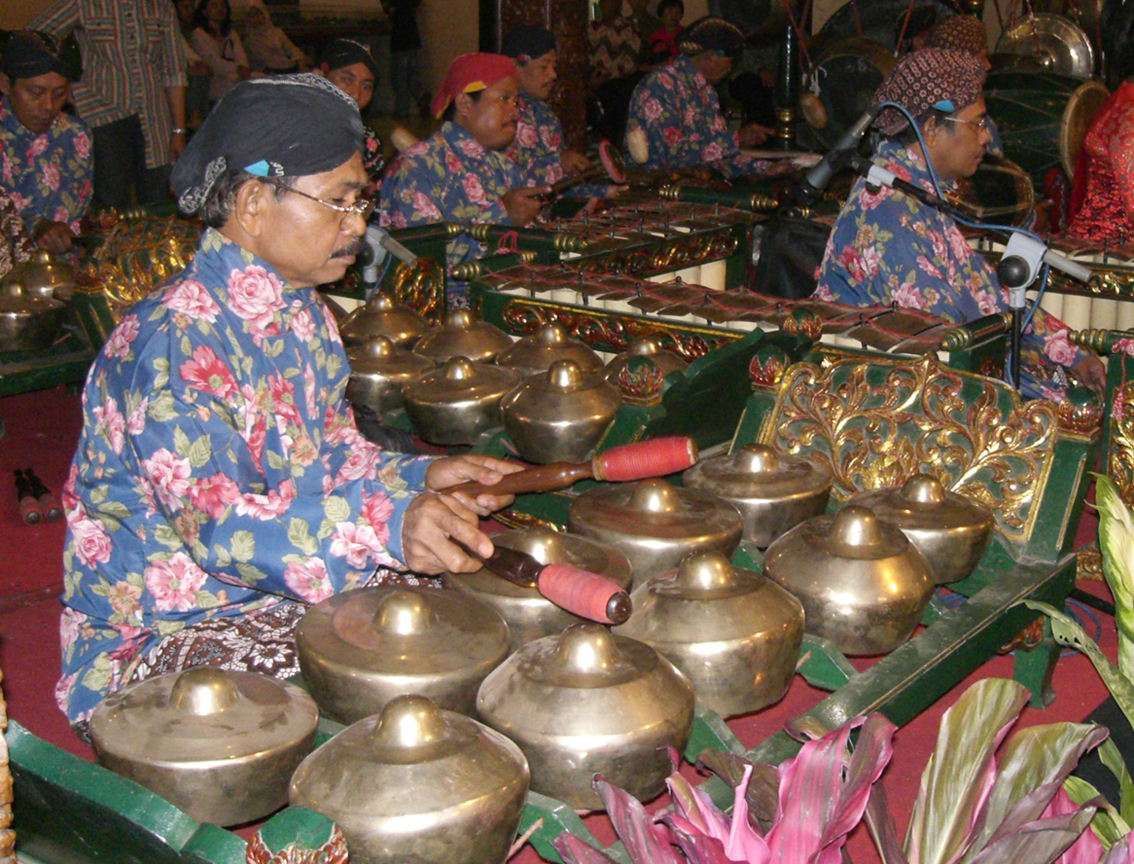
Gamelan (/ˈɡæməlæn/; Balinese: ᬕᬫ᭄ᬩᭂᬮ᭄ᬮᬦ᭄; Javanese: ꦒꦩꦼꦭꦤ꧀, romanized: gamelan (in the ngoko register), ꦒꦁꦱ, gangsa (in the krama register); Sundanese: ᮌᮙᮨᮜᮔ᮪) is the traditional ensemble music of the Javanese, Sundanese, and Balinese peoples of Indonesia, made up predominantly of percussive instruments. The most common instruments used are metallophones (played with mallets) and a set of hand-drums called kendang, which keep the beat. The kemanak, a banana-shaped idiophone, and the gangsa, another metallophone, are also commonly used gamelan instruments on Bali. Other notable instruments include xylophones, bamboo flutes (similar to the Indian bansuri), a bowed string instrument called a rebab (somewhat similar to the gadulka of Bulgaria), and a zither-like instrument called a siter, used in Javanese gamelan. Additionally, vocalists may be featured, being referred to as sindhen for females or gerong for males.
Although the popularity of gamelan has declined slightly since the introduction of modern popular music to Indonesia, the art form is still widely respected, being commonly played in many traditional ceremonies. It may also be performed as entertainment for some modern events, such as official cultural, corporate, government or educational functions, both formal or informal. Gamelan is also, traditionally, arranged and performed to accompany religious rituals, ceremonies, dance theatre, dance-drama, traditional Indonesian theater, wayang puppets theatre, singing, concerts, festivals, exhibitions, and many more. Many consider gamelan to be an integral part of Indonesian culture.
In 2014, Gamelan traditions were recognized as part of the National Intangible Cultural Heritage of Indonesia by the Indonesian Ministry of Education and Culture.
On 15 December 2021, Gamelan was inscribed onto the UNESCO Representative List of the Intangible Cultural Heritage of Humanity. The nomination builds on the archaeological connection to the Borobudur, and includes a focus on its role in fostering a sense of national identity and pride, in addition to wellbeing aspects such as mental health, the development of interpersonal skills and the connection between its cosmology and an ethics of mutual respect and care. The listing consists of Javanese gamelan (gamelan jawa) of Central Java and Special Region of Yogyakarta, Balinese gamelan (gamelan bali) of Bali, Sundanese gamelan (gamelan sunda) of West Java, Madurese gamelan (gamelan madura) and Banyuwangian Gamelan (gamelan banyuwangi) of East Java, Gendang beleq of West Nusa Tenggara, Banjarese gamelan (gamelan banjar) of South Kalimantan, Gamelan peking of Lampung, and Talempong of West Sumatra as a Masterpiece of Oral and Intangible Heritage of Humanity from Indonesia, and encouraged the Indonesian people and the Indonesian government to safeguard, transmit, promote, and develop the gamelan. Methods include the support of national, international and provincial festivals, the establishment of educational curricula including the Gamelan Goes to School program, an intention to increase the numbers of regional gamelan associations, and cultural diplomacy by sending gamelan specialists to global universities.[citation needed]
The word gamelan comes from the Javanese word gamel (ꦒꦩꦼꦭ꧀) in the ngoko register, which refers to playing of percussion instruments or the act of striking with a mallet, and the noun-forming suffix -an. The gamelan in the Sundanese is Degung (Degung), the word Degung apparently is an old Sundanese term, which refers to gongs and gong ensembles. For this reason, the words degung and gong are essentially synonyms for the word gamelan. At the same time, the expression gamelan degung may be a way to point at a gamelan ensemble tuned to degung scale. The term karawitan (ꦏꦫꦮꦶꦠꦤ꧀) refers to classical gamelan music and performance practice, and comes from the Javanese word rawit (ꦫꦮꦶꦠ꧀) of Sanskrit origin, meaning 'intricate' or 'finely worked', referring to the sense of smoothness and elegance idealized in Javanese music. Another word, pangrawit (ꦥꦁꦫꦮꦶꦠ꧀), means a person with such sense, and is used as an honorific when discussing esteemed gamelan musicians. The Javanese word for gamelan in the krama register is gangsa (ꦒꦁꦱ), formed either from the words tembaga (ꦠꦼꦩ꧀ꦧꦒ) and rejasa (ꦉꦗꦱ) referring to the materials used in bronze gamelan construction (copper and tin), or tiga (ꦠꦶꦒ) and sedasa (ꦱꦼꦢꦱ) referring to their proportions (three and ten).
The gamelan predates the Hindu-Buddhist culture that dominated Indonesia in its earliest records and thus represents an indigenous art form of Indonesia. In contrast to the heavy Indian influence in other art forms, the only obvious Indian influence in gamelan music is in the Javanese, Sundanese, and Balinese style of singing, and in the themes of the Wayang kulit and Wayang Golek (shadow puppet plays).
In Javanese mythology, the gamelan was created by Sang Hyang Guru in Saka era 167 (c. AD 230), the god who ruled as king of all Java from a palace on the Maendra mountain in Medang Kamulan (now Mount Lawu). He needed a signal to summon the gods and thus invented the gong. For more complex messages, he invented two other gongs, thus forming the original gamelan set.
The earliest image of a musical ensemble is found on the bas-relief of the 8th century Buddhist monument of Borobudur, Central Java. The Borobudur's musicians play lute-like stringed instruments, various kendang drums, various suling flutes, cymbals, bells, metallophones, and xylophones. Some of these musical instruments are indeed included in a complete gamelan orchestra. Musical instruments such as metallophones (saron, kenong, kecer), xylophones (gambang), the bamboo flute (suling), drums in various sizes (kendang), cymbals, bell (genta), and bowed and plucked string instruments were identified in this image. These reliefs of this musical ensemble are suggested to be the ancient form of the gamelan.
Hub AI
Gamelan AI simulator
(@Gamelan_simulator)
Gamelan
Gamelan (/ˈɡæməlæn/; Balinese: ᬕᬫ᭄ᬩᭂᬮ᭄ᬮᬦ᭄; Javanese: ꦒꦩꦼꦭꦤ꧀, romanized: gamelan (in the ngoko register), ꦒꦁꦱ, gangsa (in the krama register); Sundanese: ᮌᮙᮨᮜᮔ᮪) is the traditional ensemble music of the Javanese, Sundanese, and Balinese peoples of Indonesia, made up predominantly of percussive instruments. The most common instruments used are metallophones (played with mallets) and a set of hand-drums called kendang, which keep the beat. The kemanak, a banana-shaped idiophone, and the gangsa, another metallophone, are also commonly used gamelan instruments on Bali. Other notable instruments include xylophones, bamboo flutes (similar to the Indian bansuri), a bowed string instrument called a rebab (somewhat similar to the gadulka of Bulgaria), and a zither-like instrument called a siter, used in Javanese gamelan. Additionally, vocalists may be featured, being referred to as sindhen for females or gerong for males.
Although the popularity of gamelan has declined slightly since the introduction of modern popular music to Indonesia, the art form is still widely respected, being commonly played in many traditional ceremonies. It may also be performed as entertainment for some modern events, such as official cultural, corporate, government or educational functions, both formal or informal. Gamelan is also, traditionally, arranged and performed to accompany religious rituals, ceremonies, dance theatre, dance-drama, traditional Indonesian theater, wayang puppets theatre, singing, concerts, festivals, exhibitions, and many more. Many consider gamelan to be an integral part of Indonesian culture.
In 2014, Gamelan traditions were recognized as part of the National Intangible Cultural Heritage of Indonesia by the Indonesian Ministry of Education and Culture.
On 15 December 2021, Gamelan was inscribed onto the UNESCO Representative List of the Intangible Cultural Heritage of Humanity. The nomination builds on the archaeological connection to the Borobudur, and includes a focus on its role in fostering a sense of national identity and pride, in addition to wellbeing aspects such as mental health, the development of interpersonal skills and the connection between its cosmology and an ethics of mutual respect and care. The listing consists of Javanese gamelan (gamelan jawa) of Central Java and Special Region of Yogyakarta, Balinese gamelan (gamelan bali) of Bali, Sundanese gamelan (gamelan sunda) of West Java, Madurese gamelan (gamelan madura) and Banyuwangian Gamelan (gamelan banyuwangi) of East Java, Gendang beleq of West Nusa Tenggara, Banjarese gamelan (gamelan banjar) of South Kalimantan, Gamelan peking of Lampung, and Talempong of West Sumatra as a Masterpiece of Oral and Intangible Heritage of Humanity from Indonesia, and encouraged the Indonesian people and the Indonesian government to safeguard, transmit, promote, and develop the gamelan. Methods include the support of national, international and provincial festivals, the establishment of educational curricula including the Gamelan Goes to School program, an intention to increase the numbers of regional gamelan associations, and cultural diplomacy by sending gamelan specialists to global universities.[citation needed]
The word gamelan comes from the Javanese word gamel (ꦒꦩꦼꦭ꧀) in the ngoko register, which refers to playing of percussion instruments or the act of striking with a mallet, and the noun-forming suffix -an. The gamelan in the Sundanese is Degung (Degung), the word Degung apparently is an old Sundanese term, which refers to gongs and gong ensembles. For this reason, the words degung and gong are essentially synonyms for the word gamelan. At the same time, the expression gamelan degung may be a way to point at a gamelan ensemble tuned to degung scale. The term karawitan (ꦏꦫꦮꦶꦠꦤ꧀) refers to classical gamelan music and performance practice, and comes from the Javanese word rawit (ꦫꦮꦶꦠ꧀) of Sanskrit origin, meaning 'intricate' or 'finely worked', referring to the sense of smoothness and elegance idealized in Javanese music. Another word, pangrawit (ꦥꦁꦫꦮꦶꦠ꧀), means a person with such sense, and is used as an honorific when discussing esteemed gamelan musicians. The Javanese word for gamelan in the krama register is gangsa (ꦒꦁꦱ), formed either from the words tembaga (ꦠꦼꦩ꧀ꦧꦒ) and rejasa (ꦉꦗꦱ) referring to the materials used in bronze gamelan construction (copper and tin), or tiga (ꦠꦶꦒ) and sedasa (ꦱꦼꦢꦱ) referring to their proportions (three and ten).
The gamelan predates the Hindu-Buddhist culture that dominated Indonesia in its earliest records and thus represents an indigenous art form of Indonesia. In contrast to the heavy Indian influence in other art forms, the only obvious Indian influence in gamelan music is in the Javanese, Sundanese, and Balinese style of singing, and in the themes of the Wayang kulit and Wayang Golek (shadow puppet plays).
In Javanese mythology, the gamelan was created by Sang Hyang Guru in Saka era 167 (c. AD 230), the god who ruled as king of all Java from a palace on the Maendra mountain in Medang Kamulan (now Mount Lawu). He needed a signal to summon the gods and thus invented the gong. For more complex messages, he invented two other gongs, thus forming the original gamelan set.
The earliest image of a musical ensemble is found on the bas-relief of the 8th century Buddhist monument of Borobudur, Central Java. The Borobudur's musicians play lute-like stringed instruments, various kendang drums, various suling flutes, cymbals, bells, metallophones, and xylophones. Some of these musical instruments are indeed included in a complete gamelan orchestra. Musical instruments such as metallophones (saron, kenong, kecer), xylophones (gambang), the bamboo flute (suling), drums in various sizes (kendang), cymbals, bell (genta), and bowed and plucked string instruments were identified in this image. These reliefs of this musical ensemble are suggested to be the ancient form of the gamelan.