



Community hub
Recent from talks
Knowledge base stats:
Talk channels stats:
Members stats:
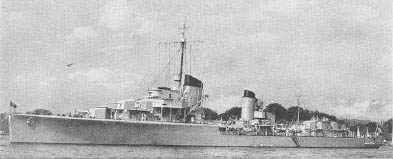
German destroyer Z2 Georg Thiele
The German destroyer Z2 Georg Thiele was one of four Type 1934-class destroyers built for the German Navy (Kriegsmarine) during the mid-1930s. Completed in 1937, two years before the start of World War II, the ship spent most of her time training although she did participate in the occupation of Memel in early 1939.
At the beginning of World War II, the ship was initially deployed to blockade the Polish coast, but she was quickly transferred to the German Bight to lay minefields in German waters. During the early stages of the Norwegian Campaign, in April 1940, Z2 Georg Thiele fought in both naval Battles of Narvik, on 10 and 13 April, and had to be beached to allow her crew to abandon ship safely after she had been severely damaged by British fire. The ship, having broken up, is now a popular diving site.
Design work on the Type 34-class destroyers began in 1932, around the time that Weimar Germany renounced the armament limitations of the Versailles Treaty that had ended World War I. Initial designs for the new destroyers were for large ships more powerful than the French and Polish destroyers then in service, but the design grew further as the Kriegsmarine now expected it to serve as a small cruiser. The design work appears to have been rushed and not well-thought out as the short forecastle and lack of flare at the bow compromised the ships' seakeeping ability and their stability was inadequate. The only substantial innovative part of the design, the high-pressure boilers, were an over-complicated system that received almost no shipboard testing before being installed in the Type 34s and frequently broke down throughout the life of the ships.
The class had an overall length of 119 meters (390 ft 5 in) and were 114 meters (374 ft 0 in) long at the waterline. The ships had a beam of 11.30 meters (37 ft 1 in), and a maximum draft of 4.23 meters (13 ft 11 in). They displaced 2,223 long tons (2,259 t) at standard load and 3,156 long tons (3,207 t) at deep load. The two Wagner geared steam turbine sets, each driving one propeller shaft, were designed to produce 70,000 PS (51,000 kW; 69,000 shp) using steam provided by six Wagner boilers. The ships had a designed speed of 36 knots (67 km/h; 41 mph), but attained an actual maximum speed of 38.7 knots (71.7 km/h; 44.5 mph). The Type 34s carried a maximum of 752 metric tons (740 long tons) of fuel oil which was intended to give a range of 4,400 nautical miles (8,100 km; 5,100 mi) at a speed of 19 knots (35 km/h; 22 mph), but they proved top-heavy in service and 30% of the fuel had to be retained as ballast low in the ship; the effective range proved to be only 1,530 nmi (2,830 km; 1,760 mi) at 19 knots. The crew of the Type 34 class ships numbered 10 officers and 315 enlisted men, plus an additional four officers and 19 enlisted men if serving as a flotilla flagship.
The Type 34s carried five 12.7-centimeter (5 in) SK C/34 guns in single mounts with gun shields, two each superimposed, fore and aft. The fifth gun was carried on top of the aft superstructure. The guns were numbered from one to five from front to rear. Their anti-aircraft armament consisted of four 3.7-centimeter (1.5 in) SK C/30 guns in a pair of twin mounts abreast the rear funnel and six 2-centimeter (0.79 in) C/30 guns in single mounts. The ships carried eight 53.3-centimeter (21 in) torpedo tubes in two power-operated mounts. A pair of reload torpedoes was provided for each mount.
Georg Thiele had four depth charge throwers mounted on the sides of her rear deckhouse, which were supplemented by six racks for individual depth charges on the sides of the stern, with either 32 or 64 charges carried. Mine rails could be fitted on the rear deck, with a maximum capacity of 60 mines. A system of passive hydrophones designated as 'GHG' (Gruppenhorchgerät) was fitted to detect submarines.
Z2 Georg Thiele was ordered on 7 July 1934 and laid down at Deutsche Werke, Kiel, on 25 October 1934 as yard number K243. She was launched on 18 August 1935, and completed and commissioned on 27 February 1937. She was named after Georg Thiele, a Korvettenkapitän who commanded the Seventh Half Flotilla of torpedo boats during World War I. She was assigned to the 1st Destroyer Division on 1 December 1937 and made a port visit to Ulvik, Norway, in April 1938, together with her sisters Z3 Max Schultz and Z4 Richard Beitzen. She was then handed back to her builders to have her bow rebuilt to fix the damage caused by the large amount of water that came over it in head seas. This increased her length by .30 meters (1 ft 0 in). She then participated in the 22 August Fleet Review for Adolf Hitler and Miklós Horthy, Regent of the Kingdom of Hungary, and the following fleet exercise. In December, Georg Thiele, together with her sisters Z1 Leberecht Maass, Max Schultz, and Richard Beitzen, sailed to the area of Iceland to evaluate their seaworthiness in a North Atlantic winter with their new bows. On 23–24 March 1939, she was one of the destroyers that escorted the heavy cruiser Deutschland, which was transporting Adolf Hitler to announce the occupation of Memel. She participated in the spring fleet exercise in the western Mediterranean and made several visits to Spanish and Moroccan ports in April and May. When World War II began, Georg Thiele was initially deployed in the Baltic to operate against the Polish Navy and to enforce a blockade of Poland, but she was soon transferred to the German Bight where she joined her sisters in laying defensive minefields. The ship began a refit in late 1939 that was completed in early April 1940.
Georg Thiele was allocated to Group 1 for the Norwegian portion of Operation Weserübung in April 1940. The group's task was to transport the 139th Mountain Infantry Regiment (139. Gebirgsjäger Regiment) and the headquarters of the 3rd Mountain Division (3. Gebirgs-Division) to seize Narvik. The ships began loading troops on 6 April and set sail the next day. The German destroyers reached the Ofotfjord on the morning of 9 April and Commodore Friedrich Bonte took his flagship Wilhelm Heidkamp, Georg Thiele and Z11 Bernd von Arnim down the fjord to Narvik. A heavy snowstorm allowed Thiele and von Arnim to enter the harbor without challenge and tie up at a pier. The mountain troops immediately began disembarking, but the ships were spotted by the coast defense ship Norge a few minutes later. The latter ship immediately opened fire and was able to fire approximately thirteen 21 cm (8.3 in) shells at a range of 600–800 meters (660–870 yd) before von Arnim sank the Norwegian ship with torpedoes. In the darkness and falling snow, none of the Norwegian shells hit either of the two destroyers, despite the short range.
Hub AI
German destroyer Z2 Georg Thiele AI simulator
(@German destroyer Z2 Georg Thiele_simulator)
German destroyer Z2 Georg Thiele
The German destroyer Z2 Georg Thiele was one of four Type 1934-class destroyers built for the German Navy (Kriegsmarine) during the mid-1930s. Completed in 1937, two years before the start of World War II, the ship spent most of her time training although she did participate in the occupation of Memel in early 1939.
At the beginning of World War II, the ship was initially deployed to blockade the Polish coast, but she was quickly transferred to the German Bight to lay minefields in German waters. During the early stages of the Norwegian Campaign, in April 1940, Z2 Georg Thiele fought in both naval Battles of Narvik, on 10 and 13 April, and had to be beached to allow her crew to abandon ship safely after she had been severely damaged by British fire. The ship, having broken up, is now a popular diving site.
Design work on the Type 34-class destroyers began in 1932, around the time that Weimar Germany renounced the armament limitations of the Versailles Treaty that had ended World War I. Initial designs for the new destroyers were for large ships more powerful than the French and Polish destroyers then in service, but the design grew further as the Kriegsmarine now expected it to serve as a small cruiser. The design work appears to have been rushed and not well-thought out as the short forecastle and lack of flare at the bow compromised the ships' seakeeping ability and their stability was inadequate. The only substantial innovative part of the design, the high-pressure boilers, were an over-complicated system that received almost no shipboard testing before being installed in the Type 34s and frequently broke down throughout the life of the ships.
The class had an overall length of 119 meters (390 ft 5 in) and were 114 meters (374 ft 0 in) long at the waterline. The ships had a beam of 11.30 meters (37 ft 1 in), and a maximum draft of 4.23 meters (13 ft 11 in). They displaced 2,223 long tons (2,259 t) at standard load and 3,156 long tons (3,207 t) at deep load. The two Wagner geared steam turbine sets, each driving one propeller shaft, were designed to produce 70,000 PS (51,000 kW; 69,000 shp) using steam provided by six Wagner boilers. The ships had a designed speed of 36 knots (67 km/h; 41 mph), but attained an actual maximum speed of 38.7 knots (71.7 km/h; 44.5 mph). The Type 34s carried a maximum of 752 metric tons (740 long tons) of fuel oil which was intended to give a range of 4,400 nautical miles (8,100 km; 5,100 mi) at a speed of 19 knots (35 km/h; 22 mph), but they proved top-heavy in service and 30% of the fuel had to be retained as ballast low in the ship; the effective range proved to be only 1,530 nmi (2,830 km; 1,760 mi) at 19 knots. The crew of the Type 34 class ships numbered 10 officers and 315 enlisted men, plus an additional four officers and 19 enlisted men if serving as a flotilla flagship.
The Type 34s carried five 12.7-centimeter (5 in) SK C/34 guns in single mounts with gun shields, two each superimposed, fore and aft. The fifth gun was carried on top of the aft superstructure. The guns were numbered from one to five from front to rear. Their anti-aircraft armament consisted of four 3.7-centimeter (1.5 in) SK C/30 guns in a pair of twin mounts abreast the rear funnel and six 2-centimeter (0.79 in) C/30 guns in single mounts. The ships carried eight 53.3-centimeter (21 in) torpedo tubes in two power-operated mounts. A pair of reload torpedoes was provided for each mount.
Georg Thiele had four depth charge throwers mounted on the sides of her rear deckhouse, which were supplemented by six racks for individual depth charges on the sides of the stern, with either 32 or 64 charges carried. Mine rails could be fitted on the rear deck, with a maximum capacity of 60 mines. A system of passive hydrophones designated as 'GHG' (Gruppenhorchgerät) was fitted to detect submarines.
Z2 Georg Thiele was ordered on 7 July 1934 and laid down at Deutsche Werke, Kiel, on 25 October 1934 as yard number K243. She was launched on 18 August 1935, and completed and commissioned on 27 February 1937. She was named after Georg Thiele, a Korvettenkapitän who commanded the Seventh Half Flotilla of torpedo boats during World War I. She was assigned to the 1st Destroyer Division on 1 December 1937 and made a port visit to Ulvik, Norway, in April 1938, together with her sisters Z3 Max Schultz and Z4 Richard Beitzen. She was then handed back to her builders to have her bow rebuilt to fix the damage caused by the large amount of water that came over it in head seas. This increased her length by .30 meters (1 ft 0 in). She then participated in the 22 August Fleet Review for Adolf Hitler and Miklós Horthy, Regent of the Kingdom of Hungary, and the following fleet exercise. In December, Georg Thiele, together with her sisters Z1 Leberecht Maass, Max Schultz, and Richard Beitzen, sailed to the area of Iceland to evaluate their seaworthiness in a North Atlantic winter with their new bows. On 23–24 March 1939, she was one of the destroyers that escorted the heavy cruiser Deutschland, which was transporting Adolf Hitler to announce the occupation of Memel. She participated in the spring fleet exercise in the western Mediterranean and made several visits to Spanish and Moroccan ports in April and May. When World War II began, Georg Thiele was initially deployed in the Baltic to operate against the Polish Navy and to enforce a blockade of Poland, but she was soon transferred to the German Bight where she joined her sisters in laying defensive minefields. The ship began a refit in late 1939 that was completed in early April 1940.
Georg Thiele was allocated to Group 1 for the Norwegian portion of Operation Weserübung in April 1940. The group's task was to transport the 139th Mountain Infantry Regiment (139. Gebirgsjäger Regiment) and the headquarters of the 3rd Mountain Division (3. Gebirgs-Division) to seize Narvik. The ships began loading troops on 6 April and set sail the next day. The German destroyers reached the Ofotfjord on the morning of 9 April and Commodore Friedrich Bonte took his flagship Wilhelm Heidkamp, Georg Thiele and Z11 Bernd von Arnim down the fjord to Narvik. A heavy snowstorm allowed Thiele and von Arnim to enter the harbor without challenge and tie up at a pier. The mountain troops immediately began disembarking, but the ships were spotted by the coast defense ship Norge a few minutes later. The latter ship immediately opened fire and was able to fire approximately thirteen 21 cm (8.3 in) shells at a range of 600–800 meters (660–870 yd) before von Arnim sank the Norwegian ship with torpedoes. In the darkness and falling snow, none of the Norwegian shells hit either of the two destroyers, despite the short range.