


Community hub
Recent from talks
Contribute something
Nothing was collected or created yet.
Gery Chico
View on Wikipedia
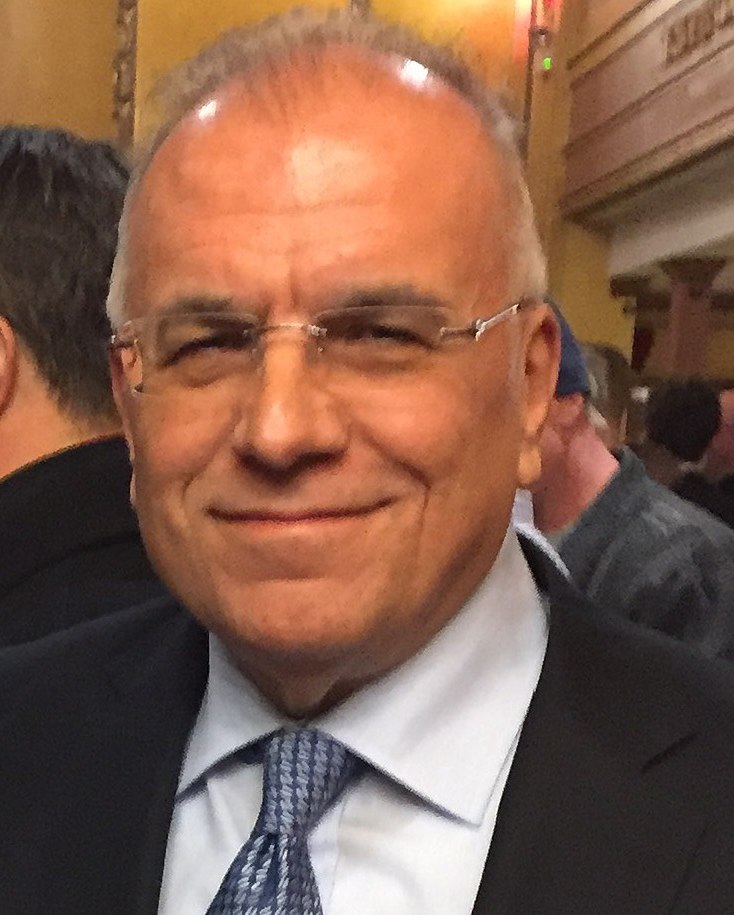
Gery J. Chico (/ˈɡɛri ˈtʃiːkoʊ/ GHERR-ee CHEE-koh; born August 24, 1956) is an American politician, lawyer, public official and former Democratic primary candidate to become the U.S. Senator from Illinois.
Key Information


Chico served as the Chief of Staff to Mayor Richard M. Daley from 1992 to 1995, and board president of the Chicago Public Schools from 1995 to 2001. He was named Outstanding School Board President by the Illinois State Board of Education in 1997. From 2007 to 2010, he was board president of the Chicago Park District, and in 2010 he was board president of the City Colleges of Chicago. On June 7, 2011, Chico was named Chairman of the Illinois State Board of Education by Illinois Governor Pat Quinn.
Chico ran for Mayor of Chicago in the 2011 election, but was defeated by Rahm Emanuel. In late 2018, Chico declared a second bid for mayor in the 2019 election. After losing in the first round, he endorsed Lori Lightfoot.[2][3]
Early life and education
[edit]Gery Chico was born on August 24, 1956,[4] to a Mexican-American father, Jesse, and a Greek-Lithuanian mother, Jacqueline (née Kopulos). With his two younger brothers, he grew up in Chicago's McKinley Park neighborhood.[5] His mother also worked as a secretary at the University of Illinois at Chicago College of Dentistry.[6] Chico attended a now-closed parochial school, Our Lady of Good Counsel Catholic Elementary School at 35th and Hermitage,[7] where he headed the altar boys and patrol boys, and also played baseball for two years. A hip injury kept him in a wheelchair during his freshman year at Thomas Kelly High School.[5]
Chico pursued a pre-medical degree at the University of Illinois at Urbana–Champaign, but after his sophomore year he transferred to the University of Illinois at Chicago.[8] A political science major, he volunteered in the 11th Ward. He later secured an externship in the city's Department of Planning during his senior year,[5] and he worked there from 1977 to 1980. He received his bachelor's degree in 1978. From 1980 to 1987, he worked for the City Council Finance Committee.[9] Finance Committee chair Alderman Edward M. Burke promoted Chico to research manager, and he became senior research assistant for the Department of Planning and Economic Development.[10] At that time, he took night classes at the Loyola University Chicago School of Law.[5] He earned his J.D. degree in 1985 and became a member of the Loyola Law Review.[9]
Chico has been married twice; his first wife was Jeryl Minow, with whom he had three daughters. He is currently married to Sunny Penedo Chico, who has a son and daughter from a previous marriage.[5][6] A former U.S. Department of Education employee, Sunny runs a consulting firm that focuses on, among others, tutoring services and curriculum advice.[11]
Legal career
[edit]Chico began working as an associate of the Chicago-based law firm Sidley Austin in 1987, and served as General Counsel to the Chicago Development Council, a real estate development association.[9] He left the firm in 1991 to become the Deputy Chief of Staff for Mayor Richard M. Daley,[5] but he later returned as partner in 1995 and 1996, leading the firm's practice related to state and local government.
In 1996, Chico left Sidley & Austin to become a senior partner of Altheimer & Gray.[9] Oscar D’Angelo, a friend of Daley and a former Altheimer partner, suggested to the firm’s managing partner that the firm hire Chico. In 2000, just four years later, at age 44, Chico became chairman of Altheimer. In 2002, the firm gave hundreds of thousands of dollars to Governor Rod Blagojevich and Attorney General Lisa Madigan's campaigns. In 2003, while Chico was chairman and simultaneously running for the US Senate, Altheimer became insolvent and dissolved.[12][13] Some partners blamed the bankruptcy on poor management by Chico, while an attorney who sat on two financial committees blamed an economic downturn.[5]
Chico also served as Special Counsel to Arnstein & Lehr in 2003 and 2004.[9] In 2004, Chico, along with Planning Department colleague Marcus Nunes, formed the general practice law firm Chico & Nunes,[5] which lobbies for clients seeking government business.[11][14]
Chief of Staff to Chicago Mayor Richard M. Daley
[edit]In 1991, Chico was a Deputy Chief of Staff for Mayor Richard M. Daley.[9] He coordinated efforts to drain freight tunnels that were flooded with water from the Chicago River.[15] Chico was later promoted to Chief of Staff, a position he held from 1992 to 1995.[9] As part of his duties, he oversaw the completion of the International Terminal of O'Hare International Airport, preparations for the 1994 FIFA World Cup, and the construction of new schools.[16] Along with Budget Director Paul Vallas, Chico helped add 1,000 officers to the police force and improved neighborhoods throughout the city through a program called Neighborhoods Alive.[5]
Chicago Public Schools board
[edit]In 1995, the Illinois state legislature passed the Chicago School Reform Act, which gave the Mayor of Chicago unprecedented new control over Chicago Public Schools.[citation needed] Daley asked Chico to become the CEO, but Chico declined because he was resuming his law career. Chico instead recommended that Daley appoint colleague Paul Vallas as CEO, and Chico was named chairman of the School Reform Board of Trustees, which was renamed the "President of the Chicago Board of Education" in 1999 (the title which the board had originally held before 1995).[17][18][19][20] In 1997 Chico was named Outstanding School Board President by the Illinois State Board of Education for his reforms in education and fiscal policies.[citation needed]
Chico was responsible for efforts to preserve and restore hundreds of murals in the public schools, which had been commissioned by President Franklin D. Roosevelt during the Progressive and New Deal eras. They had since been hidden under layers of dirt and paint.[21] Under his administration, CPS appointed an Arts Education Task Force and a Bureau of Cultural Arts.[22]
Chico resigned as President of the Chicago Board of Education in 2001.[18][23] His departure was considered sudden, and came after a number of failing standardized testing scores eliminated the improvements to test scores that had been experienced in the previous two years. Soon after his departure, Paul Vallas also announced his resignation.[24] Chico was succeeded in this office by Michael W. Scott.[25]
2004 campaign for U.S. Senate
[edit]In 2004, Chico ran for the Democratic nomination to succeed retiring Republican U.S. Senator Peter Fitzgerald. He was the first Democrat to declare his candidacy, doing so on July 30, 2002, during a rally with Hispanic leaders. His Senate committee preferences included education, transportation, and judiciary. He also criticized the Bipartisan Campaign Reform Act and the No Child Left Behind Act, but supported gay marriage,[6] abortion rights, stem cell research, the death penalty,[26] and universal healthcare.[27] Chico was the only candidate who supported gay marriage out of all seven Democrats and eight Republicans.[28] Then-State Senator Barack Obama ultimately won the nomination over six other candidates including Chico.[29]
Chicago Park District board
[edit]In October 2007, Mayor Daley appointed Chico as president of the Chicago Park District Board of Commissioners.[30] Chico supported the construction of a new soccer field in Lincoln Park despite opposition from local residents.[31] In 2010, he stepped down.[32]
City Colleges of Chicago board
[edit]In March 2010, Mayor Daley nominated Chico as chairman of the board of trustees of the City Colleges of Chicago and the board elected Chico chairman.[33][34] Along with Chancellor Cheryl Hyman, Chico reformed the City Colleges budget by laying off 225 employees, removing unfilled jobs, and reducing executive spending to increase spending on technology and training for students. Furthermore, Chico and Hyman reduced taxation on property for two straight years, and cancelled nursing programs. He resigned 8 months later to run for Mayor of Chicago.[35]
2011 campaign for mayor of Chicago
[edit].jpg)

On September 27, 2010, Chico announced that he would run for mayor of Chicago in 2011.[36] He was one of six candidates on the ballot.
Rahm Emanuel was considered to be the leading candidate before the election. Chico was considered "the rival with the best chance of forcing him into a runoff".[37]
Chico positioned himself as a business candidate with a Latino identity.[38] He sought to portray himself as a candidate who understood the city better than frontrunner Rahm Emanuel.[38] He touted his experience, particularly his tenure as president of the school board.[38]
Chico advertised his Latino background, his identity as the son of an immigrant father, his education in the Chicago Public Schools system.[38] He also contrasted his South Side upbringing to Emanuel's upbringing in the suburban North Shore.[38]
In seeking the Hispanic vote, he proved to have a lead over the race's other Hispanic candidate, Miguel del Valle.[38] Chico received significant support from the city's Hispanic community, even receiving endorsements from leading members such as congressman Luis Gutierrez.[38]
Chico raised nearly $4.4 million in campaign funds.[38] This was the second-greatest amount any candidate raised, however it was still only less than one-third of the $15 million in campaign funds that Emanuel was able to procure.[38] Chico received most of his money from personal and corporate donations. However, he also had the greatest union support financial contribution to his campaign committee of any candidate, receiving $188,000 from municipal unions, including the Chicago Firefighters Union and the Fraternal Order of Police.[38]
Chico was backed by many of the city's establishment Democrats, such as alderman Edward M. Burke.[38]
In regards to schools, Chico wanted to negotiate with the Chicago Teachers Union for both a lengthened school day and school year.[38] He opposed an elected school board.[38] He touted his experience leading the school board as qualifications which made him the best fit candidate to address problems with the Chicago Public Schools.[38]
Chico pledged to hire 2,000 police officers but did not offer specifics on how he would raise the funds.[39] He opposed making the school board an elected body, and he favored extending the school day and school year.[40] Chico picked up endorsements from unions that represented, among others, police officers, firefighters, laborers, painters, operating engineers, iron workers, roofers, and sheet metal workers.[41]
Chico attacked Rahm Emanuel's proposal to lower the sales tax and increase the service tax.[38] He derided Emanuel's proposed service tax increase the "Rahm tax", and discounted Emanuel's claim that this increase would be offset the by his proposed sales tax decrease.[38] He sought to garner additional media attention with his "Rahm tax" attacks, but to little avail.[38]
In the results of the election on February 22, Emanuel's 55% support dwarfed Chico's 24% support. Chico placed second.[42] Chico won in 10 of Chicago's 50 wards, while Emanuel won 40.[43] The campaign's communications director claimed that controversy over Emanuel's eligibility to run for mayor may have diverted the focus of the press away from the other candidates.[44] After the election, Chico remained involved in the runoff elections for other city offices, endorsing a candidate for 25th Ward alderman.[45]
State Board of Education
[edit]From June 2011 through January 2015, Chico served as chair of the Illinois State Board of Education.[46]
Chico was nominated by Governor Pat Quinn to be chairman of the Illinois State Board of Education in June 2011.[47] His confirmation was delayed as a result of questions regarding his ties to the Save-A-Life Foundation, a failed charity that was undergoing investigation by Illinois Attorney General Lisa Madigan’s office.[48][49][50]
2019 campaign for mayor of Chicago
[edit]
Chico ran for mayor again in the 2019 Chicago mayoral election.
During his candidacy, Chico was perceived to be seeking strong support from Hispanic voters.[51] In the end, he received the second-highest support among Hispanic voters of any candidate in the first round, placing behind Susana Mendoza.[52] However, Hispanic voter turnout was low in the election.[52]
Chico was one of four mayoral candidates (alongside Bill Daley, Susana Mendoza, and Toni Preckwinkle) that had political ties to Alderman Edward M. Burke, whose corruption scandal upended the race for mayor.[53][54][55] Chico was particularly tied to Burke, having received his endorsement in the mayoral election.[53] Chico made efforts to distance himself from Burke.[56]
Chico touted his experience.[57] He staked much of his candidacy upon his record at Chicago Public Schools and Chicago City Colleges.[58]
Chico placed eighth of fourteen candidates, with 6.20% of the vote.[59][60]
After failing to advance to the runoff, Chico endorsed Lori Lightfoot.[2][3]
Subsequent activities
[edit]In mid-2019, Chico became the board chairman of Local Initiatives Support Corporation Chicago, a nonprofit seeking to boost underserved neighborhoods through grants, loans, and by providing support to community organizations.[61][62]
Electoral history
[edit]| Party | Candidate | Votes | % | |
|---|---|---|---|---|
| Democratic | Barack Obama | 655,923 | 52.8% | |
| Democratic | Daniel W. Hynes | 294,717 | 23.7% | |
| Democratic | M. Blair Hull | 134,453 | 10.8% | |
| Democratic | Maria Pappas | 74,987 | 6.0% | |
| Democratic | Gery Chico | 53,433 | 4.3% | |
| Democratic | Nancy Skinner | 16,098 | 1.3% | |
| Democratic | Joyce Washington | 13,375 | 1.1% | |
| Democratic | Estella Johnson-Hunt (write-in) | 10 | 0.0% | |
| Total votes | 1,242,996 | 100.0% | ||
| Party | Candidate | Votes | % | |
|---|---|---|---|---|
| Nonpartisan | Rahm Emanuel | 326,331 | 55.27 | |
| Nonpartisan | Gery J. Chico | 141,228 | 23.92 | |
| Nonpartisan | Miguel del Valle | 54,689 | 9.26 | |
| Nonpartisan | Carol Moseley Braun | 53,062 | 8.99 | |
| Nonpartisan | Patricia Van Pelt Watkins | 9,704 | 1.64 | |
| Nonpartisan | William Walls, III | 5,343 | 0.90 | |
| Write-in | Tommy Hanson | 9 | 0.00 | |
| Write-in | John C. Hawkins | 8 | 0.00 | |
| Write-in | “Fredrick” “Frederick” “Fred” “F.” K. White | 6 | 0.00 | |
| Write-in | Alfredo Castillo | 4 | 0.00 | |
| Write-in | John Hu | 4 | 0.00 | |
| Write-in | Alex George (AG) | 3 | 0.00 | |
| Turnout | 590,391 | 41.99 | ||
| 2019 Chicago mayoral election | ||||
|---|---|---|---|---|
| Candidate | General Election[65] | Runoff Election[66] | ||
| Votes | % | Votes | % | |
| Lori Lightfoot | 97,667 | 17.54 | 386,039 | 73.70 |
| Toni Preckwinkle | 89,343 | 16.04 | 137,765 | 26.30 |
| William Daley | 82,294 | 14.78 | ||
| Willie Wilson | 59,072 | 10.61 | ||
| Susana Mendoza | 50,373 | 9.05 | ||
| Amara Enyia | 44,589 | 8.00 | ||
| Jerry Joyce | 40,099 | 7.20 | ||
| Gery Chico | 34,521 | 6.20 | ||
| Paul Vallas | 30,236 | 5.43 | ||
| Garry McCarthy | 14,784 | 2.66 | ||
| La Shawn K. Ford | 5,606 | 1.01 | ||
| Robert "Bob" Fioretti | 4,302 | 0.77 | ||
| John Kolzar | 2,349 | 0.42 | ||
| Neal Sales-Griffin | 1,523 | 0.27 | ||
| Write-ins | 86 | 0.02 | ||
| Total | 556,844 | 100 | 523,804 | 100 |
Notes
[edit]- A.^ Position was known as "chairman of the Chicago School Reform Board of Trustees" from 1995 through 1999, and has been known as "president of the Chicago Board of Education" since 1999
References
[edit]- ^ Hardy, Thomas (11 Jun 1995). "Blacks". Newspapers.com. Chicago Tribune. Retrieved 1 August 2021.
- ^ a b "Lightfoot picks up endorsements from laborers and another former rival". Chicago Tribune. 14 March 2019.
- ^ a b "Chico joins his former CPS partner Vallas in endorsing Lightfoot". 14 March 2019.
- ^ "About Gery...". Gery Chico for Mayor. 2011.
- ^ a b c d e f g h i Rossi, Rosalind (February 3, 2011). "Chico known as hard worker, solid negotiator". Chicago Sun-Times. Retrieved February 4, 2011.
- ^ a b c Mendell, David (March 7, 2004). "Proud of 'battle scars,' Chico still in the fight". Chicago Tribune. Retrieved February 4, 2011.
- ^ Felsenthal, Carol (October 1, 2010). "A Chat with Mayoral Candidate Gery Chico". Chicago Magazine. Retrieved February 4, 2011.
- ^ Jackson, Brian (October 24, 1993). "Making the City That Works Work; Daley Aide a Stickler for Detail". Chicago Sun-Times. p. 1.
- ^ a b c d e f g "Gery J. Chico". Chico & Nunes. 2011. Retrieved February 4, 2011.
- ^ Crimmins, Jerry (April 15, 1992). "Daley aide Chico moves up after flood ouster". Chicago Sun-Times. p. 18.
- ^ a b Heinzmann, David (December 21, 2010). "Gery Chico made millions from law firm that lobbies City Hall". Chicago Breaking News. Retrieved February 5, 2011.
- ^ Pallasch, Abdon (2003-10-03). "Gery Chico and the firm that failed". Chicago Sun-Times. Archived from the original on 2011-01-28. Retrieved 2011-09-15.
- ^ Robinson, Kevin (2011-01-11). "The Sun-Times Digs Up Gery Chico's Past". Chicagoist. Archived from the original on 2011-01-11.
- ^ Chase, John (2011-01-09). "Gutierrez endorses Chico in Chicago mayoral race". Chicago Tribune.
- ^ Oclander, Jorge (July 2, 1995). "Board President Chico's Duties Just Beginning". Chicago Sun-Times. p. 11.
- ^ Oclander, Jorge (June 1, 1995). "City School Chief On the Way Out; Daley Staff Chief To Head Board". Chicago Sun-Times. p. 1.
- ^ Neal, Steve (May 7, 1999). "Chico needs a lesson on sharing spotlight". Chicago Sun-Times. p. 7.
- ^ a b "History of Chicago Public Schools". Chicago Reporter. Retrieved 11 March 2020.
- ^ "#FactCheck: The truth behind Gery Chico's 'friendship' with Chicago's public school teachers". Chicago Teachers Union. 9 January 2019. Retrieved 11 March 2020.
- ^ "About Chicago Board of Education". cpsboe.org. Chicago Board of Education. Retrieved 13 March 2020.
- ^ Becker, Heather (2002). Art for the People: The Rediscovery and Preservation of Progressive- and WPA-Era Murals in the Chicago Public Schools, 1904–1943. San Francisco: Chronicle Books. pp. 1, 20. ISBN 0-8118-3579-0.
- ^ Becker 2002, p. 110.
- ^ "01-0627-RS1 June 27, 2001 RESOLUITION RE: GERY J. CHICO RETIRED PRESIDENT, CHICAGO BOARD OF EDUCATION" (PDF). Chicago Public Schools Board of Education. 27 June 2001. Retrieved 11 March 2020.
- ^ Kening, Dan (June 8, 2001). "Michael Scott named Chicago school board president". Chicago Tribune. Retrieved 6 February 2023.
- ^ "01-627-MO8 June 27, 2001 MOTION RE: APPOINT MICHAEL W> SCOTT PRESIDENT OF THE BOARD OF EDUCATION OF THE CITY OF CHICAGO" (PDF). Chicago Public Schools Board of Education. Retrieved 11 March 2020.
- ^ Kapos, Shia (March 10, 2004). "Some help with narrowing the choices". Chicago Tribune. p. 1.
- ^ Beckless, Ferman Mentrell (March 6, 2004). "Chico: Healthcare should be a fundamental right". Chicago Defender. Vol. XCVIII, no. 214. p. 9.
- ^ Krol, Eric (February 15, 2004). "Only one candidate backs gay marriage". Daily Herald. p. 1.
- ^ Finke, Doug (March 17, 2004). "Two emerge from pack of Senate candidates". State Journal Register. Springfield, Illinois. p. 1.
- ^ Dumke, Mick (September 28, 2007). "Gery Chico, can-do guy". Chicago Reader. Retrieved February 8, 2011.
- ^ Ahmed-Ullah, Noreen S. (May 15, 2008). "Chicago Park District votes to settle Lincoln Park soccer field fight". Chicago Tribune. Archived from the original on September 21, 2012. Retrieved February 14, 2011.
- ^ Uribarri, Adrian G. (April 8, 2010). "Daley recommends new Chicago Park District president". Chicago Current. Archived from the original on December 24, 2010. Retrieved February 12, 2011.
- ^ "Mayor Taps Chico to Take Reins at City Colleges". Fox Chicago News. March 3, 2010.
- ^ "Daley taps Chico to take reins at City Colleges" (Press release). Chicago Press Release Services. 2010-03-10. Archived from the original on April 26, 2014. Retrieved 2012-04-03.
- ^ Spielman, Fran (November 4, 2010). "City Colleges Chairman Gery Chico resigns to concentrate on his mayoral campaign". Chicago Sun-Times. Archived from the original on November 10, 2010. Retrieved February 7, 2011.
- ^ "Gery Chico To Run For Mayor". Progress Illinois. September 27, 2011. Retrieved February 9, 2011.
- ^ Chase, John (February 10, 2011). "Emanuel at 49%, Chico at 19% in Tribune/WGN poll". Chicago Tribune. Retrieved February 11, 2011.
- ^ a b c d e f g h i j k l m n o p q Foreman, Sean D.; Godwin, Marcia L. (2014). Local Politics and Mayoral Elections in 21st Century America: The Keys to City Hall. Routledge. pp. 128–132. ISBN 978-1-317-57893-2. Retrieved 18 May 2020.
- ^ "Chico says he'll hire more police officers". Chicago Tribune. January 27, 2011. p. 10. Archived from the original on September 16, 2014.
- ^ "Hispanic candidates disagree on public education in Chicago". Fox News Latino. February 9, 2011. Retrieved February 10, 2011.
- ^ Spielman, Fran; Pallasch, Abdon M. (February 8, 2011). "More unions endorse Chico, bash Emanuel". Chicago Sun-Times. Retrieved February 9, 2011.
- ^ Pallasch, Abdon M.; Spielman, Fran (February 23, 2011). "Rahm Emanuel wins Chicago mayor race". Chicago Sun-Times. Retrieved April 12, 2011.
- ^ Schulte, Sarah. "Is Chicago past racial elections?". ABC 7 Chicago. Retrieved February 23, 2011.
- ^ McClelland, Edward (March 25, 2011). "Running Against Rahm". NBC Chicago. Retrieved March 28, 2011.
- ^ "Chico, del Valle at odds over Ward 25". ABC 7 Chicago. March 24, 2011. Retrieved April 12, 2011.
- ^ "In the Executive Ethics Commission of the State of Illinois In re: GERY Chico 0 OEIG Case $12-02216 OEIG FINAL REPORT (REDACTED)" (PDF). eec.illinois.gov. Executive Ethics Commission of Illinois. January 13, 2016. Archived from the original (PDF) on 15 March 2023. Retrieved 15 March 2023.
- ^ Malone, Tara (June 8, 2011). "Quinn picks Chico to lead state education board". Chicago Tribune. Retrieved June 8, 2011.
- ^ McKinney, Dave (June 23, 2011). "Chico's confirmation as state school boss hits snag". Chicago Sun Times. Retrieved July 31, 2011.
- ^ Guzzardi, Will (2011-02-17). "Gery Chico Save A Life Foundation Connection: What Was His Role At Troubled Charity?". The Huffington Post.
- ^ Guzzardi, Will (2011-06-23). "Gery Chico Save A Life Foundation Connection Delays His Appointment To State Board Of Ed". The Huffington Post.
- ^ McClell, Edward (14 May 2019). "How Lori Lightfoot Beat the Machine". Chicago magazine. Retrieved 29 November 2019.
- ^ a b Serrato, Jacqueline (29 March 2019). "Latinx voters could determine the next mayor of Chicago, if they show up". Chicago Reporter. Retrieved 29 November 2019.
- ^ a b "Will Toni Preckwinkle's woes boost Susana Mendoza in mayoral race?". Chicago Reporter. 9 January 2019. Retrieved 29 November 2019.
- ^ Konkol, Mark (29 January 2019). "Mayoral Candidate Susana Mendoza Can't Be Taken Seriously Anymore". Patch. Retrieved 29 November 2019.
- ^ "Chicago: Political corruption charges shadow mayor's race". Usatoday.com. Archived from the original on March 27, 2019. Retrieved April 3, 2019.
- ^ Spielman, Fran (8 February 2019). "Chico tries to distance himself from Ald. Edward Burke". Chicago Sun-Times. Retrieved 29 November 2019.
- ^ Spielman, Fran (18 September 2018). "Chico portrays himself as only candidate with experience to actually do the job". Chicago Sun-Times. Retrieved 5 April 2020.
- ^ Blakley, Derrick (9 January 2019). "Fact Checking Ads: Gery Chico's Success Record". Retrieved 5 April 2020.
- ^ "TABULATED STATEMENT OF THE RETURNS AND PROCLAMATION OF THE RESULTS OF THE CANVASS OF THE ELECTION RETURNS FOR THE FEBRUARY 26, 2019 MUNICIPAL GENERAL ELECTION HELD IN EACH OF THE PRECINCTS IN ALL OF THE WARDS IN THE CITY OF CHICAGO" (PDF). Chicago Board of Elections. Retrieved 20 February 2020.
- ^ "2019 Municipal General – 2/26/19". chicagoelections.gov. Board of Election Commissioners for the City of Chicago. Retrieved 20 February 2020.
- ^ Blumberg, Nick (3 July 2019). "Gery Chico's New Challenge: Uplifting Underserved Neighborhoods". WTTW News. Retrieved 4 June 2020.
- ^ Spielman, Fran (18 June 2019). "Vanquished mayoral challenger Gery Chico takes on new challenge". Chicago Sun-Times. Retrieved 4 June 2020.
- ^ "Election Vote Totals Results". elections.il.gov. Illinois State Board of Elections. Archived from the original on 22 February 2020. Retrieved 14 September 2020.
- ^ "TABULATED STATEMENT OF THE RETURNS AND PROCLAMATION OF THE RESULTS OF THE CANVASS OF THE ELECTION RETURNS FOR THE FEBRUARY 22, 2011 MUNICIPAL GENERAL ELECTION HELD IN EACH OF THE PRECINCTS IN ALL OF THE WARDS IN THE CITY OF CHICAGO" (PDF). Chicago Board of Elections. Retrieved 20 February 2020.
- ^ "TABULATED STATEMENT OF THE RETURNS AND PROCLAMATION OF THE RESULTS OF THE CANVASS OF THE ELECTION RETURNS FOR THE FEBRUARY 26, 2019 MUNICIPAL GENERAL ELECTION HELD IN EACH OF THE PRECINCTS IN ALL OF THE WARDS IN THE CITY OF CHICAGO" (PDF). Chicago Board of Elections. Retrieved 20 February 2020.
- ^ "2019 Municipal Runoffs - 4/2/19". Chicago Board of Elections. Retrieved April 17, 2019.
External links
[edit]Gery Chico
View on GrokipediaGery J. Chico is an American attorney and former Chicago public official who earned a B.A. from the University of Illinois in 1978 and a J.D. from Loyola University Chicago School of Law in 1985, where he served on the Loyola Law Review.[1][2]
As chief of staff to Mayor Richard M. Daley from 1992 to 1995, Chico oversaw the day-to-day operations of Chicago's city government.[3][2][4]
He subsequently led the Chicago Board of Education as president from 1995 to 2001, a period marked by administrative restructuring in the public schools system.[5][4][6]
Chico also presided over the Chicago Park District board from 2002 to 2004 and chaired the Illinois State Board of Education.[5]
In his private career, he co-founded the law firm Chico & Nunes, P.C., focusing on real estate, land use, and government regulation matters informed by his public service background.[2]
Chico sought higher office as a Democratic primary candidate for U.S. Senate in 2004 and ran for Mayor of Chicago in 2011, finishing second, and again in 2019.[5][6]