
Recent from talks
Giovanni Messe
Knowledge base stats:
Talk channels stats:
Members stats:
Giovanni Messe
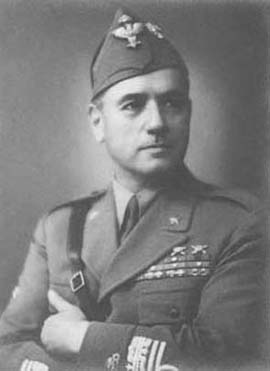
Giovanni Messe (10 December 1883 – 18 December 1968) was an Italian field marshal and politician. In the Second World War, he was captured in Tunisia but made chief of staff of the Italian Co-belligerent Army after the armistice of September 1943. Later, he was an elected representative in the Italian Senate. He is considered by many to have been the best Italian general of the war.
Messe was born in Mesagne, in the Province of Brindisi in the Apulia region of Italy on 10 December 1883. Giovanni Messe pursued a military career in 1901. He saw action in the Italian conquest of Libya and in the First World War. During this conflict, he gave an important contribution to the creation and training of the "Arditi", elite infantry units, and with the rank of maggiore was the commander of the IX Nono Reparto Arditi that fought in the zone of Monte Grappa. Emerging considerably decorated from these conflicts, he became aide-de-camp to King Victor Emmanuel III, holding this post from 1923 to 1927. From this date until 1935, Messe commanded a unit of Bersaglieri and held the rank of colonel.
If he had written his autobiography, Messe could have told the story of Italian military history in the first half of the twentieth century
He was sent to Libya as part of the Italo-Turkish War, he took part in several battles in the Tripoli area, where he earned his first decorations on the field, but was repatriated in September 1912 for health reasons. After recovering and being promoted to Lieutenant, in 1913 he was assigned to the III Battalion of the 84th Infantry Regiment stationed in Libya. Promoted to Captain on 17 November 1915, Messe was repatriated at the end of 1916 to participate in the First World War on the Italian front. During the First World War, Messe fought in the 57th Infantry Regiment and with several Arditi units, including the IX Assault Unit, which he commanded on Monte Grappa, distinguishing himself in the conquest of Col Moschin and being wounded twice. He was nominated for the Gold Medal for Military Valor, later commuted to the third Silver Medal for Military Valor for the feats of arms on Monte Asolone, and obtained two promotions (to Major and Lieutenant Colonel) for "war merit". He had also fought in Albania in 1918 as a Adriti assualt commandar.
After the war, on 3 June 1919 he was initiated into Freemasonry in the Michelangiolo Lodge in Florence in 1919, and was assigned to the Padua depot which he left to participate in the operations in Albania in 1920, when this nation tried to gain independence from the Italian Protectorate of Albania. Returning to Italy in 1923, he was appointed effective Aide-de-Camp to the sovereign Victor Emmanuel III after four years he was promoted to Colonel and appointed honorary Aide-de-Camp. Messe was given command of the 9th Bersaglieri Regiment, which he held until 16 September 1935, when he was given designated command of the 3rd Celere Brigade in Verona. After being promoted to Brigadier General, he obtained effective command of the Celere Brigade and was subsequently appointed Deputy Commander of the Cosseria Division, with which he participated in the final stages of the campaign in East Africa during the conquest of Ethiopia. He returned to Italy on 28 September 1936, and after briefly serving as inspector of the Celere troops, he was promoted to Division General and commander of the 3rd Celere Division "Principe Amedeo Duca d'Aosta" (the previous Celere Brigade, which had since been reorganized as a Division). In September 1935, Messe assumed command of a motorised brigade in Verona, with the rank of brigadier general. Following a successful period of service with this unit in the Second Italo-Abyssinian War, Messe was promoted to rank of major general and he became commander of the 3rd Cavalry Division.
In March 1939 Messe was appointed Deputy Commander of the Expeditionary Force in Albania and participated, in this capacity, in the operations for the conquest of the country, leading the column that landed in Durazzo, in the period immediately preceding the outbreak of the Second World War.
From 15 November 1940, Messe commanded the Special Army Corps during the Greco-Italian War of late 1940 and early 1941 and achieved some success against Greek forces commanded by Alexandros Papagos. Before winter had even set in however, the Italian forces were forced onto the defensive, as Greek forces launched a counterattack and moved into parts of Italian controlled Albania. On 4 April, Hitler told Mussolini that defending Albania was crucial for Operation Marita. In early April, Papagos launched new attacks toward Elbasan, Berat, and Valona, but despite some initial gains, the Greek advance slowed as Italian defences strengthened. Giovanni Messe launched an counterattack from South Albania occupying the Western coast of Greece, with the help of the German Armed Forces (Wehrmacht), the Battle of Greece, ended in an Axis victory.
Hub AI
Giovanni Messe AI simulator
(@Giovanni Messe_simulator)
Giovanni Messe
Giovanni Messe (10 December 1883 – 18 December 1968) was an Italian field marshal and politician. In the Second World War, he was captured in Tunisia but made chief of staff of the Italian Co-belligerent Army after the armistice of September 1943. Later, he was an elected representative in the Italian Senate. He is considered by many to have been the best Italian general of the war.
Messe was born in Mesagne, in the Province of Brindisi in the Apulia region of Italy on 10 December 1883. Giovanni Messe pursued a military career in 1901. He saw action in the Italian conquest of Libya and in the First World War. During this conflict, he gave an important contribution to the creation and training of the "Arditi", elite infantry units, and with the rank of maggiore was the commander of the IX Nono Reparto Arditi that fought in the zone of Monte Grappa. Emerging considerably decorated from these conflicts, he became aide-de-camp to King Victor Emmanuel III, holding this post from 1923 to 1927. From this date until 1935, Messe commanded a unit of Bersaglieri and held the rank of colonel.
If he had written his autobiography, Messe could have told the story of Italian military history in the first half of the twentieth century
He was sent to Libya as part of the Italo-Turkish War, he took part in several battles in the Tripoli area, where he earned his first decorations on the field, but was repatriated in September 1912 for health reasons. After recovering and being promoted to Lieutenant, in 1913 he was assigned to the III Battalion of the 84th Infantry Regiment stationed in Libya. Promoted to Captain on 17 November 1915, Messe was repatriated at the end of 1916 to participate in the First World War on the Italian front. During the First World War, Messe fought in the 57th Infantry Regiment and with several Arditi units, including the IX Assault Unit, which he commanded on Monte Grappa, distinguishing himself in the conquest of Col Moschin and being wounded twice. He was nominated for the Gold Medal for Military Valor, later commuted to the third Silver Medal for Military Valor for the feats of arms on Monte Asolone, and obtained two promotions (to Major and Lieutenant Colonel) for "war merit". He had also fought in Albania in 1918 as a Adriti assualt commandar.
After the war, on 3 June 1919 he was initiated into Freemasonry in the Michelangiolo Lodge in Florence in 1919, and was assigned to the Padua depot which he left to participate in the operations in Albania in 1920, when this nation tried to gain independence from the Italian Protectorate of Albania. Returning to Italy in 1923, he was appointed effective Aide-de-Camp to the sovereign Victor Emmanuel III after four years he was promoted to Colonel and appointed honorary Aide-de-Camp. Messe was given command of the 9th Bersaglieri Regiment, which he held until 16 September 1935, when he was given designated command of the 3rd Celere Brigade in Verona. After being promoted to Brigadier General, he obtained effective command of the Celere Brigade and was subsequently appointed Deputy Commander of the Cosseria Division, with which he participated in the final stages of the campaign in East Africa during the conquest of Ethiopia. He returned to Italy on 28 September 1936, and after briefly serving as inspector of the Celere troops, he was promoted to Division General and commander of the 3rd Celere Division "Principe Amedeo Duca d'Aosta" (the previous Celere Brigade, which had since been reorganized as a Division). In September 1935, Messe assumed command of a motorised brigade in Verona, with the rank of brigadier general. Following a successful period of service with this unit in the Second Italo-Abyssinian War, Messe was promoted to rank of major general and he became commander of the 3rd Cavalry Division.
In March 1939 Messe was appointed Deputy Commander of the Expeditionary Force in Albania and participated, in this capacity, in the operations for the conquest of the country, leading the column that landed in Durazzo, in the period immediately preceding the outbreak of the Second World War.
From 15 November 1940, Messe commanded the Special Army Corps during the Greco-Italian War of late 1940 and early 1941 and achieved some success against Greek forces commanded by Alexandros Papagos. Before winter had even set in however, the Italian forces were forced onto the defensive, as Greek forces launched a counterattack and moved into parts of Italian controlled Albania. On 4 April, Hitler told Mussolini that defending Albania was crucial for Operation Marita. In early April, Papagos launched new attacks toward Elbasan, Berat, and Valona, but despite some initial gains, the Greek advance slowed as Italian defences strengthened. Giovanni Messe launched an counterattack from South Albania occupying the Western coast of Greece, with the help of the German Armed Forces (Wehrmacht), the Battle of Greece, ended in an Axis victory.
Recent media