Hubbry Logo
Gipsy SmithGipsy SmithMain
Open search
Gipsy Smith
Community hub
Gipsy Smith
logo
8 pages, 0 posts
0 subscribers
Be the first to start a discussion here.
Gipsy Smith
Gipsy Smith
from Wikipedia

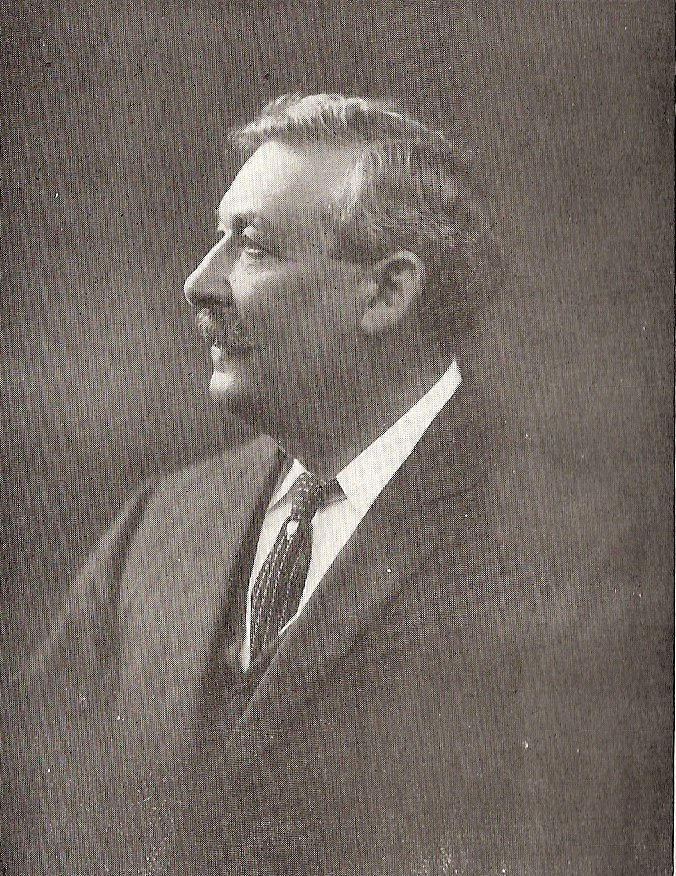
Rodney "Gipsy" Smith MBE (31 March 1860 – 4 August 1947) was a British evangelist who conducted evangelistic campaigns in the United States and Great Britain for over 70 years. He was an early member of The Salvation Army and a contemporary of Fanny Crosby and acquaintance of G. Campbell Morgan and H. A. Ironside.

Key Information

Early life

[edit]
The monument in Epping Forest marking the site of Smith's birth

Smith was born in a Romani bender tent in Epping Forest, six miles northeast of London. Today the site is marked with a large, commemorative stone in the woods near Waterworks Corner, Woodford Green. Smith received no education, and his family made a living selling baskets, tinware, and clothespegs. His father, Cornelius (1831–1922), and his mother, Mary (Polly) Welch (c1831-1865), provided a home that was happy in their vardo. Smith was a child when his mother died from smallpox near Baldock in Hertfordshire. She is buried in the nearby churchyard of St Nicholas church in Norton, now part of Letchworth Garden City. Cornelius Smith was later buried with her. The Smith children numbered four girls and two boys (Rodney was the fourth child).

Cornelius Smith was in and out of jail for various offences. There, he heard the gospel from a prison chaplain; later, he and his brothers were converted at a mission meeting. From 1873 on, "The Converted Gypsies" were involved in numerous evangelistic efforts.

Conversion

[edit]

Aged 16, Smith's conversion came as a result of a combination of various factors; the witness of his father, hearing Ira Sankey sing and a visit to the home of John Bunyan in Bedford all contributed. He taught himself to read and write and began to practice preaching. He would sing hymns to the people he met and was known as "the singing gypsy boy."

At a convention at the Christian Mission (later to become The Salvation Army) headquarters in London, William Booth noticed the Gypsies and realized the potential in young Smith. On 25 June 1877 Smith accepted the invitation of Booth to be an evangelist with and for the Mission. For six years (1877–1882) he served on street corners and mission halls.

Family

[edit]

He was married on 17 December 1879 to Annie E. Pennock, one of his converts. It was from this marriage that Rodney and Annie had three children, two boys and one girl. Albany Rodney, the eldest, became a Christian later in life and eventually followed in his father's footsteps and became an evangelist in the United States. Albany was known as 'Gipsy Smith, Jr.' and served as an evangelist from 1911 to his death on August 24, 1951. Albany's three children were Betty, John (Jack) Rodney, a lawyer, and George Wilbur, a Presbyterian pastor of three churches, one in Missouri, one in Stuttgart, Arkansas and one at Batesville, Mississippi. Rodney's youngest son, Alfred Hanley, became a Christian at a young age and became a Wesleyan pastor in England and served at 11 different pastorates during his 43 years in the ministry. Hanley died on February 11, 1949, at the age of 67.

Rhoda Zillah served with her father in his great South African campaign known as the "Mission of Peace". She eventually married a banker named James Lean and had two children, Rodney James Lean and Zillah Lean. Zillah Elizabeth Lean, Gipsy's granddaughter, worked with the late English author David Lazell, of East Leake, in his first biographical account of Gipsy Smith entitled, "Gipsy Smith, From the Forest I Came". Also, Lieutenant Charles Smith, of El Dorado, Arkansas wrote a brief biographical account of the Gipsy Smith family for the British Evangelical Magazine, The Flame (July–September 2006: Volume 72 No. 3).

Salvation Army

[edit]
'Gipsy' Smith as a Captain in The Salvation Army

Rodney and Annie served in several assignments and saw membership rise to hundreds, then a thousand. By June 1882, great crowds were coming and the work was growing. A gold watch was given to him and about £5.00 (£330.00 in modern time[1]) was presented to his wife by the warm-hearted members of local churches. (The Salvation Army corps was not part of this as Smith knew this was forbidden.) Acceptance of these gifts was still considered a breach of the rules and regulations of The Salvation Army, and for this he was dismissed from the organization. He was not given a chance to give back the gifts. (From his book Gipsy Smith His Life and Work it does look as though there were some difficulties between him and two of General Booth's sons, Bramwell and Ballington, which may have led to the decision which gave him no opportunity to put things right. Cornelius Phelps, a close friend of Bramwell, wrote “Bramwell had it out for Smith.”) This happened so suddenly that other evangelists had to step in to take up his preaching engagements, including a contemporary preacher Charles Crowie Smith, who took over two engagements in Hanley. His eight assignments with The Salvation Army had produced 23,000 decisions and his crowds were anywhere up to 1,500.

Evangelist travels

[edit]
Gipsy Smith in Manhattan in 1918

He traveled extensively around the world on evangelistic crusades, drawing crowds numbering in the hundreds of thousands throughout his life. Busy as he was, he never grew tired of visiting Romani encampments whenever he could on both sides of the Atlantic. Gipsy never wrote a sermon out for preaching purposes. Smith wrote several books and could sing as well as he preached. Sometimes he would interrupt his sermon and burst into song. Several of these hymns he would sing were recorded by Columbia Records. Although he was a Methodist, ministers of all denominations loved him. It is said that he never had a meeting without conversions.

During World War I he ministered under the auspices of the Y.M.C.A. to the British troops in France, often visiting the front lines. As a result of this, King George VI made him a Member of the Order of the British Empire.

Later life

[edit]

Gipsy Smith's wife, Annie, died in 1937 at the age of 79 while he was in America. Front-page headlines in 1938 carried the news of the 78-year-old widower marrying Mary Alice Shaw on her 27th birthday. Smith's second wife helped him in his meetings, sang, did secretarial work, and later nursed him when his health failed.

Stricken by a heart attack, he died on the Queen Mary on a cruise in America, age 87. It was estimated that this was his 45th crossing of the Atlantic. His funeral service and cremation were held 8 August 1947 in New York City. A memorial with a plaque was unveiled on 2 July 1949 at Mill Plain, Epping Forest, England, his birthplace; his ashes are reportedly buried beneath this.[2]

Sources

[edit]
  1. ^ "Currency converter: 1270–2017".
  2. ^ Journal of the Gypsy Lore Society – The Gypsy Lore Society (1953) pg 73
[edit]
Revisions and contributorsEdit on WikipediaRead on Wikipedia
from Grokipedia
Rodney "Gipsy" Smith (31 March 1860 – 4 August 1947) was a British evangelist of Romani heritage, celebrated for his fervent preaching style and lifelong ministry that drew massive crowds and inspired numerous conversions across the . Born in a bow tent in , , , to Romani parents Cornelius Smith, a basket-maker, and Mary (Polly) Welch, Smith experienced a nomadic childhood marked by and the loss of his to at age five. With no formal education—he never attended school for even a day—Smith was largely illiterate until his mid-teens, learning to read and write only after a profound spiritual awakening. At 16, on 17 November 1876, he converted to during a service at a Primitive Methodist chapel in , an event triggered by his discovery of a hymnbook that convicted him of his need for . Smith's early career began in 1877 when he joined the at the invitation of founder , serving as an officer and preacher until 1882, during which time he recorded over 23,000 decisions for Christ in his campaigns. Transitioning to independent evangelism, he conducted itinerant missions supported by various organizations, marrying Salvation Army colleague Annie E. Pennock in 1879 and fathering three children: Albany, Alfred Hanley, and Rhoda Zillah. His preaching, characterized by simplicity, emotional depth, and personal testimony from his "gipsy" roots, resonated widely; he crossed the Atlantic more than 45 times for 34 tours in the United States alone, where events like his 1906 crusade attracted 116,500 attendees. Smith's influence extended globally, with major revivals in (1904, drawing 300,000 people), , and , as well as participation in the Welsh Revival of 1904–1905. He authored an autobiography, Gipsy Smith: His Life and Work by Himself (1901), which detailed his journey from illiteracy to international acclaim, and continued preaching into his later years despite health challenges. In recognition of his contributions to evangelism and wartime ministry during both World Wars, he was appointed Member of the (MBE) in 1946. Smith died of a heart attack aboard the RMS Queen Mary while sailing to America for what would have been his 35th tour, and was buried at sea; a memorial stone now stands in near his birthplace.

Early Life

Birth and Romani Heritage

Rodney "Gipsy" Smith, born Rodney Smith, entered the world on 31 March 1860 in a traditional Romani bender tent—a makeshift shelter of bent branches and fabric—located in near , . His parents were Romani travelers Cornelius Smith, born in 1831, and , born around 1831, both of whom embodied the itinerant traditions of their ethnic group. Smith's Romani heritage rooted him in a culture of nomadic living that originated from northern around the 11th century and had persisted among Gypsy communities in Britain since their arrival in the early 16th century, blending with local itinerant traditions. In 19th-century Britain, Romani families like his often traveled in vardos (horse-drawn caravans) across rural areas, sustaining themselves through seasonal trades such as basket-weaving, , and fortune-telling, while facing widespread marginalization and legal restrictions on their movements under laws like the Egyptians Act of and later vagrancy statutes. This lifestyle typically precluded formal , as Romani children learned practical skills and oral traditions within family units rather than attending settled schools, a pattern Smith himself followed without ever receiving classroom instruction. Epping Forest, an spanning and , served as a key encampment site for Smith's family during their travels, reflecting the forest's historical role as a haven for Romani groups evading urban persecution. The approximate location of his birth is now commemorated by a large granite memorial stone, erected in 1949 near Waterworks Corner in Woodford, featuring a carved image of a traditional Gypsy and an inscription honoring his legacy as an evangelist born to Romani roots.

Childhood Upbringing and Family Losses

Rodney Smith, known as Gipsy Smith, grew up in a nomadic Romani family, traveling across counties in eastern such as , , and , living in tents and wagons that defined his early years. He received no formal schooling, instead learning through the oral traditions and practical skills passed down during family travels, which included making baskets, clothes-pegs, and tinware. As the fourth of six children, he had four sisters and one brother, with whom he shared the hardships of vagrant life, fostering close sibling bonds amid constant movement. In 1865, when Rodney was five years old, his mother, Mary Welch Smith, died of near in , leaving the family motherless and exacerbating their already dire . The illness struck during a time when the family was encamped, and Mary was buried by lantern light in Norton churchyard, a somber event that young Rodney witnessed and later recalled vividly. Compounding the loss, a newborn born shortly before her death survived only two weeks and was interred beside her, further straining the family's resources and emotional resilience. His father, Cornelius Smith, played a central role in Rodney's upbringing as a traveling and , exposing the children to a life of itinerant performances and dealings. Cornelius often played the in pubs to earn extra income, a that introduced Rodney to music and public performance from an early age, while provided sporadic livelihood amid the uncertainties of Gypsy encampments. These experiences shaped Rodney's worldview, immersing him in the rhythms of nomadic existence and the occasional communal gatherings around his father's .

Religious Awakening

Personal Conversion Experience

At the age of sixteen, Rodney "Gipsy" Smith experienced a profound spiritual conversion on November 17, 1876, while attending a service at the Primitive Methodist Chapel in Fitzroy Street, Cambridge, England. This pivotal moment was precipitated by the death of his mother from smallpox when he was five, compounded by his father's conversion to Christianity three years earlier in 1873, which had heightened Smith's awareness of spiritual matters within the household. A Methodist preacher, Rev. George Warner, preached the sermon that evening, after which Smith was the first to kneel at the communion rail during the prayer meeting, where an old man with flowing locks prayed with him; the hymn "I do believe, I will believe, That Jesus died for me" deeply moved him, leading to his assurance of salvation through simple trust in Christ. Smith's personal struggle intensified during his time as a young laborer and hawker, selling clothes-pegs and other goods to support his amid financial hardships and social marginalization as a Romani youth. Feelings of profound guilt over his wayward life, coupled with isolation from his increasingly faith-oriented , led to nights of anguished and self-doubt, where he grappled with the of eternal separation from and his deceased . In a moment of deep conviction, Smith resolved to become a Christian while sitting by a fallen near his father's , vowing to live for Christ and meet his in heaven; this assurance was confirmed at the chapel service. In the immediate aftermath, Smith rushed home to share his transformation with his rejoicing father, who affirmed the genuineness of his by noting the evident warmth of divine peace in his son's heart. He underwent shortly thereafter as a public declaration of his commitment, and without any formal theological training, he acquired a , an English dictionary, and a biblical commentary to teach himself to read and study scripture, igniting an immediate resolve to pursue despite his illiteracy at the time of conversion. This unmediated dedication propelled him into sharing his locally, laying the foundation for his lifelong ministry.

Early Preaching and Father's Influence

Gipsy Smith's father, Cornelius Smith, underwent a profound in 1873, influenced by the emerging , which later evolved into . Previously known for a life marked by frequent imprisonments and traditional Romani pursuits such as playing and , Cornelius experienced a transformative moment at a mission hall in Latimer Road, , where he declared, "I am converted! Children, has made a new man of me." This event prompted him to sell his —symbolizing his break from past sins—and dedicate himself to , becoming a recognized in the Eastern Counties. Following his conversion, Cornelius initiated regular family readings and prayers, creating a spiritual atmosphere that profoundly shaped his children, including young Rodney (later known as Gipsy Smith). Despite his own illiteracy initially overcome through dedicated study of the , Cornelius encouraged open discussions of scripture around the or in their , emphasizing themes of redemption and personal testimony. When Rodney experienced his own conversion at age 16 in November 1876 during a service in , Cornelius rejoiced and immediately urged him to share his faith publicly, affirming Rodney's potential as a with words like, "My boy, you must preach ." This paternal guidance marked the transition from private devotion to active ministry, drawing on the family's shared Romani heritage of to convey messages. At around age 16 to 17, shortly after his conversion, Gipsy Smith made his initial preaching attempts in informal settings such as local tents, fields, and street corners near the family's gypsy wagon. His early messages blended vivid Romani anecdotes with simple truths, often beginning with personal testimonies like, "I am only a gypsy boy... but I know ." These efforts were hampered by significant challenges, including severe that left him trembling and hesitant during his first public address at a Primitive Methodist chapel in ; he later recalled practicing alone in a turnip field to build confidence. Over time, these experiences honed his delivery, transforming initial awkwardness into a compelling, heartfelt style. Parallel to his preaching development, Gipsy Smith cultivated a singing ministry rooted in his family's musical traditions, where Cornelius's had once entertained at fairs but now accompanied hymns in evangelistic settings. As a boy, Rodney earned the nickname "the singing gypsy boy" by performing songs in cottages and camps, using his natural voice to draw crowds and soften hearts before delivering sermons. This integration of music, inherited from Romani campfire gatherings, became a hallmark of his , attracting audiences who might otherwise resist formal preaching and amplifying the emotional impact of his messages.

Salvation Army Involvement

Joining and Initial Roles

Following his conversion at a Primitive Methodist chapel in on November 17, 1876, Rodney "Gipsy" Smith, then aged 16, began engaging in informal preaching influenced by his father's evangelistic example. In 1877, at age 17, he formally joined —then known as the —after attending a convention at its headquarters on in , where he was inspired by founder William Booth's emphasis on street preaching, a method that aligned closely with Smith's own nomadic Romani heritage of traveling and outdoor gatherings. During the event on June 25, 1877, Booth noticed Smith's vocal talent when he sang a solo and delivered a personal testimony, promptly inviting him to serve as the organization's 36th missionary evangelist. Smith's initial roles centered on and assisting with mission activities, including visiting homes, leading street meetings, and supporting indoor services at the headquarters alongside other missionaries. His charismatic delivery and singing ability led to rapid advancement within the ranks; he was commissioned as an shortly after joining and soon promoted to while stationed at Devonport. Lacking formal theological training, Smith's preparation was practical and on-the-job, drawing from his self-taught reading of the and early preaching experiences. His first postings in included assignments at under officer Elijah Cadman, followed by , , Chatham (where attendance grew significantly under his leadership), Hull, , and , all between 1877 and 1882. These early roles established Smith as a dynamic figure in the Army's outreach efforts, leveraging his Romani background to connect with diverse audiences in urban and industrial settings.

Service Contributions and Departure

During his five years of service in the Salvation Army from 1877 to 1882, Gipsy Smith led numerous revival meetings across England, including in locations such as , , , Hull, , and Forest Hill in , where he preached to growing crowds that reached up to 1,500 attendees. These efforts resulted in significant conversions, with an estimated 23,000 decisions for Christ across his eight assignments, including among challenging audiences like the "worst characters" in and individuals such as "Happy Patty" in Hull. He expanded outreach, growing congregations from small groups—such as 13 people in Chatham—to hundreds, and boosting Salvation Army publication sales, notably distributing 15,000 copies of The War Cry weekly in Hull. Smith also contributed creatively to Salvation Army worship by composing hymns such as "Jesus Revealed in Me" and "Not Dreaming," which enhanced evangelistic services, and by incorporating his father's to draw crowds and foster engaging hymn-singing. He played an active role in bands, supporting street-corner preaching and mission hall gatherings, and contributed to early publications through his writings on , documenting experiences that influenced Army methods and later works. These activities underscored his success in important commands, leading to tangible outcomes like the construction of a mission hall in . Smith's tenure ended in August 1882 following his dismissal for accepting unsolicited gifts—a gold watch and £5 (equivalent to about $20)—presented publicly in July at Hanley from outsiders, which violated Salvation Army rules prohibiting officers from receiving such items to maintain financial independence and avoid impropriety. The decision, conveyed in a letter from Bramwell Booth on August 5, 1882, accused him of defiance despite his five years of dedicated service, though the parting was amicable yet firm, with Smith leaving to pursue independent evangelism amid personal calls to broader ministry.

Evangelistic Ministry

Global Travels and Campaigns

Following his departure from the Salvation Army in 1882, Gipsy Smith embarked on an independent evangelistic ministry that spanned over 70 years until his death in 1947, marked by extensive global travels and large-scale campaigns across multiple continents. He made an estimated 45 crossings of the Atlantic Ocean by ship, facilitating numerous tours between the United Kingdom and the United States, where he conducted major revivals drawing massive audiences. In the UK, his campaigns included early efforts in Hanley in 1882, attracting 4,000 attendees at the Imperial Circus, and later events such as the 1924 London mission at the Royal Albert Hall, which saw 10,000 people nightly over eight days. These itineraries often involved train travel for domestic legs, covering thousands of miles, and were characterized by multi-week missions in major cities like Manchester, Glasgow, and Edinburgh, where venues were frequently overcrowded with crowds exceeding 7,000-8,000. Smith's international outreach began with his US debut in 1889 in Brooklyn, New York, at Nostrand Avenue Church, resulting in 300-400 conversions and setting the stage for repeated transatlantic campaigns. Subsequent US tours, such as the 1906 Boston mission with 116,500 total attendees and 2,290 decisions for faith, and the 1929 US tour, including Winston-Salem, yielding 27,500 decisions, highlighted the scale of his American impact, often in partnership with figures like , with whom he collaborated on UK missions including Hull in 1883 (drawing 10,000-20,000). His travels extended to in 1894 for six weeks across , , and , where crowds of 1,500-2,500 filled halls like Centenary Hall; he returned in 1926 for a seven-month tour, leveraging radio broadcasts to reach 80,000 decisions. In , Smith's 1904 campaign lasted six months, attracting 300,000 attendees and 18,000 decisions through a "Mission of Peace" that adapted his messages to post-Boer War contexts. European efforts included a 1883 summer trip to and later 1908-1909 missions in , culminating at the House with 150 decisions. Logistical challenges were prominent, including arduous five-week sea voyages via routes like the on ships such as the P&O Rome, seasickness during Atlantic crossings on vessels like the , and the need to tailor preaching for diverse audiences, from urban elites to Romani communities in places like Cumminsville, , where he visited encampments. His 1920s world tours synthesized these experiences, encompassing the , , , , and in extended itineraries that required police assistance for at events often exceeding capacity.

Preaching Style and Public Impact

Gipsy Smith's preaching was characterized by a deeply personal and spontaneous style, drawing heavily on autobiographical storytelling to connect with audiences. He often wove narratives from his Romani upbringing, such as the loss of his mother and his own conversion at age 16, into his sermons to illustrate themes of redemption and , creating an emotional bridge that resonated with listeners from diverse backgrounds. This approach emphasized personal testimony over complex , allowing him to focus on simple declarations like "I know " to affirm his lived faith rather than doctrinal debates. Central to his technique was emotional hymn-singing, which he integrated seamlessly into sermons without relying on notes, trusting instead in memory and what he described as the guidance of the . Smith frequently composed or selected hymns like "I Do Believe" and "Happy, Ever Happy" to heighten spiritual intensity, singing with a raw passion that evoked responses from crowds, often leading directly into impassioned pleas for conversion. His delivery incorporated Romani flair through vivid imagery and humor—such as anecdotes involving cherry trees or open-air Gypsy traditions—to make abstract truths relatable, particularly appealing to working-class laborers and immigrant communities in urban slums. This unscripted method ensured each message felt fresh and authentic, as he preached without repetition over extended campaigns, adapting on the spot to the audience's mood. The public impact of Smith's was profound, marked by consistent calls that yielded thousands of conversions across his campaigns, transforming venues from modest halls to massive stadiums. In in 1906, for instance, his 50 meetings drew 116,000 attendees and resulted in 2,290 decisions for Christ, while a 1904 South African tour saw 300,000 people attend and 18,000 conversions. These outcomes stemmed from his direct invitations to , where he urged immediate response, leading to scenes of mass repentance in places like Glasgow's inquiry rooms (3,000 in one campaign) and Birmingham (1,500 converts). His ability to influence broad crowds—reaching up to 15,000 in single services—highlighted the universal draw of his testimony-driven style, which prioritized heartfelt surrender to Christ and left a legacy of widespread spiritual awakenings among the marginalized and elite alike.

Personal Life

Marriages and Immediate Family

Rodney "Gipsy" Smith married Annie Elizabeth Pennock, a colleague and one of his early converts, on December 17, 1879, at a registry office in , , . The couple began their married life with a modest of 33 shillings per week, residing rent-free in a furnished house provided by . Annie played a crucial role in supporting Smith's itinerant ministry, managing the household during his extended travels—such as seven-month trips to America—and occasionally accompanying him on missions, including the Ocean Grove Camp Meetings in and a world tour in 1894. Her selfless Christian life and practical advice, such as encouraging him to accept the position of National Free Church Council missioner, were instrumental to his evangelistic success. The Smiths had three children: Albany Rodney, born December 31, 1880, in Newcastle; Alfred Hanley, born August 5, 1882; and Rhoda Zillah, born February 1, 1884. Albany initially worked as a sailor before becoming an evangelist known as "Gipsy Smith Jr.," serving in that capacity from 1911 until his death in 1951. Alfred pursued studies at Victoria University and became a Wesleyan minister. Rhoda, who remained at home during her youth and attended Tettenhall College with her brothers, later married James Lean and became a missionary's wife. The children actively supported their father's work by attending his missions, participating in home meetings, and viewing his ministry as a shared family calling, despite the challenges of his frequent absences; for instance, Rhoda once recited at Manchester Girls' High School in a traditional Romani costume to highlight her heritage. Annie died on May 12, 1937, at the age of 79, while Smith was in America.

World War I Service and Honors

During , Gipsy Smith served with the in , beginning in 1914 and continuing for three and a half years until mid-1917. In this role, he organized religious services and provided spiritual support to British troops, often venturing to the front lines amid the harsh conditions of the trenches. His efforts focused on boosting through , offering comfort and hope to soldiers facing the uncertainties of war. Smith's ministry extended to aiding the wounded and weary, as he ministered directly to English troops under auspices, conducting meetings that emphasized personal faith and resilience. Drawing from his prior global travels, which had honed his ability to connect with diverse audiences, he adapted his preaching to the immediate needs of the military context, fostering a sense of community and spiritual renewal. These initiatives were part of broader humanitarian work, which included recreational and welfare services alongside religious activities. In recognition of his wartime contributions and lifelong evangelistic service, Smith was awarded the Member of the (MBE) by King George VI in 1946. This honor acknowledged his impactful role in supporting troops during the conflict, highlighting the enduring value of his morale-boosting efforts in .

Later Years and Death

Post-War Evangelism and Remarriage

Following , Gipsy Smith resumed his extensive evangelistic ministry, embarking on global tours that included major campaigns in the United States and throughout the and . Despite turning 60 in 1920 and adopting a somewhat slower pace to accommodate his age, he maintained a demanding schedule of revivals and conferences, often traveling across continents and drawing thousands to his services. For example, during his 25th trip to the U.S. in 1928, he preached to over 5,000 in a tent meeting in , alongside his son Albany. In 1929, his tour from to featured a gathering of 10,000 at the renowned Ocean Grove Conference in , where he collected 10,000 decision cards over three weeks in alone. In the UK, Smith's post-war efforts focused on youth-oriented revivals and open-air meetings that echoed his Romani roots and lifelong commitment to accessible preaching. His 1931 youth crusade attracted large audiences seeking spiritual renewal amid economic hardship, while a 1934 open-air service near the site of his mother's death drew 3,500 attendees and led to the establishment of a new Methodist mission in the North. The following year, his rally—where he recounted his personal testimony—gathered 10,000 listeners, demonstrating his enduring draw even as he approached 75. These campaigns, often lasting weeks, emphasized personal conversion and communal worship, continuing the style that had defined his career. Smith's personal life underwent a significant change after the death of his first wife, Annie Elizabeth Pennock Smith, on March 4, 1937, at age 79 in , , while he was preaching in America. On July 2, 1938—her 27th birthday—he married Shaw, a young musician and theological student he had known since her childhood in ; the took place at her mother's home in Hollywood, California, officiated by his son Albany. The marriage, notable for the 51-year age difference, drew public attention and some criticism. Shaw's involvement revitalized Smith's ministry, as she accompanied him on tours, providing musical accompaniment, secretarial support, and joint preaching that infused fresh energy into his work through the early . Together, they conducted campaigns across the U.S. and from 1939 to 1945, with Shaw's contributions helping sustain the emotional and logistical demands of his itinerant lifestyle. Even as health challenges mounted in his later years, including worsening heart issues that began affecting his stamina in , Smith demonstrated unwavering dedication to . He persisted with annual campaigns, such as his 1936 U.S. tour culminating in a 5,000-person revival in —marking the 60th anniversary of his conversion—despite the physical toll of travel and preaching. This commitment persisted into the mid-1940s, with a final tour in 1945, reflecting his resolve to continue until physically unable.

Final Voyage and Legacy Memorial

On 4 August 1947, during what was estimated to be his 45th , Gipsy Smith suffered a fatal heart attack aboard the while en route from to New York for an evangelistic revival campaign in the United States. At the age of 87, Smith had been in declining health for about 18 months but persisted in his ministry travels, collapsing just hours after appearing on deck. Upon the ship's arrival in New York, Smith's body was transported to the city for funeral arrangements. A memorial service was held on 7 August 1947 at the , presided over by Rev. Ralph B. Nesbitt and attended by Smith's widow, his son Gipsy Rodney Smith Jr., and other relatives including Rev. Dr. Herbert Booth Smith. The eulogy was delivered by Rev. Dr. , who praised Smith as “one of the greatest personalities of our times,” emphasizing his “strange power” to penetrate human hearts and his unwavering commitment to the Gospel as the transformative force for society. Following the service, Smith's body was cremated at Fresh Pond Crematory in , New York. Smith's ashes were returned to and interred beneath a commemorative at Mill Plain in , near the site of his birth in a Romani tent. The roughly hewn stone, featuring a carved image of a traditional gypsy and a plaque detailing his life, was unveiled on 2 July 1949 by his widow during a dedication ceremony. Immediate global tributes from Christian leaders, including Peale's remarks and echoes in religious publications, underscored Smith's seven-decade dedication to across five continents, portraying his death as a poignant closure to a life that inspired millions through personal magnetism and fervent preaching.

Enduring Influence

Publications and Hymn Recordings

Gipsy Smith authored several books that reflected his evangelistic experiences and personal faith journey, often drawing from his sermons and life story. His , Gipsy Smith: His Life and Work by Himself, published in 1901, detailed his conversion and early ministry within , providing an intimate account of his Romani heritage and calling to preach. In 1905, he released As Jesus Passed By, and Other Addresses, a collection of sermons emphasizing Christ's encounters with individuals, which captured his straightforward preaching style. Another key work, The Lost Christ (1909), was a devotional exploring themes of spiritual disconnection through the biblical narrative of Mary losing , focusing on personal faith stories and the need for renewed intimacy with Christ. Later publications included Evangelistic Talks (1922), compiling addresses on revival and salvation, and Real Religion (1929), which addressed practical Christian living amid modern challenges. Smith also contributed to hymnody by compiling Gipsy Smith's Mission Hymnal: A Collection of around , selecting over 200 hymns and spiritual songs tailored for evangelistic meetings, schools, and prayer services to support his campaigns. This incorporated traditional songs and spiritual songs, blending familiar melodies with evangelistic fervor to engage audiences emotionally during services. From the late 1900s through the 1930s, Smith recorded numerous hymns and sacred songs for , often interrupting his sermons with spontaneous singing that was later captured on disc to extend his ministry's reach. These sessions, beginning in , featured solo performances of classics like "The Old, Old Story" and "Jesus Is My Light and Song," alongside covers of hymns such as "He Lifted Me," emphasizing themes of redemption and joy in salvation. Representative tracks from 1925 included "Wonderful Jesus" and "He Satisfies Me So," recorded in New York, which highlighted his voice. Occasional collaborations with family musicians added harmonic depth to some recordings, reinforcing evangelistic messages through music.

Long-Term Religious and Cultural Impact

Gipsy Smith's itinerant preaching model profoundly shaped 20th-century , particularly within Methodist circles, where his emphasis on personal testimony and revival campaigns inspired generations of traveling ministers. His global outreach, spanning over 70 years, positioned him as a precursor to mass efforts, having addressed larger audiences than any evangelist before him, a record later surpassed by . Smith directly influenced Graham's early development, as the young evangelist drew from the theological and stylistic approaches of predecessors like Smith during his formative education. As one of the first prominent Romani figures in evangelical , Smith's life and ministry challenged marginalization of gypsy communities, promoting inclusion and service that resonated with Traveller groups and advanced Romani representation in religious leadership. His practice of incorporating hymns into sermons, as compiled in his Mission Hymnal, fostered enduring elements of participatory in evangelical churches, with selections like those emphasizing personal salvation continuing in contemporary services. This legacy extended through his family, notably his son Albany, who carried on the evangelistic tradition from 1911 until his death in 1951, preaching across the and . In the , Smith's influence persists through revivals of his audio recordings on digital platforms, reintroducing his sermons and songs to new audiences. Biographies such as Gypsy Smith: The Forgotten Evangelist (2016) and reprints of his autobiographical works have sparked renewed scholarly and popular interest in his contributions. The granite memorial stone in , unveiled in 1949 near his birthplace, stands as a recognized heritage site honoring his Romani roots and evangelistic impact. Additionally, digital archives like the have democratized access to his publications, ensuring his writings remain available for study and inspiration.

References

Add your contribution
Related Hubs
User Avatar
No comments yet.