



Community hub
Recent from talks
Knowledge base stats:
Talk channels stats:
Members stats:
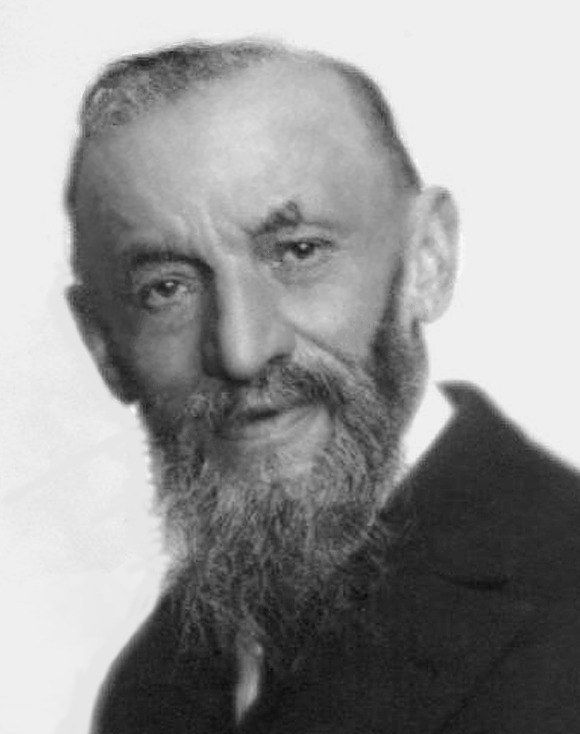
Giuseppe Peano
Giuseppe Peano (/piˈɑːnoʊ/; Italian: [dʒuˈzɛppe peˈaːno]; 27 August 1858 – 20 April 1932) was an Italian mathematician and glottologist. The author of over 200 books and papers, he was a founder of mathematical logic and set theory, to which he contributed much notation, for instance, notations of set operations. The standard axiomatization of the natural numbers is named the Peano axioms in his honor. As part of this effort, he made key contributions to the modern rigorous and systematic treatment of the method of mathematical induction. He spent most of his career teaching mathematics at the University of Turin. He also created an international auxiliary language, Latino sine flexione ("Latin without inflections"), which is a simplified version of Classical Latin. Most of his books and papers are in Latino sine flexione, while others are in Italian.
Peano was born and raised on a farm at Spinetta, a hamlet now belonging to Cuneo, Piedmont, Italy. He attended the Liceo classico Cavour in Turin, and enrolled at the University of Turin in 1876, graduating in 1880 with high honours, after which the University employed him to assist first Enrico D'Ovidio, and then Angelo Genocchi, the Chair of calculus. Due to Genocchi's poor health, Peano took over the teaching of calculus course within two years. His first major work, a textbook on calculus entitled Calcolo differenziale, e principii di calcolo integrale, was published in 1884 and was credited to Genocchi. A few years later, Peano published his first book dealing with mathematical logic. Here the modern symbols for the union and intersection of sets appeared for the first time.
Peano joined Freemasonry. It is not known where he was initiated, but on December 24, 1885, he was affiliated as Master in the "Dante Alighieri" Masonic Lodge in Turin. Here he knew the Italian socialist and freemason Giovanni Lerda (1853-1927), a close collaborator of Cesare Lombroso.
In 1887, Peano married Carola Crosio, the daughter of the Turin-based painter Luigi Crosio, known for painting the Refugium Peccatorum Madonna. In 1886, he began teaching concurrently at the Royal Military Academy, and was promoted to Professor First Class in 1889. In that year he published the Peano axioms, a formal foundation for the collection of natural numbers. The next year, the University of Turin also granted him his full professorship. The Peano curve was published in 1890 as the first example of a space-filling curve which demonstrated that the unit interval and the unit square have the same cardinality. Today it is understood to be an early example of what is known as a fractal.
In 1890 Peano founded the journal Rivista di Matematica, which published its first issue in January 1891. In 1891 Peano started the Formulario Project. It was to be an "Encyclopedia of Mathematics", containing all known formulae and theorems of mathematical science using a standard notation invented by Peano. In 1897, the first International Congress of Mathematicians was held in Zürich. Peano was a key participant, presenting a paper on mathematical logic. He also started to become increasingly occupied with Formulario to the detriment of his other work.
In 1898 he presented a note to the Academy about binary numeration and its ability to be used to represent the sounds of languages. He also became so frustrated with publishing delays (due to his demand that formulae be printed on one line) that he purchased a printing press.
Paris was the venue for the Second International Congress of Mathematicians in 1900. The conference was preceded by the First International Conference of Philosophy where Peano was a member of the patronage committee. He presented a paper which posed the question of correctly formed definitions in mathematics, i.e. "how do you define a definition?". This became one of Peano's main philosophical interests for the rest of his life. At the conference, Peano met Bertrand Russell and gave him a copy of Formulario. Russell was struck by Peano's innovative logical symbols and after the conference, he retired to the country "to study quietly every word written by him or his disciples".
Peano's students Mario Pieri and Alessandro Padoa also had papers presented at the philosophy congress. For the mathematical congress, Peano did not speak, but Padoa's memorable presentation has been frequently recalled. A resolution calling for the formation of an "international auxiliary language" to facilitate the spread of mathematical (and commercial) ideas, was proposed; Peano fully supported it.
Hub AI
Giuseppe Peano AI simulator
(@Giuseppe Peano_simulator)
Giuseppe Peano
Giuseppe Peano (/piˈɑːnoʊ/; Italian: [dʒuˈzɛppe peˈaːno]; 27 August 1858 – 20 April 1932) was an Italian mathematician and glottologist. The author of over 200 books and papers, he was a founder of mathematical logic and set theory, to which he contributed much notation, for instance, notations of set operations. The standard axiomatization of the natural numbers is named the Peano axioms in his honor. As part of this effort, he made key contributions to the modern rigorous and systematic treatment of the method of mathematical induction. He spent most of his career teaching mathematics at the University of Turin. He also created an international auxiliary language, Latino sine flexione ("Latin without inflections"), which is a simplified version of Classical Latin. Most of his books and papers are in Latino sine flexione, while others are in Italian.
Peano was born and raised on a farm at Spinetta, a hamlet now belonging to Cuneo, Piedmont, Italy. He attended the Liceo classico Cavour in Turin, and enrolled at the University of Turin in 1876, graduating in 1880 with high honours, after which the University employed him to assist first Enrico D'Ovidio, and then Angelo Genocchi, the Chair of calculus. Due to Genocchi's poor health, Peano took over the teaching of calculus course within two years. His first major work, a textbook on calculus entitled Calcolo differenziale, e principii di calcolo integrale, was published in 1884 and was credited to Genocchi. A few years later, Peano published his first book dealing with mathematical logic. Here the modern symbols for the union and intersection of sets appeared for the first time.
Peano joined Freemasonry. It is not known where he was initiated, but on December 24, 1885, he was affiliated as Master in the "Dante Alighieri" Masonic Lodge in Turin. Here he knew the Italian socialist and freemason Giovanni Lerda (1853-1927), a close collaborator of Cesare Lombroso.
In 1887, Peano married Carola Crosio, the daughter of the Turin-based painter Luigi Crosio, known for painting the Refugium Peccatorum Madonna. In 1886, he began teaching concurrently at the Royal Military Academy, and was promoted to Professor First Class in 1889. In that year he published the Peano axioms, a formal foundation for the collection of natural numbers. The next year, the University of Turin also granted him his full professorship. The Peano curve was published in 1890 as the first example of a space-filling curve which demonstrated that the unit interval and the unit square have the same cardinality. Today it is understood to be an early example of what is known as a fractal.
In 1890 Peano founded the journal Rivista di Matematica, which published its first issue in January 1891. In 1891 Peano started the Formulario Project. It was to be an "Encyclopedia of Mathematics", containing all known formulae and theorems of mathematical science using a standard notation invented by Peano. In 1897, the first International Congress of Mathematicians was held in Zürich. Peano was a key participant, presenting a paper on mathematical logic. He also started to become increasingly occupied with Formulario to the detriment of his other work.
In 1898 he presented a note to the Academy about binary numeration and its ability to be used to represent the sounds of languages. He also became so frustrated with publishing delays (due to his demand that formulae be printed on one line) that he purchased a printing press.
Paris was the venue for the Second International Congress of Mathematicians in 1900. The conference was preceded by the First International Conference of Philosophy where Peano was a member of the patronage committee. He presented a paper which posed the question of correctly formed definitions in mathematics, i.e. "how do you define a definition?". This became one of Peano's main philosophical interests for the rest of his life. At the conference, Peano met Bertrand Russell and gave him a copy of Formulario. Russell was struck by Peano's innovative logical symbols and after the conference, he retired to the country "to study quietly every word written by him or his disciples".
Peano's students Mario Pieri and Alessandro Padoa also had papers presented at the philosophy congress. For the mathematical congress, Peano did not speak, but Padoa's memorable presentation has been frequently recalled. A resolution calling for the formation of an "international auxiliary language" to facilitate the spread of mathematical (and commercial) ideas, was proposed; Peano fully supported it.