Recent from talks
Nothing was collected or created yet.
Grant Fox
View on Wikipedia
Key Information
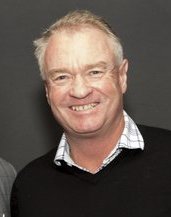
Grant James Fox MBE (born 16 June 1962) is a former rugby union player from New Zealand. He was a member of the All Blacks team that won the inaugural Rugby World Cup in 1987. He is also the father of professional golfer, Ryan Fox. Fox holds the world record for most points scored in a Rugby World Cup tournament of 126 in the 1987 Rugby World Cup. He also holds the world record for most conversions in one world cup tournament of 30 also from the same 1987 cup.
Playing career
[edit]Fox was born in New Plymouth. He attended Auckland Grammar school.
During his time with the All Blacks from 1985 to 1993, he wore the number 10 jersey (first five-eighth or fly-half), and was the main goalkicker for the All Blacks. He amassed 645 points from 46 All Black test matches (1 try, 118 conversions, 128 penalties, 7 drop goals). He is considered a true pioneer of the modern art of goal kicking,[2] in particular the technicalities of leaning the ball forward, which has been adopted by world class kickers since.Fox is regarded as one of the greatest first five-eighths in All Blacks' history,[1] even though he was not a great runner with the ball in hand.[2]
Despite his relatively short height, he made up for this with fantastic distribution skills reinforced by his long-term colleague John Kirwan's then-world-record career statistics playing outside him for Auckland and the All Blacks. His inability to score tries was often a joking point in the team – his cause not helped by an overruled attempt against Ireland in 1989 (due to a prior technical infringement by a teammate).[1]
Fox was a member of the New Zealand Cavaliers which toured apartheid South Africa in 1986, following the cancellation of the official NZRFU tour in 1985. For participating in the rebel tour Fox was banned from selection in the All Blacks for three tests.[3]
The highlight of Fox's career was winning the inaugural Rugby World Cup with New Zealand in 1987, a victory based in part on his accurate kicking.
Fox was selected as one of the “Five players of the year” for the 1984, 1988, 1989, 1990 and 1993 seasons, in the Rugby Almanack of New Zealand.
Coaching and broadcasting
[edit]In the 1995 New Year Honours, Fox was appointed a Member of the Order of the British Empire, for services to rugby.[4]
Fox remained an integral part of his Auckland club, involved at a coaching level and sharing in their success in the 1999 and 2002–2003 NPC seasons.
Fox is now a commentator on Sky Sports, NBC Sports and in the EA Sports rugby union series.
Fox provided commentary on the Rugby World Cup on ABC in 1995, with Al Michaels in 1999 and 2003 and Mike Tirico in 2007.
Fox is currently a selector with the New Zealand All Blacks (2011–present)
References
[edit]- ^ a b c d Grant Fox at the All Blacks (archived)
- ^ a b "Grant Fox | Rugby Union | Players and Officials". ESPN scrum. Retrieved 15 November 2021.
- ^ White, Steven (2015). The 50 Greatest Rugby Union Players of All Time. Icon Books. ISBN 978-1785780271.
- ^ "No. 53894". The London Gazette (2nd supplement). 31 December 1994. p. 34.
External links
[edit]- Grant Fox at the All Blacks (archived)
- Grant Fox at ESPNscrum (archived)
- Grant Fox at ItsRugby.co.uk
- Grant Fox at the New Zealand Sports Hall of Fame
Grant Fox
View on GrokipediaEarly life
Birth, family, and education
Grant Fox was born on 6 June 1962 in New Plymouth, New Zealand.[3] He grew up in a rural setting on his family's 300-acre sheep and beef farm, alongside two younger brothers, in an environment that fostered a strong sense of community and outdoor activity.[4] His parents, Ian Fox and Pam Fox, supported his early interests in sports; Ian played rugby and assisted with coaching, while Pam participated in netball, embedding athletics within the household dynamic.[5] Fox received his secondary education at Auckland Grammar School, where he boarded and first gained prominence in schoolboy rugby, honing skills as a fly-half amid a competitive environment that produced numerous All Blacks.[3] [6] He continued his studies at the University of Auckland, representing the Auckland University club in rugby during this period.[3]Domestic playing career
Auckland provincial career
Fox made his provincial debut for Auckland in 1982, quickly establishing himself as the first five-eighth with exceptional goal-kicking accuracy and tactical acumen.[2][7] Over the subsequent decade, he appeared in 189 matches for the province through 1993, amassing 2,746 points—a New Zealand record for provincial scoring at the time.[3] His reliability from the tee and ability to dictate field position were central to Auckland's offensive strategy in the amateur era. Fox played a pivotal role in Auckland's National Provincial Championship (NPC) successes during the 1980s, contributing to victories in 1982, 1984, 1985, 1987, 1988, 1989, 1990, and 1993.[8] Under coach John Hart, Auckland's dynasty emphasized forward dominance complemented by Fox's precise kicking game, which often decided tight contests; his conversions and penalties provided a high success rate, underpinning the team's consistency in Division One play.[7] Auckland's Ranfurly Shield tenure from 1985 to 1993, featuring over 60 defenses, showcased Fox's dominance in challenge matches, where he played 57 games and scored a record 932 points—nearly triple the next highest total—primarily through penalties and conversions.[9][10] This era highlighted his metronomic kicking under pressure, enabling Auckland to repel challengers and maintain provincial supremacy without relying on international-level flair.[7]International playing career
All Blacks debut and key matches
Fox made his All Blacks debut on 26 October 1985 against Argentina at Ferro Carril Oeste Stadium in Buenos Aires, starting at first five-eighth in New Zealand's 33–20 victory; he contributed a dropped goal during the match.[3] He retained his position for the second test of the series three days later, helping secure a 21–11 win and establishing himself as the preferred fly-half ahead of incumbents like Marty Berry and captain Andy Haden's influence on selection.[11] Fox featured prominently in Bledisloe Cup contests against Australia, including the 4 August 1990 test at Eden Park, Auckland, where his 15 points from penalties and conversions underpinned a 27–17 triumph that retained the trophy.[12] His precise territorial kicking and distribution supported forward dominance in these trans-Tasman series, contributing to New Zealand's consistent edge in the rivalry during his tenure.[13] During the All Blacks' 1990 northern hemisphere fixtures, Fox demonstrated tactical nous in the 24 November test against Scotland at Murrayfield, Edinburgh, scoring his only international try in a 31–16 victory through a sharp blindside run; he added further points via conversions and penalties under wet conditions.[1] These performances highlighted his composure in pressure scenarios, prioritizing possession retention and set-piece execution over speculative attacks.[3]1986 Cavaliers tour and subsequent ban
In May 1986, Grant Fox accepted an invitation to join the New Zealand Cavaliers, an unofficial rugby union team organized privately after the New Zealand Rugby Football Union (NZRFU) canceled its planned 1985 tour to South Africa due to international sporting isolation over the apartheid regime.[14] The Cavaliers, comprising 28 players including several All Blacks like Fox at fly-half, departed for a 12-match tour starting 30 April, facing provincial sides and a four-test series against the Springboks.[15] Fox featured prominently in the backs, contributing to the team's overall record of eight wins and four losses, though they were defeated 3-1 in the tests: South Africa won 21-15 on 10 May, lost 19-18 on 17 May, won 33-18 on 24 May, and secured the series decider 19-12 on 31 May.[16] The NZRFU responded to the rebel tour by suspending all participating players, including Fox, from All Blacks selection for the next three international matches, a penalty announced in June 1986 upon the team's return.[17] This ban excluded Fox from New Zealand's 1986 fixtures against Australia (two tests in July and August) and France (one test in October), limiting his international exposure during that year despite his strong domestic form with Auckland.[3] The sanction reflected the union's stance against unauthorized tours amid global pressure to boycott South Africa, though it stopped short of lifetime bans or broader professional repercussions.[17] The tour provided Fox and his teammates with high-level competition against a Springboks side featuring players like Naas Botha, who scored 67 points across the tests, offering tactical insights into South African rugby styles such as robust forward play and precise goal-kicking—elements Fox later adapted in official All Blacks contests.[16] No additional penalties beyond the three-test suspension were imposed, allowing full reinstatement for the 1987 Rugby World Cup preparations without lingering eligibility issues.[3]1987 Rugby World Cup
Fox was selected for New Zealand's squad for the inaugural Rugby World Cup despite his recent involvement in the banned Cavaliers tour, starting as fly-half in all six matches under coach Brian Lochore.[3] His reliable place-kicking proved crucial, amassing a tournament-record 126 points through 30 conversions, numerous penalties, and drop goals, averaging 21 points per game.[18][19] In the pool stage, Fox contributed 10 points each in the 70–6 rout of Italy on 22 May and the 74–13 victory over Fiji on 27 May, helping secure top spot in Pool A with his accurate conversions of multiple tries.[20] In the knockout stages, Fox's kicking maintained New Zealand's momentum, scoring in the 30–3 quarter-final win against Scotland on 3 June, the 49–6 semi-final defeat of Wales on 7 June, and the final.[20] Lochore's strategy emphasized territorial dominance via structured kicking, with Fox's metronomic boot—characterized by a deliberate pre-kick routine—pinning opponents deep and converting opportunities into points, as seen in his drop goal that opened scoring in the 29–9 final triumph over France on 20 June at Eden Park.[21][22] This approach complemented the All Blacks' forward pressure and backline exploitation, underscoring Fox's role in the campaign's success without relying on expansive play.[23]Overall statistics and playing style
Grant Fox played 46 Test matches for the All Blacks between 1985 and 1993, scoring 645 points, which included 1 try, 118 conversions, 128 penalties, and 7 drop goals.[3][1] His points total placed him among the highest scorers in All Blacks history at the time of his retirement, reflecting his role as the primary goal-kicker during an era of expanding international fixtures.[24]| Scoring Component | Quantity | Points Contribution |
|---|---|---|
| Tries | 1 | 5 |
| Conversions | 118 | 236 |
| Penalties | 128 | 512 |
| Drop Goals | 7 | 21 |
| Total | - | 645 |

