
Recent from talks
Greek Operation
Knowledge base stats:
Talk channels stats:
Members stats:
Greek Operation
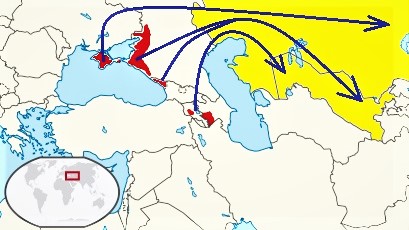
The Greek Operation (Russian: Греческая Операция, romanized: Grecheskaya Operatsiya; Ukrainian: Грецька Операція, romanized: Hretska Operatsiia; Greek: Ελληνική επιχείρηση) was an organised mass persecution of the Greeks of the Soviet Union that was ordered by Soviet leader Joseph Stalin, primarily motivated by widespread distrust of Greek populations living in the Black Sea Region and also for the availability of resources. Greeks often use the term "pogrom" (πογκρόμ) for this persecution. It began on December 15, 1937, and marked the beginning of the repressions against Greeks that went on for 13 years. Depending on the sources, it is estimated that between 15,000 and 50,000 Greeks died during this campaign. Tens of thousands more were persecuted during the Deportation of the Soviet Greeks. Some scholars characterize the operation as a "genocide" against Greeks.
A wave of Greek emigrants from the Soviet Union in 1937–1939 is often considered a consequence of Stalinist persecution of the Soviet Greek national movement.
The Greeks living within the USSR had a history of maintaining close ties with outside powers, such as the Ottoman Empire leading up to the outbreak of WWI. Such close ties made Soviet authorities wary of the loyalty of their Greek subjects. The Greeks held particularly close ties with Greece and with the Greek Orthodox Church. Soviet authorities in particular "viewed religion as a force that undermined its power and authority".
Strategically, the Greeks were viewed as a security threat by the Soviets. Worries over a nationalist uprising or saboteur activity were only heightened by the resistance shown by Greek partisans in response to the German invasion of their country. Post WWII, the entry of Greece into the NATO alliance further drove Stalin's distrust of the Soviet Greek community, fearing they had come under the influence of the West. Soviet authorities viewed Greeks as a "foreign element" to the region that was "hostile" and "unreliable" to Soviet rule. Their removal, it was thought, would solidify Soviet hegemony in the Black Sea and Georgian regions. Population transfer was Soviet policy at the time when it came to weakening nationalistic or ethnic sentiments in potentially “problematic” populations. Resettlement was often carried out regardless of whether or not different ethnic groups were resistant to Soviet rule. The Chechen, Ingush, Crimean Tatar, and other minority communities around the Black Sea also faced similar accusations of disloyalty from Soviet authorities. Soviet doctrine at the time pushed for the formation of an egalitarian society in addition to an ethnically homogenous one. As a result, extensive efforts were made to fill the newly established collective farms popping up all across Soviet territory. This contrasted directly with the long history the Greeks had of independent farming practices, and as a result, the Greek community was viewed as resistant and a hindrance to state control.
Other motivators include gaining control over resources and land populated by the Greeks, who primarily reside around the Black Sea. The Soviet Union saw the deportation of the Greeks and other minorities in this area as a way to safeguard important agricultural and mineral resources along with oil reserves for the Soviet economy.
The 1926 Soviet census registered 213,765 Greeks in the country and the 1939 census recorded 286,444. On 9 August 1937, NKVD order 00485 was adopted to target "subversive activities of Polish intelligence" in the Soviet Union, but was later expanded to also include Latvians, Germans, Estonians, Finns, Greeks, Iranians and Chinese. This was followed by Directive No. 50215 on 11 December 1937, to take effect on 15 December 1937, signed by the NKVD Commisar, Nikolai Yezhov. Directive 50215 declared that an investigation established "that Greek intelligence is actively conducting espionage, sabotage, and rebellious work in the USSR, carrying out assignments from British, German, and Japanese intelligence," and that "In order to suppress the activities of Greek intelligence in the territory of the USSR, I order [that] on December 15 of this year, simultaneously in all republics, territories and regions, arrests are to be made of all Greeks suspected of espionage, sabotage, rebel and nationalist anti-Soviet work."
The persecution of Greeks in USSR was gradual: at first, the authorities shut down the Greek schools, cultural centers, theatres and publishing houses. Then, the secret police indiscriminately arrested all Greek men aged 16 years old or older. Greeks who were wealthy or self-employed professionals were targeted first.
On many occasions, the central authorities sent telegrams to police forces with orders to arrest a certain number of Greeks, without giving any individual names, and the police officers would arrest at random any persons of Greek origin until they reached the requested total number of arrests until the process was repeated at a later date. Estimates of the number of victims vary: according to Ivan Dzhukha 15,000 were executed and 20,000 were deported to Gulags, while Vlasis Agtzidis puts the number of deaths to 50,000.
Hub AI
Greek Operation AI simulator
(@Greek Operation_simulator)
Greek Operation
The Greek Operation (Russian: Греческая Операция, romanized: Grecheskaya Operatsiya; Ukrainian: Грецька Операція, romanized: Hretska Operatsiia; Greek: Ελληνική επιχείρηση) was an organised mass persecution of the Greeks of the Soviet Union that was ordered by Soviet leader Joseph Stalin, primarily motivated by widespread distrust of Greek populations living in the Black Sea Region and also for the availability of resources. Greeks often use the term "pogrom" (πογκρόμ) for this persecution. It began on December 15, 1937, and marked the beginning of the repressions against Greeks that went on for 13 years. Depending on the sources, it is estimated that between 15,000 and 50,000 Greeks died during this campaign. Tens of thousands more were persecuted during the Deportation of the Soviet Greeks. Some scholars characterize the operation as a "genocide" against Greeks.
A wave of Greek emigrants from the Soviet Union in 1937–1939 is often considered a consequence of Stalinist persecution of the Soviet Greek national movement.
The Greeks living within the USSR had a history of maintaining close ties with outside powers, such as the Ottoman Empire leading up to the outbreak of WWI. Such close ties made Soviet authorities wary of the loyalty of their Greek subjects. The Greeks held particularly close ties with Greece and with the Greek Orthodox Church. Soviet authorities in particular "viewed religion as a force that undermined its power and authority".
Strategically, the Greeks were viewed as a security threat by the Soviets. Worries over a nationalist uprising or saboteur activity were only heightened by the resistance shown by Greek partisans in response to the German invasion of their country. Post WWII, the entry of Greece into the NATO alliance further drove Stalin's distrust of the Soviet Greek community, fearing they had come under the influence of the West. Soviet authorities viewed Greeks as a "foreign element" to the region that was "hostile" and "unreliable" to Soviet rule. Their removal, it was thought, would solidify Soviet hegemony in the Black Sea and Georgian regions. Population transfer was Soviet policy at the time when it came to weakening nationalistic or ethnic sentiments in potentially “problematic” populations. Resettlement was often carried out regardless of whether or not different ethnic groups were resistant to Soviet rule. The Chechen, Ingush, Crimean Tatar, and other minority communities around the Black Sea also faced similar accusations of disloyalty from Soviet authorities. Soviet doctrine at the time pushed for the formation of an egalitarian society in addition to an ethnically homogenous one. As a result, extensive efforts were made to fill the newly established collective farms popping up all across Soviet territory. This contrasted directly with the long history the Greeks had of independent farming practices, and as a result, the Greek community was viewed as resistant and a hindrance to state control.
Other motivators include gaining control over resources and land populated by the Greeks, who primarily reside around the Black Sea. The Soviet Union saw the deportation of the Greeks and other minorities in this area as a way to safeguard important agricultural and mineral resources along with oil reserves for the Soviet economy.
The 1926 Soviet census registered 213,765 Greeks in the country and the 1939 census recorded 286,444. On 9 August 1937, NKVD order 00485 was adopted to target "subversive activities of Polish intelligence" in the Soviet Union, but was later expanded to also include Latvians, Germans, Estonians, Finns, Greeks, Iranians and Chinese. This was followed by Directive No. 50215 on 11 December 1937, to take effect on 15 December 1937, signed by the NKVD Commisar, Nikolai Yezhov. Directive 50215 declared that an investigation established "that Greek intelligence is actively conducting espionage, sabotage, and rebellious work in the USSR, carrying out assignments from British, German, and Japanese intelligence," and that "In order to suppress the activities of Greek intelligence in the territory of the USSR, I order [that] on December 15 of this year, simultaneously in all republics, territories and regions, arrests are to be made of all Greeks suspected of espionage, sabotage, rebel and nationalist anti-Soviet work."
The persecution of Greeks in USSR was gradual: at first, the authorities shut down the Greek schools, cultural centers, theatres and publishing houses. Then, the secret police indiscriminately arrested all Greek men aged 16 years old or older. Greeks who were wealthy or self-employed professionals were targeted first.
On many occasions, the central authorities sent telegrams to police forces with orders to arrest a certain number of Greeks, without giving any individual names, and the police officers would arrest at random any persons of Greek origin until they reached the requested total number of arrests until the process was repeated at a later date. Estimates of the number of victims vary: according to Ivan Dzhukha 15,000 were executed and 20,000 were deported to Gulags, while Vlasis Agtzidis puts the number of deaths to 50,000.
Recent media