
Recent from talks
Nikolai Yezhov
Knowledge base stats:
Talk channels stats:
Members stats:
Nikolai Yezhov
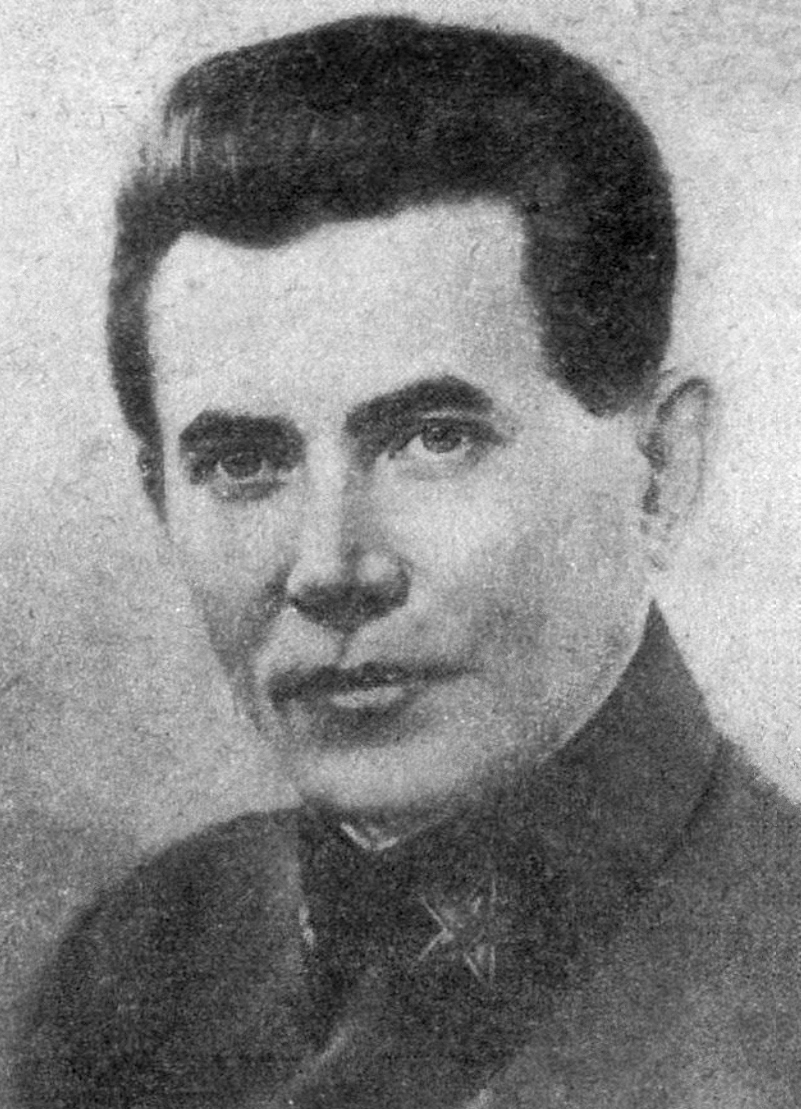
Nikolai Ivanovich Yezhov (Russian: Николай Иванович Ежов, IPA: [nʲɪkɐˈlaj ɪˈvanəvʲɪtɕ (j)ɪˈʐof]; 1 May 1895 – 4 February 1940), also spelt Ezhov, was a Soviet secret police official under Joseph Stalin who was head of the NKVD from 1936 to 1938, at the height of the Great Purge. Yezhov organized mass arrests, torture, and executions during the Great Purge, but he fell out of favour with Stalin and was arrested, subsequently admitting in a confession to a range of anti-Soviet activity including "unfounded arrests" during the Purge. He was executed in 1940 along with others who were blamed for the Purge.
Yezhov was born either in Saint Petersburg, according to his official Soviet biography, or in southwest Lithuania (probably Veiveriai, Marijampolė or Kaunas). Although Yezhov claimed to be born in Saint Petersburg, hoping to "portray (himself) in the guise of a deeply-rooted proletarian", he confessed when interrogated that his father Ivan Yezhov came from a well-off Russian peasant family from the village of Volkhonshino. He worked as a musician, railroad switchman, forest warden, head of a brothel, and as a housepainting contractor employing a couple of hired workers. His mother Anna Antonovna Yezhova was Lithuanian. Despite writing in his official biographical forms that he knew Lithuanian and Polish, he denied this in his later interrogations.
He completed only his elementary education. From 1909 to 1915, he worked as a tailor's assistant and factory worker. From 1915 until 1917, Yezhov served in the Imperial Russian Army. He joined the Bolsheviks on 5 May 1917, in Vitebsk, six months before the October Revolution. During the Russian Civil War (1917–1922), he fought in the Red Army. After February 1922, he worked in the political system, mostly as a secretary of various regional committees of the Communist Party. In 1927, he was transferred to the Accounting and Distribution Department of the Party where he worked as an instructor and acting head of the department. From 1929 to 1930, he was the Deputy People's Commissar for Agriculture. In November 1930, he was appointed head of several departments of the Communist Party: the departments of special affairs, personnel, and industry. In 1934, he was elected to the Central Committee of the Communist Party; in the next year he became a secretary of the Central Committee. From February 1935 to March 1939, he was also the Chairman of the Central Commission for Party Control.
Nadezhda Mandelstam, who met Yezhov at Sukhum in the early thirties, did not perceive anything ominous in his manner or appearance; her impression of him was that of a "modest and rather agreeable person".
A turning point for Yezhov came with Stalin's response to the 1934 murder of the Bolshevik chief of Leningrad, Sergei Kirov. Stalin used the murder as a pretext for further purges, and he personally chose Yezhov to carry out the task. Yezhov oversaw falsified accusations in the Kirov murder case against opposition leaders Kamenev, Zinoviev, and their supporters. Yezhov's success in this task led to his further promotion and ultimately to his appointment as head of the NKVD.
He was appointed People's Commissar for Internal Affairs (head of the NKVD) and a member of the Central Committee on 26 September 1936, following the dismissal of Genrikh Yagoda. This appointment did not at first seem to suggest an intensification of the purge: "Unlike Yagoda, Yezhov did not come out of the 'organs', which was considered an advantage".
Party leadership revocation and executions of those found guilty during the Moscow Trials was not a problem for Yezhov. Seeming to be a devout admirer of Stalin and not a member of the organs of state security, Yezhov was just the man Stalin needed to lead the NKVD and rid the government of potential opponents. Yezhov's first task from Stalin was to personally investigate and conduct prosecution of his long-time Chekist mentor Yagoda, which he did with remorseless zeal. Yezhov ordered the NKVD to sprinkle mercury on the curtains of his office so that the physical evidence could be collected and used to support the charge that Yagoda was a German spy, sent to assassinate Yezhov and Stalin with poison and restore capitalism. Yezhov later admitted under interrogation on 5 May 1939 that he had fabricated the mercury poisoning to "raise his authority in the eyes of the leadership of the country". It is also claimed that he personally tortured both Yagoda and Marshal Mikhail Tukhachevsky to extract their confessions.
In the "Letter of an Old Bolshevik" (1936), written by Boris Nicolaevsky, there is Bukharin's description of Yezhov:
Hub AI
Nikolai Yezhov AI simulator
(@Nikolai Yezhov_simulator)
Nikolai Yezhov
Nikolai Ivanovich Yezhov (Russian: Николай Иванович Ежов, IPA: [nʲɪkɐˈlaj ɪˈvanəvʲɪtɕ (j)ɪˈʐof]; 1 May 1895 – 4 February 1940), also spelt Ezhov, was a Soviet secret police official under Joseph Stalin who was head of the NKVD from 1936 to 1938, at the height of the Great Purge. Yezhov organized mass arrests, torture, and executions during the Great Purge, but he fell out of favour with Stalin and was arrested, subsequently admitting in a confession to a range of anti-Soviet activity including "unfounded arrests" during the Purge. He was executed in 1940 along with others who were blamed for the Purge.
Yezhov was born either in Saint Petersburg, according to his official Soviet biography, or in southwest Lithuania (probably Veiveriai, Marijampolė or Kaunas). Although Yezhov claimed to be born in Saint Petersburg, hoping to "portray (himself) in the guise of a deeply-rooted proletarian", he confessed when interrogated that his father Ivan Yezhov came from a well-off Russian peasant family from the village of Volkhonshino. He worked as a musician, railroad switchman, forest warden, head of a brothel, and as a housepainting contractor employing a couple of hired workers. His mother Anna Antonovna Yezhova was Lithuanian. Despite writing in his official biographical forms that he knew Lithuanian and Polish, he denied this in his later interrogations.
He completed only his elementary education. From 1909 to 1915, he worked as a tailor's assistant and factory worker. From 1915 until 1917, Yezhov served in the Imperial Russian Army. He joined the Bolsheviks on 5 May 1917, in Vitebsk, six months before the October Revolution. During the Russian Civil War (1917–1922), he fought in the Red Army. After February 1922, he worked in the political system, mostly as a secretary of various regional committees of the Communist Party. In 1927, he was transferred to the Accounting and Distribution Department of the Party where he worked as an instructor and acting head of the department. From 1929 to 1930, he was the Deputy People's Commissar for Agriculture. In November 1930, he was appointed head of several departments of the Communist Party: the departments of special affairs, personnel, and industry. In 1934, he was elected to the Central Committee of the Communist Party; in the next year he became a secretary of the Central Committee. From February 1935 to March 1939, he was also the Chairman of the Central Commission for Party Control.
Nadezhda Mandelstam, who met Yezhov at Sukhum in the early thirties, did not perceive anything ominous in his manner or appearance; her impression of him was that of a "modest and rather agreeable person".
A turning point for Yezhov came with Stalin's response to the 1934 murder of the Bolshevik chief of Leningrad, Sergei Kirov. Stalin used the murder as a pretext for further purges, and he personally chose Yezhov to carry out the task. Yezhov oversaw falsified accusations in the Kirov murder case against opposition leaders Kamenev, Zinoviev, and their supporters. Yezhov's success in this task led to his further promotion and ultimately to his appointment as head of the NKVD.
He was appointed People's Commissar for Internal Affairs (head of the NKVD) and a member of the Central Committee on 26 September 1936, following the dismissal of Genrikh Yagoda. This appointment did not at first seem to suggest an intensification of the purge: "Unlike Yagoda, Yezhov did not come out of the 'organs', which was considered an advantage".
Party leadership revocation and executions of those found guilty during the Moscow Trials was not a problem for Yezhov. Seeming to be a devout admirer of Stalin and not a member of the organs of state security, Yezhov was just the man Stalin needed to lead the NKVD and rid the government of potential opponents. Yezhov's first task from Stalin was to personally investigate and conduct prosecution of his long-time Chekist mentor Yagoda, which he did with remorseless zeal. Yezhov ordered the NKVD to sprinkle mercury on the curtains of his office so that the physical evidence could be collected and used to support the charge that Yagoda was a German spy, sent to assassinate Yezhov and Stalin with poison and restore capitalism. Yezhov later admitted under interrogation on 5 May 1939 that he had fabricated the mercury poisoning to "raise his authority in the eyes of the leadership of the country". It is also claimed that he personally tortured both Yagoda and Marshal Mikhail Tukhachevsky to extract their confessions.
In the "Letter of an Old Bolshevik" (1936), written by Boris Nicolaevsky, there is Bukharin's description of Yezhov:
Recent media