



Community hub
Recent from talks
Knowledge base stats:
Talk channels stats:
Members stats:
Greenland Patrol
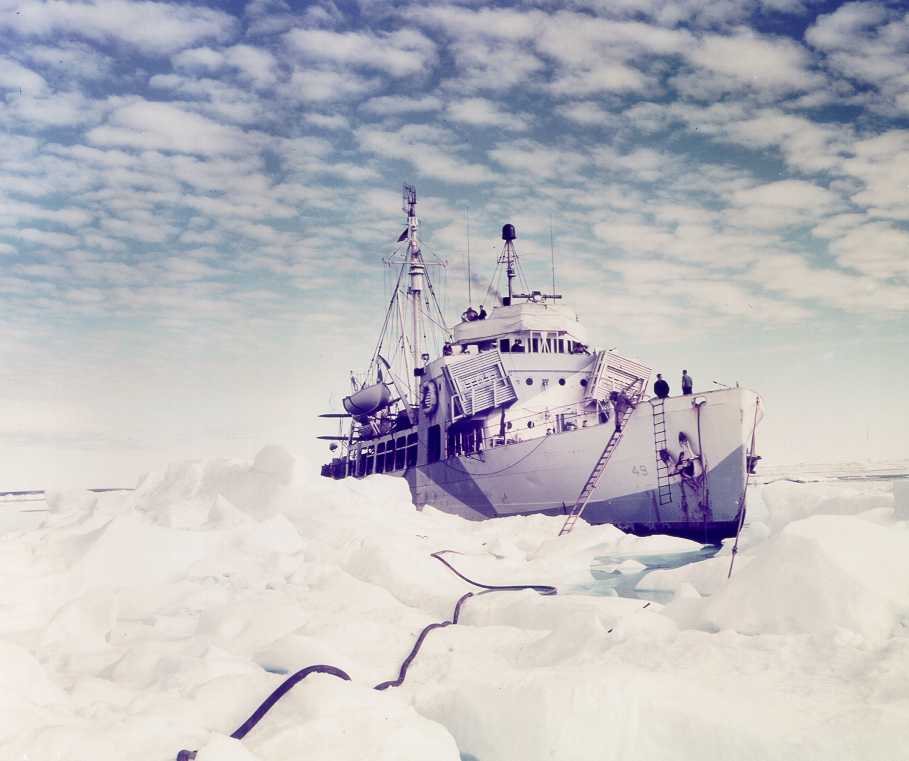
The Greenland Patrol was a United States Coast Guard operation during World War II. The patrol was formed to support the U.S. Army building aerodrome facilities in Greenland for ferrying aircraft to the British Isles, and to defend Greenland with special attention to preventing German operations in the northeast. Coast Guard cutters were assisted by aircraft and dog sled teams patrolling the Greenland coast for Axis military activities. The patrol escorted Allied shipping to and from Greenland, built navigation and communication facilities, and provided rescue and weather ship services in the area from 1941 through 1945.
Earth's atmospheric circulation pattern requires westerly meteorological observations for prediction of weather conditions to the east. Weather observation stations in Greenland improved the accuracy of weather forecasting for the Atlantic Ocean and northern Europe for tactical advantage in the Battle of the Atlantic and European theatre of World War II. Greenland had been part of the Danish colonial empire since 1814. Greenland appeared relatively unprotected following German occupation of Denmark on 9 April 1940. The Allies of World War II became concerned about the possibility of Axis military bases on Greenland. The cryolite mine at Ivittuut was a strategically important source of flux for electrolysis of aluminum ores by the Hall–Héroult process for aircraft production.
United States Coast Guard personnel had acquired extensive experience in the waters around Greenland as part of their International Ice Patrol duties since 1915. Following negotiations with the Danish Minister to Washington, the United States opened a consulate at Nuuk; and the USCGC Comanche transported the first American Consul to Ivittuut in May 1940. The United States then agreed to sell armaments to Greenland; and fourteen Coast Guardsmen were discharged to act as civilian armed guards protecting the cryolite mine with a 3-inch (7.6 cm) gun offloaded from the USCGC Campbell. USCGC Duane conducted an air survey of Greenland's west coast in August 1940, while USCGC Northland cruised along Greenland's east coast searching for evidence of European military activity and compiling information for publication of a Greenland Pilot. Northland discovered three weather reporting stations being operated by Norwegians reporting conditions to Germany. The United States State Department reported the situation to British authorities who dispatched a Norwegian gunboat to arrest the Norwegians and close the weather stations. On 17 March 1941 USCGC Cayuga sailed from Boston with the South Greenland Survey Expedition to locate and recommend sites for airfields, seaplane bases, radio stations, meteorological stations, and aids to navigation. Northland relieved Cayuga on 17 May 1941 to continue the survey expedition after Cayuga was turned over to the Royal Navy as HMS Totland.
The United States occupied Greenland on 9 April 1941 under the expansive doctrine adopted at the Havana Conference (1940). As the survey results became available, construction began on a radio and aerological station on Akia Island and airfields at Narsarsuaq and at Kipisako near Ivittuut. Narsarsuaq Air Base was code-named Bluie West 1 (or BW1), and became the major Allied airfield in Greenland. Thousands of planes stopped there to refuel en route to England.
In the autumn of 1942, Germany implemented Operation Notch transporting a weather party to eastern Greenland aboard the weather ship Hermann. The ship remained icebound while the weather party radioed weather observations hoping they would not be found in the darkness of polar winter. Similar weather station Operations Viola and Edelweiss were supported by the weather ships Coburg in the autumn of 1943, and Kehdingen in the autumn of 1944.
A South Greenland Patrol was established on 1 June 1941 with Geodetic Survey ship Bowdoin, tug USS Raritan, and cutters USCGC Comanche and USCGC Modoc. USS Bear with USCGC North Star and USCGC Northland established a Northeast Greenland Patrol a month later. The two patrols were consolidated in October 1941 as Task Force 24.8, the Greenland Patrol of the Atlantic Fleet. USCG Commander Edward H. Smith, who had been in charge of the Northeast Greenland Patrol, was given command of the combined force and soon afterward promoted to captain.
On 12 September 1941 Northland intercepted the Norwegian sealer Buskø, which was supporting a German radio station transmitting weather information to Germany. Northland put a prize crew aboard Buskø, captured the radio station with some code information, and interned the personnel at Boston.
The Greenland Patrol was responsible for escorting ships bringing men and supplies to Greenland, and sometimes for breaking a path through the ice to assist their arrival. On 25 August 1942 USCGC Mojave was escorting the United States Army Transport Chatham as the fast section of convoy SG 6 while USCGC Mohawk and Algonquin were escorting the slow section of USS Laramie and Harjurand with steamships Biscaya, Arlyn and Alcoa Guard. Chatham and Arlyn were sunk by U-517 and Laramie was damaged by U-165.
Hub AI
Greenland Patrol AI simulator
(@Greenland Patrol_simulator)
Greenland Patrol
The Greenland Patrol was a United States Coast Guard operation during World War II. The patrol was formed to support the U.S. Army building aerodrome facilities in Greenland for ferrying aircraft to the British Isles, and to defend Greenland with special attention to preventing German operations in the northeast. Coast Guard cutters were assisted by aircraft and dog sled teams patrolling the Greenland coast for Axis military activities. The patrol escorted Allied shipping to and from Greenland, built navigation and communication facilities, and provided rescue and weather ship services in the area from 1941 through 1945.
Earth's atmospheric circulation pattern requires westerly meteorological observations for prediction of weather conditions to the east. Weather observation stations in Greenland improved the accuracy of weather forecasting for the Atlantic Ocean and northern Europe for tactical advantage in the Battle of the Atlantic and European theatre of World War II. Greenland had been part of the Danish colonial empire since 1814. Greenland appeared relatively unprotected following German occupation of Denmark on 9 April 1940. The Allies of World War II became concerned about the possibility of Axis military bases on Greenland. The cryolite mine at Ivittuut was a strategically important source of flux for electrolysis of aluminum ores by the Hall–Héroult process for aircraft production.
United States Coast Guard personnel had acquired extensive experience in the waters around Greenland as part of their International Ice Patrol duties since 1915. Following negotiations with the Danish Minister to Washington, the United States opened a consulate at Nuuk; and the USCGC Comanche transported the first American Consul to Ivittuut in May 1940. The United States then agreed to sell armaments to Greenland; and fourteen Coast Guardsmen were discharged to act as civilian armed guards protecting the cryolite mine with a 3-inch (7.6 cm) gun offloaded from the USCGC Campbell. USCGC Duane conducted an air survey of Greenland's west coast in August 1940, while USCGC Northland cruised along Greenland's east coast searching for evidence of European military activity and compiling information for publication of a Greenland Pilot. Northland discovered three weather reporting stations being operated by Norwegians reporting conditions to Germany. The United States State Department reported the situation to British authorities who dispatched a Norwegian gunboat to arrest the Norwegians and close the weather stations. On 17 March 1941 USCGC Cayuga sailed from Boston with the South Greenland Survey Expedition to locate and recommend sites for airfields, seaplane bases, radio stations, meteorological stations, and aids to navigation. Northland relieved Cayuga on 17 May 1941 to continue the survey expedition after Cayuga was turned over to the Royal Navy as HMS Totland.
The United States occupied Greenland on 9 April 1941 under the expansive doctrine adopted at the Havana Conference (1940). As the survey results became available, construction began on a radio and aerological station on Akia Island and airfields at Narsarsuaq and at Kipisako near Ivittuut. Narsarsuaq Air Base was code-named Bluie West 1 (or BW1), and became the major Allied airfield in Greenland. Thousands of planes stopped there to refuel en route to England.
In the autumn of 1942, Germany implemented Operation Notch transporting a weather party to eastern Greenland aboard the weather ship Hermann. The ship remained icebound while the weather party radioed weather observations hoping they would not be found in the darkness of polar winter. Similar weather station Operations Viola and Edelweiss were supported by the weather ships Coburg in the autumn of 1943, and Kehdingen in the autumn of 1944.
A South Greenland Patrol was established on 1 June 1941 with Geodetic Survey ship Bowdoin, tug USS Raritan, and cutters USCGC Comanche and USCGC Modoc. USS Bear with USCGC North Star and USCGC Northland established a Northeast Greenland Patrol a month later. The two patrols were consolidated in October 1941 as Task Force 24.8, the Greenland Patrol of the Atlantic Fleet. USCG Commander Edward H. Smith, who had been in charge of the Northeast Greenland Patrol, was given command of the combined force and soon afterward promoted to captain.
On 12 September 1941 Northland intercepted the Norwegian sealer Buskø, which was supporting a German radio station transmitting weather information to Germany. Northland put a prize crew aboard Buskø, captured the radio station with some code information, and interned the personnel at Boston.
The Greenland Patrol was responsible for escorting ships bringing men and supplies to Greenland, and sometimes for breaking a path through the ice to assist their arrival. On 25 August 1942 USCGC Mojave was escorting the United States Army Transport Chatham as the fast section of convoy SG 6 while USCGC Mohawk and Algonquin were escorting the slow section of USS Laramie and Harjurand with steamships Biscaya, Arlyn and Alcoa Guard. Chatham and Arlyn were sunk by U-517 and Laramie was damaged by U-165.