
Recent from talks
Gulet
Knowledge base stats:
Talk channels stats:
Members stats:
Gulet
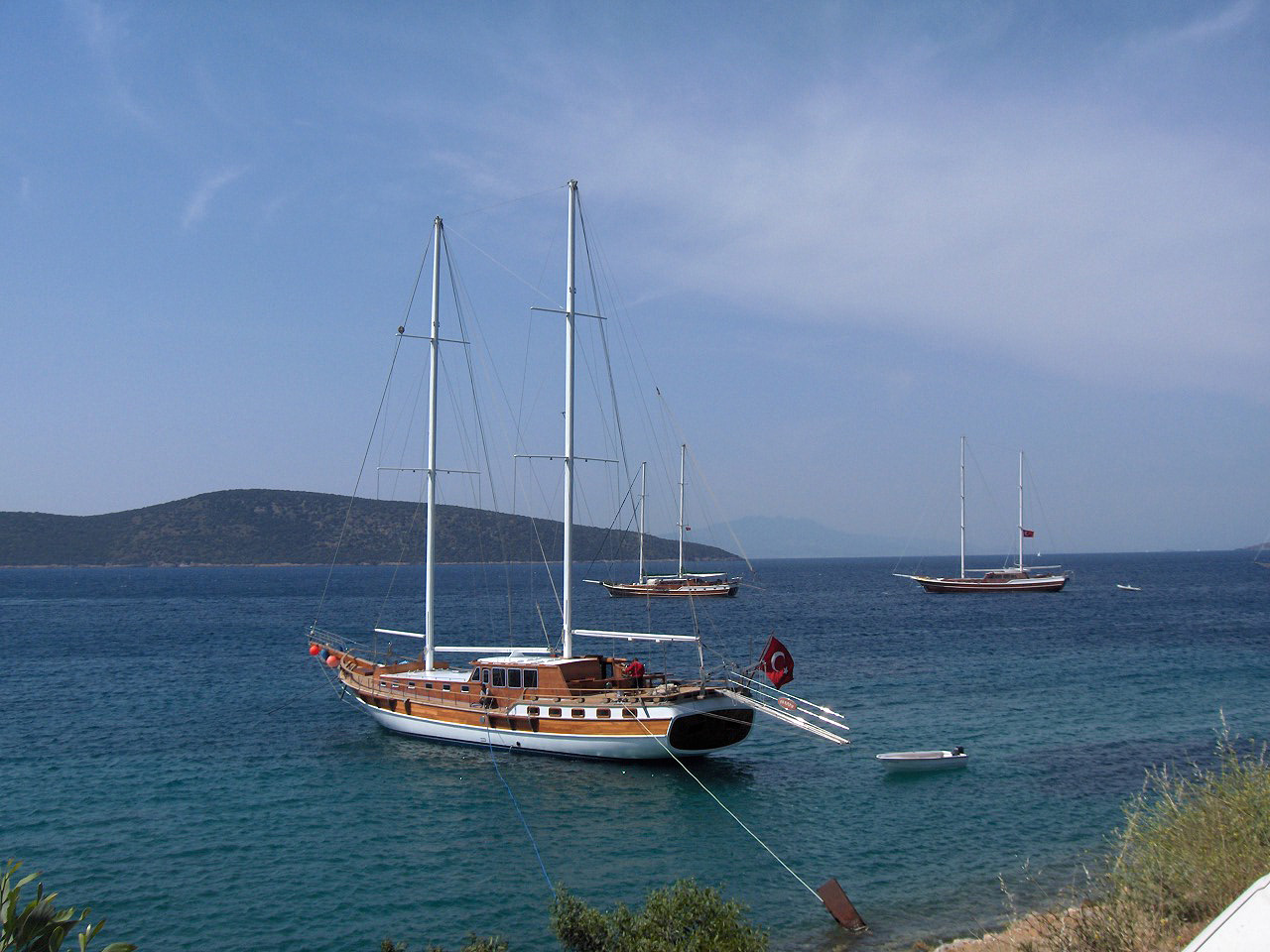
A gulet (Turkish pronunciation: [ɡuˈlet]) is a traditional design of a two-masted or three-masted wooden sailing vessel (the most common design has two masts) in Turkey, particularly built in the coastal towns of Bodrum and Marmaris, and may have originated in ancient Ionia with similar vessels found around the eastern Mediterranean. Today, this type of vessel, varying in size from 14 to 35 metres, is popular for tourist charters. For considerations of crew economy, diesel power is now almost universally used, and many are not properly rigged for sailing.
There are differing opinions about the history and etymology of gullet which took the Turkish name "gulet" from the Italian word goletta. There is still controversy on whether it originated from the schooner, which has long been used as a sweeping net, trawl net or sponging vessel in Turkey in the Aegean and Mediterranean shores, and as a freight vessel in the Black Sea; or it originates from the fishing vessel guletta (gouëlette or goélette in French), that has come up with the evolution of the word galea or galeotta for the old Italian naval vessels or "goleta" in Spanish. Others have argued that it resembles the American gullet used in line fishing in the Greenland banks, or the clippers carrying goods from India or Australia to England in the periods of colonization.
The evolution of gulet from practical maritime vessels to luxurious yachts traces back to the mid-20th century. The turning point arrived when the exiled Turkish writer, Cevat Sakir Kabaagacli, popularly known as the Fisherman of Halicarnassus, began using gulets for yachting holidays. His explorations coined the term "blue cruise," a name that quickly resonated with the local and international tourism industry.
By the dawn of the 1970s, gulets had become increasingly popular as yachts. Their designs were gradually refined to create more space for relaxation and leisure, in response to the growing demand for gulet cruises. This surge in popularity resulted in a rapid increase in the number of shipyards and workshops building gulets in the region. By the 1980s, gulet cruises, or "blue cruises," became significantly more affordable, paving the way for today's thriving gulet tourism industry.
The origin of the Bodrum-type schooner vessels falls to a nearby date, to the beginning of the 1970s. These types of vessels have come up as a result of the need to carry tourists, who have come in numbers to the Aegean region and especially to Bodrum and Marmaris at the end of the 1960s, to nearby bays. The first samples of the vessels called the Bodrum gulet are seen in those years with the addition to meet that demand of chambers and seating on the back of the deck to the chamberless gulet used in fishing or sponging till those years.
The Turkish word gulet is a loanword from Venetian gołéta (Italian goletta), itself a loanword from French gouëlette (present-day spelling goélette), meaning "schooner". The French word is probably related to goéland, meaning (and etymologically related to the word) "gull", ultimately of Celtic origin.
The boat construction in Bodrum is not a process that started solely with the construction of Gulet. A long construction process has been there starting from antiquity times to the Ottoman times (although with certain interruptions) due to the geographic and historical position of the place. The insufficiency of war hardware such as cannons and shells for the war vessels built in Istanbul within the structure of the main docks opened the search for new production facilities in the second half of the 18th century. New shipyards were constructed in various regions at the turn of the 19th century. In the shipyard in Bodrum, along with those in settlements like Sinop, Gemlik, Rodos, Fatsa and Amasra, galleon construction was started in the beginning of the 19th century.
Galleon construction in Bodrum was interrupted in the middle of 19th century, however boat construction continued for use in fishing, sponging, and especially commerce with the islands (till the years 1935–1936). Construction of Bodrum-type Gulet started to meet the demand in parallel to the development of tourism in the beginning of the 1970s. This development caused the growth of the boat construction sector, particularly for the successful schooner examples made by the local boat masters, which increased the interest in such types of boats.
Hub AI
Gulet AI simulator
(@Gulet_simulator)
Gulet
A gulet (Turkish pronunciation: [ɡuˈlet]) is a traditional design of a two-masted or three-masted wooden sailing vessel (the most common design has two masts) in Turkey, particularly built in the coastal towns of Bodrum and Marmaris, and may have originated in ancient Ionia with similar vessels found around the eastern Mediterranean. Today, this type of vessel, varying in size from 14 to 35 metres, is popular for tourist charters. For considerations of crew economy, diesel power is now almost universally used, and many are not properly rigged for sailing.
There are differing opinions about the history and etymology of gullet which took the Turkish name "gulet" from the Italian word goletta. There is still controversy on whether it originated from the schooner, which has long been used as a sweeping net, trawl net or sponging vessel in Turkey in the Aegean and Mediterranean shores, and as a freight vessel in the Black Sea; or it originates from the fishing vessel guletta (gouëlette or goélette in French), that has come up with the evolution of the word galea or galeotta for the old Italian naval vessels or "goleta" in Spanish. Others have argued that it resembles the American gullet used in line fishing in the Greenland banks, or the clippers carrying goods from India or Australia to England in the periods of colonization.
The evolution of gulet from practical maritime vessels to luxurious yachts traces back to the mid-20th century. The turning point arrived when the exiled Turkish writer, Cevat Sakir Kabaagacli, popularly known as the Fisherman of Halicarnassus, began using gulets for yachting holidays. His explorations coined the term "blue cruise," a name that quickly resonated with the local and international tourism industry.
By the dawn of the 1970s, gulets had become increasingly popular as yachts. Their designs were gradually refined to create more space for relaxation and leisure, in response to the growing demand for gulet cruises. This surge in popularity resulted in a rapid increase in the number of shipyards and workshops building gulets in the region. By the 1980s, gulet cruises, or "blue cruises," became significantly more affordable, paving the way for today's thriving gulet tourism industry.
The origin of the Bodrum-type schooner vessels falls to a nearby date, to the beginning of the 1970s. These types of vessels have come up as a result of the need to carry tourists, who have come in numbers to the Aegean region and especially to Bodrum and Marmaris at the end of the 1960s, to nearby bays. The first samples of the vessels called the Bodrum gulet are seen in those years with the addition to meet that demand of chambers and seating on the back of the deck to the chamberless gulet used in fishing or sponging till those years.
The Turkish word gulet is a loanword from Venetian gołéta (Italian goletta), itself a loanword from French gouëlette (present-day spelling goélette), meaning "schooner". The French word is probably related to goéland, meaning (and etymologically related to the word) "gull", ultimately of Celtic origin.
The boat construction in Bodrum is not a process that started solely with the construction of Gulet. A long construction process has been there starting from antiquity times to the Ottoman times (although with certain interruptions) due to the geographic and historical position of the place. The insufficiency of war hardware such as cannons and shells for the war vessels built in Istanbul within the structure of the main docks opened the search for new production facilities in the second half of the 18th century. New shipyards were constructed in various regions at the turn of the 19th century. In the shipyard in Bodrum, along with those in settlements like Sinop, Gemlik, Rodos, Fatsa and Amasra, galleon construction was started in the beginning of the 19th century.
Galleon construction in Bodrum was interrupted in the middle of 19th century, however boat construction continued for use in fishing, sponging, and especially commerce with the islands (till the years 1935–1936). Construction of Bodrum-type Gulet started to meet the demand in parallel to the development of tourism in the beginning of the 1970s. This development caused the growth of the boat construction sector, particularly for the successful schooner examples made by the local boat masters, which increased the interest in such types of boats.
Recent media