



Community hub
Recent from talks
Knowledge base stats:
Talk channels stats:
Members stats:
HMS Liverpool (C11)
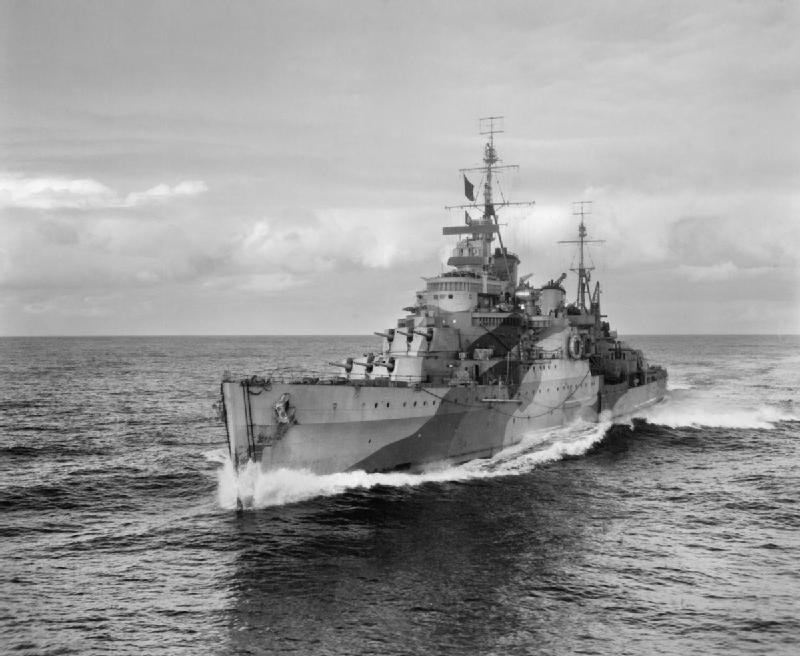
HMS Liverpool, named after the port city of Liverpool in north-west England, was a Town-class cruiser of the Royal Navy in service from 1938 to 1952.
During the Second World War, Liverpool gained four battle honours and was seriously damaged in two attacks by Italian torpedo bombers. The cruiser operated variously with the naval stations in the East Indies and China and with the Mediterranean and Home fleets. While assigned as flagship to the China Station in January 1940, the cruiser instigated a diplomatic incident with Japan when she intercepted the liner Asama Maru off the coast of Japan. Liverpool took part in the battles of the Espero Convoy and Calabria, the Arctic Convoys, and Operation Harpoon during the Malta Convoys. On 14 June 1942, during Operation Harpoon, Liverpool suffered an air attack and had to undergo repairs and refitting at Rosyth, Scotland for the remainder of the war.
Liverpool returned to service in 1945 and was assigned as flagship to the Mediterranean Fleet. In the early 1950s, the cruiser harboured in Port Said to support the British Administration of the Suez Canal Zone, when Egyptian guerrillas campaigned against it. The cruiser was decommissioned in 1952 at a time when the Royal Navy was rapidly contracting in strength. Liverpool was broken up in 1958, at Rosyth.
The Town-class light cruisers were designed as counters to the Japanese Mogami-class cruisers built during the early 1930s and the second batch of three ships was enlarged, with the most powerful engines and widest beam of any post 1927 Royal Navy cruisers, to maintain speed and stability with the weight of, a second low angle main director (2) T284 LADCT, to give two channel fire control of the six inch turrets enabling, simultaneous engagement with surface targets fore and aft of the cruisers and to give a second level of deck armour over the top of the armour box around the four main magazines (In HMS Gloucester and the third 'Belfast' group, the extra deck armour belt also extended further over the engines). Liverpool displaced 9,394 long tons (9,545 t) at standard load and 11,930 long tons (12,120 t) at deep load. The ship had an overall length of 591 feet (180.1 m), a beam of 64 feet 10 inches (19.8 m) and a draught of 20 feet 7 inches (6.3 m). She was powered by four Parsons geared steam turbine sets, each driving one shaft, which developed a total of 82,500 shaft horsepower (61,500 kW) and gave a maximum speed of 32.3 knots (59.8 km/h; 37.2 mph). Liverpool also mounted a catapult with three Supermarine Walrus. Steam for the turbines was provided by four Admiralty 3-drum boilers. The ship carried a maximum of 2,075 long tons (2,108 t) of fuel oil which gave her a range of 6,000 nautical miles (11,110 km; 6,900 mi) at 14 knots (26 km/h; 16 mph). The ship's complement was 800–850 officers and ratings.
The Town-class ships mounted twelve BL six-inch (152 mm) Mk XXIII guns in four triple-gun turrets. The turrets were designated 'A', 'B', 'X' and 'Y' from front to rear. Their secondary armament consisted of eight QF four-inch (102 mm) Mk XVI dual-purpose guns in twin mounts. Their light anti-aircraft armament consisted of a pair of quadruple mounts for the two-pounder (40 mm) AA gun ("pom-pom") and two quadruple mounts for 0.5-inch (12.7 mm) Vickers AA machine guns. The ships carried two above-water, triple mounts for 21-inch (533 mm) torpedoes.
The ship lacked a full-length waterline armour belt. The sides of Liverpool's boiler and engine rooms and the sides of the magazines were protected by 4.5 inches (114 mm) of armour. The top of the magazines and the machinery spaces were protected by 2 inches (51 mm) of armour. The armour protecting the main gun turrets had a thickness of 2–4 inches.
Procured in response to the American Brooklyn and Japanese Mogami classes of light cruiser, the Town class consisted of three variants for a total of 10 ships. These ships were intended for fleet duties rather than trade protection, which their predecessors had been designed for. The class represented a significant improvement in armament and armour, which provided reasonable protection against 8-inch (200 mm) shells. Their primary armament of twelve 6-inch (150 mm) guns in triple turrets, compared to the eight and six guns possessed by the preceding Leander and Arethusa classes, still adhered to the constraints of the London Naval Treaty. Liverpool became one of the three Town-class cruisers—with Gloucester and Manchester—ordered to a slightly revised design referred to as the Liverpool, Liverpool, or Type II sub-class. The second group retained an almost identical configuration, differentiated only by a beam enlarged to 62.4 feet (19.0 m) (compared to Southampton's beam of 61.8 feet (18.8 m)), a redesigned bridge, and improved fire control equipment.
Ordered under the 1935 estimates, the keel of Liverpool was laid down at Govan on 17 February 1936 and launched on 24 March 1937 by Priscilla Norman, wife of the Governor of the Bank of England Montagu Norman. Liverpool became the first cruiser launched at the Fairfield shipyard since the County class Norfolk. After being commissioned into the navy on 2 November 1938, Liverpool was assigned to the East Indies Station under the command of Captain A.D. Read. Before the deployment, the cruiser visited her namesake port in January 1939. The Liverpool Woman's Service Bureau presented the cruiser with a Union flag and White Ensign, while the city's Corporation gave the crew "three pairs of candlesticks, a silver cup, and two bugles". Liverpool's crew had already received a silver bell and plate originally in the possession of her predecessor.
Hub AI
HMS Liverpool (C11) AI simulator
(@HMS Liverpool (C11)_simulator)
HMS Liverpool (C11)
HMS Liverpool, named after the port city of Liverpool in north-west England, was a Town-class cruiser of the Royal Navy in service from 1938 to 1952.
During the Second World War, Liverpool gained four battle honours and was seriously damaged in two attacks by Italian torpedo bombers. The cruiser operated variously with the naval stations in the East Indies and China and with the Mediterranean and Home fleets. While assigned as flagship to the China Station in January 1940, the cruiser instigated a diplomatic incident with Japan when she intercepted the liner Asama Maru off the coast of Japan. Liverpool took part in the battles of the Espero Convoy and Calabria, the Arctic Convoys, and Operation Harpoon during the Malta Convoys. On 14 June 1942, during Operation Harpoon, Liverpool suffered an air attack and had to undergo repairs and refitting at Rosyth, Scotland for the remainder of the war.
Liverpool returned to service in 1945 and was assigned as flagship to the Mediterranean Fleet. In the early 1950s, the cruiser harboured in Port Said to support the British Administration of the Suez Canal Zone, when Egyptian guerrillas campaigned against it. The cruiser was decommissioned in 1952 at a time when the Royal Navy was rapidly contracting in strength. Liverpool was broken up in 1958, at Rosyth.
The Town-class light cruisers were designed as counters to the Japanese Mogami-class cruisers built during the early 1930s and the second batch of three ships was enlarged, with the most powerful engines and widest beam of any post 1927 Royal Navy cruisers, to maintain speed and stability with the weight of, a second low angle main director (2) T284 LADCT, to give two channel fire control of the six inch turrets enabling, simultaneous engagement with surface targets fore and aft of the cruisers and to give a second level of deck armour over the top of the armour box around the four main magazines (In HMS Gloucester and the third 'Belfast' group, the extra deck armour belt also extended further over the engines). Liverpool displaced 9,394 long tons (9,545 t) at standard load and 11,930 long tons (12,120 t) at deep load. The ship had an overall length of 591 feet (180.1 m), a beam of 64 feet 10 inches (19.8 m) and a draught of 20 feet 7 inches (6.3 m). She was powered by four Parsons geared steam turbine sets, each driving one shaft, which developed a total of 82,500 shaft horsepower (61,500 kW) and gave a maximum speed of 32.3 knots (59.8 km/h; 37.2 mph). Liverpool also mounted a catapult with three Supermarine Walrus. Steam for the turbines was provided by four Admiralty 3-drum boilers. The ship carried a maximum of 2,075 long tons (2,108 t) of fuel oil which gave her a range of 6,000 nautical miles (11,110 km; 6,900 mi) at 14 knots (26 km/h; 16 mph). The ship's complement was 800–850 officers and ratings.
The Town-class ships mounted twelve BL six-inch (152 mm) Mk XXIII guns in four triple-gun turrets. The turrets were designated 'A', 'B', 'X' and 'Y' from front to rear. Their secondary armament consisted of eight QF four-inch (102 mm) Mk XVI dual-purpose guns in twin mounts. Their light anti-aircraft armament consisted of a pair of quadruple mounts for the two-pounder (40 mm) AA gun ("pom-pom") and two quadruple mounts for 0.5-inch (12.7 mm) Vickers AA machine guns. The ships carried two above-water, triple mounts for 21-inch (533 mm) torpedoes.
The ship lacked a full-length waterline armour belt. The sides of Liverpool's boiler and engine rooms and the sides of the magazines were protected by 4.5 inches (114 mm) of armour. The top of the magazines and the machinery spaces were protected by 2 inches (51 mm) of armour. The armour protecting the main gun turrets had a thickness of 2–4 inches.
Procured in response to the American Brooklyn and Japanese Mogami classes of light cruiser, the Town class consisted of three variants for a total of 10 ships. These ships were intended for fleet duties rather than trade protection, which their predecessors had been designed for. The class represented a significant improvement in armament and armour, which provided reasonable protection against 8-inch (200 mm) shells. Their primary armament of twelve 6-inch (150 mm) guns in triple turrets, compared to the eight and six guns possessed by the preceding Leander and Arethusa classes, still adhered to the constraints of the London Naval Treaty. Liverpool became one of the three Town-class cruisers—with Gloucester and Manchester—ordered to a slightly revised design referred to as the Liverpool, Liverpool, or Type II sub-class. The second group retained an almost identical configuration, differentiated only by a beam enlarged to 62.4 feet (19.0 m) (compared to Southampton's beam of 61.8 feet (18.8 m)), a redesigned bridge, and improved fire control equipment.
Ordered under the 1935 estimates, the keel of Liverpool was laid down at Govan on 17 February 1936 and launched on 24 March 1937 by Priscilla Norman, wife of the Governor of the Bank of England Montagu Norman. Liverpool became the first cruiser launched at the Fairfield shipyard since the County class Norfolk. After being commissioned into the navy on 2 November 1938, Liverpool was assigned to the East Indies Station under the command of Captain A.D. Read. Before the deployment, the cruiser visited her namesake port in January 1939. The Liverpool Woman's Service Bureau presented the cruiser with a Union flag and White Ensign, while the city's Corporation gave the crew "three pairs of candlesticks, a silver cup, and two bugles". Liverpool's crew had already received a silver bell and plate originally in the possession of her predecessor.