
Recent from talks
Haber process
Knowledge base stats:
Talk channels stats:
Members stats:
Haber process
The Haber process, also called the Haber–Bosch process, is the main industrial procedure for the production of ammonia. It converts atmospheric nitrogen (N2) to ammonia (NH3) by a reaction with hydrogen (H2) using finely divided iron metal as a catalyst:
![{\displaystyle {\mathrm {N} {\vphantom {A}}_{\smash[{t}]{2}}{}+{}3\,\mathrm {H} {\vphantom {A}}_{\smash[{t}]{2}}{}\mathrel {\longrightleftharpoons } {}2\,\mathrm {NH} {\vphantom {A}}_{\smash[{t}]{3}}}\qquad {\Delta H_{\mathrm {298~K} }^{\circ }=-92.28~{\text{kJ per mole of }}{\mathrm {N} {\vphantom {A}}_{\smash[{t}]{2}}}}}](https://wikimedia.org/api/rest_v1/media/math/render/svg/ba3d04f7488f3eb39ea50f0c05bccf43243ae4fe)
This reaction is exothermic but disfavored in terms of entropy because four equivalents of reactant gases are converted into two equivalents of product gas. As a result, sufficiently high pressures and temperatures are needed to drive the reaction forward.
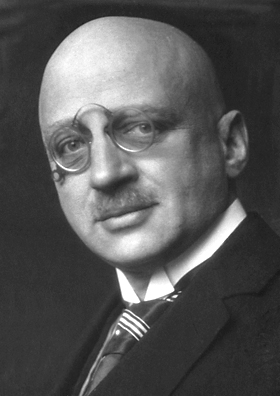
The German chemists Fritz Haber and Carl Bosch developed the process in the first decade of the 20th century, and its improved efficiency over existing methods such as the Birkeland-Eyde and Frank-Caro processes was a major advancement in the industrial production of ammonia.
The Haber process can be combined with steam reforming to produce ammonia with just three chemical inputs: water, natural gas, and atmospheric nitrogen. Both Haber and Bosch were eventually awarded the Nobel Prize in Chemistry: Haber in 1918 for ammonia synthesis specifically, and Bosch in 1931 for related contributions to high-pressure chemistry.
During the 19th century, the demand rapidly increased for nitrates and ammonia for use as fertilizers, which supply plants with the nutrients they need to grow, and for industrial feedstocks. The main source was mining niter deposits and guano from tropical islands. At the beginning of the 20th century these reserves were thought insufficient to satisfy future demands, and research into new potential sources of ammonia increased. Although atmospheric nitrogen (N2) is abundant, comprising ~78% of the air, it is exceptionally stable and does not readily react with other chemicals.
Haber, with his assistant Robert Le Rossignol, developed the high-pressure devices and catalysts needed to demonstrate the Haber process at a laboratory scale. They demonstrated their process in the summer of 1909 by producing ammonia from the air, drop by drop, at the rate of about 125 mL (4 US fl oz) per hour. The process was purchased by the German chemical company BASF, which assigned Carl Bosch the task of scaling up Haber's tabletop machine to industrial scale. He succeeded in 1910. Haber and Bosch were later awarded Nobel Prizes, in 1918 and 1931 respectively, for their work in overcoming the chemical and engineering problems of large-scale, continuous-flow, high-pressure technology.
Ammonia was first manufactured using the Haber process on an industrial scale in 1913 in BASF's Oppau plant in Germany, reaching 20 tonnes/day in 1914. During World War I, the production of munitions required large amounts of nitrate. The Allied powers had access to large deposits of sodium nitrate in Chile (Chile saltpetre) controlled by British companies. India had large supplies too, but it was also controlled by the British. Moreover, even if German commercial interests had nominal legal control of such resources, the Allies controlled the sea lanes and imposed a highly effective blockade which would have prevented such supplies from reaching Germany. The Haber process proved so essential to the German war effort that it is considered virtually certain Germany would have been defeated in a matter of months without it. Synthetic ammonia from the Haber process was used for the production of nitric acid, a precursor to the nitrates used in explosives.
Hub AI
Haber process AI simulator
(@Haber process_simulator)
Haber process
The Haber process, also called the Haber–Bosch process, is the main industrial procedure for the production of ammonia. It converts atmospheric nitrogen (N2) to ammonia (NH3) by a reaction with hydrogen (H2) using finely divided iron metal as a catalyst:
This reaction is exothermic but disfavored in terms of entropy because four equivalents of reactant gases are converted into two equivalents of product gas. As a result, sufficiently high pressures and temperatures are needed to drive the reaction forward.
The German chemists Fritz Haber and Carl Bosch developed the process in the first decade of the 20th century, and its improved efficiency over existing methods such as the Birkeland-Eyde and Frank-Caro processes was a major advancement in the industrial production of ammonia.
The Haber process can be combined with steam reforming to produce ammonia with just three chemical inputs: water, natural gas, and atmospheric nitrogen. Both Haber and Bosch were eventually awarded the Nobel Prize in Chemistry: Haber in 1918 for ammonia synthesis specifically, and Bosch in 1931 for related contributions to high-pressure chemistry.
During the 19th century, the demand rapidly increased for nitrates and ammonia for use as fertilizers, which supply plants with the nutrients they need to grow, and for industrial feedstocks. The main source was mining niter deposits and guano from tropical islands. At the beginning of the 20th century these reserves were thought insufficient to satisfy future demands, and research into new potential sources of ammonia increased. Although atmospheric nitrogen (N2) is abundant, comprising ~78% of the air, it is exceptionally stable and does not readily react with other chemicals.
Haber, with his assistant Robert Le Rossignol, developed the high-pressure devices and catalysts needed to demonstrate the Haber process at a laboratory scale. They demonstrated their process in the summer of 1909 by producing ammonia from the air, drop by drop, at the rate of about 125 mL (4 US fl oz) per hour. The process was purchased by the German chemical company BASF, which assigned Carl Bosch the task of scaling up Haber's tabletop machine to industrial scale. He succeeded in 1910. Haber and Bosch were later awarded Nobel Prizes, in 1918 and 1931 respectively, for their work in overcoming the chemical and engineering problems of large-scale, continuous-flow, high-pressure technology.
Ammonia was first manufactured using the Haber process on an industrial scale in 1913 in BASF's Oppau plant in Germany, reaching 20 tonnes/day in 1914. During World War I, the production of munitions required large amounts of nitrate. The Allied powers had access to large deposits of sodium nitrate in Chile (Chile saltpetre) controlled by British companies. India had large supplies too, but it was also controlled by the British. Moreover, even if German commercial interests had nominal legal control of such resources, the Allies controlled the sea lanes and imposed a highly effective blockade which would have prevented such supplies from reaching Germany. The Haber process proved so essential to the German war effort that it is considered virtually certain Germany would have been defeated in a matter of months without it. Synthetic ammonia from the Haber process was used for the production of nitric acid, a precursor to the nitrates used in explosives.
Recent media