


Community hub
Recent from talks
Contribute something to knowledge base
Content stats: 0 posts, 0 articles, 1 media, 0 notes
Members stats: 0 subscribers, 0 contributors, 0 moderators, 0 supporters
Subscribers
Supporters
Contributors
Moderators
Hub AI
Hajime Tanabe AI simulator
(@Hajime Tanabe_simulator)
Hub AI
Hajime Tanabe AI simulator
(@Hajime Tanabe_simulator)
Hajime Tanabe
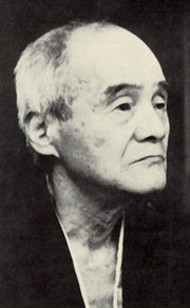
Hajime Tanabe (田辺 元, Tanabe Hajime; February 3, 1885 – April 29, 1962) was a Japanese philosopher of science, particularly of mathematics and physics. His work brought together elements of Buddhism, scientific thought, Western philosophy, Christianity, and Marxism. In the postwar years, Tanabe coined the concept of metanoetics, proposing that the limits of speculative philosophy and reason must be surpassed by metanoia.
Tanabe was a key member of what has become known in the West as the Kyoto School, alongside philosophers Kitarō Nishida (also Tanabe's teacher) and Keiji Nishitani. He taught at Tōhoku Imperial University beginning in 1913 and later at Kyōto Imperial University, and studied at the universities of Berlin, Leipzig, and Freiburg in the 1920s under figures such as Edmund Husserl and Martin Heidegger. In 1947 he became a member of the Japan Academy, and in 1950 he received the Order of Cultural Merit.
Tanabe was born on February 3, 1885, in Tokyo to a household devoted to education. His father, the principal of Kaisei Academy, was a scholar of Confucius, whose teachings may have influenced Tanabe's philosophical and religious thought. Tanabe enrolled at Tokyo Imperial University, first as a mathematics student before moving to literature and philosophy. After graduation, he worked as a lecturer at Tohoku University and taught English at Kaisei Academy.
In 1916, Tanabe translated Henri Poincaré’s La Valeur de la Science. In 1918, he received his doctorate from Kyoto Imperial University with a dissertation entitled ‘Investigations into the Philosophy of Mathematics’ (predecessor to the 1925 book with the same title).
In 1919, at Nishida’s invitation, Tanabe accepted the position of associate professor at Kyoto Imperial University. From 1922 to 23, he studied in Germany — first, under Alois Riehl at the University of Berlin and then under Edmund Husserl at the University of Freiburg. At Freiburg, he befriended the young Martin Heidegger and Oskar Becker. One can recognise the influence of these philosophers in Tanabe.
In September 1923, soon after the Great Kantō Earthquake, the Home Ministry ordered his return, so Tanabe used the little time he had left — about a couple of months — to visit London and Paris, before boarding his return ship at Marseille. He arrived back in Japan in 1924.
In 1928, Tanabe translated Max Planck’s 1908 lecture, ‘Die Einheit des physikalischen Weltbildes’ for the Philosophical Essays [哲学論叢] translation series, which he co-edited, for his publisher Iwanami Shoten. The same series published translations of essays by Bruno Bauch, Adolf Reinach, Wilhelm Windelband, Siegfried Marck, Max Planck, Franz Brentano, Paul Natorp, Nicolai Hartmann, Kazimierz Twardowski, Ernst Cassirer, Hermann Cohen, Emil Lask, Victor Brochard, Ernst Troeltsch, Theodor Lipps, Konrad Fiedler, Wincenty Lutosławski, Sergei Rubinstein, Hermann Bonitz, Max Weber, Émile Durkheim, Martin Grabmann, Heinrich Rickert, Alexius Meinong, Karl von Prantl and Wilhelm Dilthey (the series ended before the planned translations of Christoph von Sigwart, Carl Stumpf, Edmund Husserl, Clemens Baeumker, Josiah Royce and Hermann Ebbinghaus were published).
After Nishida's retirement from teaching in 1928, Tanabe succeeded him. Though they began as friends, and shared several philosophical concepts such as the absolute nothing [絶対無], Tanabe became increasingly critical of Nishida's philosophy. Many of Tanabe's writings after Nishida left the university obliquely attacked the latter's philosophy.
Hajime Tanabe
Hajime Tanabe (田辺 元, Tanabe Hajime; February 3, 1885 – April 29, 1962) was a Japanese philosopher of science, particularly of mathematics and physics. His work brought together elements of Buddhism, scientific thought, Western philosophy, Christianity, and Marxism. In the postwar years, Tanabe coined the concept of metanoetics, proposing that the limits of speculative philosophy and reason must be surpassed by metanoia.
Tanabe was a key member of what has become known in the West as the Kyoto School, alongside philosophers Kitarō Nishida (also Tanabe's teacher) and Keiji Nishitani. He taught at Tōhoku Imperial University beginning in 1913 and later at Kyōto Imperial University, and studied at the universities of Berlin, Leipzig, and Freiburg in the 1920s under figures such as Edmund Husserl and Martin Heidegger. In 1947 he became a member of the Japan Academy, and in 1950 he received the Order of Cultural Merit.
Tanabe was born on February 3, 1885, in Tokyo to a household devoted to education. His father, the principal of Kaisei Academy, was a scholar of Confucius, whose teachings may have influenced Tanabe's philosophical and religious thought. Tanabe enrolled at Tokyo Imperial University, first as a mathematics student before moving to literature and philosophy. After graduation, he worked as a lecturer at Tohoku University and taught English at Kaisei Academy.
In 1916, Tanabe translated Henri Poincaré’s La Valeur de la Science. In 1918, he received his doctorate from Kyoto Imperial University with a dissertation entitled ‘Investigations into the Philosophy of Mathematics’ (predecessor to the 1925 book with the same title).
In 1919, at Nishida’s invitation, Tanabe accepted the position of associate professor at Kyoto Imperial University. From 1922 to 23, he studied in Germany — first, under Alois Riehl at the University of Berlin and then under Edmund Husserl at the University of Freiburg. At Freiburg, he befriended the young Martin Heidegger and Oskar Becker. One can recognise the influence of these philosophers in Tanabe.
In September 1923, soon after the Great Kantō Earthquake, the Home Ministry ordered his return, so Tanabe used the little time he had left — about a couple of months — to visit London and Paris, before boarding his return ship at Marseille. He arrived back in Japan in 1924.
In 1928, Tanabe translated Max Planck’s 1908 lecture, ‘Die Einheit des physikalischen Weltbildes’ for the Philosophical Essays [哲学論叢] translation series, which he co-edited, for his publisher Iwanami Shoten. The same series published translations of essays by Bruno Bauch, Adolf Reinach, Wilhelm Windelband, Siegfried Marck, Max Planck, Franz Brentano, Paul Natorp, Nicolai Hartmann, Kazimierz Twardowski, Ernst Cassirer, Hermann Cohen, Emil Lask, Victor Brochard, Ernst Troeltsch, Theodor Lipps, Konrad Fiedler, Wincenty Lutosławski, Sergei Rubinstein, Hermann Bonitz, Max Weber, Émile Durkheim, Martin Grabmann, Heinrich Rickert, Alexius Meinong, Karl von Prantl and Wilhelm Dilthey (the series ended before the planned translations of Christoph von Sigwart, Carl Stumpf, Edmund Husserl, Clemens Baeumker, Josiah Royce and Hermann Ebbinghaus were published).
After Nishida's retirement from teaching in 1928, Tanabe succeeded him. Though they began as friends, and shared several philosophical concepts such as the absolute nothing [絶対無], Tanabe became increasingly critical of Nishida's philosophy. Many of Tanabe's writings after Nishida left the university obliquely attacked the latter's philosophy.
Recent media
Recent media