


Community hub
Recent from talks
Contribute something to knowledge base
Content stats: 0 posts, 0 articles, 1 media, 0 notes
Members stats: 0 subscribers, 0 contributors, 0 moderators, 0 supporters
Subscribers
Supporters
Contributors
Moderators
Hub AI
Harold Courlander AI simulator
(@Harold Courlander_simulator)
Hub AI
Harold Courlander AI simulator
(@Harold Courlander_simulator)
Harold Courlander
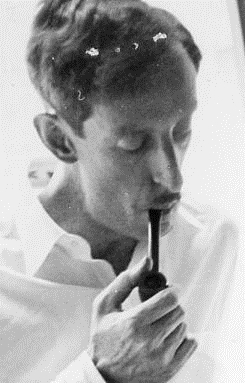
Harold Courlander (September 18, 1908 – March 15, 1996) was an American novelist, folklorist, and anthropologist and an expert in the study of Haitian life. The author of 35 books and plays and numerous scholarly articles, Courlander specialized in the study of African, Caribbean, Afro-American, and Native American cultures. He took a special interest in oral literature, cults, and Afro-American cultural connections with Africa.
Courlander was born in Indianapolis, Indiana, the son of the painter David Courlander of Detroit, Michigan. Courlander received a B.A. in English from the University of Michigan in 1931. At the University of Michigan, he received three Avery Hopwood Awards (one in drama and two in literary criticism). He attended graduate school at the University of Michigan and Columbia University. He spent time in the 1930s on a farm in Romeo, Michigan. There, he built a one-room log cabin in the woods where he spent much of his time writing.
With the prize money from the Hopwood Awards, Courlander took his first field trip to Haiti, inspired by the writings of William Buehler Seabrook. In 1939, he published his first book about Haitian life entitled Haiti Singing. Over the next 30 years, he traveled to Haiti more than 20 times. His research focused on religious practices, African retentions, oral traditions, folklore, music, and dance. His book, The Drum and the Hoe: Life and Lore of the Haitian People, published in 1960, became a classic text for the study of Haitian culture.
Courlander also took numerous field trips to the southern United States, recording folk music in the 1940s and 1950s. From 1947 to 1960, he served as a general editor of Ethnic Folkways Library (he actually devised the label name) and recorded more than 30 albums of music from different cultures (e.g., the cultures of Indonesia, Ethiopia, West Africa, Haiti, and Cuba). In 1950, he also did field recordings in Alabama later transcribed by John Benson Brooks.
In the 1960s, Courlander began a series of field trips to the American Southwest to study the oral literature and culture of the Hopi Indians. His collection of folk tales, People of the Short Blue Corn: Tales and Legends of the Hopi Indians, was issued in 1970 and was quickly recognized as an indispensable work in the study of oral literature.
From 1942 to 1943, during World War II, Harold Courlander served as a historian for the Air Transport Command for the Douglas Aircraft Project 19 in Gura, Eritrea. Courlander then worked as a writer and editor for the Office of War Information in New York City and Bombay, India, from 1943 to 1946. From 1946 until 1956, he worked as a news writer and news analyst for the Voice of America in New York City. He was an information specialist and speech writer for the U.S. Mission to the United Nations from 1956 to 1957. He was a writer and editor for The United Nations Review from 1957 to 1960. From 1960 until 1974, Courlander was African specialist, Caribbean specialist, feature writer, and senior news analyst for the Voice of America in Washington, D.C.
Courlander wrote seven novels, his most famous being The African, published in 1967. The novel was the story of a slave's capture in Africa, his experiences aboard a slave ship, and his struggle to retain his native culture in a hostile new world. In 1978, Courlander filed suit in the U.S. District Court for the Southern District of New York, charging that Alex Haley, the author of Roots, had copied 81 passages from his novel. Courlander's pre-trial memorandum in the copyright infringement lawsuit claimed:
Defendant Haley had access to and substantially copied from The African. Without The African, Roots would have been a very different and less successful novel, and indeed it is doubtful that Mr. Haley could have written Roots without The African. ... Mr. Haley copied language, thoughts, attitudes, incidents, situations, plot and character.
Harold Courlander
Harold Courlander (September 18, 1908 – March 15, 1996) was an American novelist, folklorist, and anthropologist and an expert in the study of Haitian life. The author of 35 books and plays and numerous scholarly articles, Courlander specialized in the study of African, Caribbean, Afro-American, and Native American cultures. He took a special interest in oral literature, cults, and Afro-American cultural connections with Africa.
Courlander was born in Indianapolis, Indiana, the son of the painter David Courlander of Detroit, Michigan. Courlander received a B.A. in English from the University of Michigan in 1931. At the University of Michigan, he received three Avery Hopwood Awards (one in drama and two in literary criticism). He attended graduate school at the University of Michigan and Columbia University. He spent time in the 1930s on a farm in Romeo, Michigan. There, he built a one-room log cabin in the woods where he spent much of his time writing.
With the prize money from the Hopwood Awards, Courlander took his first field trip to Haiti, inspired by the writings of William Buehler Seabrook. In 1939, he published his first book about Haitian life entitled Haiti Singing. Over the next 30 years, he traveled to Haiti more than 20 times. His research focused on religious practices, African retentions, oral traditions, folklore, music, and dance. His book, The Drum and the Hoe: Life and Lore of the Haitian People, published in 1960, became a classic text for the study of Haitian culture.
Courlander also took numerous field trips to the southern United States, recording folk music in the 1940s and 1950s. From 1947 to 1960, he served as a general editor of Ethnic Folkways Library (he actually devised the label name) and recorded more than 30 albums of music from different cultures (e.g., the cultures of Indonesia, Ethiopia, West Africa, Haiti, and Cuba). In 1950, he also did field recordings in Alabama later transcribed by John Benson Brooks.
In the 1960s, Courlander began a series of field trips to the American Southwest to study the oral literature and culture of the Hopi Indians. His collection of folk tales, People of the Short Blue Corn: Tales and Legends of the Hopi Indians, was issued in 1970 and was quickly recognized as an indispensable work in the study of oral literature.
From 1942 to 1943, during World War II, Harold Courlander served as a historian for the Air Transport Command for the Douglas Aircraft Project 19 in Gura, Eritrea. Courlander then worked as a writer and editor for the Office of War Information in New York City and Bombay, India, from 1943 to 1946. From 1946 until 1956, he worked as a news writer and news analyst for the Voice of America in New York City. He was an information specialist and speech writer for the U.S. Mission to the United Nations from 1956 to 1957. He was a writer and editor for The United Nations Review from 1957 to 1960. From 1960 until 1974, Courlander was African specialist, Caribbean specialist, feature writer, and senior news analyst for the Voice of America in Washington, D.C.
Courlander wrote seven novels, his most famous being The African, published in 1967. The novel was the story of a slave's capture in Africa, his experiences aboard a slave ship, and his struggle to retain his native culture in a hostile new world. In 1978, Courlander filed suit in the U.S. District Court for the Southern District of New York, charging that Alex Haley, the author of Roots, had copied 81 passages from his novel. Courlander's pre-trial memorandum in the copyright infringement lawsuit claimed:
Defendant Haley had access to and substantially copied from The African. Without The African, Roots would have been a very different and less successful novel, and indeed it is doubtful that Mr. Haley could have written Roots without The African. ... Mr. Haley copied language, thoughts, attitudes, incidents, situations, plot and character.
Recent media
Recent media