Hubbry Logo
Beer headBeer headMain
Open search
Beer head
Community hub
Beer head
logo
8 pages, 0 posts
0 subscribers
Be the first to start a discussion here.
Beer head
Beer head
from Wikipedia

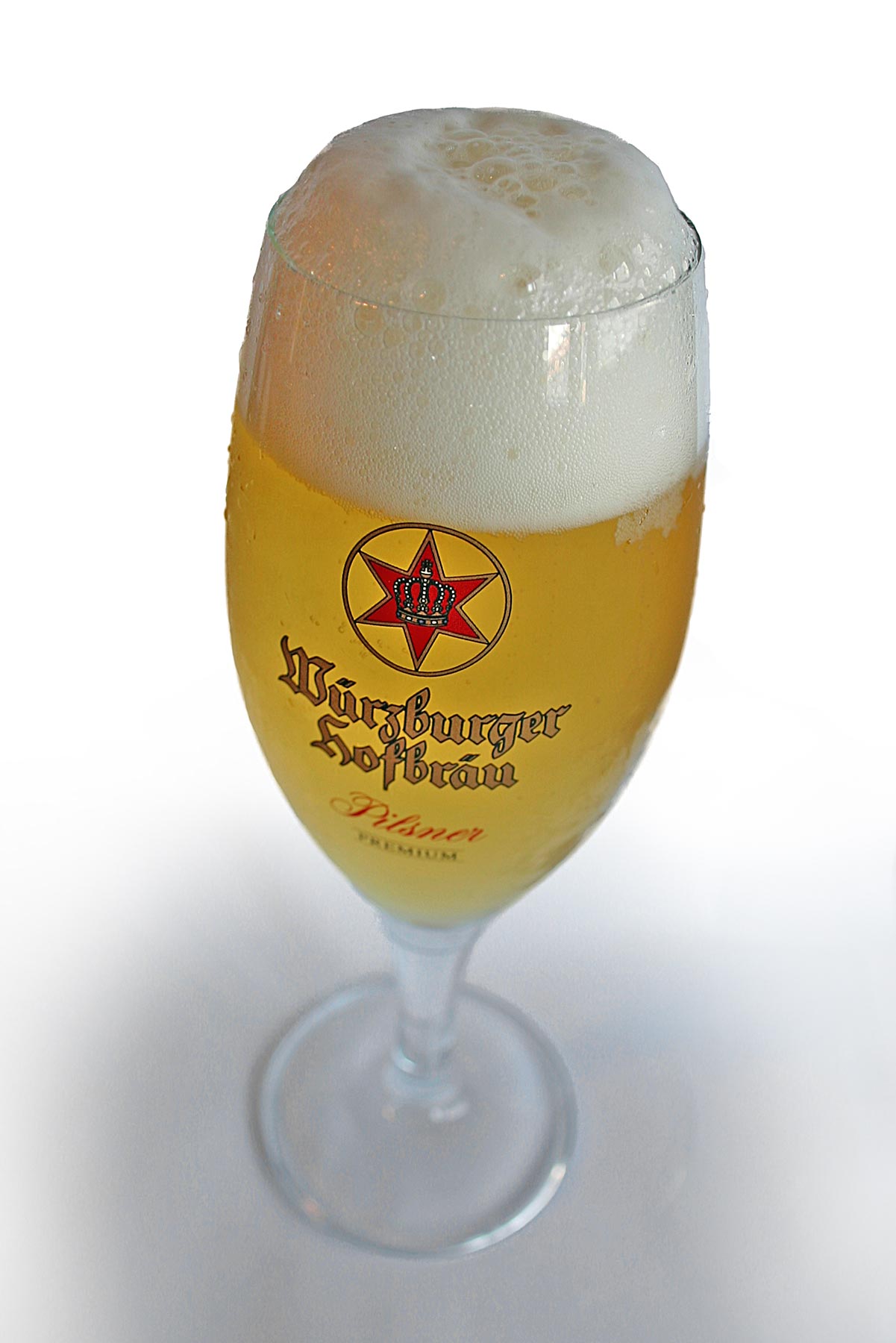
A glass of beer with a large head of foam
A glass of beer with the head having receded, leaving behind noticeable lacing

Beer head (also head or collar)[1] is the frothy foam on top of beer and carbonated beverages which is produced by bubbles of gas, predominantly carbon dioxide, rising to the surface. The elements that produce the head are wort protein, yeast and hop residue. The carbon dioxide that forms the bubbles in the head is produced during fermentation as yeasts break down sugar-rich molecules to produce ethanol and carbon dioxide. The carbonation can occur before or after bottling the beer. If the beer continues fermenting in the bottle, then it naturally carbonates and the head is formed upon opening and pouring the beer. If the beer is pasteurized or filtered then the beer must be force carbonated using pressurized gas.

The density and longevity of the head will be determined by the type of malt and adjunct from which the beer was fermented. Different mash schedules and cereal sources influence head retention. In general, wheat tends to produce larger and longer-lasting heads than barley.

Closely related to the beer head is "lacing" or "lace", a white foamy residue left on the inside of the glass as the head recedes or as the beer is drunk. Just as the composition of the beer (proteins, hops, yeast residue, filtration) affects a beer's head, the amount of lacing is also closely controlled by the specific composition of the beer, and beer connoisseurs can tell much by the lacing, though strictly speaking beer quality is not readily apparent by the head or the lacing.[2]

Importance

[edit]

Consumers tend to place a lot of importance on beer heads: too much of a head is undesirable because it detracts from the mass of the drink (similar to carbonated soda drinks); on the other hand, a poured beer is viewed as incomplete unless it has the specific form of head expected for the type of beer.[citation needed] Some connoisseurs view the head on a beer as important because it helps provide the aroma of the beer.[citation needed] Another opinion is that it is important for the aesthetic look of the beer. The commercial significance of the head has led to academic studies.[3]

At least one study suggests that the head assists in transport of beer after pouring by damping oscillation (sloshing) and converting vertical movement into horizontal movement.[4]

Formation through carbon dioxide

[edit]

The carbon dioxide may be produced naturally through the activity of brewers yeast, or artificially by dissolving carbon dioxide under pressure into the liquid. The beer head is created by the carbon dioxide produced as a byproduct of the metabolism of brewer's yeast acting upon starches and sugars found in the wort.

Chemical composition

[edit]

While the actual foam activity of beer depends on the presence of carbon dioxide, it is the surface-active materials like amphipathic polypeptides from malt that determine size, shape and length of the foam.

Beer foam consists of polypeptides of five different classifications, divided by their relative hydrophobicity. As the hydrophobicity of the polypeptide groups increases, so does the stability of the foam.[5]

Carbonation occurs when carbon dioxide is dissolved in water or an aqueous solution. This process is generally represented by the following reaction, where water and gaseous carbon dioxide react to form a dilute solution of carbonic acid.

Importance of the glass

[edit]
A German wheat beer served in the traditional glassware. The glass has a half litre fill line and is designed with extra space specifically to accommodate the head.

Beer glassware is often designed to accentuate or accommodate the head. Many other properties of the glass can also influence a beer head,[6] such as a roughened surface at the base of glass known as a widget, providing for nucleation of carbon dioxide deep in the beverage rather than at the surface, resulting in a slower release of gas to the atmosphere.

Glass surfaces can retain oil from the skin, aerosolized oil from nearby cooking, and traces of fat from food. When these oils come in contact with beer there is a significant reduction in the amount of head (foam)[7][8] that is found on the beer, and the bubbles will tend to stick to the side of the glass rather than rising to the surface as normal.

For proper foam formation, it is also important to dry the glass thoroughly after washing. Any water in the glass can prevent excitement of the gas by covering designs set in the bottom of the glass, thus making the beer flat. Conversely, some styles such as Belgian witbier benefit from being poured into a wet glass to control the often abundant head.

Formation of 'nitrogen head'

[edit]

The creamy head on beers such as Guinness is created by a widget in cans or bottles using nitrogen, or by the process of drawing keg beer from a keg using nitrogen or mixed gas (carbon dioxide and nitrogen). The use of nitrogen, which was pioneered by Guinness, creates a firm head with small bubbles while reducing the excessively acidic taste often produced by using carbon dioxide alone.

Destabilization

[edit]

One mechanism of destabilization of a beer foam is due to gravitational drainage. The water or liquid between the bubbles will drain and cause the liquid and gas phases to separate. This allows for the bubbles to become close enough to merge. This can be slowed down by increasing the viscosity of the liquid.[9]

Another mechanism of destabilization is Ostwald ripening. Gas will diffuse from smaller bubbles to larger bubbles due to the high pressure associated with smaller bubbles. This can be explained by Laplace pressure. This can be slowed by a low solubility of the gas. An example of this is adding Nitrogen to the beer. A large effect can be seen with only a 20ppm addition of nitrogen gas.[9]

Beer froth has been scientifically demonstrated to decay exponentially.[10] This research was awarded the 2002 Ig Nobel Prize in Physics.[11]

A study published in 2025 in Physics of Fluids analyzed the physical and biochemical mechanisms that determine the stability of beer foam, comparing lagers and Belgian ales with different fermentation processes. The researchers identified two main modes of stabilization: surface viscosity prevails in lagers, while in Belgian tripels, stability is due to strong Marangoni stresses generated by surface tension gradients; the concentration of the LTP1 protein increases with the number of fermentations, improving foam duration. The study suggests that different strategies can be adopted to optimize foam depending on the type of beer, such as increasing surface viscosity in lagers or controlling proteolytic activity and protein composition to optimize Marangoni stresses in Belgian ales.[12]

See also

[edit]

References

[edit]
[edit]
Revisions and contributorsEdit on WikipediaRead on Wikipedia
from Grokipedia
Beer head, also known as beer foam or froth, is the aerated layer of bubbles that forms on the surface of poured , primarily composed of gas trapped within a network of proteins, peptides, and other beer components. This arises during the pouring through , where dissolved comes out of solution and forms bubbles at sites such as imperfections on the glass or particles in the , influenced by factors like , level, and pour technique. The stability and quality of beer head depend on a delicate balance of foam-positive and foam-negative elements in the beer. Key stabilizers include proteins like Protein Z (approximately 40 kDa) and lipid transfer protein 1 (LTP1), which adsorb to bubble surfaces to reduce drainage and prevent bubble coalescence, alongside hop-derived iso-alpha acids that enhance cross-linking and surface elasticity. Conversely, components such as , , and certain detergents promote instability by accelerating bubble rupture and , where gas transfers from smaller to larger bubbles. Variations in type, such as versus , can increase protein content and , leading to more persistent in certain beer styles. Beyond , a well-formed beer head plays crucial functional roles in the beer's sensory profile and preservation. It acts as a carrier for volatile aroma compounds, releasing them as bubbles burst to enhance perceived flavor and bouquet. Additionally, the layer serves as a barrier against oxidation by minimizing oxygen ingress, thereby maintaining the beer's freshness and preventing off-flavors from developing. In brewing science, head retention is a key quality metric, with standards varying by style, directly impacting consumer satisfaction and .

Overview

Definition

Beer head is the frothy layer of bubbles that forms on the surface of poured , serving as a visible collar atop the . In optimal pours, this typically measures about one inch (2.5 cm) thick, providing a structured that enhances the beer's presentation. Visually, the beer head appears as a creamy to tan , composed of tightly packed small bubbles that form a dense, stable layer. It is distinct from "," which refers to the residual that clings to the sides of the as the beer level drops during consumption. The term "collar" is sometimes used interchangeably with head but can specifically denote the thicker, persistent basal portion of the foam. From a physical standpoint, the functions as a , with gas—primarily and entrained air—dispersed as bubbles within the liquid matrix.

Importance

The plays a crucial role in enhancing the sensory experience of drinking by trapping volatile aroma compounds and releasing them gradually as the collapses. This promotes the volatilization of key esters like ethyl hexanoate and ethyl octanoate, which contribute fruity and sweet notes, increasing their release by 2.5 to 7.0 times compared to without . By concentrating these compounds at the beer's surface, the head improves olfactory and flavor detection, allowing consumers to better appreciate the beer's nuanced profile. Aesthetically, the beer head contributes to the visual appeal of the beverage, serving as a hallmark of freshness and proper pouring technique. A stable, dense with uniform microbubbles signals high- and , enticing drinkers and elevating the overall presentation. In studies, foam stability is recognized as a primary indicator of beer , with a full, head of small bubbles directly influencing perceptions of freshness and . Functionally, the head acts as a protective barrier against oxidation, minimizing oxygen exposure that could stale the and alter its flavor. It also preserves by slowing the escape of , maintaining and preventing the beer from becoming flat during consumption. Culturally, the ideal head size—typically 1-2 fingers or 12-18 mm—serves as a benchmark in specific styles, such as the creamy, persistent head in or the dense, white foam in pilsners. For instance, 95% of consumers judge the beer's based on its appearance, including head height and texture, reflecting longstanding traditions where a proper head signifies authenticity and refreshment. Economically, poor head retention is linked to consumer dissatisfaction in the brewing industry, as foam quality directly affects perceptions of overall acceptability and can lead to complaints or returns. U.S. studies indicate that consumers favor beers with a good head but reject those with inadequate or excessive , potentially reducing repeat purchases and impacting revenue. In styles like stouts and lagers, subpar has been shown to lower satisfaction ratings, influencing and market performance.

Composition and Formation

Chemical Composition

The beer head, or foam, is a colloidal dispersion consisting primarily of gas bubbles enveloped by thin liquid films derived from the beer wort. By volume, it typically comprises 90–98% gas and 2–10% liquid, with the liquid phase making up the continuous matrix enriched in solutes from the brewing process. The gaseous component is dominated by (CO₂), which constitutes the majority due to its production during and dissolution in the beer, while smaller amounts of (N₂) and oxygen (O₂) are incorporated through air entrainment during pouring. This composition enables the foam's structure, where CO₂ drives initial bubble formation and the trace N₂ and O₂ influence bubble size and stability. Key to the foam's stability are proteins derived from , particularly hordeins (prolamins) and glutelins, which adsorb at the gas-liquid interface to form viscoelastic films around bubbles, resisting drainage and coalescence. These proteins, with molecular weights often exceeding 40 , create a mechanically robust network that traps gas and maintains foam height. Their effectiveness is maximized near their isoelectric points, typically between pH 4.3 and 5.5, where reduced and net charge allow optimal adsorption and film formation—a range aligning with the of most beers (around 4–5). Surfactants play a critical role in lowering to facilitate bubble expansion and stability. Iso-alpha acids, derived from hop isomerization during , act as such by accumulating at interfaces and enhancing persistence without excessive drainage. Similarly, melanoidins—polymeric compounds formed via Maillard reactions between sugars and during and boiling—exhibit surface-active properties that independently stabilize by integrating into the liquid films. Minor components include and polyphenols, which can modulate properties. Excessive , such as free fatty acids or phospholipids from or , destabilize the by disrupting protein films and promoting coalescence, though low levels may have neutral effects. In contrast, polyphenols from and bind to proteins, forming rigid complexes that bolster interfacial strength and contribute to overall rigidity.

Carbon Dioxide Nucleation

The formation of beer head primarily occurs through the nucleation of (CO₂) bubbles, a process driven by the of CO₂ in the when pressure is released during pouring. sites, such as microscopic scratches, engravings, or impurities like tiny hollow fibers on the surface (typically 10–20 µm in ), lower the barrier required for bubble initiation, enabling heterogeneous rather than spontaneous homogeneous bubble formation. These sites trap pre-existing gas pockets with radii exceeding the critical value of approximately 0.1–0.2 µm, allowing CO₂ to diffuse into them and form stable bubbles. The solubility of CO₂ in beer follows Henry's law, which states that the concentration of dissolved CO₂ is directly proportional to its partial pressure above the liquid, with solubility increasing at lower temperatures and higher pressures. In typical lagers, beer is carbonated to about 2.4–2.8 volumes of CO₂ (equivalent to roughly 5–6 g/L) under 2–3 atm of pressure during bottling or kegging, creating a supersaturated state approximately five times the equilibrium concentration at atmospheric pressure. Upon opening and pouring, this supersaturation leads to effervescence as CO₂ rapidly escapes, forming bubbles that rise and contribute to the head. The process unfolds in distinct stages: an initial rapid bubble growth phase (0–5 seconds post-pour) driven by and , where CO₂ molecules quickly enter sites to expand bubbles; a coalescence phase (5–30 seconds), where rising bubbles merge via buoyancy-driven flows to form a collar; and a stabilization phase, where the structure settles with ongoing bubble release. Proteins present in the , such as those from , briefly interact with these bubbles to enhance initial integrity during this kinetic formation. Optimal head formation depends on pouring technique, which controls agitation and CO₂ release to achieve a head height of 2–3 cm without overflow. The standard method involves tilting the glass at a 45-degree angle to fill it to about two-thirds capacity, minimizing turbulence to promote controlled , then pouring straight down to agitate the surface and trigger a surge of bubbles for the desired layer. Excessive agitation can lead to unstable , while insufficient mixing reduces head volume. Temperature significantly influences by affecting CO₂ solubility, with colder (4–7°C) dissolving more gas (up to 2.5–3 volumes) and promoting denser, more persistent bubble formation upon pouring compared to warmer . At serving temperatures around 6°C, the for nucleation decreases, facilitating easier bubble initiation and a richer head, though excessively low temperatures (below 4°C) may suppress aroma release.

Alternative Formations

Nitrogen Head

Nitrogen head refers to the foam formed in certain beers, particularly creamy stouts, through the incorporation of nitrogen gas rather than relying solely on carbon dioxide (CO₂). Unlike the effervescent head produced by CO₂ nucleation in standard beers, nitrogen creates a denser, silkier foam due to its lower solubility in liquid, resulting in smaller, more stable bubbles that rise slowly and contribute to a cascading effect during pouring. A key innovation for achieving nitrogen head in packaged beers is the widget, a small plastic or metal device embedded in cans or bottles that contains pressurized nitrogen. Upon opening, the pressure drop causes the widget to inject a jet of nitrogen into the beer, generating millions of tiny bubble nuclei—which form bubbles typically 30-50 microns in diameter, much smaller than the 100+ microns common in CO₂-carbonated beers. This technology ensures a creamy head comparable to draught pours without requiring specialized equipment at home. Nitrogen heads are typically achieved using a gas of about 75% and 25% CO₂, which balances for flavor with 's role in texture. 's lower , governed by with a constant of approximately 0.00061 mol// compared to 0.034 mol// for CO₂ at 25°C, allows it to form persistent small bubbles rather than dissolving readily like CO₂. In , this is adapted through nitro-kegs or draught systems that use blends and specialized faucets with restrictor plates to dispense beers like , maintaining the gas under pressure for optimal head formation. Sensory-wise, nitrogen head provides a silkier mouthfeel and reduced aggressive fizz compared to CO₂-only beers, as the fine bubbles create a velvety texture without sharp carbonation bite, while offering superior head retention of 10-15 minutes or more. This was popularized in the 1950s by Guinness, which introduced nitrogenated draught stout in 1959 to replicate pub-quality creaminess for export, later extending it to canned formats with widgets.

Other Influences on Formation

Several brewing ingredients and techniques influence the formation of beer head by modulating the availability of foam-active compounds and the overall matrix during production. High-protein s, such as wheat used in hefeweizens, enhance foam potential by providing more polypeptides that stabilize bubbles during and initial formation. In contrast, like corn can dilute protein content, potentially reducing the foam height and persistence achieved from barley alone. Hop varieties also play a key role, with high-alpha hops contributing to iso-alpha acids that promote better head stabilization through reduction and cling formation. These compounds, formed during boiling, interact with proteins to support denser foam structures. control further affects head development, as levels of 70-80%—typical for many ales and lagers—ensure balanced production while minimizing excess fusel alcohols, which can otherwise disrupt foam by altering viscosity and promoting coalescence. In commercial brewing, permitted additives like (E405) are sometimes incorporated to enhance foam formation by improving bubble stability without altering flavor. Beer style variations highlight these influences, as seen in the persistent head of Belgian ales, often achieved through the use of candi sugar that supports high and protein interactions during multiple fermentations, compared to the quicker-dissipating head in English bitters, which rely on lower-carbonated, malt-forward profiles with minimal .

Stability Factors

Glassware Effects

The design and features of beer glassware play a crucial role in promoting , which initiates bubble formation essential for head development. Etched bases in glasses, often laser-engraved with nucleation sites, facilitate the release of dissolved (CO₂) by providing consistent starting points for bubble , leading to more uniform and sustained formation in lagers. Similarly, the tulip glass incorporates a widget—a small, nitrogen-pressurized sphere with a pinhole—that, upon pouring, agitates the beer to generate a cascade of fine bubbles, creating the characteristic creamy head and consistent bubble typical of nitrogenated stouts. The shape of the glass significantly influences head retention by affecting how bubbles rise and foam is contained. Narrow-topped designs, such as flutes, trap the head more effectively by minimizing surface area exposure to air, which reduces CO₂ escape and preserves foam stability during consumption. In contrast, wide-mouthed American shaker pints allow greater air contact, potentially leading to quicker dissipation of the head due to accelerated gas release. Tulip glasses, with their inward-curving rims, further enhance retention by channeling bubbles upward and concentrating the foam layer. Glass material and preparation are vital for optimal head formation, as non-porous surfaces prevent absorption of foam-stabilizing proteins while clean conditions ensure effective . Non-porous resists wicking away the beer's surface-active compounds, maintaining bubble integrity and head height. Rinsing the glass with clean removes residues like grease or detergents without leaving films that disrupt and inhibit bubble adhesion, thereby promoting robust head development; however, residues must be thoroughly avoided, as they accelerate foam collapse. The volume capacity and pouring technique in taller support layered CO₂ release, contributing to denser head formation. Taller vessels allow bubbles to nucleate gradually from the base, building a stable foam collar as the beer fills, while optimal filling leaves headspace (typically 1-2 cm) to accommodate expansion without overflow. Regional glassware designs, such as dimpled mugs () used for German lagers, leverage their textured surfaces and robust structure to concentrate aromas released through the persistent head. The dimples and thick walls insulate the , preserving for prolonged foam stability, while the shape traps volatile compounds in the head, enhancing sensory perception of and hop notes.

Destabilization Mechanisms

The beer head, or foam, destabilizes through several interconnected physical and chemical processes that lead to bubble collapse and loss of structure. One primary mechanism is drainage, where gravity causes the liquid film between bubbles to thin progressively, facilitating bubble coalescence. This process is driven by the flow of liquid through Plateau borders and thin films, with the drainage rate influenced by factors such as foam viscosity and bubble size. As films thin to critical levels, typically on the order of micrometers, adjacent bubbles merge, reducing the overall foam volume and height. Coalescence and disproportionation further accelerate foam breakdown by altering bubble size distribution. In disproportionation, also known as , smaller bubbles shrink and disappear as gas diffuses into larger ones due to differences in internal pressure governed by the Laplace : ΔP=2σr\Delta P = \frac{2\sigma}{r} where σ\sigma is the surface tension and rr is the bubble radius; this pressure gradient (ΔPtot=2σr12σr2\Delta P_{tot} = \frac{2\sigma}{r_1} - \frac{2\sigma}{r_2}) promotes gas transfer from smaller to larger bubbles, coarsening the structure. Coalescence occurs when thinned films rupture, often exacerbated by drainage, leading to direct merging of bubbles and a rapid decline in foam stability. These processes are particularly pronounced in CO₂-dominated foams like beer head, where high gas enhances diffusion rates. Evaporation contributes to destabilization by promoting gas out of bubbles, especially from the 's top layer exposed to air. This loss of gas volume thins films further and accelerates collapse, with the effect intensified by environmental warmth or mechanical agitation that increases surface area exposure. Higher temperatures reduce and solubility differences, hastening both and overall drainage. Contaminants such as fats and oils, often introduced via greasy fingers or unclean glassware, severely undermine foam integrity by disrupting the stabilizing protein films at bubble interfaces. Long-chain fatty acids (e.g., C16:0, C18:0, ) adsorb into these protein layers, weakening surface elasticity and promoting film rupture through mechanical bridging or increased coalescence probability; for instance, adding 5 µM can render beer foam unstable. Shorter-chain fatty acids have minimal impact, but saturated longer chains form aggregates that bridge and puncture films, bypassing changes in surface . Over time, these mechanisms culminate in measurable foam loss, with beer head typically halving in volume within 175–422 seconds (about 3–7 minutes) at (around 20°C), depending on beer composition and pour conditions. Pre-pour agitation, such as shaking, accelerates this by enhancing initial drainage and gas escape, shortening retention time. Elevated serving temperatures further reduce by promoting faster and reduced .

References

Add your contribution
Related Hubs
User Avatar
No comments yet.