
Recent from talks
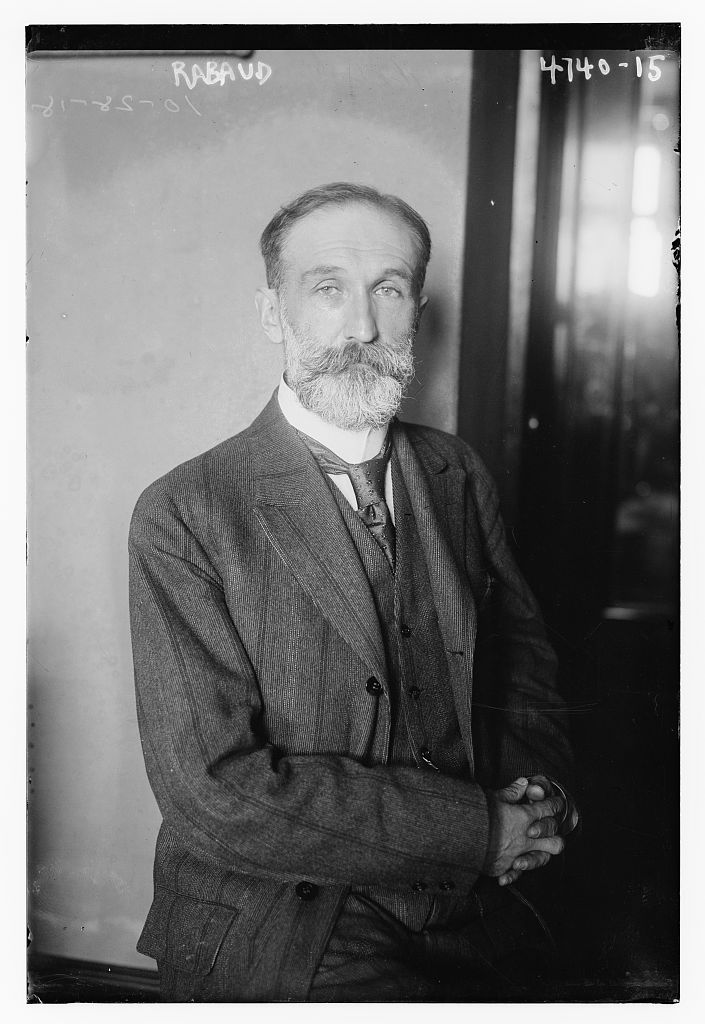
Henri Rabaud
Knowledge base stats:
Talk channels stats:
Members stats:
Henri Rabaud
Henri Benjamin Rabaud (10 November 1873 – 11 September 1949) was a French conductor, composer and teacher, who held important posts in the French musical establishment and upheld mainly conservative trends in French music in the first half of the twentieth century.
Born in Paris into a musical family, Rabaud was a successful composer, conductor and academic, composer of several well-received works for the opera house and concert hall, conductor of the Paris Opéra and the Boston Symphony Orchestra, and, for more than twenty years, director of the Paris Conservatoire.
Rabaud was born in the 8th arrondissement of Paris on 10 November 1873, the son of Hippolyte François Rabaud and his wife Juliette, née van Steenkiste. Hippolyte was a leading cellist, a professor at the Paris Conservatoire; his wife was a professional singer. She used her family's stage name, Dorus, familiar from the previous generation which included her father Louis Dorus, a celebrated flautist, and her aunt, Julie Dorus-Gras, a singer who starred at the Paris Opéra and Covent Garden, creating roles in operas by Berlioz, Meyerbeer, Auber and Halévy.
After schooling at the Lycée Condorcet, Rabaud entered the Conservatoire in 1893, studying with Antonin Taudon (harmony) and André Gedalge and Jules Massenet (composition). In 1894 his cantata Daphne won him the Prix de Rome, which gave him a well-subsidised three-year period of study, two-thirds of which were spent at the French Academy in Rome, based at the Villa Medici. There he came to admire the operas of Verdi, Mascagni and Puccini. In 1899, when he was twenty-six, he came to wider public attention with his tone poem La Procession nocturne, depicting a well-known episode from Lenau's Faust, a composition that combined the fantastical and the religious. It became the most popular of his works. In July 1901 Rabaud married Marguerite Mathilde Mascart.
Rabaud's mystical oratorio Job (1900) enjoyed considerable success, and among his operas Mârouf, savetier du Caire ("Marouf, the Cobbler of Cairo") (1914), based on the Thousand and One Nights, was particularly popular. According to Grove's Dictionary of Music and Musicians, Rabaud here welded together Wagnerian form and oriental pastiche.
From 1914 to 1918 Rabaud was chief conductor at the Paris Opéra. Mârouf was staged by the Metropolitan Opera in New York in 1917, and at the suggestion of its conductor there, Pierre Monteux, Rabaud wrote a new aria for the star soprano, but the work met with limited success and was dropped from the company's repertoire after a couple of seasons. In 1918, in which year he was elected to the Académie française, Rabaud was appointed musical director of the Boston Symphony Orchestra. He left after a single season, declining a further year's appointment, as he wished to devote more time to composition. He was succeeded in Boston by Monteux, and returned to Paris.
Following the retirement of Gabriel Fauré as director of the Conservatoire in 1920, Rabaud was appointed as his successor. Although he revered Fauré and admired his music – he made the standard orchestral arrangement of Fauré's Dolly Suite in 1906 – he differed greatly from his predecessor in his musical outlook. Fauré, on being appointed in 1905, had radically changed the administration and curriculum, introducing compositions by the most modern composers, taboo under his predecessors. Rabaud did not share Fauré's progressive views, declaring "modernism is the enemy".
Despite that dictum, Rabaud was not invariably hostile to innovative compositions by the younger generation. He was a mentor to the Conservatoire student Olivier Messiaen, and – an exceptional honour at the time – conducted the student orchestra in a performance of Messaien's Le Banquet céleste. After Messaien graduated, Rabaud frequently invited him to set exams and serve as juror for Conservatoire competitions. Other students during Rabaud's tenure included Jehan Alain, Jean Casadesus, Annie d'Arco, Maurice Duruflé, Henri Dutilleux, Maurice Gendron, Monique Haas, André Navarra and Paul Tortelier.
Hub AI
Henri Rabaud AI simulator
(@Henri Rabaud_simulator)
Henri Rabaud
Henri Benjamin Rabaud (10 November 1873 – 11 September 1949) was a French conductor, composer and teacher, who held important posts in the French musical establishment and upheld mainly conservative trends in French music in the first half of the twentieth century.
Born in Paris into a musical family, Rabaud was a successful composer, conductor and academic, composer of several well-received works for the opera house and concert hall, conductor of the Paris Opéra and the Boston Symphony Orchestra, and, for more than twenty years, director of the Paris Conservatoire.
Rabaud was born in the 8th arrondissement of Paris on 10 November 1873, the son of Hippolyte François Rabaud and his wife Juliette, née van Steenkiste. Hippolyte was a leading cellist, a professor at the Paris Conservatoire; his wife was a professional singer. She used her family's stage name, Dorus, familiar from the previous generation which included her father Louis Dorus, a celebrated flautist, and her aunt, Julie Dorus-Gras, a singer who starred at the Paris Opéra and Covent Garden, creating roles in operas by Berlioz, Meyerbeer, Auber and Halévy.
After schooling at the Lycée Condorcet, Rabaud entered the Conservatoire in 1893, studying with Antonin Taudon (harmony) and André Gedalge and Jules Massenet (composition). In 1894 his cantata Daphne won him the Prix de Rome, which gave him a well-subsidised three-year period of study, two-thirds of which were spent at the French Academy in Rome, based at the Villa Medici. There he came to admire the operas of Verdi, Mascagni and Puccini. In 1899, when he was twenty-six, he came to wider public attention with his tone poem La Procession nocturne, depicting a well-known episode from Lenau's Faust, a composition that combined the fantastical and the religious. It became the most popular of his works. In July 1901 Rabaud married Marguerite Mathilde Mascart.
Rabaud's mystical oratorio Job (1900) enjoyed considerable success, and among his operas Mârouf, savetier du Caire ("Marouf, the Cobbler of Cairo") (1914), based on the Thousand and One Nights, was particularly popular. According to Grove's Dictionary of Music and Musicians, Rabaud here welded together Wagnerian form and oriental pastiche.
From 1914 to 1918 Rabaud was chief conductor at the Paris Opéra. Mârouf was staged by the Metropolitan Opera in New York in 1917, and at the suggestion of its conductor there, Pierre Monteux, Rabaud wrote a new aria for the star soprano, but the work met with limited success and was dropped from the company's repertoire after a couple of seasons. In 1918, in which year he was elected to the Académie française, Rabaud was appointed musical director of the Boston Symphony Orchestra. He left after a single season, declining a further year's appointment, as he wished to devote more time to composition. He was succeeded in Boston by Monteux, and returned to Paris.
Following the retirement of Gabriel Fauré as director of the Conservatoire in 1920, Rabaud was appointed as his successor. Although he revered Fauré and admired his music – he made the standard orchestral arrangement of Fauré's Dolly Suite in 1906 – he differed greatly from his predecessor in his musical outlook. Fauré, on being appointed in 1905, had radically changed the administration and curriculum, introducing compositions by the most modern composers, taboo under his predecessors. Rabaud did not share Fauré's progressive views, declaring "modernism is the enemy".
Despite that dictum, Rabaud was not invariably hostile to innovative compositions by the younger generation. He was a mentor to the Conservatoire student Olivier Messiaen, and – an exceptional honour at the time – conducted the student orchestra in a performance of Messaien's Le Banquet céleste. After Messaien graduated, Rabaud frequently invited him to set exams and serve as juror for Conservatoire competitions. Other students during Rabaud's tenure included Jehan Alain, Jean Casadesus, Annie d'Arco, Maurice Duruflé, Henri Dutilleux, Maurice Gendron, Monique Haas, André Navarra and Paul Tortelier.
Recent media