Hubbry Logo
search
logo
2121942

Hopper crystal

logo
Community Hub0 Subscribers
Read side by side
from Wikipedia
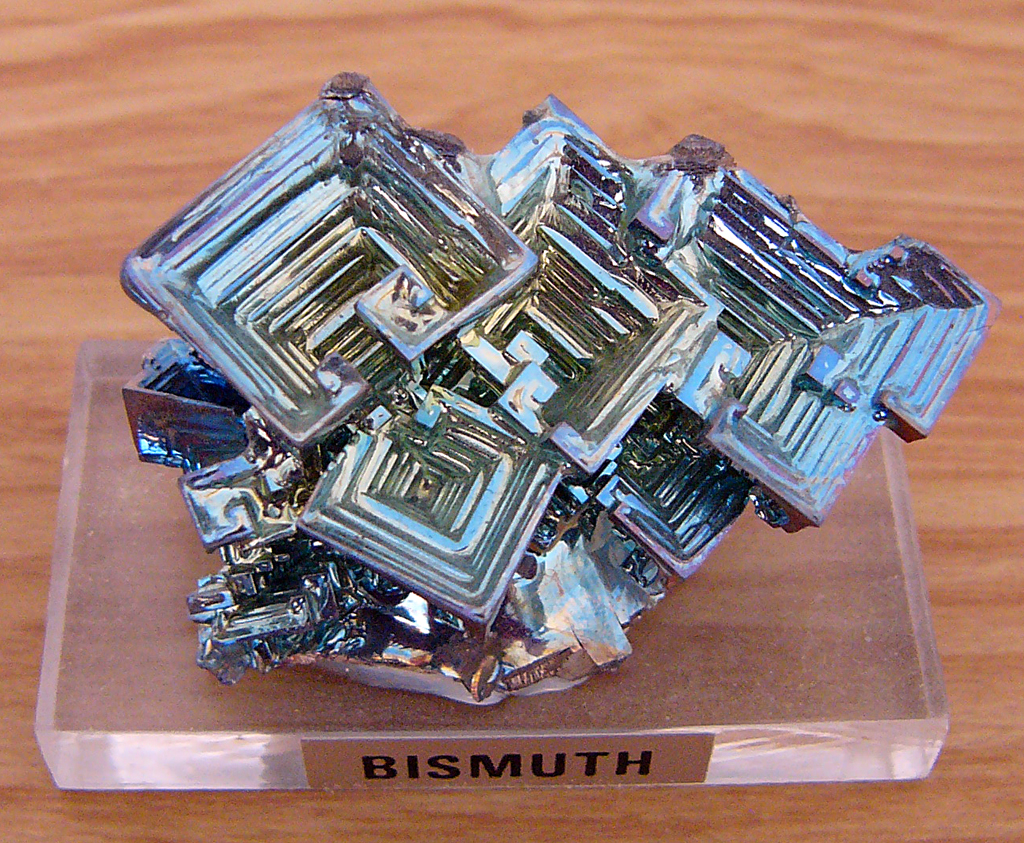
A possibly synthetic bismuth hopper crystal
Hoppered galena

A hopper crystal is a form of crystal, the shape of which resembles that of a pyramidal hopper container.

The edges of hopper crystals are fully developed, but the interior spaces are not filled in. This results in what appears to be a hollowed-out step lattice formation, as if someone had removed interior sections of the individual crystals. In fact, the "removed" sections never filled in, because the crystal was growing so rapidly that there was not enough time (or material) to fill in the gaps. The interior edges of a hopper crystal still show the crystal form characteristic to the specific mineral, and so appear to be a series of smaller and smaller stepped down miniature versions of the original crystal.[1][2]

Hoppering occurs when electrical attraction is higher along the edges of the crystal; this causes faster growth at the edges than near the face centers. This attraction draws the mineral molecules more strongly than the interior sections of the crystal, thus the edges develop more quickly. However, the basic physics of this type of growth is the same as that of dendrites but, because the anisotropy in the solid–liquid interfacial energy is so large, the dendrite so produced exhibits a faceted morphology.

Hoppering is common in many minerals, including lab-grown bismuth, galena, quartz (called skeletal or fenster crystals), gold, calcite, halite (salt), and water (ice).

In 2017, Frito-Lay filed for (and later received) a patent[3] for a salt cube hopper crystal. Because the shape increases surface area to volume, it allows people to taste more salt compared to the amount actually consumed.

References

[edit]
[edit]
Revisions and contributorsEdit on WikipediaRead on Wikipedia
from Grokipedia
A hopper crystal is a type of crystal morphology characterized by a hollow, stepped, or skeletal structure resembling a miniature pyramid or staircase, formed when the edges and corners of the crystal grow more rapidly than the centers of its faces, often under conditions of high supersaturation or rapid environmental changes such as evaporation or cooling.[1][2] This growth habit arises from anisotropic kinetics at the molecular level, where high-energy sites at edges and corners facilitate faster attachment of ions or atoms compared to the relatively stable face centers, leading to underdeveloped or recessed interiors that create the distinctive "hoppered" form.[2][3] In geological contexts, hopper crystals commonly develop in evaporite deposits, such as those of halite (sodium chloride) in salt flats or lakes, where quick evaporation from supersaturated brines produces interconnected cubic mini-structures at growth rates exceeding approximately 6.5 μm/s.[2] Hopper crystals are also observed in other minerals and synthetic materials, including bismuth, which forms iridescent, lab-grown specimens with staircase-like terraces due to similar rapid cooling from the melt; galena (lead sulfide); and occasionally calcite or quartz under disequilibrium conditions.[3][4] These structures serve as indicators of rapid crystallization in natural settings, providing insights into past environmental conditions like fluctuating salinity or temperature in sedimentary basins, and in materials science, they inform models of crystal growth for applications in pharmaceuticals, optics, and nanotechnology.[2][3]

Definition and Characteristics

Definition

A hopper crystal is a type of crystal formation characterized by a hollow, stepped, or skeletal structure resembling a pyramidal hopper container, where growth occurs preferentially at edges and corners over flat faces.[5][2] This morphology results in a terraced or crater-like appearance, with the crystal's interior often remaining underdeveloped compared to its protruding edges.[1] The term "hopper" derives from the resemblance of this structure to a hopper, a container or machine wide at the top and narrowing downward.[6] Unlike euhedral crystals, which develop fully formed faces, or general skeletal crystals, hopper crystals are specifically hollowed and terraced due to interrupted growth, creating a distinctive skeletal framework.[1][7] This sets them apart as a unique habit in crystallography, often featuring stepped surfaces that highlight their incomplete development.[7]

Morphological Features

Hopper crystals exhibit distinctive stepped or terraced surfaces that form a series of recessed platforms, resembling skeletal frameworks with hollow interiors and prominent sharp edges.[8] These features create a cavernous appearance on the crystal faces, particularly in isometric minerals where the overall outline is typically cubic or octahedral.[9] The terraced structure arises from faster growth along the edges and corners compared to the central face regions, resulting in pyramid-like depressions that give the crystal its characteristic hopper shape.[2] Variations in hopper crystal form include pyramidal subtypes with concentric stepped layers, skeletal configurations that mimic incomplete cubes, and more branched dendritic-like extensions under certain growth conditions.[2] Sizes range from microscopic scales on the order of micrometers to larger specimens several centimeters across, depending on the growth environment.[3] Color and transparency vary by mineral composition; for instance, halite hopper crystals are typically colorless and transparent, while others like bismuth may display metallic luster.[9] Diagnostic identification often relies on scanning electron microscopy (SEM), which reveals the layered growth steps and terraced morphology in high detail, highlighting the recessed platforms and sharp edge definitions.[10] X-ray diffraction (XRD) patterns confirm the underlying crystal lattice structure, such as face-centered cubic for many metallic or halide examples, though the hopper habit indicates non-uniform filling in central regions compared to compact forms.[11]

Formation Mechanisms

Crystal Growth Dynamics

Hopper crystals exhibit a distinctive growth pattern driven by interfacial instability, where edges and corners advance more rapidly than crystal faces due to elevated attachment rates of ions or molecules at high-curvature sites. This phenomenon arises from the Berg effect in diffusion-limited conditions, wherein solute depletion occurs preferentially at face centers, creating a concentration gradient that maintains higher supersaturation at protrusions like edges and corners. As a result, attachment kinetics favor these regions, promoting anisotropic expansion that hollows the faces while elongating the skeletal framework.[12][2] The disparity in growth velocities, characterized by $ v_{\text{edge}} > v_{\text{face}} $, underscores the kinetic dominance over thermodynamic equilibrium shapes, often observed in systems with low solute diffusivity that confines transport to a thin boundary layer. Under high supersaturation, this rapid edge advancement exacerbates face depressions, which may remain unfilled or partially infill later, depending on the persistence of the instability. Supersaturation levels above approximately 1.45 in model systems like sodium chloride trigger the transition to hopper morphology by accelerating secondary nucleation at edges.[2][12] Phase-field simulations provide a quantitative framework for modeling this process, capturing the evolution of concentration and order parameter through coupled equations that account for diffusion, phase transitions, and anisotropic surface energy to reproduce the velocity disparity and hollowing in three-dimensional cubic systems, particularly under non-equilibrium conditions.[13]

Environmental Conditions

Hopper crystals form under low to moderate temperatures, typically ranging from 20°C to 100°C in evaporative environments where ion concentration increases due to water loss. In laboratory simulations of salt crystal growth, such as for sodium chloride, temperatures are maintained at 19–23°C to mimic ambient conditions and promote controlled evaporation. Natural occurrences in subsurface evaporite deposits, like those in Alpine basins, involve temperatures below 50°C for halite hopper crystal formation and deformation during shallow burial, compaction, and early diagenetic processes with fluid migration.[14] Pressures during formation are generally near-atmospheric for surface or shallow-water settings, while buried deposits experience low differential stresses of 0.1–1 MPa under overburden of 500–1,000 m. These conditions ensure slow diffusion relative to attachment rates at crystal edges, favoring hopper morphologies. Solution chemistry plays a pivotal role, requiring high supersaturation in aqueous brines or melts to drive rapid crystallization. For halite hopper crystals, supersaturation ratios (S) exceed 1.45, often reaching 1.65 or higher in saline solutions like NaCl brines, where evaporation concentrates ions. In natural settings, such as hypersaline lakes or subsurface fluids, brines are undersaturated in halite but contain impurities like K⁺, Mg²⁺, Ca²⁺, and SO₄²⁻, which inhibit uniform face growth and promote skeletal development. pH extremes, such as alkaline conditions in evaporating ponds, further stabilize supersaturated states by altering solubility. These chemical environments interrupt planar growth, leading to the characteristic hollow centers. Temporal factors, including rapid evaporation or cooling over hours to days, are essential for hopper development by creating transient supersaturation gradients. In controlled experiments, evaporation at 50–70% relative humidity sustains growth rates of 6.5 μm/s for NaCl at S ≈ 1.45, with hopper forms emerging within minutes under antisolvent addition. Natural evaporation in arid basins, driven by seasonal cooling (e.g., winter drops in hypersaline lakes), precipitates hoppers over days as brine volumes decrease. Such rates outpace face filling, resulting in faster edge advancement as described in crystal growth dynamics.

Natural and Synthetic Examples

In Minerals and Rocks

Hopper crystals of halite, commonly known as rock salt, are frequently observed in evaporite deposits formed through the precipitation of salts from saturated brines in sedimentary environments. These crystals develop in settings such as the Permian basins of West Texas and New Mexico, where thick sequences of halite layers, including hopper morphologies, accumulated during arid periods of the late Paleozoic era.[15] In the Dead Sea region, displacive halite hopper crystals grow within carbonate sediments, displacing the host material as brine concentrations increase during seasonal desiccation.[16] Pyrite hopper crystals can form in hydrothermal vein systems through rapid precipitation from sulfur-rich fluids, as demonstrated in experimental studies simulating mineralized fractures.[17] Such morphologies are observed in ore deposits associated with igneous intrusions, such as those in metamorphic terranes where pyrite forms cubic skeletal structures amid quartz and other sulfides. Quartz hopper crystals, often referred to as skeletal or elestial forms, are found in vugs within dolomitic limestones, exemplified by the Herkimer "diamonds" from Herkimer County, New York, where double-terminated crystals exhibit stepped faces due to interrupted growth in cavity fillings.[18] Gold hopper crystals, displaying octahedral skeletal habits, are preserved in placer deposits derived from eroded primary sources, such as the lateritic placers of Serra do Caldeirão in Mato Grosso, Brazil,[19] and the Santa Elena district in Venezuela.[20] Hopper crystals of galena (lead sulfide) are reported in hydrothermal ore deposits, where rapid growth under non-equilibrium conditions produces skeletal cubic forms.[21] Calcite hopper crystals occasionally form in cave environments or sedimentary settings with rapid precipitation from supersaturated solutions.[22] In pegmatite environments, hopper quartz can form in late-stage fluid pockets, while metamorphic rocks host deformed pyrite hoppers altered by regional stresses. Associated features include deformation of halite hoppers under overburden pressure in buried evaporite sequences, resulting in flattened or distorted shapes within the Alpine Haselgebirge salt deposits of the Northern Calcareous Alps.[14] Pseudomorphic replacements, such as anhydrite cubes after halite hoppers, occur when calcium sulphate-rich solutions replace the precursor halite and precipitate anhydrite in its mold, preserving the original hopper outline in sedimentary evaporites.[14]

In Alloys and Synthetic Materials

Hopper crystals are prominently featured in synthetic bismuth production, where molten bismuth is slowly cooled from its melting point of 271.5 °C to form iridescent, stepped structures commonly used in educational demonstrations.[23] These hopper forms arise due to preferential edge growth during crystallization, resulting in hollow, pyramidal shapes with oxide layers responsible for their characteristic colors. Bismuth's low melting point facilitates accessible lab-scale synthesis, making it a model system for studying non-equilibrium crystal morphologies.[24] In alloy systems, hopper crystals emerge during solidification of intermetallic compounds, such as Cu6Sn5 in Sn-Cu-Al solders and Fe-based alloys like those in the Iron-Carbon-Silicon system.[3] These structures form under non-equilibrium conditions, where slower diffusion at facet centers relative to edges leads to depressed, hopper-like depressions and hollow channels, influencing microstructure control in casting processes.[3] Phase-field simulations have been employed to predict and model such hopper formation, revealing that specific anisotropy and solute diffusion parameters (e.g., liquid diffusion coefficient DL1/12D_L \approx 1/12) promote these morphologies over dendritic growth, aiding optimization for applications in lightweight materials and catalysis.[3] Synthetic production of hopper crystals extends to semiconductor materials via controlled methods like solvothermal or solution-based approaches. For instance, uniform PbS hopper crystals are synthesized in large quantities by adjusting reaction time and temperature in ethylene glycol solutions, yielding skeletal structures indicative of rapid, diffusion-limited growth.[11] Similarly, complex PbTe hopper crystals with hierarchical features are obtained through mild solution routes, highlighting their potential in optoelectronic contexts where hopper morphology signals non-equilibrium solidification kinetics.[25] These techniques, often involving melts or gels, underscore hopper crystals as markers of controlled rapid solidification in engineered metallic and semiconducting systems.[3]

Scientific and Practical Significance

Geological Implications

Hopper crystals in halite formations serve as important paleoenvironmental indicators, signaling ancient arid and evaporative conditions in sedimentary basins characterized by cyclic marine incursions and desiccation. These skeletal structures, often forming through rapid growth in brines under high supersaturation, preserve evidence of playa-like settings where upward-diffusing fluids interacted with desiccated surfaces. In the Permian Zechstein evaporites of Europe, halite crystals grew intrasedimentarily during brine concentration phases, aiding reconstructions of paleoclimate, basin hydrology, and sea-level variations in restricted marine environments.[26] Similarly, Neoarchaean halite casts exhibiting hopper morphologies in silicified mudstones indicate early evaporitic processes and provide constraints on primordial oceanic chemistry and atmospheric conditions.[27] Deformed hopper crystals embedded in halite beds reveal insights into post-depositional stress regimes, overburden pressures, and tectonic evolution, as their distortion patterns reflect the mechanics of sediment compaction and early diagenesis. In simple, overburden-dominated stress fields, these crystals—typically pseudomorphed by minerals like anhydrite or polyhalite—undergo plastic deformation at low differential stresses, with resulting morphologies highly dependent on their initial orientation relative to the principal stress axis.[14] For example, in the Alpine Haselgebirge evaporites, 3D analyses of such deformed hoppers demonstrate how enclosing mudrocks imposed directional strains during burial, enabling quantitative estimates of paleostress magnitudes and strain histories without requiring advanced tectonic overprints.[28] This deformation preserves a record of ductile behavior in evaporite sequences, distinguishing diagenetic compaction from later tectonic events.[29] The presence of hopper crystals in evaporite sequences holds implications for resource exploration, particularly in delineating hydrocarbon traps within salt-dominated basins. In the Gulf of Mexico, the Middle Jurassic Louann Salt formation features halite layers indicative of its primary evaporitic deposition, which later mobilized into diapiric salt domes that create impermeable seals and structural highs for oil and gas accumulations.[30] These depositional signatures confirm the stratigraphic integrity of the salt, guiding geophysical modeling and well targeting in one of the world's premier petroleum provinces.

Applications in Materials Science

Hopper crystals have emerged as valuable structures in materials science for controlling microstructures in metallic alloys during solidification processes. In intermetallic alloys such as Cu₆Sn₅ found in Sn-Cu solders, hopper formations arise under non-equilibrium conditions, creating skeletal architectures that may impact mechanical properties.[3] In crystal engineering, synthetic hopper crystals offer unique opportunities for tailoring optical and optoelectronic properties. For instance, uniform PbS hopper crystals, synthesized via hydrothermal methods, exhibit quantum confinement effects and narrow band gaps, making them suitable for infrared photodetectors and photovoltaic devices where enhanced light absorption is critical.[31] Similarly, metal halide perovskite hopper crystals grown on scaffolds demonstrate superior light-trapping capabilities due to their concave microstructures and broad absorption areas, improving photodetector performance compared to flat films.[32] Bismuth-based hopper crystals, prized for their layered iridescence from thin oxide coatings, serve as models in educational tools and preliminary optical applications, while their self-assembly potential extends to designing functional nanomaterials.[33] Phase-field modeling of hopper crystal growth has advanced solidification theory, providing predictive tools for dendrite and skeletal formation in metals. These simulations, applied to cubic faceted growth in alloys, reveal how diffusion-driven instabilities lead to hopper morphologies, informing defect avoidance in casting and welding processes.[3] Such models are instrumental in optimizing microstructures for components in lightweight alloys like iron-carbon-silicon systems.[3] Overall, hopper crystals facilitate innovative approaches in self-assembly and energy materials, with ongoing research addressing scalability challenges in synthesis.[33]

References

User Avatar
No comments yet.