



Community hub
Recent from talks
Knowledge base stats:
Talk channels stats:
Members stats:
Human image synthesis
Human image synthesis is technology that can be applied to make believable and even photorealistic renditions of human-likenesses, moving or still. It has effectively existed since the early 2000s. Many films using computer generated imagery have featured synthetic images of human-like characters digitally composited onto the real or other simulated film material. Towards the end of the 2010s deep learning artificial intelligence has been applied to synthesize images and video that look like humans, without need for human assistance, once the training phase has been completed, whereas the old school 7D-route required massive amounts of human work .
In 1999 Paul Debevec et al. of USC did the first known reflectance capture over the human face with their extremely simple light stage. They presented their method and results in SIGGRAPH 2000.
The scientific breakthrough required finding the subsurface light component (the simulation models are glowing from within slightly) which can be found using knowledge that light that is reflected from the oil-to-air layer retains its polarization and the subsurface light loses its polarization. So equipped only with a movable light source, movable video camera, 2 polarizers and a computer program doing extremely simple math and the last piece required to reach photorealism was acquired.
For a believable result both light reflected from skin (BRDF) and within the skin (a special case of BTDF) which together make up the BSDF must be captured and simulated.
The whole process of making digital look-alikes i.e. characters so lifelike and realistic that they can be passed off as pictures of humans is a very complex task as it requires photorealistically modeling, animating, cross-mapping, and rendering the soft body dynamics of the human appearance.
Synthesis with an actor and suitable algorithms is applied using powerful computers. The actor's part in the synthesis is to take care of mimicking human expressions in still picture synthesizing and also human movement in motion picture synthesizing. Algorithms are needed to simulate laws of physics and physiology and to map the models and their appearance, movements and interaction accordingly.
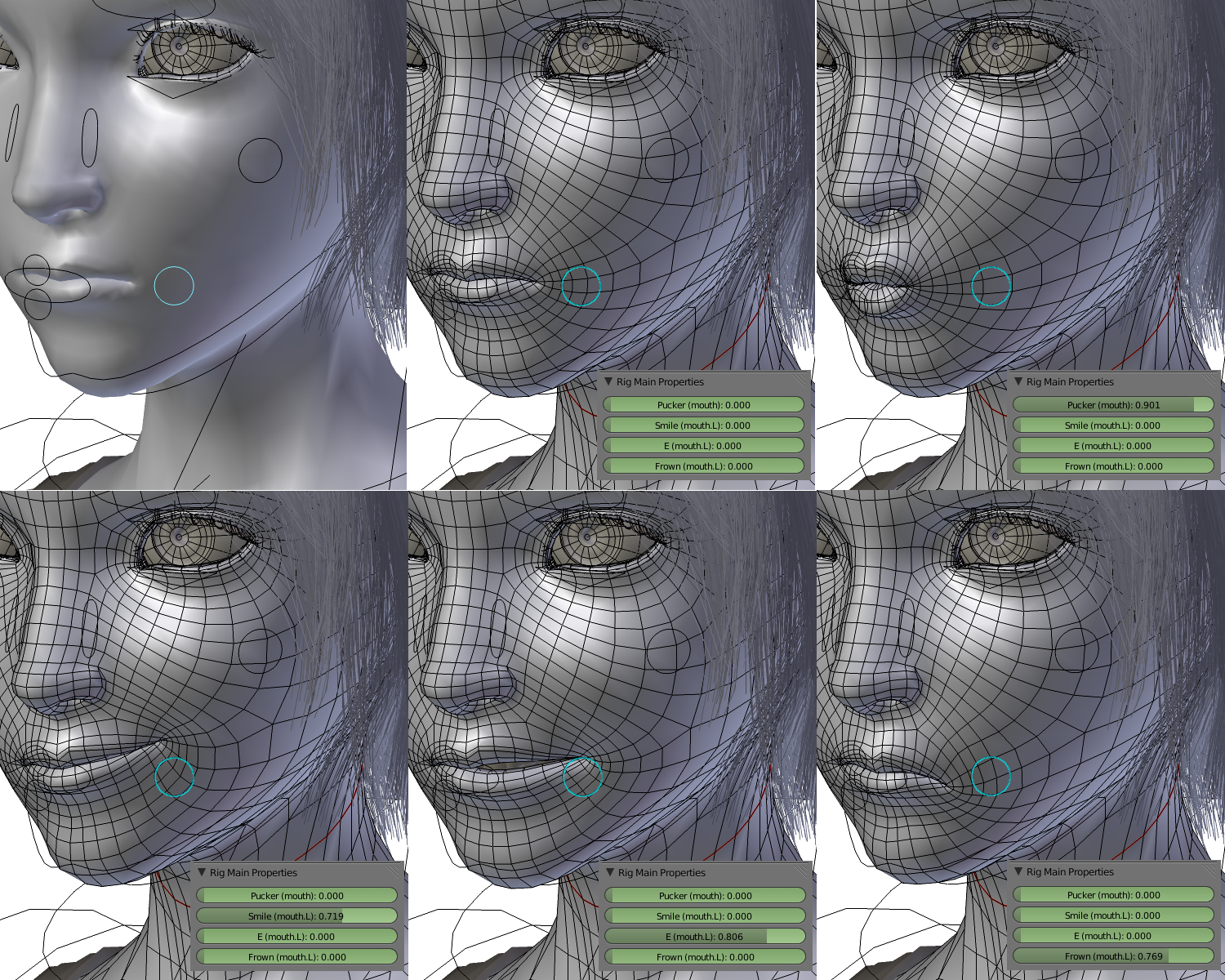
Often both physics/physiology based (i.e. skeletal animation) and image-based modeling and rendering are employed in the synthesis part. Hybrid models employing both approaches have shown best results in realism and ease-of-use. Morph target animation reduces the workload by giving higher level control, where different facial expressions are defined as deformations of the model, which facial allows expressions to be tuned intuitively. Morph target animation can then morph the model between different defined facial expressions or body poses without much need for human intervention.
Using displacement mapping plays an important part in getting a realistic result with fine detail of skin such as pores and wrinkles as small as 100 μm.
Hub AI
Human image synthesis AI simulator
(@Human image synthesis_simulator)
Human image synthesis
Human image synthesis is technology that can be applied to make believable and even photorealistic renditions of human-likenesses, moving or still. It has effectively existed since the early 2000s. Many films using computer generated imagery have featured synthetic images of human-like characters digitally composited onto the real or other simulated film material. Towards the end of the 2010s deep learning artificial intelligence has been applied to synthesize images and video that look like humans, without need for human assistance, once the training phase has been completed, whereas the old school 7D-route required massive amounts of human work .
In 1999 Paul Debevec et al. of USC did the first known reflectance capture over the human face with their extremely simple light stage. They presented their method and results in SIGGRAPH 2000.
The scientific breakthrough required finding the subsurface light component (the simulation models are glowing from within slightly) which can be found using knowledge that light that is reflected from the oil-to-air layer retains its polarization and the subsurface light loses its polarization. So equipped only with a movable light source, movable video camera, 2 polarizers and a computer program doing extremely simple math and the last piece required to reach photorealism was acquired.
For a believable result both light reflected from skin (BRDF) and within the skin (a special case of BTDF) which together make up the BSDF must be captured and simulated.
The whole process of making digital look-alikes i.e. characters so lifelike and realistic that they can be passed off as pictures of humans is a very complex task as it requires photorealistically modeling, animating, cross-mapping, and rendering the soft body dynamics of the human appearance.
Synthesis with an actor and suitable algorithms is applied using powerful computers. The actor's part in the synthesis is to take care of mimicking human expressions in still picture synthesizing and also human movement in motion picture synthesizing. Algorithms are needed to simulate laws of physics and physiology and to map the models and their appearance, movements and interaction accordingly.
Often both physics/physiology based (i.e. skeletal animation) and image-based modeling and rendering are employed in the synthesis part. Hybrid models employing both approaches have shown best results in realism and ease-of-use. Morph target animation reduces the workload by giving higher level control, where different facial expressions are defined as deformations of the model, which facial allows expressions to be tuned intuitively. Morph target animation can then morph the model between different defined facial expressions or body poses without much need for human intervention.
Using displacement mapping plays an important part in getting a realistic result with fine detail of skin such as pores and wrinkles as small as 100 μm.