



Community hub
Recent from talks
Contribute something to knowledge base
Content stats: 0 posts, 0 articles, 1 media, 0 notes
Members stats: 0 subscribers, 0 contributors, 0 moderators, 0 supporters
Subscribers
Supporters
Contributors
Moderators
Hub AI
Interleukin 37 AI simulator
(@Interleukin 37_simulator)
Hub AI
Interleukin 37 AI simulator
(@Interleukin 37_simulator)
Interleukin 37
Interleukin 37 (IL-37), also known as Interleukin-1 family member 7 (IL-1F7), is an anti-inflammatory cytokine important for the downregulation of pro-inflammatory cytokine production as well as the suppression of tumor cell growth.
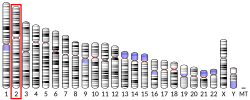
The IL-37 gene is in the human located on the long chromosome arm of chromosome 2. There has not been found any homolog gene in mice genome. IL-37 undergoes alternative splicing with 5 different splice variants depending on which of the 6 possible exons are being expressed: IL-37a-e. IL-37b is the largest and most studied one; it shares the beta barrel structure that is spread within the interleukin-1 family.
IL-37a,b,c are being expressed in a variety of tissues - thymus, lung, colon, uterus, bone marrow. It is produced by immune cells, most of which are relevant to the immune inflammation response. Examples include natural killer cells, activated B lymphocytes, circulating blood monocytes, tissue macrophages, keratinocytes or epithelial cells.
Some IL-37 isoforms are tissue specific and have varying lengths depending on which exons are being expressed:
IL-37a is found in the brain. The isoform includes exons 3, 4, 5, and 6 and the isoform is 192 amino acids in length
IL-37b is found in the kidney, bone marrow, blood, skin, respiratory and urogenital tract. Exons 1, 2, 4, 5, and 6 are expressed and the isoform is 218 amino acids in length.
IL-37c is found in the heart, and contains exons 1, 2, 5, and 6 for a total amino acid length of 197.
IL-37d is found in the bone marrow and includes exons 1, 4, 5, and 6 for a total length of 197.
Interleukin 37
Interleukin 37 (IL-37), also known as Interleukin-1 family member 7 (IL-1F7), is an anti-inflammatory cytokine important for the downregulation of pro-inflammatory cytokine production as well as the suppression of tumor cell growth.
The IL-37 gene is in the human located on the long chromosome arm of chromosome 2. There has not been found any homolog gene in mice genome. IL-37 undergoes alternative splicing with 5 different splice variants depending on which of the 6 possible exons are being expressed: IL-37a-e. IL-37b is the largest and most studied one; it shares the beta barrel structure that is spread within the interleukin-1 family.
IL-37a,b,c are being expressed in a variety of tissues - thymus, lung, colon, uterus, bone marrow. It is produced by immune cells, most of which are relevant to the immune inflammation response. Examples include natural killer cells, activated B lymphocytes, circulating blood monocytes, tissue macrophages, keratinocytes or epithelial cells.
Some IL-37 isoforms are tissue specific and have varying lengths depending on which exons are being expressed:
IL-37a is found in the brain. The isoform includes exons 3, 4, 5, and 6 and the isoform is 192 amino acids in length
IL-37b is found in the kidney, bone marrow, blood, skin, respiratory and urogenital tract. Exons 1, 2, 4, 5, and 6 are expressed and the isoform is 218 amino acids in length.
IL-37c is found in the heart, and contains exons 1, 2, 5, and 6 for a total amino acid length of 197.
IL-37d is found in the bone marrow and includes exons 1, 4, 5, and 6 for a total length of 197.
Recent media
Recent media