Hubbry Logo
IdumbanIdumbanMain
Open search
Idumban
Community hub
Idumban
logo
8 pages, 0 posts
0 subscribers
Be the first to start a discussion here.
Idumban
Idumban
from Wikipedia
Idumban
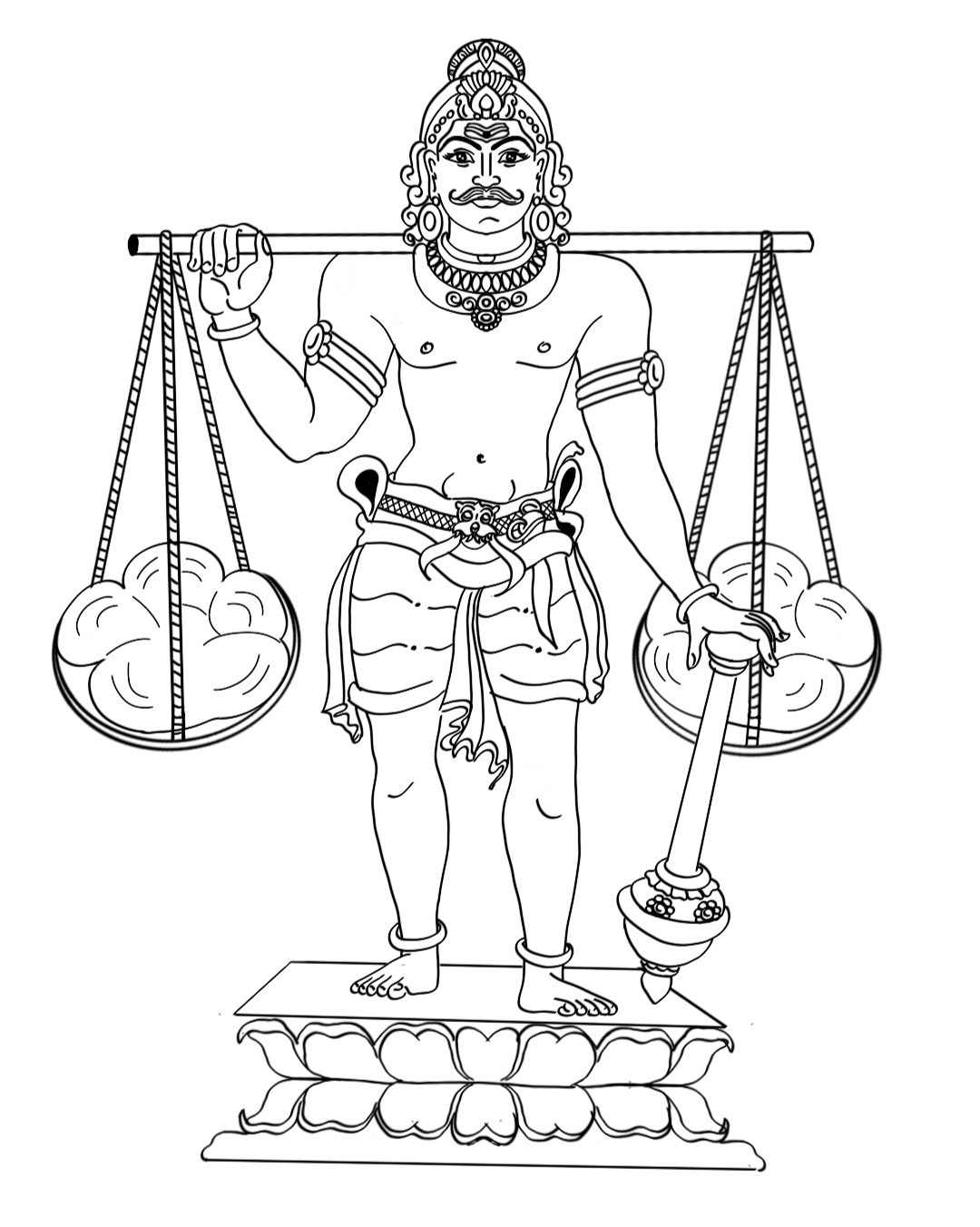
Modern representation of Idumban
Venerated inKaumaram
AffiliationAsura
TextsKanda Puranam

Idumban (Tamil: இடும்பன், romanized: Iṭumpaṉ) is an asura in Hinduism, featured in Tamil mythology. Idumban is described to be a devotee of the deity Murugan (Kartikeya), regarded by adherents to be a guardian of the deity's temples in Tamil Nadu. He is also associated with the ritual practice of the Kavadi Aattam, in which his veneration is regarded to be a prerequisite.[1]

Legend

[edit]

According to legend, Sage Agastya wanted two hills, Shivagiri and Shaktigiri, to be transported to his abode in the south, and commissioned his disciple, the asura Idumban, to carry them. Idumban bore the hills slung across his shoulders by inventing a tool called the kavadi. The tool was made of the staff of Brahma, which was employed as a pole, and two divine serpents, which were employed as ropes. When he became fatigued after carrying the hills, he placed the kavadi near Palani to recuperate. Meanwhile, Murugan, having journeyed to Palani after losing the jnana palam (fruit of wisdom) to Ganesha, claimed the hills as his own. Unable to lift the hills and resume his journey, Idumban confronted the deity. In the combat that ensued, Idumban was slain,[2] but was resurrected on the intercession of his wife, Idumbi, as well as Agastya. Restored to life, Idumban wished to serve for perpetuity as the dvarapala (door-guardian) of Murugan's shrine. The deity declared that Idumban would stand guard at the foot of the hill, and proclaimed that every devotee who worshipped him at the site would first venerate his dvarapala.[3]

[edit]

References

[edit]
Revisions and contributorsEdit on WikipediaRead on Wikipedia
from Grokipedia
Idumban is a prominent figure in Tamil Hindu mythology, revered as a devoted asura (demon) and guardian of Lord Murugan's temples, particularly the Palani hill shrine in Tamil Nadu, where he is said to have carried two sacred hills—Sivagiri and Saktigiri—slung across his shoulders in the form of a kavadi (a shoulder-borne altar or yoke) on the orders of his guru, the sage Agastya. According to the Idumban myth, a variant of narratives found in the Skanda Purana and elaborated in the 14th–15th century Tamil text Kanda Puranam, Idumban, initially arrogant and bandit-like, undertook this task to transport the hills to a destined location but grew fatigued near Palani. There, Lord Murugan, disguised as a young boy and residing on the hills after his exile following a contest with Ganesha, caused the load to become impossibly heavy, leading to a confrontation in which Murugan slew Idumban with his vel (spear). Upon pleas from Idumban's wife Idumbi, his followers, and sage , Murugan revived him and granted boons: Idumban was appointed as the eternal sentinel of the and Murugan's temples, ensuring safe passage for devotees, while those who emulate his act by carrying a kavadi would receive and purification. This legend forms the mythological foundation for the kavadi attam ritual dance and the broader kavadi carrying practice, performed during festivals like (Thai Poosam), where participants bear ornate kavadis, often pierced with hooks or spears, symbolizing penance, devotion, and the surrender of ego—mirroring Idumban's transformative journey from to protector. The underscores themes of humility, loyalty, and ritual sacrifice in Tamil Shaivite tradition, with Idumban's shrine located midway up hill, where pilgrims offer prayers before ascending to Murugan's sanctum.

Origins in Mythology

Asura Heritage

In Tamil Hindu mythology, Idumban is characterized as an , a demonic being belonging to the race of powerful adversaries to the devas, within the sect that reveres , also known as or Skanda. This tradition, centered in , portrays asuras like Idumban as embodiments of raw, untamed strength and vitality, often aligned with primal forces rather than inherent malevolence. His asura identity underscores a pre-devotional phase marked by formidable prowess, setting him apart in narratives that blend conflict with potential for redemption. The Kanda Puranam, a 10th-century Tamil adaptation of the composed by Kachiappa Sivachariyar, depicts Idumban as a towering figure of immense physical might. This vigor symbolizes his inherent heritage, enabling feats of endurance and power that reflect the archetype of demonic warriors in Tamil lore. Prior to any transformative events, such as his brief survival amid the Devasura War, Idumban embodies the unyielding resilience typical of s in these texts. Unlike many depicted as irredeemably hostile in , Idumban stands out as one of the rare figures whose narrative avoids outright condemnation, hinting at an underlying capacity for devotion that foreshadows his later spiritual evolution without imposing moral judgment on his origins. This nuanced portrayal in the tradition highlights the complexity of asura characters, emphasizing their role as catalysts for divine interventions rather than simplistic villains.

Survivor of the Devasura War

In the rich tapestry of Tamil mythological traditions, the Surasura war—also referred to as the Devasura war—represents a cataclysmic conflict between the divine forces of the devas, commanded by Lord Murugan (), and the demonic legions led by the formidable Surapadman. This epic battle, detailed in local puranic lore, culminated in the of Murugan's celestial army, which decimated the ranks through strategic warfare and divine intervention. Idumban, identified as an warrior within these narratives, stood among the exceedingly rare survivors of this devastating war, where the majority of Surapadman's forces, including the demon king himself, were vanquished. His endurance through the onslaught highlighted a unique fortitude that set him apart from his fallen comrades, preserving him amid the widespread destruction. This survival positioned Idumban as a figure of transition in the mythological accounts, bridging the chasm between adversarial heritage and emerging spiritual paths. Following the war's conclusion, Idumban underwent a profound for his role in the asura campaigns, renouncing his former allegiances and seeking redemption through devotion. In Tamil puranic traditions, this led him to pursue guidance from revered sages, marking the onset of his journey toward enlightenment and service. Such narratives underscore themes of transformation, where even warriors from opposing sides could find grace through sincere reflection.

Discipleship under Agastya

Service to the Sage

Following his survival in the Devasura War as one of the few remaining , Idumban underwent a profound transformation, repenting his past aggressions and embracing devotion to Lord Murugan and Lord Shiva. This shift led him to seek spiritual refuge under , whom he accepted as his , marking his transition from a of chaos to a dedicated disciple committed to righteous service. As 's disciple, Idumban served with unwavering loyalty, functioning as both a protector and a bearer of burdens during the sage's extensive travels across southern regions. , renowned for his pilgrimages to disseminate Vedic wisdom and balance the earth's tilt, relied on Idumban's formidable strength derived from his asura lineage to safeguard their paths and assist in logistical demands of these journeys. Through such disciplined service, effectively tempered Idumban's inherent ferocity, redirecting it toward constructive devotion and foreshadowing the asura's future displays of endurance in Tamil mythological traditions.

The Task of Carrying the Hills

In the mythological traditions associated with the Murugan Temple, Sage Agastya, seeking to bring sacred elements from the northern to the southern Tamil regions, instructed his devoted disciple Idumban to transport two prominent hills known as and Saktigiri. These hills were intended for establishing a herbal garden rich in and as foundational sites for temples dedicated to divine . To enable Idumban to carry them with ease, the sage initiated him into certain mantras. To accomplish this formidable task, Idumban fashioned a kavadi—a sturdy resembling a shoulder pole with suspended baskets or slings—crafted with divine assistance from , who provided a solid rod to balance the load. He placed in one basket and Saktigiri in the other, slinging the entire apparatus across his broad shoulders, and began the arduous southward journey on foot. This method of carrying highlighted Idumban's extraordinary physical prowess, enabling him to bear the immense weight of the mountainous formations without faltering initially. The two hills held profound symbolic significance: Shivagiri embodied the essence of , representing masculine divine energy, destruction, and regeneration, while Saktigiri symbolized , denoting feminine creative power and vitality. Idumban's southward trek with these hills thus mirrored Agastya's broader mission to harmonize cosmic energies—uniting and —in the Tamil lands, promoting spiritual equilibrium and the proliferation of sacred knowledge.

Encounter and Transformation

Challenge by Murugan

After an arduous journey from the , where Idumban had been tasked by Sage to transport the hills of Sivagiri and Saktigiri as a kavadi, he arrived near the site of present-day and set down his heavy load to rest due to exhaustion. This pause marked a pivotal moment in the legend, as the hills remained firmly in place, immovable by Idumban's immense strength. Lord Murugan, having chosen as his abode after a familial dispute, appeared in disguise as a playful young boy clad only in a simple kaupeenam, on one of the hills. Unable to lift the hills, Idumban noticed the boy and challenged him as an intruder, demanding that he leave the hill. The boy refused, and when Idumban attacked to assert dominance over what he perceived as a mere mortal child, a confrontation ensued. Despite Idumban's formidable power, derived from his heritage, the boy effortlessly overpowered him.

Death and Revival

In the climactic battle at , Idumban was defeated and slain by Murugan, who had appeared in the guise of a young boy. Idumban's wife, Idumbi, discovered her husband's body and, in deep sorrow, prayed fervently to Murugan for mercy, emphasizing Idumban's unwitting ignorance of the god's identity. Sage Agastya, Idumban's , also intervened, imploring Murugan to revive his devoted disciple due to the task's sacred purpose. Moved by their pleas, Murugan bestowed his grace, restoring Idumban to life; upon revival, Idumban realized the boy's true identity as the commander of the divine forces, shifting his perception from confrontation to reverence. This revival event fundamentally altered Idumban's destiny, elevating him from an heritage to an eternal servant of Murugan. As part of the resolution, Murugan claimed the hill of Sivagiri as his sacred abode, establishing the site that would become the renowned temple.

Legacy as Guardian

Role at Palani Temple

Following his revival by Murugan, Idumban was appointed as the , or guardian, of the hill, tasked with overseeing access to the deity's shrine atop the hill and ensuring that only worthy devotees proceed. This role symbolizes Idumban's eternal devotion and serves as a protective barrier against unauthorized entry, reflecting the deity's mercy in granting him an immortal position of service. The Idumban shrine is situated midway up the hill, roughly 540 steps from the base, positioned strategically to command the pathway leading to the main . It features a colossal 13-foot-tall idol of Idumban, sculpted in a dynamic pose as he bears a kavadi—a shoulder yoke with baskets—representing the two sacred hills he once carried. The shrine complex also incorporates smaller sanctums dedicated to Lord Vinayaka and Lord Muruga, enhancing its architectural integration with the broader temple ecosystem, and remains open daily from 7 a.m. to 6 p.m. for pilgrim visits. A key ritual at the requires devotees to prostrate before the idol, seeking Idumban's symbolic "permission" to ascend further, an act that embodies humility and acknowledgment of the guardian's authority. This practice underscores the temple's emphasis on respectful progression, where the kavadi replica on the idol reinforces themes of sacrificial devotion, reminding pilgrims of Idumban's transformative journey.

Veneration Practices

Devotees across Tamil Nadu's Murugan temples honor Idumban as a guardian figure through customary rituals, particularly at his dedicated in located en route to the main deity's sanctum, and more generally through the kavadi tradition in other temples. Before entering the primary Murugan , pilgrims offer prayers and simple tributes such as flowers, fruits, and coconuts to seek Idumban's blessings for safe passage and protection. This practice underscores his role as a guardian figure, ensuring devotees' devotion is acknowledged by the intermediary deity who himself attained divine favor through unwavering service. During major festivals like Thai Poosam and , Idumban is invoked for safeguarding pilgrims, particularly those undertaking arduous vows. Processions often feature devotees carrying symbolic loads reminiscent of Idumban's original burden, with chants and recitations of his legend to invoke his protective spirit against physical and spiritual obstacles. These events, held annually at temples such as those in and beyond, emphasize communal through walks and offerings, reinforcing themes of strength and redemption. A distinctive homage involves devotees bearing a symbolic kavadi—a shoulder-borne frame with pots or burdens—at Idumban shrines to emulate his act of carrying the sacred hills. This practice, seeking blessings for endurance and deepened devotion, is performed not only for personal vows but also to honor Idumban's transformation, with participants often pausing for special pujas before proceeding to the main temple. Such customs extend Idumban's legacy, fostering a sense of shared spiritual fortitude among worshippers.

Cultural and Ritual Associations

Kavadi Attam Origin

The legend of Idumban, who carried two sacred hills—Sivagiri and Saktigiri—on a wooden yoke across his shoulders as instructed by Sage Agastya, directly inspired the kavadi ritual in Murugan worship. This yoke, known as kavadi, symbolized the burdensome devotion Idumban undertook to transport the hills containing curative herbs to southern lands, a feat that tested his endurance and faith. In the ritual, devotees replicate this act by balancing a semi-circular arched frame or pole laden with offerings, such as milk pots, flowers, or peacock feathers, on their shoulders during pilgrimages to Murugan temples, thereby honoring Idumban's selfless service. Kavadi Attam, the ritual dance form, incorporates rhythmic movements and gestures while carrying the kavadi, often accompanied by traditional music like urumai drums and , to express devotion and trance-like states during processions. Historically, the practice of carrying kavadi emerged from the events at Hill, where Idumban was revived by Murugan after a and subsequently appointed as the guardian of the shrine's entrance. In gratitude, Idumban beseeched Murugan that any devotee bearing a kavadi to the temple should receive divine blessings and relief from afflictions, establishing the ritual as a of pilgrimage. This tradition, which began at the Palani Dandayuthapani Temple, gradually spread across and among communities, evolving into a central element of Murugan festivals by the 19th century, as devotees sought spiritual purification and fulfillment of personal vows. It is prominently observed during , marking Murugan's victory over demons, and Skanda Shashti, commemorating his triumph over Soorapadman, with processions drawing thousands to temples like and . Various types of kavadi reflect adaptations of Idumban's original , ranging from simple wooden or structures balanced on the shoulders to more elaborate versions adorned with bells, lights, and images of Murugan. For instance, the paal kavadi involves carrying pots of milk, echoing the herbal essences of the hills, while extreme forms like vel kavadi incorporate body piercings with hooks or tridents to intensify the act of penance. These variations trace their conceptual roots to Idumban's feat, symbolizing the devotee's complete surrender (tyagam) to Murugan, the bestower of and , and the transcendence of physical burdens through .

Physical Training: Idumban Karlakattai

The Idumban Karlakattai is a specialized form of wooden club, or mace, integral to traditional Tamil martial and fitness practices, designed for swinging exercises that enhance strength, balance, and rotational power. Shaped like three pots stacked in ascending order of size, it directly honors Idumban's legendary elephant-like prowess in bearing immense loads, such as hills, by replicating the and grip demands of such feats through dynamic sutru (rotational swings). These clubs, typically weighing 2 to 10 kilograms depending on the practitioner's level, are wielded singly or doubly to target the shoulders, core, and wrists, fostering the endurance required for warrior conditioning. Within the cultural framework of Tamil akharas—communal training grounds rooted in ancient systems like —this exercise embodies vidya, the disciplined art of physical preparation for and survival. Practitioners perform sequences of Idumban sutru in controlled circuits, often integrated with breathwork to optimize flow and prevent injury, reflecting a holistic approach to body-mind . The tool's ties extend to ancient tales, underscoring the club's role in evoking ancestral valor for prowess. In contemporary settings, the Idumban Karlakattai has evolved into a preserved element of secular fitness heritage, adapted for wrestling regimens where it builds grappling resilience and for flows that emphasize mobility under load. Modern versions often use adjustable weights to simulate the kavadi's burdensome carry, allowing practitioners worldwide to access this ancient tradition through structured programs that prioritize functional strength over ritual.

References

Add your contribution
Related Hubs
User Avatar
No comments yet.