Hubbry Logo
Ingvar HirdwallIngvar HirdwallMain
Open search
Ingvar Hirdwall
Community hub
Ingvar Hirdwall
logo
8 pages, 0 posts
0 subscribers
Be the first to start a discussion here.
Ingvar Hirdwall
Ingvar Hirdwall
from Wikipedia

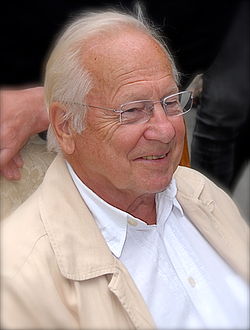
Lars Ingvar Hirdwall (5 December 1934 – 6 April 2023) was a Swedish actor.[1] In Sweden he is best known for his role in the Martin Beck film series; internationally he was perhaps best known for his role as the lawyer Dirch Frode in the Millennium films.

Key Information

Characters

[edit]

One of the country's most prolific stage and film actors, he is probably most widely recognised for his two heterogeneous roles in the Martin Beck universe; as the eponymous killer in Bo Widerberg's The Man on the Roof in 1976,[2] and the recurrent role as "The Neighbor" in the mass produced film series, a rambunctious raconteur who frequently interacts with the titular police investigator for the purpose of comic relief.[3] He also had a role in the film adaptation of Stieg Larsson's Millennium series as the lawyer Dirch Frode, and starred as various colourful characters in Lars Molin's comedies.[4]

Career

[edit]

Hirdwall was born in Stockholm, and was educated at Gothenburg City Theatre stage school 1957–1960. [5] Since the early 1960s he has been active as an actor in many films and TV series and on theatrical stages, mainly the Stockholm City Theatre. [6] He also worked at Oscarsteatern, with productions like West Side Story.[7] As well as Chinateatern, with the play "Revisorn" alongside his Beck-lead Peter Haber. [8] He is well known in Sweden, often portraying obstinate or strange characters. His most well-recognised role in his closing decades was as the eccentric “The Neighbor”, a rambunctious raconteur living next to the eponymous homicide investigator Martin Beck and often providing comic relief, and occasionally (unintentionally) vital insights, in the many Martin Beck TV movies made from 1997 into the 2020s.[5] He was also often in director Lars Molin's productions. In December 1993, Hirdwall played the leading role in the Swedish TV company SVT's annual children's Christmas "Advent calendar" – Tomtemaskinen (The mechanical Santa), one of the Pettson and Findus stories by Sven Nordqvist – with one 15-minute part shown each day until Christmas Eve. Hirdwall played the character of Pettson.[9]

Hirdwall received the Swedish Guldbagge Award for Best Actor at the 17th Guldbagge Awards for Barnens ö (Children's Island)[1] and the Thaliapriset prize in 1993.[10]

His last film role was "The Neighbour" in the film "Beck – Deadlock", which was released to the TV4 streaming service C More on 22 July 2023.[11]

Family and death

[edit]

Hirdwall was married to the actress Marika Lindström. They had two children, director Jacob Hirdwall and actress Agnes Hirdwall.[12]

Hirdwall died on 6 April 2023, from an act of suicide, at age 88.[13][14]

Selected filmography

[edit]

Source:[15]

References

[edit]
[edit]
Revisions and contributorsEdit on WikipediaRead on Wikipedia
from Grokipedia
Lars Ingvar Hirdwall (5 December 1934 – 6 April 2023) was a Swedish celebrated for his versatile and prolific contributions to , television, and stage throughout a career spanning over six decades. Born in , Hirdwall trained at the Gothenburg City Theatre stage school from 1957 to 1960, after which he became active in the early 1960s, primarily at Stockholms stadsteater, where he performed in numerous theatrical productions. His breakthrough came with early roles such as Sixten in Raven's End (1963) and Jens Mattsson in För vänskaps skull (1965), establishing him as a skilled portrayer of complex, often obstinate or eccentric characters. Hirdwall's television work gained widespread acclaim in Sweden through his recurring role as the quirky neighbor Grannen in the long-running series (1997–2023), appearing in over 40 episodes and embodying the character's distinctive neck brace and peculiar mannerisms. Internationally, Hirdwall achieved recognition for his role as the lawyer Dirch Frode in the 2009 Swedish film adaptation of The Girl with the Dragon Tattoo, directed by . Other notable film performances include Åke Eriksson in The Man on the Roof (1976), in Daybreak (2003)—for which he won a for Best Supporting Actor in 2004—and the lead role of Tomas Fryk in Children's Island (1980), earning him the Guldbagge for Best Actor at the 17th in 1981. He also received the Thaliapriset theater award in 1993 for his contributions to Swedish stage acting. In addition to his professional achievements, Hirdwall was married to actress Marika Lindström and had three children, including director Jacob Hirdwall and actress Agnes Hirdwall.

Early Life and Education

Birth and Upbringing

Lars Ingvar Hirdwall was born Lars Ingvar Eriksson on December 5, 1934, in S:t Görans församling, , . His family later adopted the surname Hirdwall after the street Hirdvägen where they lived. Hirdwall grew up in a working-class family in the Norra Ängby suburb of , a planned development that emerged in as part of 's early social housing initiatives. His childhood unfolded during and 1940s, a period marked by the Great Depression's lingering effects and , though 's neutrality spared it direct conflict; the nation faced economic challenges, rationing, and the gradual buildup of its , which emphasized and like Norra Ängby. In this modest socioeconomic environment, Hirdwall attended local schools before training as an , a practical reflecting the era's focus on skilled labor amid Sweden's industrial growth and post-war reconstruction efforts.

Acting Training

Ingvar Hirdwall first attended "Hampe" Faustmans Stockholms Teaterskola for one term before enrolling in the drama school (elevskola) at City Theatre in 1957, marking the beginning of his formal after initial theater exposure in . The three-year program from 1957 to 1960 provided intensive training in , voice, movement, and character development, typical of mid-20th-century Swedish theater , which emphasized classical techniques alongside emerging modern approaches. During his studies, Hirdwall advanced to premiärelev status in 1959, the highest rank, reflecting his dedication and skill. A key influence emerged in his fervent admiration for Konstantin of realistic , which shaped his approach to emotional depth and psychological realism in performances. He gained practical early experience through productions and rehearsals at the theater, honing his abilities in work and under the guidance of the school's faculty. Upon completing his training in 1960, Hirdwall secured an engagement with City Theatre, transitioning directly to professional status. His debut came that same year in the production of Arnold Wesker's (Rötter), where he portrayed a supporting role that showcased his emerging versatility in ensemble drama. This initial appearance was followed by a notable role in Ingmar Bergman's (Resan) in 1962, further solidifying his foundation in professional theater.

Career

Theater Work

Ingvar Hirdwall began his stage career after completing acting training at the City Theatre stage school from 1957 to 1960, initially joining Göteborgs stadsteater where he remained engaged from 1960 to 1979 as a prominent ensemble member in the innovative group theater led by figures like Kent Andersson. From 1973 until his death in 2023, Hirdwall maintained a primary affiliation with Stockholms stadsteater, contributing to nearly 30 productions over four decades and establishing himself as a cornerstone of the institution's ensemble. His theater work at Stockholms stadsteater showcased remarkable versatility across drama, comedy, and adaptations of both Swedish and international . Early in his tenure there, Hirdwall appeared in supporting roles such as the in and Hella Wuolijoki's Herr Puntila och hans dräng Matti (1985), directed by Staffan Valdemar Holm, blending comic timing with subtle social commentary. He gained widespread acclaim for his portrayal of George in John Steinbeck's Möss och människor (Of Mice and Men, 1987), directed by Fred Hjelm, a production that ran for an extended period and highlighted his ability to convey quiet intensity and emotional depth in ensemble-driven narratives. Hirdwall's collaborations with notable directors further underscored his adaptability, including Thommy Berggren's staging of Harold Pinter's Fastighetsskötaren (The Caretaker, 2001), where he embodied the enigmatic central figure with understated menace, and Leif Stinnerbom's direction of Vilhelm Moberg's Din stund på jorden (Your Moment on Earth, 2004), in which he took the lead as Albert Carlsson, a role he had long coveted for its exploration of ordinary resilience. Later leading roles demonstrated his command of introspective characters, such as the aging protagonist in Samuel Beckett's (Krapp's Last Tape, 2013), in Arthur Miller's (Death of a Salesman, 2015) directed by Björn Runge, and the title character in Moberg's Änkeman Jarl (Widower Jarl, 2009). His final stage appearance was as the Uncle in Federico García Lorca's Fröken Rosita (Miss Rosita) in 2023, capping a career that spanned Swedish classics like those of Strindberg and Ibsen alongside modern international works by Pinter and Beckett. Over time, Hirdwall's style evolved from collaborative ensemble performances in his early years to authoritative leading roles that often amplified the humanity in complex characters, earning praise for his naturalistic delivery and emotional authenticity. Critics lauded his capacity to make roles "larger than they were in the script" through subtle, radiant interpretations that resonated deeply with audiences. This recognition culminated in the Thaliapriset, Svenska Dagbladets prestigious theater award, bestowed upon him in 1993 for his outstanding contributions to Swedish stage acting. He also received Expressens teaterpris in 2003 for his portrayal of Big Daddy in Tennessee Williams's Cat on a Hot Tin Roof.

Film and Television

Ingvar Hirdwall transitioned to screen in the early , following his theater , where his stage-honed subtlety in portraying nuanced characters translated effectively to film and television. His debut came in 1963 with the role of Sixten in Bo Widerberg's Raven's End (Kvarteret Korpen), a working-class story set in 1930s that marked a significant entry into Swedish cinema. This was followed by supporting parts in films like För vänskaps skull (1965), a exploring and societal pressures, establishing his early presence in introspective Swedish narratives. Throughout the 1970s and 1980s, Hirdwall expanded into crime thrillers and family dramas, collaborating frequently with director Bo Widerberg. Notable among these was his portrayal of Åke Eriksson, a key witness, in the 1976 police procedural The Man on the Roof (Mannen på taket), Sweden's first modern crime film that influenced the genre's development in Scandinavian cinema. On television, he debuted prominently in the 1978 miniseries Hedebyborna, a rural drama series that showcased his ability to embody everyday Swedish life, and later starred as the lead in the 1993 children's holiday special Tomtemaskinen, a mechanical elf tale broadcast by SVT. Films such as Children's Island (1980), where he played a supportive adult figure in a coming-of-age story, further highlighted his versatility in youth-oriented dramas. By the 1990s and 2000s, Hirdwall became a staple in Swedish television, particularly in series, while continuing work across genres. He appeared in the long-running Beck franchise starting in 1997, contributing to 50 episodes and films as the eccentric neighbor Valdemar, a role that defined his screen persona in police procedurals directed by filmmakers like Harald Hamrell and Kjell Sundvall. In cinema, he featured in comedies like Miffo (2003) and dramas such as Goltuppen (Daybreak, 2003), blending humor with social commentary. Internationally recognized for his role as lawyer Dirch Frode in Niels Arden Oplev's 2009 adaptation of The Girl with the Dragon Tattoo, part of the Millennium Trilogy, Hirdwall bridged Swedish arthouse with global thrillers. Hirdwall's career in film and television spanned six decades, evolving from youthful supporting roles to authoritative character parts that often depicted obstinate or quirky everymen, contributing to the realism and depth of Swedish screen storytelling. His collaborations with directors like Widerberg emphasized social realism, while his genre-spanning work—from thrillers to family tales—solidified his status as a reliable fixture in Swedish media, influencing portrayals of ordinary citizens in crisis. In the 2010s and early 2020s, he continued in series like Wallander (2005–2013) and late Beck installments, including Beck – Dödlock (2023), maintaining his impact on contemporary Scandinavian television.

Notable Roles

Martin Beck Series

Ingvar Hirdwall was cast as Valdemar Grannen, the eccentric and grumpy neighbor to the titular detective in the Swedish crime television series , which premiered in 1997 and is adapted from the novels by and . His role as Grannen, a recurring character who frequently interacts with and his family, began in the first season and continued through multiple entries, appearing in 50 episodes across the series' run. Grannen is depicted as an obstinate, quirky retiree living next door, often providing humorous interruptions to Beck's investigations while offering grounded, everyday perspectives on the detective's personal life. Throughout the series, spanning from the late to the early , Hirdwall's portrayal of Grannen evolved from brief cameo-like appearances to more integral scenes that highlighted the character's loyalty and dry wit, particularly in episodes dealing with 's domestic tensions. Hirdwall infused the role with subtle warmth beneath the gruff exterior, using understated expressions and timing to balance the show's darker procedural elements, making Grannen a beloved fixture who humanized the otherwise stoic . This consistent characterization contributed to the series' enduring popularity, as Grannen's presence offered levity and continuity in a format known for its gritty realism. Hirdwall's performance as Grannen garnered significant acclaim in , where it became his most recognized role and solidified his public image as a master of eccentric supporting characters. Critics and fans praised how his interpretation added emotional depth and humor, enhancing the series' appeal and helping maintain high viewership over decades. Upon Hirdwall's death in 2023, tributes emphasized Grannen's iconic status, noting how the role "won our hearts" and defined his legacy in Swedish television. His final appearance in the 2023 episode "Beck – Deadlock" marked the end of an era for the character, underscoring the role's impact on the franchise's success.

Other Prominent Performances

One of Ingvar Hirdwall's most internationally recognized roles outside his long-running television work was as Dirch Frode in the 2009 Swedish film adaptation of The Girl with the Dragon Tattoo, directed by . In this thriller, based on Stieg Larsson's novel, Hirdwall portrayed the loyal family lawyer to industrialist Henrik Vanger, who hires disgraced journalist to investigate a decades-old disappearance. His performance as the composed, ethically conflicted Frode added depth to the film's exploration of corporate secrecy and personal vendettas, contributing to the Millennium Trilogy's global breakthrough, which grossed over $235 million worldwide and sold more than 5 million DVDs. Hirdwall's understated delivery grounded the high-stakes narrative, helping elevate the production's appeal to international audiences through its blend of and . In earlier cinema, Hirdwall delivered a chilling lead performance as Åke Eriksson, the titular sniper, in Bo Widerberg's 1976 crime thriller Man on the Roof. Eriksson, a disillusioned former policeman driven to vengeance against corrupt colleagues, embodies themes of institutional betrayal and vigilante justice in post-war Sweden; Hirdwall's intense portrayal of quiet rage culminates in a rooftop showdown that critiques police brutality and systemic flaws. The film, praised for its realistic depiction of urban tension, showcased Hirdwall's ability to convey psychological unraveling through subtle physicality. Hirdwall earned critical acclaim for his role as Stig Utler in Kay Pollak's 1980 drama Children's Island, winning the Guldbagge Award for Best Actor at the 17th Guldbagge Awards. Utler, a compassionate yet flawed adult figure, aids a young boy escaping family troubles on a remote island, highlighting themes of childhood innocence amid adult hypocrisy and societal neglect. Hirdwall's nuanced interpretation of quiet empathy and hidden vulnerabilities anchored the film's poignant coming-of-age story, marking a career highlight in his portrayal of morally complex everymen. In the 2003 ensemble drama Daybreak, directed by Richard Hobert, Hirdwall played Knut, an elderly husband in a rural Swedish community facing apocalypse-like isolation during a —for which he won a Guldbagge Award for Best in 2004. His character, alongside his wife Mona, seeks to barricade their home against perceived chaos, symbolizing generational fears of change and existential dread; Hirdwall's restrained performance infused the film's allegorical examination of human fragility with authentic emotional weight. Beyond film, Hirdwall had notable television roles that demonstrated his versatility in ensemble series. In the 1978-1982 SVT drama Hedebyborna, he portrayed the recurring character Skomakar-Ludde, a quirky shoemaker in a rural village, contributing to the show's satirical take on small-town life and community dynamics across multiple episodes. Later, in the 1989-1991 series Tre kärlekar, Hirdwall played Egon Nilsson, a steadfast entangled in post-World War II romantic and familial conflicts, in a recurring role that spanned 16 episodes and explored themes of love, loss, and resilience in mid-20th-century . In the 2009 miniseries Stormen, inspired by a real hurricane, he appeared as Bernt, a survivor grappling with disaster's aftermath, adding gravitas to the ensemble's depiction of human endurance. These parts, often award-nominated within Swedish television circles, underscored Hirdwall's range in portraying ordinary individuals amid extraordinary circumstances up through the 2010s.

Personal Life and Death

Family and Relationships

Ingvar Hirdwall was first married to and director Margita Ahlin from 1967 to 1972, with whom he had one son, Jacob Hirdwall, who later became a director and dramaturg at Dramaten. In 1975, Hirdwall married Marika Lindström, a long-term member of the City ensemble, and the couple remained together until his death nearly five decades later; they had one daughter, Agnes Hirdwall, who pursued a career as an . In public interviews, Hirdwall rarely delved into personal matters, emphasizing instead his dedication to work while noting a desire in later years for more family time amid his demanding theater schedule.

Death

Ingvar Hirdwall died on April 6, 2023, in , , at the age of 88. He passed away at his home on . His death was later confirmed to be by , as revealed by his widow, Lindström, in interviews discussing the stigma surrounding such topics. Lindström noted that while the cause was known to family, friends, and colleagues, it was not publicly addressed earlier due to the challenges of open conversation about , tying into her own work on a film exploring these issues. Immediate tributes poured in from the Swedish theater and film communities, highlighting Hirdwall's profound impact. SVT's CEO Hanna Stjärne described him as "one of the greatest," praising how he "played his way straight into the hearts of many Swedes" through his versatile performances. Colleagues and critics, including theater expert Claes Wahlin, mourned the loss of a master actor whose articulate, mumbling delivery defined iconic roles at venues like Stockholms stadsteater. Tributes continued on and in media outlets, with friends and peers emphasizing his warmth and enduring presence in Swedish culture. Posthumously, Hirdwall's legacy was reflected through memorials and the ongoing broadcast of his work. A funeral ceremony was held on May 15, 2023, at Eric Ericsonhallen on Skeppsholmen in . His final appearance as the eccentric neighbor in the series, in the episode "Deadlock," aired after his death, prompting renewed appreciation for his contributions. These reflections also underscored broader discussions on , as Lindström's public statements aimed to reduce stigma around in community.

References

Add your contribution
Related Hubs
User Avatar
No comments yet.