Hubbry Logo
search
logo

Internationalization

logo
Community Hub0 Subscribers
Read side by side
from Wikipedia

Internationalization or Internationalisation is the process of increasing involvement of enterprises in international markets, although there is no agreed definition of internationalization.[1] Internationalization is a crucial strategy not only for companies that seek horizontal integration globally but also for countries that addresses the sustainability of its development in different manufacturing as well as service sectors especially in higher education which is a very important context that needs internationalization to bridge the gap between different cultures and countries.[2] There are several internationalization theories which try to explain why there are international activities.

Entrepreneurs and enterprises

[edit]

Those entrepreneurs who are interested in the field of internationalization of business need to possess the ability to think globally and have an understanding of international cultures. By appreciating and understanding different beliefs, values, behaviors and business strategies of a variety of companies within other countries, entrepreneurs will be able to internationalize successfully. Entrepreneurs must also have an ongoing concern for innovation, maintaining a high level of quality, be committed to corporate social responsibility, and continue to strive to provide the best business strategies and either goods or services possible while adapting to different countries and cultures.

Trade theories

[edit]

Absolute cost advantage (Adam Smith, 1776)

[edit]

Adam Smith claimed that a country should specialise in, and export, commodities in which it had an absolute advantage.[3] An absolute advantage existed when the country could produce a commodity with less costs per unit produced than could its trading partner.[3] By the same reasoning, it should import commodities in which it had an absolute disadvantage.[3]

While there are possible gains from trade with absolute advantage, comparative advantage extends the range of possible mutually beneficial exchanges. In other words, it is not necessary to have an absolute advantage to gain from trade, only a comparative advantage.

Comparative cost advantage (David Ricardo, 1817)

[edit]

David Ricardo argued that a country does not need to have an absolute advantage in the production of any commodity for international trade between it and another country to be mutually beneficial.[4] Absolute advantage meant greater efficiency in production, or the use of less labor factor in production.[4] Two countries could both benefit from trade if each had a relative advantage in production.[4] Relative advantage simply meant that the ratio of the labor embodied in the two commodities differed between two countries, such that each country would have at least one commodity where the relative amount of labor embodied would be less than that of the other country.[4]

Gravity model of trade (Walter Isard, 1954)

[edit]

The gravity model of trade in international economics, similar to other gravity models in social science, predicts bilateral trade flows based on the economic sizes of (often using GDP measurements) and distance between two units. The basic theoretical model for trade between two countries takes the form of:
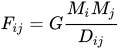
with:

: Trade flow
: Country i and j
: Economic mass, for example GDP
: Distance
: Constant

The model has also been used in international relations to evaluate the impact of treaties and alliances on trade, and it has been used to test the effectiveness of trade agreements and organizations such as the North American Free Trade Agreement (NAFTA) and the World Trade Organization (WTO).

Heckscher–Ohlin model (Eli Heckscher, 1966 & Bertil Ohlin, 1952)

[edit]

The Heckscher–Ohlin model (H–O model), also known as the factors proportions development, is a general equilibrium mathematical model of international trade, developed by Eli Heckscher and Bertil Ohlin at the Stockholm School of Economics. It builds on David Ricardo's theory of comparative advantage by predicting patterns of commerce and production based on the factor endowments of a trading region. The model essentially says that countries will export products that utilize their abundant and cheap factor(s) of production and import products that utilize the countries' scarce factor(s).[5]

The results of this work have been the formulation of certain named conclusions arising from the assumptions inherent in the model. These are known as:

Leontief paradox (Wassily Leontief, 1954)

[edit]

Wassily Leontief's paradox in economics is that the country with the world's highest capital-per worker has a lower capital:labour ratio in exports than in imports.

This econometric find was the result of Professor Wassily W. Leontief's attempt to test the Heckscher-Ohlin theory empirically. In 1954, Leontief found that the U.S. (the most capital-abundant country in the world by any criteria) exported labor-intensive commodities and imported capital-intensive commodities, in contradiction with Heckscher-Ohlin theory.

Linder hypothesis (Staffan Burenstam Linder, 1961)

[edit]

The Linder hypothesis (demand-structure hypothesis) is a conjecture in economics about international trade patterns. The hypothesis is that the more similar are the demand structures of countries the more they will trade with one another. Further, international trade will still occur between two countries having identical preferences and factor endowments (relying on specialization to create a comparative advantage in the production of differentiated goods between the two nations).

Location theory

[edit]

Location theory is concerned with the geographic location of economic activity; it has become an integral part of economic geography, regional science, and spatial economics. Location theory addresses the questions of what economic activities are located where and why. Location theory rests — like microeconomic theory generally — on the assumption that agents act in their own self-interest. Thus firms choose locations that maximize their profits and individuals choose locations, that maximize their utility.

Market imperfection theory (Stephen Hymer, 1976 & Charles P. Kindleberger, 1969 & Richard E. Caves, 1971)

[edit]

In economics, a market failure is a situation wherein the allocation of production or use of goods and services by the free market is not efficient. Market failures can be viewed as scenarios where individuals' pursuit of pure self-interest leads to results that can be improved upon from the societal point of view.[6] The first known use of the term by economists was in 1958,[7] but the concept has been traced back to the Victorian philosopher Henry Sidgwick.[8]

Market imperfection can be defined as anything that interferes with trade.[9] This includes two dimensions of imperfections.[9] First, imperfections cause a rational market participant to deviate from holding the market portfolio.[9] Second, imperfections cause a rational market participant to deviate from his preferred risk level.[9] Market imperfections generate costs which interfere with trades that rational individuals make (or would make in the absence of the imperfection).[9]

The idea that multinational corporations (MNEs) owe their existence to market imperfections was first put forward by Stephen Hymer, Charles P. Kindleberger and Caves.[10] The market imperfections they had in mind were, however, structural imperfections in markets for final products.[11]

According to Hymer, market imperfections are structural, arising from structural deviations from perfect competition in the final product market due to exclusive and permanent control of proprietary technology, privileged access to inputs, scale economies, control of distribution systems, and product differentiation,[12] but in their absence markets are perfectly efficient.[11]

By contrast, the insight of transaction costs theories of the MNEs, simultaneously and independently developed in the 1970s by McManus (1972), Buckley and Casson (1976), Brown (1976) and Hennart (1977, 1982), is that market imperfections are inherent attributes of markets, and MNEs are institutions to bypass these imperfections.[11] Markets experience natural imperfections, i.e. imperfections that are because the implicit neoclassical assumptions of perfect knowledge and perfect enforcement are not realized.[13]

New Trade Theory

[edit]

New Trade Theory (NTT) is the economic critique of international free trade from the perspective of increasing returns to scale and the network effect. Some economists have asked whether it might be effective for a nation to shelter infant industries until they had grown to a sufficient size large enough to compete internationally.

New Trade theorists challenge the assumption of diminishing returns to scale, and some argue that using protectionist measures to build up a huge industrial base in certain industries will then allow those sectors to dominate the world market (via a network effect).

Specific factors model

[edit]

In this model, labour mobility between industries is possible while capital is immobile between industries in the short-run. Thus, this model can be interpreted as a 'short run' version of the Heckscher-Ohlin model.

Traditional approaches

[edit]
The Porter diamond[14]

Diamond model (Michael Porter)

[edit]

The diamond model is an economical model developed by Michael Porter in his book The Competitive Advantage of Nations, where he published his theory of why particular industries become competitive in particular locations.[15]

The diamond model consists of six factors:[15]

  • Factor conditions
  • Demand conditions
  • Related and supporting industries
  • Firm strategy, structure and rivalry
  • Government
  • Chance

The Porter thesis is that these factors interact with each other to create conditions where innovation and improved competitiveness occurs.[15]

Diffusion of innovations (Rogers, 1962)

[edit]

Diffusion of innovation is a theory of how, why, and at what rate new ideas and technology spread through cultures. Everett Rogers introduced it in his 1962 book, Diffusion of Innovations, writing that "Diffusion is the process by which an innovation is communicated through certain channels over time among the members of a social system."[16]

Eclectic paradigm (John H. Dunning)

[edit]

The eclectic paradigm is a theory in economics and is also known as the OLI-Model.[17][18] It is a further development of the theory of internalization and published by John H. Dunning in 1993.[19] The theory of internalization itself is based on the transaction cost theory.[19] This theory says that transactions are made within an institution if the transaction costs on the free market are higher than the internal costs. This process is called internalization.[19]

For Dunning, not only the structure of organization is important.[19] He added three additional factors to the theory:[19]

  • Ownership advantages[17] (trademark, production technique, entrepreneurial skills, returns to scale)[18]
  • Locational advantages (existence of raw materials, low wages, special taxes or tariffs)[18]
  • Internalisation advantages (advantages by producing through a partnership arrangement such as licensing or a joint venture)[18]

Foreign direct investment theory

[edit]

Foreign direct investment (FDI) in its classic form is defined as a company from one country making a physical investment into building a factory in another country. It is the establishment of an enterprise by a foreigner.[20] Its definition can be extended to include investments made to acquire lasting interest in enterprises operating outside of the economy of the investor.[21] The FDI relationship consists of a parent enterprise and a foreign affiliate which together form a multinational corporation (MNC). In order to qualify as FDI the investment must afford the parent enterprise control over its foreign affiliate. The International Monetary Fund (IMF) defines control in this case as owning 10% or more of the ordinary shares or voting power of an incorporated firm or its equivalent for an unincorporated firm; lower ownership shares are known as portfolio investment.[22]

Monopolistic advantage theory (Stephen Hymer)

[edit]

The monopolistic advantage theory is an approach in international business which explains why firms can compete in foreign settings against indigenous competitors[23] and is frequently associated with the seminal contribution of Stephen Hymer.[24]

Prior to Stephen Hymer’s doctoral thesis, The International Operations of National Firms: A Study of foreign direct Investment, theories did not adequately explain why firms engaged in foreign operations. Hymer started his research by analyzing the motivations behind foreign investment of US corporations in other countries. Neoclassical theories, dominant at the time, explained foreign direct investments as capital movements across borders based on perceived benefits from interest rates in other markets, there was no need to separate them from any other kind of investment (Ietto-Guilles, 2012).

He effectively differentiated Foreign Direct Investment and portfolio investments by including the notion of control of foreign firms to FDI Theory, which implies control of the operation; whilst portfolio foreign investment confers a share of ownership but not control. Stephen Hymer focused on and considered FDI and MNE as part of the theory of the firm. (Hymer, 1976: 21)

He also dismissed the assumption that FDIs are motivated by the search of low costs in foreign countries, by emphasizing the fact that local firms are not able to compete effectively against foreign firms, even though they have to face foreign barriers (cultural, political, lingual etc.) to market entry. He suggested that firms invest in foreign countries in order to maximize their specific firm advantages in imperfect markets, that is, markets where the flow of information is uneven and allows companies to benefit from a competitive advantage over the local competition.

Stephen Hymer also suggested a second determinant for firms engaging in foreign operations, removal of conflicts. When a rival company is operating in a foreign market or is willing to enter one, a conflict situation arises. Through FDI, a multinational can share or take complete control of foreign production, effectively removing conflict. This will lead to the increase of market power for the specific firm, increasing imperfections in the market as a whole (Ietto-Guilles, 2012)

A final determinant for multinationals making direct investments is the distribution of risk through diversification. By choosing different markets and production locations, the risk inherent to foreign operations are spread and reduced.

All of these motivations for FDI are built on market imperfections and conflict. A firm engaging in direct investment could then reduce competition, eliminate the conflicts and exploit the firm specific advantages making them capable of succeeding in a foreign market.

Stephen Hymer can be considered the father of international business because he effectively studied multinationals from a different perspective than the existing literature, by approaching multinationals as national companies with international operations, regarded as expansions from home operations. He analyzed the activities of the MNEs and their impact on the economy, gave an explanation for the large flow of foreign investments by US corporations at a time where they were incomplete, and envisioned the ethical conflicts that could arise from the increase in power of MNEs.

Non-availability approach (Irving B. Kravis, 1956)

[edit]

The non-availability explains international trade by the fact that each country imports the goods that are not available at home.[25] This unavailability may be due to lack of natural resources (oil, gold, etc.: this is absolute unavailability) or to the fact that the goods cannot be produced domestically, or could only be produced at prohibitive costs (for technological or other reasons): this is relative unavailability.[26] On the other hand, each country exports the goods that are available at home.[26]

Technology gap theory of trade (Michael Posner)

[edit]

The technology gap theory describes an advantage enjoyed by the country that introduces new goods in a market. As a consequence of research activity and entrepreneurship, new goods are produced and the innovating country enjoys a monopoly until the other countries learn to produce these goods: in the meantime they have to import them. Thus, international trade is created for the time necessary to imitate the new goods (imitation lag).[25]

Uppsala model

[edit]

The Uppsala model[27] is a theory that explains how firms gradually intensify their activities in foreign markets.[28] It is similar to the POM model.[29] The key features of both models are the following: firms first gain experience from the domestic market before they move to foreign markets; firms start their foreign operations from culturally and/or geographically close countries and move gradually to culturally and geographically more distant countries; firms start their foreign operations by using traditional exports and gradually move to using more intensive and demanding operation modes (sales subsidiaries etc.) both at the company and target country level.[30]

Updated Uppsala model

[edit]

The Updated Uppsala model[31] is a further progression of the original Uppsala model. Like the Uppsala model, the Updated Uppsala model is a theory that explains firm internationalization as a process of gradual commitment. However, instead of an increased commitment to other markets, the theory posits that firms commit to business networks.[32] Firms thereby utilize the established relationships with other firms to internationalize within their network, e.g. by localizing production at a foreign production site of the client.[33]

Learning portal model

[edit]

The Learning portal model [34] is a new theory that was originally developed to explain the emergence and catch-up of multinational firms from the emerging markets. The theory explains that latecomer firms (from both, advanced and emerging markets) can use springboarding strategies to leapfrog certain technological development stages and accelerate their catch‐up with incumbent leading firms in their industry. To do so, the catching-up firms establish learning portals in knowledge hubs to acquire knowledge and assets, which they exploit to compete in global markets.

Further theories

[edit]

Contingency theory

[edit]

Contingency theory refers to any of a number of management theories. Several contingency approaches were developed concurrently in the late 1960s. They suggested that previous theories such as Weber's bureaucracy and Frederick Winslow Taylor's scientific management had failed because they neglected that management style and organizational structure were influenced by various aspects of the environment: the contingency factors. There could not be "one best way" for leadership or organization.

Contract theory

[edit]

In economics, contract theory studies how economic actors can and do construct contractual arrangements, generally in the presence of asymmetric information. Contract theory is closely connected to the field of law and economics. One prominent field of application is managerial compensation.

Economy of scale

[edit]

Economies of scale, in microeconomics, are the cost advantages that a business obtains due to expansion. They are factors that cause a producer’s average cost per unit to fall as output rises.[35] Diseconomies of scale are the opposite. Economies of scale may be utilized by any size firm expanding its scale of operation.

Internalisation theory (Peter J. Buckley & Mark Casson, 1976; Rugman, 1981)

[edit]

Product life-cycle theory

[edit]

As first articulated by Raymond Vernon in 1966, a product goes through a life cycle consisting of four stages: "new product", "growth product", "maturity product" and "obsolescence product". The conditions in which a product is sold change over time and must be managed as it moves through this succession of stages. This is called product life cycle management. [36]

Transaction cost theory

[edit]

The theory of the firm consists of a number of economic theories which describe the nature of the firm, company, or corporation, including its existence, its behaviour, and its relationship with the market.

Ronald Coase set out his transaction cost theory of the firm in 1937, making it one of the first (neo-classical) attempts to define the firm theoretically in relation to the market.[37] Coase sets out to define a firm in a manner which is both realistic and compatible with the idea of substitution at the margin, so instruments of conventional economic analysis apply. He notes that a firm’s interactions with the market may not be under its control (for instance because of sales taxes), but its internal allocation of resources are: “Within a firm, ... market transactions are eliminated and in place of the complicated market structure with exchange transactions is substituted the entrepreneur ... who directs production.” He asks why alternative methods of production (such as the price mechanism and economic planning), could not either achieve all production, so that either firms use internal prices for all their production, or one big firm runs the entire economy. More recent work has added managerial cognition into the transaction cost theory framework to internationalization—for example, a 2025 study of Chinese SMEs found that top managers’ global mindset significantly influences their choice of export channel in conjunction with TCE considerations.[38]

Theory of the growth of the firm (Edith Penrose, 1959)

[edit]

While at Johns Hopkins, Penrose participated in a research project on the growth of firms. She came to the conclusion that the existing theory of the firm was inadequate to explain how firms grow. Her insight was to realise that the 'Firm' in theory is not the same thing as 'flesh and blood' organizations that businessmen call firms. This insight eventually led to the publication of her second book, The Theory of the Growth of the Firm in 1959.

See also

[edit]

References

[edit]
Revisions and contributorsEdit on WikipediaRead on Wikipedia
from Grokipedia
Internationalization is the process by which firms progressively increase their commitment to foreign markets, starting with low-risk activities like exporting and advancing to higher-involvement strategies such as wholly-owned subsidiaries or foreign direct investment.[1][2] This expansion seeks to leverage opportunities abroad, including access to larger customer bases, lower production costs, and resource acquisition, while navigating barriers like tariffs and regulations.[3] Key theories explaining firm internationalization include the Uppsala model, which posits gradual, experiential learning through incremental market entries to mitigate uncertainty, and John Dunning's eclectic paradigm (OLI framework), emphasizing ownership, location, and internalization advantages as drivers for choosing specific entry modes.[4][5] Empirical evidence supports these frameworks, showing that firms often internationalize in psychically close markets first before venturing further, though "born-global" firms challenge the incremental view by rapidly expanding from inception due to technological enablers like digital platforms.[6] Controversies arise over the universality of staged models, as data from emerging market multinationals indicate faster, asset-light strategies often yield higher initial success amid volatile global conditions.[7] While internationalization enables revenue diversification and competitive edge—evidenced by multinational corporations achieving up to 50% of sales from abroad—it carries substantial risks, including exposure to geopolitical instability, currency fluctuations, and cultural mismatches that contribute to high failure rates, with studies reporting over 60% of international ventures underperforming expectations.[8][9][10] Success hinges on rigorous assessment of host-country institutions and adaptive strategies, underscoring that causal factors like institutional voids in developing economies can amplify both opportunities and hazards beyond simplistic market-size narratives.[11]

Definition and Conceptual Framework

Core Definition and Scope

Internationalization denotes the strategic process whereby firms augment their engagement in foreign markets, extending operations beyond domestic boundaries to encompass exporting, licensing, joint ventures, or foreign direct investment (FDI). This progression often follows an incremental pattern, starting with low-risk export activities and escalating to resource-intensive commitments as firms accumulate experiential knowledge of international environments.[1] The concept, rooted in economic theory, emphasizes exploiting firm-specific advantages—such as proprietary technology or brand equity—in overseas contexts to achieve growth unattainable solely through national operations.[12] The scope of internationalization extends to multiple dimensions of firm behavior, including the breadth of market coverage (number of countries entered), depth of commitment (from arm's-length trade to integrated subsidiaries), and modes of entry tailored to host-country conditions. It involves navigating liabilities of foreignness, such as cultural distances and institutional variances, which empirical studies quantify through metrics like psychic distance indices influencing entry decisions.[13] For instance, manufacturing firms may prioritize FDI in proximate markets to minimize coordination costs, while service providers lean toward alliances to leverage local expertise. This framework contrasts with mere domestic scaling, as internationalization inherently demands adaptations in supply chains, compliance with tariffs (e.g., average global applied tariffs at 7.5% in 2023 per WTO data), and hedging against currency volatility.[3][14] At its core, internationalization's scope is bounded by causal factors like resource endowments and competitive pressures, rather than ideological imperatives, with success predicated on aligning entry strategies with verifiable comparative strengths—evidenced by data showing that firms with high R&D intensity internationalize faster via greenfield investments. Risks within this scope, including expropriation in unstable regimes, underscore the need for phased expansion, as abrupt overreach correlates with higher failure rates in cross-border ventures.[15][16] Internationalization, as a firm-level process, differs from globalization, which encompasses the macro-level integration of national economies through expanded cross-border flows of goods, services, capital, and information, driven by reductions in trade barriers and technological advances since the late 20th century.[17] While globalization reflects systemic worldwide interdependence—evidenced by the World Trade Organization's data showing global merchandise trade rising from $6.45 trillion in 2000 to $28.5 trillion in 2022—internationalization focuses on individual firms' incremental strategies to enter foreign markets, such as through exporting or foreign direct investment, often motivated by market-seeking or efficiency gains rather than global homogenization. This distinction is highlighted in Theodore Levitt's 1983 analysis, which contrasts multinational adaptation to local preferences (aligned with internationalization) against global standardization of products for uniform markets (a facet of globalization).[18] Unlike international trade, which denotes the aggregate exchange of goods and services between countries—quantified by metrics like the U.S. Census Bureau's reporting of $5.7 trillion in U.S. goods trade in 2023—internationalization pertains to the micro-level decisions and capabilities firms develop to engage in such trade, including overcoming psychic distance via experiential learning as per the Uppsala model. International trade can occur without firm internationalization (e.g., via intermediaries), but sustained participation typically requires firms to internationalize through ownership advantages or network building, distinguishing it from passive trade flows.[6] Internationalization also contrasts with offshoring and outsourcing, which are operational tactics rather than comprehensive processes. Offshoring involves relocating domestic activities (e.g., manufacturing) to lower-cost foreign locations to exploit factor price differences, as seen in U.S. firms shifting 2.5 million jobs overseas between 2000 and 2010 per Economic Policy Institute estimates, but it may not entail market entry or adaptation. Outsourcing delegates non-core functions to external providers, potentially domestic or international, prioritizing specialization over geographic expansion; for instance, a firm might outsource IT domestically without internationalizing, whereas internationalization integrates such moves into broader foreign market commitment.[19] These differ from internationalization's emphasis on psychic and institutional distance reduction for long-term foreign involvement, rather than mere cost arbitrage.[20] Multinational enterprise (MNE) status represents an outcome of advanced internationalization, where firms control value-adding activities in multiple countries, but not all internationalizing firms become MNEs—many remain export-focused without foreign subsidiaries.[21] Global integration, by contrast, implies coordinated worldwide operations treating markets as unified, often sacrificing local responsiveness, whereas internationalization typically preserves national responsiveness in early stages, evolving variably toward integration based on firm-specific advantages.[22] This nuanced progression underscores internationalization's firm-centric, path-dependent nature over static categorical labels.

Historical Evolution

Early Foundations in Trade and Mercantilism

Mercantilism emerged in Europe during the 16th century as an economic doctrine emphasizing state intervention to achieve a favorable balance of trade, whereby exports exceeded imports to accumulate precious metals like gold and silver, viewed as the primary measures of national wealth.[23] This approach built upon earlier medieval trade networks, such as those facilitated by Italian city-states and the Hanseatic League, but systematized international commerce through protectionist measures including tariffs, quotas, and subsidies for domestic industries.[24] Proponents argued that trade surpluses strengthened military and economic power, driving policies that restricted imports of manufactured goods while promoting exports of finished products.[25] Key figures shaped mercantilist implementation across nations. In England, Thomas Mun's 1621 treatise England's Treasure by Foreign Trade advocated for exporting more value-added goods and minimizing bullion outflows, influencing policies like the Navigation Acts of 1651, which mandated that colonial trade occur on British vessels to capture shipping profits and secure raw materials.[26] In France, Jean-Baptiste Colbert, appointed Controller-General of Finances in 1661, enforced Colbertism through royal monopolies, infrastructure investments, and bans on importing luxury textiles, aiming to foster self-sufficiency and export surpluses that reportedly increased French trade volumes by promoting industries like silk and glass.[25] Similar strategies in Spain and the Netherlands prioritized colonial exploitation, with the Dutch East India Company (VOC), chartered in 1602, exemplifying state-backed ventures that dominated spice trade routes and generated dividends averaging 18% annually for shareholders through fortified trading posts in Asia.[27] These policies laid foundational mechanisms for internationalization by institutionalizing cross-border economic expansion via chartered companies and colonial empires. The British East India Company, established in 1600, secured monopolies on trade with India and China, establishing factories and influencing local governance to ensure favorable terms, which by the 18th century controlled over half of global textile exports from Bengal.[27] Mercantilism's emphasis on colonies as captive markets and resource suppliers—evident in the triangular trade system involving Europe, Africa, and the Americas—created enduring international supply chains, though often enforced through naval power and exclusive privileges that limited competition.[23] This era's state-firm collaborations prefigured modern multinational operations, fostering technological adaptations like improved shipbuilding and accounting practices essential for sustained overseas engagement.[24] Critiques of mercantilism, later articulated by Adam Smith in The Wealth of Nations (1776), highlighted its zero-sum view of trade as inefficient, yet its practices undeniably expanded Europe's global economic footprint, with trade volumes rising as European powers captured an estimated 80% of world silver production through New World colonies by the mid-18th century.[28] By prioritizing national aggregates over individual efficiencies, mercantilism entrenched the causal link between domestic policy and international rivalry, setting precedents for subsequent theories of comparative advantage while revealing tensions between protectionism and mutual gains from exchange.[25]

20th Century Developments and Post-War Expansion

The early 20th century witnessed significant disruptions to international trade and firm expansion due to the World Wars and the interwar economic instability. World War I (1914–1918) severely curtailed global trade flows, with subsequent protectionist policies and the Great Depression (1929–1939) leading to a sharp contraction; world trade volume fell by approximately two-thirds between 1929 and 1933 amid rising tariffs and currency devaluations.[29] This period marked a retreat from pre-war liberalization, as nations prioritized domestic recovery over cross-border exchange, limiting firm internationalization to sporadic export activities rather than sustained foreign direct investment (FDI). Post-World War II reconstruction efforts catalyzed a reversal through institutional frameworks designed to stabilize and expand international economic relations. The Bretton Woods Conference in July 1944 established the International Monetary Fund (IMF) to oversee fixed exchange rates pegged to the U.S. dollar (itself convertible to gold) and the International Bank for Reconstruction and Development (IBRD, later World Bank) to finance postwar rebuilding, aiming to prevent the competitive devaluations and trade barriers of the 1930s.[30] Complementing this, the General Agreement on Tariffs and Trade (GATT) was negotiated in 1947 among 23 countries, committing signatories to reciprocal tariff reductions via negotiation rounds, which progressively dismantled protectionist barriers and fostered multilateral trade rules.[31] These institutions underpinned rapid post-war trade expansion, with world merchandise exports from non-communist countries surging 290% between 1948 and 1968, outpacing output growth and reflecting lower transport costs, stable currencies, and policy-induced openness.[32] GATT's early rounds, such as Geneva (1947) and Annecy (1949), achieved average tariff cuts of 35–40% on industrial goods, contributing to exports expanding eightfold in the decade following WWII—double the rate seen after World War I.[33] This era also saw world trade grow at over 8% annually in real terms through the 1950s and 1960s, driven by U.S.-led aid like the Marshall Plan (1948–1952), which disbursed $13 billion to Europe, stimulating demand and supply chain integration.[34] Firm-level internationalization accelerated concurrently, as U.S. and European companies leveraged technological advances in shipping, aviation, and communication to establish overseas subsidiaries. Multinational corporations (MNCs) proliferated, with U.S. FDI outflows rising from $11.8 billion in 1950 to $49.3 billion by 1967, often targeting European markets for market-seeking and efficiency motives amid host-country reconstruction.[35] This shift from arm's-length trade to internalized operations reflected firms' exploitation of monopolistic advantages, such as proprietary technologies, amid imperfect global markets, marking a transition toward vertically integrated international production networks.[36] Regional initiatives, including the European Coal and Steel Community (1951) and the European Economic Community (1957), further embedded internationalization by creating preferential trade zones that encouraged cross-border firm strategies.[37]

Late 20th to Early 21st Century Acceleration

The collapse of the Berlin Wall in November 1989 marked a pivotal geopolitical shift, facilitating the reintegration of Central and Eastern European economies into global markets and dismantling barriers to cross-border investment and trade that had persisted under Cold War divisions.[38] This event, combined with widespread economic liberalizations—such as China's ongoing reforms initiated in the late 1970s and accelerated in the 1990s, and India's dismantling of the License Raj in 1991—opened vast new markets and reduced state controls on foreign entry.[39] Consequently, global foreign direct investment (FDI) inflows to developing and transition economies surged, growing at an average annual rate of 23% from 1990 to 2000, reaching $215 billion by 2001.[40] Trade liberalization further propelled this acceleration through multilateral and regional agreements. The establishment of the World Trade Organization (WTO) in 1995, succeeding the General Agreement on Tariffs and Trade (GATT), codified lower tariffs and dispute resolution mechanisms, contributing to world merchandise trade volume expanding at an average of 4% annually from 1995 onward.[41] Regional pacts, including the North American Free Trade Agreement (NAFTA) in 1994 and the European Union's Single Market completion in 1992, amplified intra- and inter-regional flows. China's accession to the WTO in December 2001 exemplified this trend, integrating its manufacturing prowess into global supply chains and driving a spike in merchandise exports that outpaced global GDP growth, with world exports exceeding $16 trillion by 2008.[42][43] Technological advancements, particularly in information and communication technologies during the 1990s internet boom, lowered coordination costs for multinational firms, enabling "born global" strategies where companies pursued rapid international expansion from inception rather than incremental approaches.[44] Institutional harmonization, including strengthened intellectual property protections and reduced trade barriers, further incentivized outward FDI from emerging markets, with developing economies absorbing nearly half of global inflows by 2010.[45] Global FDI inflows peaked near $1.4 trillion in 2000 before a brief dip, reflecting this era's causal links between policy openness, market access, and firm-level adaptations that prioritized efficiency-seeking investments over traditional market-seeking ones.[46] By the mid-2000s, these dynamics had elevated FDI to over 5% of global GDP in peak years, underscoring a departure from prior decades' slower, more regionally confined internationalization patterns.[47]

Foundational Trade Theories

Absolute and Comparative Advantage

Absolute advantage refers to the ability of a country to produce a good or service using fewer resources or at a lower cost than another country, enabling it to specialize in that good for mutual benefit through trade.[48] This concept, introduced by Adam Smith in An Inquiry into the Nature and Causes of the Wealth of Nations published in 1776, argued that free trade allows nations to capitalize on productivity differences, increasing overall output and wealth without mercantilist restrictions.[49] Smith illustrated this by suggesting that if one country excels in manufacturing pins due to superior machinery and labor division, it should export pins while importing goods like woolens from partners better suited to agriculture, as specialization enhances efficiency across borders.[50] However, absolute advantage fails to explain trade when one country outperforms another in all goods, a scenario Smith did not fully resolve.[51] David Ricardo addressed this in On the Principles of Political Economy and Taxation in 1817 with the theory of comparative advantage, which posits that trade benefits arise from relative efficiencies measured by opportunity costs, even if a country has absolute disadvantage in every product.[52] Ricardo's model assumes constant returns, immobile factors like labor across sectors but mobile via trade, and focuses on labor as the sole input, demonstrating that specialization in the good with the lowest domestic opportunity cost allows both parties to consume beyond autarkic production possibilities.[53] Ricardo's seminal numerical example contrasted England and Portugal producing cloth and wine, using labor units as the measure:
CountryLabor for 1 unit clothLabor for 1 unit wine
England100120
Portugal9080
Portugal holds absolute advantage in both, requiring fewer labor hours per unit. Yet, England's comparative advantage lies in cloth (opportunity cost: 100/120 ≈ 0.83 wine units forgone vs. Portugal's 90/80 = 1.125), while Portugal's is in wine (lower relative cost). By specializing—England in cloth, Portugal in wine—and trading at terms between autarkic ratios (e.g., 1 cloth for 1 wine), both expand consumption: England gains wine beyond its 5:6 cloth-wine ratio, Portugal more cloth than its 9:8.[54][55] The distinction hinges on metrics: absolute advantage emphasizes total productivity (output per resource), justifying trade only where disparities exist, whereas comparative advantage prioritizes relative opportunity costs, explaining gains from specialization universally and underpinning arguments for unrestricted trade in internationalization.[56] This framework causally links domestic resource allocation to global exchange, fostering efficiency through division of labor across nations, though later models like Heckscher-Ohlin incorporated multiple factors and empirical trade patterns.[57] Empirical validations, such as post-1817 trade liberalizations correlating with specialization in lower-opportunity-cost sectors, support Ricardo's logic despite assumptions like perfect competition rarely holding.[58]

Factor Proportions and Heckscher-Ohlin Model

The factor proportions theory posits that differences in relative endowments of production factors—such as capital and labor—across countries determine patterns of international trade, with nations exporting goods that intensively employ their relatively abundant factors. This framework underpins the Heckscher-Ohlin model, formalized by Swedish economists Eli Heckscher in 1919 and Bertil Ohlin in 1933, which extends David Ricardo's comparative advantage by emphasizing factor endowments rather than productivity differences alone.[59][60] In the Heckscher-Ohlin model, trade arises from inter-country variations in factor supplies under assumptions including two countries, two goods, two factors (typically capital and labor), identical constant-returns-to-scale production technologies across nations, perfect competition, and no factor intensity reversals. The model predicts that a capital-abundant country will export capital-intensive goods and import labor-intensive ones, as encapsulated in the Heckscher-Ohlin theorem. Additionally, the factor-price equalization theorem states that free trade equalizes factor returns (e.g., wages and rents) across countries, assuming traded goods' prices converge and technologies are identical, thereby reducing incentives for factor mobility.[61][62] Empirical testing of the model has yielded mixed results, challenging its strong predictions. Wassily Leontief's 1953 analysis of 1947 U.S. trade data revealed that U.S. exports were more labor-intensive than imports, contradicting the expectation for a capital-abundant nation like the United States; this "Leontief paradox" prompted refinements such as incorporating human capital, where skilled labor counts as a capital-like factor, partially resolving the anomaly in later studies. Subsequent tests, including Daniel Trefler's 1995 examination of Heckscher-Ohlin-Vanek equations across 33 countries, found systematic deviations but supported weaker versions accounting for productivity differences and measurement errors.[59][63] Criticisms of the model highlight its limitations in explaining real-world trade, particularly intra-industry exchanges and trade driven by scale economies or demand similarities, which factor endowments alone do not capture. The assumption of identical technologies ignores technology gaps, while factor-price equalization rarely holds due to barriers like transportation costs and non-traded goods. Despite these, the model remains foundational for understanding how endowment-driven trade influences internationalization, as firms in endowment-rich countries gain comparative advantages in exporting intensive products, facilitating market expansion abroad.[61][59]

Gravity Model and Empirical Trade Flows

The gravity model of international trade analogizes bilateral trade flows to Newton's law of universal gravitation, positing that trade volume between countries i and j is directly proportional to their economic sizes—typically gross domestic product (GDP)—and inversely proportional to the geographical distance separating them.[64] Formulated as Fij=GMiMjDijF_{ij} = G \frac{M_i M_j}{D_{ij}}, where FijF_{ij} denotes trade flow, MiM_i and MjM_j represent economic masses (e.g., GDP), DijD_{ij} is distance, and GG is a constant, the model was first applied empirically by Jan Tinbergen in 1962 to analyze world trade patterns.[65] Tinbergen's estimation used 1959 data across 41 countries, demonstrating that the model captured key determinants of trade despite lacking initial theoretical microfoundations.[66] Empirically, the gravity model has shown robust explanatory power for bilateral trade flows, with log-linear specifications commonly estimated as ln(Tradeij)=ln(G)+αln(GDPi)+βln(GDPj)+γln(Distij)+ϵ\ln(Trade_{ij}) = \ln(G) + \alpha \ln(GDP_i) + \beta \ln(GDP_j) + \gamma \ln(Dist_{ij}) + \epsilon, where coefficients α\alpha and β\beta approximate 1, indicating trade elasticity near unity with respect to origin and destination GDP, and γ\gamma around -1, reflecting distance's deterrent effect.[67] Studies consistently find that distance reduces trade by 1-2% per 1% increase, explaining over 60% of variation in aggregate flows when augmented with factors like shared language, colonial ties, or regional trade agreements.[64] For instance, Head and Mayer's meta-analysis of over 3,000 estimates confirms distance elasticities averaging -1.1, underscoring transport costs, information barriers, and cultural differences as causal mechanisms.[68] In the context of internationalization, the model empirically validates patterns where proximate, larger economies dominate trade networks, as seen in intra-European Union flows exceeding predictions absent integration effects.[67] Multilateral resistance terms, formalized by Anderson and van Wincoop in 2003, address biases from unaccounted third-country influences, enhancing accuracy; post-correction, the model aligns gravity predictions with general equilibrium trade theory.[69] Recent applications, such as those usingCEPII's gravity database covering 1960-2020 data for 250+ countries, affirm its stability, with GDP elasticities holding across disaggregated sectors like manufacturing.[70] Despite critiques of ad hoc extensions, the model's enduring fit—rooted in causal frictions like shipping costs rising logarithmically with distance—provides a benchmark for assessing barriers to cross-border exchange.[65]

Firm-Level Explanations for Internationalization

Market Imperfections and Monopolistic Advantages

In the mid-20th century, Stephen Hymer's theory of foreign direct investment (FDI) emphasized market imperfections as the foundational rationale for firm-level internationalization, positing that multinational enterprises (MNEs) arise to exploit firm-specific monopolistic advantages that cannot be efficiently transferred through arm's-length mechanisms like licensing or exporting.[71] Hymer, in his 1960 dissertation, rejected neoclassical assumptions of perfect capital markets, arguing instead that FDI represents a deliberate strategy to internalize control over proprietary assets—such as superior technology, patents, branded products, or managerial expertise—in foreign markets where local firms lack equivalent capabilities.[72] These advantages stem from structural barriers like economies of scale, product differentiation, and barriers to entry, which create oligopolistic or monopolistic conditions domestically and enable the firm to overcome the inherent disadvantages of operating abroad, including cultural unfamiliarity and regulatory hurdles.[73] Market imperfections, in Hymer's framework, manifest in two primary forms: those in product markets, where information asymmetries and imitation risks prevent reliable external transactions, and those in capital markets, where exchange rate fluctuations and investor uncertainty discourage passive portfolio flows in favor of active control.[73] Firms thus internationalize via FDI to safeguard and leverage these advantages internally, reducing competition by establishing subsidiaries that replicate domestic market power abroad; for instance, a firm with a patented production process might establish a foreign plant to prevent knowledge leakage to competitors, rather than exporting or franchising.[71] This control-oriented approach explains why MNEs often cluster in industries with high research and development intensity, such as pharmaceuticals or automobiles, where proprietary knowledge yields sustained rents—evidenced by data from the 1960s showing U.S. FDI concentrated in sectors with above-average profit margins tied to intangible assets.[74] Empirical support for the theory emerged from disaggregated firm-level studies, which link monopolistic advantages to the choice of FDI over alternative entry modes; for example, analysis of U.S.-based multinationals in the post-World War II era revealed that affiliates possessing parent-firm technologies outperformed local rivals by 15-20% in profitability, attributable to internalized advantages amid imperfect knowledge markets.[74] However, the theory's emphasis on static advantages has faced scrutiny for underemphasizing dynamic capabilities or host-country factors, though it laid groundwork for later extensions like internalization theory by highlighting causal links between market failures and hierarchical governance in internationalization.[75] Overall, Hymer's model underscores that internationalization is not merely opportunistic but a response to imperfections that reward firms able to monopolize scarce resources across borders.[72]

Product Life-Cycle Theory

The Product Life-Cycle Theory, proposed by economist Raymond Vernon in 1966, posits that the evolution of a product's market position drives patterns of international trade and foreign direct investment (FDI) by innovating firms, particularly those in advanced economies like the post-World War II United States.[76] Vernon argued that new products emerge in high-income markets where demand for innovation is strong and production costs are elevated due to small-scale, flexible manufacturing tailored to uncertain consumer preferences. In this introductory stage, firms focus on domestic sales with minimal exports, as the product requires proximity to affluent buyers for feedback and customization; internationalization begins tentatively through limited foreign sales to similar high-income markets.[76] As the product matures into the growth phase, demand surges, production scales up, and exports expand significantly to other developed markets, capitalizing on the innovating firm's technological lead and monopolistic advantages in know-how. Vernon emphasized that this stage sustains the firm's competitive edge through high-volume output and incremental improvements, but rising foreign competition prompts defensive strategies; firms may license technology abroad or establish sales subsidiaries, marking early internationalization steps beyond pure exporting.[76] By the standardization phase, the product's design simplifies, quality becomes uniform, and production shifts toward cost efficiency via standardized processes amenable to lower-wage locations. Here, innovating firms internationalize aggressively through FDI in developing countries to exploit labor cost differentials and circumvent import barriers, reversing trade flows as the home market imports from these affiliates while exports decline.[76] This framework explains firm-level internationalization as a dynamic response to eroding innovation rents, where initial exporting gives way to FDI to internalize advantages and defend market share against imitators. Vernon drew on U.S. data from the 1950s-1960s, noting that over 60% of U.S. manufactured exports involved relatively new products less than 7.5 years old, underscoring the theory's empirical grounding in observed FDI surges for items like semiconductors and pharmaceuticals.[76] However, the model assumes a unidirectional flow from U.S.-led innovation to peripheral production, which empirical critiques highlight as outdated amid globalization; for instance, shortened innovation cycles—now often under 2 years for electronics due to rapid R&D diffusion—compress stages and enable emerging markets like South Korea to leapfrog into early-stage production via reverse engineering.[77] Additionally, the theory underemphasizes service innovations and born-global firms that internationalize from inception, as evidenced by software exports where standardization lags behind rapid digital dissemination.[78] Despite these limitations, the theory remains influential for predicting FDI in capital-intensive goods, with studies confirming its patterns in industries like automobiles, where Japanese firms followed U.S. precedents by maturing domestically before investing abroad in the 1970s-1980s.[79]

Eclectic Paradigm and Ownership-Location-Internalization

The eclectic paradigm, developed by British economist John H. Dunning, provides a comprehensive framework for explaining foreign direct investment (FDI) as a mode of internationalization by multinational enterprises (MNEs). First articulated in 1976 during a presentation at a Nobel Symposium and subsequently formalized in Dunning's 1977 and 1980 works, the paradigm synthesizes elements from industrial organization, location theory, and transaction cost economics to address why firms choose FDI over alternatives like exporting or arm's-length licensing.[80] It posits that FDI occurs when a firm possesses ownership advantages that can be most effectively exploited through location-specific advantages in foreign markets, combined with internalization advantages that favor hierarchical control over external transactions.[81] Ownership advantages refer to firm-specific assets, such as proprietary technology, branded products, managerial expertise, or economies of scale, that provide competitive edges transferable within the firm but difficult to sell or license without dissipation. These intangible assets, often generated domestically, enable MNEs to overcome the disadvantages of operating abroad, such as unfamiliarity with local conditions or cultural barriers. For instance, a firm's patented production processes or superior marketing capabilities represent ownership advantages that sustain profitability in international expansion. Empirical studies confirm that such firm-level competencies correlate positively with FDI propensity, as measured in datasets from the 1990s onward showing technology-intensive industries exhibiting higher outward FDI flows.[82][83] Location advantages encompass country-specific factors attracting FDI, including natural resources, labor costs, market size, infrastructure quality, and regulatory environments that reduce production or distribution costs relative to domestic operations. Dunning emphasized that these advantages must align with ownership assets; for example, resource-seeking FDI targets raw material endowments, while market-seeking FDI follows large consumer bases, as evidenced by U.S. firms' investments in Europe post-World War II to access growing demand. Quantitative analyses, such as gravity models augmented with OLI variables, demonstrate that host-country GDP and institutional stability significantly predict FDI inflows, with elasticities around 0.5-1.0 for market size in panel data from 1980-2010.[84][83] Internalization advantages arise from the benefits of retaining control over operations within the firm's boundaries to mitigate market failures, such as opportunistic behavior in licensing agreements or hold-up problems in supplier contracts. Drawing from transaction cost theory, this component explains preferences for wholly-owned subsidiaries over joint ventures when knowledge assets are tacit or prone to leakage; for example, pharmaceutical firms internalize R&D-intensive production to safeguard intellectual property. Cross-sectional regressions on FDI data from emerging markets in the 2000s support this, finding that high internalization incentives—proxied by asset intangibility—reduce reliance on contractual modes and increase equity-based investments by 15-20%.[85][86] The paradigm's explanatory power lies in its conditional logic: FDI is viable only if the sum of OLI advantages exceeds those of alternative entry modes, integrating prior theories like monopolistic advantages (Hymer, 1960) and product life cycles (Vernon, 1966) without assuming universal applicability. While early critiques noted its static nature and underemphasis on dynamic capabilities, extensions in Dunning's later works (e.g., 2001) incorporate alliance capitalism and institutional factors, enhancing robustness in explaining non-equity internationalization forms like strategic alliances. Empirical validations, including meta-analyses of 500+ studies up to 2020, affirm the OLI framework's predictive validity for MNE patterns, though causal inference remains challenged by endogeneity in firm-host interactions.[81][87]

Internationalization Process Models

Incremental Approaches and Uppsala Model

The incremental approach to firm internationalization posits that companies expand abroad gradually, starting with minimal resource commitments in nearby or similar markets before progressing to more distant or dissimilar ones, primarily to mitigate uncertainty through experiential learning. This perspective emphasizes the role of knowledge acquisition in reducing perceived risks associated with foreign operations, where firms accumulate market-specific insights via trial-and-error rather than comprehensive planning. Empirical studies of Swedish manufacturing firms in the 1970s revealed patterns of sequential entry, with initial exports to Nordic countries preceding ventures into linguistically and culturally distant markets like the United States.[88] The Uppsala Model, formalized by Jan Johanson and Jan-Erik Vahlne in 1977, provides a theoretical framework for this incremental process, drawing from longitudinal observations of Swedish enterprises' foreign activities conducted at Uppsala University. The model assumes that lack of foreign market knowledge generates uncertainty, prompting firms to adopt low-risk entry modes initially, such as sporadic exports, before escalating to higher commitments like sales subsidiaries or local production. Central to the framework is the concept of psychic distance, defined as factors inhibiting information flows between home and host markets—including cultural differences, language barriers, and economic disparities—which leads firms to prioritize proximate markets for easier knowledge transfer and lower perceived hazards.[88][89] At its core, the model delineates an establishment chain outlining progressive commitment levels: from irregular exporting of products, to organized exports via independent representatives, to establishing overseas sales subsidiaries, and ultimately to foreign manufacturing facilities. This sequence reflects a dynamic interplay between two state variables—market knowledge (experiential and objective) and current market commitment (resource allocation tied to foreign operations)—and two change mechanisms: commitment decisions (influenced by perceived opportunities and risks) and ongoing activities (which generate learning). Johanson and Vahlne proposed two key propositions: first, that increased foreign market knowledge, stemming from current activities, spurs commitment decisions; second, that heightened commitments positively affect activity levels, fostering further knowledge gains in a self-reinforcing cycle.[88][90] Supporting evidence from the model's empirical basis includes data on 28 Swedish firms across industries, showing that internationalization degree correlated with time and psychic proximity, with average establishment abroad occurring after 18 years of domestic operations. The framework's process-oriented ontology contrasts with static equilibrium models, highlighting path dependence where early choices constrain or enable subsequent expansions. While later revisions incorporated network influences and opportunity recognition, the original formulation underscores experiential knowledge as the primary driver of incrementalism, applicable to contexts of high uncertainty but less so in standardized global industries.[88][91]

Born-Global Firms and Rapid Internationalization

Born-global firms, alternatively termed international new ventures, represent a class of enterprises that engage in substantial international sales—typically at least 25% of total revenue—from inception or within two to three years of founding, bypassing traditional gradual expansion.[92] This phenomenon was first systematically documented by Michael Rennie in a 1993 McKinsey & Company analysis of Australian high-value-added manufacturing exporters, where small and medium-sized enterprises (SMEs) were observed deriving significant export income early, often within the first two years, due to niche product focus and global orientation.[93] Empirical definitions emphasize speed and scope, with firms internationalizing to multiple markets rapidly, contrasting sharply with incremental models like the Uppsala framework that predict psychic distance-based progression.[94] Key characteristics of born-global firms include limited initial resources, founder-driven international mindset, and emphasis on differentiated, knowledge-intensive offerings in sectors such as technology, biotechnology, and specialized manufacturing.[92] These entities leverage entrepreneurial capabilities, including superior product quality and targeted niches, to overcome resource constraints, often relying on global networks, prior expatriate experience of founders, and digital tools for market access rather than domestic market dominance.[95] Studies indicate prevalence in high-tech industries where innovation cycles are short and global demand is fragmented, with founders exhibiting proactive risk-taking and boundary-spanning orientations.[96] For example, a review of born-global attributes identifies orientations toward global markets, capabilities in rapid adaptation, and strategic actions like early alliances as core enablers.[97] Rapid internationalization in these firms is causally linked to exogenous shifts, including post-1980s globalization, falling communication and logistics costs, and information technology proliferation, which compress entry barriers and enable small-scale global coordination.[98] Empirical evidence from datasets in developed economies shows born-globals achieving export ratios exceeding 50% within three years in about 10-20% of innovative SMEs, though their incidence varies by industry and home market size—higher in open economies like Denmark or Israel.[99] Longitudinal analyses reveal dynamic capabilities, such as knowledge recombination and relational embedding, sustain post-entry growth in market spread and sales intensity, but also highlight vulnerabilities: while initial expansion correlates with higher revenue trajectories, survival rates lag traditional gradual internationalizers by 15-20% due to overextension risks.[100] Scholarly consensus, drawn from firm-level panels, affirms born-globals as a distinct but not universal path, with prevalence rising in digital eras yet constrained by causal factors like founder human capital over firm size alone.[93]

Network and Relational Perspectives

The network perspective conceptualizes firm internationalization as a process embedded in interconnected business relationships rather than isolated market entries or resource commitments. Developed by Jan Johanson and Lars-Gunnar Mattsson in their 1988 framework, it views firms as actors within industrial networks comprising suppliers, customers, competitors, and other intermediaries, where international expansion hinges on achieving a favorable "position" in foreign networks through mutual adaptations and interdependencies.[101] This contrasts with earlier models like Uppsala's emphasis on psychic distance and gradual commitment by prioritizing relational "insidership"—gaining legitimacy and access via established ties—over outsider status.[102] Firms' internationalization strategies vary by the interplay of three dimensions: the degree of internationalization of the firm itself (e.g., foreign sales ratio), the specific foreign market, and the surrounding network. In a low-internationalized network (e.g., domestically oriented suppliers and buyers), firms pursue an "extension" strategy by leveraging domestic network strengths abroad with minimal adaptation; conversely, in highly internationalized networks, "diversification" or "penetration" strategies involve deeper integration, such as forming alliances or acquiring positions to exploit opportunities.[103] These positions emerge from long-term interactions, where experiential knowledge accumulates through dyadic exchanges, enabling risk reduction and opportunity identification without formal market analysis.[104] The relational perspective complements this by focusing on the micro-dynamics of ties, emphasizing trust, commitment, and resource exchange in bilateral relationships as drivers of cross-border activities. Rooted in social exchange theory, it posits that strong relational bonds—built via repeated interactions—facilitate knowledge spillovers, co-development of offerings, and mitigation of opportunism, particularly in uncertain foreign contexts.[105] For instance, relational governance reduces transaction costs compared to arm's-length contracts, allowing firms to internalize advantages from partners' local insights. Empirical studies, such as those on Spanish wineries, demonstrate that business networks (e.g., distributor prestige) promote gradual internationalization by enhancing commitment levels (β = 0.36, p < 0.01), while social networks (e.g., client ties) accelerate processes for born-global firms by bypassing traditional stages (β = -0.25, p < 0.05).[105][106] A systematic review of 210 studies from 2010 to 2022 confirms networks' positive influence on internationalization speed, scope, and performance across individual (e.g., managerial ties), organizational (e.g., alliances), and national levels, primarily through resource access, trust-building, and capability enhancement.[107] However, outcomes depend on boundary conditions like firm age and host-market hostility; dense networks may constrain agility by locking firms into suboptimal paths, as evidenced in cases of over-reliance on ethnic ties in emerging markets.[11] This perspective has been applied to diverse contexts, including family firms and informal African enterprises, where relational embeddedness explains deviations from resource-based predictions.[108][109] Despite empirical support from qualitative case studies and surveys, quantitative causal evidence remains limited by endogeneity in network formation, prompting calls for longitudinal designs to isolate relational effects from firm heterogeneity.[107][110]

Empirical Evidence, Paradoxes, and Criticisms

Key Empirical Tests and Paradoxes

Empirical tests of the Uppsala internationalization model, originally derived from observations of Swedish firms in the 1970s, initially supported its predictions of gradual market entry based on psychic distance and incremental commitment building. Studies of manufacturing exporters showed firms typically progressed from low-commitment exports to psychically proximate markets before advancing to higher-commitment modes like subsidiaries in distant locations, with commitment levels increasing by an average of 10-20% annually in early phases.[88] However, meta-analyses of over 100 studies reveal inconsistent adherence, particularly in dynamic sectors; for example, only 40-50% of sampled firms followed the predicted psychic distance sequence, with deviations linked to industry-specific factors like technology intensity.[111] The rise of born-global firms has posed a central paradox to stage-based models like Uppsala, as these entities—often small, innovative startups—derive 25% or more of sales from foreign markets within three years of founding, defying expectations of slow, knowledge-accumulating expansion. Observed in sectors such as biotechnology and software, where firms like Skype achieved global reach in under two years post-2003 launch, this rapid path contradicts the model's emphasis on experiential learning to mitigate uncertainty, suggesting instead that pre-existing networks or digital scalability enable "ignorance-driven" success despite limited foreign knowledge.[112] Empirical surveys of over 300 SMEs indicate born-globals comprise 10-15% of new exporters in knowledge economies, with faster growth rates (up to 2x domestic peers) but higher failure risks (30-40% within five years), highlighting a trade-off between speed and stability not fully captured by incremental theories.[113] Tests of the eclectic (OLI) paradigm have yielded stronger predictive power for mode-of-entry choices, with ownership advantages (e.g., firm-specific technologies or brands) explaining 20-30% of variance in FDI decisions across datasets of 500+ multinational enterprises from 1990-2020. Location factors, such as host-country market size and policy incentives, combined with internalization benefits like protecting intellectual property, consistently predict preferences for wholly-owned subsidiaries over licensing, as evidenced in analyses of U.S. and European outward FDI flows where OLI alignment boosted entry likelihood by 15-25%.[114] Yet, paradoxes emerge in emerging-market multinationals, where state ownership dilutes pure ownership advantages, leading to "asset-seeking" FDI in developed markets despite theoretical emphasis on exploiting home-based assets; Chinese firms' $200+ billion in annual outbound M&A since 2010 exemplifies this, prioritizing resource acquisition over traditional O-specific edges.[83] A recurring empirical paradox across frameworks is the psychic distance anomaly, where firms frequently enter culturally or institutionally distant markets first—contrary to Uppsala's proximity bias—when high-growth opportunities outweigh perceived barriers; regression analyses of 1,000+ FDI cases from 1980-2015 found no significant negative correlation between psychic distance and entry probability in 60% of instances, attributed to global value chains reducing effective distances.[115] This challenges causal assumptions of distance as a uniform deterrent, revealing context-dependent effects where digital tools or alliances amplify reach, as seen in born-globals' 40% higher entry into non-proximate markets compared to traditional internationalizers.[116]

Performance Impacts and Causal Evidence

Empirical studies on the relationship between firm internationalization—measured by metrics such as foreign sales ratio, number of foreign subsidiaries, or geographic diversification—and performance outcomes like return on assets (ROA), Tobin's Q, or sales growth have yielded mixed results, with meta-analyses indicating a generally positive but modest average effect size of approximately r = 0.05 to 0.10 across multinational corporations (MNCs).[117] This correlation holds particularly for export-oriented internationalization and outward foreign direct investment (FDI), where firms expanding abroad often report higher productivity and profitability compared to domestic peers, as evidenced in panel data from emerging and developed markets.[118] However, the form of the relationship is frequently curvilinear, with an inverted U-shape predominant: moderate levels of internationalization enhance performance through scale economies and market access, but excessive diversification incurs costs from coordination complexities and cultural distances, leading to declining returns beyond an optimal threshold of 40-50% foreign sales ratio in many samples.[119] Causal inference remains challenging due to endogeneity, as higher-performing firms may self-select into internationalization rather than internationalization causing performance gains; dynamic panel estimations and instrumental variable approaches in recent studies often reveal bidirectional causality, but with stronger evidence that prior performance drives expansion decisions.[120] For instance, Granger causality tests on European firm panels from 2000-2020 indicate that lagged profitability and innovation metrics predict subsequent multinationality increases more robustly than the reverse, suggesting selection effects where only capable firms successfully internationalize.[121] Heterogeneity across firm types further complicates causality: born-global startups experience rapid performance uplifts from early internationalization via knowledge spillovers, while traditional MNCs face liabilities of foreignness that diminish net benefits unless moderated by firm-specific advantages like R&D intensity.[122] Resource-based analyses confirm that internalization of proprietary assets causally mediates positive impacts, as firms leveraging monopolistic advantages abroad outperform those without, per ownership-location-internalization framework extensions tested on global datasets.[123] Contextual moderators significantly influence outcomes, with meta-regressions showing stronger positive effects for larger firms (effect size r ≈ 0.12 for enterprises over 1,000 employees) and those from high-income home countries, where institutional support reduces entry barriers.[119] Industry competition also plays a role: in low-competition sectors, internationalization boosts ROA by 2-5 percentage points through market power extension, but in high-rivalry industries, it can erode margins due to intensified global pressures, as seen in longitudinal studies of manufacturing firms from 2010-2022.[124] Overall, while aggregate evidence supports net positive performance impacts under optimal conditions, causal claims require caution, as unobserved firm capabilities and reverse causality inflate apparent benefits in cross-sectional designs; rigorous quasi-experimental evidence, such as from policy shocks like trade liberalization, substantiates gains primarily for exporters with pre-existing competitive edges.[125]

Debates on Incremental vs. Non-Linear Paths

The debate on incremental versus non-linear paths in firm internationalization centers on whether expansion into foreign markets typically proceeds through gradual, knowledge-accumulating stages or via abrupt, high-commitment leaps that bypass traditional caution. Proponents of the incremental approach, rooted in the Uppsala model developed by Jan Johanson and Jan-Erik Vahlne in 1977, argue that firms mitigate uncertainties like psychic distance—differences in language, culture, and institutions—by starting with low-risk activities such as exporting to nearby markets before escalating commitments like foreign direct investment. This path emphasizes experiential learning, where each step builds networks and reduces perceived risks, aligning with bounded rationality and liability of foreignness theories. Empirical studies from the 1970s Swedish firms that informed Uppsala supported this, showing average internationalization timelines spanning years, with initial markets often within Europe for Nordic exporters.[126] Critics of strict incrementalism highlight non-linear paths observed in born-global firms, which achieve significant international sales—often over 25% within three years of inception—without sequential progression, as conceptualized by Knight and Cavusgil in 1996. These firms, prevalent in knowledge-intensive sectors like biotechnology and software, leverage global niches, digital tools, and entrepreneurial agility to enter distant markets rapidly, challenging Uppsala's risk-aversion assumption. For instance, a 2016 study of Polish firms found rapid internationalizers, including family-owned ones, averaged shorter entry times than incremental peers, attributing this to pre-existing global networks rather than gradual learning. Non-linear dynamics also encompass "yo-yo" patterns of multiple entries, exits, and re-entries, as evidenced in serial internationalizers facing volatile environments, contradicting unidirectional progression.[127][128] Reconciling these views, revised Uppsala frameworks incorporate non-linearity by relaxing linearity assumptions, positing that commitment decisions can accelerate under high opportunity recognition or low perceived uncertainty, as in platform economies where data-driven scaling diverges from gradualism. Yet, empirical paradoxes persist: while born-globals demonstrate viability—comprising up to 10-20% of new ventures in OECD countries per 2020 analyses—they often underperform incrementally matured firms in long-term survival, with failure rates elevated due to overextension, per a 2021 review questioning their incompatibility with risk thresholds. Critics of born-global exceptionalism argue many such firms exhibit hidden incrementalism in product adaptation or partnerships, suggesting non-linearity as context-specific rather than paradigmatic. Overall, evidence indicates path choice correlates with firm age, industry turbulence, and institutional voids, with emerging market multinationals blending both amid accelerated globalization post-2000.[129][130][126]

Contemporary Dynamics and Challenges

Digital Platforms and Accelerated Expansion

Digital platforms, such as e-commerce marketplaces and cloud-based services, have enabled firms to achieve rapid internationalization by minimizing traditional entry costs associated with physical infrastructure, local partnerships, and market-specific knowledge acquisition. Unlike conventional incremental approaches, these platforms allow even resource-constrained small and medium-sized enterprises (SMEs) to access global customers directly, often from inception, through scalable digital interfaces that facilitate real-time transactions and data-driven targeting. For example, platforms like Alibaba and Amazon provide tools for cross-border selling, logistics integration, and customer analytics, compressing timelines from years to months for market penetration.[131][132] Empirical research on digital platform firms (DPFs) demonstrates irregular and accelerated expansion patterns, with firms internationalizing without heavy reliance on prior experiential learning or psychic distance considerations central to earlier models. A study of inexperienced digital entrepreneurs found that platform leverage enables swift global scaling despite limited resources, as digital tools substitute for traditional networks in knowledge gathering and opportunity identification. Born-global firms, in particular, exploit these platforms for immediate value delivery, with digital technologies shaping business models toward proactive cross-border operations from early stages. Longitudinal analyses of health app developers confirm platform-mediated project activities drive rapid internationalization via iterative global user feedback loops.[133][134][135] Cross-border e-commerce activity underscores this acceleration, with platforms transforming export dynamics for SMEs; global e-commerce sales reached approximately $4.8 trillion in projections for 2025, driven partly by SME participation in international marketplaces. In emerging markets, e-commerce adoption correlated with export growth exceeding 200% in select cases between 2020 and 2024, as platforms reduced intermediation costs and enabled direct foreign sales. However, while benefits include lower sunk costs for rapid entry, evidence also points to elevated exit risks for platform-dependent exporters due to intensified competition and platform algorithm dependencies. Systematic reviews of 61 studies from 2010–2023 highlight growing empirical support for platforms' role in non-linear paths but note gaps in long-term performance causal links.[136][137][138][139] Global foreign direct investment (FDI) declined by 11% to $1.5 trillion in 2024, marking the second consecutive year of contraction, primarily due to heightened geopolitical tensions, trade fragmentation, and competitive industrial policies among major economies.[140] This slowdown has constrained firm internationalization by elevating risks associated with cross-border investments, prompting multinationals to prioritize domestic or allied markets over expansive global footprints. World merchandise trade volume growth is projected at 2.4% for 2025, a modest rate reflecting policy-induced barriers rather than robust expansion, which limits opportunities for firms to leverage international markets for scale and efficiency.[141] Geopolitical conflicts, such as Russia's 2022 invasion of Ukraine, have amplified deglobalization through energy sanctions and supply disruptions, reducing Europe's FDI inflows by approximately 60% in 2024 compared to prior levels.[142] Similarly, the US-China trade war, initiated in 2018 with escalating tariffs, has driven partial decoupling, with China's share of US imports dropping from 22% in 2017 to 17% by 2022, as firms shifted sourcing to Vietnam (gaining 2.1 percentage points) and Mexico (gaining 2.0 percentage points) under friendshoring and nearshoring strategies.[143] [144] These shifts, while enhancing supply chain resilience against adversarial risks, have increased operational costs for internationalizing firms, with empirical models estimating that returning integration to 2000 levels could yield global GDP losses of 1.8% under friendshoring scenarios.[145] Protectionist measures, including US subsidies via the 2022 CHIPS and Inflation Reduction Acts, have accelerated reshoring of critical sectors like semiconductors, though such moves remain limited in scope, with US imports overall rising nearly 40% above pre-COVID levels by 2022, indicating incomplete deglobalization.[146] Geopolitical risk indices correlate with trade reductions of 30-40%, as heightened tensions suppress openness by deterring long-term commitments abroad and fostering regulatory unpredictability.[147] For firms, this manifests in cautious internationalization, with greenfield investments post-2018 increasingly favoring geopolitically aligned partners, though changes unfold gradually due to entrenched supply dependencies.[148] Broader trends point to fragmented globalization rather than outright reversal, with global growth forecasted to slow to 2.3% in 2025 amid rising trade barriers—the weakest non-recessionary performance in 17 years—exacerbating inflationary pressures and complicating firms' risk assessments for overseas expansion.[149] Policies like reciprocal tariffs could further contract world merchandise trade by 1.5% in 2025, underscoring how geopolitical fragmentation elevates entry barriers and erodes the causal incentives for incremental internationalization models.[150] Despite resilience in some flows, these dynamics compel firms to balance efficiency gains from internationalization against vulnerabilities from state-driven disruptions, often resulting in diversified but regionally concentrated strategies.[151]

Supply Chain Disruptions and Resilience Strategies

The COVID-19 pandemic, beginning in early 2020, exposed vulnerabilities in global supply chains integral to firm internationalization, as lockdowns in China and other manufacturing hubs led to widespread shortages of semiconductors, pharmaceuticals, and intermediate goods, reducing global industrial production by an estimated 1-2% in 2020-2021.[152] [153] These disruptions amplified economic shocks through international linkages, with U.S. firms experiencing magnified impacts due to reliance on foreign suppliers, prompting a reevaluation of extended internationalization strategies that prioritize cost over proximity.[154] Geopolitical events further compounded risks; the 2022 Russian invasion of Ukraine disrupted energy and grain supplies, while Houthi attacks in the Red Sea from late 2023 onward increased shipping costs by up to 300% on affected routes, delaying deliveries and raising input prices for internationalizing manufacturers dependent on just-in-time inventory models.[155] By 2024, global disruptions rose 38%, including factory fires and labor strikes, correlating with heightened costs that shifted firm expectations toward riskier future unit expenses and slowed cross-border expansion.[156] [157] In response, internationalizing firms have adopted supplier diversification to enhance resilience, empirically reducing the adverse effects of relational changes in supply networks on overseas market entry; for instance, outward foreign direct investment (OFDI) facilitates broader geographic sourcing, mitigating single-country dependencies as seen in post-2020 shifts away from concentrated Asian hubs.[158] [159] Strategies include multi-sourcing across regions, which lowers shutdown risks and supports sustained internationalization by balancing efficiency with redundancy, though trade-offs arise as diversified chains can increase coordination costs by 10-20% initially.[160] [161] Nearshoring and friend-shoring—relocating production to politically aligned or geographically closer partners—gained traction post-COVID, with European and U.S. firms reducing China reliance by 5-10% in key sectors like electronics by 2023, enabling faster adaptation to geopolitical volatility while preserving access to international markets.[162] [163] Digital technologies and visibility enhancements further bolster resilience, with firms integrating real-time monitoring and AI-driven predictive analytics to preempt disruptions, as evidenced by improved inventory management in diversified chains that "bounce forward" after shocks like the 2021 Suez blockage.[164] [165] Empirical studies confirm that such proactive measures, including tier-spanning partnerships, correlate with higher persistence for small and medium enterprises in international operations amid persistent risks.[166] [167] However, policy-induced diversification, such as subsidies for regional sourcing, must account for demand elasticities to avoid suboptimal outcomes, underscoring the causal link between resilient configurations and long-term internationalization viability over pure efficiency pursuits.[168]

Strategic and Theoretical Extensions

Transaction Costs and Internalization Theory

Transaction costs encompass the expenses associated with market exchanges, including information acquisition, bargaining, and policing contractual performance, which Ronald Coase identified in 1937 as key determinants of firm boundaries. Coase posited that firms exist to supplant market mechanisms when internal coordination costs fall below those of external transactions, particularly under conditions of uncertainty and specificity in assets. In international business, these costs amplify due to cross-border asymmetries in information, legal enforcement, and cultural barriers, rendering arm's-length dealings prone to opportunism and hold-up problems.[169][170] Internalization theory extends Coase's insights to explain multinational enterprise formation, as articulated by Peter Buckley and Mark Casson in their 1976 analysis. Firms internalize intermediate product markets—especially for firm-specific knowledge and technology—via foreign direct investment (FDI) when external markets exhibit imperfections, such as weak intellectual property protection or high agency risks in licensing. This approach favors hierarchical governance over exporting or contractual modes, as internalization mitigates dissipation of proprietary advantages and ensures efficient transfer of tacit capabilities across borders. Unlike domestic transaction cost applications, internalization theory emphasizes international market failures, including spatial frictions and policy distortions, which elevate the premium on ownership control.[171][172] In the internationalization process, transaction costs influence entry mode choices: low-cost tangible goods may rely on exporting to avoid setup expenses, while high-value intangibles prompt FDI to circumvent licensing hazards like premature disclosure or partner shirking. Empirical tests, such as comparisons of FDI versus non-FDI expansion gains, support this by showing superior returns for internalizing firms in knowledge-intensive sectors, though measurement challenges persist due to unobserved asset specificity. For instance, models demonstrate that FDI dominates licensing when technology transfer risks exceed coordination benefits, aligning with observed patterns where R&D-intensive multinationals exhibit higher foreign ownership shares. Internalization thus underscores causal realism in firm expansion, prioritizing governance structures that align incentives amid global imperfections over simplistic scale or market-seeking rationales.[173][174][175]

Scale Economies and New Trade Theory

New Trade Theory, developed in the late 1970s and 1980s, extends classical trade models by incorporating increasing returns to scale (economies of scale) and imperfect competition, explaining intra-industry trade and specialization patterns among similar economies that comparative advantage alone cannot account for. In these models, firms face downward-sloping average cost curves due to fixed costs in production or product differentiation, leading to monopolistic competition where each firm produces a unique variety.[176] International trade expands the effective market size, allowing firms to produce at lower average costs by spreading fixed costs over greater output volumes, which incentivizes export-oriented internationalization even absent factor endowment differences.[177] For multinational firms, economies of scale manifest at both plant and firm levels, but firm-level scale—arising from shared intangible assets like headquarters services, R&D, or managerial expertise—plays a pivotal role in motivating foreign direct investment (FDI) over pure exporting.[178] In equilibrium, multinationals form when trade costs (tariffs or transport) are high relative to market size, national incomes are elevated, and firm-level economies exceed plant-level ones, enabling cost-efficient replication of production across borders while centralizing scale-intensive activities.[179] This horizontal FDI strategy allows firms to serve foreign markets locally, avoiding trade frictions and achieving global scale without proportionally increasing plant-specific fixed costs, as modeled in frameworks integrating New Trade Theory with multinational production.[180] Empirical patterns align with these predictions: industries with pronounced firm-level scale economies, such as automobiles and electronics, exhibit higher multinational activity, where leading firms like Toyota or Intel leverage global operations to dilute R&D fixed costs—estimated at 5-10% of sales in high-tech sectors—across international plants.[178] However, plant-level scale limits fragmentation, as excessive dispersion raises coordination costs, constraining FDI to markets with sufficient demand to justify additional facilities.[181] These dynamics underscore how scale-driven internationalization enhances competitiveness but amplifies market concentration, with the top 10% of firms capturing disproportionate trade shares in scale-intensive goods.[182]

Innovation, Learning, and Future Directions

Internationalization facilitates innovation by exposing firms to diverse knowledge pools, market signals, and competitive pressures abroad, enabling recombinant capabilities that enhance product, process, and organizational innovations. A meta-analysis of 99 empirical studies across various contexts confirms a generally positive, albeit heterogeneous, effect of internationalization on firm innovation, with stronger impacts observed in knowledge-intensive sectors and through mechanisms like foreign market entry diversity.[183] For instance, multinational enterprises often leverage international R&D networks to accelerate innovation outputs, as evidenced by systematic reviews linking outward FDI and exports to increased patent filings and technological upgrades in emerging market firms.[184] [185] This relationship is bidirectional, with innovative firms self-selecting into internationalization to exploit global opportunities, though causal evidence underscores that breadth of international operations—measured by foreign sales ratios or subsidiary counts—drives subsequent innovative performance more than depth alone.[186] Organizational learning underpins these dynamics, as firms accumulate experiential knowledge through iterative international engagements, reducing liabilities of foreignness and fostering adaptive routines. Research employing complex systems models reveals reciprocal interactions among learning, innovation, and internationalization, where psychic distance and entry modes influence learning curves, but non-linear paths in born-global firms accelerate knowledge absorption via accelerated experimentation.[187] [188] Empirical studies on small and medium-sized enterprises (SMEs) indicate that collaborative innovation during internationalization enhances exploratory learning, moderated by the degree of market diversification, with unlearning prior routines proving critical to avoid path dependencies.[189] In emerging economies, state ownership can amplify learning benefits from internationalization by providing resource buffers, enabling firms to internalize foreign technological spillovers into domestic innovation ecosystems.[185] Future directions in internationalization theory emphasize integrating innovation and learning with emerging paradigms, such as dynamic capabilities frameworks that account for digital recombination and sustainability imperatives. Scholars advocate for longitudinal studies on R&D internationalization's role in open innovation, particularly how geopolitical fragmentation may shift learning toward resilient, localized networks rather than global hubs.[190] [191] Additionally, multilevel analyses incorporating executive internationalization experience highlight untapped potential in human capital's mediation of innovation efficiency, suggesting avenues for research on AI-augmented learning algorithms in global strategy formulation.[192] These trajectories prioritize causal identification through instrumental variable approaches to disentangle endogeneity, while addressing biases in prior datasets that overemphasize Western multinationals.[184]

References

User Avatar
No comments yet.