
Recent from talks
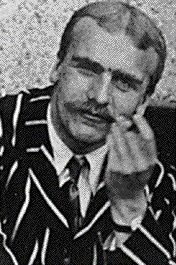
J. B. S. Haldane
Knowledge base stats:
Talk channels stats:
Members stats:
J. B. S. Haldane
John Burdon Sanderson Haldane FRS (/ˈhɔːldeɪn/; 5 November 1892 – 1 December 1964), nicknamed "Jack" or "JBS", was a British-born scientist who later moved to India and acquired Indian citizenship. He worked in the fields of physiology, genetics, evolutionary biology, and mathematics. With innovative use of statistics in biology, he was one of the founders of neo-Darwinism. Despite his lack of an academic degree in the field, he taught biology at the University of Cambridge, the Royal Institution, and University College London. Renouncing his British citizenship, he became an Indian citizen in 1961 and worked at the Indian Statistical Institute until his death in 1964.
Haldane's article on abiogenesis in 1929 introduced the "primordial soup theory", which became the foundation for the concept of the chemical origin of life. He established human gene maps for haemophilia and colour blindness on the X chromosome, and codified Haldane's rule on sterility in the heterogametic sex of hybrids in species. He correctly proposed that sickle-cell disease confers some immunity to malaria. He was the first to suggest the central idea of in vitro fertilisation, as well as concepts such as hydrogen economy, cis and trans-acting regulation, coupling reaction, molecular repulsion, the darwin (as a unit of evolution), and organismal cloning.
In 1957, Haldane articulated Haldane's dilemma, a limit on the speed of beneficial evolution, an idea that is still debated today. He is also remembered for his work in human biology, having coined "clone", "cloning", and "ectogenesis". With his sister, Naomi Mitchison, Haldane was the first to demonstrate genetic linkage in mammals. Subsequent works established a unification of Mendelian genetics and Darwinian evolution by natural selection whilst laying the groundwork for modern synthesis, and helped to create population genetics.
Haldane served in World War I, and obtained the rank of captain. He was a professed socialist, Marxist, atheist, and secular humanist whose political dissent led him to leave England in 1956 and live in India, becoming a naturalised Indian citizen in 1961. Arthur C. Clarke credited him as "perhaps the most brilliant science populariser of his generation". Brazilian-British biologist and Nobel laureate Peter Medawar called Haldane "the cleverest man I ever knew". According to Theodosius Dobzhansky, "Haldane was always recognized as a singular case"; Ernst Mayr described him as a "polymath" (as did others); Michael J. D. White described him as "the most erudite biologist of his generation, and perhaps of the century"; James Watson described him as "England's most clever and eccentric biologist", and Sahotra Sarkar described him as "probably the most prescient biologist of this [20th] century". According to a Cambridge student, "he seemed to be the last man who might know all there was to be known". He willed his body for medical studies, as he wanted to remain useful even in death.
Haldane was born in Oxford in 1892. His father was the Scottish physiologist, scientist, philosopher, and Liberal, John Scott Haldane, who was the grandson of evangelist James Alexander Haldane. His mother Louisa Kathleen Trotter, was a Conservative of Scottish ancestry. His only sibling, Naomi Mitchison, became a prominent Scottish writer. His uncle was Viscount Haldane and his aunt was the author Elizabeth Haldane. Descended from an aristocratic and secular family of the Clan Haldane, he later claimed that his Y chromosome could be traced back to Robert the Bruce.
Haldane grew up at 11 Crick Road, North Oxford. He learnt to read at the age of three, and at four, after injuring his forehead, he asked the physician treating him about the bleeding, "Is this oxyhaemoglobin or carboxyhaemoglobin?" He was raised as an Anglican Christian. From age eight he worked with his father in their home laboratory where he experienced his first self-experimentation, the method he would later be famous for. He and his father became their own "human guinea pigs", such as in their investigation on the effects of poison gases. In 1899, his family moved to "Cherwell", a late Victorian house at the outskirts of Oxford with its own private laboratory. At age 8, in 1901, his father brought him to the Oxford University Junior Scientific Club to listen to a lecture on Mendelian genetics, which had been recently rediscovered. Although he found the lecture given by Arthur Dukinfield Darbishire, Demonstrator of Zoology at Balliol College, Oxford, "interesting but difficult", it influenced him permanently such that genetics became the field in which he made his most important scientific contributions.
His formal education began in 1897 at Oxford Preparatory School (now Dragon School), where he gained a First Scholarship in 1904 to Eton College. In 1905 he joined Eton, where he experienced severe abuse from senior students for allegedly being arrogant, but was befriended by Julian Huxley. The indifference of authority left him with a lasting hatred for the English education system. However, the ordeal did not stop him from becoming captain of the school.
He participated for the first time in scientific research as a volunteer subject for his father in 1906. John was the first to study the effects of decompression (relief from high pressure) in humans. He investigated the physiological condition called "bends", such as when goats lift and bend their legs if discomforted, that also may affect deep-sea divers. In July 1906, on board HMS Spanker off the west coast of Scotland, Rothesay, young Haldane jumped into the Atlantic Ocean with the experimental diving suit. The study was published in a 101-paged article in The Journal of Hygiene in 1908; where Haldane was described as "Jack Haldane (age 13)" for whom it "was the first time [he] had ever dived in a diving dress". The research became a foundation for a scientific theory called Haldane's decompression model.
Hub AI
J. B. S. Haldane AI simulator
(@J. B. S. Haldane_simulator)
J. B. S. Haldane
John Burdon Sanderson Haldane FRS (/ˈhɔːldeɪn/; 5 November 1892 – 1 December 1964), nicknamed "Jack" or "JBS", was a British-born scientist who later moved to India and acquired Indian citizenship. He worked in the fields of physiology, genetics, evolutionary biology, and mathematics. With innovative use of statistics in biology, he was one of the founders of neo-Darwinism. Despite his lack of an academic degree in the field, he taught biology at the University of Cambridge, the Royal Institution, and University College London. Renouncing his British citizenship, he became an Indian citizen in 1961 and worked at the Indian Statistical Institute until his death in 1964.
Haldane's article on abiogenesis in 1929 introduced the "primordial soup theory", which became the foundation for the concept of the chemical origin of life. He established human gene maps for haemophilia and colour blindness on the X chromosome, and codified Haldane's rule on sterility in the heterogametic sex of hybrids in species. He correctly proposed that sickle-cell disease confers some immunity to malaria. He was the first to suggest the central idea of in vitro fertilisation, as well as concepts such as hydrogen economy, cis and trans-acting regulation, coupling reaction, molecular repulsion, the darwin (as a unit of evolution), and organismal cloning.
In 1957, Haldane articulated Haldane's dilemma, a limit on the speed of beneficial evolution, an idea that is still debated today. He is also remembered for his work in human biology, having coined "clone", "cloning", and "ectogenesis". With his sister, Naomi Mitchison, Haldane was the first to demonstrate genetic linkage in mammals. Subsequent works established a unification of Mendelian genetics and Darwinian evolution by natural selection whilst laying the groundwork for modern synthesis, and helped to create population genetics.
Haldane served in World War I, and obtained the rank of captain. He was a professed socialist, Marxist, atheist, and secular humanist whose political dissent led him to leave England in 1956 and live in India, becoming a naturalised Indian citizen in 1961. Arthur C. Clarke credited him as "perhaps the most brilliant science populariser of his generation". Brazilian-British biologist and Nobel laureate Peter Medawar called Haldane "the cleverest man I ever knew". According to Theodosius Dobzhansky, "Haldane was always recognized as a singular case"; Ernst Mayr described him as a "polymath" (as did others); Michael J. D. White described him as "the most erudite biologist of his generation, and perhaps of the century"; James Watson described him as "England's most clever and eccentric biologist", and Sahotra Sarkar described him as "probably the most prescient biologist of this [20th] century". According to a Cambridge student, "he seemed to be the last man who might know all there was to be known". He willed his body for medical studies, as he wanted to remain useful even in death.
Haldane was born in Oxford in 1892. His father was the Scottish physiologist, scientist, philosopher, and Liberal, John Scott Haldane, who was the grandson of evangelist James Alexander Haldane. His mother Louisa Kathleen Trotter, was a Conservative of Scottish ancestry. His only sibling, Naomi Mitchison, became a prominent Scottish writer. His uncle was Viscount Haldane and his aunt was the author Elizabeth Haldane. Descended from an aristocratic and secular family of the Clan Haldane, he later claimed that his Y chromosome could be traced back to Robert the Bruce.
Haldane grew up at 11 Crick Road, North Oxford. He learnt to read at the age of three, and at four, after injuring his forehead, he asked the physician treating him about the bleeding, "Is this oxyhaemoglobin or carboxyhaemoglobin?" He was raised as an Anglican Christian. From age eight he worked with his father in their home laboratory where he experienced his first self-experimentation, the method he would later be famous for. He and his father became their own "human guinea pigs", such as in their investigation on the effects of poison gases. In 1899, his family moved to "Cherwell", a late Victorian house at the outskirts of Oxford with its own private laboratory. At age 8, in 1901, his father brought him to the Oxford University Junior Scientific Club to listen to a lecture on Mendelian genetics, which had been recently rediscovered. Although he found the lecture given by Arthur Dukinfield Darbishire, Demonstrator of Zoology at Balliol College, Oxford, "interesting but difficult", it influenced him permanently such that genetics became the field in which he made his most important scientific contributions.
His formal education began in 1897 at Oxford Preparatory School (now Dragon School), where he gained a First Scholarship in 1904 to Eton College. In 1905 he joined Eton, where he experienced severe abuse from senior students for allegedly being arrogant, but was befriended by Julian Huxley. The indifference of authority left him with a lasting hatred for the English education system. However, the ordeal did not stop him from becoming captain of the school.
He participated for the first time in scientific research as a volunteer subject for his father in 1906. John was the first to study the effects of decompression (relief from high pressure) in humans. He investigated the physiological condition called "bends", such as when goats lift and bend their legs if discomforted, that also may affect deep-sea divers. In July 1906, on board HMS Spanker off the west coast of Scotland, Rothesay, young Haldane jumped into the Atlantic Ocean with the experimental diving suit. The study was published in a 101-paged article in The Journal of Hygiene in 1908; where Haldane was described as "Jack Haldane (age 13)" for whom it "was the first time [he] had ever dived in a diving dress". The research became a foundation for a scientific theory called Haldane's decompression model.
Recent media