Hubbry Logo
search
logo
409431

JNR Class C11

logo
Community Hub0 Subscribers
Read side by side
from Wikipedia

Class C11
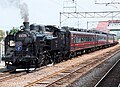
JR Hokkaido C11 207 hauling a Niseko tourist service in September 2014
Type and origin
Power typeSteam
DesignerHideo Shima
BuilderHitachi, Kisha, Kawasaki, Nippon Sharyo
Build date1932-1947
Total produced381
Specifications
Configuration:
 • Whyte2-6-4T
Gauge1,067 mm (3 ft 6 in)
Leading dia.860 mm (2 ft 10 in)
Driver dia.1,520 mm (5 ft 0 in)
Trailing dia.860 mm (2 ft 10 in)
Length12,650 mm (41 ft 6 in)
Width2,936 mm (9 ft 7.6 in)
Height3,900 mm (12 ft 10 in)
Loco weight66.05 t (72.81 short tons; 65.01 long tons)
Fuel typeCoal
Cylinders2
Cylinder size450 mm × 610 mm (18 in × 24 in) (bore × stroke)
Valve gearWalschaerts
Performance figures
Maximum speed60 mph (97 km/h)
Career
NumbersC11 1-C11 381
Retired1971-1975
Disposition52 preserved (6 operational), remainder scrapped

The Class C11 (C11形) is a type of 2-6-4T steam locomotive built by the Japanese Government Railways and the Japanese National Railways from 1932 to 1947. A total of 381 Class C11 locomotives were built and designed by Hideo Shima.[1]

Overview

[edit]

The Class C11 was based on the earlier 2-6-4T Class C10 type built in 1930.[1]

Preserved examples

[edit]

52 Class C11 locomotives are preserved, as listed below, with six in working order.[2]

Operational

[edit]
  • C11 123: Operated by Tobu Railway in Tochigi Prefecture. Operating as SL Taiju. It was originally numbered C11 1 on a private railway.
  • C11 171: Operated by JR Hokkaido and based at Asahikawa Depot[2]
  • C11 190: Operated by Oigawa Railway in Shizuoka Prefecture[2]
  • C11 207: Operated by Tobu Railway in Tochigi Prefecture. Operating as SL Taiju.
  • C11 227: Operated by Oigawa Railway in Shizuoka Prefecture.[2]
  • C11 325: Operated by Tobu Railway in Tochigi Prefecture. Operating as SL Taiju.

Static

[edit]

See also

[edit]

References

[edit]
Revisions and contributorsEdit on WikipediaRead on Wikipedia
from Grokipedia
The JNR Class C11 is a class of 2-6-4T side-tank steam locomotives designed as an improved and enlarged version of the earlier Class C10 for use on Japan's 1,067 mm (3 ft 6 in) narrow-gauge network.[1][2] A total of 381 locomotives were built for the Japanese Government Railways (JGR) and its successor, the Japanese National Railways (JNR), between 1932 and 1947 by manufacturers including Kawasaki, Kisha Seizo, Hitachi, and Nippon Sharyo, with an additional 20 units produced for private railways.[1][2] These versatile engines, weighing 65.85 tonnes in working order with a boiler pressure of 15 kg/cm² (213 psi) and driving wheels of 1,520 mm (5 ft) diameter, were primarily employed for freight, passenger, and mixed train services on branch lines, short-haul routes, and in urban areas across Japan, Sakhalin, and Korea until their withdrawal by 1975.[1][3] The Class C11 featured welded construction for lighter weight compared to riveted predecessors, enabling efficient operation in both forward and reverse directions without a tender, and included Walschaerts valve gear with 450 mm × 610 mm (18 in × 24 in) cylinders producing up to 1,067 horsepower.[1][4] The class addressed the need to replace aging imported locomotives from the 1890s with domestically produced, reliable machines suited to local lines and increasing transport demands. Production peaked during World War II to support wartime logistics, but post-war simplification of designs allowed continued manufacture until 1947.[2] In service, the C11s proved durable and adaptable, hauling trains on routes from Hokkaido to Kyushu and even exported units operating abroad until the 1960s; their maximum speed of 85 km/h (53 mph) and axle load of 12.31 tonnes made them ideal for lighter infrastructure.[1][3] Today, approximately 52 examples are preserved as of 2025, with six operational for tourist excursions, including C11 171 on JR Hokkaido's Kushiro Marsh route, C11 123, 207, and 325 on Tobu Railway's Kinugawa Line, and C11 190 and 227 at Oigawa Railway for themed events like Thomas the Tank Engine trains.[3][4] The remaining preserved units serve as static exhibits at sites such as Tokyo's Shimbashi Station and Okayama's Tsuyama Station, highlighting their role in Japan's steam era.[3]

Development and Design

Design Origins

The JNR Class C11 originated as an evolution of the Class C10, a 2-6-4T side-tank steam locomotive introduced in 1930 to modernize urban and suburban passenger services by replacing older units on Japan's 1,067 mm narrow-gauge network. While the C10 provided a compact Adriatic-type configuration suitable for branch lines and urban operations, its heavy weight of 69.7 tons imposed limitations in power and efficiency, particularly for mixed-traffic duties involving both passenger and light freight hauls, leading to its gradual replacement as electrification advanced in suburban areas.[5] Hideo Shima, who began his career as a locomotive designer for the Japanese Government Railways in 1925, played a central role in adapting the C10 design for the C11 to achieve better overall performance on the narrow-gauge system, including enhanced versatility for regional and secondary routes.[6] The C11 drew specific influences from earlier JGR tank locomotives, retaining the need for a compact 2-6-4T Adriatic arrangement to navigate tight curves and limited facilities on branch lines and urban services. Initial design goals emphasized increasing tractive effort to better handle freight requirements without sacrificing speed for passenger work, while the side-tank configuration ensured operational flexibility, such as bidirectional running without facility-dependent turning. These adaptations addressed the C10's shortcomings through lighter construction via welded rather than riveted assembly, enabling broader deployment across diverse Japanese lines.[1]

Key Design Features

The JNR Class C11 employed a 2-6-4T wheel arrangement, with leading and trailing wheels measuring 860 mm in diameter and driving wheels of 1,520 mm, which provided a balanced combination of speed capability and stability suitable for mixed freight and passenger service on Japan's 1,067 mm gauge lines. This configuration allowed for effective weight distribution, with the larger driving wheels enabling higher speeds on level terrain while the smaller leading and trailing wheels improved curve negotiation and reduced derailment risk.[7][1] The locomotive utilized Walschaerts valve gear, a proven system that ensured efficient steam distribution to the cylinders, minimizing steam waste and enhancing overall performance in coal-fired operations. Complementing this, the two outside cylinders had a bore of 450 mm and a stroke of 610 mm, dimensions optimized for reliable power output in the class's intended roles without excessive complexity.[8][1] Side water tanks with a capacity of approximately 6,800 liters flanked the boiler, paired with a coal bunker holding 3 tons, permitting extended operational runs of up to several hundred kilometers without frequent refueling stops. The steel frame supported a firebox boiler operating at 15 kgf/cm² (1.47 MPa), a design choice that maximized heating efficiency and adaptability to the narrow gauge while maintaining structural integrity under load. This boiler setup, with its distinctive square-topped firebox, contributed to improved steam production for sustained performance.[1][7] A key innovation in the C11's design was the adoption of welded construction in place of traditional riveting for certain components, which reduced overall weight compared to the predecessor C10 class and simplified assembly processes. Additionally, the side-tank arrangement was refined to minimize water contamination risks from coal dust or external debris, enhancing reliability and reducing maintenance demands in demanding environments. These features collectively distinguished the C11 as a versatile and robust tank locomotive for Japan's railway network.[1]

Production

Builders and Manufacturing

The JNR Class C11 locomotives were primarily constructed by four prominent Japanese industrial firms specializing in railway equipment: Hitachi at its Kasado Works, Kisha Seizo (later merged into Kawasaki Heavy Industries), Kawasaki at its Kobe facility, and Nippon Sharyo at its Atsuta Works.[9] These builders were selected by the Japanese Government Railways (JGR) for their established expertise in steam locomotive production, leveraging standardized blueprints to enable efficient mass production across multiple sites. For instance, Kawasaki's Kobe plant handled significant portions of the wartime batches, contributing to the overall output through coordinated efforts with the other manufacturers.[1][10] Manufacturing processes followed JGR-mandated designs derived from the earlier Class C10, emphasizing modular assembly to facilitate rapid production amid Japan's industrial landscape. Boilers were welded for lighter weight and efficiency, while wheels were forged using techniques adapted to local steel supplies, reflecting the sector's focus on reliability for narrow-gauge operations. From the wartime period, later batches (C11 247–381) featured square steam dome and sandbox covers to save materials. These modifications addressed material shortages, including steel and copper, without compromising core functionality, as overseen by JGR inspectors who ensured compliance during assembly at each builder's facilities.[11] Quality control was rigorously maintained through JGR's direct supervision at the builders' plants, involving on-site inspections of critical components like boiler welding and wheel forging to align with national standards suited to Japan's resource-limited environment. This oversight helped mitigate variations in build quality, particularly as production shifted from prewar precision engineering—characterized by high-grade alloys and detailed craftsmanship—to postwar efforts focused on rebuilding infrastructure with simplified methods and recycled materials. By 1947, these adaptations ensured the class's viability for continued service despite economic hardships following World War II.[12][13]

Production Timeline and Output

The production of the JNR Class C11 locomotives occurred over a 16-year period from 1932 to 1947, commencing with an initial series of prototypes to refine the design derived from the earlier C10 class and escalating in volume during World War II to address heightened military transportation demands. The locomotives were divided into informal batches, with the fourth batch (C11 247–381) incorporating wartime simplifications.[11][13][10] In total, 381 units were manufactured, assigned sequential numbers from C11 1 to C11 381 under the standard JNR classification system, without the establishment of formal subclasses despite minor design variations across production runs.[14][15] Key milestones included the construction of the first batch of 20 locomotives in 1932 by Kisha Seizō for evaluation and testing on light passenger services. Production output reached 82 units cumulatively from 1932 to 1935 across primary builders, before surging to approximately 150 locomotives between 1940 and 1945 as wartime logistics priorities accelerated manufacturing at facilities like Kawasaki and Nippon Sharyō.[16][17] Following Japan's surrender in 1945, the remaining orders were fulfilled in 1946 and 1947, with the final three units (C11 379–381) completed by Nippon Sharyō amid the constraints imposed by the Allied occupation, marking the end of steam locomotive production for this class.[18][19]

Operational History

Introduction and Early Use

The JNR Class C11 2-6-4T tank locomotives entered service in 1932, primarily deployed on branch lines in western Japan to replace older tank engines for mixed freight and passenger duties.[1] These versatile locomotives were built as an improved version of the preceding Class C10, with their design emphasizing compactness and power for regional operations, allowing effective service without the need for frequent tender refueling on shorter routes.[20] Early assignments focused on 1,067 mm (3 ft 6 in) narrow-gauge lines in the Kyushu and Chugoku regions, where the C11s hauled light freight consists and local passenger trains.[1] Capable of speeds up to 85 km/h (53 mph), they provided efficient transport on undemanding infrastructure, often operating in both forward and reverse directions to suit branch line layouts lacking turntables. The locomotives' lightweight construction, at 65.85 tonnes, minimized track wear while supporting typical loads of four to five passenger cars or equivalent freight.[1] By the late 1930s, deployments expanded to include eastern Japan and Hokkaido for similar mixed services. In peacetime operations during the 1930s, the Class C11 proved reliable for urban shunting yards and short-haul services, handling frequent starts and stops with a starting tractive effort of 10,400 kgf that adequately managed moderate gradients.[21] Their balanced performance contributed to smoother integration into the expanding JNR network, supporting daily commuter and goods movements before escalating wartime demands.[20] Over the first five years, operators noted opportunities for minor field adjustments, such as optimizations to firing and water management systems, which enhanced overall coal efficiency in routine use.[1]

Wartime and Postwar Service

During World War II, production of the Class C11 continued uninterrupted from 1932 until 1947, with the locomotives serving primarily as branch-line passenger engines on the Japanese Government Railways network to support essential transport needs.[21] These 2-6-4T tank locomotives were employed for both passenger and freight duties, particularly in western Japan, where they handled increased demands amid wartime conditions.[2] Following the war, the Class C11 emerged as the most prevalent tank engine on the Japanese National Railways (JNR), playing a vital role in the postwar era by hauling passenger, freight, and mixed trains on rural branch lines and short-distance urban routes throughout Japan. Some units had previously operated in territories such as Sakhalin and Korea during the wartime period.[21][3] As JNR transitioned toward diesel locomotives in the 1950s and 1960s, the C11s remained essential for freight operations, especially in rural regions where electrification progressed slowly, contributing to economic recovery efforts through reliable short-haul services.[3] In Hokkaido, units such as C11 171 and C11 207 operated on branch lines until the early 1970s, with regular service concluding around 1975 before some were repurposed for tourist excursions.[22][23] By the early 1950s, the class maintained a substantial active fleet, underscoring its enduring utility in reconstruction-era rail operations.[21]

Withdrawal and Legacy

Retirement Process

The retirement of JNR Class C11 locomotives formed part of the Japanese National Railways' comprehensive shift away from steam traction, driven by a modernization plan announced in 1959 to replace steam with diesel and electric motive power for greater efficiency and to accommodate rising traffic demands during Japan's post-war economic expansion. This process accelerated in the early 1970s as dieselization progressed on main lines, with C11 units beginning withdrawal from regular service in 1971; the class's total production of 381 locomotives meant many remained active on secondary routes amid the phased transition.[2] By the mid-1970s, the aging C11 fleet faced increasing maintenance challenges, including high costs for boiler upkeep and parts for pre-war designs, compounded by economic pressures such as the 1973 oil crisis that highlighted the inefficiencies of coal-dependent steam operations relative to diesel alternatives. The final phase focused on remote branches, particularly in Hokkaido, where electrification lagged and diesel adoption was slower; shunting and light freight duties persisted until the last units were retired in 1975. For instance, C11 171 was withdrawn on 25 June 1975 in the Kushiro region, marking one of the concluding operational cutoffs for the class on JNR networks. Of the 381 locomotives built, 52 have been preserved, with the remainder scrapped by 1976.[22] Overall, the retirement completed by 1975 aligned with JNR's broader elimination of steam from revenue service, as the last passenger run occurred on 14 December 1975 on Hokkaido's Muroran Line and shunting ended in March 1976, after which surviving C11s were either scrapped or repurposed outside regular operations.[20]

Cultural and Historical Significance

The JNR Class C11 stands as a symbol of Japan's interwar industrialization, representing the nation's push toward efficient rail infrastructure in the 1930s amid rapid economic modernization and expansion of narrow-gauge networks. Built primarily between 1932 and 1947, these locomotives exemplified resilient engineering adapted to resource-scarce conditions, serving critical roles in both passenger and freight transport during World War II when they supported military logistics and civilian mobility despite wartime shortages. Their durable design highlighted Japan's engineering prowess in overcoming infrastructural limitations, such as the 1,067 mm narrow gauge, which constrained heavier locomotives.[24] In popular culture, the Class C11 has evoked nostalgia for the steam era, appearing in media that romanticizes Japan's railway history. Notably, Oigawa Railway's operational C11 locomotives have been repurposed for collaborations with international franchises, such as repainting one as Thomas the Tank Engine since 2014, drawing global tourists and integrating into family-oriented events that blend heritage with entertainment. This has amplified the locomotive's presence in literature and animations focused on railway adventures, fostering a cultural appreciation for pre-electrification rail travel.[25][26] The Class C11 played a pivotal role in Japan's post-1970s preservation movement, igniting public interest in heritage railways as steam operations waned. Oigawa Railway's acquisition and restoration of a C11 in 1975, with first runs in 1976, marked the start of private steam excursions, evolving into regular tourist services by the 2000s and inspiring a nationwide boom in experiential rail tourism that sustains rural economies. These efforts transformed obsolete locomotives into cultural assets, promoting community involvement and historical education.[24] Today, the C11 represents the pinnacle of narrow-gauge steam engineering, informing studies on sustainable transport by demonstrating low-impact, localized mobility solutions amid global rail revivals. Heritage operations like those on Oigawa contribute to eco-friendly tourism, reducing reliance on automobiles through scenic, low-emission excursions that preserve biodiversity and cultural landscapes in mountainous regions.[26]

Preservation

Operational Examples

As of November 2025, five JNR Class C11 locomotives are preserved in operational condition, dedicated to heritage and tourist services across several Japanese railways. These units undergo rigorous maintenance protocols, including annual overhauls and boiler certifications, to ensure compliance with modern safety regulations while preserving their historical integrity.[1][27] Tobu Railway operates three Class C11 locomotives on its SL Taiju service, which runs along the Kinugawa Line and Nikko Line between Shimo-Imaichi and Kinugawa-Onsen stations, offering nostalgic excursions through scenic Tochigi Prefecture. C11 123, built in 1947 by Nippon Sharyo for private use, entered service in July 2022 after a multi-year restoration by Tobu to mark the company's 123rd anniversary; it primarily hauls the SL Taiju Futara variant.[28][29] C11 207, constructed in 1941 by Hitachi, has been in operation since August 2017 and alternates duties on the route, pulling consists of up to three vintage passenger cars for approximately 200 passengers per train.[28] C11 325, built in 1946 by Nippon Sharyo, joined commercial service in December 2020 after transfer from the Moka Railway and shares rotation on the Kinugawa lines, contributing to Tobu's fleet that supports year-round tourist operations with seasonal peaks.[28][30] JR Hokkaido maintains C11 171, built in 1940 by Kawasaki, as its sole operational steam locomotive, based at Asahikawa Depot for winter excursions. This unit powers the SL Fuyu-no-Shitsugen train, a seasonal service from January to February that traverses the 48 km Kushiro-Shibecha route through the snow-covered Kushiro Wetlands, operating on weekends and holidays to showcase Hokkaido's pristine winter landscapes.[31][32] Oigawa Railway in Shizuoka Prefecture runs one Class C11 locomotive for seasonal tourist services along its line through the Oi River valley, emphasizing environmental and historical themes with runs on weekends and holidays. C11 190, built in 1940 by Kawasaki Sharyō, remains active for these excursions, often paired with other preserved steam classes for themed trains like those tied to "Day Out with Thomas" events.[25] C11 227, built in 1942 by Nippon Sharyo, entered overhaul in late 2021 and remains out of service as of November 2025, with ongoing maintenance using parts from other preserved units in the railway's collection.[33][34] Operational usage for these locomotives is strictly limited to preserve their longevity, typically confined to tourist routes with speed caps around 40-60 km/h and annual mileages emphasizing reliability over volume, such as the short-haul winter runs for C11 171 or the frequent but inspected seasonal services at Oigawa and Tobu.[27][32]

Static Displays

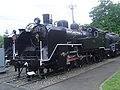
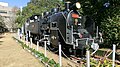
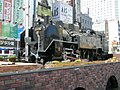
Of the 52 JNR Class C11 locomotives preserved overall, 47 remain as static displays as of 2025, serving as educational exhibits in museums, parks, and public spaces across Japan.[35] These static examples highlight the locomotive's role in local and branch line service, often with cosmetic restorations to maintain their historical appearance without full operational capability. Key displays are concentrated in major railway museums and regional parks. In the Kanto region, C11 1, the lead locomotive of the class built in 1932 by Kisha Seizo, is exhibited outdoors at Ome Railway Park in Tokyo, where it has been preserved since 1962 to commemorate Japan's railway heritage; the park features it alongside other steam-era rolling stock, though the site has been closed for renovations since 2023 and remains closed as of November 2025.[18] Similarly, C11 312, constructed in 1944 by Nippon Sharyo, stands as a static outdoor exhibit at KADODE OOIGAWA in Shimada, Shizuoka Prefecture, following its relocation in 2020 after serving as a parts donor for operational units; this display emphasizes the class's postwar utility in rural lines.[36] In Kyushu, several C11s are preserved in public sites evoking the region's industrial past, such as C11 145 at Mojiko Retro in Kitakyushu, Fukuoka Prefecture, where it is cosmetically restored and displayed outdoors to represent wartime freight operations on Kyushu lines; additional examples include C11 257 at Sarayama Park and C11 260 at Habu Park, both in Fukuoka, maintained with minimal restoration for local community viewing.[35] Hokkaido hosts northern examples, including C11 224 at Otaru City General Museum, preserved indoors since the 1970s to showcase early 20th-century coal-hauling service in the region's harsh climate; other Hokkaido displays like C11 65 at Akan Coal Mine Museum feature outdoor setups with protective coverings against weather.[35] Preservation efforts typically involve cosmetic restorations focusing on paint, plating, and structural integrity, with indoor displays in facilities like Kyoto Railway Museum—home to C11 64, built in 1935 by Kawasaki and housed in a climate-controlled roundhouse—offering better protection from corrosion compared to outdoor sites.[37] Some locomotives have been relocated for special events or site improvements, such as temporary moves to rail festivals, but most remain fixed. Coverage is incomplete for unrestored hulks in remote or private locations, like C11 218 at Haya Sohonten in Osaka, which shows visible deterioration from prolonged outdoor exposure without maintenance. No C11 units are currently on international loan, though domestic transfers between preservers occur periodically to aid conservation.[35]

References

User Avatar
No comments yet.