Hubbry Logo
19471947Main
Open search
1947
Community hub
1947
logo
8 pages, 0 posts
0 subscribers
Be the first to start a discussion here.
1947
1947
from Wikipedia

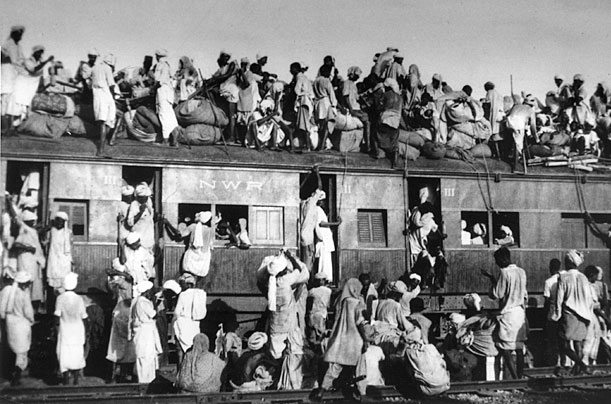
From top to bottom, left to right: The Partition of India creates India and Pakistan, sparking mass migrations, violence, and the Indo-Pakistani War of 1947–1948 over Kashmir; the Roswell incident and the 1947 flying disc craze fuel UFO speculation; the 1947–1948 civil war in Mandatory Palestine escalates after the UN Partition Plan for Palestine; the February 28 incident in Taiwan is violently suppressed, killing 18,000–28,000 and leading to decades of martial law; the Marshall Plan offers U.S. aid to rebuild Europe and counter Soviet influence; the Truman Doctrine commits the U.S. to support nations threatened by communism, marking the start of the Cold War; the Texas City disaster kills at least 581 people in a massive explosion; the Hachikō Line derailment kills 184 in Japan; and Jackie Robinson breaks Major League Baseball’s color barrier with the Brooklyn Dodgers.
1947 in various calendars
Gregorian calendar1947
MCMXLVII
Ab urbe condita2700
Armenian calendar1396
ԹՎ ՌՅՂԶ
Assyrian calendar6697
Baháʼí calendar103–104
Balinese saka calendar1868–1869
Bengali calendar1353–1354
Berber calendar2897
British Regnal year11 Geo. 6 – 12 Geo. 6
Buddhist calendar2491
Burmese calendar1309
Byzantine calendar7455–7456
Chinese calendar丙戌年 (Fire Dog)
4644 or 4437
    — to —
丁亥年 (Fire Pig)
4645 or 4438
Coptic calendar1663–1664
Discordian calendar3113
Ethiopian calendar1939–1940
Hebrew calendar5707–5708
Hindu calendars
 - Vikram Samvat2003–2004
 - Shaka Samvat1868–1869
 - Kali Yuga5047–5048
Holocene calendar11947
Igbo calendar947–948
Iranian calendar1325–1326
Islamic calendar1366–1367
Japanese calendarShōwa 22
(昭和22年)
Javanese calendar1878–1879
Juche calendar36
Julian calendarGregorian minus 13 days
Korean calendar4280
Minguo calendarROC 36
民國36年
Nanakshahi calendar479
Thai solar calendar2490
Tibetan calendarམེ་ཕོ་ཁྱི་ལོ་
(male Fire-Dog)
2073 or 1692 or 920
    — to —
མེ་མོ་ཕག་ལོ་
(female Fire-Boar)
2074 or 1693 or 921

1947 (MCMXLVII) was a common year starting on Wednesday of the Gregorian calendar, the 1947th year of the Common Era (CE) and Anno Domini (AD) designations, the 947th year of the 2nd millennium, the 47th year of the 20th century, and the 8th year of the 1940s decade.

It was the first year of the Cold War, which would last until 1991, ending with the dissolution of the Soviet Union.

Events

[edit]

January

[edit]
January 1: Nigeria gains autonomy.

February

[edit]

March

[edit]

April

[edit]

May

[edit]

June

[edit]

July

[edit]
'Flying Disc' photos published in Phoenix press on July 9

August

[edit]
Flag of Pakistan, the country that gained independence on August 14, 1947
Flag of India, the country that gained independence on August 15, 1947, and became the largest democracy in the world.

September

[edit]
The Central Intelligence Agency (CIA), officially born September 18, 1947

October

[edit]

November

[edit]

December

[edit]

Births

[edit]
Births
January · February · March · April · May · June · July · August · September · October · November · December

January

[edit]
David Bowie
Andrea Martin
Megawati Sukarnoputri
Michio Kaku
Jonathan Banks

February

[edit]
Farrah Fawcett
Yukio Hatoyama
Edward James Olmos
Lee Evans

March

[edit]
Rob Reiner
Kim Campbell
Mitt Romney
Glenn Close
Ali Abdullah Saleh
Sir Elton John

April

[edit]
John Ratzenberger
Florian Schneider
Tom Clancy
Kareem Abdul-Jabbar
James Woods
Iggy Pop
Johan Cruyff

May

[edit]

June

[edit]
Sir Jonathan Pryce
Ronnie Wood
Viktor Klima
David Blunkett
Robert Englund
Shirin Ebadi
Jerry Rawlings
Mick Fleetwood
Jimmie Walker

July

[edit]
Larry David
O. J. Simpson
Queen Camilla
Brian May
Carlos Santana
Albert Brooks
Su Tseng-chang
Françoise Barré-Sinoussi
Arnold Schwarzenegger

August

[edit]
Anwar Ibrahim
Cindy Williams
Temple Grandin
Somchai Wongsawat

September

[edit]
Kjell Magne Bondevik
Amos Biwott
Sir Sam Neill
Stephen King
Meat Loaf
Marc Bolan

October

[edit]
Brian Johnson
Sammy Hagar
Kevin Kline
Richard Dreyfuss
Herman Van Rompuy

November

[edit]
Joe Mantegna
Dwight Schultz

December

[edit]
Gregg Allman
Vincent Matthews
Porfirio Lobo Sosa
Ted Danson
Jeff Lynne

Date unknown

[edit]

Deaths

[edit]
Deaths
January · February · March · April · May · June · July · August · September · October · November · December

January

[edit]
Blessed Hryhoriy Khomyshyn
Blessed Maria Giovanna Fasce
Al Capone
Prince Gustaf Adolf, Duke of Västerbotten

February

[edit]
Petar Živković
Luigi Russolo
Joachim Ernst, Duke of Anhalt

March

[edit]
Carrie Chapman Catt

April

[edit]
King George II of Greece
Henry Ford
King Christian X of Denmark
Gheorghe Ciuhandu

May

[edit]
Miguel Abadía Méndez
George William Forbes

June

[edit]
Władysław Raczkiewicz
Richard Bedford Bennett

July

[edit]
Raoul Wallenberg
Patriarch Yousef VI Emmanuel II Thomas
Joseph Cook

August

[edit]
Blessed Claudio Granzotto
Prince Eugen, Duke of Närke

September

[edit]

October

[edit]
Max Planck

November

[edit]
Constantin Sănătescu
Blessed Josaphat Kotsylovsky
Ernst Lubitsch

December

[edit]
Stanley Baldwin
King Victor Emmanuel III of Italy

Date unknown

[edit]

Nobel Prizes

[edit]

References

[edit]
[edit]
Revisions and contributorsEdit on WikipediaRead on Wikipedia
from Grokipedia

1947 was a transformative year in the aftermath of , characterized by accelerated , the institutionalization of Cold War strategies by the , and major economic recovery initiatives for war-devastated . The partition of British India into the independent dominions of and on August 14–15 triggered widespread and mass migrations, resulting in large-scale loss of life and displacement. On March 12, President articulated the before Congress, pledging U.S. support to nations resisting communist subversion, initially aiding and with $400 million in assistance. This policy shift underscored America's emerging role in global affairs, prioritizing the containment of Soviet expansion through military and economic means.
In June, Secretary of State proposed a comprehensive aid program—later formalized as the —to rebuild Western Europe's economies, offering nearly $13 billion over four years to sixteen nations and averting potential communist takeovers amid postwar privation. The Act of July 26 restructured U.S. defense and intelligence apparatuses, establishing the (CIA) as an independent entity tasked with foreign intelligence coordination, the United States Air Force as a separate military service branch, alongside the and Department of Defense. Later that year, on November 29, the adopted Resolution 181, recommending the partition of into separate Jewish and Arab states, a decision that intensified regional tensions leading to the 1948 Arab-Israeli War. These developments collectively delineated the contours of a bipolar world order, with exposing ethnic fault lines and Western initiatives countering ideological threats from the Soviet bloc.

Events

January

On January 1, 1947, the United States and British occupation zones in post-war Germany merged economically to form the Bizone, aimed at streamlining administration and fostering recovery amid resource shortages and reparations demands from the Soviet Union. This integration covered approximately two-thirds of Germany's industrial capacity and population, setting the stage for separate economic policies from the Soviet zone and contributing to emerging East-West divisions. Also on January 1, the British government nationalized the coal industry under the Coal Industry Nationalisation Act 1946, transferring ownership of nearly 1,000 collieries and 700,000 workers to the state-run National Coal Board to address chronic production shortfalls, labor disputes, and wartime damage that had left the sector inefficient. In British India, commenced a peace march on January 2 through riot-torn areas of Noakhali in , seeking to mitigate Hindu-Muslim that had escalated since direct action campaigns the prior year; he urged local weavers to prioritize hand-spun yarn amid supply disruptions and addressed fears among Hindu communities regarding potential partition outcomes. The march, one of Gandhi's final major public efforts before , highlighted ongoing sectarian tensions that would culminate in mass migrations later in the year. President nominated General as U.S. on January 7, 1947, following the resignation of ; Marshall was confirmed by the on January 8 and sworn in on January 21, bringing his logistical expertise to foreign policy amid rising Soviet influence in Europe. His appointment preceded initiatives like the containment policy articulated later that year. On January 25, 1947, , the Chicago organized crime figure convicted of tax evasion in 1931, died at age 48 in his home from following a , exacerbated by untreated that had impaired his mental and physical health during his later years of seclusion. Capone's death marked the end of an era in Prohibition-era bootlegging and gang warfare, though his syndicate's structure persisted under successors.

February

On February 3, Percival L. Prattis became the first African American news correspondent accredited to the press galleries of the and , advancing opportunities for Black journalists in covering federal government proceedings. On February 12, French designer presented his debut collection, dubbed the "New Look," in , emphasizing feminine silhouettes with full skirts, nipped waists, and luxurious fabrics that contrasted with the utilitarian styles of World War II-era rationing and signaled postwar economic recovery in fashion. On February 17, the U.S. government's Voice of America radio service launched its first broadcasts aimed at the Soviet Union and Soviet-occupied Eastern Europe, delivering news and cultural programming in Russian as an early Cold War initiative to promote democratic values and counter communist propaganda amid rising East-West tensions. On February 28, the 228 Incident erupted in Taiwan when authorities arrested a female cigarette vendor in Taipei for unlicensed sales, prompting public intervention that escalated into clashes with police; this ignited province-wide protests by native Taiwanese against the Kuomintang regime's corruption, economic mismanagement, hyperinflation, and discriminatory policies favoring recent mainland Chinese migrants over locals, who had initially welcomed the Republic of China forces after Japanese colonial rule ended in 1945. The uprising, rooted in grievances over resource hoarding, black market dominance by officials, and suppression of Taiwanese elites, was crushed by Kuomintang troops under Chiang Kai-shek, who deployed reinforcements including naval and air units, resulting in mass executions, disappearances, and purges that killed an estimated 18,000 to 28,000 people, primarily intellectuals, professionals, and protesters, while establishing a decades-long martial law era known as the White Terror.

March

On March 1, members of the , a Zionist organization, detonated a at the British officers' club in , killing 17 British military and intelligence personnel and injuring dozens more. The attack was part of the Jewish insurgency against British rule in , aimed at pressuring the withdrawal of British forces and facilitating Jewish immigration. On March 4, Britain and France signed the , establishing a defensive alliance against potential German aggression and marking an early step in Western European cooperation amid tensions. The commenced full operations on March 1, implementing mechanisms for international monetary cooperation and exchange stability as established by the 1944 Bretton Woods Agreement. On March 12, U.S. President delivered an address to a of , requesting $400 million in economic and military aid for and to counter Soviet influence and communist insurgencies. This speech articulated the , committing the to support free peoples resisting subjugation by armed minorities or external pressures, thereby initiating the policy of against Soviet expansionism. On March 29, the erupted in as nationalists launched attacks against French colonial authorities, seeking independence from rule imposed since 1896. The rebellion, involving and widespread unrest, prompted a severe French response that resulted in an estimated 40,000 to 90,000 Malagasy deaths over the following two years.

April

On April 15, Jackie Robinson debuted as the first African American player in modern Major League Baseball, starting at first base for the Brooklyn Dodgers against the Boston Braves at Ebbets Field in Brooklyn, New York; he recorded no hits in four at-bats but scored the winning run in a 5-3 victory. The following day, April 16, financier and statesman Bernard Baruch popularized the term "Cold War" in a speech to the South Carolina House of Representatives, warning that "we are today in the midst of a cold war" amid escalating tensions with the Soviet Union and internal threats. The phrase, suggested by journalist Herbert Bayard Swope, described the ideological and military rivalry between the United States and its allies against the Soviet bloc without direct hot conflict. Coinciding on April 16, the Texas City disaster unfolded when the French cargo ship SS Grandcamp, loaded with approximately 2,300 tons of ammonium nitrate fertilizer, caught fire and exploded in the port of Texas City, Texas, generating a blast equivalent to 2.1 kilotons of TNT that shattered windows 25 miles away and created a 15-foot tidal wave. The explosion killed at least 581 people, including 27 Texas City firefighters, injured over 5,000, and destroyed much of the town's industrial facilities, marking the deadliest industrial accident in U.S. history; a chain reaction ignited nearby ships and facilities, including the SS High Flyer. The disaster prompted federal legislation like the Federal Tort Claims Act amendments and highlighted risks of storing volatile chemicals near populated areas. Earlier in the month, on April 1, King Paul of Greece ascended to the throne following the sudden death of his brother, King George II, from a heart attack at age 56, amid ongoing post-World War II recovery and civil strife in the country. On April 10, Frederik IX was proclaimed King of after the death of his father, Christian X, stabilizing the monarchy in the post-war era. The first ceremony occurred on April 6 in , recognizing achievements in Broadway theater with awards for plays like and musicals like Street Scene.

May

On May 1, Rear Admiral took office as , heading the Central Intelligence Group, the precursor organization to the established later that year by the National Security Act. The came into effect on May 3, marking a fundamental shift from imperial rule to parliamentary democracy under Allied occupation reforms; it enshrined universal adult suffrage, protected , reduced the to a ceremonial role, and via Article 9 committed to by renouncing war and forgoing armed forces for offensive purposes. On May 5, French Prime Minister removed all five ministers from his coalition cabinet after they defied a confidence vote on policy toward Indochina, initiating the purge of communists from French governance and signaling deepening East-West divisions in postwar . , a Polish renowned for organizing resistance inside after voluntarily allowing his capture to gather intelligence on Nazi atrocities, was arrested on May 8, 1947, by agents of the Soviet-backed Polish Ministry of Public Security; charged with for Western intelligence, his detention exemplified the Stalinist regime's suppression of anti-communist elements in Poland. In , ongoing cabinet instability culminated in Alcide de Gasperi's efforts to form a new government amid communist influence, with the crisis resolving in the exclusion of the from power by late May, bolstered by U.S. diplomatic pressure to prevent Soviet dominance. signed legislation on May 22 authorizing $400 million in economic and military aid to and under the framework of the , aimed at containing Soviet expansion by supporting nations resisting communist insurgencies and subversion.

June

On June 3, Viceroy Louis Mountbatten announced the British government's plan to partition British India into two independent dominions: a Hindu-majority and a Muslim-majority , effective August 15. The Mountbatten Plan provided for the princely states to accede to either dominion or remain independent, though most eventually joined one or the other; it was accepted by the and the Muslim League despite ongoing communal tensions that foreshadowed widespread violence and displacement during the transfer of populations. On June 5, U.S. delivered a commencement address at , proposing a large-scale economic aid program to rebuild war-devastated Europe and foster stability against potential communist expansion. Known as the or European Recovery Program, it offered over $12 billion in grants and loans from 1948 to 1952, with 16 European nations participating while the rejected it on June 22 and pressured its satellites, including , to withdraw, deepening East-West divisions. In the United States, overrode President Harry S. Truman's on June 23, enacting the Taft-Hartley Act (Labor-Management Relations Act), which amended the National Labor Relations Act by prohibiting certain union practices such as closed shops, jurisdictional strikes, and secondary boycotts, while requiring union leaders to swear they were not communists and allowing states to pass right-to-work laws. The law aimed to balance labor-management power amid strikes but drew criticism from unions as restrictive. On June 24, private pilot reported observing nine unidentified flying objects traveling at high speeds near , Washington, describing their flight as resembling "a saucer if you skip it across water," a phrase that popularized the term "flying saucers" in media reports and sparked public interest in unidentified aerial phenomena.

July

On July 5, entered as a pinch hitter for the Cleveland Indians against the , becoming the first African American to play in the , 11 weeks after Jackie Robinson's National League debut. On July 8, the Roswell Army Air Field in issued a stating that personnel had recovered a "flying disc" from a near Roswell, sparking widespread media interest amid recent UFO sightings. Later that day, military officials retracted the claim, identifying the debris as from a downed high-altitude . An FBI teletype confirmed the object resembled a with a radar reflector, though the incident fueled enduring speculation about extraterrestrial involvement. From July 21 to August 5, Dutch forces launched , the first major military offensive against the Indonesian Republic, aiming to reassert colonial control over and following Indonesia's 1945 independence proclamation. The framed the action as a "police measure" to restore order, but it involved seizing key Republican-held cities and infrastructure, drawing international condemnation and intervention. On July 26, President signed the into law, restructuring U.S. military and intelligence apparatus by establishing the Department of Defense, unifying the War and Navy Departments; creating the for policy coordination; and forming the to centralize foreign intelligence activities. The act addressed post-World War II needs for integrated national security strategy amid emerging tensions. Other notable events included the , where won the men's singles title on July 5 by defeating Tom Brown 6–1, 6–3, 6–2, and claimed the women's singles. In Romania, the communist government banned the led by on July 28, consolidating one-party rule.

August

On August 14, 1947, the Dominion of was established as an independent nation within the British Commonwealth, marking the culmination of the Muslim League's demand for a separate based on religious majorities in British India. was sworn in as its first in . The creation of preceded India's independence by one day, reflecting the partition plan to divide the subcontinent along religious lines, with Muslim-majority areas forming the new state comprising (present-day ) and (later ). The following day, August 15, 1947, saw the Dominion of achieve independence, with addressing the nation from the in as its first . This event ended nearly two centuries of British colonial rule but triggered immediate between , , and , fueled by long-standing religious tensions and the abrupt division of provinces like and . An estimated 14 to 15 million people were displaced in one of history's largest migrations, with refugees crossing borders amid widespread riots, massacres, and abductions; death toll estimates range from 200,000 to 2 million, primarily from sectarian clashes rather than organized military action. On August 17, the —demarcated by British lawyer Sir Cyril Radcliffe—was publicly announced, formally defining the boundary between and . Drawn hastily without prior knowledge of local demographics by Radcliffe, who had never visited before, the line awarded key districts like to despite Muslim majorities, exacerbating disputes and further violence as populations realized their divided fates. The delay in publication until after independence announcements intensified chaos, as migrations began before boundaries were clear, leading to ambushes on convoys and retaliatory killings across , where the line sliced through mixed communities. The partition's causal roots lay in irreconcilable demands for religious , but its rushed execution by British authorities, prioritizing withdrawal over stability, amplified the human cost.

September

On September 9, 1947, a team led by identified the first documented instance of a literal causing a computer malfunction while the electromechanical calculator at ; a trapped in a was removed, prompting the logbook entry "First actual case of bug being found," which popularized the term "" in despite the metaphorical use predating the incident. The , signed by President on July 26 but effective September 18, reorganized U.S. military and intelligence structures by establishing the Department of Defense, the , the (CIA), and elevating the U.S. Air Force to a coequal branch alongside the Army and Navy, reflecting post-World War II efforts to centralize national security apparatus amid emerging tensions. From September 17 to 21, the , a Category 4 storm, struck southeastern , causing 51 deaths, damaging over 4,000 homes, and resulting in $110 million in property losses across , , , and , highlighting vulnerabilities in coastal infrastructure recovery after wartime resource constraints. On , British authorities intercepted the Exodus 1947 ship carrying over 4,500 Jewish refugees from to , forcibly returning many to camps in after clashes that injured dozens, underscoring escalating tensions over Jewish immigration amid the British Mandate's collapse and the looming partition of .

October

On October 1, the prototype of the North American XP-86 Sabre, the United States Air Force's first swept-wing jet fighter, made its maiden flight from , piloted by test pilot George S. Welch. The aircraft reached a speed of approximately 620 during the test, demonstrating advanced performance derived from captured German aerodynamic research. On October 5, President delivered the first presidential address televised from the , broadcast live on and duplicated for other networks, in which he called for American households to reduce food consumption by one meal per week to support European recovery efforts amid postwar shortages. The 10-minute speech reached an estimated audience of fewer than 10,000 viewers, limited by the nascent television infrastructure, but marked a in presidential communication. On October 14, U.S. Air Force Captain Charles "Chuck" Yeager piloted the Bell X-1 rocket-powered experimental aircraft to become the first human to officially exceed the speed of sound in level flight, achieving Mach 1.06 (approximately 700 miles per hour at 43,000 feet) over the Mojave Desert near Muroc Army Air Field, California. Yeager, flying with two broken ribs from a prior horseback riding accident, controlled the aircraft through the transonic "sound barrier" region where aerodynamic drag peaks, validating prior theoretical concerns about stability at supersonic speeds. The flight, part of a joint U.S. Army Air Forces-National Advisory Committee for Aeronautics program, remained classified until 1948. On October 20, the (HUAC) convened hearings in , to examine evidence of infiltration in the Hollywood film industry, summoning studio executives, writers, directors, and actors amid concerns over Soviet influence in American cultural production during the early . Testimonies revealed affiliations with Communist front organizations and scripts promoting leftist themes, prompting studio heads to pledge self-policing against subversive content. The proceedings, which continued through the month, led to contempt citations for ten witnesses who refused to answer questions about their political associations, initiating the that barred hundreds from industry employment. On October 22, Pashtun tribal militias from Pakistan's , armed and logistically supported by Pakistani military officers, launched an invasion of the of Jammu and Kashmir, capturing and advancing toward in an effort to seize the Muslim-majority region amid uncertainty over its accession following the August partition of British . The incursion, involving thousands of fighters who committed atrocities against non-Muslims en route, prompted Maharaja to sign an to on October 26, enabling the airlifting of Indian troops to defend the and escalating the conflict into the first Indo-Pakistani . The war, which displaced over 500,000 people and resulted in thousands of casualties, ended with a UN-mediated in January 1949, leaving the region divided.

November

On November 2, piloted the H-4 Hercules, a massive wooden flying boat nicknamed the "Spruce Goose," on its sole flight from Long Beach Harbor, , covering approximately one mile at a low altitude of 70 feet before landing; the aircraft, built to demonstrate large-scale wooden construction feasibility amid wartime aluminum shortages, never flew again despite costing $23 million. On November 20, Princess Elizabeth, heir presumptive to the British throne, married Lieutenant Philip Mountbatten, a officer and Greek prince by birth, in a ceremony at attended by dignitaries including King George VI; the union, which produced four children including future monarch , symbolized post-war continuity for the monarchy amid Britain's economic recovery. On November 17, the Screen Actors Guild adopted a loyalty oath requiring members to affirm they were not members of the Communist Party, reflecting rising anti-communist sentiment in Hollywood amid Cold War tensions and congressional investigations into alleged subversive influences in the entertainment industry. On November 29, the United Nations General Assembly adopted Resolution 181 (II), proposing the partition of British Mandate Palestine into independent Jewish and Arab states with Jerusalem under international administration, passing with 33 votes in favor, 13 against, and 10 abstentions; the plan allocated roughly 56% of the territory to the Jewish state—much of it the sparsely populated Negev Desert—despite Jews comprising about one-third of the population and owning around 7% of the land, a distribution Arab representatives rejected as inequitable, leading to immediate violence and the 1948 Arab-Israeli War.

December

On December 2, riots erupted in as Arabs protested the Partition Plan for Palestine, adopted on November 29, marking the onset of widespread violence in the 1947–1948 in ; Arab forces initiated attacks on Jewish communities and , leading to hundreds of casualties in the following weeks amid mutual reprisals. The conflict, which pitted irregular Arab militias against Jewish defense groups like the , resulted in over 1,000 deaths by the end of the month, exacerbating tensions ahead of the British Mandate's termination in May 1948. On December 3, ' play premiered on Broadway at the , featuring as and as ; the production, directed by , ran for 1,122 performances and earned Williams the in 1948. On December 23, physicists and Walter Brattain, working under at Bell Laboratories in , successfully demonstrated the first using a and foil contacts, enabling signal amplification without vacuum tubes and laying the foundation for modern electronics; the device achieved transistor action after experiments beginning in November, with Shockley later developing the in 1948. This breakthrough, awarded the in 1956 to the trio, stemmed from efforts to replace bulky, power-hungry vacuum tubes in telephony. On December 30, King was compelled to abdicate by the Soviet-backed communist government under , ending the monarchy and establishing the Romanian People's Republic; the forced resignation followed months of political pressure, including the arrest of opposition leaders and rigged elections earlier in the year, aligning fully with the .

Births

January

On January 1, 1947, the United States and British occupation zones in post-war Germany merged economically to form the Bizone, aimed at streamlining administration and fostering recovery amid resource shortages and reparations demands from the Soviet Union. This integration covered approximately two-thirds of Germany's industrial capacity and population, setting the stage for separate economic policies from the Soviet zone and contributing to emerging East-West divisions. Also on January 1, the British government nationalized the coal industry under the Coal Industry Nationalisation Act 1946, transferring ownership of nearly 1,000 collieries and 700,000 workers to the state-run National Coal Board to address chronic production shortfalls, labor disputes, and wartime damage that had left the sector inefficient. In British India, Mahatma Gandhi commenced a peace march on January 2 through riot-torn areas of Noakhali in East Bengal, seeking to mitigate Hindu-Muslim communal violence that had escalated since direct action campaigns the prior year; he urged local weavers to prioritize hand-spun yarn amid supply disruptions and addressed fears among Hindu communities regarding potential partition outcomes. The march, one of Gandhi's final major public efforts before independence, highlighted ongoing sectarian tensions that would culminate in mass migrations later in the year. President nominated General as U.S. on January 7, 1947, following the resignation of ; Marshall was confirmed by the on January 8 and sworn in on January 21, bringing his logistical expertise to foreign policy amid rising Soviet influence in Europe. His appointment preceded initiatives like the containment policy articulated later that year. On January 25, 1947, , the Chicago organized crime figure convicted of tax evasion in 1931, died at age 48 in his home from following a , exacerbated by untreated that had impaired his mental and physical health during his later years of seclusion. Capone's death marked the end of an era in Prohibition-era bootlegging and gang warfare, though his syndicate's structure persisted under successors.

February

On February 3, Percival L. Prattis became the first African American news correspondent accredited to the press galleries of the and , advancing opportunities for Black journalists in covering federal government proceedings. On February 12, French designer presented his debut collection, dubbed the "New Look," in , emphasizing feminine silhouettes with full skirts, nipped waists, and luxurious fabrics that contrasted with the utilitarian styles of World War II-era and signaled postwar economic recovery in fashion. On February 17, the U.S. government's Voice of America radio service launched its first broadcasts aimed at the Soviet Union and Soviet-occupied Eastern Europe, delivering news and cultural programming in Russian as an early Cold War initiative to promote democratic values and counter communist propaganda amid rising East-West tensions. On February 28, the 228 Incident erupted in Taiwan when authorities arrested a female cigarette vendor in Taipei for unlicensed sales, prompting public intervention that escalated into clashes with police; this ignited province-wide protests by native Taiwanese against the Kuomintang regime's corruption, economic mismanagement, hyperinflation, and discriminatory policies favoring recent mainland Chinese migrants over locals, who had initially welcomed the Republic of China forces after Japanese colonial rule ended in 1945. The uprising, rooted in grievances over resource hoarding, black market dominance by officials, and suppression of Taiwanese elites, was crushed by Kuomintang troops under Chiang Kai-shek, who deployed reinforcements including naval and air units, resulting in mass executions, disappearances, and purges that killed an estimated 18,000 to 28,000 people, primarily intellectuals, professionals, and protesters, while establishing a decades-long martial law era known as the White Terror.

March

On March 1, members of the , a Zionist organization, detonated a bomb at the British officers' club in , killing 17 British military and intelligence personnel and injuring dozens more. The attack was part of the Jewish insurgency against British rule in , aimed at pressuring the withdrawal of British forces and facilitating Jewish immigration. On March 4, Britain and France signed the , establishing a defensive alliance against potential German aggression and marking an early step in Western European cooperation amid tensions. The commenced full operations on March 1, implementing mechanisms for international monetary cooperation and exchange stability as established by the 1944 Bretton Woods Agreement. On March 12, U.S. President delivered an address to a of , requesting $400 million in economic and military aid for and to counter Soviet influence and communist insurgencies. This speech articulated the , committing the to support free peoples resisting subjugation by armed minorities or external pressures, thereby initiating the policy of against Soviet expansionism. On March 29, the erupted in as nationalists launched attacks against French colonial authorities, seeking independence from rule imposed since 1896. The rebellion, involving and widespread unrest, prompted a severe French response that resulted in an estimated 40,000 to 90,000 Malagasy deaths over the following two years.

April

On April 15, Jackie Robinson debuted as the first African American player in modern Major League Baseball, starting at first base for the Brooklyn Dodgers against the Boston Braves at Ebbets Field in Brooklyn, New York; he recorded no hits in four at-bats but scored the winning run in a 5-3 victory. The following day, April 16, financier and statesman popularized the term "" in a speech to the , warning that "we are today in the midst of a " amid escalating tensions with the and internal threats. The phrase, suggested by journalist Herbert Bayard Swope, described the ideological and military rivalry between the and its allies against the Soviet bloc without direct hot conflict. Coinciding on April 16, the unfolded when the French cargo ship SS Grandcamp, loaded with approximately 2,300 tons of fertilizer, caught fire and exploded in the port of , generating a blast equivalent to 2.1 kilotons of TNT that shattered windows 25 miles away and created a 15-foot tidal wave. The explosion killed at least 581 people, including 27 Texas City firefighters, injured over 5,000, and destroyed much of the town's industrial facilities, marking the deadliest industrial accident in U.S. history; a ignited nearby ships and facilities, including the SS High Flyer. The disaster prompted federal legislation like the amendments and highlighted risks of storing volatile chemicals near populated areas. Earlier in the month, on April 1, King Paul of Greece ascended to the throne following the sudden death of his brother, King George II, from a heart attack at age 56, amid ongoing post-World War II recovery and civil strife in the country. On April 10, Frederik IX was proclaimed King of after the death of his father, Christian X, stabilizing the monarchy in the post-war era. The first ceremony occurred on April 6 in , recognizing achievements in Broadway theater with awards for plays like and musicals like Street Scene.

May

On May 1, Rear Admiral took office as , heading the Central Intelligence Group, the precursor organization to the established later that year by the National Security Act. The came into effect on May 3, marking a fundamental shift from imperial rule to parliamentary democracy under Allied occupation reforms; it enshrined universal adult suffrage, protected , reduced the to a ceremonial role, and via Article 9 committed to by renouncing war and forgoing armed forces for offensive purposes. On May 5, French Prime Minister removed all five ministers from his coalition cabinet after they defied a confidence vote on policy toward Indochina, initiating the purge of communists from French governance and signaling deepening East-West divisions in postwar Europe. Witold Pilecki, a Polish renowned for organizing resistance inside after voluntarily allowing his capture to gather intelligence on Nazi atrocities, was arrested on May 8, 1947, by agents of the Soviet-backed Polish Ministry of Public Security; charged with for Western intelligence, his detention exemplified the Stalinist regime's suppression of anti-communist elements in Poland. In , ongoing cabinet instability culminated in Alcide de Gasperi's efforts to form a new government amid communist influence, with the crisis resolving in the exclusion of the from power by late May, bolstered by U.S. diplomatic pressure to prevent Soviet dominance. signed legislation on May 22 authorizing $400 million in economic and military aid to and under the framework of the , aimed at containing Soviet expansion by supporting nations resisting communist insurgencies and subversion.

June

On June 3, Viceroy Louis Mountbatten announced the British government's plan to partition British India into two independent dominions: a Hindu-majority and a Muslim-majority , effective August 15. The Mountbatten Plan provided for the princely states to accede to either dominion or remain independent, though most eventually joined one or the other; it was accepted by the and the Muslim League despite ongoing communal tensions that foreshadowed widespread violence and displacement during the transfer of populations. On June 5, U.S. delivered a commencement address at , proposing a large-scale economic aid program to rebuild war-devastated Europe and foster stability against potential communist expansion. Known as the or European Recovery Program, it offered over $12 billion in grants and loans from 1948 to 1952, with 16 European nations participating while the rejected it on June 22 and pressured its satellites, including , to withdraw, deepening East-West divisions. In the United States, overrode President Harry S. Truman's on June 23, enacting the Taft-Hartley Act (Labor-Management Relations Act), which amended the National Labor Relations Act by prohibiting certain union practices such as closed shops, jurisdictional strikes, and secondary boycotts, while requiring union leaders to swear they were not communists and allowing states to pass right-to-work laws. The law aimed to balance labor-management power amid postwar strikes but drew criticism from unions as restrictive. On June 24, private pilot reported observing nine unidentified flying objects traveling at high speeds near , Washington, describing their flight as resembling "a saucer if you skip it across water," a phrase that popularized the term "flying saucers" in media reports and sparked public interest in unidentified aerial phenomena.

July

On July 5, entered as a pinch hitter for the Cleveland Indians against the , becoming the first African American to play in the , 11 weeks after Jackie Robinson's National League debut. On July 8, the Roswell Army Air Field in issued a stating that personnel had recovered a "flying disc" from a near Roswell, sparking widespread media interest amid recent UFO sightings. Later that day, military officials retracted the claim, identifying the debris as from a downed high-altitude . An FBI teletype confirmed the object resembled a with a reflector, though the incident fueled enduring speculation about extraterrestrial involvement. From July 21 to August 5, Dutch forces launched , the first major military offensive against the Indonesian Republic, aiming to reassert colonial control over and following Indonesia's 1945 independence proclamation. The framed the action as a "police measure" to restore order, but it involved seizing key Republican-held cities and infrastructure, drawing international condemnation and intervention. On July 26, President signed the into law, restructuring U.S. military and intelligence apparatus by establishing the Department of Defense, unifying the War and Navy Departments; creating the for policy coordination; and forming the to centralize foreign intelligence activities. The act addressed post-World War II needs for integrated national security strategy amid emerging tensions. Other notable events included the , where won the men's singles title on July 5 by defeating Tom Brown 6–1, 6–3, 6–2, and claimed the women's singles. In Romania, the communist government banned the led by on July 28, consolidating one-party rule.

August

On August 14, 1947, the Dominion of was established as an independent nation within the British Commonwealth, marking the culmination of the Muslim League's demand for a separate based on religious majorities in British . was sworn in as its first in . The creation of preceded 's independence by one day, reflecting the partition plan to divide the subcontinent along religious lines, with Muslim-majority areas forming the new state comprising (present-day ) and (later ). The following day, August 15, 1947, saw the Dominion of achieve independence, with addressing the nation from the in as its first . This event ended nearly two centuries of British colonial rule but triggered immediate between , , and , fueled by long-standing religious tensions and the abrupt division of provinces like and . An estimated 14 to 15 million people were displaced in one of history's largest migrations, with refugees crossing borders amid widespread riots, massacres, and abductions; death toll estimates range from 200,000 to 2 million, primarily from sectarian clashes rather than organized military action. On August 17, the —demarcated by British lawyer Sir Cyril Radcliffe—was publicly announced, formally defining the boundary between and . Drawn hastily without prior knowledge of local demographics by Radcliffe, who had never visited before, the line awarded key districts like to despite Muslim majorities, exacerbating disputes and further violence as populations realized their divided fates. The delay in publication until after announcements intensified chaos, as migrations began before boundaries were clear, leading to ambushes on refugee convoys and retaliatory killings across , where the line sliced through mixed communities. The partition's causal roots lay in irreconcilable demands for religious , but its rushed execution by British authorities, prioritizing withdrawal over stability, amplified the human cost.

September

On September 9, 1947, a team led by identified the first documented instance of a literal causing a computer malfunction while the electromechanical calculator at ; a trapped in a relay was removed, prompting the logbook entry "First actual case of bug being found," which popularized the term "" in computing despite the metaphorical use predating the incident. The , signed by President on July 26 but effective September 18, reorganized U.S. military and intelligence structures by establishing the Department of Defense, the , the , and elevating the U.S. Air Force to a coequal branch alongside the and , reflecting post-World War II efforts to centralize national security apparatus amid emerging tensions. From September 17 to 21, the , a Category 4 storm, struck southeastern , causing 51 deaths, damaging over 4,000 homes, and resulting in $110 million in property losses across , , , and , highlighting vulnerabilities in coastal infrastructure recovery after wartime resource constraints. On , British authorities intercepted the Exodus 1947 ship carrying over 4,500 Jewish refugees from Europe to , forcibly returning many to camps in Germany after clashes that injured dozens, underscoring escalating tensions over Jewish immigration amid the British Mandate's collapse and the looming partition of .

October

On October 1, the prototype of the North American XP-86 Sabre, the United States Air Force's first swept-wing jet fighter, made its maiden flight from , piloted by test pilot George S. Welch. The aircraft reached a speed of approximately 620 miles per hour during the test, demonstrating advanced performance derived from captured German aerodynamic research. On October 5, President delivered the first presidential address televised from the , broadcast live on and duplicated for other networks, in which he called for American households to reduce food consumption by one meal per week to support European recovery efforts amid postwar shortages. The 10-minute speech reached an estimated audience of fewer than 10,000 viewers, limited by the nascent television infrastructure, but marked a in presidential communication. On October 14, U.S. Air Force Captain Charles "Chuck" piloted the rocket-powered experimental aircraft to become the first human to officially exceed the in level flight, achieving Mach 1.06 (approximately 700 miles per hour at 43,000 feet) over the near Muroc Army Air Field, . , flying with two broken ribs from a prior horseback riding accident, controlled the aircraft through the transonic "sound barrier" region where aerodynamic drag peaks, validating prior theoretical concerns about stability at supersonic speeds. The flight, part of a joint U.S. Army Air Forces-National Advisory Committee for Aeronautics program, remained classified until 1948. On October 20, the (HUAC) convened hearings in , to examine evidence of infiltration in the Hollywood film industry, summoning studio executives, writers, directors, and actors amid concerns over Soviet influence in American cultural production during the early . Testimonies revealed affiliations with Communist front organizations and scripts promoting leftist themes, prompting studio heads to pledge self-policing against subversive content. The proceedings, which continued through the month, led to contempt citations for ten witnesses who refused to answer questions about their political associations, initiating the that barred hundreds from industry employment. On October 22, Pashtun tribal militias from Pakistan's , armed and logistically supported by Pakistani military officers, launched an invasion of the princely state of Jammu and Kashmir, capturing and advancing toward in an effort to seize the Muslim-majority region amid uncertainty over its accession following the August partition of British . The incursion, involving thousands of fighters who committed atrocities against non-Muslims en route, prompted Maharaja to sign an to on October 26, enabling the airlifting of Indian troops to defend the and escalating the conflict into the first Indo-Pakistani . The war, which displaced over 500,000 people and resulted in thousands of casualties, ended with a UN-mediated in January 1949, leaving the region divided.

November

On November 2, piloted the H-4 Hercules, a massive wooden flying boat nicknamed the "Spruce Goose," on its sole flight from Long Beach Harbor, , covering approximately one mile at a low altitude of 70 feet before landing; the aircraft, built to demonstrate large-scale wooden construction feasibility amid wartime aluminum shortages, never flew again despite costing $23 million. On November 20, Princess Elizabeth, heir presumptive to the British throne, married Lieutenant Philip Mountbatten, a officer and Greek prince by birth, in a ceremony at attended by dignitaries including King George VI; the union, which produced four children including future monarch , symbolized post-war continuity for the monarchy amid Britain's economic recovery. On November 17, the Screen Actors Guild adopted a loyalty oath requiring members to affirm they were not members of the Communist Party, reflecting rising anti-communist sentiment in Hollywood amid Cold War tensions and congressional investigations into alleged subversive influences in the entertainment industry. On November 29, the United Nations General Assembly adopted Resolution 181 (II), proposing the partition of British Mandate Palestine into independent Jewish and Arab states with Jerusalem under international administration, passing with 33 votes in favor, 13 against, and 10 abstentions; the plan allocated roughly 56% of the territory to the Jewish state—much of it the sparsely populated Negev Desert—despite Jews comprising about one-third of the population and owning around 7% of the land, a distribution Arab representatives rejected as inequitable, leading to immediate violence and the 1948 Arab-Israeli War.

December

On December 2, riots erupted in as Arabs protested the Partition Plan for , adopted on November 29, marking the onset of widespread violence in the 1947–1948 in ; Arab forces initiated attacks on Jewish communities and infrastructure, leading to hundreds of casualties in the following weeks amid mutual reprisals. The conflict, which pitted irregular Arab militias against Jewish defense groups like the , resulted in over 1,000 deaths by the end of the month, exacerbating tensions ahead of the British Mandate's termination in May 1948. On December 3, Tennessee Williams' play A Streetcar Named Desire premiered on Broadway at the Ethel Barrymore Theatre, featuring Marlon Brando as Stanley Kowalski and Jessica Tandy as Blanche DuBois; the production, directed by Elia Kazan, ran for 1,122 performances and earned Williams the Pulitzer Prize for Drama in 1948. On December 23, physicists John Bardeen and Walter Brattain, working under William Shockley at Bell Laboratories in Murray Hill, New Jersey, successfully demonstrated the first point-contact transistor using a germanium crystal and gold foil contacts, enabling signal amplification without vacuum tubes and laying the foundation for modern electronics; the device achieved transistor action after experiments beginning in November, with Shockley later developing the junction transistor in 1948. This breakthrough, awarded the Nobel Prize in Physics in 1956 to the trio, stemmed from efforts to replace bulky, power-hungry vacuum tubes in telephony. On December 30, King was compelled to abdicate by the Soviet-backed communist government under , ending the monarchy and establishing the Romanian People's Republic; the forced resignation followed months of political pressure, including the arrest of opposition leaders and rigged elections earlier in the year, aligning Romania fully with the .

Date unknown

The first , a collection of ancient Jewish manuscripts including biblical texts and sectarian writings from the Second Temple period, were discovered in 1947 by shepherds exploring caves near on the northwestern shore of the Dead Sea. These artifacts, preserved in clay jars and dating primarily from the 3rd century BCE to the 1st century CE, represent the oldest surviving copies of biblical books such as and offer evidence of diverse Jewish religious practices predating the destruction of the Second Temple in 70 CE. Subsequent explorations through 1956 uncovered thousands of fragments from eleven caves, confirming the scrolls' significance for understanding early and the textual transmission of the , though debates persist over their exact authorship and community origins. In 1947, physicist Dennis Gabor conceived the principle of holography as a method to enhance electron microscope resolution by recording and reconstructing wavefront interference patterns, laying the groundwork for three-dimensional imaging technology. Gabor's theoretical framework, published in a 1948 paper but developed the prior year amid postwar research constraints at Imperial College London, utilized coherent light to capture both amplitude and phase information, distinguishing it from conventional photography. This innovation, initially limited by the lack of lasers until the 1960s, earned Gabor the 1971 Nobel Prize in Physics and enabled applications in data storage, security features, and optical computing.

Deaths

January

On January 1, 1947, the United States and British occupation zones in post-war Germany merged economically to form the Bizone, aimed at streamlining administration and fostering recovery amid resource shortages and reparations demands from the Soviet Union. This integration covered approximately two-thirds of Germany's industrial capacity and population, setting the stage for separate economic policies from the Soviet zone and contributing to emerging East-West divisions. Also on January 1, the British government nationalized the coal industry under the Coal Industry Nationalisation Act 1946, transferring ownership of nearly 1,000 collieries and 700,000 workers to the state-run National Coal Board to address chronic production shortfalls, labor disputes, and wartime damage that had left the sector inefficient. In British India, commenced a peace march on January 2 through riot-torn areas of Noakhali in , seeking to mitigate Hindu-Muslim that had escalated since direct action campaigns the prior year; he urged local weavers to prioritize hand-spun yarn amid supply disruptions and addressed fears among Hindu communities regarding potential partition outcomes. The march, one of Gandhi's final major public efforts before , highlighted ongoing sectarian tensions that would culminate in mass migrations later in the year. President nominated General as U.S. Secretary of State on January 7, 1947, following the resignation of ; Marshall was confirmed by the on January 8 and sworn in on January 21, bringing his logistical expertise to foreign policy amid rising Soviet influence in Europe. His appointment preceded initiatives like the containment policy articulated later that year. On January 25, 1947, , the Chicago organized crime figure convicted of in 1931, died at age 48 in his home from following a , exacerbated by untreated that had impaired his mental and physical health during his later years of seclusion. Capone's death marked the end of an era in Prohibition-era bootlegging and gang warfare, though his syndicate's structure persisted under successors.

February

On February 3, Percival L. Prattis became the first African American news correspondent accredited to the press galleries of the and , advancing opportunities for Black journalists in covering federal government proceedings. On February 12, French designer presented his debut collection, dubbed the "New Look," in , emphasizing feminine silhouettes with full skirts, nipped waists, and luxurious fabrics that contrasted with the utilitarian styles of World War II-era rationing and signaled postwar economic recovery in fashion. On February 17, the U.S. government's Voice of America radio service launched its first broadcasts aimed at the Soviet Union and Soviet-occupied Eastern Europe, delivering news and cultural programming in Russian as an early Cold War initiative to promote democratic values and counter communist propaganda amid rising East-West tensions. On February 28, the 228 Incident erupted in Taiwan when authorities arrested a female cigarette vendor in Taipei for unlicensed sales, prompting public intervention that escalated into clashes with police; this ignited province-wide protests by native Taiwanese against the Kuomintang regime's corruption, economic mismanagement, hyperinflation, and discriminatory policies favoring recent mainland Chinese migrants over locals, who had initially welcomed the Republic of China forces after Japanese colonial rule ended in 1945. The uprising, rooted in grievances over resource hoarding, black market dominance by officials, and suppression of Taiwanese elites, was crushed by Kuomintang troops under Chiang Kai-shek, who deployed reinforcements including naval and air units, resulting in mass executions, disappearances, and purges that killed an estimated 18,000 to 28,000 people, primarily intellectuals, professionals, and protesters, while establishing a decades-long martial law era known as the White Terror.

March

On March 1, members of the , a Zionist organization, detonated a at the British officers' club in , killing 17 British military and intelligence personnel and injuring dozens more. The attack was part of the Jewish insurgency against British rule in , aimed at pressuring the withdrawal of British forces and facilitating Jewish immigration. On March 4, Britain and France signed the , establishing a defensive alliance against potential German aggression and marking an early step in Western European cooperation amid tensions. The commenced full operations on March 1, implementing mechanisms for international monetary cooperation and exchange stability as established by the 1944 Bretton Woods Agreement. On March 12, U.S. President delivered an address to a of , requesting $400 million in economic and military aid for and to counter Soviet influence and communist insurgencies. This speech articulated the , committing the to support free peoples resisting subjugation by armed minorities or external pressures, thereby initiating the policy of against Soviet expansionism. On March 29, the erupted in as nationalists launched attacks against French colonial authorities, seeking independence from rule imposed since 1896. The rebellion, involving and widespread unrest, prompted a severe French response that resulted in an estimated 40,000 to 90,000 Malagasy deaths over the following two years.

April

On April 15, Jackie Robinson debuted as the first African American player in modern Major League Baseball, starting at first base for the Brooklyn Dodgers against the Boston Braves at Ebbets Field in Brooklyn, New York; he recorded no hits in four at-bats but scored the winning run in a 5-3 victory. The following day, April 16, financier and statesman popularized the term "" in a speech to the , warning that "we are today in the midst of a " amid escalating tensions with the and internal threats. The phrase, suggested by journalist Herbert Bayard Swope, described the ideological and military rivalry between the and its allies against the Soviet bloc without direct hot conflict. Coinciding on April 16, the unfolded when the French cargo ship SS Grandcamp, loaded with approximately 2,300 tons of fertilizer, caught fire and exploded in the port of , generating a blast equivalent to 2.1 kilotons of TNT that shattered windows 25 miles away and created a 15-foot tidal wave. The explosion killed at least 581 people, including 27 Texas City firefighters, injured over 5,000, and destroyed much of the town's industrial facilities, marking the deadliest industrial accident in U.S. history; a ignited nearby ships and facilities, including the SS High Flyer. The disaster prompted federal legislation like the amendments and highlighted risks of storing volatile chemicals near populated areas. Earlier in the month, on April 1, King Paul of Greece ascended to the throne following the sudden death of his brother, King George II, from a heart attack at age 56, amid ongoing post-World War II recovery and civil strife in the country. On April 10, Frederik IX was proclaimed King of after the death of his father, Christian X, stabilizing the monarchy in the post-war era. The first ceremony occurred on April 6 in , recognizing achievements in Broadway theater with awards for plays like and musicals like Street Scene.

May

On May 1, Rear Admiral took office as , heading the Central Intelligence Group, the precursor organization to the established later that year by the National Security Act. The came into effect on May 3, marking a fundamental shift from imperial rule to parliamentary democracy under Allied occupation reforms; it enshrined universal adult suffrage, protected , reduced the to a ceremonial role, and via Article 9 committed to by renouncing war and forgoing armed forces for offensive purposes. On May 5, French Prime Minister removed all five ministers from his coalition cabinet after they defied a confidence vote on policy toward Indochina, initiating the purge of communists from French governance and signaling deepening East-West divisions in postwar . , a Polish renowned for organizing resistance inside after voluntarily allowing his capture to gather intelligence on Nazi atrocities, was arrested on May 8, 1947, by agents of the Soviet-backed Polish Ministry of Public Security; charged with for Western intelligence, his detention exemplified the Stalinist regime's suppression of anti-communist elements in Poland. In , ongoing cabinet instability culminated in Alcide de Gasperi's efforts to form a new government amid communist influence, with the crisis resolving in the exclusion of the from power by late May, bolstered by U.S. diplomatic pressure to prevent Soviet dominance. signed legislation on May 22 authorizing $400 million in economic and military aid to and under the framework of the , aimed at containing Soviet expansion by supporting nations resisting communist insurgencies and subversion.

June

On June 3, Viceroy Louis Mountbatten announced the British government's plan to partition British India into two independent dominions: a Hindu-majority India and a Muslim-majority Pakistan, effective August 15. The Mountbatten Plan provided for the princely states to accede to either dominion or remain independent, though most eventually joined one or the other; it was accepted by the Indian National Congress and the Muslim League despite ongoing communal tensions that foreshadowed widespread violence and displacement during the transfer of populations. On June 5, U.S. delivered a commencement address at , proposing a large-scale economic aid program to rebuild war-devastated Europe and foster stability against potential communist expansion. Known as the or European Recovery Program, it offered over $12 billion in grants and loans from 1948 to 1952, with 16 European nations participating while the rejected it on June 22 and pressured its satellites, including , to withdraw, deepening East-West divisions. In the United States, overrode President Harry S. Truman's on June 23, enacting the Taft-Hartley Act (Labor-Management Relations Act), which amended the National Labor Relations Act by prohibiting certain union practices such as closed shops, jurisdictional strikes, and secondary boycotts, while requiring union leaders to swear they were not communists and allowing states to pass right-to-work laws. The law aimed to balance labor-management power amid postwar strikes but drew criticism from unions as restrictive. On June 24, private pilot reported observing nine unidentified flying objects traveling at high speeds near , Washington, describing their flight as resembling "a saucer if you skip it across water," a phrase that popularized the term "flying saucers" in media reports and sparked public interest in unidentified aerial phenomena.

July

On July 5, entered as a pinch hitter for the Cleveland Indians against the , becoming the first African American to play in the , 11 weeks after Jackie Robinson's National League debut. On July 8, the Roswell Army Air Field in issued a stating that personnel had recovered a "flying disc" from a near Roswell, sparking widespread media interest amid recent UFO sightings. Later that day, military officials retracted the claim, identifying the debris as from a downed high-altitude . An FBI teletype confirmed the object resembled a with a reflector, though the incident fueled enduring speculation about extraterrestrial involvement. From July 21 to August 5, Dutch forces launched , the first major military offensive against the Indonesian Republic, aiming to reassert colonial control over and following Indonesia's 1945 independence proclamation. The framed the action as a "police measure" to restore order, but it involved seizing key Republican-held cities and infrastructure, drawing international condemnation and intervention. On July 26, President signed the into law, restructuring U.S. military and intelligence apparatus by establishing the Department of Defense, unifying the War and Navy Departments; creating the for policy coordination; and forming the to centralize foreign intelligence activities. The act addressed post-World War II needs for integrated national security strategy amid emerging tensions. Other notable events included the , where won the men's singles title on July 5 by defeating Tom Brown 6–1, 6–3, 6–2, and claimed the women's singles. In Romania, the communist government banned the led by on July 28, consolidating one-party rule.

August

On August 14, 1947, the Dominion of was established as an independent nation within the British Commonwealth, marking the culmination of the Muslim League's demand for a separate based on religious majorities in British . was sworn in as its first in . The creation of preceded 's independence by one day, reflecting the partition plan to divide the subcontinent along religious lines, with Muslim-majority areas forming the new state comprising (present-day ) and (later ). The following day, August 15, 1947, saw the Dominion of achieve independence, with addressing the nation from the in as its first . This event ended nearly two centuries of British colonial rule but triggered immediate between , , and , fueled by long-standing religious tensions and the abrupt division of provinces like and . An estimated 14 to 15 million people were displaced in one of history's largest migrations, with refugees crossing borders amid widespread riots, massacres, and abductions; death toll estimates range from 200,000 to 2 million, primarily from sectarian clashes rather than organized military action. On August 17, the —demarcated by British lawyer Sir Cyril Radcliffe—was publicly announced, formally defining the boundary between and . Drawn hastily without prior knowledge of local demographics by Radcliffe, who had never visited before, the line awarded key districts like to despite Muslim majorities, exacerbating disputes and further violence as populations realized their divided fates. The delay in publication until after independence announcements intensified chaos, as migrations began before boundaries were clear, leading to ambushes on convoys and retaliatory killings across , where the line sliced through mixed communities. The partition's causal roots lay in irreconcilable demands for religious , but its rushed execution by British authorities, prioritizing withdrawal over stability, amplified the human cost.

September

On September 9, 1947, a team led by identified the first documented instance of a literal causing a computer malfunction while the electromechanical calculator at ; a trapped in a was removed, prompting the logbook entry "First actual case of bug being found," which popularized the term "" in despite the metaphorical use predating the incident. The , signed by President on July 26 but effective September 18, reorganized U.S. military and intelligence structures by establishing the Department of Defense, the , the (CIA), and elevating the U.S. Air Force to a coequal branch alongside the Army and Navy, reflecting post-World War II efforts to centralize national security apparatus amid emerging tensions. From September 17 to 21, the , a Category 4 storm, struck southeastern , causing 51 deaths, damaging over 4,000 homes, and resulting in $110 million in property losses across , , , and , highlighting vulnerabilities in coastal infrastructure recovery after wartime resource constraints. On , British authorities intercepted the Exodus 1947 ship carrying over 4,500 Jewish refugees from to , forcibly returning many to camps in after clashes that injured dozens, underscoring escalating tensions over Jewish immigration amid the British Mandate's collapse and the looming partition of .

October

On October 1, the prototype of the North American XP-86 Sabre, the United States Air Force's first swept-wing jet fighter, made its maiden flight from , piloted by test pilot George S. Welch. The aircraft reached a speed of approximately 620 miles per hour during the test, demonstrating advanced performance derived from captured German aerodynamic research. On October 5, President delivered the first presidential address televised from the , broadcast live on and duplicated for other networks, in which he called for American households to reduce food consumption by one meal per week to support European recovery efforts amid postwar shortages. The 10-minute speech reached an estimated audience of fewer than 10,000 viewers, limited by the nascent television infrastructure, but marked a in presidential communication. On October 14, U.S. Air Force Captain Charles "Chuck" piloted the rocket-powered experimental aircraft to become the first human to officially exceed the in level flight, achieving Mach 1.06 (approximately 700 miles per hour at 43,000 feet) over the near Muroc Army Air Field, . , flying with two broken ribs from a prior horseback riding accident, controlled the aircraft through the transonic "" region where aerodynamic drag peaks, validating prior theoretical concerns about stability at supersonic speeds. The flight, part of a joint U.S. Army Air Forces-National Advisory Committee for Aeronautics program, remained classified until 1948. On October 20, the (HUAC) convened hearings in , to examine evidence of infiltration in the Hollywood film industry, summoning studio executives, writers, directors, and actors amid concerns over Soviet influence in American cultural production during the early . Testimonies revealed affiliations with Communist front organizations and scripts promoting leftist themes, prompting studio heads to pledge self-policing against subversive content. The proceedings, which continued through the month, led to contempt citations for ten witnesses who refused to answer questions about their political associations, initiating the that barred hundreds from industry employment. On October 22, Pashtun tribal militias from Pakistan's , armed and logistically supported by Pakistani military officers, launched an invasion of the of Jammu and Kashmir, capturing and advancing toward in an effort to seize the Muslim-majority region amid uncertainty over its accession following the August partition of British . The incursion, involving thousands of fighters who committed atrocities against non-Muslims en route, prompted Maharaja to sign an to on October 26, enabling the airlifting of Indian troops to defend the and escalating the conflict into the first Indo-Pakistani . The war, which displaced over 500,000 people and resulted in thousands of casualties, ended with a UN-mediated in January 1949, leaving the region divided.

November

On November 2, piloted the H-4 Hercules, a massive wooden flying boat nicknamed the "Spruce Goose," on its sole flight from Long Beach Harbor, California, covering approximately one mile at a low altitude of 70 feet before landing; the aircraft, built to demonstrate large-scale wooden construction feasibility amid wartime aluminum shortages, never flew again despite costing $23 million. On November 20, Princess Elizabeth, heir presumptive to the British throne, married Lieutenant Philip Mountbatten, a officer and Greek prince by birth, in a ceremony at attended by dignitaries including King George VI; the union, which produced four children including future monarch , symbolized post-war continuity for the monarchy amid Britain's economic recovery. On November 17, the Screen Actors Guild adopted a loyalty oath requiring members to affirm they were not members of the Communist Party, reflecting rising anti-communist sentiment in Hollywood amid Cold War tensions and congressional investigations into alleged subversive influences in the entertainment industry. On November 29, the United Nations General Assembly adopted Resolution 181 (II), proposing the partition of British Mandate Palestine into independent Jewish and Arab states with Jerusalem under international administration, passing with 33 votes in favor, 13 against, and 10 abstentions; the plan allocated roughly 56% of the territory to the Jewish state—much of it the sparsely populated Negev Desert—despite Jews comprising about one-third of the population and owning around 7% of the land, a distribution Arab representatives rejected as inequitable, leading to immediate violence and the 1948 Arab-Israeli War.

December

On December 2, riots erupted in as Arabs protested the Partition Plan for Palestine, adopted on November 29, marking the onset of widespread violence in the 1947–1948 in ; Arab forces initiated attacks on Jewish communities and , leading to hundreds of casualties in the following weeks amid mutual reprisals. The conflict, which pitted irregular Arab militias against Jewish defense groups like the , resulted in over 1,000 deaths by the end of the month, exacerbating tensions ahead of the British Mandate's termination in May 1948. On December 3, ' play premiered on Broadway at the , featuring as and as ; the production, directed by , ran for 1,122 performances and earned Williams the in 1948. On December 23, physicists and Walter Brattain, working under at Bell Laboratories in , successfully demonstrated the first using a crystal and gold foil contacts, enabling signal amplification without vacuum tubes and laying the foundation for modern electronics; the device achieved transistor action after experiments beginning in November, with Shockley later developing the in 1948. This breakthrough, awarded the in 1956 to the trio, stemmed from efforts to replace bulky, power-hungry vacuum tubes in . On December 30, King was compelled to abdicate by the Soviet-backed communist government under , ending the monarchy and establishing the Romanian People's Republic; the forced resignation followed months of political pressure, including the arrest of opposition leaders and rigged elections earlier in the year, aligning Romania fully with the .

Date unknown

The first , a collection of ancient Jewish manuscripts including biblical texts and sectarian writings from the Second Temple period, were discovered in 1947 by shepherds exploring caves near on the northwestern shore of the Dead Sea. These artifacts, preserved in clay jars and dating primarily from the 3rd century BCE to the 1st century CE, represent the oldest surviving copies of biblical books such as and offer evidence of diverse Jewish religious practices predating the destruction of the Second Temple in 70 CE. Subsequent explorations through 1956 uncovered thousands of fragments from eleven caves, confirming the scrolls' significance for understanding early and the textual transmission of the , though debates persist over their exact authorship and community origins. In 1947, physicist Dennis Gabor conceived the principle of holography as a method to enhance electron microscope resolution by recording and reconstructing wavefront interference patterns, laying the groundwork for three-dimensional imaging technology. Gabor's theoretical framework, published in a 1948 paper but developed the prior year amid postwar research constraints at Imperial College London, utilized coherent light to capture both amplitude and phase information, distinguishing it from conventional photography. This innovation, initially limited by the lack of lasers until the 1960s, earned Gabor the 1971 Nobel Prize in Physics and enabled applications in data storage, security features, and optical computing.

Nobel Prizes

Physics

The for 1947 was awarded to Sir Edward Victor Appleton, a British physicist, "for his investigations of the physics of the upper atmosphere." Appleton, born on September 6, 1892, in , , conducted pioneering experiments in the 1920s that demonstrated the existence of ionized layers in the capable of reflecting radio waves. Using a BBC shortwave transmitter in and a receiver in , approximately 180 kilometers distant, he measured the time delay of radio pulse echoes, calculating the height of the reflecting layer at about 100 kilometers; a subsequent experiment with a colleague revealed a higher layer at around 300 kilometers, later named the Appleton layer (or F layer). These findings explained the mechanism behind long-distance propagation, previously observed but unexplained, by showing how ionized gases in the upper atmosphere refract and reflect signals back to Earth. Appleton's work built on earlier suggestions by and Arthur Kennelly of an ionized layer but provided empirical proof through quantitative measurements, including the influence of the on wave propagation. His techniques, involving frequency variation and directional antennas, laid foundational principles for ionospheric sounding and were instrumental in the development of systems during , where Appleton served as secretary of the Department of Scientific and Industrial Research, overseeing applied research. The prize recognized not only these discoveries but also their broader implications for radio communication reliability and atmospheric physics, with Appleton receiving the award in 1947 alongside the U.S. Medal of Merit for wartime contributions. No other laureates shared the 1947 prize, reflecting the singular impact of his ionospheric research.

Chemistry

The Nobel Prize in Chemistry for 1947 was awarded to Sir Robert Robinson of the "for his investigations on plant products of biological importance, especially the s." The prize recognized Robinson's pioneering structural elucidations and syntheses of complex natural products, which advanced understanding of biosynthetic pathways in plants. His work demonstrated the role of in formation and provided foundational insights into the biogenesis of compounds like and . Born on 13 September 1886 in Rufford, near Chesterfield, , Robinson developed key methodologies in organic synthesis during his career at institutions including the , , and . A landmark achievement was his 1917 one-step synthesis of , a precursor to and atropine, using a biomimetic approach involving succindialdehyde, , and acetonedicarboxylic acid, which foreshadowed modern studies. Robinson's extended analysis of and structures resolved longstanding puzzles in alkaloid chemistry, confirming intricate polycyclic frameworks through degradative and synthetic experiments. Beyond alkaloids, Robinson contributed to and chemistry, proposing early outlines of their structures based on degradation products and spectral data, which linked pigments to biosynthetic origins. He introduced the use of curly arrows to depict movement in reaction mechanisms, a convention that became standard in education and notation. These innovations influenced subsequent research in synthesis and informed pharmacological applications of -derived compounds. The 1947 award, delayed from wartime considerations, underscored Robinson's cumulative impact on bridging with biological function.

Physiology or Medicine

The Nobel Prize in Physiology or Medicine for 1947 was divided between two parties: one half jointly awarded to Carl Ferdinand Cori (born December 5, 1896, in ) and Gerty Theresa Cori (née Radnitz, born August 15, 1896, in ), for their discovery of the catalytic conversion of , a key in glucose storage and release; the other half to Bernardo Alberto Houssay (born April 10, 1887, in ), for demonstrating the pituitary gland's regulatory role in . The award was announced on October 23, 1947, by the , recognizing foundational contributions to understanding , which laid groundwork for treatments in and metabolic disorders. Carl and , husband-and-wife researchers at in since 1931, elucidated the enzymatic processes governing breakdown and synthesis. Their work identified as the enzyme catalyzing 's conversion to glucose-1-phosphate (now termed the Cori ester), enabling muscle cells to generate energy anaerobically during exertion; lactate produced is then transported to the liver for reconversion to glucose via , forming the "." This mechanism explained how organisms maintain glucose despite varying energy demands, with experiments on frog muscle extracts and rat liver confirming the reversible pathway's efficiency. , the third woman and first American woman to receive a Nobel in science, overcame early career barriers, including limited recognition for female scientists in interwar Europe and the U.S. Bernardo Houssay, director of the Institute of Biology and Experimental Medicine in , showed through hypophysectomy studies on dogs and toads that extracts exacerbate in diabetic animals, while pituitary removal induces , revealing the gland's promotion of glucose utilization via influences on insulin sensitivity. His findings, building on endocrine research, clarified pituitary-insulin interactions in pathogenesis, independent of the Coris' focus but complementary in metabolic regulation. Houssay's resource-constrained lab in produced rigorous results, including survival data from over 200 operated animals, underscoring the pituitary's non-insulin-dependent effects on blood sugar. These discoveries advanced causal understanding of glucose dynamics, influencing subsequent insulin therapies and research; by 1947, they had been validated across species, with phosphorylase isolation enabling biochemical assays. The prizes highlighted collaborative, empirical approaches amid post-World War II scientific recovery, though institutional biases against women like delayed her promotions until the . No major controversies attended the selections, which aligned with peer nominations emphasizing verifiable enzymatic and hormonal mechanisms over speculative theories.

Literature

The Nobel Prize in Literature 1947 was awarded to André Paul Guillaume Gide (1869–1951), a French recognized for his probing examinations of human and across novels, essays, journals, and writings. The Swedish Academy cited Gide "for his comprehensive and artistically significant writings, in which human problems and conditions have been presented with a fearless love of truth and keen psychological insight," highlighting his innovative approach to and ethical dilemmas that challenged societal conventions. Gide's oeuvre included early symbolic works like Les Cahiers d'André Walter (1891), an autobiographical exploration of inner turmoil, and later novels such as (The Immoralist, 1902), which depicted a man's sensual awakening and moral disintegration, and (Strait is the Gate, 1909), contrasting with desire. His manifesto-like Les Nourritures terrestres (Fruits of the Earth, 1897) urged rejection of constraints in favor of earthly pleasures, influencing modernist thought, while his co-founding of the Nouvelle Revue Française journal in 1909 positioned him as a key promoter of . Gide also translated major figures including Shakespeare, Whitman, and Rilke, extending his impact beyond French borders as a critic and essayist who critiqued , notably in Retour de l'U.R.S.S. (Return from the U.S.S.R., 1936), based on his disillusioning 1936 visit. Due to frail health, Gide did not attend the Nobel banquet in on December 10, 1947, where his acceptance remarks were read by envoy Puaux; he died in on February 19, 1951, shortly after receiving additional honors like an in June 1947. The award, announced on November 13, 1947, affirmed Gide's enduring role in 20th-century despite controversies over his personal life and unconventional themes, such as defended in Corydon (1924).

Peace

The 1947 Nobel Peace Prize was awarded jointly to the Friends Service Council () and the (), organizations representing the Religious Society of Friends, commonly known as . These groups were recognized for their "pioneering work in the international and compassionate effort to relieve human suffering, thereby promoting the fraternity between nations." The award coincided with the tercentenary of the ' founding in 1647 by , highlighting three centuries of commitment to and humanitarian service. Quaker principles, rooted in the belief in the "Inner Light" and equality of all persons, have long emphasized and opposition to war; members refused military service and participated in founding early peace societies in the 1800s. During , the , established in 1917, coordinated relief efforts for war victims across Europe, while the Friends Service Council, formed in 1927 as a successor to wartime aid groups, extended similar work internationally. In , both organizations provided impartial aid to civilians in belligerent and neutral countries alike, including , , the , , and ; the AFSC specifically appealed to the U.S. government for permission to assist populations in Axis-controlled areas, delivering food, medical supplies, and reconstruction support despite risks. Postwar, they addressed famine, displacement, and unemployment, notably rebuilding communities in war-torn regions by organizing housing and job programs that fostered reconciliation. The Nobel Committee's decision underscored the Quakers' approach to peace as active service rather than mere abstention from conflict, demonstrating how practical aid could bridge national divides and mitigate hatred's aftermath. Gunnar Jahn, Chairman of the , noted in the presentation speech that the Quakers' efforts exemplified solving immediate crises—like resettling refugees and restarting economies—while embodying a broader ethic of human brotherhood. The organizations accepted the prize on behalf of all , using the funds to expand relief operations, including support for displaced persons in and aid to victims of ongoing conflicts. This award remains unique as one of the few given to religious or service organizations rather than individuals, reflecting the Committee's post-World War II emphasis on collective amid global reconstruction.

References

Add your contribution
Related Hubs
User Avatar
No comments yet.