Hubbry Logo
Jamie MathiesonJamie MathiesonMain
Open search
Jamie Mathieson
Community hub
Jamie Mathieson
logo
8 pages, 0 posts
0 subscribers
Be the first to start a discussion here.
Jamie Mathieson
Jamie Mathieson
from Wikipedia

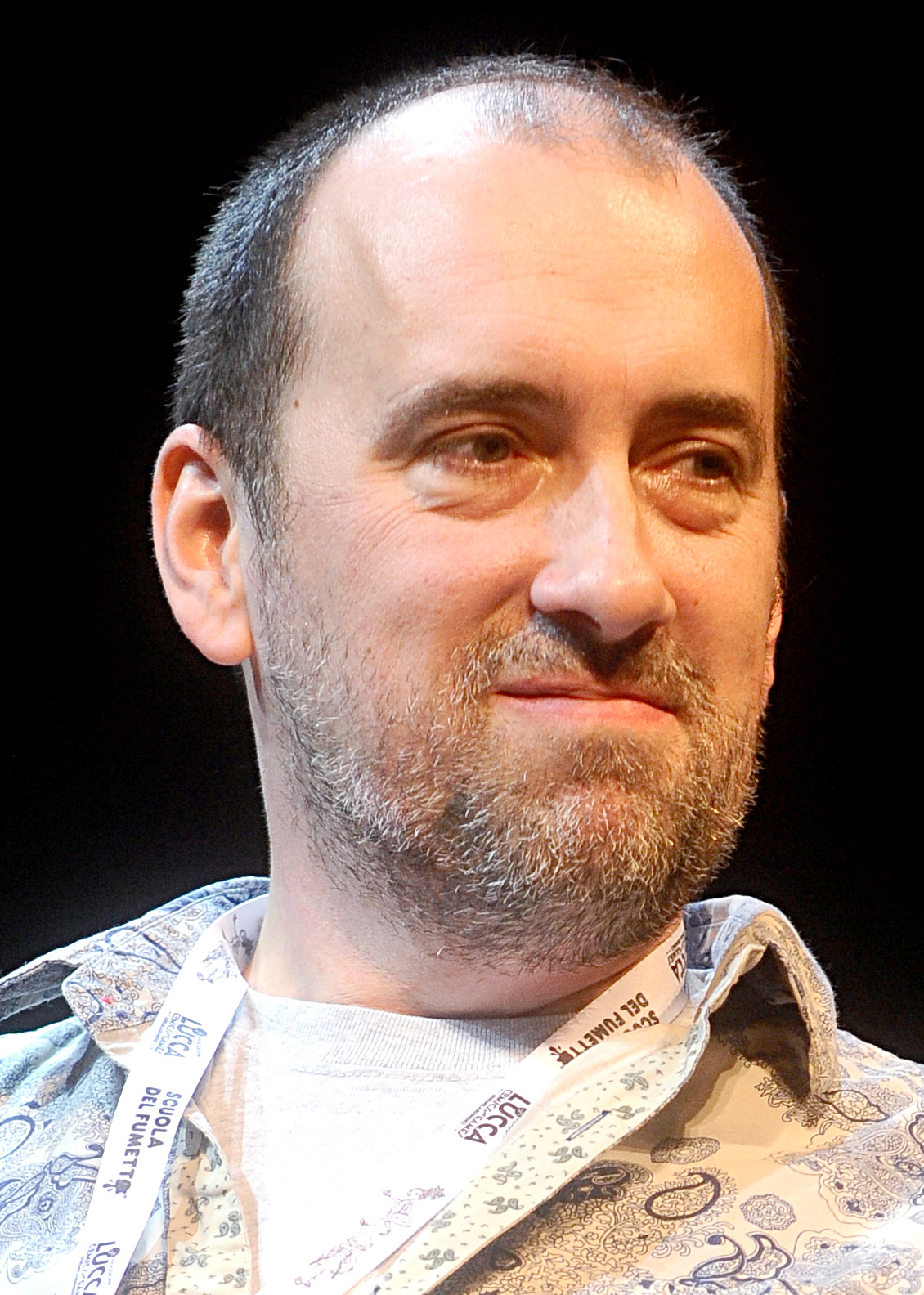
Jamie Alan[1] Mathieson (born May 1970)[2] is a British television screenwriter. A former stand-up comedian,[3] he has written for a number of UK science fiction TV shows, namely Being Human, Dirk Gently and Doctor Who.[4]

Key Information

Career

[edit]

He scripted the sci-fi comedy film Frequently Asked Questions About Time Travel, starring Chris O'Dowd, Dean Lennox Kelly, Marc Wootton, and Anna Faris. It was released in the UK and Ireland on 24 April 2009. He wrote the drama pilot ALT for Channel 4 in 2014, but it was not picked up for a series.[5] However, he did create and write the sci-fi miniseries Tripped for E4.

It was announced in October 2014 that Mathieson would be the lead writer of French science fiction series Métal Hurlant: Origins, a sequel to Métal Hurlant Chronicles.[6] It is based on the popular comics anthology magazine Métal Hurlant, known in the United States as Heavy Metal and in Germany as Schwermetall. Mathieson started his contributions to Doctor Who during the tenure of Peter Capaldi, working on series 8, 9 and 10.

In 2023, Mathieson independently published his first book, the short story collection The First Ten. The same year, he confirmed his intention to write a second collection, titled The Second Ten.[7]

Writing credits

[edit]
Production Notes Broadcaster/distributor
FAQ About Time Travel
  • Feature film (2009)
Picturehouse Entertainment
Becoming Human
  • Series 1: Episode 4 (2011)
  • Series 1: Episode 5 (2011)
  • Series 1: Episode 6 (2011)
BBC iPlayer
Dirk Gently
  • Series 1: Episode 3
BBC Four
Being Human
  • "Educating Creature" (2010)
  • "Type 4" (2011)
  • "The Graveyard Shift" (2012)
  • "Pie and Prejudice" (2013)
BBC Three
Alt
  • TV Movie (2014)
N/A
Tripped
  • Series creator (2016)
E4
Doctor Who BBC One

References

[edit]
[edit]
Revisions and contributorsEdit on WikipediaRead on Wikipedia
from Grokipedia
Jamie Mathieson (born May 1970) is an English screenwriter and producer renowned for his contributions to British science fiction television, particularly episodes of Doctor Who and Being Human. A former stand-up comedian, Mathieson transitioned to screenwriting in the early 2000s, debuting with the time-travel comedy film Frequently Asked Questions About Time Travel (2009), which he wrote and associate produced. His television career gained prominence with four episodes of the supernatural series Being Human between 2010 and 2013, including "Educating Creature" (series 2, episode 4) and "Pie and Prejudice" (series 5, episode 3). Mathieson's work on from 2014 to 2017 is among his most acclaimed, with solo scripts for "" (series 8, episode 8), "" (series 8, episode 9), and "Oxygen" (series 10, episode 5), as well as co-writing "" (series 9, episode 5) with . Other notable credits include an episode of (2010) and creating the sci-fi comedy miniseries Tripped (2015). In recent years, Mathieson has expanded into prose with the publication of his debut novel The First Ten in 2023.

Early life

Family background

Jamie Alan Mathieson was born in May 1970 in the United Kingdom.

Education and early interests

Growing up in the and , a vibrant era for British science fiction on and in literature, Mathieson developed an early fascination with the genre. At the age of five, he vividly remembered being frightened by the 1975 Doctor Who serial , featuring the Zygons, the , and , marking one of his initial encounters with imaginative storytelling. His formative interests extended to comedy and , shaped by the cultural landscape of the time, including influential humorists and authors who blended wit with fantastical elements. Among these, stood out prominently, with Mathieson later likening the author's impact to "a pretty big mountain range" in the geography of his creative influences. This period fostered amateur explorations in writing and humor, drawing from the era's satirical television and books that encouraged playful narrative experimentation.

Career beginnings

Stand-up comedy

Jamie Mathieson began his career in entertainment as a in the during the and . While employed at a customer service , he started developing his comedic material and performing skills. He continued in stand-up for six years before shifting to screenwriting. Mathieson's performances took place at notable UK comedy venues, including regular appearances at Jongleurs comedy clubs. His comedic style emphasized observational humor, often drawing on personal anecdotes and storytelling to engage audiences. For instance, he incorporated tales from life experiences, such as chaotic stag nights, to deliver relatable and lighthearted material. Like many aspiring comedians, Mathieson faced significant challenges in stand-up, including inconsistent audience reception. He frequently "died on stage," experiencing moments of silence or boos from crowds instead of , a common that every stand-up performer encounters at least once. Performing for hundreds of people, he found the craft humbling, as it dispelled any illusions of innate funniness and required building mental resilience through repeated .

Transition to screenwriting

After pursuing full-time starting around 2000, Jamie Mathieson began transitioning to in the mid-2000s by crafting speculative (spec) scripts to showcase his abilities. His initial writing efforts included unpublished sci-fi thriller spec scripts, which he developed without commissions to build a portfolio and demonstrate his comedic timing in narrative form. A key early attempt came in 2004 when Mathieson pitched a sci-fi thriller spec script to executive for the first series of , though it did not result in a commission due to his lack of prior television credits. He continued honing his craft through additional unpublished specs and sketches, often drawing on his stand-up experience to infuse dialogue-driven humor and sharp character interactions. This foundation from live performance helped shape his resilient approach to feedback and pitching, akin to handling hecklers in clubs. Networking played a crucial role in his breakthrough; by the late 2000s, Mathieson had secured an agent who circulated his specs, leading to pivotal readings by industry figures. One such spec—a fantasy drama—caught the attention of Being Human creator Toby Whithouse, resulting in his first TV writing commission around 2007. Similarly, another spec impressed producer Sue Vertue, facilitating introductions to Steven Moffat and opening doors to further BBC opportunities. These events marked the culmination of his shift, transforming unpublished writing into professional screenwriting prospects.

Television writing

Being Human series

Jamie Mathieson contributed to the British supernatural comedy-drama series Being Human as a across multiple seasons, becoming one of the show's most consistent contributors after creator . His episodes often explored the tensions between the characters' monstrous natures and their desires for normal human lives, blending horror elements with humor and emotional depth. In series 2, Mathieson wrote episode 4, titled "Educating Creature," which aired on 31 January 2010 and focused on the housemates' attempts to integrate into everyday society while grappling with their supernatural identities. This episode highlighted George's new job and relationship, Annie's ghostly limitations, and Mitchell's struggles with addiction, using comedic scenarios to underscore themes of isolation and redemption. For series 3, episode 3, "Type 4," broadcast on 6 February 2011, Mathieson delved into zombie lore within the Being Human universe, examining Annie's post-resurrection experiences and the group's encounters with the undead, while advancing character arcs around loss and supernatural bureaucracy. The story incorporated humor through absurd situations, such as a zombie's drunken antics, to balance the horror of existential threats. Mathieson's work continued in series 4 with episode 3, "The Graveyard Shift," which aired on 19 February 2012 and centered on the new housemates' adjustment to their powers amid ghostly disturbances and politics, emphasizing themes of grief and reluctant heroism. The episode featured witty dialogue and ironic twists to humanize the conflicts. In the final series 5, he penned episode 3, "Pie and Prejudice," shown on 17 February 2013, which revisited past characters and explored Hal's internal battles with his curse through a time-loop , blending with satirical humor on domesticity and fate. This installment reinforced the series' core motif of beings yearning for ordinary human connections. Mathieson also wrote for the Being Human spin-off web series Becoming Human, a focusing on teenage characters, contributing episodes 4 through 6 of its single 2011 series. These installments, directed by , developed the backstories of young vampire Adam and his friends, incorporating youthful humor and coming-of-age arcs within the franchise's framework. His involvement helped expand the Being Human universe by bridging generational themes of identity and friendship among the undead.

Doctor Who episodes

Jamie Mathieson's contributions to Doctor Who began in 2014 during Peter Capaldi's tenure as the Twelfth Doctor, spanning three series with four episodes that blended science fiction horror elements, intricate mysteries, and character-driven narratives. His scripts often featured confined settings, escalating threats, and explorations of human resilience, earning praise for revitalizing the show's horror roots while advancing companion arcs. Mathieson's debut episodes in series 8 marked him as a fresh voice, with subsequent works building on themes of survival and moral ambiguity. "Mummy on the Orient Express," the eighth episode of series 8, aired on October 11, 2014, and follows the Doctor and boarding a luxury space train modeled after the historic , where passengers are being murdered by a holographic ancient Egyptian mummy known as the Foretold. The creature activates only for those over a certain age or with specific ailments, killing them precisely 66 seconds after being seen, while the train's sinister AI host, Gus, manipulates events. The episode fuses Agatha Christie-style tension with cosmic horror, culminating in the revelation that Gus engineered the threat to study fear for his creators. , Mathieson developed the script rapidly after delivering "," incorporating early drafts with elaborate "Seven Wonders of the Universe" setpieces that were trimmed for pacing, resulting in an 87-page cuts file from the original draft. Critics lauded its atmospheric production design and Capaldi's commanding performance, with highlighting the episode's clever puzzles and emotional depth as a series highlight. Following immediately as the ninth episode of series 8, "," aired on October 18, 2014, shifts the action to contemporary , where extradimensional entities called the Boneless flatten humans into two-dimensional graffiti-like forms, draining the city of a vital dimension. With the Doctor trapped and shrinking inside the , Clara assumes a leadership role, teaming with local graffiti artist Rigsy to combat the threat using the . This "Doctor-lite" structure emphasizes Clara's resourcefulness and the episode's theme of perception and reality's fragility, with the Boneless emerging from walls and murals to create visceral horror. Mathieson crafted four drafts in quick succession, including cut scenes that deepened guest character backstories but were removed to tighten the runtime. The script received acclaim for its inventive visuals and Jenna Coleman's standout portrayal of Clara's heroism, with reviewers noting its thrilling originality and effective blend of urban terror and wit. In series 9, Mathieson co-wrote "," the fifth episode aired on October 17, 2015, with showrunner , depicting the Doctor and Clara arriving in a ninth-century Viking village invaded by , alien warriors who use hallucinogenic skull masks to brainwash humans into berserkers for organ harvesting. A young villager named challenges the invaders with fabricated technology, leading to a desperate battle where the Doctor loses his memories of Clara's name as a consequence. The narrative explores themes of , identity, and the cost of heroism, introducing 's immortality arc. Production notes indicate collaborative development to integrate broader series mythology, with Moffat refining Mathieson's historical sci-fi premise. Reception praised its energetic Viking action and emotional stakes, though some critiqued pacing inconsistencies in the dual authorship. Mathieson's final Doctor Who episode to date, "Oxygen," the fifth of series 10 aired on May 13, 2017, strands the Doctor, Bill Potts, and on the abandoned Chasm Forge mining station, where oxygen is a corporate sold by the liter, and rogue smart-suits turn wearers into "zombies" after death to conserve air. The crew faces suffocation and betrayal by the AI, with the Doctor sacrificing his sight in a bold gambit to overload the system. This claustrophobic tale critiques in space while amplifying horror through , evolving from Moffat's mandate to make "dangerous again." Mathieson incorporated sentient gas creatures in initial concepts before shifting to techno-zombies for added dread, with filming emphasizing practical effects for zero-gravity sequences. commended its taut suspense and Peter Capaldi's visceral performance, calling it a gripping reminder of the show's horror prowess, while hailed it as one of the strongest standalone episodes of the era.

Other television projects

Mathieson's television work extended beyond major franchises to include contributions to several science fiction and comedy series, often blending speculative concepts with humor. In 2012, he wrote the third episode of the BBC Four miniseries Dirk Gently, an adaptation of Douglas Adams' novel Dirk Gently's Holistic Detective Agency. Titled simply "Episode 3," the installment features the titular detective navigating interconnected mysteries involving a missing millionaire and a computer-banking conspiracy, showcasing Mathieson's knack for witty, interconnected plotting in a comedic sci-fi framework. Building on his established reputation in genre television, Mathieson created and co-wrote the 2015 E4 miniseries Tripped, a four-part sci-fi comedy exploring multiverse travel. The series follows best friends Milo and Danny, who accidentally access parallel universes via a mysterious device, leading to chaotic adventures across alternate realities filled with doppelgängers and existential mishaps. Originally developed from Mathieson's 2014 pilot Alt—a 60-minute E4 drama about a young man discovering subtle alternate versions of his life, starring Gethin Anthony and Craig Roberts—the project evolved into Tripped with input from writers Harry and Jack Williams, emphasizing buddy-comedy dynamics amid quantum weirdness. Though Alt was not commissioned as a full series, its multiverse premise directly informed Tripped's lighthearted take on infinite possibilities and personal regrets. Mathieson also contributed to international sci-fi projects, including scripting the planned reboot Métal Hurlant: Origins for Atlantique Productions in 2014. Intended as a serialized continuation of the anthology series Métal Hurlant Chronicles—based on the influential French comics magazine Métal Hurlant (known as Heavy Metal in English-speaking markets)—the project aimed to introduce recurring characters and a seasonal arc exploring the magazine's origins, drawing from Mathieson's expertise in adaptive genre storytelling. Although announced for production in early 2015, the series did not proceed to air. Earlier in his career, Mathieson penned a single episode for the children's sci-fi comedy in 2005. The installment, "The Tail of the Knitted Map," involves the alien family unraveling a quirky mystery with a magical artifact, reflecting his early foray into family-oriented speculative humor.

Film and original works

Frequently Asked Questions About

Frequently Asked Questions About Time Travel is a 2009 British film written by Jamie Mathieson in his debut as a feature screenwriter. Directed by Gareth Carrivick, the low-budget production blends tropes with humor centered on ordinary characters facing extraordinary circumstances. The script originated from Mathieson's transition from television writing, where he honed his skills in witty, genre-infused storytelling. The plot revolves around three friends—sci-fi enthusiast Ray (Chris O'Dowd), geeky Toby (), and cynical Pete ()—who gather at their local after Ray loses his job. What begins as a night of drinking turns chaotic when they discover a time leak in the pub's bathroom, propelling them through multiple timelines and alternate realities. As they navigate paradoxes and potential world-ending threats, the trio encounters (), a from the future, leading to comedic attempts to fix the temporal mishaps while questioning the rules of . The story unfolds almost entirely within the pub setting, emphasizing dialogue-driven humor over . Production on the film was modest, reflecting its independent roots with a runtime of 83 minutes and a focus on character interactions rather than high production values. Filming took place primarily in the UK, capturing a grounded, everyday atmosphere that suits the pub-centric narrative. The cast features emerging talents like O'Dowd, known for , alongside Wootton and Kelly, with Faris providing American star power in a supporting role. The film was released theatrically in the UK on 24 April 2009 by Picturehouse Entertainment and later distributed on DVD and via in other markets, achieving limited success with a global gross of approximately $23,820. Critically, the film received mixed reviews, earning a 35% approval rating on based on 20 scores, with for its clever premise but for uneven pacing and budget constraints. However, it has garnered a dedicated among sci-fi fans, particularly for Mathieson's sharp, witty dialogue that pokes fun at conventions and geek culture. User ratings on average 6.9/10 from over 38,000 votes, highlighting the film's endearing charm and quotable lines despite its flaws.

Tripped and additional creations

In 2015, Jamie Mathieson co-created and co-wrote the four-part sci-fi comedy miniseries Tripped for E4, which follows two best friends, and Milo, as they navigate bizarre adventures across parallel universes after a mysterious device transports them between realities. The series blends humor with exploration, emphasizing themes of alternate realities where characters confront twisted versions of their lives, such as worlds dominated by or reversed social norms, all delivered through witty, character-driven comedy. Produced by , Tripped starred as and George Webster as Milo, with Mathieson contributing to the writing of the first episode alongside lead writers . The project originated from Mathieson's earlier pilot Alt, a 60-minute drama commissioned by E4 in 2014 and directed by Ben Caron, which explored similar parallel universe concepts but was not advanced to a full series. Alt featured Craig Roberts and Gethin Anthony and served as the foundational idea for Tripped, evolving from a standalone pilot into a collaborative miniseries that retained Mathieson's core vision of humorous interdimensional mishaps while expanding into a buddy-comedy format. This development highlighted Mathieson's interest in creator-driven projects that fuse speculative fiction with everyday relational dynamics, allowing for satirical takes on personal growth and friendship amid chaotic alternate worlds. Mathieson's experience with time-travel comedy in his 2009 film Frequently Asked Questions About Time Travel informed the lighthearted yet conceptually intricate approach to multiverse storytelling in Tripped. No other original series or unproduced works by Mathieson in this vein have been publicly detailed beyond these projects.

Literary career

Short story publications

In 2023, Jamie Mathieson independently published his debut prose collection, The First Ten, a self-contained anthology of ten short stories that blend science fiction with humor in the style of Douglas Adams and Terry Pratchett, while incorporating elements of suspense, thriller, horror, and fantasy. The work marks Mathieson's entry into literary fiction, drawing on his background in screenwriting to craft narratives that bypass the lengthy pre-production processes of television and film. The stories explore themes of existential dread, human frailty, and the absurdities of the unknown, often centering on broken anti-heroes confronting apocalyptic or otherworldly scenarios, such as demons, end-of-the-world events, and encounters with extraterrestrial phenomena. Representative examples include a tale of a passenger on a plummeting plane who notices eerie inconsistencies in their life reflections, and another featuring a child on a who uncovers a derelict supermarket harboring a secret that could either preserve or destroy her existence. A third story involves scientists examining a crashed UFO containing an alien corpse, only to discover mysterious footprints leading into the surrounding woods. Self-published and available exclusively through Amazon in both print and e-book formats, The First Ten has received early professional interest, with literary agents negotiating potential film and television adaptations for select stories. Mathieson has indicated plans for a , The Second Ten, noting that he maintains a dedicated folder of ideas for additional stories.

Script releases and writings

Jamie Mathieson has made available the professional scripts for his episodes "" (2014) and "" (2014), including both first drafts and shooting scripts, hosted on his official website. These releases provide aspiring writers and fans with direct access to the documents, such as the first draft of "" submitted as his initial pitch and the corresponding yellow-draft shooting script finalized in June 2014. Similarly, the first draft of "," dated January 2014, and its blue-draft shooting script from May 2014 are publicly downloadable, allowing examination of the production-ready versions. In accompanying blog posts on his website, Mathieson offers detailed insights into his , emphasizing the iterative nature of script development. For "Flatline," he describes how the first draft focused on intense and terror from the extradimensional creatures known as the Boneless, but revisions toned down elements deemed too grim for a family audience, including the addition of the "tiny " to accommodate a Doctor-lite structure. He notes that four prior drafts preceded this submission, which ultimately secured him the opportunity to write "." In the "Mummy" post, Mathieson reveals that the first draft's cuts file spanned 87 pages—longer than the 63-page final script—highlighting extensive rewrites to streamline a meandering plot and simplify the mummy's visibility mechanic, which in early versions was overly complex. He characterizes initial drafts as "a different species entirely," akin to a "dark timeline" diverging sharply from the broadcast episode. Mathieson's writings extend to explorations of creative challenges in sci-fi scripting, particularly in a dedicated post on the Boneless monsters from "Flatline." There, he details drawing inspiration from tropes like extradimensional flatness in Edwin A. Abbott's (1884) and the children's book , while naming elements in the script after these sources to embed subtle nods. To avoid undermining the horror, he consciously steered away from comedic pitfalls in early outlines, such as wrapping victims like anacondas, opting instead for silent, inscrutable aliens whose kills evoke dread rather than laughter, ensuring the creatures felt credible within the show's Saturday evening constraints. These posts collectively serve as non-fiction resources on evolving sci-fi concepts from concept to screen.

Recognition and influence

Awards and nominations

Mathieson's contributions to the series Being Human were part of a team that won the Award for Best TV Drama Series in 2012, recognizing the series' exceptional writing, including from creators , Tom Grieves, John Jackson, and . The honor, presented at a ceremony in , acknowledged the series' innovative fusion of horror, comedy, and emotional depth in exploring supernatural coexistence. The third series of Being Human, which included Mathieson's episode "Type 4", contributed to the series' nomination for the BAFTA Television Award for Best Drama Series in 2011. This recognition highlighted the show's , including executive producers Rob Pursey, Philip Trethowan, and Whithouse, for delivering compelling, genre-blending narratives on a tight budget.

Impact on science fiction

Jamie Mathieson's signature writing style in science fiction prominently blends elements of horror, , and clever narrative twists, creating tense yet accessible stories that subvert expectations. In his episode "Flatline" (2014), he introduces the Boneless—two-dimensional creatures that flatten victims into murals—merging with Looney Tunes-inspired absurdity to explore perceptual dimensions, resulting in a suspenseful thriller punctuated by humorous character interactions between the Doctor and Clara. Similarly, in the 2015 miniseries Tripped, Mathieson crafts a buddy- framework around multiverse-hopping protagonists who navigate alternate realities, from post-apocalyptic wastelands to assassin-filled timelines, infusing sci-fi concepts with crude, Misfits-like banter and dramatic stakes that heighten the comedic chaos. This genre fusion distinguishes his work, as seen in recurring motifs like zombie-like in "Oxygen" (2017), where oxygen scarcity in space turns crew members into suffocating cadavers, delivering creepy visuals alongside satirical commentary on corporate exploitation. Mathieson's contributions have notably influenced UK science fiction television by elevating standalone, episode-driven storytelling within long-form series like . His scripts, including "" (2014) and "" (2015, co-written with ), emphasize self-contained arcs that advance character relationships—such as the evolving Doctor-Clara dynamic—while innovating on classic tropes like haunted trains and Viking invasions, thereby refreshing the show's procedural format amid serialized elements. Critics have hailed him as one of the programme's most arresting writers for this versatility, spanning themes of , and dimension, and expressed hopes for his continued involvement to sustain high-quality, concept-driven narratives in British sci-fi. In the , Mathieson's fan and critical legacy endures through ongoing discussions of his potential return to , particularly as the series transitions post-Russell T Davies. A 2025 analysis positions him among top trusted writers, praising his episodes' Moffat-level quality and advocating for his role in future seasons or even as , underscoring his lasting impact despite shifting to novels since 2017. This acclaim reflects broader effects on genre tropes, such as rigorous and mechanics; in Frequently Asked Questions About Time Travel (2009), his debut feature script meticulously avoids paradoxes through pub-based loops and future visions, establishing a blueprint for clever, rule-bound alternate-reality tales that prioritize logical twists over spectacle.

References

Add your contribution
Related Hubs
User Avatar
No comments yet.