Hubbry Logo
Call centreCall centreMain
Open search
Call centre
Community hub
Call centre
logo
8 pages, 0 posts
0 subscribers
Be the first to start a discussion here.
Call centre
Call centre
from Wikipedia

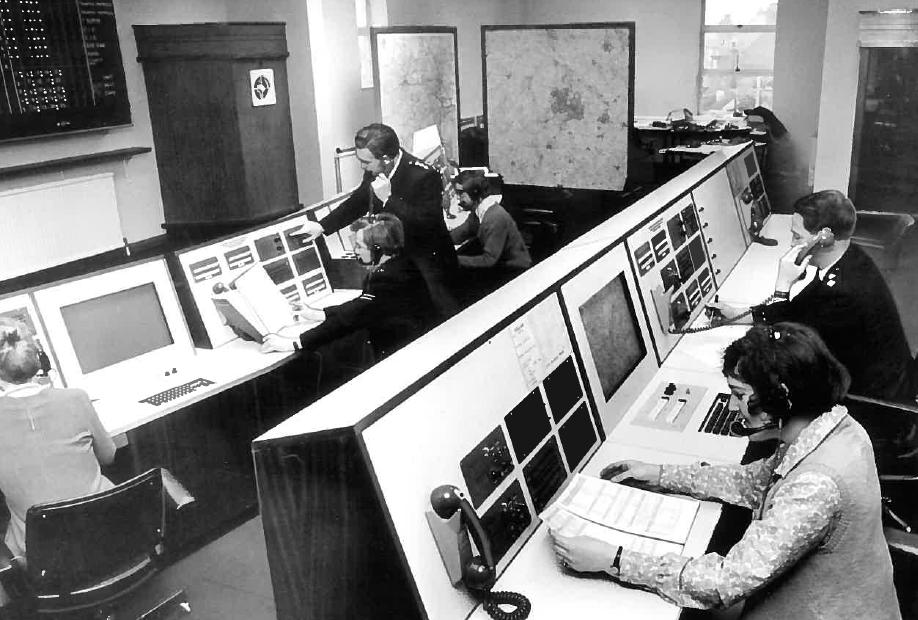
A 1970 police call centre in Brierley Hill, England

A call centre (Commonwealth spelling) or call center (American spelling; see spelling differences) is a managed capability that can be centralised or remote that is used for receiving or transmitting a large volume of enquiries by telephone. An inbound call centre is operated by a company to administer incoming product or service support or information inquiries from consumers. Outbound call centres are usually operated for sales purposes such as telemarketing, for solicitation of charitable or political donations, debt collection, market research, emergency notifications, and urgent/critical needs blood banks. A contact centre is a further extension of call centres' telephony based capabilities, administering centralised handling of individual communications including letters, faxes, live support software, social media, instant message, and email.[1]

A call centre was previously seen as an open workspace for call centre agents, with workstations that included a computer and display for each agent and were connected to an inbound/outbound call management system, and one or more supervisor stations. It can be independently operated or networked with additional centres, often linked to a corporate computer network, including mainframes, microcomputer, servers and LANs. It is expected that artificial intelligence-based chatbots will significantly impact call centre jobs and will increase productivity substantially.[2][3][4] Many organisations have already adopted AI-based chatbots to improve their customer service experience.[4][5][3]

The contact centre is a central point from which all customer contacts are managed. Through contact centres, valuable information can be routed to the appropriate people or systems, contacts can be tracked, and data may be gathered. It is generally a part of the company's customer relationship management infrastructure. The majority of large companies use contact centres as a means of managing their customer interactions. These centres can be operated by either an in-house department responsible or outsourcing customer interaction to a third-party agency (known as Outsourcing Call Centres[6]).

History

[edit]
A very large call centre in Lakeland, Florida (2006)

Answering services, as known in the 1960s through the 1980s, earlier and slightly later, involved a business that specifically provided the service. Primarily, by using an off-premises extension (OPX) for each subscribing business, connected at a switchboard at the answering service business, the answering service would answer the otherwise unattended phones of the subscribing businesses with a live operator. The live operator could take messages or relay information, doing so with greater human interactivity than a mechanical answering machine. Although undoubtedly more costly (the human service, the cost of setting up and paying the phone company for the OPX on a monthly basis), it had the advantage of being more ready to respond to the unique needs of after-hours callers. The answering service operators also had the option of calling the client and alerting them to particularly important calls.

The origins of call centres date back to the 1960s with the UK-based Birmingham Press and Mail, which installed Private Automated Business Exchanges (PABX) to have rows of agents handling customer contacts.[7][8] By 1973, call centres had received mainstream attention after Rockwell International patented its Galaxy Automatic Call Distributor (GACD) for a telephone booking system as well as the popularisation of telephone headsets as seen on televised NASA Mission Control Center events.[9][10]

During the late 1970s, call centre technology expanded to include telephone sales, airline reservations, and banking systems. The term "call centre" was first published and recognised by the Oxford English Dictionary in 1983. The 1980s saw the development of toll-free telephone numbers to increase the efficiency of agents and overall call volume. Call centres increased with the deregulation of long-distance calling and growth in information-dependent industries.[11]

As call centres expanded, workers in North America began to join unions[12] such as the Communications Workers of America[13] and the United Steelworkers. In Australia, the National Union of Workers represents unionised workers; their activities form part of the Australian labour movement.[14] In Europe, UNI Global Union of Switzerland is involved in assisting unionisation in the call center industry,[15] and in Germany Vereinte Dienstleistungsgewerkschaft represents call centre workers.

During the 1990s, call centres expanded internationally and developed into two additional subsets of communication: contact centres and outsourced bureau centres. A contact centre is a coordinated system of people, processes, technologies, and strategies that provides access to information, resources, and expertise, through appropriate channels of communication, enabling interactions that create value for the customer and organisation.[16] In contrast to in-house management, outsourced bureau contact centres are a model of contact centre that provide services on a "pay per use" model. The overheads of the contact centre are shared by many clients, thereby supporting a very cost effective model, especially for low volumes of calls. The modern contact centre includes automated call blending of inbound and outbound calls as well as predictive dialling capabilities, dramatically increasing agents' productivity. New implementations of more complex systems require highly skilled operational and management staff that can use multichannel online and offline tools to improve customer interactions.[17][18][19]

Technology

[edit]
Call centre worker confined to a small workstation/booth, using CallWeb[20] Internet-based survey software
Workstation
A typical call centre telephone; note absence of handset — phone is for headset use only
Call-centre technology c. 2005

Call centre technologies often include: speech recognition software which allowed Interactive Voice Response (IVR) systems to handle first levels of customer support, text mining, natural language processing to allow better customer handling, agent training via interactive scripting and automatic mining using best practices from past interactions, support automation and many other technologies to improve agent productivity and customer satisfaction. Automatic lead selection or lead steering is also intended to improve efficiencies, both for inbound and outbound campaigns. This allows inbound calls to be directly routed to the appropriate agent for the task, whilst minimising wait times and long lists of irrelevant options for people calling in.[21]

For outbound calls, lead selection allows management to designate what type of leads go to which agent based on factors including skill, socioeconomic factors, past performance, and percentage likelihood of closing a sale per lead.

The universal queue standardises the processing of communications across multiple technologies such as fax, phone, and email. The virtual queue provides callers with an alternative to waiting on hold when no agents are available to handle inbound call demand.

Premises-based technology

[edit]

Historically call centres have been built on Private branch exchange (PBX) equipment owned, hosted, and maintained by the call centre operator. The PBX can provide functions such as automatic call distribution, interactive voice response, and skills-based routing.

Virtual call centre

[edit]

In a virtual call centre model, the call centre operator (business) pays a monthly or annual fee to a vendor that hosts the call centre telephony and data equipment in their own facility, cloud-based. In this model, the operator does not own, operate or host the equipment on which the call centre runs. Agents connect to the vendor's equipment through traditional PSTN telephone lines, or over voice over IP. Calls to and from prospects or contacts originate from or terminate at the vendor's data centre, rather than at the call centre operator's premises. The vendor's telephony equipment (at times data servers) then connects the calls to the call centre operator's agents.[22]

Virtual call centre technology allows customer service representatives to operate remotely, connecting to the organisation’s telephony and CRM systems via cloud infrastructure instead of working from a central office. This approach promotes greater accessibility for individuals with disabilities and supports distributed or hybrid workforce models across different regions. The only required equipment is Internet access, a workstation, and a softphone.[23] If the virtual call centre software utilises webRTC, a softphone is not required to dial. The companies are preferring Virtual Call Centre services due to cost advantage. Companies can start their call centre business immediately without installing the basic infrastructure like Dialer, ACD and IVRS.[24]

Virtual call centres became increasingly used after the COVID-19 pandemic restricted businesses from operating with large groups of people working in close proximity.

Cloud computing

[edit]

Through the use of application programming interfaces (APIs), hosted and on-demand call centres that are built on cloud-based software as a service (SaaS) platforms can integrate their functionality with cloud-based applications for customer relationship management (CRM), lead management and more.

Developers use APIs to enhance cloud-based call centre platform functionality—including Computer telephony integration (CTI) APIs which provide basic telephony controls and sophisticated call handling from a separate application, and configuration APIs which enable graphical user interface (GUI) controls of administrative functions.

Outsourcing

[edit]

Outsourced call centres are often located in developing countries, where wages are significantly lower than in western countries with higher minimum wages. These include the call centre industries in the Philippines, Bangladesh, and India.

Companies that regularly utilise outsourced contact centre services include British Sky Broadcasting and Orange[25] in the telecommunications industry, Adidas in the sports and leisure sector,[26] Audi in car manufacturing[27] and charities such as the RSPCA.

Industries

[edit]

Healthcare

[edit]

The healthcare industry has and continues to use outbound call centre programmes for years to help manage billing, collections, and patient communication.[28] The inbound call centre is a new[when?] and increasingly popular service for many types of healthcare facilities, including large hospitals. Inbound call centres can be outsourced or managed in-house.

These healthcare call centres are designed to help streamline communications, enhance patient retention and satisfaction, reduce expenses and improve operational efficiencies.

Hospitality

[edit]

Many large hospitality companies such as the Hilton Hotels Corporation and Marriott International make use of call centres to manage reservations. These are known in the industry as "central reservations offices". Staff members at these call centres take calls from clients wishing to make reservations or other inquiries via a public number, usually a 1-800 number. These centres may operate as many as 24 hours per day, seven days a week, depending on the call volume the chain receives.[29]

Evaluation

[edit]

Mathematical theory

[edit]

Queueing theory is a branch of mathematics in which models of service systems have been developed. A call centre can be seen as a queueing network and results from queueing theory such as the probability an arriving customer needs to wait before starting service useful for provisioning capacity.[30] (Erlang's C formula is such a result for an M/M/c queue and approximations exist for an M/G/k queue.) Statistical analysis of call centre data has suggested arrivals are governed by an inhomogeneous Poisson process and jobs have a log-normal service time distribution.[31] Simulation algorithms are increasingly being used to model call arrival, queueing and service levels.[32]

Call centre operations have been supported by mathematical models beyond queueing, with operations research, which considers a wide range of optimisation problems seeking to reduce waiting times while keeping server utilisation and therefore efficiency high.[33]

Criticism

[edit]

Call centres have received criticism for low rates of pay and restrictive working practices for employees, which have been deemed as a dehumanising environment.[34][35][36] Other research illustrates how call centre workers develop ways to counter or resist this environment by integrating local cultural sensibilities or embracing a vision of a new life.[37] Most call centres provide electronic reports that outline performance metrics, quarterly highlights and other information about the calls made and received. This has the benefit[38] of helping the company to plan the workload and time of its employees. However, it has also been argued that such close monitoring breaches the human right to privacy.[39]

Complaints are often logged by callers who find the staff do not have enough skill or authority to resolve problems,[40] as well as appearing apathetic.[41] These concerns are due to a business process that exhibits levels of variability because the experience a customer gets and results a company achieves on a given call are dependent upon the quality of the agent.[42] Call centres are beginning to address this by using agent-assisted automation to standardise the process all agents use.[43][44][45] However, more popular alternatives are using personality and skill based approaches.[46][47] The various challenges encountered by call operators are discussed by several authors.[48][49][50][51][52]

Media portrayals

[edit]

Call centres located in India have been the focus of several documentary films: the 2004 film Thomas L. Friedman Reporting: The Other Side of Outsourcing, the 2005 films John and Jane, Nalini by Day, Nancy by Night, 1-800-India: Importing a White-Collar Economy, and the 2006 film Bombay Calling, among others.[53] An Indian call centre is also the subject of the 2006 film Outsourced and a key location in the 2008 film, Slumdog Millionaire. The 2014 BBC fly on the wall documentary series The Call Centre gave an often distorted although humorous view of life in a Welsh call centre.[54]

See also

[edit]

References

[edit]

Further reading

[edit]
[edit]
Revisions and contributorsEdit on WikipediaRead on Wikipedia
from Grokipedia

A call centre is a centralized facility or department dedicated to handling large volumes of inbound and outbound telephone calls, primarily for customer service, sales, telemarketing, or support purposes.
Emerging in the 1960s with initial inbound reservation systems and formalized in the 1970s through innovations like the Automatic Call Distributor, call centres enabled scalable communication management for businesses.
Today, the industry operates on a global scale, with a market value exceeding $340 billion as of 2020 and projected growth to $500 billion by 2027, often involving outsourced operations to lower-cost regions for efficiency gains.
Key operational features include scripted interactions, performance metrics such as average handle time, and technologies for call routing, though these contribute to high employee turnover rates averaging 30-45% annually due to repetitive, high-pressure workloads.
While enabling cost-effective customer engagement and rapid query resolution, call centres have drawn scrutiny for worker stress and assembly-line-like conditions, prompting ongoing debates over labor practices and automation integration.

History

Origins in Telecommunications (1960s–1980s)

The introduction of toll-free 800 numbers by in 1967 marked a pivotal development in centralized customer service operations, enabling businesses to receive long-distance calls at their expense rather than the caller's. This Inward Wide Area Telephone Service (InWATS) system, initially designed to streamline collect calls, rapidly expanded to support inbound inquiries, allowing companies to consolidate scattered customer interactions into dedicated telephone hubs for greater efficiency. By the 1970s, these early call centers primarily served inbound functions in industries such as airlines for reservation handling and utilities for account inquiries, focusing on scalable volume management amid rising adoption. The decade saw the refinement of automated call distribution (ACD) technology, with systems like the Rockwell Galaxy ACD—introduced in 1973—capable of routing calls to available agents based on predefined criteria such as skill sets or availability, thereby reducing wait times and operator idle periods in high-volume environments. During the 1980s, ACD integration with private branch exchanges (PBXs) further propelled call center growth, as businesses leveraged these tools to handle surging call traffic from expanded toll-free access without proportional staff increases. This era emphasized operational scalability—distributing calls algorithmically to optimize agent utilization—over personalized interactions, laying the groundwork for structured telecommunications-based service models that prioritized throughput in sectors reliant on routine inbound support.

Globalization and Outsourcing Boom (1990s–2000s)

The of call centers in the was propelled by multinational corporations seeking substantial labor cost savings through international arbitrage, as wages in developed markets like the averaged $12–$15 per hour compared to under $2 in emerging hubs such as . This shift was enabled by falling international costs following deregulations, including the U.S. , which fostered competition and reduced long-distance rates, making offshore voice operations economically viable. Companies increasingly adopted (BPO) models, transferring not only inbound but also outbound functions like sales and to exploit 24/7 operations across time zones. A pivotal catalyst was the Y2K millennium bug remediation efforts from 1996 to 2000, which generated acute demand for scalable support and programming labor; U.S. and European firms outsourced these tasks en masse to , where a surplus of English-speaking graduates provided a ready at fractions of domestic costs. 's economic starting in , coupled with the IT sector's expansion and the New Telecom Policy of 1999 that dismantled state monopolies and improved infrastructure, transformed cities like Bangalore and into BPO epicenters. The followed suit, with its first dedicated contact center established in 1992 by leveraging similar linguistic advantages and U.S. cultural affinities, though its major surge occurred in the early 2000s as clients diversified from amid quality concerns. This outsourcing boom yielded rapid revenue expansion for the sector; India's BPO industry, dominated by call center services, grew from negligible levels in the mid-1990s to over $3.9 billion by 2003, with compound annual growth rates exceeding 40% driven by export-oriented contracts. Globally, the outsourced call center and BPO market ballooned to approximately $90 billion by the late 2000s, reflecting a 250% industry increase since 1995 amid widespread adoption by sectors like and retail. However, this relied on persistent wage differentials and reliability, with early operations often facing challenges like high agent attrition rates exceeding 50% annually due to monotonous tasks and night shifts.

Digital Transformation and AI Emergence (2010s–Present)

The 2010s marked a pivotal shift in call center operations toward digital infrastructure, with widespread adoption of Voice over Internet Protocol (VoIP) systems enabling cost reductions of 30–50% compared to traditional telephony by eliminating per-line fees and long-distance charges. Concurrently, (CRM) software proliferated, with cloud-based integrations allowing real-time data access across channels, boosting efficiency in handling customer interactions; by the mid-2010s, over 90% of mid-sized and larger enterprises incorporated CRM tools to streamline workflows and personalize service. These advancements facilitated omnichannel support, merging voice calls with email, chat, and , as digital interactions grew at an annual rate of 6% since 2010, outpacing traditional voice channels. The from 2020 accelerated remote operations, compelling many call centers to transition agents to work-from-home models overnight, with remote staffing reaching 74% by April 2020 from under 60% pre-pandemic. Hybrid setups persisted post-2020, with projections indicating 60–80% of agents operating remotely or in blended environments by 2022, supported by cloud-based platforms that maintained security and performance metrics. This shift underscored the resilience of digital tools, reducing physical infrastructure dependency while sustaining service continuity amid lockdowns. AI integration began with pilot deployments of chatbots and virtual assistants around 2016–2020, automating routine queries and handling up to 20% of customer interactions by , thereby alleviating agent workloads for complex escalations. By the mid-2020s, these evolved into sophisticated systems leveraging on historical data to forecast call volumes, optimize staffing, and anticipate customer needs, with the global call center AI market expanding from $1.6 billion in to projected $4.1 billion by 2027 at a 21.3% CAGR. Such tools enhanced first-contact resolution rates and resource allocation, marking a transition from reactive to proactive operations.

Technology and Infrastructure

Core Hardware and Software Systems

Private Branch Exchange (PBX) systems, such as open-source VoIP solutions like Asterisk or FreePBX, form the backbone of call center , enabling the efficient routing and distribution of incoming and outgoing calls among agents through internal extensions and trunk lines. These systems, often integrated with Automatic Call Distributors (ACD), prioritize calls based on predefined rules such as agent availability and caller data. Agent hardware essentials include computers equipped with multi-core processors and sufficient RAM for handling software applications, noise-canceling headsets typically USB-connected to workstations for high-fidelity audio and comfort during prolonged shifts, alongside stable internet connections for reliable VoIP communications, IP phones or applications on computers for call handling. (IVR) hardware and interfaces, linked to PBX, automate initial call screening via touch-tone or , reducing agent workload by resolving simple queries or queuing complex ones. Core software encompasses (CTI) platforms that synchronize telephony with customer databases, triggering screen pops—automatic displays of caller history, profiles, and interaction logs—upon call connection to facilitate informed agent responses. This integration supports real-time data retrieval from CRM systems, enhancing efficiency without manual lookups. Reliability in these systems targets "five nines" uptime of 99.999%, equating to less than 5.26 minutes of annual downtime, achieved through redundant power supplies, mechanisms, and robust network infrastructure critical for uninterrupted high-volume operations.

Premises-Based and Cloud-Based Deployments

Premises-based call centers rely on on-site hardware and software owned and managed by the , including servers, PBX systems, and dedicated network installed within physical facilities. This deployment model provides greater control over and customization, as all components remain within the company's premises, facilitating direct oversight of protocols and compliance with internal policies. However, it entails substantial upfront capital expenditures for , installation, and configuration of hardware such as workstations, servers, and , alongside ongoing costs for , upgrades, and space requirements. In contrast, cloud-based deployments host call center functionality on remote servers managed by third-party providers using SaaS models with pay-as-you-go pricing and solutions such as Bitrix24, Zendesk, Twilio, or Amazon Connect, eliminating the need for on-site hardware purchases and reducing deployment times from months to weeks. Organizations migrating to solutions post-2015 have reported IT cost reductions of 20-30% through scalable and minimized maintenance burdens, though this shifts reliance to provider uptime and measures. Scalability advantages include rapid adjustments to demand without physical expansions, appealing to businesses prioritizing over absolute control. Trade-offs between the models center on and cost: premises-based systems offer inherent data locality for enhanced in sensitive operations, while alternatives demand robust SLAs to mitigate risks like breaches, with studies noting comparable when providers adhere to standards like SOC 2. By 2025, hybrid models combining on-premises cores for critical data with extensions for overflow have gained traction in compliance-intensive sectors such as and healthcare, balancing regulatory needs like with operational flexibility.

Virtual and Remote Operations

Virtual call centers enable agents to handle interactions from dispersed locations using software-based , such as VoIP softphones over stable internet connections secured by virtual private networks (VPNs) and supported by cloud-based solutions that allow remote work without a full physical office. This model facilitates global scalability by eliminating the need for centralized physical facilities, allowing organizations to recruit talent across borders while maintaining secure access to core systems. The accelerated the shift to remote operations, with call center adoption rising sharply as companies adapted to lockdowns and mandates from 2020 onward; by 2023, more than 45% of global agents were working remotely at least three days per week, particularly . Tools like Cisco Webex Contact Center support remote monitoring through unified agent desktops that integrate voice, digital channels, and , enabling supervisors to oversee distributed teams without on-site presence. Nevertheless, some call centers retain on-site requirements to enable direct oversight, physical monitoring of agents, and enforcement of company culture. Despite these advantages, remote setups introduce challenges such as network latency, which can disrupt real-time coaching and call quality due to delays in VoIP transmissions, , or during live supervisor interventions. Advancements in 5G technology, offering ultra-low latency under 1 in optimal conditions by 2025, mitigate these issues by enhancing connection reliability and speed, thereby supporting seamless real-time guidance and reducing disruptions in distributed environments.

AI, Automation, and Analytics Integration

The integration of (AI), , and analytics in call centers has primarily augmented human agents by handling repetitive tasks and providing data-driven insights, thereby enhancing operational efficiency without widespread replacement. Speech analytics tools, leveraging AI to provide real-time speech-to-text transcription and analyze conversations, enable sentiment and emotion detection, compliance monitoring, and topic extraction, which empirically reduce handle time (AHT) by up to 40% through automated summaries and prompts that shave 30 to 60 seconds per call. These capabilities, prominent in 2025 deployments, focus on identifying and agent gaps during interactions, allowing for immediate interventions that improve first-call resolution rates while preserving agent involvement in complex escalations. Real-time agent assistance systems further support this by offering live transcription, knowledge base searches, and suggested responses during calls, while predictive call routing employs machine learning models to direct callers to optimal agents based on factors like history, sentiment, and performance metrics. Intelligent virtual agents and voice bots handle initial interactions through advanced dialogue management, often integrating with IVR for seamless escalation to human agents. Robotic process automation (RPA) complements AI by automating routine backend queries, such as data entry or ticket routing, freeing agents for higher-value engagements; in 2024, 60% of enterprises adopted AI-enhanced RPA, yielding efficiency gains of 35% in process execution. Industry analyses indicate that RPA integration in contact centers reduces agent workload by up to 90% for standardized tasks, with (ROI) realized through cost savings of 30% or more in operational overhead, as measured in automation pilots across service sectors. This synergy emphasizes augmentation, where RPA handles predictable workflows causally linked to error-prone manual processes, enabling scalable handling of volume spikes without proportional staffing increases. Analytics platforms, particularly for outbound operations, employ predictive or progressive dialing algorithms with pacing mechanisms that forecast agent availability and caller responsiveness, boosting connect rates and conversion by 20-30% via data-informed timing and . Proactive outreach features trigger AI-driven callbacks based on detected negative sentiment or other triggers. Empirical data from 2025 implementations show these tools increase answered calls by optimizing against historical patterns like time-of-day variables, directly correlating to higher contact efficiency in and collections campaigns. Overall, such integrations deliver measurable ROI, with AI-driven enhancements in yielding process efficiency improvements that underpin sustained productivity gains, as validated in vendor case studies and enterprise benchmarks.

Operational Models

In-House versus Outsourced Structures

In-house call centers enable organizations to maintain direct oversight of operations, facilitating precise customization of interactions to align with branding strategies and internal processes. This structure allows for seamless integration with company-specific bases and real-time policy adjustments, reducing risks of misalignment in service delivery. However, such setups typically incur 30-50% higher operational costs compared to , encompassing expenses for , , and ongoing without the benefits of shared economies. Outsourced models, often through (BPO) providers, prioritize cost efficiency by leveraging labor arbitrage and scalable infrastructure, with to low-wage regions contributing to savings of 40-70% relative to domestic in-house operations. For instance, average hourly wages for call center agents stand at approximately $15, versus $3 in the , enabling providers to handle high volumes at reduced rates while passing efficiencies to clients. The global contact center market, valued at $117.52 billion in 2025, is projected to expand at a 7.48% CAGR to $168.56 billion by 2030, reflecting widespread adoption for non-core functions. Service level agreements (SLAs) in outsourcing contracts commonly stipulate performance benchmarks, such as first contact resolution (FCR) rates exceeding 70-80% to ensure quality parity with in-house standards, with top performers targeting 80% or higher to minimize repeat contacts and associated costs. These metrics, derived from post-interaction surveys, underscore the empirical trade-offs: in-house operations favor strategic control at a premium, while outsourcing emphasizes measurable efficiency and flexibility for variable demand.

Inbound, Outbound, and Blended Call Handling

Inbound call handling operations center on reactive responses to customer-initiated contacts, such as inquiries, , billing disputes, or order processing. Calls are routed via Automatic Call Distribution (ACD) systems, which prioritize equitable distribution to available agents while minimizing hold times; industry standards target service levels like 80% of calls answered within 20 seconds to maintain . Procedural steps typically include initial greeting and routing through (IVR) for basic , followed by caller verification, to identify needs, and resolution or escalation using scripted protocols and access to customer databases. Outbound call handling employs proactive outreach for purposes including , , , or customer surveys, where agents initiate contacts using predictive or progressive dialing systems to maximize connect rates. Operations emphasize scripted pitches, objection handling, and appointment setting, but require strict adherence to regulations like the Telephone Consumer Protection Act (TCPA) of 1991, which mandates prior express consent for autodialed calls to mobile numbers, prohibits calls to Do Not Call registry listings, and restricts calling hours to between 8:00 a.m. and 9:00 p.m. local time. Non-compliance risks fines up to $1,500 per violation, necessitating real-time scrubbing against national and internal suppression lists. Blended call handling integrates inbound and outbound processes within the same agent pool, enabling dynamic shifting via specialized software that monitors queue volumes and agent availability to assign the next interaction—prioritizing inbound for immediate service while queuing outbound campaigns during lulls. This model supports hybrid sales-support environments by optimizing agent utilization, reducing idle time, and facilitating 24/7 coverage through flexible workflows that alternate tasks based on real-time demand. Such blending requires integrated platforms for seamless transitions, ensuring outbound compliance does not interrupt inbound responsiveness.

Performance Metrics and Queuing Theory

Call centers rely on key performance indicators (KPIs) to quantify efficiency, agent productivity, and . Average Handle Time (AHT), encompassing talk time, hold time, and after-call work, serves as a core metric for interaction duration, with benchmarks typically ranging from 6 to 8 minutes across industries to balance speed and thoroughness. Score (CSAT), often derived from post-call surveys, targets scores above 85% to reflect effective resolutions, though U.S. averages hover around 73%. First Contact Resolution (FCR) measures issues resolved without callbacks, with industry standards at 75-85% for high-performing operations, as lower rates correlate with increased costs and dissatisfaction. Abandonment rate, the percentage of callers hanging up before agent connection, is maintained below 5% to prevent loss and reputational harm, with thresholds of 3-5% deemed optimal in efficient centers. , such as 80% of calls answered within 20 seconds, and agent occupancy rates around 85% further guide to avoid idle time or burnout. Queuing theory underpins staffing decisions through models like the M/M/c queue, assuming Poisson arrivals and exponential service times, to predict wait probabilities and optimize capacity. The Erlang C formula specifically computes the likelihood of delay in multi-agent systems with infinite queue capacity, enabling managers to forecast required agents for desired service levels while minimizing overstaffing costs (e.g., idle agents) and understaffing risks (e.g., long queues). For example, inputting call volume in Erlangs (traffic intensity), average handle time, and target delay probability yields staffing estimates, often implemented via software to simulate peak-hour demands and adjust for variability like agent shrinkage. This approach integrates with KPIs by linking abandonment rates to queue lengths and service levels to wait times, ensuring empirical balancing of customer tolerance against operational costs. AI integration has measurably improved metrics like FCR by automating routine tasks and providing real-time guidance, with reports indicating lifts from baseline 70% toward 85% in AI-adopting centers through and chatbots handling initial queries. Such enhancements reduce queue pressures in queuing models by shortening effective service times, allowing Erlang C-derived staffing to focus on complex interactions while maintaining abandonment below benchmarks.

Industries and Applications

Telecommunications, Finance, and Retail

Call centers in the sector primarily handle inbound customer service for billing inquiries, , and detection, processing millions of interactions annually to resolve disputes over charges and unauthorized services. Fraudulent practices such as cramming—adding unrequested charges to bills—prompt significant complaint volumes, with the tracking these via its consumer complaint system since at least 2000. Telecom providers also manage outbound campaigns for service upgrades, but inbound dominates due to regulatory on billing accuracy. In the finance industry, call centers prioritize , particularly PCI DSS standards for safeguarding data during verbal transactions, categorizing operations by annual transaction volumes from under 20,000 for Level 4 merchants to over 6 million for Level 1. Agents verify identities and process inquiries for accounts, loans, and disputes while avoiding storage of sensitive data in recordings, with non-compliance risking fines of $5,000 to $100,000 monthly. These centers often integrate secure to meet evolving PCI DSS 4.0 requirements, focusing on high-volume interactions that demand precision to mitigate losses exceeding $10 billion yearly across related scams. Retail call centers support , returns, and promotions, with volumes surging during peak seasons like Black Friday, where interactions can increase by 100-200% or more via phone and digital channels. Dynamic scaling through deployments or enables rapid agent ramp-up, analyzing historical data and trends to forecast and manage spikes in inquiries for inventory checks and shipping updates. This sector's operations emphasize blended inbound-outbound models for , with adoption at 61% to handle variable demands without fixed overhead.

Healthcare, Hospitality, and Public Services

In healthcare, call centers serve as primary interfaces for patient scheduling, inquiries, and support, operating under stringent regulatory frameworks such as the Health Insurance Portability and Accountability Act (HIPAA) to protect sensitive health information. HIPAA mandates secure handling of (PHI), including encryption of communications and employee training to prevent breaches, with non-compliance risking fines up to $1.5 million per violation annually. Following the , integration accelerated, with call centers facilitating virtual appointments and remote monitoring; utilization for office visits surged 78-fold from February to April 2020, sustaining elevated levels thereafter despite a post-peak decline. The global healthcare contact center as a service market reached $7.05 billion in 2025, reflecting demand for compliant, scalable patient support amid challenges like low first-call resolution rates, where only 1% of centers achieve 80-100%. Hospitality call centers manage reservations, guest inquiries, and service requests, often integrating with (CRM) systems to enable personalized interactions based on prior booking history and preferences. These operations prioritize direct bookings to reduce reliance on online travel agencies, which account for about 24% of North American online reservations, by capturing detailed guest data during calls for tailored offers. Post-pandemic call volumes have increased, with 65% of consumers preferring phone contact for hospitality services, driving centers to streamline processes like average handle time and wait reduction for enhanced guest satisfaction. CRM-enabled personalization, such as recommending room upgrades or amenities, fosters loyalty without aggressive upselling, distinguishing these centers from purely transactional models. Public services utilize call centers for hotlines, response, and citizen assistance, prioritizing universal accessibility over commercial metrics like . Examples include municipal IVR systems routing callers to departments via intuitive menus and multilingual support, ensuring equitable access for diverse populations including non-English speakers and rural residents. These centers handle high-volume inquiries—such as tax assistance or —using pre-verification and intelligent routing to minimize wait times, with modernization efforts like AI-assisted summaries improving efficiency without compromising human oversight. Unlike private-sector counterparts, operations emphasize statutory obligations for responsiveness, such as 24/7 availability for critical lines, reflecting a service-oriented model grounded in accountability rather than revenue generation.

Emerging Sectors like E-Commerce and Tech Support

Call centers have expanded into e-commerce to manage high-volume customer interactions amid surging online retail activity, with global sales projected to reach $6.4 trillion in 2025. These operations handle critical functions such as real-time order tracking, where agents verify shipment statuses and update customers on delivery timelines, often integrating with e-commerce platforms for seamless data access. Returns processing represents another core area, involving verification of return eligibility, issuance of refunds or exchanges, and coordination with logistics partners to minimize disputes and enhance retention. The sector's growth has driven outsourcing demand, as e-commerce firms leverage specialized call centers to scale support without internal overhead, particularly during peak periods like holiday sales surges. In tech support, call centers serve software-as-a-service (SaaS) providers by delivering for user-reported issues, including application errors, integration failures, and bottlenecks. Agents employ remote diagnostic protocols, such as screen-sharing tools and log analysis, to identify and resolve problems without on-site intervention, reducing for enterprise clients. This model supports the proliferation of cloud-based applications, where rapid resolution correlates with higher subscription renewals, though efficacy depends on agent training in ecosystems. Call center operations have also proliferated in the , providing dedicated support for platforms like and , where drivers and riders seek assistance with payment discrepancies, account deactivations, and route optimizations. These services operate 24/7 via integrated phone lines and apps, addressing real-time operational hurdles that impact worker earnings and platform reliability in on-demand delivery and ride-sharing. Expansion into this area reflects the gig workforce's scale, with support teams mitigating churn by expediting resolutions to service interruptions and compliance queries.

Workforce and Employment

Recruitment, Training, and Skill Requirements

Recruitment for call center positions predominantly targets entry-level candidates, prioritizing innate over extensive prior experience, with processes typically involving applications, initial phone or video screenings to gauge verbal clarity, and structured interviews assessing adaptability. Employers advertise roles through job boards and , screening for basic qualifications like high school diplomas or equivalent, while emphasizing traits suited to high-volume customer interactions. Essential skills include effective verbal communication for clear articulation and to comprehend customer needs, to de-escalate frustrations, problem-solving under time constraints, amid repetitive queries, and multitasking proficiency with tools like (CRM) software and multiple screens. Technical aptitude for navigating databases and basic is also required, often tested via pre-employment assessments. Hiring assessments commonly utilize simulations replicating real calls, where candidates respond to scripted scenarios involving complaints or inquiries, evaluating response quality, emotional regulation, and efficiency to predict on-job performance. These tools, such as AI-driven role-plays, help filter for candidates who maintain composure and deliver resolutions, reducing mismatch risks in roles with high initial failure rates. Onboarding training generally spans 4 to 10 weeks, incorporating sessions on company policies and product , supervised shadowing of experienced agents, and a nesting phase with live calls under to build . About 55% of contact centers allocate 6 to 12 weeks for comprehensive programs, focusing on scenario-based drills to accelerate proficiency in handling inbound or outbound calls. As of 2025, elements like badges, leaderboards, and interactive modules are increasingly integrated into platforms to boost and retention of material, with industry reports indicating potential reductions in agent ramp-up time through accelerated learning curves. Such methods address high attrition by making skill acquisition more dynamic, though varies by implementation quality and agent demographics.

Working Conditions and Productivity Factors

Call center agents typically work in shifts to support 24/7 operations demanded by needs across time zones. These shifts often include evenings, nights, and weekends, with schedules optimized for peak call volumes using tools. Productivity is driven by key performance indicators such as average handle time (AHT), which measures total time per call including talk, hold, and after-call work, and service levels targeting response times. High call volumes and these performance metrics can pressure agents to expedite interactions, sometimes resulting in rushed responses, incomplete listening to callers, or skipped troubleshooting steps. Quotas for calls handled or resolutions achieved enforce these metrics, resulting in monitored breaks and adherence to attendance policies to minimize disruptions in queue handling. Ergonomic workstation designs are essential to counteract risks of repetitive strain injuries (RSI) from sustained keyboarding, use, and headset wearing. (OSHA) guidelines recommend adjustable chairs, desks at elbow height, monitors positioned to avoid neck strain, and keyboard trays to maintain neutral wrist postures, thereby reducing musculoskeletal disorders (MSDs). These setups help mitigate and incidence, as RSI stems from cumulative micro-traumas in repetitive tasks common to call handling. Incentive structures, including commissions tied to sales quotas or bonuses for exceeding resolution targets, serve as motivators enhancing output. Empirical studies indicate that individual performance incentives yield an average 22% uplift in employee performance, with effects varying by agent skill level—higher-skilled workers showing stronger gains under pay-for-performance models. Additionally, positive mood interventions, such as brief positive stimuli, have demonstrated causal productivity increases of up to 13% in call center settings by improving focus and engagement.

High Turnover Rates and Retention Strategies

Call centers experience annual employee turnover rates averaging 30-45%, significantly higher than many other sectors, primarily due to from high-volume customer interactions, demands, and repetitive task structures that lead to burnout. Empirical analyses attribute this churn to factors such as emotional dissonance—where agents must suppress genuine feelings to maintain scripted positivity—and limited perceived advancement, with studies showing these elements correlating strongly with voluntary exits within the first six months. Despite these pressures, the industry's low , requiring only basic communication skills and minimal formal qualifications, facilitate rapid replacement hiring from large applicant pools, mitigating operational disruptions from turnover. Evidence-based retention strategies focus on addressing root causes through structured interventions. Career progression programs, including clear promotion tracks from agent to supervisory roles with skill-based certifications, have demonstrated effectiveness in pilots, reducing voluntary turnover by up to 20% by enhancing and long-term commitment. Wellness initiatives, such as training, flexible scheduling to avoid shift fatigue, and support resources, target burnout directly; multifaceted implementations combining these with performance feedback loops have lowered attrition in tested environments by fostering agent empowerment and reducing isolation. Compensation adjustments aligned with market rates and responsibilities further bolster retention, as misaligned pay emerges as a recurrent driver in employee surveys. By 2025, the adoption of remote and hybrid work models has contributed to stabilizing turnover at 25-35% in select operations, as distributed setups alleviate commute-related fatigue and improve work-life balance, per industry benchmarks tracking post-pandemic shifts. These arrangements, when paired with virtual team-building and technology for real-time coaching, yield measurable retention gains, though sustained success requires ongoing investment in digital tools to prevent remote disconnection. Overall, integrating such strategies demands data-driven monitoring of metrics like monthly churn to iteratively refine approaches, prioritizing causal links between interventions and outcomes over generic incentives.

Economic Impact

Global Market Size and Growth Drivers

The global call center market was valued at USD 352.4 billion in 2024 and is projected to expand at a (CAGR) of approximately 6% through 2030, reaching USD 500.1 billion by that year, with estimates for 2025 placing the market size above USD 370 billion amid sustained for customer interaction services. This growth trajectory reflects the sector's resilience and adaptation to evolving business needs, though projections vary by scope, with segments alone forecasted at USD 111.95 billion in 2025 growing at 9% CAGR to USD 242.80 billion by 2034. Primary growth drivers include escalating customer expectations for seamless, multichannel support and the proliferation of , which necessitates scalable inbound and outbound operations to handle inquiries, sales, and retention. Businesses increasingly rely on call centers to manage high-volume interactions generated by digital transactions, with sectors like retail and contributing significantly to volume expansion. Outsourcing to cost-effective regions further accelerates growth by enabling firms to optimize operational expenses while maintaining service levels. The region is poised for the fastest expansion, driven by abundant labor pools, investments, and rising domestic consumption in countries like and the , accounting for over 20% of certain contact center submarkets such as software and as-a-service models. This regional dominance supports global efficiency, as operations there often yield cost reductions of 30-50% compared to Western markets, indirectly benefiting consumers through competitive pricing in served industries.

Job Creation in Developing Economies

The (BPO) sector, including call centers, has generated substantial in developing economies like and the since the early 2000s, driven by offshore outsourcing from high-wage countries. In the , where call centers form the core of BPO activities, reached 1.3 million full-time equivalents by 2016 and exceeded 1.7 million by 2024, reflecting annual growth rates of 8-10% in recent years. In , the broader IT-BPO industry, encompassing call center operations, employed an estimated 3.1 million workers as of 2018, with the sector's expansion creating hundreds of thousands of roles annually during its peak growth phase from 2000 onward. These jobs have absorbed surplus labor from urbanizing populations, particularly educated youth, filling gaps in formal opportunities. Wages in these call center roles typically exceed local averages for comparable entry-level positions, offering 2-3 times the pay of traditional service or jobs in the same regions. In the , agents earn around $350-450 monthly, surpassing minimum wages in many provinces and providing disposable income that stimulates local economies. In , entry-level call center salaries range from 20,000-30,000 INR monthly, a premium over unskilled local labor markets. This wage differential has supported household consumption and remittances, contributing to in outsourcing hubs like and Bangalore. Outsourcing has enabled skill transfers that promote long-term upward mobility, as workers gain proficiency in communication, data handling, and digital tools—skills transferable to other sectors. Analyses of BPO impacts in , the , , and highlight positive labor market effects, including enhanced employability for women and rural migrants previously excluded from high-skill jobs. World Bank assessments of online underscore its potential to foster socioeconomic development through such in low-income contexts. Despite AI advancements automating routine tasks, projections for 2025 anticipate net job additions of 100,000-200,000 in Philippine BPO via reskilling for hybrid roles, with the sector expanding to 1.8 million employees overall. In , AI integration has paradoxically created supervisory and tech-support positions, offsetting some displacements and sustaining growth in non-voice processes. These trends suggest outsourcing's resilience, contingent on workforce adaptation to AI-augmented operations.

Cost Efficiencies and Consumer Benefits

Call centers achieve substantial cost efficiencies for businesses, particularly through outsourcing models that reduce operational expenses by 40-60%, as reported in analyses citing Deloitte research. These reductions primarily result from accessing lower-wage labor markets, economies of scale in handling high-volume inquiries, and streamlined processes that minimize overhead compared to in-house operations. By lowering the cost per interaction—sometimes by up to 50% with integrated technologies—firms can sustain profitability amid competitive pressures. Such efficiencies translate to consumer benefits via more competitive , as businesses pass on savings in market-driven environments where undifferentiated services compel cost leadership. Empirical studies on service operations confirm that centralized call center models enhance overall value chains, enabling lower prices without eroding service . Consumers gain from extended availability of support, often 24/7, which supports timely resolutions and reduces downtime for goods or services. Efficient call centers further boost consumer through faster resolutions, with high first-call resolution rates identified as the primary driver of improved Net Promoter Scores (NPS) and in industry surveys. This causal link—rooted in reduced repeat contacts and minimized frustration—fosters repeat business and positive word-of-mouth, amplifying economic value beyond immediate transactions. In free-market dynamics, among call center providers spurs ongoing innovations in efficiency, outperforming rigid or subsidized alternatives by aligning incentives with performance outcomes.

Criticisms and Controversies

Labor Practices and Worker Exploitation Claims

Call center operations have faced allegations of worker exploitation, particularly in offshore locations, centered on low wages, excessive performance monitoring, and grueling schedules that purportedly prioritize corporate metrics over employee . Critics, including labor groups, argue that agents in countries like and the earn annual salaries ranging from $3,000 to $6,000, often under intense pressure from call volume quotas and scripted interactions that induce emotional strain. However, these wages exceed local thresholds; in the , where the monthly poverty line for a of five hovered around PHP 12,000–13,000 in recent years, entry-level call center pay starts at PHP 15,000–22,000 per month, enabling improved living standards relative to alternatives like informal sector work. Empirical studies on highlight real pressures from role conflicts—such as balancing customer demands with adherence to handle-time targets—which correlate with elevated burnout rates of up to 63% among agents, manifesting in exhaustion and reduced satisfaction. Yet, participation remains voluntary and competitive, evidenced by the sector employing 1.1–1.3 million workers in and 1.3–1.5 million in the , with high application volumes driven by the jobs' status as accessible white-collar opportunities offering structured shifts and benefits absent in many local industries. This demand persists despite alternatives, suggesting perceived net benefits over , as no major international labor bodies like the ILO have classified call center work as forced labor in these contexts. High turnover rates, often cited as 30–50% annually, are frequently attributed to exploitation but labor analyses indicate primary drivers include acquisition enabling upward mobility to higher-paying roles, rather than systemic abuse; for instance, agents frequently depart for supervisory positions or other sectors after gaining English proficiency and expertise. Contextualized against local labor markets, where or affects millions, these dynamics reflect opportunity costs and voluntary churn, not inherent involuntariness, with retention improving via career progression incentives rather than regulatory overhauls.

Outsourcing's Effects on Domestic Employment

Outsourcing of call center operations has led to the displacement of domestic jobs, particularly , where estimates indicate that approximately 400,000 service sector positions, including many in customer support and call centers, were between 2000 and the mid-2010s. This trend accelerated in the early as firms sought lower labor costs abroad, with annual offshoring rates for such roles reaching 12,000 to 15,000 jobs during peak periods. However, comprehensive analyses reveal that these losses represent gross rather than net impacts, as often correlates with minimal overall reduction in domestic jobs due to induced gains and sectoral shifts. Cost savings from —typically 30% to 60% lower operational expenses compared to domestic equivalents—enable firms to reinvest in higher-value activities, fostering the creation of skilled positions in areas like , , and management within the same industries. from U.S. firm-level data supports this dynamic, showing that boosts domestic capital investment and output, which in turn generates demand for reskilled workers transitioning from routine tasks to more complex roles. The broader service sector has expanded by millions since 2000, absorbing many displaced workers through such adaptations, though low-skill incumbents face short-term challenges without targeted reskilling programs. Protectionist policies aimed at curbing , such as subsidies for domestic retention or trade barriers on services, risk elevating business costs and eroding competitiveness, potentially increasing service prices by 20% to 50% in affected sectors based on foregone offshore efficiencies. These interventions could stifle reinvestment in and higher-skill jobs, as historical precedents in service trade restrictions demonstrate reduced aggregate growth without commensurate preservation. Policymakers must weigh these trade-offs, prioritizing evidence-based reskilling initiatives over blunt restrictions to facilitate labor market adjustments while harnessing 's net productivity benefits.

Automation-Induced Job Displacement Debates

In debates surrounding in call centers, proponents of significant job displacement highlight the replacement of routine, low-skill tasks such as basic query resolution and by AI chatbots and voice agents, which can handle high volumes with minimal human intervention. A 2025 analysis by investment bank Jefferies projected that AI adoption could result in a 50% revenue decline for India's call center industry over the subsequent five years, correlating with substantial workforce reductions as firms like those using generative AI agents report slashing agent needs by up to 80% for processing 10,000 monthly queries. This view is supported by empirical observations in India's sector, where AI has already displaced thousands in entry-level roles, concentrating losses among workers with limited adaptability to technological shifts. Counterarguments emphasize historical patterns where automation in service sectors has led to job transformation and net gains rather than outright elimination, with routine tasks automated but new roles emerging in AI oversight, quality assurance, and data analytics. For instance, McKinsey's analysis of automation scenarios across industries, including services, forecasts that while up to 45% of work activities could be automated by 2030-2050, this would displace some positions but create equivalent or greater demand in complementary human-AI hybrid functions, drawing on longitudinal data from prior tech adoptions like computerization in the 1980s-2000s. In India's context, despite initial disruptions, policymakers and industry leaders advocate accelerating AI integration over restrictive measures, anticipating shifts toward higher-value jobs; a 2025 Reuters report notes this approach bets on creating analytics and supervisory positions amid routine task automation, mirroring past service-sector evolutions where productivity gains spurred overall employment growth. Studies on AI assistants in call centers further indicate productivity boosts for novice workers, enabling them to handle complex interactions while AI manages basics, thus evolving rather than eroding the workforce. Causal analyses underscore that displacement effects are most acute for low-skill, non-adaptable labor markets, with from automation's suggesting that flexible economies—those prioritizing skill upgrading over heavy regulation—experience faster reabsorption of workers into evolved roles. A review of adoption found net increases of about 10% in the years following , as savings expanded for adjacent services. However, longitudinal U.S. since 1980 reveal technology's net replacement of jobs in some contexts, challenging unqualified optimism and highlighting the need for market-driven adaptation over interventionist policies that may prolong mismatches. In call centers, this implies concentrated risks for routine operators, but empirical precedents favor long-term net positives in dynamic sectors where AI augments rather than supplants human judgment in nuanced customer interactions.

Advancements in AI and Omnichannel Support

Advancements in (AI) are projected to automate a substantial portion of call center interactions, with estimates suggesting AI agents could manage 30% or more of routine tasks by the late 2020s, accelerating beyond initial forecasts for 2030. In practice, AI tools have already enabled agents to resolve 14% more issues per hour in large call centers by summarizing data and providing real-time guidance. These capabilities stem from generative AI and agentic systems that handle voice, text, and predictive routing autonomously, reducing manual oversight while maintaining resolution accuracy. Omnichannel support, integrating voice calls, chat, email, , and into unified workflows, has emerged as a core trend for 2025, driven by AI to ensure continuity across customer touchpoints. This approach allows customers to switch channels mid-interaction without repeating information, supported by AI-powered and automatic queuing that route queries to optimal agents or bots. Surveys indicate 83% of contact center managers anticipate AI enabling 24/7 availability, transforming centers into proactive hubs rather than reactive ones. Pilot implementations demonstrate these technologies deliver cost reductions without compromising ; for instance, Webex AI Agent deployments have achieved 23% shorter call handling times and 39% higher scores in claims processing. Similarly, conversational AI is forecasted by to fully handle one in ten interactions by 2026, yielding $80 billion in global agent labor savings through efficient . These outcomes highlight AI's role in hybrid models where human oversight focuses on complex escalations, preserving empathy in high-stakes scenarios.

Reskilling Initiatives and Hybrid Human-AI Models

In response to advancing AI integration, call center operators have launched reskilling programs to transition workers from routine tasks to AI-augmented roles, such as overseeing automated systems and handling escalated queries. These initiatives focus on building competencies in AI tools, , and to sustain employment amid . For instance, in 's business process outsourcing sector, which supports over 1.65 million call center jobs, estimates a need to upskill around 1 million workers by 2027 to bridge AI talent gaps projected at over 1 million openings. has pledged AI training for 2 million individuals in by the end of 2025, targeting tech and service sectors including BPM to foster adaptability. Hybrid human-AI models complement these efforts by deploying AI for initial , query routing, and synthesis, while assigning human agents to empathy-driven or nuanced interactions. This division enhances , as AI handles repetitive volumes—freeing agents for higher-value engagements—and has demonstrated superior performance over AI-only systems in metrics like resolution speed and . McKinsey analysis indicates that such hybrids optimize , enabling contact centers to manage growing demands without proportional staff increases. Companies prioritizing reskilling within hybrid frameworks experience reduced attrition, as trained agents report greater role fulfillment and lower obsolescence fears during AI rollouts. Effective correlates with turnover by improving skills alignment and , countering baseline industry rates of 40-45%. These strategies underscore a human-centric , preserving agent expertise for irreplaceable elements like rapport-building while leveraging AI for .

References

Add your contribution
Related Hubs
User Avatar
No comments yet.