Hubbry Logo
Toby WhithouseToby WhithouseMain
Open search
Toby Whithouse
Community hub
Toby Whithouse
logo
8 pages, 0 posts
0 subscribers
Be the first to start a discussion here.
Toby Whithouse
Toby Whithouse
from Wikipedia

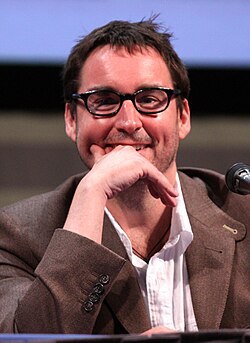
Toby Lawrence Whithouse (/ˈwɪths/;[1] born 5 July 1970)[2][3] is an English actor, screenwriter and playwright. His highest-profile work has been the creation of the BBC Three supernatural television series Being Human. He also created the Channel 4 television comedy-drama series No Angels, the BBC America/BBC Two espionage drama series The Game and has written seven episodes for BBC One's Doctor Who. His work on Doctor Who was primarily for the Doctors played by Matt Smith and Peter Capaldi.

Key Information

Early life

[edit]

After initially attending art college (SEEVIC) in Benfleet to become a book illustrator,[4] Whithouse decided to drop out of the course and turn to acting as a profession, training at the Guildhall School of Music and Drama. He was a regular in the cast of the early 1990s BBC One drama series The House of Eliott and had a small role in the 1993 film Shadowlands. Whithouse also appeared on stage in the West End, co-starring with Gene Wilder in Laughter on the 23rd Floor by Neil Simon in 1997.

Career

[edit]

Acting

[edit]

As an actor, he appeared in the role of Alistair in the film version of Bridget Jones's Diary in 2001. Since then his appearances have been less frequent, although he appeared in a small role in his own episode of Hotel Babylon in February 2006, and made a cameo appearance in the last ever episode of No Angels, transmitted on Channel 4 in April 2006. He also played the Home Secretary in the final series of Being Human in 2013. Whithouse returned to the stage of the Soho Theatre in 2017 in a one-man show as the actor/writer of his play Executioner Number One. Due to his friendship and professional relationship with the departing Doctor Who showrunner Steven Moffat, Whithouse also appeared later that same year in the Twelfth Doctor Peter Capaldi's final episode, "Twice Upon a Time" as a World War I soldier speaking solely in German. [5] In 2025, he reprised his role as Alistair in the fourth Bridget Jones film, Bridget Jones: Mad About the Boy.

Toby Whithouse was also a stand up comedian in the early 2000s, becoming a So You Think You're Funny? finalist in 2007.[6]

Writing

[edit]

Frustrated at what he perceived as a lack of quality in many of the scripts he was sent to read, Whithouse took to writing in his spare time between acting roles, eventually writing a play Jump Mr. Malinoff, Jump which won the Verity Bargate Award. The play was performed as the opening production of the Soho Theatre in Dean Street, London. Following this, he gained his first television writing credit by scripting an episode for the ITV drama series Where the Heart Is.

He then became associated with the independent production company World Productions, for whom he worked on the BBC Two drama series Attachments. When Channel 4 approached World with a view to a new drama series commission, the company came up with the idea of a series concerning the lives of four nurses in the North of England, and Whithouse was given the task of fleshing out and formatting the show which became No Angels. The series was a success, running for three series on Channel 4 from 2004 to 2006.

A long-time friend of Doctor Who executive producer Julie Gardner, Whithouse was invited to contribute to the series in 2005, eventually writing the third episode of the second series. "School Reunion", which featured the return of the robot dog K-9 and 1970s companion Sarah Jane Smith, transmitted on 29 April 2006. He went on to write for the Doctor Who spin-off series Torchwood, with his episode – "Greeks Bearing Gifts" – transmitted on 26 November 2006. At the invitation of showrunner Steven Moffat, Whithouse returned to Doctor Who in 2010 and contributed scripts on a regular basis until 2017.

In 2008 the pilot of Being Human, created and written by Whithouse, was shown on BBC Three as part of a viewer trial. Initially it did not become part of BBC's line-up for new commissioned series, but after positive public feedback including a petition for its return, Being Human returned on BBC Three as a 6-part series in early 2009. The first episode debuted on 25 January 2009, and the series went on to run for five seasons before it ended in 2013.

In November 2012, BBC Cymru Wales announced the commission of Whithouse's 1970s-set spy thriller The Game. The six-part series, starring Tom Hughes and Brian Cox was first broadcast on BBC America in November 2014, then later on BBC Two in April 2015. Whithouse confirmed via Twitter in July 2015 that there would not be a second series,[7] and subsequently remarked in a 2017 interview that The Game "had not been a particularly enjoyable experience".[8]

In April 2018, it was announced that Whithouse would be showrunner on Noughts and Crosses, the BBC One adaptation of the Malorie Blackman novel.[9] Later that same year (in November 2018) came the additional announcement that Neil Gaiman had hired Whithouse to collaborate with him, as the lead writer and Executive Producer on a television adaptation of Mervyn Peake's Gormenghast novels.[10]

A long-time comics fan, Whithouse announced via Twitter in May 2019 that he was collaborating with the comics artist Alan Davis as part of Marvel Comics #1000, a project involving multiple creative team-ups for Marvel Comics which celebrated the history of the company.[11] The Whithouse/Davis piece published in August 2019 was an illustrated text story featuring the 1979 Marvel UK character Night Raven.[12]

In June 2023 it was announced that filming had started on The Red King, a mystery series from Whithouse commissioned by the channel Alibi. The six-part horror-thriller starring Anjli Mohindra and Jill Halfpenny aired in April 2024.[13][14]

Whithouse will helm a 2025 reboot of the popular 1980s detective series Bergerac.[15]

Productions

[edit]

Television

[edit]
Production Notes Broadcaster
Where the Heart Is
  • "Letting Go" (1999)
ITV
Attachments
  • "Flat Management", Series One (2000)
BBC Two
No Angels
  • Series Creator, various episodes (2004–2006)
Channel 4
Hotel Babylon
  • Series 1, Episode 5 (2006)
BBC One
Doctor Who BBC One
Torchwood BBC Three
Other People
  • Pilot episode shown in C4's Comedy Showcase (2007)
Channel 4
Being Human
  • Series Creator, 17 episodes (2008–2013)
BBC Three
The Game
  • Series Creator, 4 of 6 episodes (2014)
BBC Two
Noughts and Crosses
  • Series Creator (2020)
BBC One
The Red King
  • Series Creator (2024)
Alibi
Bergerac
  • Series Creator (2025)
U&Drama

Theatre

[edit]
Production First Performed Theatre
Jump, Mr Malinoff, Jump
  • 2000
Soho Theatre
Blue Eyes & Heels
  • 2005
Soho Theatre
Executioner No. 1
  • 2017
Soho Theatre

References

[edit]
[edit]
Revisions and contributorsEdit on WikipediaRead on Wikipedia
from Grokipedia
Toby Whithouse is an English screenwriter, playwright, and occasional actor best known as the creator of the supernatural drama series Being Human, which aired from 2008 to 2013 and centered on a , a , and a cohabiting in a house while grappling with their human-like impulses. Born in , , Whithouse initially pursued acting and before focusing on writing, with early credits including roles in films like (2001) and contributions to series such as . His television writing gained prominence through episodes for and , including "School Reunion" (2006), "" (2011), and "" (2012), often featuring themes of isolation, morality, and the supernatural intersecting with everyday life. Whithouse's later projects include the spy thriller The Game (2014) and a reimagined Bergerac series in 2025, where he sought to add psychological depth to the titular detective.

Early life

Upbringing and family background

Toby Whithouse was born Tobias Lawrence Whithouse on 5 July 1970 in Southend-on-Sea, Essex, England. He grew up in the area during the 1970s and 1980s, a period that later informed elements of his writing, such as in the Cold War-era drama The Game. Little public information exists regarding Whithouse's immediate family background, including details on his parents or any siblings. In his youth, he became an avid reader of comic books, with a particular admiration for the works of Alan Moore, which sparked his early ambition to become an illustrator. This interest in visual storytelling influenced his initial educational pursuits before shifting toward drama and acting.

Education and early interests

Whithouse developed an early fascination with comic books, particularly the works of , alongside British , Hammer Horror films, and authors like , which initially directed his ambitions toward illustration. These interests prompted him to pursue formal art training, though amateur dramatics later redirected his focus toward performance. He began post-secondary education with a BTEC diploma in at Southend College of Technology but departed after one year to enroll in A-level courses in drama and at Seevic College in Thundersley. Whithouse completed only a handful of O-levels and two before upon securing admission to the Guildhall School of Music and in , where he trained professionally as an actor. This transition marked his pivot from to and screen performance, forgoing further academic qualifications in favor of practical vocational preparation.

Acting career

Debut roles and stage work

Whithouse made his professional debut in 1992, portraying a student in the BBC television film A Masculine Ending. That same year, he began appearing regularly in the period drama series , which depicted the lives of two sisters running a fashion house in . His early television work established him in supporting roles within British drama productions during the early 1990s. Whithouse's screen debut extended to film in 1993 with an uncredited appearance in Shadowlands, a biographical drama about starring and . In theatre, Whithouse performed on the West End stage in 1997, co-starring with in Neil Simon's comedy at the Queen's Theatre; the play, a fictionalized account of writers working on Sid Caesar's television show, marked Wilder's British stage debut. This role represented one of his notable early stage credits amid his transition toward writing.

Film and television appearances

Whithouse's acting debut came in the 1992 television film A Masculine Ending, where he portrayed a student. That same year, he appeared as Jamie in an episode of the ITV The Upper Hand and featured in the television adaptation Mrs. 'Arris Goes to Paris. He gained a recurring role as Norman Foss in 11 episodes of the period drama The House of Eliott from 1992 to 1994. In film, Whithouse played Frith in the 1993 biographical drama Shadowlands, directed by Richard Attenborough. He also appeared as Tanbeau in the 1993 ITV miniseries Scarlet and Black. Whithouse continued with guest roles in British television, including Nathan Joseph and Paul Morgan across two episodes of Holby City between 2000 and 2004. He portrayed Alastair in the 2001 romantic comedy Bridget Jones's Diary, directed by Sharon Maguire. Additional guest spots included episodes of Kavanagh QC and Doctors. In 2017, Whithouse appeared as a German soldier in the Doctor Who Christmas special "Twice Upon a Time". He reprised the role of Alastair in the 2025 sequel Bridget Jones: Mad About the Boy.

Writing and production career

Entry into playwriting

Whithouse transitioned from acting to playwriting in the late 1990s after eight years in the profession, seeking to create original material that aligned with his creative vision. His debut play, Jump Mr Malinoff, Jump, marked his entry into the field, winning the 1998 Verity Bargate Award, a prestigious competition for unproduced plays organized by the . The play premiered as the opening production at the newly established in on March 16, 2000, directed by Anna Mackmin and starring actors including Mark Rice-Oxley and . It explored themes of existential despair and redemption through the story of a suicidal man encountering a mysterious figure, earning critical notice for its dark humor and character-driven narrative. The production's success led to a radio adaptation broadcast on in 2001, broadening its reach beyond the stage. Building on this breakthrough, Whithouse wrote subsequent plays such as Blue Eyes and Heels (2002), which premiered at the Royal Court Theatre Upstairs, further establishing his reputation in British theatre for blending comedy with poignant social observation. These early works demonstrated his skill in crafting informed by his acting background, where he emphasized performability and authenticity in character voices.

Breakthrough in television scripting

Whithouse secured his initial television writing credit with the episode "Letting Go" of the ITV family drama Where the Heart Is, broadcast on 9 May 1999. The episode, set in a Yorkshire community, explored themes of personal loss and family reconciliation, aligning with Whithouse's emerging focus on character-driven narratives honed in theatre. Building on this entry, Whithouse contributed to the BBC Two comedy-drama Attachments in 2000, scripting four episodes of the six-part series. Centered on employees at a fledgling internet startup amid the dot-com era, the show blended workplace satire with interpersonal tensions, reflecting early 2000s anxieties about technology and connectivity. Episodes like "Flat Management," aired on 17 October 2000, highlighted Whithouse's adeptness at ensemble scripting and sharp dialogue, earning praise for its prescient take on digital-age isolation. This work represented his breakthrough by securing a sustained role in broadcast television and establishing his versatility beyond stage plays, leading to subsequent commissions. The success of Attachments underscored Whithouse's transition from to mainstream scripting, with its innovative integration of web elements—such as companion online content—foreshadowing interactive media trends. Produced by , the series' modest but favorable reception helped solidify his reputation among producers for crafting relatable, contemporary stories.

Showrunning and adaptations

Whithouse served as for the series Being Human, which he created and which aired five seasons from to 2013, overseeing its production as a centered on a , , and cohabiting. As , he wrote multiple episodes across the run and managed narrative arcs involving themes of monstrosity and humanity, with the series achieving cult status and averaging viewership in the millions per episode in its early seasons. In adaptations, Whithouse acted as and lead writer for the 2020 BBC One miniseries Noughts + Crosses, adapting Malorie Blackman's young adult novel series set in a dystopian society with reversed racial hierarchies; he penned the first two episodes and shaped the six-part production exploring interracial romance amid systemic oppression. For the North American remake of Being Human on (2011–2014), he contributed as format creator, , and creative consultant, adapting the core premise for U.S. audiences while retaining supernatural ensemble dynamics. Whithouse was announced as and for a planned Showtime adaptation of Mervyn Peake's Gormenghast trilogy in 2019, collaborating with and to develop the gothic fantasy narrative of a sprawling castle and its rigid hierarchies into a television series; the project remains in development without a release date as of 2023.

Major works

Being Human series

Being Human is a British supernatural comedy-drama television series created by Toby Whithouse, who served as lead writer, showrunner, and executive producer. The series follows three supernatural beings—a , a , and a ghost—sharing a house in while attempting to live normal human lives amidst their personal struggles and external threats. Whithouse developed the concept from a 2008 pilot episode broadcast on on 18 February 2008, which attracted 1.3 million viewers and led to a full commission. The main series premiered on 25 January 2009, running for five seasons totaling 36 episodes until its conclusion on 18 February 2013. Whithouse wrote the pilot and contributed scripts to every season, often penning the opening and closing episodes to maintain narrative cohesion. He expanded the initial six-episode first series to eight episodes in subsequent runs, incorporating ensemble writing while overseeing the storyline arcs involving themes of redemption, addiction, and coexistence. Key cast changes occurred across seasons, including as vampire Mitchell in the first three series, as werewolf George throughout, and as ghost Annie in the first four, reflecting Whithouse's decisions to evolve the characters' fates for dramatic impact. The series achieved commercial success for , with viewership peaking at over 3 million for select episodes and becoming the channel's highest-rated drama at the time. It received the 2012 Writers' Guild of Great Britain Award for Best TV Drama Series, shared among Whithouse and writers Tom Grieves, John Jackson, , and . Critically, it garnered praise for blending humor with horror and emotional depth, though some reviews noted inconsistencies in later seasons due to cast departures and escalating elements. Whithouse has reflected that the show's enduring stems from its focus on relatable frailties within fantastical premises, influencing its cult status 15 years post-premiere.

Doctor Who contributions

Toby Whithouse's initial contribution to the revived series was "School Reunion", the fourth episode of Series 2, which aired on on 29 April 2006. The story marked the return of companion , portrayed by , and introduced the alien Krillitanes as antagonists. Whithouse resumed writing for the series in 2010 at the invitation of showrunner , beginning with "", the sixth episode of Series 5, broadcast on 8 May 2010. This was followed by "" on 17 September 2011, the eleventh episode of Series 6, featuring a Minotaur-like entity feeding on faith in a labyrinthine hotel. In Series 7, Whithouse penned "", the third episode, which premiered on 15 September 2012 and depicted the as a reluctant in a Western town harboring a cyborg gunslinger. He later contributed the two-part story "" and "Before the Flood" for Series 9, airing on 3 October and 10 October 2015, respectively, involving ghostly apparitions on an underwater mining base. Whithouse's final Doctor Who episode, "The Lie of the Land", the eighth installment of Series 10, was transmitted on 3 June 2017. The story explored a dystopian under ' control, utilizing mass , and concluded his tenure on the series after a decade of intermittent contributions totaling seven episodes.

Other television projects

Whithouse wrote the episode "Greeks Bearing Gifts" for the first series of , a sci-fi drama spin-off from , which aired on 26 November 2006 and centered on a symbiotic alien artifact influencing human emotions.) In 2007, he penned the pilot episode of Other People for Channel 4's Comedy Showcase, depicting an ex-child star navigating dissatisfaction while employed at a sofa shop; the single 30-minute installment featured a straightforward premise involving personal regrets and workplace antics but did not lead to a full series commission. Whithouse created and wrote all six episodes of The Game, a Cold War spy thriller miniseries set in 1972 , which premiered on 19 March 2015 and followed MI5's covert operations against Soviet threats, starring Tom Hughes as agent Joe Lambe; the series emphasized psychological tension and institutional intrigue, earning praise for its atmospheric period detail despite mixed reviews on pacing. As lead writer and executive producer for the adaptation of Malorie Blackman's , Whithouse scripted the first two episodes of the 2020 debut series, which inverted racial hierarchies in a dystopian exploring forbidden romance amid segregation; the six-episode run aired from 15 March 2020, focusing on themes of and , though Whithouse's involvement was limited to the initial installments. Whithouse created and wrote The Red King, a six-episode crime-horror drama for UKTV's channel, which premiered on 24 April 2024 and followed a police sergeant investigating a on a remote Welsh island steeped in pagan rituals and insular community dynamics; directed by Daniel O'Hara and Lisa Clarke, the series blended elements with procedural investigation, receiving commendations for its atmospheric tension and performances, including as protagonist Grace Narayan.) Wait, no Wikipedia, but from [web:39] but avoid. Use IMDb and Guardian: In 2025, Whithouse contributed to the screenplay for the reboot of Bergerac, a crime drama reviving the 1980s Jersey-set detective series, with the first season airing episodes featuring ex-cop Jim Bergerac (Damien Molony) confronting personal demons and complex cases; he co-wrote alongside Catherine Tregenna, Brian Fillis, and Polly Buckle, aiming to deepen the protagonist's labyrinthine psychology, and the show was renewed for a second series in May 2025.

Creative approach

Thematic elements and style

Whithouse's narratives recurrently examine the tension between innate monstrosity and the pursuit of normalcy, particularly in Being Human, where a vampire, werewolf, and ghost navigate mundane existences amid their supernatural impulses, blending horror with domestic drama to underscore isolation and the human condition. This theme extends to his Doctor Who contributions, such as ghost stories probing life, death, and premonitions of mortality, where characters encounter spectral entities tied to temporal paradoxes. Moral dilemmas and their irreversible outcomes form a core motif, evident in episodes like "," which critiques faith and fear through , and "," delving into vengeance and ethical retribution in a Western-inflected setting. Whithouse favors implication over explicit spectacle, drawing from British fantasy traditions to evoke dread through character rather than effects-heavy sequences. His style emphasizes character propulsion over rigid plotting, informed by his acting background, which ensures dialogue is performable and tailored to performers' idiosyncrasies—such as adapting to distinct Doctor interpretations from David Tennant to Peter Capaldi. Versatile in genre, he shifts from chamber pieces to thrillers in Doctor Who, contrasting the consistent ensemble shape of Being Human, while incorporating humor-tension balances from stand-up experience to heighten emotional stakes.

Influences and evolution

Whithouse's early writing influences included playwright , television writer P.J. Hammond—known for the supernatural series —and comic book author , whose works shaped his interest in character psychology, genre blending, and narrative innovation during his formative years. These figures contributed to his affinity for taut dialogue, eerie atmospheric horror, and complex moral landscapes, elements evident in his supernatural dramas. In the realm of television science fiction, Whithouse credited the 2005 revival of under as a pivotal influence, noting that "every writer has been influenced by what Russell did" in revitalizing the series for modern audiences through emotional depth and serialized storytelling. His creative evolution began in the theater, where frustration with subpar scripts during his career in the prompted a shift to playwriting; his debut stage work, Used, premiered to critical acclaim in 1998 and explored themes of alienation and human frailty. By the early , Whithouse transitioned to television scripting, contributing episodes to series like Attachments in 2000 before achieving a breakthrough with the creation of Being Human in 2008, which established his signature style of domesticating horror tropes within ensemble character studies. This period marked a refinement in balancing episodic accessibility with overarching arcs, honed further through showrunning the series across five seasons and overseeing its North American adaptation from 2011 to 2014. Subsequent work on Doctor Who, starting with "Vampires of Venice" in 2010 and spanning episodes like "The God Complex" (2011) and "Under the Lake" (2015), demonstrated an evolution toward concise, standalone narratives infused with ethical quandaries and psychological tension, adapting to the demands of a collaborative writers' room while retaining his penchant for vampire and ghostly motifs. Later projects, including the espionage thriller The Game in 2014 and the forthcoming adaptation of Mervyn Peake's Gormenghast—announced in collaboration with Neil Gaiman around 2023—reflect a broadening into historical fantasy and intricate plotting, signaling a maturation from genre-specific horror to versatile literary interpretations.

Reception and legacy

Achievements and commercial success

Whithouse's creation of the BBC Three series Being Human (2008–2013) marked a major commercial breakthrough, running for five seasons and becoming one of the channel's flagship programs with consistently strong viewership relative to its youth-oriented slot. The fourth series premiere drew 1.12 million viewers, almost double BBC Three's average audience for the preceding three months. Subsequent episodes sustained solid performance, though ratings dipped to an average of 731,000 for the fifth series premiere amid broader channel trends. The series' supernatural premise and character-driven storytelling fueled international interest, inspiring a successful U.S. adaptation on that premiered in 2011 and achieved cable ratings highs, including 1.66 million viewers for its first-season finale, up 16% from the prior week. Being Human garnered key industry recognition, winning the Writers' Guild of Great Britain Award for best new drama series in 2009, selected over competitors including Doctor Who and Ashes to Ashes. Whithouse shared in further accolades through collaborative projects, such as nominations in the British Screenwriters' Awards for The Game (2014), a BBC One thriller miniseries he co-created. His episodes contributed to the BBC's flagship sci-fi revival, with scripts like "School Reunion" (2006) earning an 8.2 IMDb user rating from over 9,500 votes and bolstering the series' commercial dominance, which generated approximately £100 million annually in its modern era through global licensing and merchandising. Later entries, including "" (2011) at 8.1 on aggregated fan scales, helped maintain episode viewership in the multi-million range, enhancing Whithouse's profile for subsequent commissions.

Critical analyses and praises

Whithouse's Being Human (2008–2013) earned praise for reimagining tropes through the lens of everyday struggles, blending horror, , and to depict vampires, werewolves, and ghosts as flawed individuals seeking normalcy, which propelled it to Three's highest-rated original series by viewership metrics in its early seasons. The show's character-driven narratives, focusing on themes of redemption and isolation, sustained a , with its creator reflecting in 2023 on the enduring appeal rooted in relatable emotional arcs amid fantastical elements. His episodes, such as "" (2011), have been lauded for probing psychological terror and existential doubt, earning an 8/10 IMDb user rating from over 7,000 votes for its innovative premise and exploration of faith's fragility under fear. Reviewers have commended Whithouse's grasp of ensemble dynamics and moral complexity in entries like "" (2010) and "School Reunion" (2006), which integrate historical settings with personal stakes effectively. Peers, including fellow writers, have acknowledged his contributions as building on established traditions while delivering multifaceted character studies. Critical analyses highlight Whithouse's stylistic fusion of genre elements—horror with —often yielding introspective portraits of otherness and ethical ambiguity, as seen in Being Human's portrayal of "evil" confronting internal and external threats. His approach prioritizes emotional realism over spectacle, fostering viewer investment through authentic relational tensions, though some observers note a recurring emphasis on brooding that echoes early television trends. This method has been credited with elevating ensemble casts, distinguishing his output in British sci-fi and fantasy .

Criticisms and controversies

Whithouse has faced accusations of transphobia from segments of the and fandom, primarily centered on his 2006 script "Greeks Bearing Gifts". In the episode, encounters a sex worker named Vanessa, whom he refers to using female pronouns based on biological sex, accompanied by dialogue that some viewers interpreted as dismissive of transition, such as Jack's remark questioning the character's presentation. Critics in fan discussions argued this reflected Whithouse's insensitivity or endorsement of misgendering, with one analysis explicitly labeling him a transphobe for reinforcing stereotypes through such portrayals. These claims have persisted in online forums and , extending to interpretations of elements in Whithouse's episodes like "" (2012), where pronoun usage for a character named (a horse) was retroactively linked by detractors to similar concerns. However, the accusations remain confined to niche fan commentary without broader industry repercussions or response from Whithouse, and no peer-reviewed or investigations have substantiated in his writing. Beyond representation debates, Whithouse's contributions have drawn script-specific criticisms for plotting inconsistencies and overemphasis on introspective male angst. For instance, "The Lie of the Land" (2017) was faulted by reviewers for underdeveloped character motivations, particularly the Doctor's feigned villainy under ' control, which lacked sufficient buildup from prior episodes and strained narrative coherence. Similarly, the two-parter ""/"Before the Flood" (2015) received mixed feedback for relying on bootstrap paradoxes that some found contrived, though praised for atmosphere. Such critiques highlight a perceived pattern in Whithouse's style favoring emotional isolation over ensemble dynamics, as noted in analyses of his broader oeuvre.

References

Add your contribution
Related Hubs
User Avatar
No comments yet.