


Community hub
Recent from talks
Contribute something
Nothing was collected or created yet.
Jani Golob
View on Wikipedia
Key Information


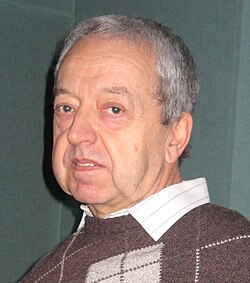
Jani Golob (born 18 January 1948) is a Slovenian composer, violinist, arranger and professor.
His music opus is often on the thin line of classic, pop and jazz. Golob has composed operas, ballets, orchestral works, chamber and vocal music,[1] as well as numerous Slovenian film scores,[2] and music for television and for advertising purposes. His most important works are probably three operas: Krpan's mare (1992), Medeja (1999) and Love Capital (2010); and others as Four Slovene Folk Songs (1979 and 2005), Concerto for violin and orchestra (1998) and ballet The Baptism at the Savica (1989). He is most recognized by his contribution in Slovenian popular music.[3]
His internationally best-known piece of work is the unofficially named "Planica Slow Motion Theme" (1997), an instrumental piece of music played in slow motion replays annually on worldwide broadcasting of FIS Ski Jumping/Flying World Cup events from Planica, Slovenia. Especially because of this melody Golob became famous worldwide. Each year since 1997 this piece of music is played in Planica slow motion replays live to millions of people worldwide.
Other hit songs are "Prisluhni školjki/A Song In a Seashell" (1985), "Moja dežela/My Country" (1986) and "Pustite nam ta svet/Leave Us This World" (1987), popular especially in Slovenia. In 1971 he also arranged music for the song Sejem želja/Scarborough Fair with Slovenian lyrics of this original English folk ballad. He is the arranger of the most common used orchestrated version of the Slovenian national anthem "Zdravljica", used in protocol, sports and other big events.[4]
In 1973 he acted in a film called Ljubezen na odoru (Love on the Furrows).[5]
Golob has the ability of absolute pitch. When he was younger he would write music in notes just by listening and memorizing it.[6]
He is a member of the European Academy of Sciences and Arts.[7]
Career
[edit]In the 1960s he founded Slovene pop band Delial, in which he played bass guitar. He studied violin with graduate education in 1971 and with musical composition in 1977 at the Ljubljana Academy of Music. At first he was mainly an arranger and later started writing his own compositions. From 1998 to 2000 he was professor of music composition and theory at the Academy for Theatre, Radio, Film and Television in Ljubljana (AGRFT).[1] From then on he has been a professor of musical composition at the Ljubljana Academy of Music. Between 2002 and 2006 he was the president of Society of Slovene Composers.
Golob's compositions are performed by the most important Slovene ensembles and orchestras and also different important European artists, such as Slovakian State Philharmony Košice and Berlin Symphony Orchestra, with their conductors George Pehlivanian, En Shao, David de Villiers, and Carl Davis.
He was a member of many international music juries at various European festivals:
- Selector for music for the European Month of Culture EMK (1997)
- Representative of RTV Slovenia at the EBU work group for music (Eurovision, 1992-1998)
- Representative of RTV Slovenia at the International Music Centre in Vienna (1992-1998)
- Member of the international jury at Festival Prix Italia in Turin (1994)
- Member of the international jury at Festival Golden Prague in Prague (1996)
- Member of the European Academy of Sciences and Arts in Salzburg (since 1992)
Awards and prizes
[edit]He has received many Slovenian and international awards in classic and in popular music:[4][8]
- In 1975, 1976 and 1980 he won the Golden Medal for the best arrangement at the Slovene Song Festival.
- In 1977 he won the Prešeren Award of University of Ljubljana for "Concertino for big orchestra" and the Silver Medal at the Slovene Song Festival.
- In 1978 in Bratislava he won third prize in the Grand Prix de Musique Folklorique de Radio Bratislava for "Sv. Sintilawdič".
- In 1980 he won the Second and third prize of the Expert Jury at the Slovene Song Festival.
- In 1983 he won the Župančič Prize for "Four Slovene Folk Songs for stings".
- In 1986 and 1988 he won the Metod Badjura Recognition Award.
- In 1987 in Cannes he won the collective prize at the Prix National at the 34ème Festival du Film Publicitaire Cinema & Television Cannes for "The Guests are Coming", part of the project "Slovenia, My Country", and won the first prize for it at the festival of tourism short films in Berlin.
- In 2000 he won the Prešeren Fund Prize for "Violin Concerto".
- In 2012 he won the Kozina Award for lifetime achievements in music from the Society of Slovene Composers.
Selected works
[edit]Orchestral music
[edit]| Year | Original title | English title | Title continues |
|---|---|---|---|
| 1977 | Concertino | Concertino | for big orchestra |
| Nokturno | Nocturne | for string orchestra | |
| 1978 | Sveti Sintilawdič | Sveti Sintilawdič | for chamber orchestra |
| 1979 | Komorna glasba | Chamber Music | for orchestra |
| Štiri ljudske pesmi | Four Folk Songs | for string orchestra | |
| 1980 | Uvertura | Overture | for symphony orchestra |
| Elegija | Elegy | for flugelhorn and string orchestra | |
| 1982 | Koncertantna glasba | Concertante Music | for woodwind quintet and orchestra |
| 1984 | Svatbeni ples | Wedding Dance | for two clarinets and string orchestra |
| 1985 | Mi za mir | We for Peace | for chamber orchestra (40th anniversary of UN) |
| 1988 | Rezijski ples | Rezian Dance | for two Rezian fiddlers and string orchestra |
| 1990 | Slovenska rapsodija | Slovenian Rhapsody | for orchestra |
| 1992 | Koncert | Concerto | for violin, cello and orchestra |
| 1993 | Hommage Rahmaninovu | Hommage Rahmaninovu | for symphony orchestra |
| 1995 | Variacije | Variations | for violin, piano and orchestra |
| 1996 | Introdukcija | Introduction | for alt saxophone and string orchestra |
| Introdukcija | Introduction | for alt saxophone and saxophone orchestra | |
| 1998 | Koncert | Concerto | for violin and orchestra |
| Concertino | Concertino | za flute and string orchestra | |
| 1999 | Romanca in humoreska | Romance and Humoresque | for violin and string orchestra |
| Upanje | Hope | for symphony orchestra | |
| Fanfare | Fanfares | for wind orchestra | |
| 2000 | Concerto grosso | Concerto grosso | for chamber quartet and wind orchestra |
| Nostalgija | Nostalgia | for two violas and string orchestra | |
| Passacaglia | Passacaglia | za violino, violo, violončelo in orkester | |
| 2000 | Koncert | Concertino | for cello and string orchestra |
| 2001 | Koncert | Concertino | for cello and string orchestra |
| 2004 | Allegro festivo | Allegro festivo | for wind orchestra |
| Tri epizode | Three Episodes | for horn and orchestra | |
| 2005 | The Night Shift | The Night Shift | for brass quintet and wind orchestra |
| Štiri slovenske ljudske pesmi | Four Slovene Folk Songs | for symphony orchestra | |
| Štiri prekmurske ljudske pesmi | Four Prekmurje Folk Songs | za tenor, violino in orkester | |
| 2006 | Tempered | Tempered | for chamber ensemble and string orchestra |
| Zlatorog | Zlatorog | ballet suite | |
| 2007 | Missa in Do | Missa in Do | for soloists, mixed choir, organ and orchestra |
| - | Vöra bije, sunce mi zahaja | My Time Has Come, My Sun Has Gone | for chamber orchestra |
| - | Cool Voices | Cool Voices | for string orchestra |
Vocal
[edit]| Year | Original title | English title | Title continues |
|---|---|---|---|
| 1981 | Stara Ljubljana | Old Ljubljana | cantata for youth choir, recitator and chamber orchestra |
| 1984 | Zreilo je žito | Wheat Has Ripened | for alto, ocarina, hammered dulcimer, percussion and string orchestra |
| Ne ouri ne sejaj | Ne ouri ne sejaj | for alto and string orchestra | |
| 1986 | Neznani materi | To the Unknown Mother | for baritone and string orchestra |
| 1988 | Tisti čas | That Time | Song Cycle for alto and string orchestra |
| 1989 | Lovec na ljudi | Man Hunter | for alto and string orchestra |
| 1995 | Quo vadis, Domine | Quo vadis, Domine | for tenor, mixed choir organ orchestra |
| 2005 | Vaje v slogu | Exercises in Style | variations on Slovenian folk song for mixed choir and chamber orchestra |
Choral
[edit]| Year | Original title | English title | Title continues |
|---|---|---|---|
| 1979 | Mesto | The City | for mixed chorus |
| 1980 | Kata, Katalena | Kata, Katalena | for 12 voices |
| 1988 | Mesto | The City | for male chorus |
Opera and ballet
[edit]| Year | Original title | English title | Note |
|---|---|---|---|
| 1985 | Urška in povodni mož | Ursula and the Water Sprite | ballet in 6 scenes |
| 1989 | Krst pri Savici | The Baptism at the Savica | ballet |
| 1992 | Krpanova kobila | Krpan's Mare | opera buffa in 3 acts |
| 1994 | Matiček se ženi | Matiček's Wedding | ballet in 3 scenes |
| 1999 | Medeja | Medeja | opera |
| 2004 | Ivana | Ivana | dance puppet show for adults |
| 2010 | Ljubezen kapital | Love Capital | opera in 3 acts |
Chamber music
[edit]| Year | Original title | English title | Title continues |
|---|---|---|---|
| 1977 | Poema | Poema | for woodwind quintet |
| Andante | Andante | for string quartet | |
| Romanca | Romance | for viola and piano | |
| 1978 | Komorna glasba | Chamber Music | for 11 instruments |
| Balada | Ballad | for trumpet (or flugelhorn) and piano | |
| 1979 | Capriccio | Capriccio | for soprano saxophone, double bass and percussion |
| Glasba | Music | for bassoon and piano | |
| Skica | Sketch | for flute and piano | |
| 1980 | Passacaglia | Passacaglia | for piano quartet |
| 1981 | Groteska | Grotesque | for clarinet and piano |
| Dialog | Dialogue | for violin and guitar | |
| Capriccio | Capriccio | for trumpet and piano | |
| 1982 | Tri skladbe | Three Pieces | for violin and piano |
| Igre | Games | for recorder, violin and cello | |
| Glasba | Music | for oboe (or English horn) and harp | |
| 1983 | Dve skladbi | Two Pieces | for cello and piano |
| Tri skladbe | Three Pieces | for horn and piano | |
| Melodija | Melody | for cello and piano | |
| Glasba | Music | for flute and piano | |
| Glasba | Music | for accordion and cello | |
| 1984 | Trio 84' | Trio 84' | for violin, viola and cello |
| Dialog | Dialogue | for flute and viola | |
| Iz dnevnika padlega partizana | Iz dnevnika padlega partizana | for bass, violin, viola, cello and piano | |
| Tri pesmi | Three songs | for bass, cello and piano | |
| 1985 | Dialogi | Dialogues | for two violins |
| Sonatina | Sonatina | for violin and piano | |
| Sonata št. 1 | Sonata No.1 | for violin and piano | |
| 1986 | Sonata št. 2 | Sonata No.2 | for violin and piano |
| Gozd | Forest | for horn and organ | |
| Uvodna glasba | Introduction Music | for 4 horns | |
| Tri pesmi | Three Songs | for tenor, violin and piano | |
| 1987 | Godalni kvartet št. 1 | String Quartet No.1 | - |
| Godalni kvartet št. 2 | String Quartet No.2 | - | |
| Koral | Choral | for brass quintet and organ | |
| Tri miniature | Three Miniatures | for double bass and piano | |
| Tri pesmi | Three Songs | for mezzo-soprano, violin and guitar | |
| Monolog | Monologue | for clarinet, percussion and tape | |
| 1988 | Tri variacije | Three Variations | for cello and piano |
| 1990 | Concertino | Concertino | for guitar and string quartet |
| Toccata | Toccata | for two pianos and percussion | |
| 1991 | The Seventh Avenue Blues | The Seventh Avenue Blues | for violin and piano |
| Sonata | Sonata | for cello and piano | |
| 1992 | Glasba | Music | for alto saxophone and piano |
| 1993 | Bagatela | Bagatelle | for recorder and piano |
| Humoreska | Humoresque | for clarinet and piano | |
| Igre | Games | for two cellos and organ | |
| Tri skladbe | Three Pieces | for horn, trumpet, trombone and piano | |
| Človek zmaguje ali zgodba neke ozdravitve | Man Wins or the Story of a Cure | for woodwind quintet | |
| Dve bagateli | Two Bagatelles | for two violins, cello and organ | |
| 1994 | Bagatela | Bagatelle | for trumpet and organ |
| Balada | Ballade | for saxophone ensemble | |
| Igre | Games | for violin, guitar and accordion | |
| 1995 | Godalni kvartet št. 3 | String Quartet No.3 | - |
| 1999 | Glasba | Music | for flute and piano |
| 2000 | Romanca | Romance | for violin and piano |
| 2002 | Danubiana | Danubiana | for seven performers |
| Passacaglia in Toccata | Passacaglia in Toccata | for string quartet | |
| 2003 | In blue | In blue | for alto saxophone, string quartet and double bass |
| 2005 | Glasba | Music | for flute and piano |
| 2006 | Invokacija | Invocation | for chamber ensemble |
| TASF (Moderato assai Ritmico) | TASF (Moderato assai Ritmico) | for brass ensemble | |
| 2007 | Sence | Shadows | for chamber orchestra |
| 2008 | Koncertantne epizode | Koncertantne epizode | for violin and chamber orchestra |
| 2008-09 | Slovenska fantazija | Slovenian Fantasy | for flute and piano |
| 2009 | Tri bagatele | Three Bagatelles | for harp and chamber orchestra |
| - | Capriccio | Capriccio | percussion, soprano-saxophone and double bass |
Works for solo instruments
[edit]| Year | Original title | English title | Title continues |
|---|---|---|---|
| 1978 | Sonatina | Sonatina | for violin solo |
| 1979 | Valse | Valse | for piano |
| Etuda | Etude | for percussion | |
| 1981 | Preludij | Prelude | for accordion |
| 1983 | Improvizacija | Improvisation | for double bass solo |
| 1984 | Dve romanci | Two Romances | for violoncello solo |
| 1987 | Slovenska rapsodija | Slovene Rhapsody | for guitar |
| 2005 | Tri etude | Three Etudes | for guitar |
| 2007 | Tri skladbe | Three Pieces | for piano |
Television
[edit]Film scores
[edit]| Year | Original title | English title |
|---|---|---|
| 1983 | Dih | |
| 1984 | Leta odločitve | The Years of Decision |
| Veselo gostivanje | ||
| 1985 | Poletje v školjki | A Summer in a Sea-Shell |
| 1986 | Heretik | Heretic |
| 1987 | Čisto pravi gusar | A Real Pirate |
| 1988 | Poletje v školjki II | A Summer in a Sea-Shell II |
| Odpadnik | The Maverick | |
| 1989 | Coprnica Zofka | Sophie the Witch |
| Nekdo drug | Someone Else | |
| 1999 | Patriot | |
| 2005 | Predmestje | Suburbs |
| 2008 | Videvanje Van Gogha | Seeing Van Gogh |
| 2010 | Črni bratje | Black Brothers |
TV music
[edit]| Year | Original title | English title | Note |
|---|---|---|---|
| 1982 | Živeti, živeti | Desire for Life | short documentary |
| Zmaga | Victory | short documentary | |
| Slike iz leta 1941 | short documentary | ||
| 1983 | Putovanje plavog lonca | Trip of a Blue Pot | short animated |
| 1984 | Strici so mi povedali | TV series | |
| Kasač | documentary short | ||
| Kugy | children's TV series | ||
| Gorenčev vrag | children's TV series | ||
| 1986 | Primož Trubar | TV series | |
| Slovenija, moja dežela | Slovenia, My land | for ad Gostje prihajajo | |
| 1987 | Dopust | Holiday | TV film |
| 1988 | Bronasti vijak | Bronze Screw | TV series |
| 1991 | Ljubezen po kranjsko | Love, Kranj Style | TV film |
| 1992 | Portret Jožeta Galeta | Portrait of Jože Gale | documentary short |
| 1996 | Domače obrti na Slovenskem - Krovci | Handcrafts in Slovenia - Roofers | TV documentary short |
| Domače obrti na Slovenskem - Kamnarji in kamnoseki | Handcrafts in Slovenia - Stonecutters and Stonemasons | TV documentary short | |
| Domače obrti na Slovenskem - Puškarji | Handcrafts in Slovenia - Gunmakers | TV documentary short | |
| 1997 | Planica | slow motion music (ski flying) | |
| Pesem od Ludomorca | The Ballad of the Butcherman | short film | |
| 2006 | Sejalci svetlobe | TV film | |
| Sejalci besed | TV film | ||
| En dan resnice | One Day of Truth | fiction short | |
| 2011 | Slovenci in 1. svetovna vojna | Slovenia and World War I | documentary (in production) |
Hit singles
[edit]| Year | Original | English | Performed by |
|---|---|---|---|
| 1971 | "Sejem želja" | Scarabough Fair | Delial |
| 1985 | "Prisluhni školjki" | "Song to a Seashell" | Black & White |
| 1986 | "Moja dežela" | "My Country" | Oto Pestner ft. Strune |
| 1987 | "Pustite nam ta svet" | "Leave Us This World" | Vlado Kreslin ft. RTV Slovenia Symphony Orchestra |
| 1997 | "Planica Slow Motion Music" | "Planica Slow Motion Music" | Jani Golob |
Discography
[edit]- Jani Golob - skladatelj, 1988 (LP)
- Glasba iz filma Poletje v školjki I. in II., 1986 (cassette)
- Sklicujem zborovanje, šansoni, 1987 (cassette)
- Pusti pevcu peti, Prešernove pesmi, 1991 (cassette)
- Pevca pesem sladka, Prešernove pesmi, 1991 (cassette)
- Škofjeloški pasijon, 1992 (double cassette)
- Jani Golob - skladatelj, 1994 (CD)
- Lepa Vida, glasba iz predstave, 1995 (CD)
References
[edit]- ^ a b Society of Slovene Composers: Jani Golob
- ^ Internet Movie Database: Jani Golob
- ^ "Odprti kop - Družinske zgodbe: Družina Golob in Habe". 3 December 2013. Archived from the original on 3 December 2013. Retrieved 28 February 2025.
- ^ a b c "Jani Golob". MusMa (in Italian). Retrieved 28 February 2025.
- ^ "Love on the Furrows: film-center.si". Archived from the original on 5 March 2016. Retrieved 23 May 2012.
- ^ "Jani Golob". MusMa (in Italian). Retrieved 18 June 2024.
- ^ "Members". members.euro-acad.eu. Retrieved 28 February 2025.
- ^ "GOLOB Jani". www.dss.si. Retrieved 28 February 2025.
External links
[edit]- Jani Golob at the Society of Slovene Composers
- Jani Golob at the Slovenian Film Database
- Jani Golob at IMDb
- "Planica Slow Motion Music" (1997) on YouTube
- "Moja dežela/My Country" (1986) - from short video Gostje prihajo/Guest are coming - part of Slovenian tourism campaign "Slovenija, moja dežela/Slovenia, My Country" on YouTube
- "Pustite nam ta svet/Leave Us This World" (1987) on YouTube
- "Prisluhni školjki/Song to a Seashell" (1985 on YouTube
- "Sejem želja/Scarabough Fair" (1971) - arranged Slovene version on YouTube
| International | |
|---|---|
| National | |
| Artists | |
| People | |
| Other | |
