
Recent from talks
Japanese submarine I-64
Knowledge base stats:
Talk channels stats:
Members stats:
Japanese submarine I-64
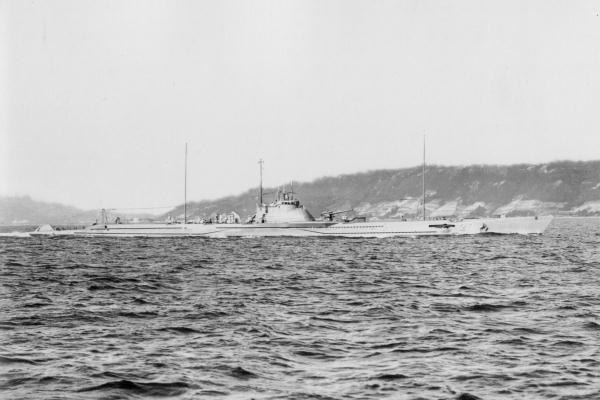
I-64 was an Imperial Japanese Navy Kaidai-class cruiser submarine of the KD4 sub-class commissioned in 1930. During World War II, she supported the Japanese invasion of Malaya and conducted war patrols in the Indian Ocean before she was sunk in May 1942 while deploying to take part in the upcoming Battle of Midway. Just after her loss, and before her loss became known to the Japanese, she was renumbered I-164.
Built by the Kure Naval Arsenal at Kure, Japan, I-64 was laid down on 28 March 1927 and launched on 5 October 1929. She was completed and accepted into Imperial Japanese Navy service on 30 August 1930.
Upon commissioning, I-64 was attached to the Sasebo Naval District and assigned to Submarine Division 29, in which she served until 1942 alongside the submarines I-61 and I-62. Submarine Division 29 in turn was assigned to Submarine Squadron 1 in the 1st Fleet, a component of the Combined Fleet, on 1 December 1930. Submarine Division 29 was reassigned to the Sasebo Defense Division in the Sasebo Naval District on 10 November 1932. On 15 November 1933, Submarine Division 29 was reassigned to Submarine Squadron 2 in the 2nd Fleet, also a component of the Combined Fleet.
I-64 departed Ryojun, Manchukuo, on 27 September 1934 in company with I-61, I-62, and the submarines I-56, I-57, I-58, I-65, I-66, and I-67 to conduct a training cruise in the Qingdao area off China. The nine submarines completed the cruise with their arrival at Sasebo on 5 October 1934. On 7 February 1935, I-64 departed Sasebo in company with the other eight submarines of Submarine Squadron 2 — I-53, I-54, I-55, I-59, I-60, I-61, I-62, and I-63 — for a training cruise in the Kuril Islands. The cruise concluded with their arrival at Sukumo Bay on 25 February 1935. The nine submarines departed Sasebo on 29 March 1935 to train in Chinese waters, returning to Sasebo on 4 April 1935.
Submarine Division 29 had a second assignment to the Sasebo Defense Division in the Sasebo Naval District from 15 November 1935 to 1 December 1936, then again had duty in Submarine Squadron 2 in the 2nd Fleet in the Combined Fleet from 1 December 1936 to 15 December 1938. Submarine Division 29 then served at the submarine school at Kure, Japan, from 15 December 1938 to 15 November 1939, when I-64 was placed in the Third Reserve in the Sasebo Naval District. When I-64 was recommissioned on 15 November 1940, Submarine Division 29 was reassigned to Submarine Squadron 5 in the Combined Fleet.
As the Imperial Japanese Navy began to deploy in preparation for the impending conflict in the Pacific, Submarine Division 29, still made up of I-62 and I-64, departed Sasebo, Japan, on 26 November 1941 bound for Palau along with the rest of Submarine Squadron 5, namely the submarines of Submarine Division 30 and the squadron's flagship, the light cruiser Yura. While en route, the entire squadron was diverted to Samah on Hainan Island in China.
On 5 December 1941, I-64 departed Samah to begin what would become her first war patrol. When the Japanese invasion of Malaya began on 8 December 1941 — the first day of the war in East Asia — I-64 was in the South China Sea off Trengganu, British Malaya, operating as the easternmost submarine on a patrol line with the submarines I-57, I-58, I-62, and I-66. Reassigned to Patrol Unit "B" on 26 December 1941, she concluded her patrol by arriving at Cam Ranh Bay in Japanese-occupied French Indochina on 27 December 1941.
As a unit of Patrol Group "B," I-64 was among submarines tasked with attacking Allied shipping in the Indian Ocean west of the 106th meridian east, operating from a new base at newly captured Penang in Japanese-occupied British Malaya. Accordingly, on 7 January 1942 I-64 departed Cam Ranh Bay to begin her second war patrol. At 16:30 local time on 22 January 1942 while in the Indian Ocean 550 nautical miles (1,020 km; 630 mi) west of Sibolga, Sumatra, she fired two torpedoes at the Dutch 4,482-gross register ton Koninklijke Paketvaart-Maatschappij merchant ship Van Overstraten, which was on a voyage from Bombay, India, to Oosthaven, Sumatra. After one torpedo passed ahead of Van Overstraten and one passed under her keel, leaving her undamaged, I-64 surfaced and opened fire on Van Overstraten with her deck gun. She scored a number of hits, slowing Van Overstraten and killing four members of her crew. Van Overstraten stopped and her surviving crew abandoned ship in her lifeboats. After waiting for the boats to pull away to a safe distance, I-64 hit Van Overstraten with a torpedo shortly before sunset, and Van Overstraten sank by the bow at 01°40′N 090°13′E / 1.667°N 90.217°E. There were 113 survivors.
Hub AI
Japanese submarine I-64 AI simulator
(@Japanese submarine I-64_simulator)
Japanese submarine I-64
I-64 was an Imperial Japanese Navy Kaidai-class cruiser submarine of the KD4 sub-class commissioned in 1930. During World War II, she supported the Japanese invasion of Malaya and conducted war patrols in the Indian Ocean before she was sunk in May 1942 while deploying to take part in the upcoming Battle of Midway. Just after her loss, and before her loss became known to the Japanese, she was renumbered I-164.
Built by the Kure Naval Arsenal at Kure, Japan, I-64 was laid down on 28 March 1927 and launched on 5 October 1929. She was completed and accepted into Imperial Japanese Navy service on 30 August 1930.
Upon commissioning, I-64 was attached to the Sasebo Naval District and assigned to Submarine Division 29, in which she served until 1942 alongside the submarines I-61 and I-62. Submarine Division 29 in turn was assigned to Submarine Squadron 1 in the 1st Fleet, a component of the Combined Fleet, on 1 December 1930. Submarine Division 29 was reassigned to the Sasebo Defense Division in the Sasebo Naval District on 10 November 1932. On 15 November 1933, Submarine Division 29 was reassigned to Submarine Squadron 2 in the 2nd Fleet, also a component of the Combined Fleet.
I-64 departed Ryojun, Manchukuo, on 27 September 1934 in company with I-61, I-62, and the submarines I-56, I-57, I-58, I-65, I-66, and I-67 to conduct a training cruise in the Qingdao area off China. The nine submarines completed the cruise with their arrival at Sasebo on 5 October 1934. On 7 February 1935, I-64 departed Sasebo in company with the other eight submarines of Submarine Squadron 2 — I-53, I-54, I-55, I-59, I-60, I-61, I-62, and I-63 — for a training cruise in the Kuril Islands. The cruise concluded with their arrival at Sukumo Bay on 25 February 1935. The nine submarines departed Sasebo on 29 March 1935 to train in Chinese waters, returning to Sasebo on 4 April 1935.
Submarine Division 29 had a second assignment to the Sasebo Defense Division in the Sasebo Naval District from 15 November 1935 to 1 December 1936, then again had duty in Submarine Squadron 2 in the 2nd Fleet in the Combined Fleet from 1 December 1936 to 15 December 1938. Submarine Division 29 then served at the submarine school at Kure, Japan, from 15 December 1938 to 15 November 1939, when I-64 was placed in the Third Reserve in the Sasebo Naval District. When I-64 was recommissioned on 15 November 1940, Submarine Division 29 was reassigned to Submarine Squadron 5 in the Combined Fleet.
As the Imperial Japanese Navy began to deploy in preparation for the impending conflict in the Pacific, Submarine Division 29, still made up of I-62 and I-64, departed Sasebo, Japan, on 26 November 1941 bound for Palau along with the rest of Submarine Squadron 5, namely the submarines of Submarine Division 30 and the squadron's flagship, the light cruiser Yura. While en route, the entire squadron was diverted to Samah on Hainan Island in China.
On 5 December 1941, I-64 departed Samah to begin what would become her first war patrol. When the Japanese invasion of Malaya began on 8 December 1941 — the first day of the war in East Asia — I-64 was in the South China Sea off Trengganu, British Malaya, operating as the easternmost submarine on a patrol line with the submarines I-57, I-58, I-62, and I-66. Reassigned to Patrol Unit "B" on 26 December 1941, she concluded her patrol by arriving at Cam Ranh Bay in Japanese-occupied French Indochina on 27 December 1941.
As a unit of Patrol Group "B," I-64 was among submarines tasked with attacking Allied shipping in the Indian Ocean west of the 106th meridian east, operating from a new base at newly captured Penang in Japanese-occupied British Malaya. Accordingly, on 7 January 1942 I-64 departed Cam Ranh Bay to begin her second war patrol. At 16:30 local time on 22 January 1942 while in the Indian Ocean 550 nautical miles (1,020 km; 630 mi) west of Sibolga, Sumatra, she fired two torpedoes at the Dutch 4,482-gross register ton Koninklijke Paketvaart-Maatschappij merchant ship Van Overstraten, which was on a voyage from Bombay, India, to Oosthaven, Sumatra. After one torpedo passed ahead of Van Overstraten and one passed under her keel, leaving her undamaged, I-64 surfaced and opened fire on Van Overstraten with her deck gun. She scored a number of hits, slowing Van Overstraten and killing four members of her crew. Van Overstraten stopped and her surviving crew abandoned ship in her lifeboats. After waiting for the boats to pull away to a safe distance, I-64 hit Van Overstraten with a torpedo shortly before sunset, and Van Overstraten sank by the bow at 01°40′N 090°13′E / 1.667°N 90.217°E. There were 113 survivors.
Recent media