


Community hub
Recent from talks
Contribute something to knowledge base
Content stats: 0 posts, 0 articles, 1 media, 0 notes
Members stats: 0 subscribers, 0 contributors, 0 moderators, 0 supporters
Subscribers
Supporters
Contributors
Moderators
Jasraj
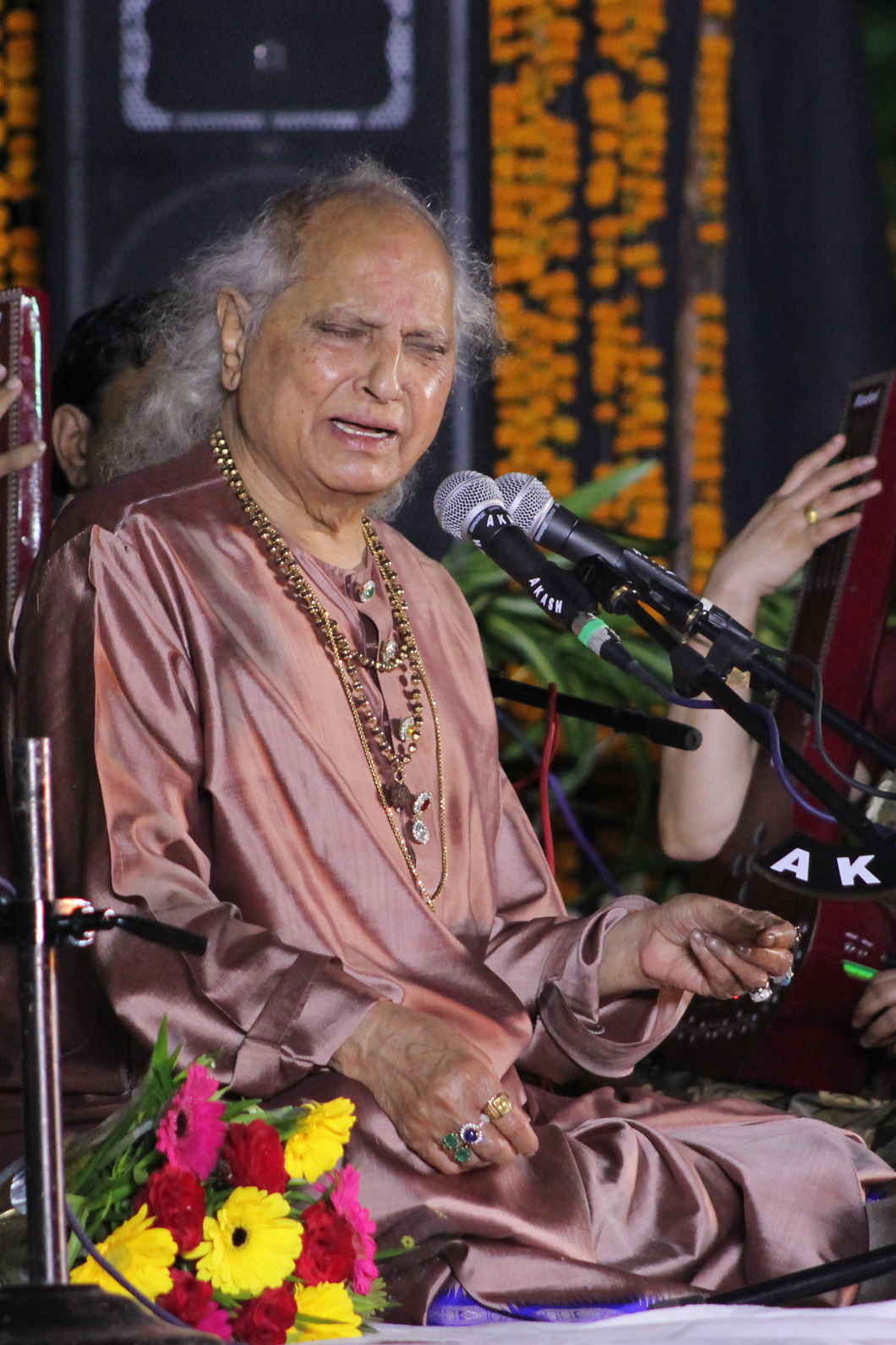
Pandit Jasraj (28 January 1930 – 17 August 2020) was an Indian classical vocalist, belonging to the Mewati gharana (musical apprenticeship lineage). His musical career spanned 75 years resulting in national and international fame, respect and numerous major awards and accolades. His legacy includes memorable performances of classical and semi-classical vocal music, classical and devotional music, albums and film soundtracks, innovations in various genres including Haveli Sangeet and popularizing the Mewati Gharana – a school of thought in Hindustani classical music. Pandit Jasraj taught music to amateur and professional students in India, Europe, Canada and the United States.
Pandit Jasraj was born on 28 January 1930 in Pili Mandori, a village in the then Hisar district (now in Fatehabad district) of Haryana, in an artistic Brahmin family to Pandit Motiram, a classical singer and Krishna Bai. He was the youngest of three sons, in a family of classical singers. Motiram died in 1934 when Jasraj was four, on the day he was to be appointed as the state musician in the court of Mir Osman Ali Khan, the Nizam (ruler) of Hyderabad State. His eldest brother was vocalist Pandit Maniram, who instructed Jasraj after the death of their father. Jasraj's elder brother, Pandit Pratap Narayan, was also an accomplished musician and was the father of music composer duo Jatin–Lalit, singer-actress Sulakshana Pandit and actress Vijeta Pandit. Pandit Pratap Narayan taught Jasraj to play tabla starting at age 7, but Jasraj decided that he wanted to only sing by 14.
Jasraj spent his youth in Hyderabad, and travelled often to Sanand in Gujarat to study music with musicians of the Mewati gharana. Jasraj performed for Thakur Jaiwant Singhji Vaghela, the Thakur Sahib of Sanand, who was deeply dedicated to classical music, and received training from him.
In 1946, Jasraj moved to Calcutta, where he began singing classical music for radio.
In 1962, Jasraj married Madhura Shantaram, the daughter of film director V. Shantaram, whom he had first met in 1960 in Bombay. They initially lived in Calcutta, moving to Bombay in 1963. They had two children, a son, Shaarang Dev Pandit, a daughter, Durga Jasraj, and four grandchildren.
Madhura made a film, Sangeet Martand Pandit Jasraj in 2009 and directed her first Marathi film, Aai Tuza Ashirwad, in 2010, in which Jasraj and Lata Mangeshkar sang in Marathi.
Jasraj was initiated into vocal music by his father, and later trained as a tabla accompanist under his elder brother, Pandit Pratap Narayan. He would frequently accompany Maniram in his solo vocal performances. He credits the vocalist, Begum Akhtar, as inspiring him to take up classical music.
Jasraj began training as a vocalist at the age of 14, after renouncing tabla in reaction to how accompanists were treated at the time . He would practice singing close to 14 hours a day. In 1952 when he was 22 he performed his first stage concert as a vocalist in the court of King Tribhuvan Bir Bikram Shah of Nepal in Kathmandu. Before becoming a stage performer, Jasraj worked as a performing artist on radio for several years.
Jasraj
Pandit Jasraj (28 January 1930 – 17 August 2020) was an Indian classical vocalist, belonging to the Mewati gharana (musical apprenticeship lineage). His musical career spanned 75 years resulting in national and international fame, respect and numerous major awards and accolades. His legacy includes memorable performances of classical and semi-classical vocal music, classical and devotional music, albums and film soundtracks, innovations in various genres including Haveli Sangeet and popularizing the Mewati Gharana – a school of thought in Hindustani classical music. Pandit Jasraj taught music to amateur and professional students in India, Europe, Canada and the United States.
Pandit Jasraj was born on 28 January 1930 in Pili Mandori, a village in the then Hisar district (now in Fatehabad district) of Haryana, in an artistic Brahmin family to Pandit Motiram, a classical singer and Krishna Bai. He was the youngest of three sons, in a family of classical singers. Motiram died in 1934 when Jasraj was four, on the day he was to be appointed as the state musician in the court of Mir Osman Ali Khan, the Nizam (ruler) of Hyderabad State. His eldest brother was vocalist Pandit Maniram, who instructed Jasraj after the death of their father. Jasraj's elder brother, Pandit Pratap Narayan, was also an accomplished musician and was the father of music composer duo Jatin–Lalit, singer-actress Sulakshana Pandit and actress Vijeta Pandit. Pandit Pratap Narayan taught Jasraj to play tabla starting at age 7, but Jasraj decided that he wanted to only sing by 14.
Jasraj spent his youth in Hyderabad, and travelled often to Sanand in Gujarat to study music with musicians of the Mewati gharana. Jasraj performed for Thakur Jaiwant Singhji Vaghela, the Thakur Sahib of Sanand, who was deeply dedicated to classical music, and received training from him.
In 1946, Jasraj moved to Calcutta, where he began singing classical music for radio.
In 1962, Jasraj married Madhura Shantaram, the daughter of film director V. Shantaram, whom he had first met in 1960 in Bombay. They initially lived in Calcutta, moving to Bombay in 1963. They had two children, a son, Shaarang Dev Pandit, a daughter, Durga Jasraj, and four grandchildren.
Madhura made a film, Sangeet Martand Pandit Jasraj in 2009 and directed her first Marathi film, Aai Tuza Ashirwad, in 2010, in which Jasraj and Lata Mangeshkar sang in Marathi.
Jasraj was initiated into vocal music by his father, and later trained as a tabla accompanist under his elder brother, Pandit Pratap Narayan. He would frequently accompany Maniram in his solo vocal performances. He credits the vocalist, Begum Akhtar, as inspiring him to take up classical music.
Jasraj began training as a vocalist at the age of 14, after renouncing tabla in reaction to how accompanists were treated at the time . He would practice singing close to 14 hours a day. In 1952 when he was 22 he performed his first stage concert as a vocalist in the court of King Tribhuvan Bir Bikram Shah of Nepal in Kathmandu. Before becoming a stage performer, Jasraj worked as a performing artist on radio for several years.
Recent media
Recent media