



Community hub
Recent from talks
Knowledge base stats:
Talk channels stats:
Members stats:
Jazira Region
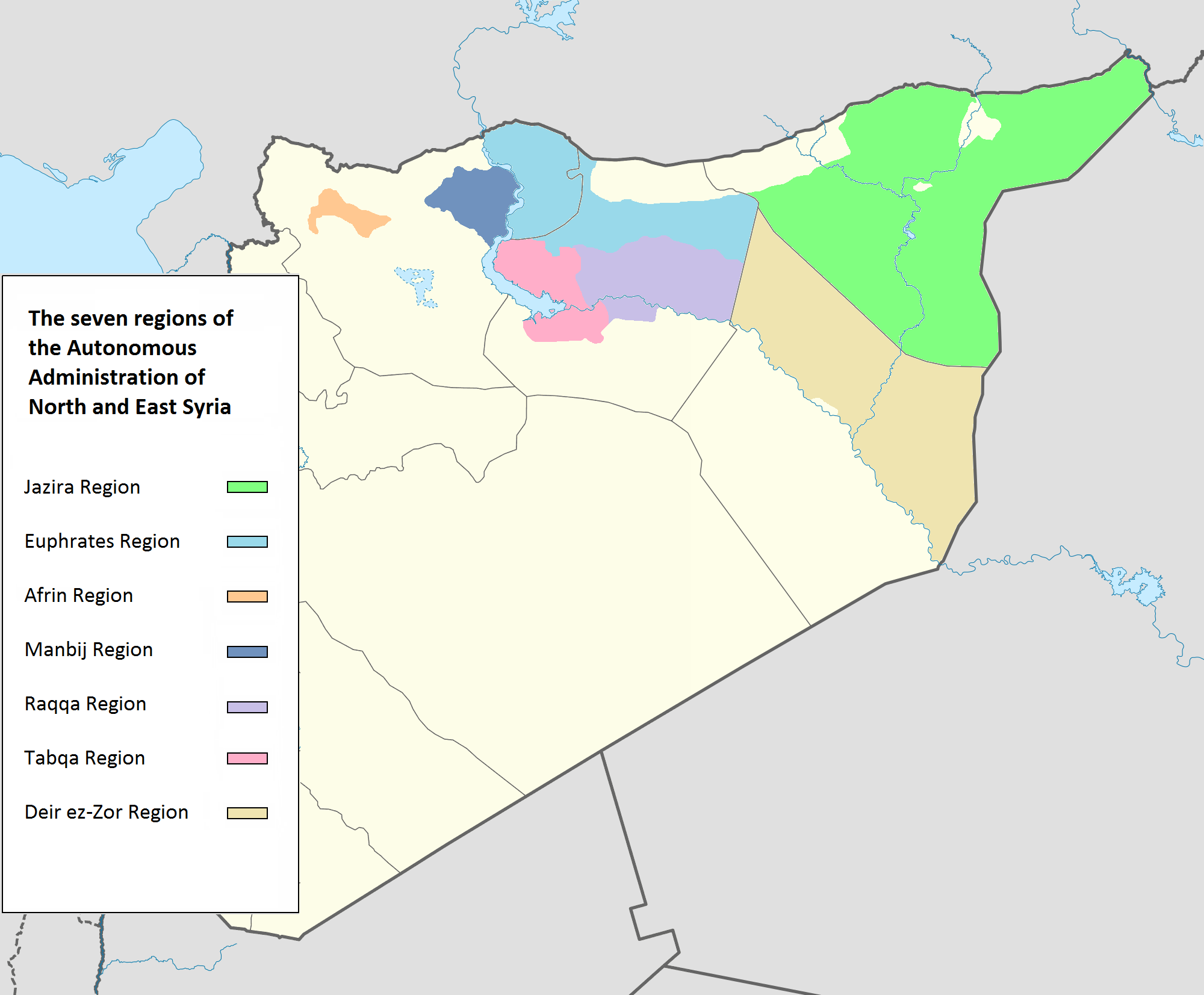
Jazira Region, formerly the Jazira Canton (Kurdish: Herêma Cizîrê; Arabic: إقليم الجزيرة; Syriac: ܦܢܝܬܐ ܕܓܙܪܬܐ, romanized: Ponyotho d'Gozarto), is the largest of the three original regions of the de facto Democratic Autonomous Administration of North and East Syria (DAANES). As part of the ongoing Rojava conflict, its democratic autonomy was officially declared on 21 January 2014. The region is in the Al-Hasakah Governorate (formerly known as the Al-Jazira Province) of Syria.
According to the DAANES constitution, the city of Qamishli is the administrative center of Jazira Region. However, as parts of Qamishli previously were under the control of Syrian government forces, meetings of the autonomous region's administration take place in the nearby city of Amuda.
The region has two subordinate cantons, the Hasakah canton consisting of the al-Hasakah area (with the Al-Shaddadi, Al-Arisha and Al-Hawl districts subordinate to it), the Al-Darbasiyah area, and the Tell Tamer area, as well as the Qamishli canton consisting of the Qamishli area (with the Amûda, Tirbê Sipî, Tel Hemîs and Tel Berak districts subordinate to it) and the Derîk area (with the Girkê Legê, Tel Koçer and Çilaxa districts subordinate to it).
Jazira Region's ethnic groups include Kurds, Arabs, Assyrians, Armenians and Yazidis. While Kurdish, Arabic and Syriac are official languages, all communities have the right to teach and be taught in their native language. Religions practiced in the region are Islam, Christianity and Yazidism. The majority of the Arabs and Kurds in the region are Sunni Muslim. Between 20 and 30% of the people of Al-Hasakeh governorate are Christians of various churches and denominations.
Cities and towns with more than 10,000 inhabitants according to the 2004 Syrian census are Hasakah (188,160), Qamishli (184,231), Amuda (26,821), Al-Malikiyah (26,311), Al-Qahtaniyah (16,946), Al-Shaddadah (15,806), Al-Muabbada (15,759), Al-Sabaa wa Arbain (14,177) and Al-Manajir (12,156).
The Jazira region has been home to one of the largest concentrations of Christians in Syria. Many of the cities where founded by Christian communities. In 1927 the regions population was recorded as the following table.
In the late 10th century, the Kurdish Humaydi tribe had their winter pastures in the Jazira region and clashed with forces of Buyid ruler Adud al-Dawla. During the Ottoman Empire (1299–1922), large Kurdish-speaking tribal groups both settled in and were deported to areas of northern Syria from Anatolia. The largest of these tribal groups was the Reshwan confederation, which was initially based in Adıyaman Province but eventually also settled throughout Anatolia. The Milli confederation, mentioned in 1518 onward, was the most powerful group and dominated the entire northern Syrian steppe in the second half of the 18th century. Danish writer C. Niebuhr who traveled to Jazira in 1764 recorded five nomadic Kurdish tribes (Dukurie, Kikie, Schechchanie, Mullie and Aschetie) and six Arab tribes (Tay, Kaab, Baggara, Geheish, Diabat and Sherabeh). According to Niebuhr, the Kurdish tribes were settled near Mardin in Turkey, and paid the governor of that city for the right to graze their herds in the Syrian Jazira. The Kurdish tribes gradually settled in villages and cities and are still present in Jazira (modern Syria's Hasakah Governorate). The Ottoman province of Diyarbekir, which included parts of modern-day northern Syria, was called Eyalet-i Kurdistan during the Tanzimat reforms period (1839–67). Until the 19th century, Kurdistan did not include the lands of Syrian Jazira in some books. The Treaty of Sèvres' putative Kurdistan did not include any part of today's Syria. According to McDowall, Kurds slightly outnumbered Arabs in Jazira in 1918.
The demographics of Northern Syria saw a huge shift in the early part of the 20th century when the Ottoman Empire (Turks) conducted ethnic cleansing of its Christian Armenian and Assyrian populations. Some Kurdish tribes joined in the atrocities committed against them. Many Assyrians fled to Syria during the genocide and settled mainly in the Jazira area.
Hub AI
Jazira Region AI simulator
(@Jazira Region_simulator)
Jazira Region
Jazira Region, formerly the Jazira Canton (Kurdish: Herêma Cizîrê; Arabic: إقليم الجزيرة; Syriac: ܦܢܝܬܐ ܕܓܙܪܬܐ, romanized: Ponyotho d'Gozarto), is the largest of the three original regions of the de facto Democratic Autonomous Administration of North and East Syria (DAANES). As part of the ongoing Rojava conflict, its democratic autonomy was officially declared on 21 January 2014. The region is in the Al-Hasakah Governorate (formerly known as the Al-Jazira Province) of Syria.
According to the DAANES constitution, the city of Qamishli is the administrative center of Jazira Region. However, as parts of Qamishli previously were under the control of Syrian government forces, meetings of the autonomous region's administration take place in the nearby city of Amuda.
The region has two subordinate cantons, the Hasakah canton consisting of the al-Hasakah area (with the Al-Shaddadi, Al-Arisha and Al-Hawl districts subordinate to it), the Al-Darbasiyah area, and the Tell Tamer area, as well as the Qamishli canton consisting of the Qamishli area (with the Amûda, Tirbê Sipî, Tel Hemîs and Tel Berak districts subordinate to it) and the Derîk area (with the Girkê Legê, Tel Koçer and Çilaxa districts subordinate to it).
Jazira Region's ethnic groups include Kurds, Arabs, Assyrians, Armenians and Yazidis. While Kurdish, Arabic and Syriac are official languages, all communities have the right to teach and be taught in their native language. Religions practiced in the region are Islam, Christianity and Yazidism. The majority of the Arabs and Kurds in the region are Sunni Muslim. Between 20 and 30% of the people of Al-Hasakeh governorate are Christians of various churches and denominations.
Cities and towns with more than 10,000 inhabitants according to the 2004 Syrian census are Hasakah (188,160), Qamishli (184,231), Amuda (26,821), Al-Malikiyah (26,311), Al-Qahtaniyah (16,946), Al-Shaddadah (15,806), Al-Muabbada (15,759), Al-Sabaa wa Arbain (14,177) and Al-Manajir (12,156).
The Jazira region has been home to one of the largest concentrations of Christians in Syria. Many of the cities where founded by Christian communities. In 1927 the regions population was recorded as the following table.
In the late 10th century, the Kurdish Humaydi tribe had their winter pastures in the Jazira region and clashed with forces of Buyid ruler Adud al-Dawla. During the Ottoman Empire (1299–1922), large Kurdish-speaking tribal groups both settled in and were deported to areas of northern Syria from Anatolia. The largest of these tribal groups was the Reshwan confederation, which was initially based in Adıyaman Province but eventually also settled throughout Anatolia. The Milli confederation, mentioned in 1518 onward, was the most powerful group and dominated the entire northern Syrian steppe in the second half of the 18th century. Danish writer C. Niebuhr who traveled to Jazira in 1764 recorded five nomadic Kurdish tribes (Dukurie, Kikie, Schechchanie, Mullie and Aschetie) and six Arab tribes (Tay, Kaab, Baggara, Geheish, Diabat and Sherabeh). According to Niebuhr, the Kurdish tribes were settled near Mardin in Turkey, and paid the governor of that city for the right to graze their herds in the Syrian Jazira. The Kurdish tribes gradually settled in villages and cities and are still present in Jazira (modern Syria's Hasakah Governorate). The Ottoman province of Diyarbekir, which included parts of modern-day northern Syria, was called Eyalet-i Kurdistan during the Tanzimat reforms period (1839–67). Until the 19th century, Kurdistan did not include the lands of Syrian Jazira in some books. The Treaty of Sèvres' putative Kurdistan did not include any part of today's Syria. According to McDowall, Kurds slightly outnumbered Arabs in Jazira in 1918.
The demographics of Northern Syria saw a huge shift in the early part of the 20th century when the Ottoman Empire (Turks) conducted ethnic cleansing of its Christian Armenian and Assyrian populations. Some Kurdish tribes joined in the atrocities committed against them. Many Assyrians fled to Syria during the genocide and settled mainly in the Jazira area.