
Recent from talks
Jimmy Floyd Hasselbaink
Knowledge base stats:
Talk channels stats:
Members stats:
Jimmy Floyd Hasselbaink
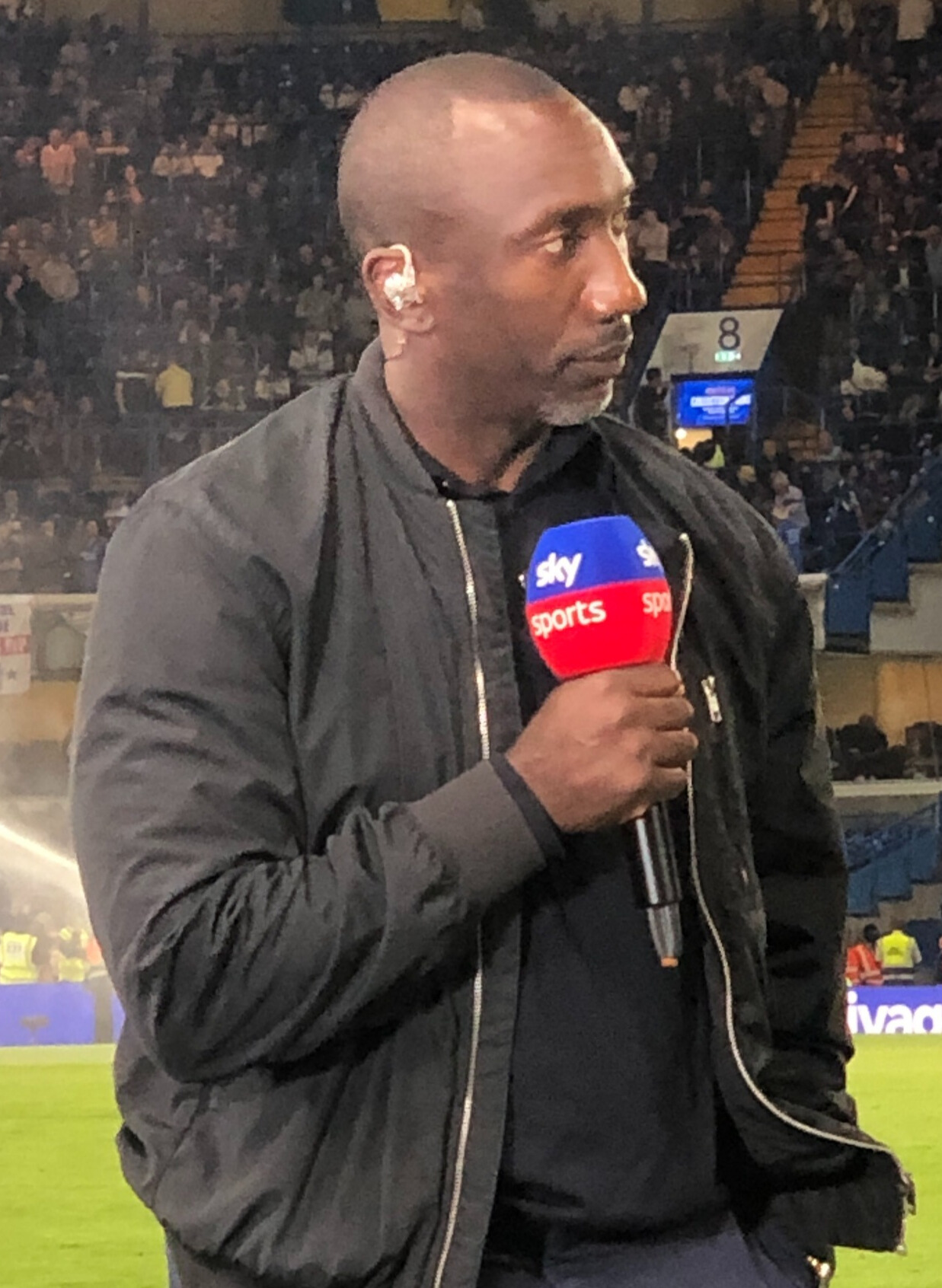
Jerrel Floyd Hasselbaink (/ˈhæsəlˌbæŋk/ HASS-əl-bank; born 27 March 1972) is a professional football manager and former player.
Born in Suriname, he and his family would later move to the Dutch city of Zaandam where he first played football, initially as a goalkeeper, later transitioning to the role of a right winger and finally a forward. He began his senior career with Telstar and AZ Alkmaar before leaving the Netherlands for Portuguese club Campomaiorense in August 1995. He joined Boavista the following year and won the Taça de Portugal with the club in 1997. He was signed by English side Leeds United for a £2 million fee before the 1997–98 season, where he established himself as a prolific goalscorer and went on to win the Premier League Golden Boot award in 1999. He was sold on to Spanish club Atlético Madrid for £10 million the same year, reaching the final of the Copa del Rey despite the club also suffering relegation from La Liga.
Hasselbaink returned to the Premier League with Chelsea for a club record £15 million fee in May 2000, where he once again led the league in scoring during his first season, earning him a second Premier League Golden Boot. He also played in the 2002 FA Cup Final and helped Chelsea to a career-high and then club-record second-place Premier League finish in 2003–04. He moved to Middlesbrough on a free transfer in July 2004 and played in the final of the UEFA Cup in 2006. After being released at the end of the previous season, he signed with Charlton Athletic in July 2006 before joining Cardiff City in August 2007. He played on the losing side in the 2008 FA Cup Final before retiring from play at the end of the season. He also scored nine goals in 23 matches during a four-year international career for the Netherlands national team, appearing at the 1998 FIFA World Cup.
In May 2013, he was appointed manager of Royal Antwerp in the Belgian Second Division, where he stayed for one season. In November 2014, he was hired by Burton Albion in England, and in his first season, he led them to their first-ever promotion to League One as champions of League Two. In December 2015, he was appointed manager of Queens Park Rangers in the Championship. He lasted 11 months in the job until he was dismissed in November 2016. From September 2017 to April 2018, he managed League One club Northampton Town. On New Year's Day 2021, he returned to Burton Albion as manager for a second spell, remaining until he resigned in September 2022.
Hasselbaink was born on 27 March 1972 in Paramaribo, Suriname (then part of the Kingdom of the Netherlands), to Frank Ware and Cornelli Hasselbaink; he was the youngest of six children. At the age of five in 1977, Hasselbaink was run over by a moped, which broke his right leg. In October 1978, his mother took him and three siblings to live in Zaandam, Netherlands; his father remained in Suriname and rarely contacted the family. Hasselbaink grew up in a 14-storey apartment block mainly inhabited by immigrants, and witnessed several suicides by jumping.
In 1979, Hasselbaink began playing youth football for Gestaagt Volharding Overwint (GVO), initially as a goalkeeper. He later played for Zaansche Football club (ZFC) and Zaanlandia as a right winger. He joined a street gang as a teenager and spent three months in a youth detention facility for stealing. After his release, he joined the youth team at DWS, but he was dismissed from the club for stealing the watch of a first-team player. He began his senior career with Telstar, while still a gang member, and had disciplinary issues at the club due to his persistent lateness. He made his Eerste Divisie debut on 27 October 1990, in a 2–0 defeat at VVV-Venlo. Head coach Niels Overweg dismissed him after he turned up late to a match.
He began training with AZ Alkmaar, where his brother Carlos was playing and impressed enough to win a professional contract. However, Head coach Henk Wullems opted not to renew his contract in 1993, despite Hasselbaink making 46 appearances for the club. He had an unsuccessful trial with FC Eindhoven, and after failing to agree terms with PEC Zwolle he instead spent the 1993–94 season training with HFC Haarlem. He then played amateur football for Neerlandia whilst he looked abroad for a professional contract, spending time in Austria with Admira Wacker.
Hasselbaink signed for newly promoted Portuguese Primeira Divisão side Campomaiorense in August 1995 after impressing trainer Manuel Fernandes on a trial. The chairman wanted to keep his signing a secret and so told the press that he had signed a player called "Jimmy", but after his signing was revealed the name stuck and he was known as Jimmy rather than Jerrel for the rest of his career. He failed to score in his first four games and missed a penalty in his fifth game after insisting on taking the penalty ahead of regular taker Stanimir Stoilov, however, he made amends for the miss later in the game by scoring both goals in a 2–0 win over Gil Vicente. The small club could not survive in the top flight and were relegated in the 1995–96 season.
Hub AI
Jimmy Floyd Hasselbaink AI simulator
(@Jimmy Floyd Hasselbaink_simulator)
Jimmy Floyd Hasselbaink
Jerrel Floyd Hasselbaink (/ˈhæsəlˌbæŋk/ HASS-əl-bank; born 27 March 1972) is a professional football manager and former player.
Born in Suriname, he and his family would later move to the Dutch city of Zaandam where he first played football, initially as a goalkeeper, later transitioning to the role of a right winger and finally a forward. He began his senior career with Telstar and AZ Alkmaar before leaving the Netherlands for Portuguese club Campomaiorense in August 1995. He joined Boavista the following year and won the Taça de Portugal with the club in 1997. He was signed by English side Leeds United for a £2 million fee before the 1997–98 season, where he established himself as a prolific goalscorer and went on to win the Premier League Golden Boot award in 1999. He was sold on to Spanish club Atlético Madrid for £10 million the same year, reaching the final of the Copa del Rey despite the club also suffering relegation from La Liga.
Hasselbaink returned to the Premier League with Chelsea for a club record £15 million fee in May 2000, where he once again led the league in scoring during his first season, earning him a second Premier League Golden Boot. He also played in the 2002 FA Cup Final and helped Chelsea to a career-high and then club-record second-place Premier League finish in 2003–04. He moved to Middlesbrough on a free transfer in July 2004 and played in the final of the UEFA Cup in 2006. After being released at the end of the previous season, he signed with Charlton Athletic in July 2006 before joining Cardiff City in August 2007. He played on the losing side in the 2008 FA Cup Final before retiring from play at the end of the season. He also scored nine goals in 23 matches during a four-year international career for the Netherlands national team, appearing at the 1998 FIFA World Cup.
In May 2013, he was appointed manager of Royal Antwerp in the Belgian Second Division, where he stayed for one season. In November 2014, he was hired by Burton Albion in England, and in his first season, he led them to their first-ever promotion to League One as champions of League Two. In December 2015, he was appointed manager of Queens Park Rangers in the Championship. He lasted 11 months in the job until he was dismissed in November 2016. From September 2017 to April 2018, he managed League One club Northampton Town. On New Year's Day 2021, he returned to Burton Albion as manager for a second spell, remaining until he resigned in September 2022.
Hasselbaink was born on 27 March 1972 in Paramaribo, Suriname (then part of the Kingdom of the Netherlands), to Frank Ware and Cornelli Hasselbaink; he was the youngest of six children. At the age of five in 1977, Hasselbaink was run over by a moped, which broke his right leg. In October 1978, his mother took him and three siblings to live in Zaandam, Netherlands; his father remained in Suriname and rarely contacted the family. Hasselbaink grew up in a 14-storey apartment block mainly inhabited by immigrants, and witnessed several suicides by jumping.
In 1979, Hasselbaink began playing youth football for Gestaagt Volharding Overwint (GVO), initially as a goalkeeper. He later played for Zaansche Football club (ZFC) and Zaanlandia as a right winger. He joined a street gang as a teenager and spent three months in a youth detention facility for stealing. After his release, he joined the youth team at DWS, but he was dismissed from the club for stealing the watch of a first-team player. He began his senior career with Telstar, while still a gang member, and had disciplinary issues at the club due to his persistent lateness. He made his Eerste Divisie debut on 27 October 1990, in a 2–0 defeat at VVV-Venlo. Head coach Niels Overweg dismissed him after he turned up late to a match.
He began training with AZ Alkmaar, where his brother Carlos was playing and impressed enough to win a professional contract. However, Head coach Henk Wullems opted not to renew his contract in 1993, despite Hasselbaink making 46 appearances for the club. He had an unsuccessful trial with FC Eindhoven, and after failing to agree terms with PEC Zwolle he instead spent the 1993–94 season training with HFC Haarlem. He then played amateur football for Neerlandia whilst he looked abroad for a professional contract, spending time in Austria with Admira Wacker.
Hasselbaink signed for newly promoted Portuguese Primeira Divisão side Campomaiorense in August 1995 after impressing trainer Manuel Fernandes on a trial. The chairman wanted to keep his signing a secret and so told the press that he had signed a player called "Jimmy", but after his signing was revealed the name stuck and he was known as Jimmy rather than Jerrel for the rest of his career. He failed to score in his first four games and missed a penalty in his fifth game after insisting on taking the penalty ahead of regular taker Stanimir Stoilov, however, he made amends for the miss later in the game by scoring both goals in a 2–0 win over Gil Vicente. The small club could not survive in the top flight and were relegated in the 1995–96 season.
Recent media