Hubbry Logo
John MuirJohn MuirMain
Open search
John Muir
Community hub
John Muir
logo
23 pages, 0 posts
0 subscribers
Be the first to start a discussion here.
John Muir
John Muir
from Wikipedia

John Muir (/mjʊər/ MURE; April 21, 1838 – December 24, 1914),[1] also known as "John of the Mountains" and "Father of the National Parks",[2] was a Scottish-born American[3][4]: 42  naturalist, author, environmental philosopher, botanist, zoologist, glaciologist, and early advocate for the preservation of wilderness in the United States.

Key Information

His books, letters and essays describing his adventures in nature, especially in the Sierra Nevada, have been read by millions. His activism helped to preserve the Yosemite Valley and Sequoia National Park, and his example has served as an inspiration for the preservation of many other wilderness areas. The Sierra Club, which he co-founded, is a prominent American conservation organization. In his later life, Muir devoted most of his time to his wife and the preservation of the Western forests. As part of the campaign to make Yosemite a national park, Muir published two landmark articles on wilderness preservation in The Century Magazine, "The Treasures of the Yosemite" and "Features of the Proposed Yosemite National Park"; this helped support the push for US Congress to pass a bill in 1890 establishing Yosemite National Park.[5] The spiritual quality and enthusiasm toward nature expressed in his writings has inspired readers, including presidents and congressmen, to take action to help preserve large nature areas.[6]

John Muir has been considered "an inspiration to both Scots and Americans".[7] Muir's biographer, Steven J. Holmes, believes that Muir has become "one of the patron saints of twentieth-century American environmental activity", both political and recreational. As a result, his writings are commonly discussed in books and journals, and he has often been quoted by nature photographers such as Ansel Adams.[8] "Muir has profoundly shaped the very categories through which Americans understand and envision their relationships with the natural world", writes Holmes.[9]

Muir was noted for being an ecological thinker, political spokesman, and environmental advocate, whose writings became a personal guide into nature for many people, making his name "almost ubiquitous" in the modern environmental consciousness. According to author William Anderson, Muir exemplified "the archetype of our oneness with the earth",[10] while biographer Donald Worster says he believed his mission was "saving the American soul from total surrender to materialism".[11]: 403  On April 21, 2013, the first John Muir Day was celebrated in Scotland, which marked the 175th anniversary of his birth, paying homage to the conservationist.

Early life

[edit]

Boyhood in Scotland

[edit]
photo of John Muir's birthplace in Dunbar, Scotland
Muir was born in the small house at left. His father bought the adjacent building in 1842, and made it the family home.

John Muir was born in Dunbar, Scotland, in a three-story stone building now preserved as a museum. He was the third of eight children of Daniel Muir and Ann Gilrye; their other children were Margaret, Sarah, David, Daniel, Ann and Mary (twins), and the American-born Joanna. His earliest recollections were of taking short walks with his grandfather when he was three.[12] In his autobiography, he described his boyhood pursuits, which included fighting, either by re-enacting romantic battles from the Wars of Scottish Independence or just wrestling on the playground, and hunting for birds' nests (ostensibly to one-up his fellows as they compared notes on who knew where the most were located).[13]: 25, 37  Author Amy Marquis notes that he began his "love affair" with nature while young, and implies that it may have been in reaction to his strict religious upbringing. "His father believed that anything that distracted from Bible studies was frivolous and punishable." But the young Muir was a "restless spirit" and especially "prone to lashings".[14] As a young boy, Muir became fascinated with the East Lothian landscape, and spent a lot of time wandering the local coastline and countryside. It was during this time that he became interested in natural history and the works of Scottish naturalist Alexander Wilson.

Although he spent the majority of his life in America, Muir never forgot his roots in Scotland. He held a strong connection with his birthplace and Scottish identity throughout his life and was frequently heard talking about his childhood spent amid the East Lothian countryside. He greatly admired the works of Thomas Carlyle and poetry of Robert Burns; he was known to carry a collection of poems by Burns during his travels through the American wilderness. He returned to Scotland on a trip in 1893, where he met one of his Dunbar schoolmates and visited the places of his youth that were etched in his memory.[7] He never lost his Scottish accent since he was already 11 years old when he and his family emigrated to America.[15]

Emigration to America

[edit]

In 1849, Muir's family emigrated to the United States, starting a farm near Portage, Wisconsin, called Fountain Lake Farm. It has been designated a National Historic Landmark.[16] Stephen Fox recounts that Muir's father found the Church of Scotland insufficiently strict in faith and practice, leading to their immigration and joining a congregation of the Campbellite Restoration Movement, called the Disciples of Christ.[17]: 7  By the age of 11, the young Muir had learned to recite "by heart and by sore flesh" all of the New Testament and most of the Old Testament.[4]: 30  In maturity, while remaining a deeply spiritual man, Muir may have changed his orthodox beliefs. He wrote, "I never tried to abandon creeds or code of civilization; they went away of their own accord ... without leaving any consciousness of loss." Elsewhere in his writings, he described the conventional image of a Creator "as purely a manufactured article as any puppet of a half-penny theater".[18]: 95, 115 

Entrance to Fountain Lake Farm near Portage, Wisconsin

When he was 22 years old, Muir enrolled at the University of Wisconsin–Madison, paying his own way for several years. There, under a towering black locust tree beside North Hall, Muir took his first botany lesson. A fellow student plucked a flower from the tree and used it to explain how the grand locust is a member of the pea family, related to the straggling pea plant. Fifty years later, the naturalist Muir described the day in his autobiography. "This fine lesson charmed me and sent me flying to the woods and meadows in wild enthusiasm".[13]: 225  As a freshman, Muir studied chemistry with Professor Ezra Carr and his wife Jeanne; they became lifelong friends and Muir developed a lasting interest in chemistry and the sciences.[11]: 76  Muir took an eclectic approach to his studies, attending classes for two years but never being listed higher than a first-year student due to his unusual selection of courses. Records showed his class status as "irregular gent" and, even though he never graduated, he learned enough geology and botany to inform his later wanderings.[19]: 36 

Muir c. 1863

In 1863, his brother Daniel left Wisconsin and moved to Southern Ontario (then known as Canada West in the United Canadas), to avoid the draft during the US Civil War. Muir left school and travelled to the same region in 1864, and spent the spring, summer, and fall exploring the woods and swamps, and collecting plants around the southern reaches of Lake Huron's Georgian Bay.[11]: 85, 92  Muir hiked along the Niagara Escarpment, including much of today's Bruce Trail. With his money running low and winter coming, he reunited with his brother Daniel near Meaford, Ontario, who persuaded him to work with him at the sawmill and rake factory of William Trout and Charles Jay. Muir lived with the Trout family in an area called Trout Hollow, south of Meaford, on the Bighead River.[20] While there, he continued "botanizing", exploring the escarpment and bogs, collecting and cataloging plants. One source appears to indicate he worked at the mill/factory until the summer of 1865,[19]: 37  while another says he stayed on at Trout Hollow until after a fire burned it down in February 1866.[21]

In March 1866, Muir returned to the United States, settling in Indianapolis to work in a wagon wheel factory. He proved valuable to his employers because of his inventiveness in improving the machines and processes; he was promoted to supervisor, being paid $25 per week.[4]: 48  In early-March 1867, an accident changed the course of his life: a tool he was using slipped and struck him in the eye. The file slipped and cut the cornea in his right eye and then his left eye sympathetically failed.[22] He was confined to a darkened room for six weeks to regain his sight, worried about whether he would end up blind. When he regained his sight, "he saw the world—and his purpose—in a new light". Muir later wrote, "This affliction has driven me to the sweet fields. God has to nearly kill us sometimes, to teach us lessons".[14] From that point on, he determined to "be true to [himself]" and follow his dream of exploration and study of plants.[18]: 97 

In September 1867, Muir undertook a walk of about 1,000 miles (1,600 km) from Kentucky to Florida, which he recounted in his book A Thousand-Mile Walk to the Gulf. He had no specific route chosen, except to go by the "wildest, leafiest, and least trodden way I could find".[23] When Muir arrived at Cedar Key, he began working for Richard Hodgson at Hodgson's sawmill. However, three days after accepting the job at Hodgson's, Muir almost died of a malarial sickness. After spending three months in an oft delirious state, Muir's condition improved such that he was able to move about the Hodgson's house and look outside. Due to their unending kindness in caring for his life, Muir stated that he "doubtless owe my life"[24] to the Hodgsons.

One evening in early January 1868, Muir climbed onto the Hodgson house roof to watch the sunset. He saw a ship, the Island Belle, and learned it would soon be sailing for Cuba.[25]: 150, 154  Muir boarded the ship, and while in Havana, he spent his hours studying shells and flowers and visiting the botanical garden in the city.[26]: 56  Afterwards, he sailed to New York City and booked passage to California.[19]: 40–41  In 1878, Muir served as a guide and artist for the United States Coast and Geodetic Survey on the survey of the 39th parallel across the Great Basin of Nevada and Utah.[27][28]

Explorer of nature

[edit]

California

[edit]

Experiencing Yosemite

[edit]
Muir c. 1902

Finally settling in San Francisco, Muir immediately left for a week-long visit to Yosemite, a place he had only read about. Seeing it for the first time, Muir notes that "He was overwhelmed by the landscape, scrambling down steep cliff faces to get a closer look at the waterfalls, whooping and howling at the vistas, jumping tirelessly from flower to flower."[14] He later returned to Yosemite and worked as a shepherd for a season. He climbed a number of mountains, including Cathedral Peak and Mount Dana, and hiked an old trail down Bloody Canyon to Mono Lake.

Muir built a small cabin along Yosemite Creek,[29]: 207  designing it so that a section of the stream flowed through a corner of the room so he could enjoy the sound of running water. He lived in the cabin for two years[30]: 143  and wrote about this period in his book First Summer in the Sierra (1911). Muir's biographer, Frederick Turner, notes Muir's journal entry upon first visiting the valley and writes that his description "blazes from the page with the authentic force of a conversion experience".[25]: 172 

Friendships

[edit]

During these years in Yosemite, Muir was unmarried, often unemployed, with no prospects for a career, and had "periods of anguish", writes naturalist author John Tallmadge. In 1880, he married Louisa Strentzel. He went into business for 10 years with his father-in-law managing the orchards on the family 2,600 acre farm in Martinez, California. Muir and Strentzel had two daughters, Wanda Muir Hanna and Helen Muir Funk. He was sustained by the natural environment and by reading the essays of naturalist author Ralph Waldo Emerson, who wrote about the very life that Muir was then living. On excursions into the back country of Yosemite, he traveled alone, carrying "only a tin cup, a handful of tea, a loaf of bread, and a copy of Emerson".[31]: 52–53  He usually spent his evenings sitting by a campfire in his overcoat, reading Emerson under the stars. As the years passed, he became a "fixture in the valley", respected for his knowledge of natural history, his skill as a guide, and his vivid storytelling.[31]: 53  Visitors to the valley often included scientists, artists, and celebrities, many of whom made a point of meeting with Muir.

During his time at the University of Wisconsin, Muir took classes under Charles H. Allen, with whom he became lifelong friends, sharing a love of natural sciences.[32] Allen would move to California in 1872 and become the principal of the California State Normal School (now San Jose State University), Muir gave several lectures at the normal school, and Allen joined Muir in several mountain hikes.[32]

Muir maintained a close friendship for 38 years with William Keith, a California landscape painter. They were both born the same year in Scotland and shared a love for the mountains of California.[citation needed][33]

In 1871, after Muir had lived in Yosemite for three years, Emerson, with several friends and family, arrived in Yosemite during a tour of the Western United States.[34]: 105–46  The two men met, and according to Tallmadge, "Emerson was delighted to find at the end of his career the prophet-naturalist he had called for so long ago ... And for Muir, Emerson's visit came like a laying on of hands."[31]: 53  Emerson spent one day with Muir, and he offered him a teaching position at Harvard, which Muir declined. Muir later wrote, "I never for a moment thought of giving up God's big show for a mere profship!"[31]: 53 

Muir also spent time with photographer Carleton Watkins and studied his photographs of Yosemite.[35]

Geological studies and theories

[edit]
Muir in 1907

Pursuit of his love of science, especially geology, often occupied his free time. Muir soon became convinced that glaciers had sculpted many of the features of the Yosemite Valley and surrounding area. This notion was in strong contradiction to the accepted contemporary theory, promulgated by Josiah Whitney (head of the California Geological Survey), which attributed the formation of the valley to a catastrophic earthquake. As Muir's ideas spread, Whitney tried to discredit Muir by branding him as an amateur. But Louis Agassiz, the premier geologist of the day, saw merit in Muir's ideas and lauded him as "the first man I have ever found who has any adequate conception of glacial action".[36] In 1871, Muir discovered an active alpine glacier below Merced Peak, which helped his theories gain acceptance.

A large earthquake centered near Lone Pine in Owens Valley strongly shook occupants of Yosemite Valley in March 1872. The quake woke Muir in the early morning, and he ran out of his cabin "both glad and frightened", exclaiming, "A noble earthquake!" Other valley settlers, who believed Whitney's ideas, feared that the quake was a prelude to a cataclysmic deepening of the valley. Muir had no such fear and promptly made a moonlit survey of new talus piles created by earthquake-triggered rockslides.[37] This event led more people to believe in Muir's ideas about the formation of the valley.[clarification needed]

Botanical studies

[edit]

In addition to his geologic studies, Muir also investigated the plant life of the Yosemite area. In 1873 and 1874, he made field studies along the western flank of the Sierra on the distribution and ecology of isolated groves of Giant Sequoia. In 1876, the American Association for the Advancement of Science published Muir's paper on the subject.[38]

Pacific Northwest

[edit]

Between 1879 and 1899, Muir made seven trips to Alaska, as far as Unalaska and Barrow.[39] Muir, Mr. Young (Fort Wrangell missionary) and a group of Native American Guides first traveled to Alaska in 1879 and were the first Euro-Americans[40] to explore Glacier Bay. Muir Glacier was later named after him. He traveled into British Columbia a third of the way up the Stikine River, likening its Grand Canyon to "a Yosemite that was a hundred miles long".[41] Muir recorded over 300 glaciers along the river's course.[42]

He returned for further explorations in southeast Alaska in 1880 and in 1881 was with the party that landed on Wrangel Island on the USS Corwin and claimed that island for the United States. He documented this experience in journal entries and newspaper articles—later compiled and edited into his book The Cruise of the Corwin.[43] In 1888 after seven years of managing the Strentzel fruit ranch in Alhambra Valley, California, his health began to suffer. He returned to the hills to recover, climbing Mount Rainier in Washington and writing Ascent of Mount Rainier.

Activism

[edit]

Preservation efforts

[edit]
Yosemite Valley and the Merced River

Establishing Yosemite National Park

[edit]

Muir threw himself into the preservationist role with great vigor. He envisioned the Yosemite area and the Sierra as pristine lands.[44] He thought the greatest threat to the Yosemite area and the Sierra was domesticated livestock—especially domestic sheep, which he referred to as "hoofed locusts". In June 1889, the influential associate editor of The Century magazine, Robert Underwood Johnson, camped with Muir in Tuolumne Meadows and saw firsthand the damage a large flock of sheep had done to the grassland. Johnson agreed to publish any article Muir wrote on the subject of excluding livestock from the Sierra high country. He also agreed to use his influence to introduce a bill to Congress to make the Yosemite area into a national park, modeled after Yellowstone National Park.

On September 30, 1890, the US Congress passed a bill that essentially followed recommendations that Muir had suggested in two Century articles, "The Treasures of the Yosemite" and "Features of the Proposed National Park", both published in 1890.[45][44] But to Muir's dismay, the bill left Yosemite Valley under state control, as it had been since the 1860s.

Co-founding the Sierra Club

[edit]
Muir in the forest

In early 1892, Professor Henry Senger, a philologist at the University of California, Berkeley, contacted Muir with the idea of forming a local 'alpine club' for mountain lovers. Senger and San Francisco attorney Warren Olney sent out invitations "for the purpose of forming a 'Sierra Club'. Mr. John Muir will preside". On May 28, 1892, the first meeting of the Sierra Club was held to write articles of incorporation. One week later Muir was elected president, Warren Olney was elected vice-president, and a board of directors was chosen that included David Starr Jordan, president of the new Stanford University. Muir remained president until his death 22 years later.[4]: 107–108 [46]

The Sierra Club immediately opposed efforts to reduce Yosemite National Park by half, and began holding educational and scientific meetings. At one meeting in the fall of 1895 that included Muir, Joseph LeConte, and William R. Dudley, the Sierra Club discussed the idea of establishing 'national forest reservations', which were later called National Forests. The Sierra Club was active in the successful campaign to transfer Yosemite National Park from state to federal control in 1906. The fight to preserve Hetch Hetchy Valley was also taken up by the Sierra Club, with some prominent San Francisco members opposing the fight. Eventually a vote was held that overwhelmingly put the Sierra Club behind the opposition to Hetch Hetchy Dam.[46]

Preservation vs conservation

[edit]

In July 1896, Muir became associated with Gifford Pinchot, a national leader in the conservation movement. Pinchot was the first head of the United States Forest Service and a leading spokesman for the sustainable use of natural resources for the benefit of the people. His views eventually clashed with Muir's and highlighted two diverging views of the use of the country's natural resources. Pinchot saw conservation as a means of managing the nation's natural resources for long-term sustainable commercial use. As a professional forester, his view was that "forestry is tree farming", without destroying the long-term viability of the forests.[47] Muir valued nature for its spiritual and transcendental qualities. In one essay about the National Parks, he referred to them as "places for rest, inspiration, and prayers". He often encouraged city dwellers to experience nature for its spiritual nourishment. Both men opposed reckless exploitation of natural resources, including clear-cutting of forests. Even Muir acknowledged the need for timber and the forests to provide it, but Pinchot's view of wilderness management was more resource-oriented.[47]

Their friendship ended late in the summer of 1897 when Pinchot released a statement to a Seattle newspaper supporting sheep grazing in forest reserves. Muir confronted Pinchot and demanded an explanation. When Pinchot reiterated his position, Muir told him: "I don't want any thing more to do with you". This philosophical divide soon expanded and split the conservation movement into two camps: the "preservationists", led by Muir; and Pinchot's camp, who used the term "conservation". The two men debated their positions in popular magazines, such as Outlook, Harper's Weekly, Atlantic Monthly, World's Work, and Century. Their contrasting views were highlighted again when the United States was deciding whether to dam Hetch Hetchy Valley. Pinchot favored damming the valley as "the highest possible use which could be made of it". In contrast, Muir proclaimed, "Dam Hetch Hetchy! As well dam for water-tanks the people's cathedrals and churches, for no holier temple has ever been consecrated by the hearts of man".[47]

Theodore Roosevelt and Muir, 1903

In 1899, Muir accompanied railroad executive E. H. Harriman and esteemed scientists on the famous exploratory voyage along the Alaska coast aboard the luxuriously refitted 250-foot (76 m) steamer, the George W. Elder. He later relied on his friendship with Harriman to pressure Congress to pass conservation legislation.[citation needed]

In 1903, President Theodore Roosevelt accompanied Muir on a visit to Yosemite. Muir joined Roosevelt in Oakland, California, for the train trip to Raymond. The presidential entourage then traveled by stagecoach into the park. While traveling to the park, Muir told the president about state mismanagement of the valley and rampant exploitation of the valley's resources. Even before they entered the park, he was able to convince Roosevelt that the best way to protect the valley was through federal control and management.

After entering the park and seeing the magnificent splendor of the valley, the president asked Muir to show him the real Yosemite. Muir and Roosevelt set off largely by themselves and camped in the back country. The duo talked late into the night, slept in the brisk open air of Glacier Point, and were dusted by a fresh snowfall in the morning. It was a night Roosevelt never forgot.[48][49] He later told a crowd, "Lying out at night under those giant Sequoias was like lying in a temple built by no hand of man, a temple grander than any human architect could by any possibility build."[50] Muir, too, cherished the camping trip. "Camping with the President was a remarkable experience", he wrote. "I fairly fell in love with him".[50]

Muir then increased efforts by the Sierra Club to consolidate park management. In 1906 Congress transferred the Mariposa Grove and Yosemite Valley to the park.[51]

Nature writer

[edit]
Lake Tenaya, Yosemite

In his life, Muir published six volumes of writings, all describing explorations of natural settings. Four additional books were published posthumously. Several books were subsequently published that collected essays and articles from various sources. Miller writes that what was most important about his writings was not their quantity, but their "quality". He notes that they have had a "lasting effect on American culture in helping to create the desire and will to protect and preserve wild and natural environments".[19]: 173 

His first appearance in print was by accident, writes Miller; a person he did not know submitted, without his permission or awareness, a personal letter to his friend Jeanne Carr, describing Calypso borealis, a rare flower he had encountered. The piece was published anonymously, identified as having been written by an "inspired pilgrim".[19]: 174  Throughout his many years as a nature writer, Muir frequently rewrote and expanded on earlier writings from his journals, as well as articles published in magazines. He often compiled and organized such earlier writings as collections of essays or included them as part of narrative books.[19]: 173 

Jeanne Carr: friend and mentor

[edit]

Muir's friendship with Jeanne Carr had a lifelong influence on his career as a naturalist and writer. They first met in the fall of 1860, when, at age 22, he entered a number of his homemade inventions in the Wisconsin State Agricultural Society Fair. Carr, a fair assistant, was asked by fair officials to review Muir's exhibits to see if they had merit. She thought they did and "saw in his entries evidence of genius worthy of special recognition", notes Miller.[19]: 33  As a result, Muir received a diploma and a monetary award for his handmade clocks and thermometer.[52]: 1  During the next three years while a student at the University of Wisconsin, he was befriended by Carr and her husband, Ezra, a professor at the same university. According to Muir biographer Bonnie Johanna Gisel, the Carrs recognized his "pure mind, unsophisticated nature, inherent curiosity, scholarly acumen, and independent thought". Jeanne Carr, 35 years of age, especially appreciated his youthful individuality, along with his acceptance of "religious truths" that were much like her own.[52]: 2 

The Muirs' home in Martinez, California, is a US National Historic Site

Muir was often invited to the Carrs' home; he shared Jeanne's love of plants. In 1864, he left Wisconsin to begin exploring the Canadian wilderness and, while there, began corresponding with her about his activities. Carr wrote Muir in return and encouraged him in his explorations and writings, eventually having an important influence over his personal goals. At one point she asked Muir to read a book she felt would influence his thinking, Lamartine's The Stonemason of Saint Point. It was the story of a man whose life she hoped would "metabolize in Muir", writes Gisel, and "was a projection of the life she envisioned for him". According to Gisel, the story was about a "poor man with a pure heart", who found in nature "divine lessons and saw all of God's creatures interconnected".[52]: 3 

After Muir returned to the United States, he spent the next four years exploring Yosemite, while at the same time writing articles for publication. During those years, Muir and Carr continued corresponding. She sent many of her friends to Yosemite to meet Muir and "to hear him preach the gospel of the mountains", writes Gisel. The most notable was naturalist and author Ralph Waldo Emerson. The importance of Carr, who continually gave Muir reassurance and inspiration, "cannot be overestimated", adds Gisel. It was "through his letters to her that he developed a voice and purpose". She also tried to promote Muir's writings by submitting his letters to a monthly magazine for publication. Muir came to trust Carr as his "spiritual mother", and they remained friends for 30 years.[52]: 6  In one letter she wrote to Muir while he was living in Yosemite, she tried to keep him from despairing as to his purpose in life.[52]: 43 

The value of their friendship was first disclosed by a friend of Carr's, clergyman and writer G. Wharton James. After obtaining copies of their private letters from Carr, and despite pleadings from Muir to return them, he instead published articles about their friendship, using those letters as a primary source. In one such article, his focus was Muir's debt to Carr, stating that she was his "guiding star" who "led him into the noble paths of life, and then kept him there".[53]: 87–88 

John Charles Van Dyke and Dix Strong Van Dyke

[edit]

John Charles Van Dyke was an author and Professor of Art at Rutgers College (now Rutgers, State University of New Jersey). His nephew Dix Strong Van Dyke had gone to Daggett, California to seek his fortune. Like his uncle, Dix was an author, who wrote Daggett: Life in a Mojave Frontier Town (Creating the North American Landscape). John Muir found his way to Daggett and had many conversations with the uncle and nephew Van Dyke at the Dix ranch. This likely had an effect on his writings. His daughter Helen married Frank Buel and lived in Daggett.

Writing becomes his work

[edit]

Muir's friend, zoologist Henry Fairfield Osborn, writes that Muir's style of writing did not come to him easily, but only with intense effort. "Daily he rose at 4:30 o'clock, and after a simple cup of coffee labored incessantly. ... he groans over his labors, he writes and rewrites and interpolates". Osborn notes that he preferred using the simplest English language, and therefore admired above all the writings of Carlyle, Emerson and Thoreau. "He is a very firm believer in Thoreau and starts by reading deeply of this author".[54]: 29  His secretary, Marion Randall Parsons, also noted that "composition was always slow and laborious for him. ... Each sentence, each phrase, each word, underwent his critical scrutiny, not once but twenty times before he was satisfied to let it stand". Muir often told her, "This business of writing books is a long, tiresome, endless job".[54]: 33 

Miller speculates that Muir recycled his earlier writings partly due to his "dislike of the writing process". He adds that Muir "did not enjoy the work, finding it difficult and tedious". He was generally unsatisfied with the finished result, finding prose "a weak instrument for the reality he wished to convey".[19]: 173  However, he was prodded by friends and his wife to keep writing and as a result of their influence he kept at it, although never satisfied. Muir wrote in 1872, "No amount of word-making will ever make a single soul to 'know' these mountains. One day's exposure to mountains is better than a cartload of books".[55]: xviii  In one of his essays, he gave an example of the deficiencies of writing versus experiencing nature.[56]

Philosophical beliefs

[edit]

Nature and theology

[edit]
Muir at age 73 on March 29, 1912

Muir believed that to discover truth, he must turn to what he believed were the most accurate sources. In his book, The Story of My Boyhood and Youth (1913), he writes that during his childhood, his father made him read the Bible every day. Muir eventually memorized three-quarters of the Old Testament and all of the New Testament.[13]: 20  Muir's father read Josephus's War of the Jews to understand the culture of first-century Judea, as it was written by an eyewitness, and illuminated the culture during the period of the New Testament.[57]: 43  But as Muir became attached to the American natural landscapes he explored, Williams notes that he began to see another "primary source for understanding God: the Book of Nature". According to Williams, in nature, especially in the wilderness, Muir was able to study the plants and animals in an environment that he believed "came straight from the hand of God, uncorrupted by civilization and domestication".[57]: 43  As Tallmadge notes, Muir's belief in this "Book of Nature" compelled him to tell the story of "this creation in words any reader could understand". As a result, his writings were to become "prophecy, for [they] sought to change our angle of vision".[31]: 53 

Williams notes that Muir's philosophy and world view rotated around his perceived dichotomy between civilization and nature. From this developed his core belief that "wild is superior".[57]: 41  His nature writings became a "synthesis of natural theology" with scripture that helped him understand the origins of the natural world. According to Williams, philosophers and theologians such as Thomas Dick suggested that the "best place to discover the true attributes of deity was in Nature". He came to believe that God was always active in the creation of life and thereby kept the natural order of the world.[57]: 41  As a result, Muir "styled himself as a John the Baptist", adds Williams, "whose duty was to immerse in 'mountain baptism' everyone he could".[57]: 46  Williams concludes that Muir saw nature as a great teacher, "revealing the mind of God", and this belief became the central theme of his later journeys and the "subtext" of his nature writing.[57]: 50 

During his career as writer and while living in the mountains, Muir continued to experience the "presence of the divine in nature", writes Holmes.[9]: 5 [58]: 317  His personal letters also conveyed these feelings of ecstasy. Historian Catherine Albanese stated that in one of his letters, "Muir's eucharist made Thoreau's feast on wood-chuck and huckleberry seem almost anemic". Muir was extremely fond of Thoreau and was probably influenced more by him than even Emerson. Muir often referred to himself as a "disciple" of Thoreau.[59]: 100 

Sensory perceptions and light

[edit]
Yosemite scene

During his first summer in the Sierra as a shepherd, Muir wrote field notes that emphasized the role that the senses play in human perceptions of the environment. According to Williams, he speculated that the world was an unchanging entity that was interpreted by the brain through the senses, and, writes Muir, "If the creator were to bestow a new set of senses upon us ... we would never doubt that we were in another world ..."[57]: 43  While doing his studies of nature, he would try to remember everything he observed as if his senses were recording the impressions, until he could write them in his journal. As a result of his intense desire to remember facts, he filled his field journals with notes on precipitation, temperature, and even cloud formations.[57]: 45 

However, Muir took his journal entries further than recording factual observations. Williams notes that the observations he recorded amounted to a description of "the sublimity of Nature", and what amounted to "an aesthetic and spiritual notebook". Muir felt that his task was more than just recording "phenomena", but also to "illuminate the spiritual implications of those phenomena", writes Williams. For Muir, mountain skies, for example, seemed painted with light, and came to "... symbolize divinity".[57]: 45  He often described his observations in terms of light.[60]

Muir biographer Steven Holmes notes that Muir used words like "glory" and "glorious" to suggest that light was taking on a religious dimension: "It is impossible to overestimate the importance of the notion of glory in Muir's published writings, where no other single image carries more emotional or religious weight",[9]: 178  adding that his words "exactly parallels its Hebraic origins", in which biblical writings often indicate a divine presence with light, as in the burning bush or pillar of fire, and described as "the glory of God".[9]: 179 [60][58]: 24 

Seeing nature as home

[edit]
Posthumous portrait by Orlando Rouland (1917)

Muir often used the term "home" as a metaphor for both nature and his general attitude toward the "natural world itself", notes Holmes. He often used domestic language to describe his scientific observations, as when he saw nature as providing a home for even the smallest plant life: "the little purple plant, tended by its Maker, closed its petals, crouched low in its crevice of a home, and enjoyed the storm in safety".[58]: 57  Muir also saw nature as his own home, as when he wrote friends and described the Sierra as "God's mountain mansion". He considered not only the mountains as home, however, as he also felt a closeness even to the smallest objects: "The very stones seem talkative, sympathetic, brotherly. No wonder when we consider that we all have the same Father and Mother".[60]: 319 

In his later years, he used the metaphor of nature as home in his writings to promote wilderness preservation.[29]: 1 

Not surprisingly, Muir's deep-seated feeling about nature as being his true home led to tension with his family at his house in Martinez, California. He once told a visitor to his ranch there, "This is a good place to be housed in during stormy weather, ... to write in, and to raise children in, but it is not my home. Up there", pointing towards the Sierra Nevada, "is my home".[4]: 74 

Native Americans

[edit]

Muir expressed mixed attitudes towards Native Americans over his life, from sympathy to distaste. He saw nature as ideal when it was free from man's influence, including Native Americans, but he did not recognize that the landscapes he loved had been shaped by Native Americans for millennia, through the use of deliberately-set fires to burn-off understory growth.[61][62][63] His earliest encounters, during his childhood in Wisconsin, were with Winnebago Indians, who begged for food and stole his favorite horse. In spite of that, he had expressed sympathy for their "being robbed of their lands and pushed ruthlessly back into narrower and narrower limits by alien races who were cutting off their means of livelihood". His early encounters with the Paiute in California left him feeling ambivalent after seeing their lifestyle, which he described as "lazy" and "superstitious".[64]

Muir wrote of the Miwoks in Yosemite as "most ugly, and some of them altogether hideous" and said "they seemed to have no right place in the landscape, and I was glad to see them fading out of sight down the pass."[62] Ecofeminist philosopher Carolyn Merchant has criticized Muir, believing that he wrote disparagingly of the Native Americans he encountered in his early explorations.[65] Later, after living with Indians, he praised and grew more respectful of their low impact on the wilderness as compared to the heavy impact by European Americans.[64] However, in his journals, he often describes those he encounters as "dirty", "irregular" and "unnatural".[60]

Muir was given the Stickeen (Muir's spelling, coastal tribe) name "Ancoutahan", meaning "adopted chief".[66]

In response to claims about Muir's attitudes about Native Americans, Sierra Club national Board member Chad Hanson wrote, "Muir wrote repeatedly about the intelligence and dignity of Native Americans, and honored how traditional Indigenous peoples lived in peaceful coexistence with Nature and wild creatures, expressing his view that Native peoples ‘rank above’ white settlers, who he increasingly described as selfish, base, and lacking honor. This would become a constant theme in Muir's writings, as he attacked the dominant white culture's destructive and greedy ways, and its anthrosupremacist mindset that placed humans above all else and recognized no intrinsic value in ecosystems or wildlife species beyond whatever profit could be gained by exploiting them."[67]

African Americans

[edit]

Muir spoke and wrote about the equality of all people, "regardless of color, or race",[68] and wrote about the immorality of slavery in his final book, Travels in Alaska.[69] During his time in Alaska he also wrote,

...how we were all children of one father; sketched the characteristics of the different races of mankind, showing that no matter how far apart their countries were, how they differed in color, size, language, etc. and no matter how different and how various the ways in which they got a living, that the white man and all the people of the world were essentially alike, that we all had ten fingers and toes and our bodies were the same, whether white, brown, black or different colors, and speak different languages.[70]

In his earlier years, Muir did make some disparaging remarks about African Americans. In A Thousand-Mile Walk to the Gulf, Muir described African Americans as "well trained" but "making a great deal of noise and doing little work. One energetic white man, working with a will, would easily pick as much cotton as half a dozen Sambos and Sallies." Describing the sight of two African Americans at a campfire, he wrote, "I could see their ivory gleaming from the great lips, and their smooth cheeks flashing off light as if made of glass. Seen anywhere but in the South, the glossy pair would have been taken for twin devils, but here it was only a Negro and his wife at their supper."[71] However, at no point in Muir's personal journey to the Gulf did he support or empathize with the Southern cause, avoiding entreaties from Southern hosts when they prodded him.[72]

In 2020, in light of the movement to remove Confederate monuments across the country, Michael Brune, the executive director of the Sierra Club, reflected on Muir's complex and controversial legacy and announced that the club would shift towards investing in racial justice work and determine which of its monuments need to be renamed or removed.[73] On July 22, 2020, the Sierra Club wrote:

Muir was not immune to the racism peddled by many in the early conservation movement. He made derogatory comments about Black people and Indigenous peoples that drew on deeply harmful racist stereotypes, though his views evolved later in his life. As the most iconic figure in Sierra Club history, Muir's words and actions carry an especially heavy weight. They continue to hurt and alienate Indigenous people and people of color who come into contact with the Sierra Club.[73]

Some of Muir's associates cited by Brune and others, such as Joseph LeConte, David Starr Jordan, and Henry Fairfield Osborn were closely related to the early eugenics movement in the United States.[73][74] Some claim Muir did not espouse such beliefs.[72]

Aaron Mair, who in 2015 became the first Black president of the Sierra Club board, stated that the contents and framing of Muir in Brune's post "are a misrepresentation". Mair went on to state that Brune, "did not consult him or the other two Black board members before pushing ahead on what he called a 'revisionist' and 'ahistorical' account of Muir's writings, thoughts and life."[75] Mair, along with two other Sierra Club board members, Chad Hanson and Mary Ann Nelson, wrote a response to Brune's attack on Muir, writing:

...while some of Muir’s colleagues promoted White supremacist myths and exclusionary views regarding national parks and forests, Muir spoke out about the importance of making these areas accessible and encouraging all people to experience them, writing, "Few are altogether deaf to the preaching of pine trees. Their sermons on the mountains go to our hearts; and if people in general could be got into the woods, even for once, to hear the trees speak for themselves, all difficulties in the way of forest preservation would vanish." He came to believe deeply in the equality of all people, writing, "We all flow from one fountain Soul. All are expressions of one Love. God does not appear, and flow out, only from narrow chinks and round bored wells here and there in favored races and places."[72]

Hetch Hetchy Dam controversy

[edit]
Hetch Hetchy Valley

With population growth continuing in San Francisco, political pressure increased to dam the Tuolumne River for use as a water reservoir. Muir passionately opposed the damming of Hetch Hetchy Valley because he found Hetch Hetchy as stunning as Yosemite Valley.[76]: 249–62  Muir, the Sierra Club and Robert Underwood Johnson fought against inundating the valley. Muir wrote to President Roosevelt pleading for him to scuttle the project. Roosevelt's successor, William Howard Taft, suspended the Interior Department's approval for the Hetch Hetchy right-of-way. After years of national debate, Taft's successor Woodrow Wilson signed the bill authorizing the dam into law on December 19, 1913. Muir felt a great loss from the destruction of the valley, his last major battle. He wrote to his friend Vernon Kellogg, "As to the loss of the Sierra Park Valley [Hetch Hetchy] it's hard to bear. The destruction of the charming groves and gardens, the finest in all California, goes to my heart."[77]

Personal life

[edit]
John Muir with wife (Louisa Wanda Strentzel) and children Wanda and Helen circa 1888

In 1878, when he was nearing the age of 40, Muir's friends "pressured him to return to society".[14] Soon after he returned to the Oakland area, he was introduced by Jeanne Carr to Louisa Strentzel, daughter of a prominent physician and horticulturist with a 2,600-acre (11 km2) fruit orchard in Martinez, California, northeast of Oakland. In 1880, after he returned from a trip to Alaska, Muir and Strentzel married. John Muir went into partnership with his father-in-law John Strentzel, and for ten years directed most of his energy into managing this large fruit farm.[78] Although Muir was a loyal, dedicated husband, and father of two daughters, "his heart remained wild", writes Marquis. His wife understood his needs, and after seeing his restlessness at the ranch would sometimes "shoo him back up" to the mountains. He sometimes took his daughters with him.[14]

The house and part of the ranch are now the John Muir National Historic Site.[79] In addition, the W.H.C. Folsom House, where Muir worked as a printer, is also listed on the National Register of Historic Places.

Muir became a naturalized citizen of the United States in 1903.[80]

Death

[edit]

Muir died, aged 76, at California Hospital[81] in Los Angeles on December 24, 1914, of pneumonia.[82] He had been in Daggett, California, to see his daughter, Helen Muir Funk. His grandson, Ross Hanna, lived until 2014, when he died at age 91.[83]

Legacy

[edit]
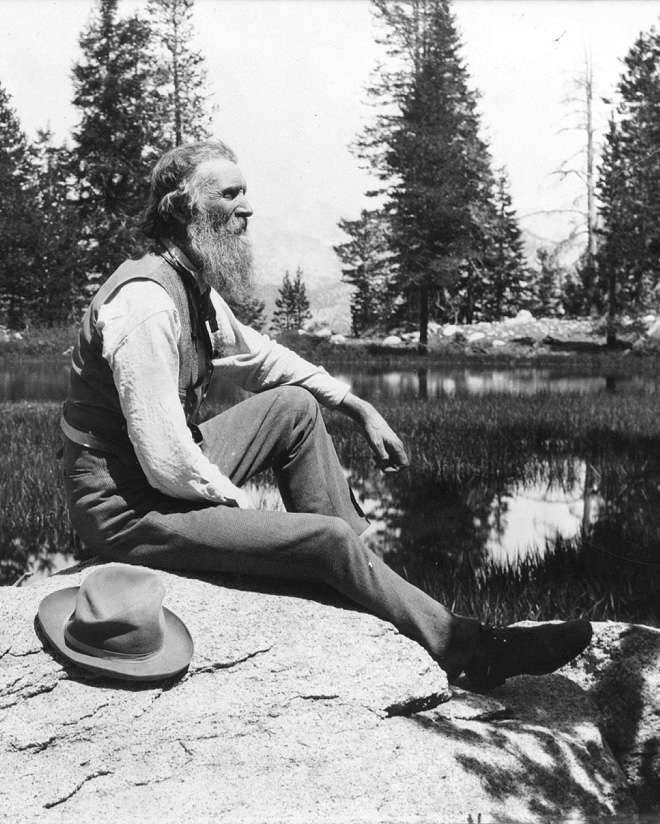
A portrait of Muir c. 1910

During his lifetime John Muir published over 300 articles and 12 books. He co-founded the Sierra Club, which helped establish a number of national parks after he died. Today the club has over 2.4 million members.

Muir has been called the "patron saint of the American wilderness" and its "archetypal free spirit". "As a dreamer and activist, his eloquent words changed the way Americans saw their mountains, forests, seashores, and deserts", said nature writer Gretel Ehrlich.[84] He not only led the efforts to protect forest areas and have some designated as national parks, but his writings presented "human culture and wild nature as one of humility and respect for all life".[26]

Robert Underwood Johnson, editor of Century Magazine, which published many of Muir's articles, states that he influenced people's appreciation of nature and national parks, which became a lasting legacy:

The world will look back to the time we live in and remember the voice of one crying in the wilderness and bless the name of John Muir. ... He sung the glory of nature like another Psalmist, and, as a true artist, was unashamed of his emotions. His countrymen owe him gratitude as the pioneer of our system of national parks. ... Muir's writings and enthusiasm were the chief forces that inspired the movement. All the other torches were lighted from his.[54]

Muir exalted wild nature over human culture and civilization, believing that all life was sacred. Turner describes him as "a man who in his singular way rediscovered America. ... an American pioneer, an American hero".[25] The primary aim of Muir's nature philosophy, writes Wilkins, was to challenge mankind's "enormous conceit", and in so doing, he moved beyond the Transcendentalism of Emerson to a "biocentric perspective on the world". He did so by describing the natural world as "a conductor of divinity", and his writings often made nature synonymous with God.[26]: 265  His friend, Henry Fairfield Osborn, observed that as a result of his religious upbringing, Muir retained "this belief, which is so strongly expressed in the Old Testament, that all the works of nature are directly the work of God".[54] In the opinion of Enos Mills, a contemporary who established Rocky Mountain National Park, Muir's writings were "likely to be the most influential force in this century".[54]

Since 1970, the University of the Pacific has housed the largest collection of Muir's personal papers, including his travel journals and notebooks, manuscripts, correspondence, drawings and personal library.[85] In 2019, the University of the Pacific was given full ownership of the Muir collection, which had been expanding over the years. The university has a John Muir Center for Environmental Studies,[86] the Muir Experience,[87] as well as other programs related to Muir and his work.

Tributes and honors

[edit]
Mount Muir located one mile south of Mount Whitney in the High Sierra
John Muir on a 1964 US commemorative stamp
John Muir depicted on the California state quarter

California celebrates John Muir Day on April 21 each year. Muir was the first person honored with a California commemorative day when legislation signed in 1988 created John Muir Day, effective from 1989 onward. Muir is one of three people so honored in California, along with Harvey Milk Day and Ronald Reagan Day.[88][89]

Mountain Days, a 2000 musical by Craig Bohmler and Mary Bracken Phillips, celebrates Muir's life and was performed annually in a custom-built amphitheater in Muir's adult hometown of Martinez, California.[90][91][92][93]

The play Thank God for John Muir, by Andrew Dallmeyer is based on his life.[94][95][96]

The following places are named after Muir:

  • Muir Woods also called John Muir Park, in Madison, Wisconsin, was designed by G. William Longenecker and Richard E Tipple from the University of Wisconsin Landscape Architecture Department. Official dedication of John Muir Park took place on February 8, 1964. Ceremonies at the State Historical Society of Wisconsin headquarters building included the unveiling of a John Muir commemorative stamp.[115][116]
  • Muir Valley – a privately owned nature preserve and rock climbing area in the Red River Gorge area of Kentucky. The Valley is approximately 400 acres in size and walled in by over seven miles of majestic cliffs of hard Corbin Sandstone. The owners, Rick & Liz Weber, chose the name, "Muir Valley", to honor the memory of John Muir.[117]

John Muir was featured on two US commemorative postage stamps. A 5-cent stamp issued on April 29, 1964, was designed by Rudolph Wendelin, and showed Muir's face superimposed on a grove of redwood trees, and the inscription, "John Muir Conservationist". A 32-cent stamp issued on February 3, 1998, was part of the "Celebrate the Century" series, and showed Muir in Yosemite Valley, with the inscription "John Muir, Preservationist".[118] An image of Muir, with the California condor and Half Dome, appears on the California state quarter released in 2005. A quotation of his appears on the reverse side of the Indianapolis Prize Lilly Medal for conservation.[119] On December 6, 2006, California Governor Arnold Schwarzenegger and First Lady Maria Shriver inducted John Muir into the California Hall of Fame located at The California Museum for History, Women, and the Arts.

The John Muir Trust is a Scottish charity established as a membership organization in 1983 to conserve wild land and wild places. It has more than 11,000 members internationally.[120]

The John Muir Birthplace Charitable Trust is a Scottish charity whose aim is to support John Muir's birthplace in Dunbar, which opened in 2003 as an interpretative centre focused on Muir's work.[121] A statue of Muir as a boy by the Ukrainian sculptor Valentin Znoba had been unveiled outside the house in 1997.

Muirite (a mineral), Erigeron muirii, Carlquistia muirii (two species of aster), Ivesia muirii (a member of the rose family), Troglodytes troglodytes muiri (a wren), Ochotona princeps muiri (a pika), Thecla muirii (a butterfly), Calamagrostis muiriana (a Sierra Nevada subalpine-alpine grass)[122] and Amplaria muiri (a millipede) were all named after John Muir.[123]

In 2006, he was inducted into the Hall of Great Westerners of the National Cowboy & Western Heritage Museum.[124]

See also

[edit]

Works

[edit]

Books

[edit]

Essays online

[edit]

Notes

[edit]

Further reading

[edit]
[edit]
Revisions and contributorsEdit on WikipediaRead on Wikipedia
from Grokipedia

John Muir (April 21, 1838 – December 24, 1914) was a Scottish-born American naturalist, writer, and preservationist whose advocacy emphasized the intrinsic value of wilderness and played a pivotal role in the establishment of and . Born in , Scotland, Muir immigrated with his family to a near , in 1849 at age 11, where he endured a strict upbringing under his father's religious discipline while developing an early fascination with through self-directed exploration. After brief studies in chemistry and at the University of Wisconsin and a period inventing mechanical devices in industrial settings, a factory accident causing temporary blindness in 1867 redirected his focus toward the restorative power of wild landscapes, prompting extensive travels including his first visit to in 1868.
Muir's writings, including books such as The Mountains of California (1894) and serialized articles in Century Magazine, articulated a viewing as a divine, self-sustaining deserving protection from commercial exploitation, influencing and to safeguard areas like Yosemite from and . In 1892, he co-founded the to promote and preservation of the Sierra Nevada mountains, serving as its first president and using the organization to lobby against threats to wild lands. His personal influence peaked during a 1903 camping trip in Yosemite with President , where Muir's firsthand demonstrations of ecological interdependence convinced Roosevelt to expand federal protections, contributing to the of 1906 and the creation of additional parks like and . Despite these triumphs, Muir faced defeats, notably the 1913 approval of the dam in Yosemite, which flooded a valley he deemed comparable in beauty to itself, highlighting tensions between preservation and utilitarian water needs that persist in conservation debates. Muir's legacy endures through the national parks system he helped inspire, though modern reassessments note his writings sometimes generalized as transient elements of the landscape rather than stewards, reflecting the era's prevailing settler perspectives rather than empirical engagement with their land management practices.

Early Life

Childhood in Scotland

John Muir was born on April 21, 1838, in , , , the third of eight children born to Daniel Muir and Ann Gilrye Muir. Daniel, a by , adhered strictly to Calvinist doctrines following a , enforcing a disciplined household centered on evangelical . The family occupied a modest in the coastal town, where Muir's early years were marked by formal schooling at the parish academy interspersed with intensive home-based religious instruction. Muir's father imposed demanding routines, including predawn awakenings for study and memorization of entire chapters and books, such as the , which the children recited verbatim to avoid . This regimen, detailed in Muir's later autobiography The Story of My Boyhood and Youth, cultivated resilience amid what Muir described as a joyless domestic atmosphere dominated by his father's authoritarian control. Physical chores supplemented the intellectual rigor, involving assistance in the family milling business and household maintenance, though less intensive than later farm labors. In contrast to the austere home, Dunbar's seaside environment ignited Muir's innate affinity for nature. He roamed the rocky shores and cliffs with siblings, particularly his brother , observing seabirds nesting on the , seals in coves, and diverse coastal flora, experiences that honed his observational skills and . These unsupervised explorations of caves, tidal pools, and bird habitats provided escape and early lessons in the interconnectedness of life, fostering a curiosity that persisted despite familial constraints. Such formative encounters with Scotland's wild coastlines laid the groundwork for Muir's enduring reverence for untamed landscapes.

Emigration to the United States and Settlement in Wisconsin

In 1849, Daniel Muir, driven by religious convictions and prospects of abundant land, decided to emigrate his family from to the , seeking greater freedom to practice his faith in an American sect and economic opportunities in the frontier. John, aged 11, along with siblings Sarah (13) and David (9), accompanied their father on the initial voyage, sailing from on an old-fashioned vessel that took six weeks and three days to cross the Atlantic. The family landed and proceeded to , , before traveling overland approximately 100 miles to Kingston amid muddy roads and heavy luggage. Upon arrival, Daniel purchased a 160-acre quarter-section farm near Fountain Lake, close to Portage in Marquette County, selected for its sunny open woods and proximity to water, with assistance from a land agent and local farmer Alexander Gray. The Muirs built a primitive shanty with neighbors' help, marking the start of frontier settlement, while the rest of the family joined later once basic structures were established. Settlement demanded intense manual labor, including clearing dense brush and timber from the wooded acres, burning debris, and preparing fields for crops like and potatoes, often from dawn to under Daniel's strict supervision. This grueling routine exacerbated tensions between John and his father, rooted in Daniel's rigid religious discipline—which emphasized scriptural literalism and communal worship—and John's growing desire for personal autonomy and intellectual pursuits. Despite the isolation and exhaustive farm work, John pursued self-education by reading voraciously from limited books, such as the , and observing local , , and , fostering early mechanical ingenuity through tinkering with simple tools and devices. These experiences in Wisconsin's prairie-woodland frontier honed his resilience and curiosity, though family religious strife persisted, with Daniel enforcing Bible readings and labor as moral duties.

Early Adulthood and Transition to Naturalism

Inventions and Industrial Work

Muir attended the University of Wisconsin in Madison from approximately 1861 to 1863, pursuing informal studies in chemistry, , and without completing a degree or formal enrollment in a specific program. His time there supplemented self-directed learning, including botany lessons from professors, while he supported himself through teaching and odd jobs. Prior to and during his university period, Muir exhibited mechanical ingenuity on the family farm in , crafting numerous handmade devices from wood and scrap materials during predawn hours permitted by his father. These included water wheels, barometers, hygrometers, clocks, locks, and an automatic feeder, demonstrating early command of practical and empirical experimentation. A notable creation was an "early-rising ," an integrated with a study desk that mechanically elevated the sleeper to a sitting position at a preset time, compelling immediate and . He displayed several such inventions, including a scythe-shaped clock and large iron , at the around 1860, earning recognition for their precision and utility. In 1864, amid the , Muir relocated to , , to work alongside his brother David in a woodworking manufacturing broom handles and hay . There, he applied his inventive skills to streamline production, conducting rudimentary time-and-motion analyses to reorganize workflows, adapt machinery, and boost efficiency, which impressed employers despite his youth. The factory fire in 1867 ended this phase, after which Muir briefly returned to the for further industrial employment. These factory experiences underscored Muir's self-reliant problem-solving and affinity for mechanical innovation, traits rooted in hands-on that later informed, yet ultimately diverged from, his critique of unchecked industrialization.

Eye Injury and Awakening to Nature

In March 1867, while employed at a manufacturing shop in , , John Muir suffered a severe industrial accident when a sharp tool slipped from his hand and pierced his right , cutting the where it met the . This injury caused immediate loss of sight in the affected eye, followed by sympathetic blindness in the left eye, rendering him completely blind for approximately six weeks as he rested in a darkened . During this period of enforced darkness, Muir underwent profound introspection about the mechanized existence he had pursued, questioning the value of industrial labor over direct engagement with the natural world. Upon partial recovery of his vision in May 1867, he declined a new position offered by his employers at another factory and resigned, vowing instead to devote his restored sight to observing "God's first works" rather than machines. This epiphany marked his rejection of urban and industrial routines, leading him to embark on a southward walking journey from in September 1867, covering over 1,000 miles through the Midwest and into the southeastern states. As he traversed forests and fields in , , and beyond, Muir collected botanical specimens, immersing himself in wilderness observation and further distancing from civilized settlements. His travels culminated in a sea voyage from to and then across the , arriving in , , by steamer on March 28, 1868. From the deck, his initial view of the Sierra Nevada mountains struck him as revelatory, inspiring him to describe them not as the "Snowy Range" but as the "Range of Light," due to their luminous, ethereal quality amid the surrounding darkness. This sighting affirmed his commitment to a life of natural , redirecting his path toward deeper immersion in untamed landscapes.

Explorations and Scientific Observations

Initial Journeys to Yosemite Valley


John Muir first reached Yosemite Valley on foot in early April 1868, after departing from the San Francisco Bay Area amid the region's spring bloom. Upon entering the valley, he experienced profound awe at its geological features, including the towering granite cliffs of El Capitan and Cathedral Rocks, the cascading Yosemite Falls, and the sheer scale of the U-shaped glacial trough. This initial eight-day visit captivated him, prompting immediate explorations such as scrambling down steep inclines for closer views of the waterfalls and meadows.
To facilitate his return to the Sierra Nevada, Muir accepted a sheepherding position in June 1869, guiding a flock of approximately 2,000 sheep from the Central Valley toward Tuolumne Meadows in the High Sierra, a route that skirted Yosemite Valley's environs. During this journey, he documented the local and through rudimentary sketches of the mountainous terrain and began noting basic observations of glacial polish and U-shaped valleys, which deepened his fixation on the region's formative processes. The sensory immersion—dominated by the stark monoliths, thundering waterfalls, and scattered —solidified Yosemite as a pivotal influence, contrasting sharply with his prior industrial experiences. By fall 1869, Muir established residence in Yosemite Valley, constructing a modest one-room cabin from pine and cedar near the base of for James Mason Hutchings' sawmill operations. He spent the ensuing winter in this shelter, where falling asleep to the creek's rush allowed focused note-taking and sketching of valley features, informed by conversations with early settlers. Among these was Galen Clark, Yosemite's first appointed guardian since 1866, whom Muir met during his initial visits; Clark's mountaineering expertise and amiable demeanor provided practical insights into the area's trails and ecology, anchoring Muir's perceptions as an newcomer. These early interactions and self-directed mappings laid the groundwork for Muir's prolonged engagement with the valley, without yet extending to formalized scientific advocacy.

Extended Travels in California and the Sierra Nevada

Following his initial visit to Yosemite Valley in 1868, John Muir embarked on extended explorations of the Sierra Nevada starting in , spending summers herding sheep for Pat Delaney while venturing into the high country to study its features. These annual treks, continuing through the early 1870s, involved covering hundreds of miles on foot, often solo, as he ascended peaks, traversed passes, and mapped remote basins inaccessible to most travelers. By November 1869, Muir had returned to Yosemite for seasonal work but used winters and off-seasons for further , accumulating detailed notes on and natural processes. In 1873, Muir penetrated Kings Canyon, a deeply incised valley along the South Fork of the Kings River, documenting its sheer walls and sequoia groves during a multi-month expedition from to . This journey exemplified his pattern of pushing into uncharted territories, where he navigated rugged terrain without established trails, relying on rudimentary maps and local knowledge from indigenous guides or shepherds. Such explorations revealed isolated alpine meadows and cirques, contributing to his growing catalog of Sierra landforms observed firsthand over thousands of cumulative miles hiked annually. Muir's physical stamina enabled endurance feats, including solo ascents of challenging summits like Mount Ritter in 1872, where he free-climbed steep faces using ice axes improvised from available tools. He frequently traveled light, carrying minimal provisions and berries, fish, or small game, which honed his self-sufficiency amid prolonged isolation from civilization. Encounters with , such as black bears in dense or in subalpine zones, occurred routinely without arms, as Muir prioritized observation over confrontation, noting their behaviors in field journals. During these wanderings, Muir documented effects, including widespread landslips along moraine slopes denuded after ice-sheet withdrawal, which reshaped valleys through rather than gradual fluvial action. He cataloged patterns, such as conifer regeneration on talus slopes and the role of in distributing seed across elevations from 8,000 to 12,000 feet, challenging assumptions of uniform erosional dominance by observing integrated glacial and vegetative dynamics. These field accumulations, jotted amid campsites at timberline, underscored the Sierra's dynamic recovery from Pleistocene glaciation, with uplift exposing fresh while biota recolonized scarred landscapes.

Expeditions to the Pacific Northwest and Alaska

In 1879, John Muir undertook his first expedition to , joining Presbyterian missionary Samuel Hall Young in southeastern , where they traveled by canoe and explored uncharted fjords and glaciers, including the first non-native entry into what became Glacier Bay. During this journey from Fort Wrangell, Muir documented active glacial processes, observing ice worms—small, dark annelids thriving in glacier ice—which he described as wriggling en masse on melting surfaces, contrasting with the sterile ice fields of the Sierra Nevada. Muir returned to Alaska in 1880, again with Young, navigating coastal waters and glaciers; on one outing from Fort Wrangell, he crossed a crevassed accompanied by Young's Stickeen, a wild black spaniel that demonstrated remarkable agility in leaping chasms, highlighting the adaptive behaviors of local in this wetter, fjord-dominated terrain unlike the arid Sierra highlands. These trips revealed temperate rainforests of Sitka and hemlock, with annual exceeding 150 inches in places like the Alexander Archipelago, fostering dense understories absent in California's drier zones and broadening Muir's appreciation for North America's varied ecosystems. Subsequent visits included a 1890 solo sled expedition across the Muir Glacier, spanning about 10 days and covering roughly 100 miles of ice, where he mapped crevasses and tidal influences; in 1899, Muir participated in the Harriman Expedition, a two-month scientific survey from northward to Siberia's edge, cataloging coastal biodiversity and glaciers amid emerging resource pressures from the . These northern forays, totaling seven between 1879 and 1899, emphasized Alaska's dynamic, moisture-laden landscapes—contrasting the Sierra's granitic austerity with fjord-carved valleys and calving ice fronts—thus informing Muir's holistic view of continental glaciation and ecological preservation needs.

Scientific Contributions

Geological Interpretations

John Muir challenged the prevailing geological interpretation of Yosemite Valley's formation, which attributed its origin primarily to tectonic uplift, fracturing, and followed by fluvial , as advanced by California State Geologist D. Whitney. Drawing from extensive fieldwork in the Sierra Nevada starting in 1868, Muir contended that the valley was excavated mainly by enormous glaciers during the Pleistocene Ice Age, emphasizing empirical evidence over speculative catastrophic . He rejected Whitney's model of a sudden "crash of worlds" causing , arguing instead that the landscape's features aligned with the mechanics of ice flow under immense pressure, capable of over 1,000 tons per . Central to Muir's case were direct observations of glacial signatures, including the valley's broad U-shaped cross-section, which contrasted with the narrower V-shaped profiles of river-eroded canyons. He documented polished granite surfaces at elevations of 8,000 to 9,000 feet, striated by ice abrasion and reflecting light like glass, as seen on features such as Fairview Dome at 10,000 feet. Moraines provided further proof, with the right lateral moraine of the Illilouette Glacier rising 250 feet high in three terraces, and extensive deposits marking ancient glacier termini, such as those from the Tuolumne Glacier curving through Little Yosemite Valley. In 1872, Muir conducted measurements confirming active glacial motion at Lyell and Maclure glaciers, extrapolating these to reconstruct past ice rivers converging on Yosemite, with the Merced Glacier alone spanning 14 miles long and 500 to 1,000 feet deep. Muir disseminated these interpretations through articles in the Overland Monthly, including "Living Glaciers of " in 1872 and a series from 1874 to 1875 later compiled as Studies in the Sierra. These works integrated field data with reasoning on ice dynamics, predicting extensive prior glaciations that subsequent surveys by geologists like and François Matthes largely verified, though Muir somewhat overestimated the exclusivity of glacial agency relative to joint-controlled rock exfoliation. His emphasis on observable traces of ice action shifted discourse toward recognizing Pleistocene glaciations' role in Sierra morphology, influencing later USGS assessments.

Botanical Discoveries and Classifications

During his extensive fieldwork in the Sierra Nevada beginning in the late 1860s, John Muir amassed substantial plant collections, pressing specimens from diverse elevations and habitats to document floral diversity. These efforts, conducted primarily between 1868 and 1875, yielded thousands of samples from regions like and the High Sierra, which he meticulously labeled with collection dates, locations, and observational notes on growth habits and environmental associations. His specimens, often gathered during solitary hikes or sheepherding excursions, captured alpine endemics and transitional forms, contributing for taxonomic by contemporary botanists. Muir's observations advanced understandings of ecological zonation, positing that Sierra flora exhibited distinct vertical belts tied to altitude-driven climatic gradients, with lower montane giving way to subalpine and alpine meadows above 9,000 feet. In detailed accounts from his 1869 summer traverses, he mapped shifts in species composition—such as the dominance of in mid-elevations transitioning to herbaceous cushions like sedges and gentians at timberline—attributing distributions to adaptive responses to temperature, moisture, and soil rather than invoking speculative mechanisms. These empirical delineations, drawn from repeated ascents up to 12,000 feet, prefigured formalized life-zone concepts without reliance on evolutionary theory, emphasizing observable causal links between and . Collaborations with botanist amplified Muir's taxonomic impact; during joint 1877 expeditions around and via exchanged Sierra specimens, Gray utilized Muir's high-altitude collections to describe and name species, including Erigeron muirii (Muir's fleabane), a compact aster endemic to alpine screes. Gray's 1873 correspondence praised Muir's finds as "curious and new," integrating them into systematic revisions of flora while highlighting adaptive traits like cushion growth for wind resistance. Muir avoided formal himself, prioritizing field-derived evidence over theoretical classification. Muir donated specimens to institutional herbaria, including over 45 sheets to the by the 1870s and additional sets to Harvard under Gray's auspices, preserving his collections for ongoing study. These archives, verified through modern digitization, confirm his role in furnishing verifiable type material for at least a dozen regional taxa, underscoring the empirical foundation of his contributions amid limited prior documentation of Sierra endemics.

Literary Output

Influences and Mentorship in Writing

Muir developed his writing abilities primarily through self-directed practice, transforming detailed travel journals into more eloquent and persuasive prose over decades of observation and reflection. His early journals, initiated during his 1867 walk from to and subsequent explorations, consisted of factual logs recording geological features, flora, and personal encounters with minimal stylistic flourish. These entries gradually incorporated vivid sensory descriptions and philosophical musings, reflecting an autodidactic evolution influenced by voracious reading of naturalists like and , though without formal literary training. A pivotal influence emerged through his correspondence with Jeanne C. Carr, a and educator he first met around 1860 in , where she judged a exhibit involving Muir's inventions. Their exchange began formally in 1865 and intensified after Muir's 1868 arrival in , with Carr urging him to articulate his raw impressions into publishable form. In letters spanning 1866 to 1879—later compiled as Letters to a Friend—Carr critiqued and encouraged Muir's nascent poetic style, emphasizing clarity in conveying nature's spiritual dimensions while preserving scientific accuracy, thus bridging his journalistic habit with advocacy-oriented rhetoric. Further refinement occurred via collaboration with Robert Underwood Johnson, associate editor of Century Magazine, whom Muir met in in 1889. Following a Sierra camping excursion that summer, Johnson prompted Muir to adapt journal-derived material into serialized articles, providing editorial feedback that streamlined Muir's descriptive intensity for periodical audiences. This partnership marked Muir's shift toward structured, emotive essays capable of broad dissemination, with Johnson's insistence on thematic focus elevating personal logs into influential public pieces by 1890.

Key Publications and Their Themes

Muir's The Mountains of California, published in 1894, comprises a collection of essays based on his extensive explorations, providing detailed accounts of the Sierra Nevada's geological formations, glaciers, forests, , and . These descriptions underscore the region's ecological interconnectedness and self-regulating processes, portraying as a harmonious system independent of human intervention. Muir integrates personal anecdotes of solitary wanderings to evoke the spiritual invigoration derived from untrammeled , while implicitly cautioning against commercial and development that disrupt this sanctity. In Our National Parks, released in 1901, Muir compiles essays on parks including Yosemite, Yellowstone, and Sequoia, using narrative accessibility to depict their landscapes, wildlife, and atmospheric phenomena. The book advances preservation by framing these areas as enduring exemplars of nature's intrinsic worth, superior to extractive utilities like timber harvesting or reservoir construction. Drawing from firsthand observations, Muir conveys themes of renewal through immersion in wild environs, positioning parks as sources of physical and moral rejuvenation amid industrial encroachment. Across these works, recurring motifs privilege preservation over utilitarian exploitation, with nature depicted as self-sufficient and divinely ordered, capable of sustaining its own vitality without human alteration. Muir's , rooted in empirical sketches and sensory encounters, reinforces causal links between intact ecosystems and human , advocating restraint to maintain ecological and spiritual integrity.

Role in Shaping Public Views on Wilderness

Muir's essays, often serialized in influential periodicals like , exposed educated urban readers to the sublime qualities of wilderness, portraying it as a realm of intrinsic beauty and spiritual renewal rather than mere raw material for economic exploitation. These publications, including pieces such as "The Treasures of the Yosemite" in , emphasized the experiential essence of untamed landscapes through detailed, sensory accounts that evoked wonder and humility in the face of nature's grandeur. By drawing on first-hand observations of Sierra Nevada vistas and Alaskan glaciers, Muir countered prevailing anthropocentric attitudes that prioritized resource extraction, instead advocating for preservation grounded in the inherent value of wild places as sources of profound human inspiration. In contrast to utilitarian conservationists like , who viewed forests and public lands primarily as managed assets for sustained human benefit and economic productivity, Muir's prose championed a holistic reverence for as an independent, divine entity deserving protection from commodification. Pinchot's approach, encapsulated in his belief that "the object of our forest policy is not to preserve forests because they are beautiful... but because they are useful," clashed with Muir's insistence on experiential truth—prioritizing vivid depictions of natural processes and ecosystems to foster public recognition of 's non-instrumental worth over abstract managerial theories. This rhetorical strategy shifted elite perceptions toward seeing wild areas as vital for cultural and psychological renewal, influencing broader societal debates on in an era dominated by industrial expansion. The wide dissemination of Muir's works through reprints and book compilations in the late 19th and early 20th centuries amplified their impact among a pre-broadcast audience, with serialized features in high-circulation magazines reaching thousands of subscribers and thereby embedding preservationist ideals into public discourse. His emphasis on immersive, awe-inspiring narratives—detailing phenomena like glacial flows and sequoia majesty—served to humanize , encouraging readers to value its preservation for its capacity to elevate the spirit rather than serve immediate utilitarian ends. This approach not only contrasted sharply with resource-oriented viewpoints but also laid foundational sentiments for recognizing 's role in countering the alienating effects of .

Conservation Efforts

Advocacy for National Parks

John Muir actively lobbied Congress for expanded federal protections of the Sierra Nevada, contributing to the establishment of on October 1, 1890, which encompassed the high-country watershed surrounding the previously state-protected to safeguard it from and threats. His writings in Century Magazine, including articles published in the late 1880s and early 1890, highlighted the ecological damage from sheep and timber extraction, arguing that unchecked was eroding soil stability and watershed integrity in the region. Muir's efforts extended to the creation of on September 25, 1890, and General Grant National Park on October 1, 1890, both designed to preserve stands of giant sequoia trees facing imminent commercial . He collaborated with politicians such as Congressman William Vandever, supplying observational data on depletion rates and emphasizing the parks' value as undisturbed baselines for studying geological and botanical processes rather than solely for recreational use. These arguments underscored the causal links between habitat destruction and long-term environmental degradation, positioning national parks as essential refugia for scientific inquiry into natural ecosystems.

Founding and Leadership of the Sierra Club

The Sierra Club was founded on May 28, 1892, in San Francisco by John Muir and a group of associates, including attorney Warren Olney and professors from the University of California, Berkeley, and Stanford University, with 182 charter members predominantly comprising scientists and elites interested in the Sierra Nevada. The organization's initial constitution emphasized exploring, enjoying, and rendering accessible the mountain regions of the Sierra Nevada, while advancing scientific study and preservation efforts. Muir, elected as the club's first president at the inaugural meeting held in Olney's office, served in that unpaid role for 22 years until his death in 1914, guiding its direction through personal leadership, organized outings, and targeted lobbying. Under Muir's presidency, the prioritized high-country excursions, known as "high trips," beginning with its first outing in 1893, which combined recreational access with opportunities for geological and botanical surveys among members. These activities, alongside advocacy campaigns—such as successfully opposing a 1892 proposal to shrink Yosemite National Park's boundaries—established the club as a conduit for both experiential engagement and policy influence. The Bulletin, launched in January 1893, served as a key publication outlet, featuring firsthand expedition reports, geographical guides, and scientific findings to disseminate knowledge and build support among readers. Membership initially drew from an educated, urban elite but expanded over the subsequent decades to include a broader constituency, reflecting the club's dual emphasis on accessibility and wilderness advocacy. Early internal discussions highlighted tensions between promoting public access through outings—which aimed to cultivate appreciation for nature—and maintaining the purity of remote areas against overuse, debates that anticipated later conflicts over utilitarian development. Muir's hands-on involvement in planning trips and drafting appeals underscored his vision of the club as a sustained platform for defending Sierra wildlands.

Conflict Over Preservation Versus Utilitarian Conservation

John Muir advocated for the strict preservation of areas, opposing the utilitarian conservation principles championed by , who emphasized the "wise use" of natural resources for sustained human benefit. Muir contended that Pinchot's approach, focused on multiple-use management and economic productivity, inevitably prioritized short-term extraction over the intrinsic value of ecosystems, allowing markets to undervalue irreplaceable natural features like ancient forests and valleys whose regenerative capacity could not match human demands. In contrast to Pinchot's sustained-yield forestry, which aimed to balance timber harvesting with regrowth, Muir argued from ecological observation that such interventions disrupted biodiversity's natural resilience, as human-engineered cycles often failed to replicate the complexity of undisturbed habitats. This philosophical rift manifested acutely in the Valley controversy, where sought to dam the federally reserved portion of to secure a following the 1906 earthquake and fires. Muir, leading the Sierra Club's opposition from 1908 onward, described the valley as a "temple" comparable to itself, warning that flooding it for urban utility would permanently sacrifice a unique glacial-carved landscape for consumptive purposes, reflecting broader tensions between metropolitan expansion and wilderness integrity. Pinchot, as U.S. Forest Service chief, supported the project, viewing the dam as compatible with conservation by providing reliable water without excessive waste, yet Muir criticized this as subordinating ecological permanence to engineered infrastructure that ignored the causal chain of habitat loss leading to diminished species adaptability. Congressional debates from 1908 to 1913 pitted preservationists against proponents of , with urban legislators arguing the reservoir's necessity for 1.8 million residents outweighed the valley's recreational value, ultimately approving the Raker Act on December 19, 1913, which granted rights to divert the and construct the dam. Muir's campaigns, including articles and , highlighted how such decisions exemplified human shortsightedness, where immediate resource demands eroded the long-term buffering capacity of biodiverse systems against climatic and anthropogenic stresses, as evidenced by the valley's rare combination of , meadows, and waterfalls that supported endemic and . Despite mobilizing public sentiment through vivid prose equating the proposal to "damning ," the utilitarian imperative prevailed, underscoring the prioritization of scalable human over non-substitutable natural assets.

Philosophical Perspectives

Wilderness as Divine Creation

John Muir espoused a theology that imbued wilderness with divine essence, portraying it as an uncorrupted expression of God's creative power rather than a mere resource for human use. He frequently invoked nature as a sacred realm, akin to "God's first temples," where forests and mountains served as unaltered sanctuaries revealing the Creator's handiwork. This perspective aligned with a pantheistic inclination, emphasizing God's immanence in the natural world while rejecting a purely transcendent deity detached from creation. Muir's writings countered mechanistic interpretations of nature prevalent in his era, insisting that empirical observations of ecological harmony pointed to intentional divine orchestration over random processes. Muir drew explicit parallels to biblical imagery, particularly the awe-struck reverence of the , to depict as a realm evoking profound spiritual wonder. He rejected anthropocentric —the notion that creation existed primarily for human subjugation—as unsupported by observable facts, arguing instead that the world's intricate balances predated and transcended human needs. In works like The Mountains of California, he critiqued presumptions of human centrality, positing that all elements of possessed inherent value under divine , not merely utilitarian purpose. This stance stemmed from his early religious upbringing, which he reformulated to prioritize 's autonomy as evidence of God's equitable governance across creation. Through meticulous field observations, Muir amassed empirical details on biological adaptations—such as morphologies suited to alpine conditions and glacial formations shaping landscapes—as testimonies to purposeful amid evolutionary flux. These findings, documented during expeditions in the Sierra Nevada starting in 1868, served to refute atheistic by highlighting causal patterns of interdependence that suggested an underlying intelligent order. Personal epiphanies in isolated settings, including storms that unveiled geological dynamism, reinforced this conviction, yielding quasi-mystical insights into nature's "Godful" vitality. Muir's thus integrated scientific rigor with spiritual intuition, framing preservation as a moral imperative to safeguard divine artistry.

Human Relationship to Nature

John Muir advocated a human relationship to nature characterized by humble stewardship rather than domination, drawing from empirical observations of disruptions caused by activities like grazing and lumbering. He concluded that all life forms possess inherent significance, with humans neither superior nor inferior to other , and that excessive interference undermined ecosystems' natural self-regulation. For instance, during his 1869 travels in the Sierra Nevada, Muir witnessed sheep devastate meadows, preventing vegetative recovery and altering hydrological patterns, which informed his view that untouched maintained superior balance compared to exploited lands. Muir critiqued industrialization for fostering alienation, portraying city life as turning individuals into "machines for making money" devoid of vital natural connections. He prescribed restorative immersion in as the antidote, emphasizing that direct exposure allowed nature's healing forces to replenish over-civilized souls: "Thousands of tired, nerve-shaken, over-civilized people are beginning to find out that going to the mountains is going home," and "nature's peace will flow into you as sunshine flows into trees." This immersion, he argued, cultivated ethical restraint and appreciation, countering the detachment bred by urban progress. Acknowledging human gains from preserved areas—such as sites for , reflection, and renewal where "nature may heal and give strength to body and soul alike"—Muir insisted on prioritizing wild integrity over utilitarian demands. He warned that while individuals could destroy features with ease, only could safeguard them from widespread folly, reflecting field-derived insights that ecosystems thrived best with minimal human meddling.

Sensory Experience and Personal Connection to the Environment

Muir's accounts emphasized tactile interactions with natural elements, such as the winds that "caress" forests and sway trees in rhythm with environmental forces. He detailed the physical sensation of these winds shaping landscapes over time, underscoring direct bodily engagement as essential to understanding ecological dynamics. Auditory experiences featured prominently, including the "dull muffled rumble" followed by a "ponderous crunching sound" of descending Sierra slopes, observed during his fieldwork. Olfactory impressions, like air "as delicious to the lungs as nectar to the tongue" amid Sierra meadows, highlighted how scents reinforced immersive . Muir portrayed light penetrating canopies or illuminating falls as unveiling hidden features of terrain, serving as a perceptual tool for deeper environmental insight. He critiqued "armchair" approaches to , favoring empirical validation through personal exposure over detached theorizing. This stance led him to undertake hazardous firsthand observations, such as riding a in the Sierra Nevada on December 19, 1874, to document its silent glide and mechanics without auditory cues from compression. Autobiographical episodes illustrated nature's role in health restoration; after a 1867 factory accident injuring his right eye and causing temporary blindness, Muir commenced a 1,000-mile walk from to in 1867, crediting outdoor immersion for gradual vision recovery and vitality renewal. Such excursions, detailed in his journals, demonstrated how sensory saturation in mitigated physical debility and enhanced psychological endurance, as evidenced by his sustained explorations post-injury.

Social and Racial Views

Opinions on Native Americans

John Muir's initial encounters with Native Americans in during the late 1860s often reflected 19th-century stereotypes, portraying groups such as the and Paiute—whom he referred to as "Digger Indians"—in derogatory terms based on their post-contact conditions and visible poverty. In journals from 1868, later incorporated into My First Summer in the Sierra, he described the dirt on their faces as "almost old enough and thick enough to have a geological significance," and characterized their existence as "a strangely dirty and irregular life these dark-eyed, dark-haired, half-happy savages lead in this clean ." These observations stemmed from limited interactions with remnants of tribes decimated by disease, violence, and displacement following the , where Muir witnessed individuals eking out survival amid environmental degradation rather than thriving traditional societies. Muir noted the minimal environmental footprint of these Yosemite-area tribes, observing that "Indians walk softly and hurt the landscape hardly more than the birds and squirrels," contrasting their practices with the more disruptive activities of white settlers. However, he viewed their cultural practices, including controlled burns and resource gathering, as incompatible with his ideal of untouched , prioritizing scenic preservation over human habitation in national parks. In The Mountains of California (1894), he acknowledged some affinity, stating that even "young Digger Indians have sufficient love for the brightest colored of the plant people," yet his overall depictions emphasized their perceived laziness and degradation, aligning with broader era prejudices rather than empirical advocacy for their rights or lands. Later experiences, particularly among the Tlingit in during expeditions in 1879 and 1890, introduced nuances of admiration for Indigenous survival skills and resilience. Muir praised their mountaineering prowess and ingenuity, writing that "in good breeding, intelligence, and skill in accomplishing whatever they try to do with tools, they seem to me to rank above most of our uneducated white laborers," and declared them " has no better subjects, white, black, or brown." For California tribes, however, his sentiments remained tempered, with no recorded push for policy changes benefiting them; instead, his conservation focus elevated pristine nature above Indigenous presence, reflecting a prioritization of ecological purity over cultural accommodation.

Views on African Americans

John Muir's documented views on African Americans derive primarily from journal entries recorded during his 1867 thousand-mile walk from to , shortly after the Civil War, when he traversed regions with newly freed enslaved people adapting to emancipation amid economic upheaval and entrenched social hierarchies. In , he observed "a great many negroes going to meeting, dressed in their Sunday best. Fat, happy looking, and contented," and noted that "many of these Kentucky negroes are shrewd and intelligent, and when warmed upon a subject that interests them, are eloquent in no mean degree." These early impressions portrayed some as congenial and capable, aligning with interactions in border states less scarred by plantation slavery. Further south in Georgia, Muir's assessments shifted toward stereotypes prevalent in postbellum Southern society, where freedpeople often labored under systems that perpetuated poverty and limited opportunities. He described cotton pickers as "easy-going and merry, making a great deal of noise and doing little work," reflecting a perception of idleness amid the era's disrupted labor norms following slavery's abolition. In , he remarked that "the here have been well trained and are extremely polite," with customs like removing hats at a distance from white passersby, indicating observations of shaped by recent enslavement. Near Savannah, he expressed wariness of "idle ... prowling about everywhere," and in , he feared "wild, runaway " while camping, as well as a "large, muscular, brawny young " who contemplated robbing him, prompting Muir to bluff his way to safety. Such entries echoed 19th-century racial prejudices, including characterizations of as lazy, dirty, or superstitious, common among observers of the South's transitional conditions where systemic barriers hindered self-sufficiency. Muir's comments on remain sparse and incidental, lacking the depth or advocacy seen in his environmental writings, as his journey prioritized natural observations over social analysis. No evidence indicates he pursued systematic engagement with racial issues or altered these views in later decades, during which his focus centered on wilderness preservation rather than human societal reforms. Unlike contemporaries who actively supported segregationist policies or exclusionary practices, Muir's record shows no involvement in anti-Black actions, such as land dispossession or political agitation against freedpeople's ; his prejudices appear unexamined and reflective of cultural norms absorbed during his Southern exposure as a young Scottish immigrant.

Contextual Influences on His Prejudices

John Muir's prejudices were shaped by his early environment in a rigid, insular Scottish Presbyterian household dominated by his father, Daniel Muir, an evangelical Protestant whose strict religious absolutism emphasized human depravity and divine hierarchy. Daniel's abusive parenting, including physical beatings and enforced grueling farm labor from a young age, instilled a worldview prioritizing discipline over empathy, potentially transmitting biases common among 19th-century Scottish immigrants who viewed non-Europeans through lenses of cultural superiority. This familial dynamic, rooted in Dunbar's small-town homogeneity where Muir spent his first 11 years until the 1849 emigration to Wisconsin, limited early exposure to diversity and reinforced insularity. Upon arrival in America, the Muir family's isolated existence on a Fountain Lake Farm in south-central further constrained interactions with varied groups, as Muir rarely ventured beyond a 15-mile and encountered primarily fellow in a setting. Pre-1860s life on the farm, marked by relentless toil under paternal , offered scant opportunity for encounters with Native Americans or , whose presence in rural Wisconsin was minimal amid ongoing displacement and segregation. Such seclusion, combined with the era's pervasive pseudoscientific racial theories—like and emerging eugenics precursors—fostered uncritical acceptance of hierarchies portraying non-whites as inferior or vanishing obstacles to progress. The dominant frontier myths of , which framed unsettled lands as providential for white agrarian expansion, aligned with Muir's inherited religious framework, sidelining indigenous claims in favor of a teleological view of nature's redemption through European stewardship. Muir's burgeoning empirical focus on natural observation, honed through self-taught studies amid farm drudgery, prioritized preservation over social reform, channeling energies away from interrogating societal biases until later travels. Subsequent exposures during his 1867 southern walk and Sierra expeditions gradually moderated some prejudices, evidencing learned rather than immutable dispositions.

Personal Life

Marriage and Family

John Muir married Louisa Wanda "Louie" Strentzel on April 14, 1880, in Martinez, California. Louie, the daughter of Hungarian-born physician and horticulturist Dr. John Strentzel, had grown up on the family's fruit ranch in Alhambra Valley near Martinez. Following the marriage, Muir entered into partnership with his father-in-law to manage the 2,600-acre Strentzel fruit ranch, overseeing the cultivation of pears, grapes, and other crops, as well as vineyard operations. The couple had two daughters: , born on March 25, 1881, and Helen, born on January 23, 1886. Muir expressed profound joy at Wanda's birth, describing himself as "the happiest man in the world." The family integrated nature into daily life, with the daughters accompanying Muir on outings to nearby hills and wild areas, fostering their appreciation for the outdoors. Muir's frequent and extended travels for and writing often left Louie to manage and household alone, creating strains from his prolonged absences that tested dynamics. Nonetheless, Louie's practical support and understanding enabled Muir's expeditions, as she handled ranch operations and encouraged his pursuits, balancing domestic responsibilities with his irrepressible wanderlust.

Daily Routines and Health Challenges

John Muir adhered to an ascetic lifestyle marked by and simplicity, even in his Martinez home from onward. He followed a vegetable-based diet, influenced by his father's insistence on such practices during his youth, and later advocated for it as aligned with ethical considerations toward animals. Daily routines centered on writing in his upstairs "Scribble Den," where he produced much of his published work, interspersed with gardening and extended walks in the nearby hills to sustain physical vigor. These habits reflected minimal comforts, prioritizing immersion in natural surroundings over sedentary domesticity. Muir's resilience amid health vulnerabilities underscored his reliance on outdoor activity as . Early factory work exposed him to industrial hazards, culminating in a 1867 accident that temporarily blinded him and prompted therapeutic wanderings in . Recurrent fevers from contracted during his 1867 thousand-mile walk to the Gulf further challenged him, yet he mitigated effects through vigorous exercise and fresh air in settings. This approach, rather than medical intervention, formed the core of his health maintenance, enabling sustained exploration despite underlying frailties.

Final Years and Death

Later Travels and Writings

In 1903–1904, Muir undertook an extensive world tour, departing from and visiting , , , and , where he explored natural landscapes and urban parks such as those in and . During these travels, he documented comparative observations of preservation, noting the relative scarcity of protected wild areas in compared to and emphasizing the universal value of untouched for human renewal. These notes reinforced his conviction that global conservation required recognizing as a fundamental resource, distinct from utilitarian exploitation prevalent in developing regions. Amid growing physical fatigue from chronic respiratory ailments, Muir sustained his literary productivity in the ensuing decade. In 1909, he published Stickeen: The Story of a Dog, a compact narrative drawn from his 1880 Alaskan expedition, detailing a perilous glacier crossing with a resilient dog that illustrated themes of instinctual courage and nature's unforgiving beauty. This work, dedicated to his daughter Helen, marked a culmination of his reflective prose on animal intelligence and wilderness trials. Two years later, in 1911, My First Summer in the Sierra appeared, vividly reconstructing his 1869 shepherding journey through Yosemite's high country, with precise descriptions of flora, geology, and seasonal rhythms that underscored the Sierra's ecological interdependence. Muir's advocacy intensified concurrently, as he channeled waning energy into opposition against the Hetch Hetchy Valley damming project, authoring polemical articles like "The Valley" in 1908 and testifying before in 1908 and 1913 to defend the site's pristine integrity against San Francisco's water demands. In 1912, he released The Yosemite, compiling revised essays that integrated travel sketches with urgent pleas for federal protection of California's iconic landscapes, arguing from firsthand surveys that such areas embodied irreplaceable natural cathedrals. These efforts, pursued despite evident exhaustion, highlighted his commitment to empirical advocacy rooted in decades of field observation.

Illness and Passing

In 1914, while visiting his youngest daughter Helen in the community of , Muir contracted after exposure to cold conditions. His deteriorating health prompted transport by train to California Hospital in Los Angeles for treatment, where he succumbed to the illness. Muir died on December 24, 1914, at the age of 76. His remains were returned to , and interred in the family gravesite along Alhambra Creek, approximately one mile south of his homestead.

Legacy

Enduring Impact on Environmental Policy and Protected Lands

John Muir's direct advocacy shaped key U.S. conservation policies, particularly through his influence on President during a three-day trip in in May 1903, where Muir stressed the need to safeguard wilderness from commercial exploitation. This encounter contributed to Roosevelt's expansive preservation efforts, including the establishment of five new national parks—[Crater Lake](/page/Crater Lake) in (1902), Wind Cave in (1903), Mesa Verde in (1906), and others—along with 148 million acres of national forests and 51 federal bird reserves by the end of his presidency in 1909. Muir's earlier campaigns also aided the creation of in 1890 and in the same year, encompassing over 1,200 square miles of pristine Sierra Nevada terrain vital for watershed protection and timber reserves. The of 1906, signed by Roosevelt amid growing calls for federal land safeguards inspired by figures like Muir, empowered presidents to designate national monuments, leading to protections such as in 1908, which preserved 554 acres of coastal redwoods threatened by logging. Over time, this act facilitated the safeguarding of more than 150 monuments totaling over 800 million acres, many in biodiversity-rich areas akin to those Muir championed. Muir's persistent lobbying, including writings in outlets like , underscored the causal link between individual advocacy and legislative outcomes, countering industrial pressures that had already deforested vast western tracts. As co-founder and first president of the in 1892, Muir established an organization that has endured as a force in , initiating over 100 lawsuits by the late 20th century to block developments and secure wilderness designations under acts like the , which protected 9.1 million acres initially and now spans 111 million acres nationwide. The club's model of citizen-led conservation has influenced global reserves, with U.S. parks serving as prototypes for systems in countries like and , preserving ecological integrity in hotspots where —such as Yosemite's 7,000 plant varieties and endemic amphibians—remains intact amid surrounding agricultural and urban expansion. These outcomes demonstrate empirical success in halting , with protected lands exhibiting higher native species abundance compared to adjacent developed zones.

Honors, Tributes, and Cultural Recognition


, encompassing 554 acres of coastal redwood forest near , was proclaimed on January 9, 1908, by President to honor Muir's conservation efforts. This dedication symbolized federal recognition of Muir's advocacy for wilderness preservation, following land donation by .
The , a 211-mile route traversing and the Sierra Nevada to , was established on May 17, 1915, via legislation signed by Governor , explicitly naming it for Muir shortly after his death. Mount Muir, a 14,018-foot summit in the Sierra Nevada adjacent to , was named in his honor, reflecting his geological explorations and founding role. In philatelic tribute, the U.S. Postal Service issued a 5-cent portraying Muir on April 29, 1964, through the , post office, coinciding with the centennial of his Sierra explorations. The 2005 California state quarter, released as part of the program, features Muir admiring Yosemite Valley's with a , minted in quantities exceeding 500 million. The John Muir Trust, a Scottish charity dedicated to wild land conservation, was founded in 1983 and named for Muir to perpetuate his birthplace legacy in . Statues commemorating Muir include a bronze figure unveiled in , , in 2013 at his birthplace, and a 10-foot carving in Lemon Cove, California, relocated from a Visalia site. President Theodore Roosevelt's 1903 camping excursion with Muir in served as a personal endorsement, influencing subsequent national park expansions.

Contemporary Criticisms and Historical Reassessments

In July 2020, amid national protests following the death of George Floyd, executive director Michael Brune issued a statement titled "Pulling Down Our Monuments," acknowledging that founder John Muir held racist views common in the early , including derogatory remarks about and in his journals and writings, such as descriptions of Native Americans as "dirty" and "savage" during his 1869 travels in the Yosemite region. Brune pledged organizational reforms, including diversifying staff and confronting exclusionary histories, which prompted debates over removing Muir's name from landmarks like , schools, and trails, with some activists affixing notes to statues labeling him racist. These criticisms drew from selective excerpts of Muir's private journals, written in the 1860s–1890s by a Scottish immigrant shaped by Victorian-era prejudices, though sources note he also expressed admiration for Native American resilience and knowledge of the land in other passages. Responses to these accusations emphasized contextual nuance, arguing that Muir's views, while reflecting widespread 19th-century biases—including anti-Black stereotypes and paternalistic attitudes toward Indigenous groups—did not constitute systematic or advocacy for , as evidenced by his lack of involvement in exclusionary policies and his interactions with diverse laborers during Sierra excursions. Scholars like Raymond Barnett, in Sierra Club analyses, highlighted Muir's evolution, such as his 1870s praise for Native guides' wilderness expertise and friendships with individuals like the Black sheepherder near Yosemite, suggesting a complex figure whose prejudices diminished over time amid personal experiences. Internal Sierra Club dissent, reported in 2021, criticized Brune's statement as overstated and divisive, with members arguing it ignored Muir's era-normal attitudes—prevalent even among abolitionists—and risked alienating supporters by prioritizing present-day moral lenses over historical fidelity. Historical reassessments post-2020 have underscored that Muir's conservation achievements—establishing protections for over 80 million acres of public lands, including Yosemite and Sequoia National Parks—have delivered enduring benefits to all demographic groups through accessible natural resources, preservation, and recreational opportunities, outweighing personal flaws when evaluated by causal outcomes rather than isolated utterances. Critics of anachronistic condemnations warn that retroactively vilifying figures like Muir, whose writings advanced empirical observation of ecosystems influencing modern , undermines the evidentiary basis for understanding past motivations and progress, potentially eroding support for policies rooted in those very legacies. Despite the controversies, many honors persist, including the managed by the as of 2022, reflecting a balanced recognition of his net contributions amid ongoing scholarly .

Writings

Major Books

The Mountains of California (1894), published by the Century Company, presents detailed observational accounts of the Sierra Nevada's , patterns, forests, and , incorporating illustrations derived from field sketches and early photographs to depict glacial formations and vegetation zones. Our National Parks (1901), issued by Houghton Mifflin, assembles ten essays previously serialized in the Atlantic Monthly between 1897 and 1901, offering descriptive surveys of Yosemite, Yellowstone, Sequoia, and other western reserves, with embedded images emphasizing their scenic and ecological attributes. Stickeen (1909), published by Houghton Mifflin as a standalone expanded from an earlier piece, recounts a singular Alaskan adventure involving a amid glacial perils, illustrated sparingly to underscore themes of and survival in settings. in the Sierra (1911), brought out by Houghton Mifflin, chronicles Muir's 1869 sheepherding expedition through Yosemite's high country via journal entries, detailing daily encounters with meadows, peaks, and sequoias, supplemented by photographic reproductions. The Yosemite (1912), released by the Century , integrates revised articles and new material on the valley's origins, waterfalls, and forests, arguing against developmental encroachments, with and plate illustrations capturing rock formations and vistas.

Selected Essays and Articles

Muir's essays and articles in periodicals served as urgent calls to action against immediate threats to wilderness areas, leveraging vivid descriptions backed by observational data on , , and to rally public and legislative support. Unlike his expansive books, these shorter pieces enabled rapid publication in response to policy debates, such as proposals for , , or damming in protected zones. A pivotal series appeared in during the early 1890s, commissioned by editor Robert Underwood Johnson to advocate for federal park protections. "The Treasures of the Yosemite," published in August 1890, detailed the valley's glacial formations, sequoia groves, and waterfalls, estimating over 1,000 plant and arguing their vulnerability to private exploitation under state management. This was followed by "Features of the Proposed Yosemite National Park" in September 1890, which mapped out boundaries encompassing 1,500 square miles of Sierra Nevada high country, citing specific elevations (up to 13,000 feet) and water flows to justify exclusion of sheep grazing and timber harvests that had already scarred 500,000 acres. These articles, drawing on Muir's field surveys from 1868 onward, directly influenced the Act signed by President on October 1, 1890, transferring oversight to the federal government. In 1908, amid San Francisco's push to dam the for municipal water, Muir published "The Hetch Hetchy Valley" in the Sierra Club Bulletin's January issue. He described the valley's 1,800-foot granite walls, meadows supporting rare species like the alpine lily, and annual snowmelt volumes exceeding 1.5 million acre-feet, likening it to " on a somewhat lower scale" and warning that inundation would destroy irreplaceable ecosystems for a serving 400,000 residents—a capacity achievable via alternative aqueducts from the Sierra foothills. This piece mobilized opposition but ultimately failed against the Raker Act of 1913, highlighting tensions between preservation and utilitarian water needs. Many of these works are accessible in digital archives, including the Sierra Club's John Muir exhibit, preserving original texts for verification of Muir's data-driven arguments against development. Their periodical format facilitated timely interventions, contrasting with slower production and amplifying Muir's role in early conservation campaigns.

References

Add your contribution
Related Hubs
User Avatar
No comments yet.