
Recent from talks
Josiah Harlan
Knowledge base stats:
Talk channels stats:
Members stats:
Josiah Harlan
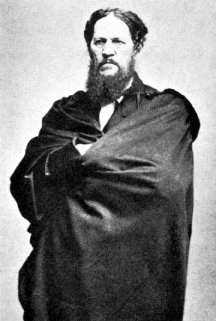
Josiah Harlan, Prince of Ghor (June 12, 1799 – October 1871) was an American adventurer who claimed to have travelled to Afghanistan and Punjab with the intention of making himself a king. He claimed that during his travels, he became involved in local politics and factional military actions. He claimed he was awarded the title Prince of Ghor in exchange for military aid. Rudyard Kipling's 1888 short story "The Man Who Would Be King" is believed by some to have been partly based on Harlan.
Harlan was born in Newlin Township, in Chester County, Pennsylvania. Harlan and his nine siblings—including paleontologist Richard Harlan—were raised in a strict and pious home by Quakers. His father was a merchant broker in Philadelphia.
After the death of his mother when he was 13 years old, Harlan took up reading. It was recorded that at the age of 15, he was reading medical books, such as the biographies of Plutarch. He also allegedly held interest in advanced religious texts. Harlan had a knack for languages, as he was able to speak French fluently and could read in both Greek and Latin. Furthermore, he enjoyed studying Greek and Roman ancient history, with Alexander the Great bearing a particular point of interest for him.
In 1820, Harlan embarked on his first travels after joining the Freemasons. His father secured him a job as a supercargo on a merchant ship bound for Asia, sailing from Calcutta, India to Guangzhou, China and back. After his return, he fell in love with Elizabeth Swaim. Soon after, they got engaged and planned to marry after he returned from the voyage to India and China. However, she married someone else and Harlan vowed to never return to America.
In July 1824, he enlisted as a military surgeon with the East India Company, despite his lack of medical training. The company was about to enter the war in Burma and needed surgeons. Relying on self-study and some practice while at sea, Harlan presented himself to the medical board for examination and was hired as a surgeon in the Calcutta general hospital. In January 1825, he served with the army in Burma. Owing to heavy losses due to disease and war, Harlan sometimes fought with the Bengal Artillery, acquiring military experience. Harlan claimed he was at the Battle of Prome in 1825, where Anglo-Indian forces stormed the city of Prome (modern Pyay) and engaged in fierce hand-to-hand fighting with the Burmese. The Treaty of Yandabo in 1826 ended hostilities.
Once recuperated, Harlan was posted to Karnal, north of Delhi. There, he read the 1815 book: An Account of the Kingdom of Caubul, and its dependencies in Persia, Tartary and India, comprising a View of the Afghan Nation and history of the Dooraunee Monarchy by Mountstuart Elphinstone, a civil servant with the East India Company who had visited the Durrani Empire in 1809. To many Westerners at that time, Afghanistan seemed remote and mysterious. Elphinstone's book described a nation that no Westerner had ever before visited, which quickly became a bestseller. Harlan was interested in the idea of a medieval Afghanistan, where tribal chiefs battled for supremacy.
Harlan was a strict disciplinarian who would not tolerate any insubordination from those serving under him. But he himself had difficulty taking orders and was openly insubordinate towards his superiors. Harlan began to learn Hindi and Persian. In the summer of 1826, he quit his service with the East India Company. As a civilian, he was granted a permit to stay in India by the Governor-General Lord Amherst. According to his writings about this time Harlan decided to travel to Punjab, which was then beyond the realm of British rule.[citation needed]
After a stay in Shimla, Harlan came to Ludhiana, a border outpost of the British East India Company on the river Sutlej, which formed the border between the Sikh Empire and British India at the time. Harlan had decided to enter the service of Ranjit Singh, the Maharaja of Punjab. Ranjit Singh was willing to hire Westerners who could be useful to him, but generally did not allow them to enter Punjab. He knew that the East India Company possessed much of the Indian subcontinent, and as far as he was concerned, the less known of Punjab the better. So, Punjab became a rather mysterious region for Westerners. The East India Company's agent in Ludhiana, Captain Claude Martin Wade, described Harlan as an enigmatic character who dressed well, knew much about the flora of India and the classics, and wanted to become a mercenary for Ranjit Singh. This made him the first classicist/botanist/soldier of fortune that Wade had ever met. Harlan planned to study the flora of the Punjab, which was unknown in the West, and publish a book about the botany of Punjab with a special emphasis on flowers.
Hub AI
Josiah Harlan AI simulator
(@Josiah Harlan_simulator)
Josiah Harlan
Josiah Harlan, Prince of Ghor (June 12, 1799 – October 1871) was an American adventurer who claimed to have travelled to Afghanistan and Punjab with the intention of making himself a king. He claimed that during his travels, he became involved in local politics and factional military actions. He claimed he was awarded the title Prince of Ghor in exchange for military aid. Rudyard Kipling's 1888 short story "The Man Who Would Be King" is believed by some to have been partly based on Harlan.
Harlan was born in Newlin Township, in Chester County, Pennsylvania. Harlan and his nine siblings—including paleontologist Richard Harlan—were raised in a strict and pious home by Quakers. His father was a merchant broker in Philadelphia.
After the death of his mother when he was 13 years old, Harlan took up reading. It was recorded that at the age of 15, he was reading medical books, such as the biographies of Plutarch. He also allegedly held interest in advanced religious texts. Harlan had a knack for languages, as he was able to speak French fluently and could read in both Greek and Latin. Furthermore, he enjoyed studying Greek and Roman ancient history, with Alexander the Great bearing a particular point of interest for him.
In 1820, Harlan embarked on his first travels after joining the Freemasons. His father secured him a job as a supercargo on a merchant ship bound for Asia, sailing from Calcutta, India to Guangzhou, China and back. After his return, he fell in love with Elizabeth Swaim. Soon after, they got engaged and planned to marry after he returned from the voyage to India and China. However, she married someone else and Harlan vowed to never return to America.
In July 1824, he enlisted as a military surgeon with the East India Company, despite his lack of medical training. The company was about to enter the war in Burma and needed surgeons. Relying on self-study and some practice while at sea, Harlan presented himself to the medical board for examination and was hired as a surgeon in the Calcutta general hospital. In January 1825, he served with the army in Burma. Owing to heavy losses due to disease and war, Harlan sometimes fought with the Bengal Artillery, acquiring military experience. Harlan claimed he was at the Battle of Prome in 1825, where Anglo-Indian forces stormed the city of Prome (modern Pyay) and engaged in fierce hand-to-hand fighting with the Burmese. The Treaty of Yandabo in 1826 ended hostilities.
Once recuperated, Harlan was posted to Karnal, north of Delhi. There, he read the 1815 book: An Account of the Kingdom of Caubul, and its dependencies in Persia, Tartary and India, comprising a View of the Afghan Nation and history of the Dooraunee Monarchy by Mountstuart Elphinstone, a civil servant with the East India Company who had visited the Durrani Empire in 1809. To many Westerners at that time, Afghanistan seemed remote and mysterious. Elphinstone's book described a nation that no Westerner had ever before visited, which quickly became a bestseller. Harlan was interested in the idea of a medieval Afghanistan, where tribal chiefs battled for supremacy.
Harlan was a strict disciplinarian who would not tolerate any insubordination from those serving under him. But he himself had difficulty taking orders and was openly insubordinate towards his superiors. Harlan began to learn Hindi and Persian. In the summer of 1826, he quit his service with the East India Company. As a civilian, he was granted a permit to stay in India by the Governor-General Lord Amherst. According to his writings about this time Harlan decided to travel to Punjab, which was then beyond the realm of British rule.[citation needed]
After a stay in Shimla, Harlan came to Ludhiana, a border outpost of the British East India Company on the river Sutlej, which formed the border between the Sikh Empire and British India at the time. Harlan had decided to enter the service of Ranjit Singh, the Maharaja of Punjab. Ranjit Singh was willing to hire Westerners who could be useful to him, but generally did not allow them to enter Punjab. He knew that the East India Company possessed much of the Indian subcontinent, and as far as he was concerned, the less known of Punjab the better. So, Punjab became a rather mysterious region for Westerners. The East India Company's agent in Ludhiana, Captain Claude Martin Wade, described Harlan as an enigmatic character who dressed well, knew much about the flora of India and the classics, and wanted to become a mercenary for Ranjit Singh. This made him the first classicist/botanist/soldier of fortune that Wade had ever met. Harlan planned to study the flora of the Punjab, which was unknown in the West, and publish a book about the botany of Punjab with a special emphasis on flowers.
Recent media